Tag: volunteer group

Beyond the Razor Grass — Part Two, 11th July 2026

Beyond the Razor Grass — Part Two

A forest revealed!

The first Global Works team had broken through the barrier. They reopened the way into a part of the forest that had been inaccessible since Hurricane Maria and helped us rediscover trees planted many years ago. But reaching the planted trees was only the beginning.

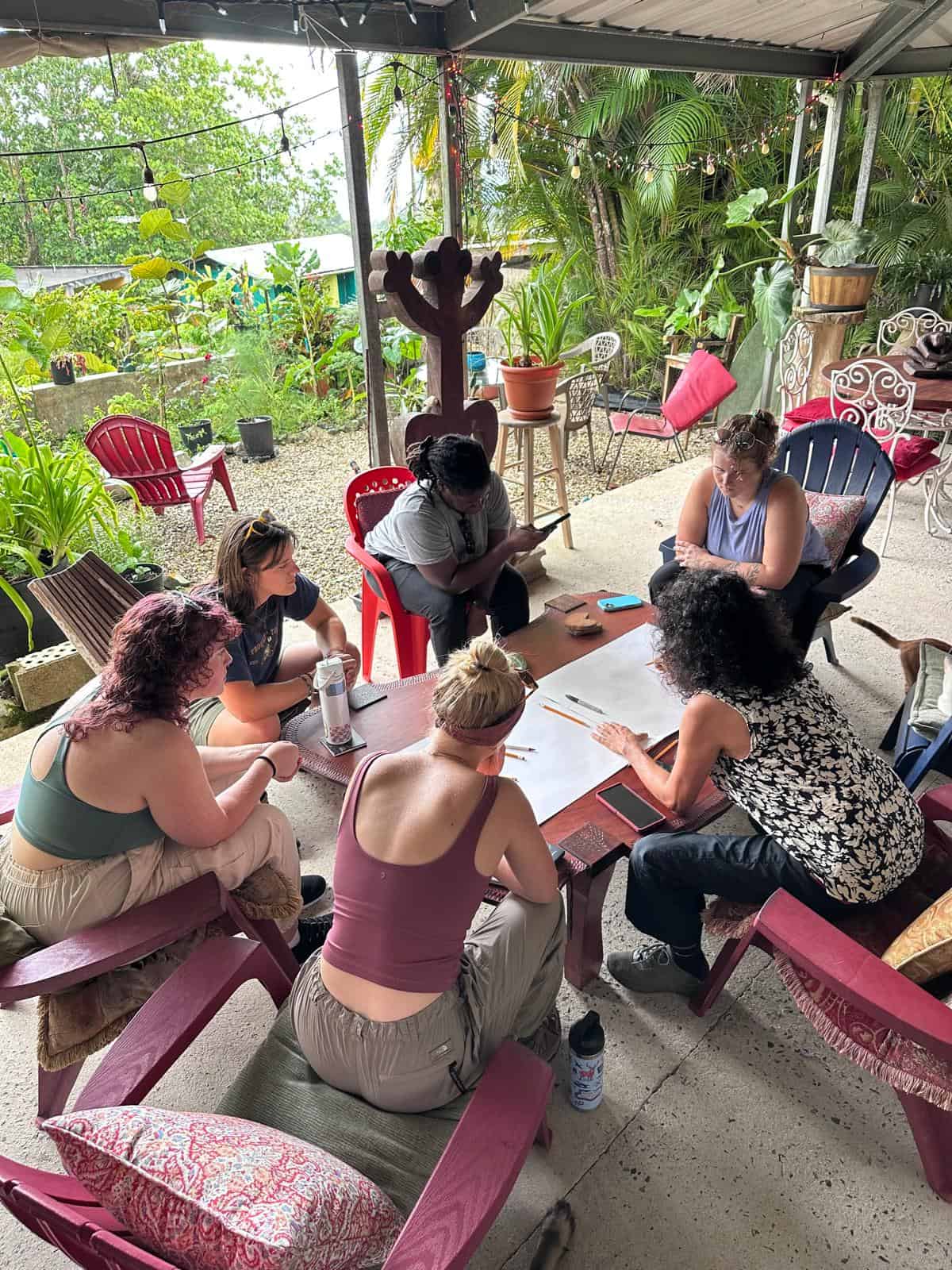
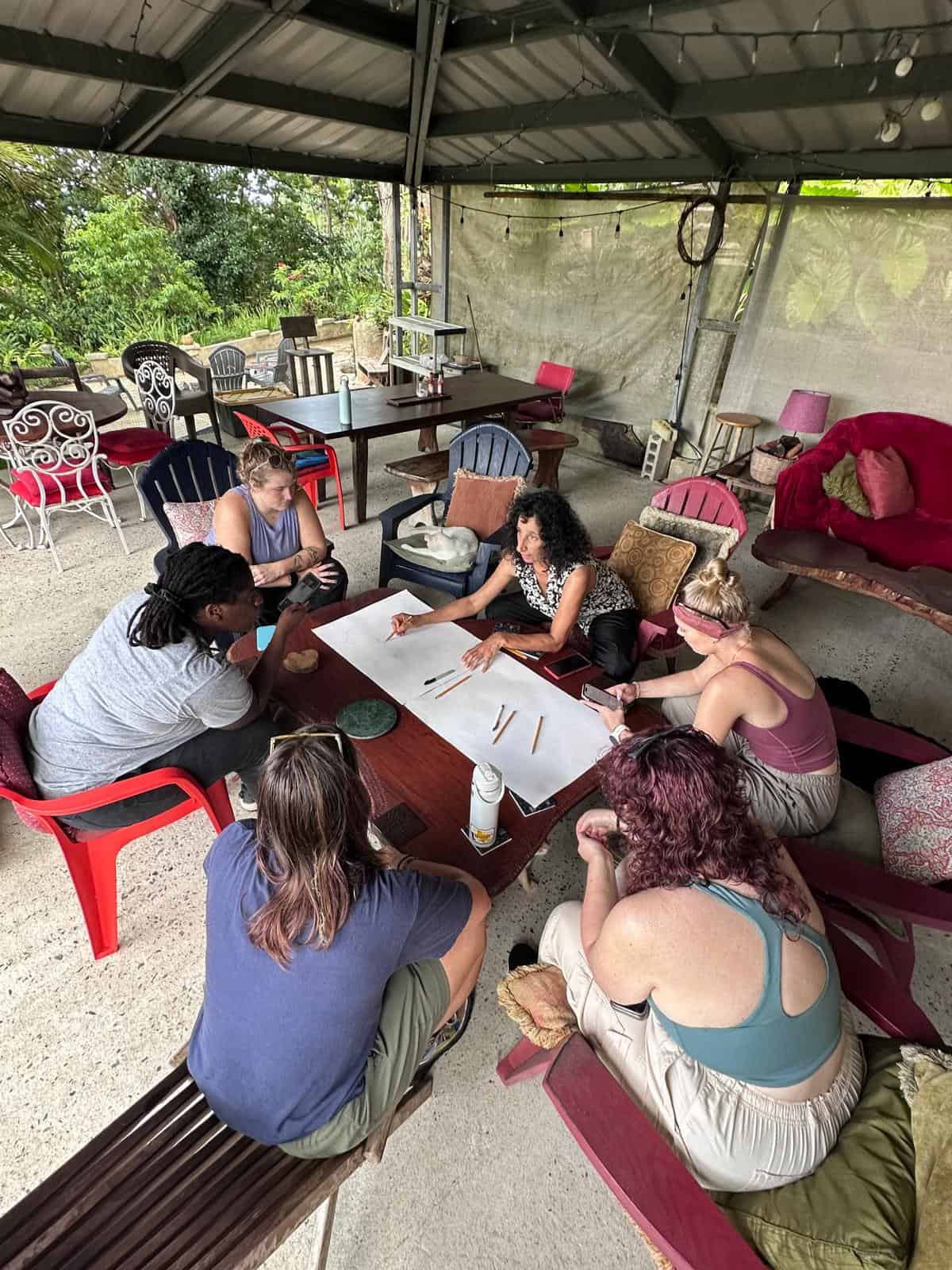
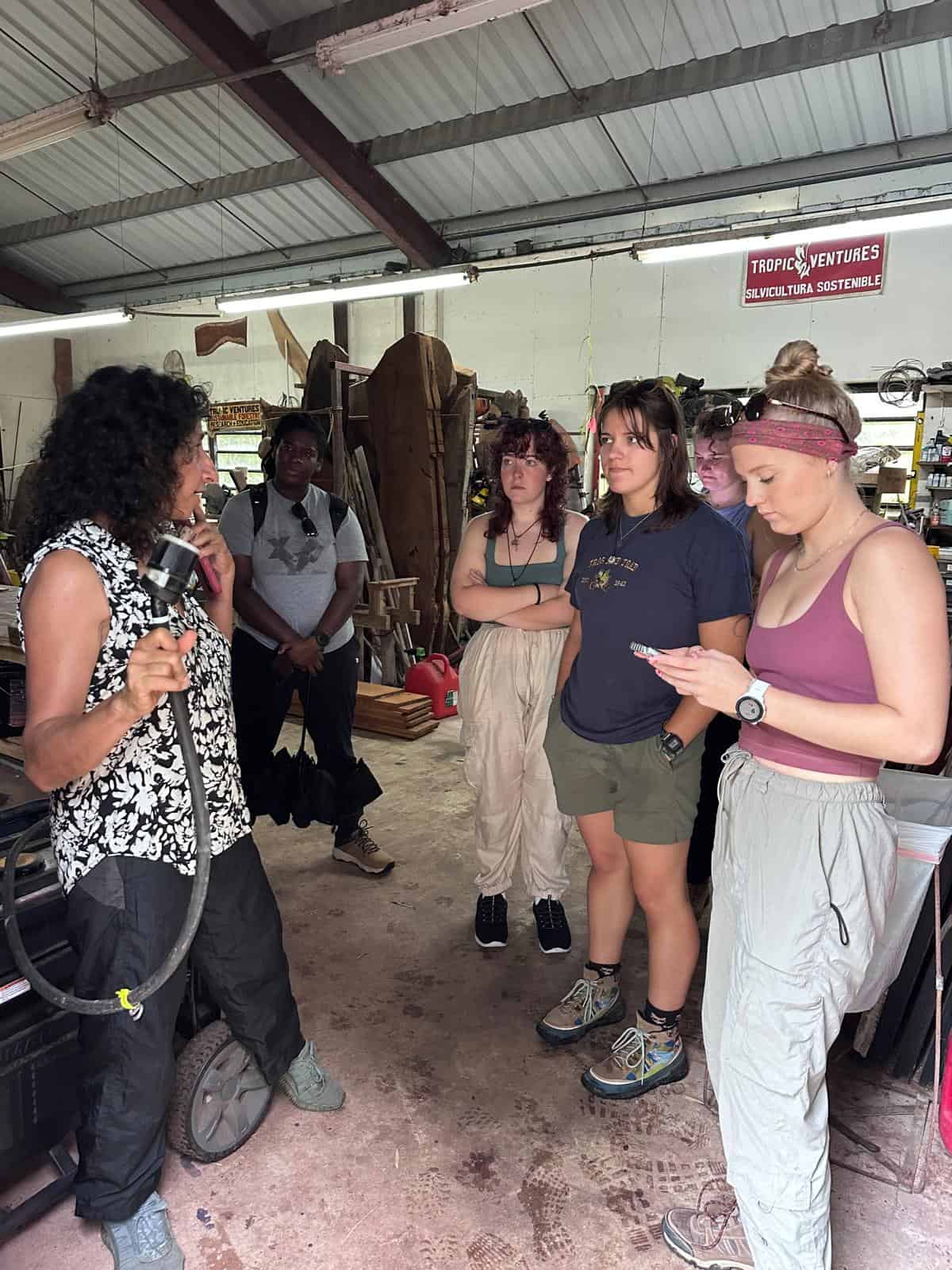
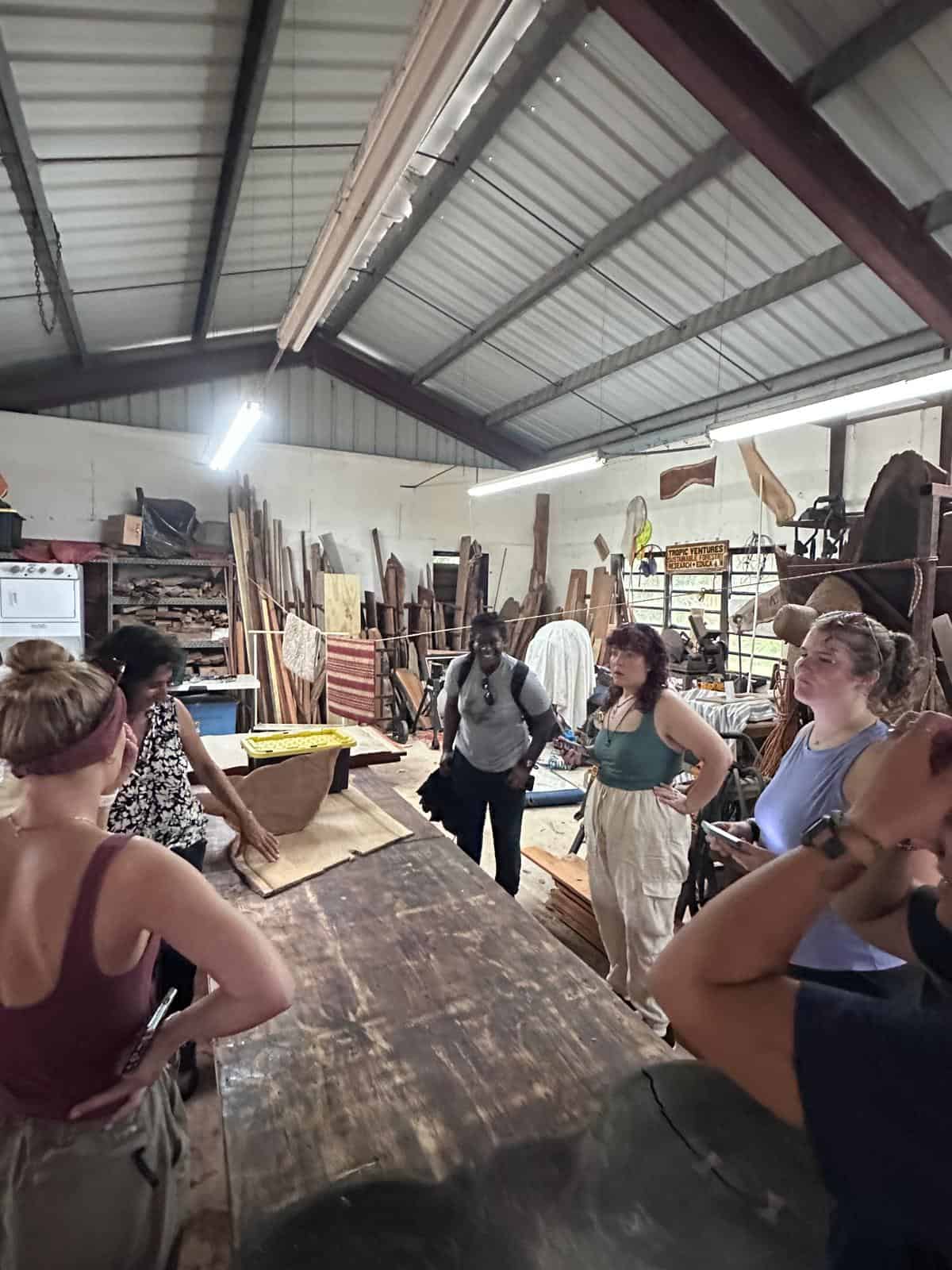
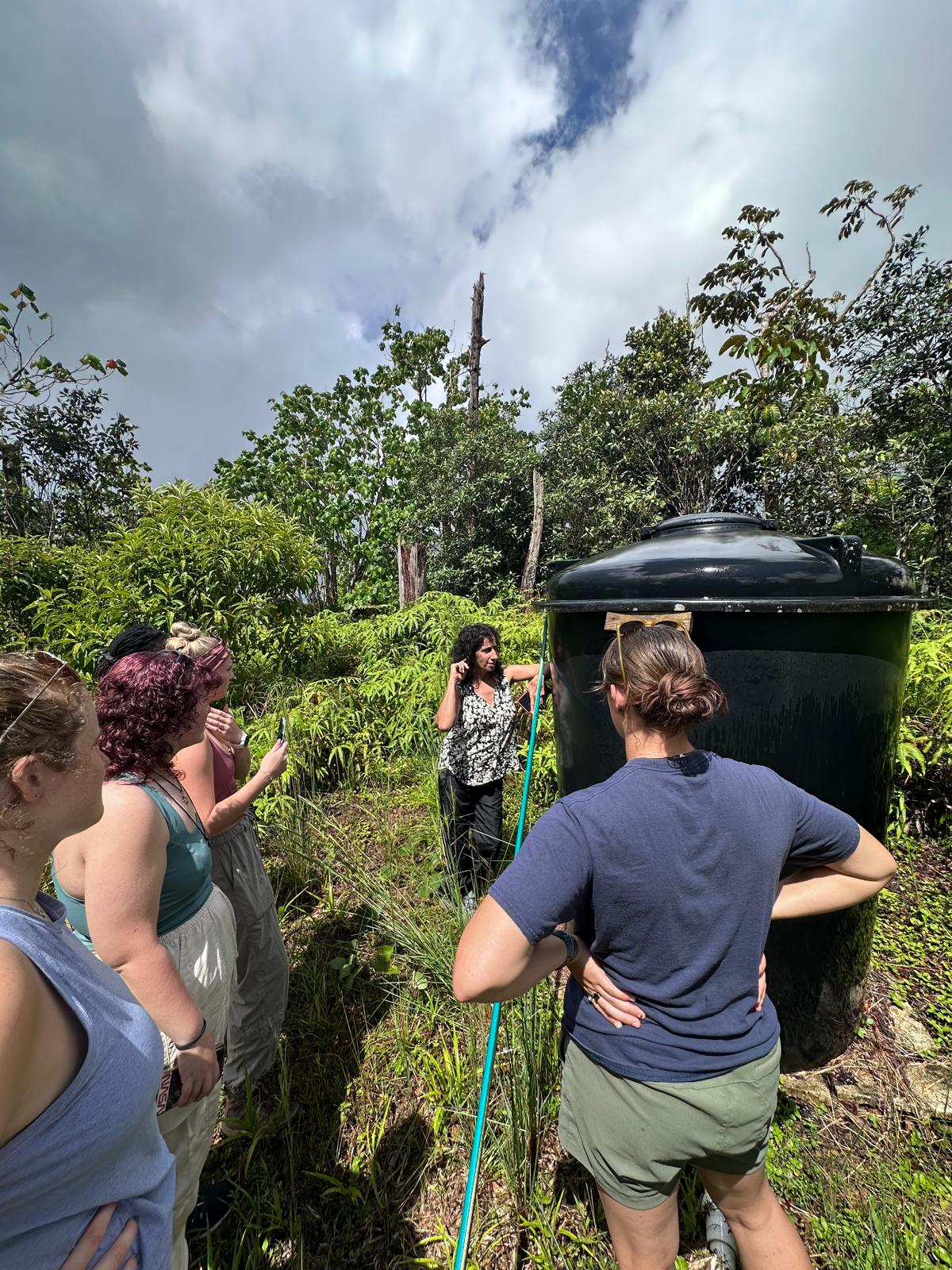
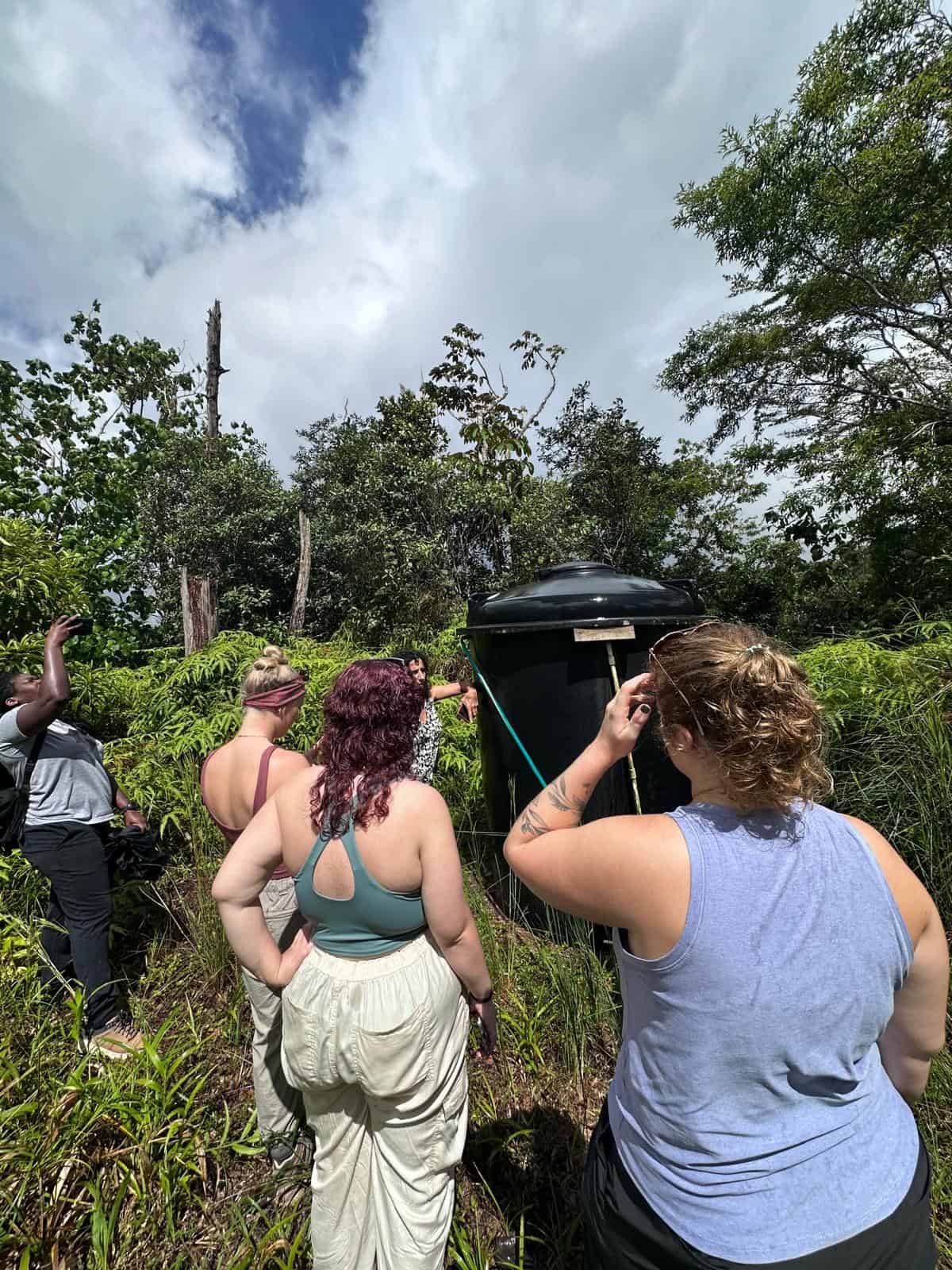
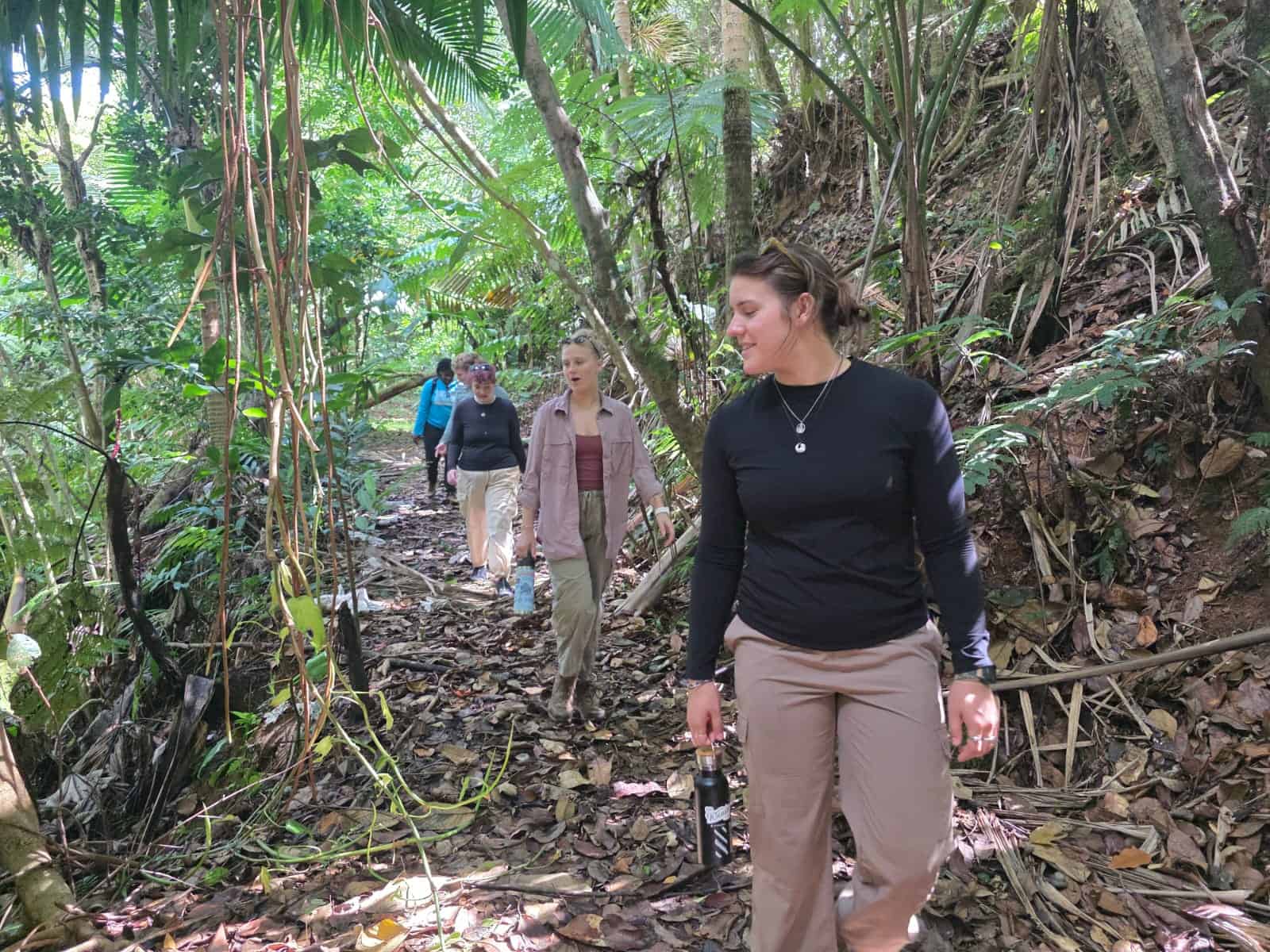
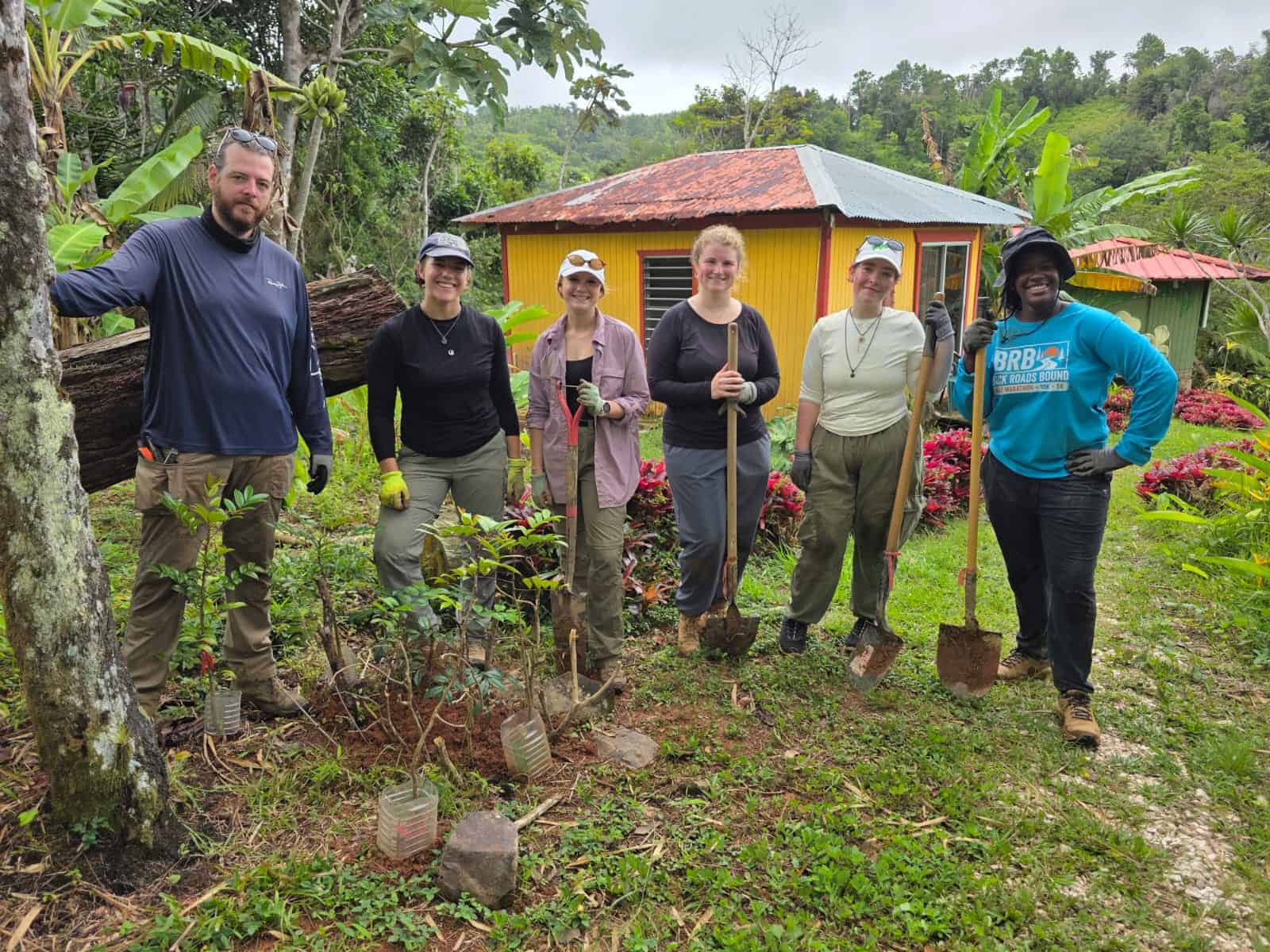
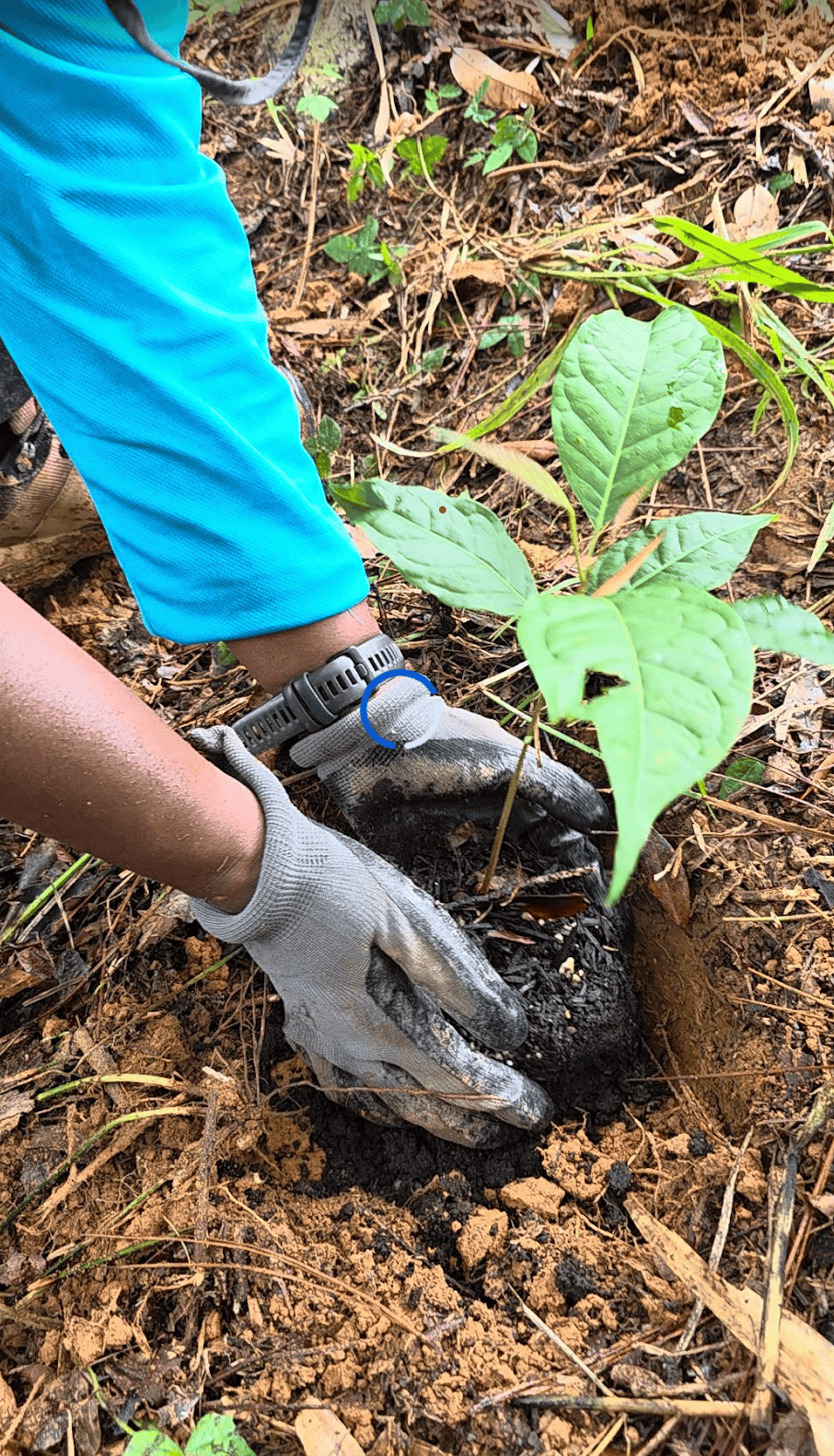
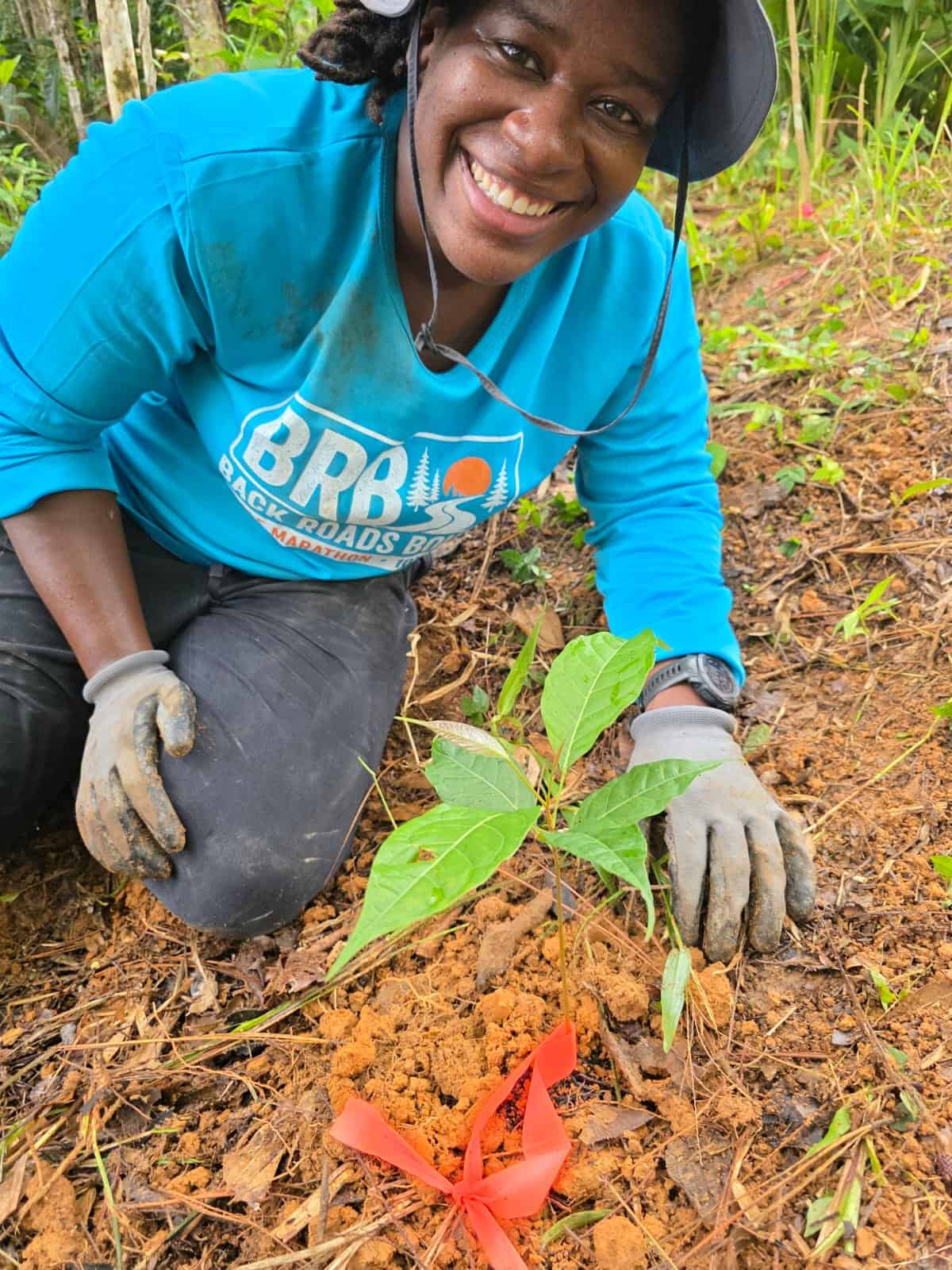
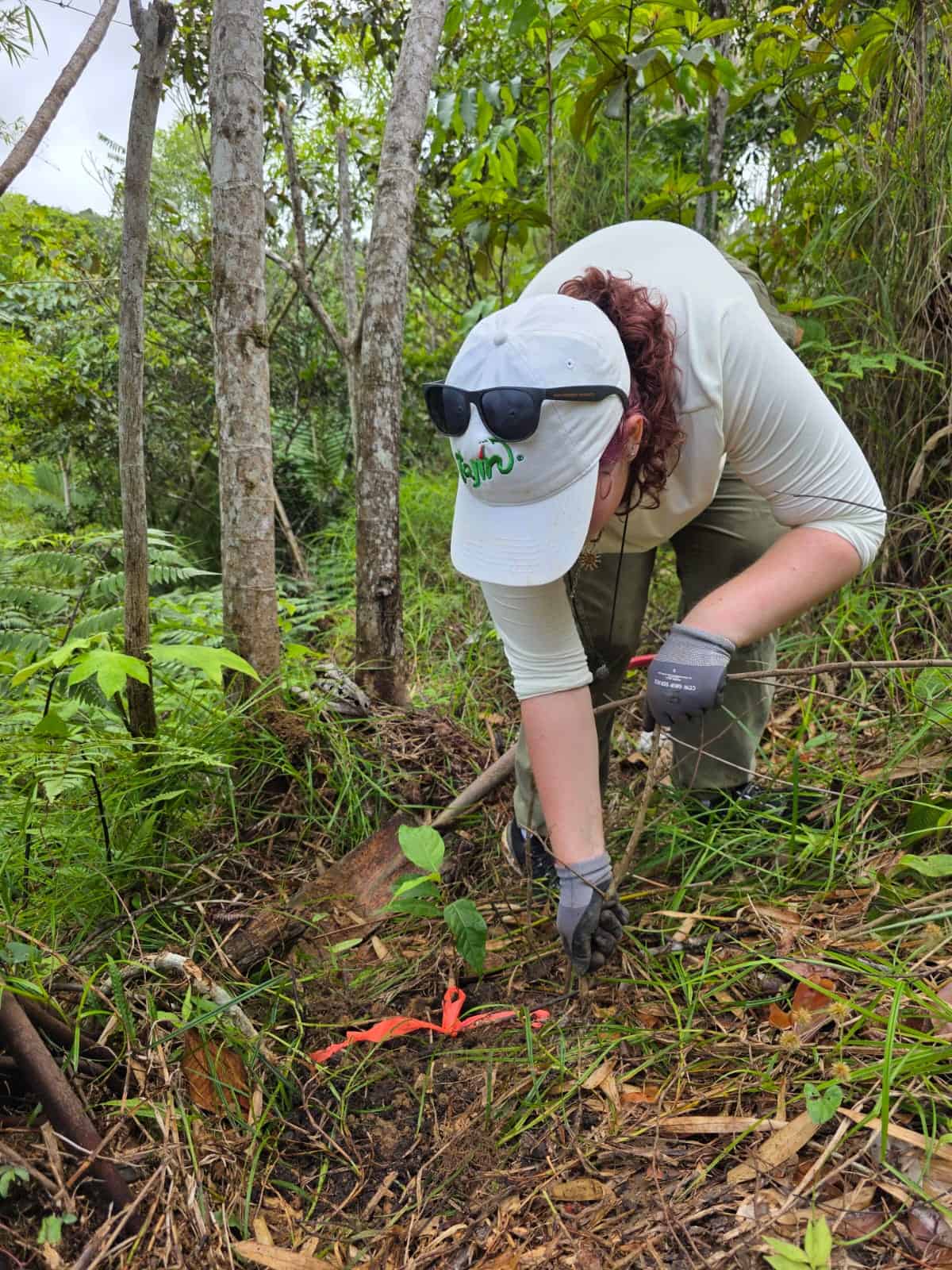
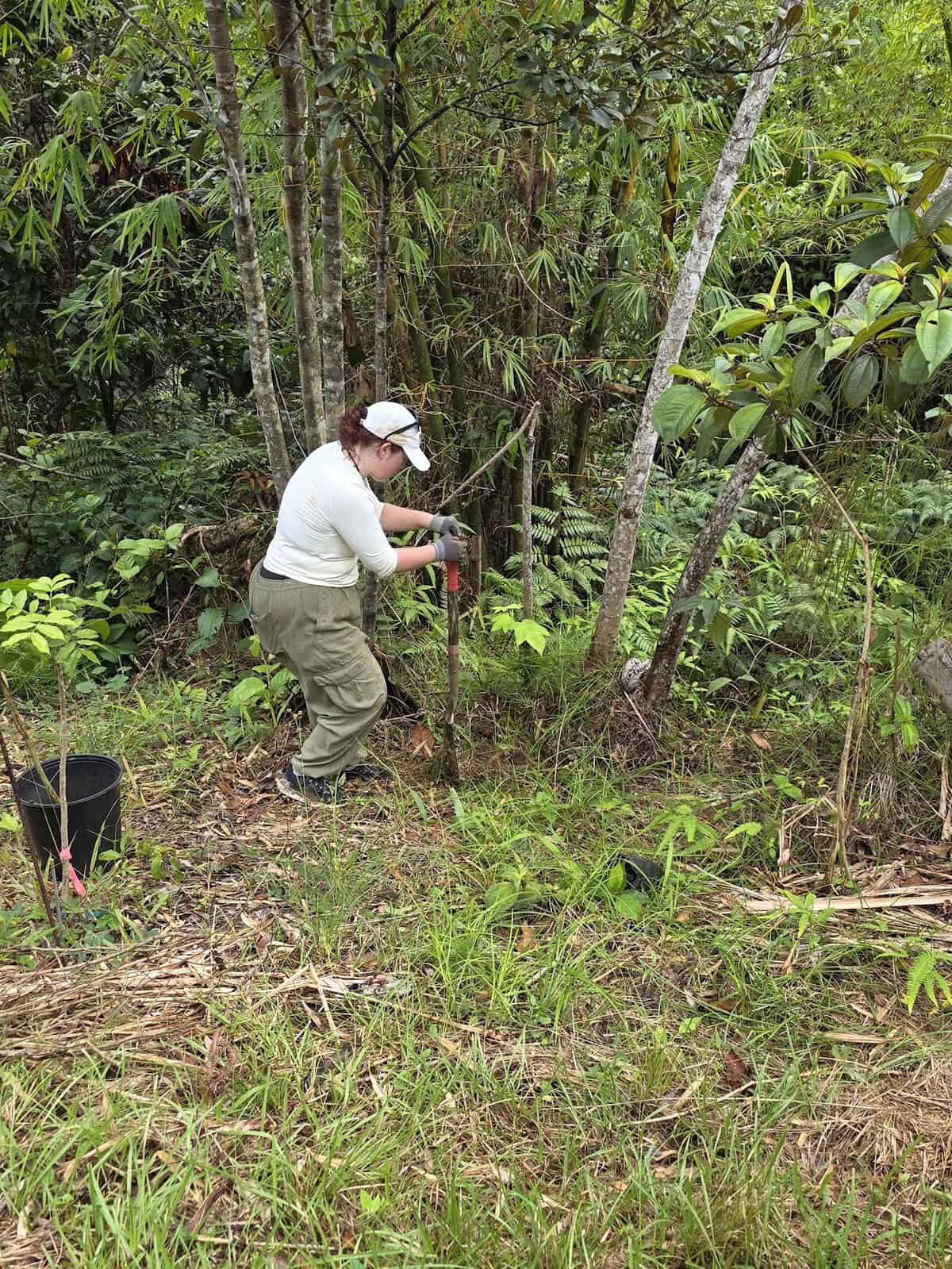
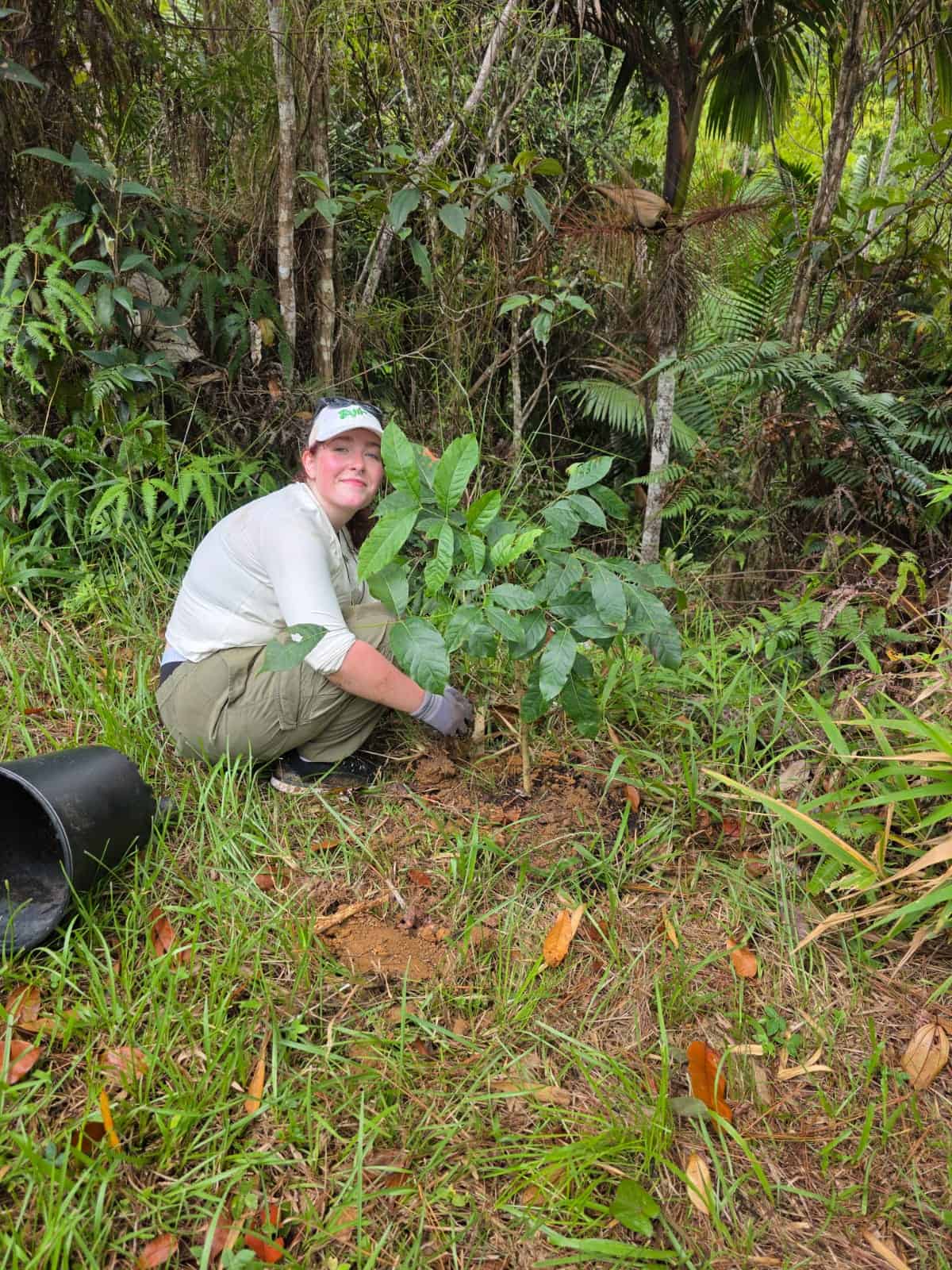
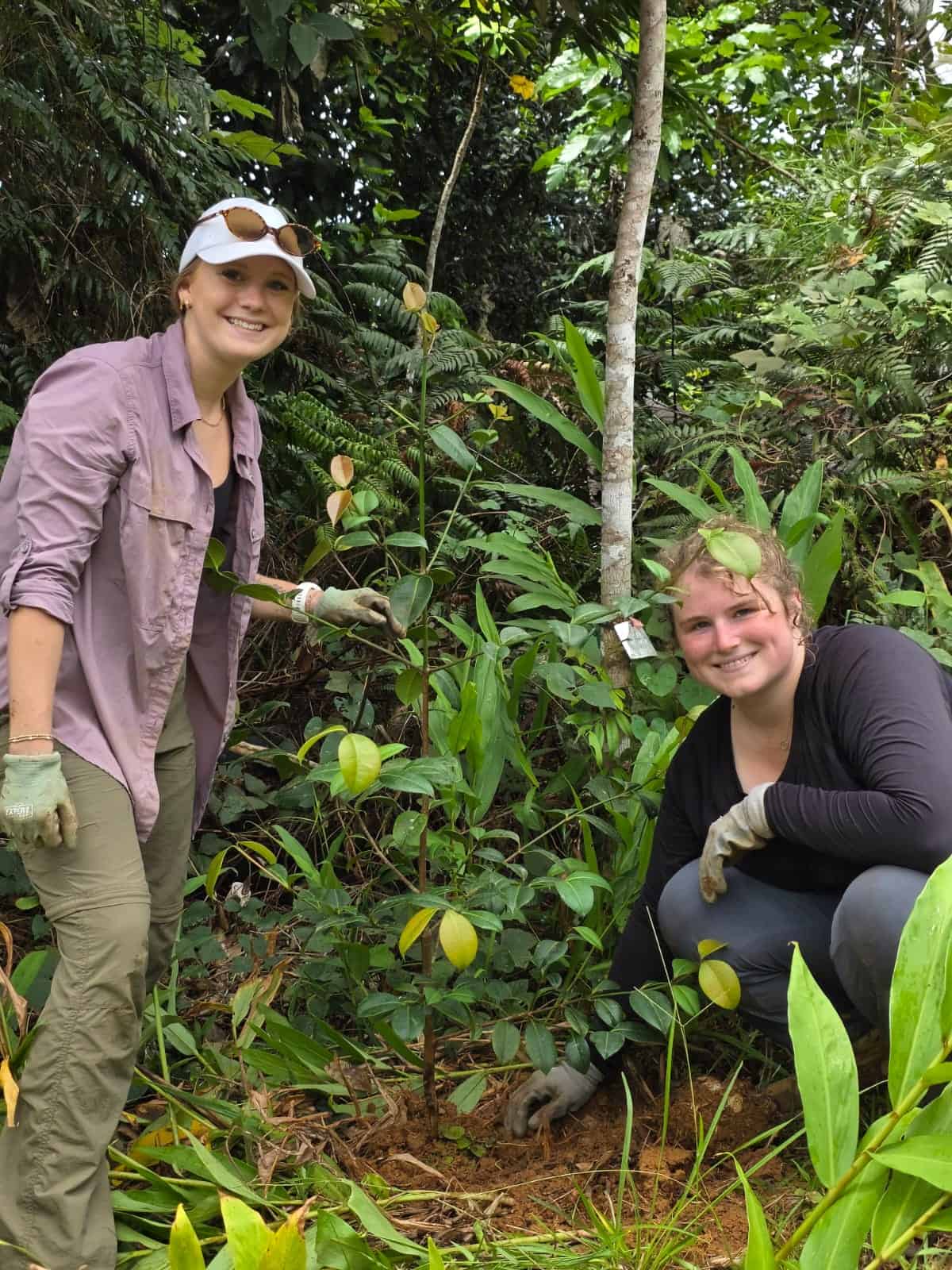
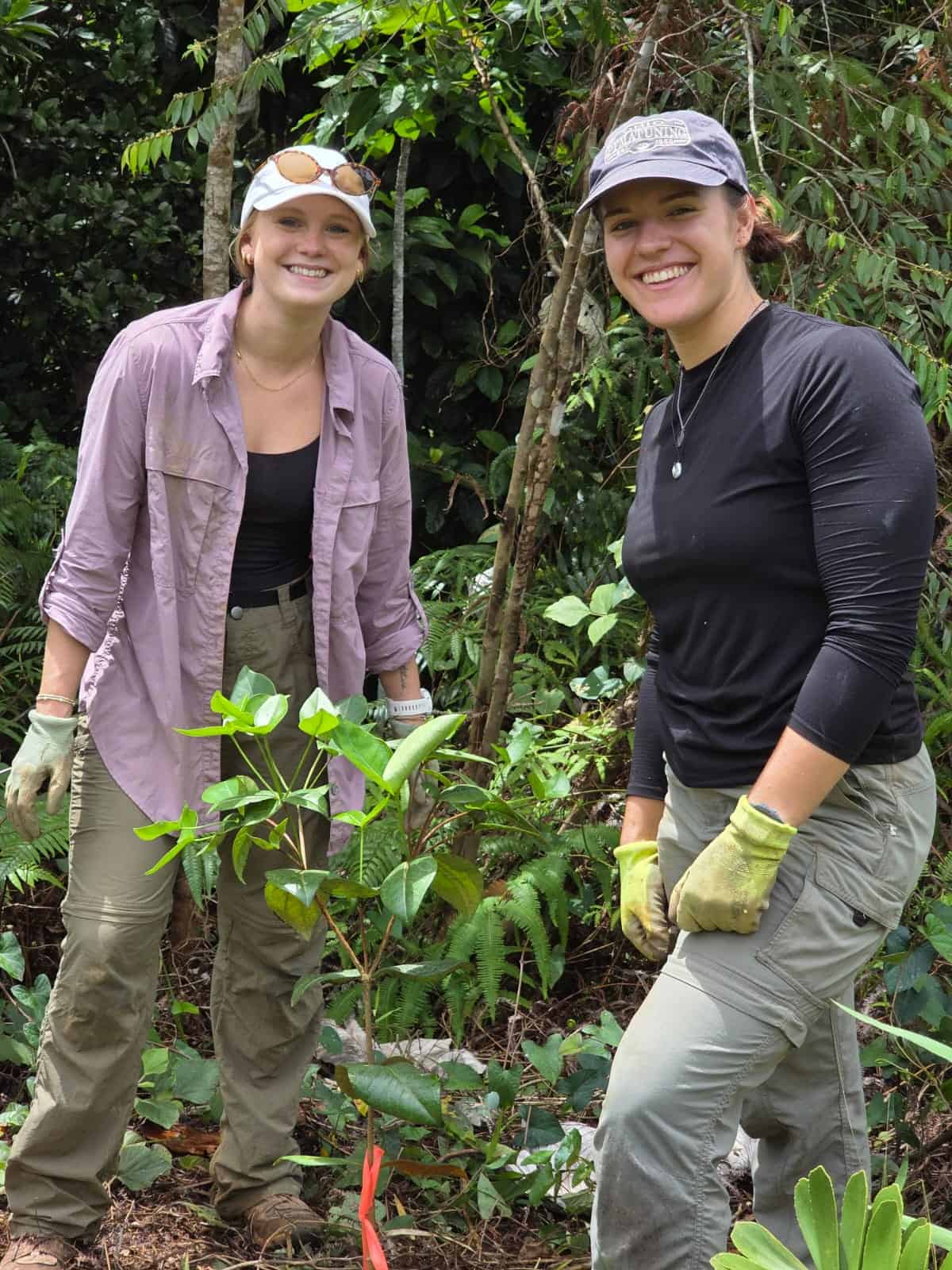
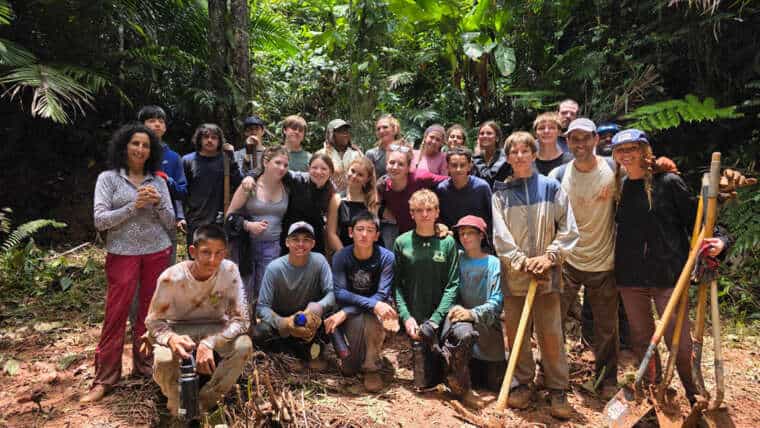
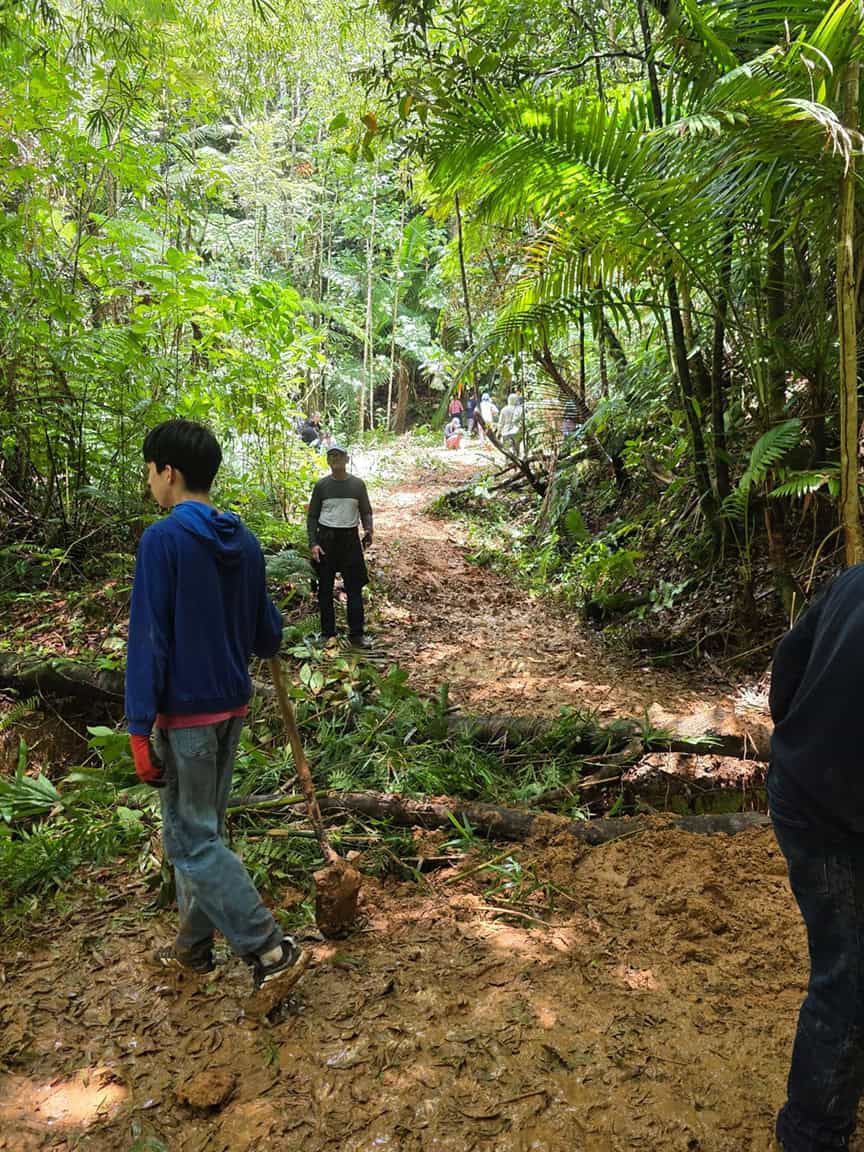
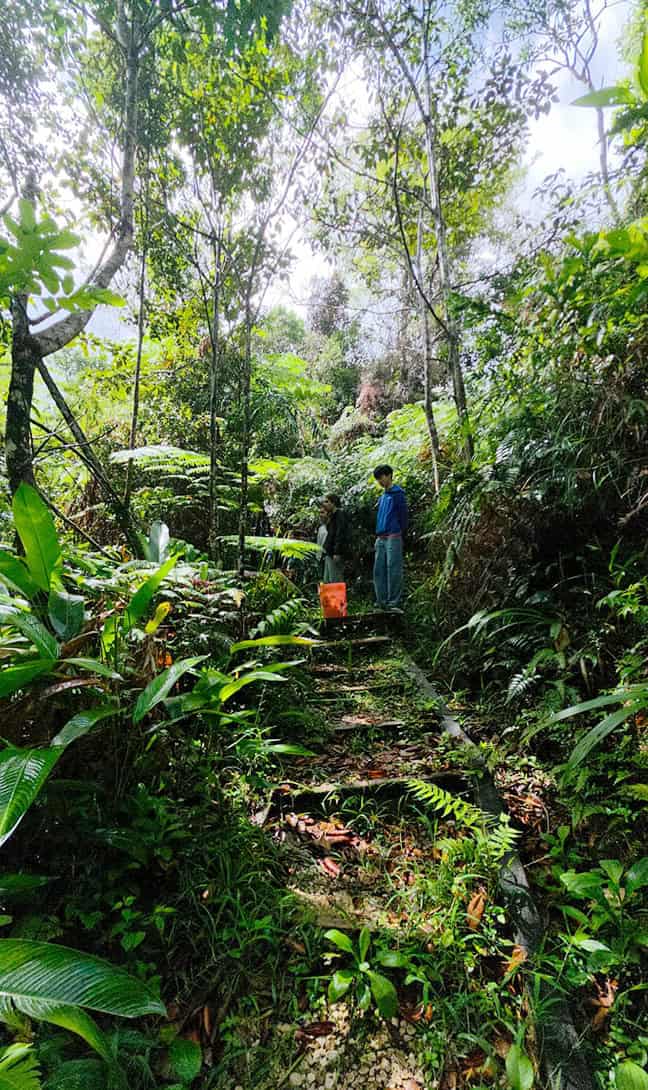
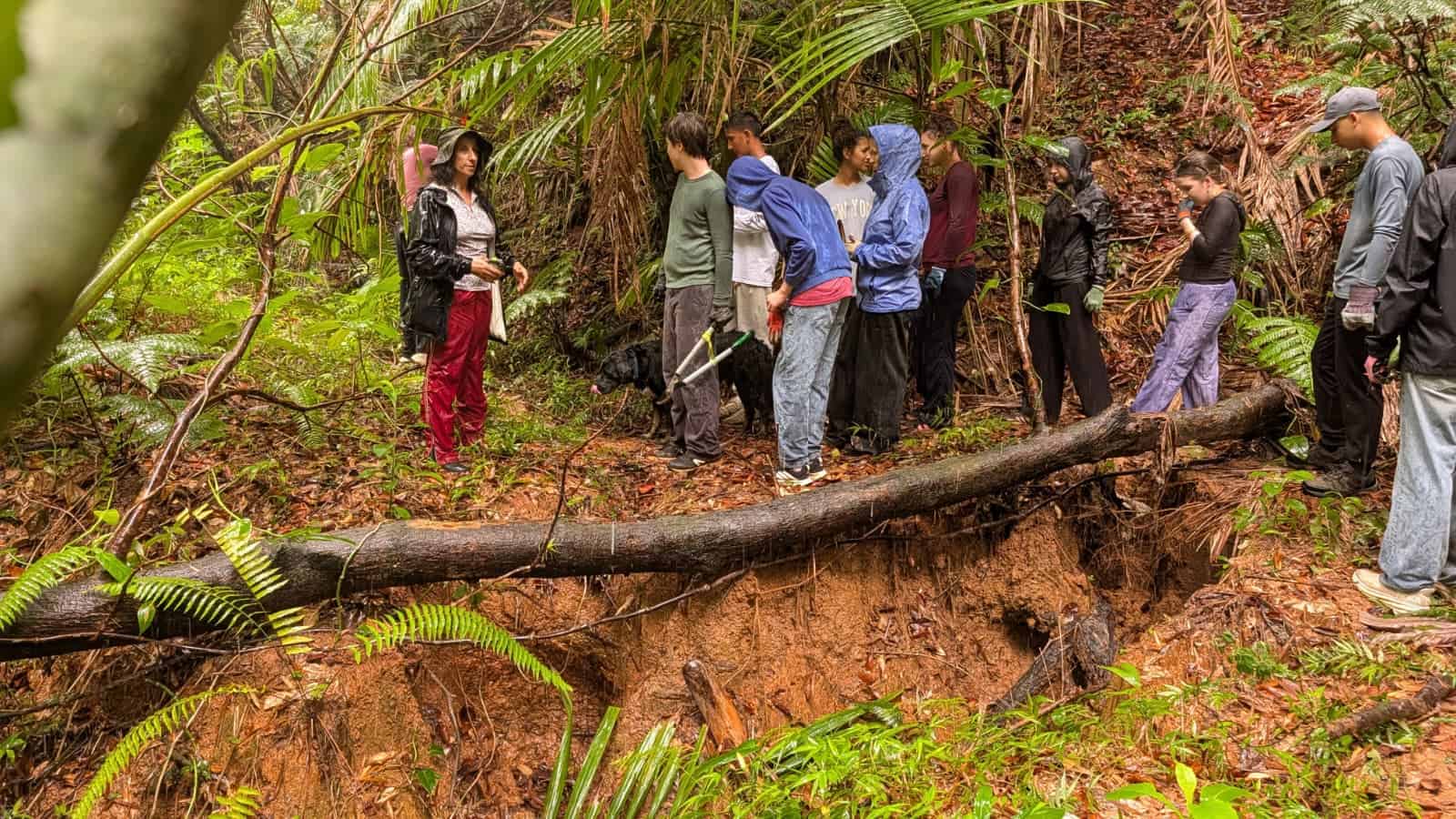
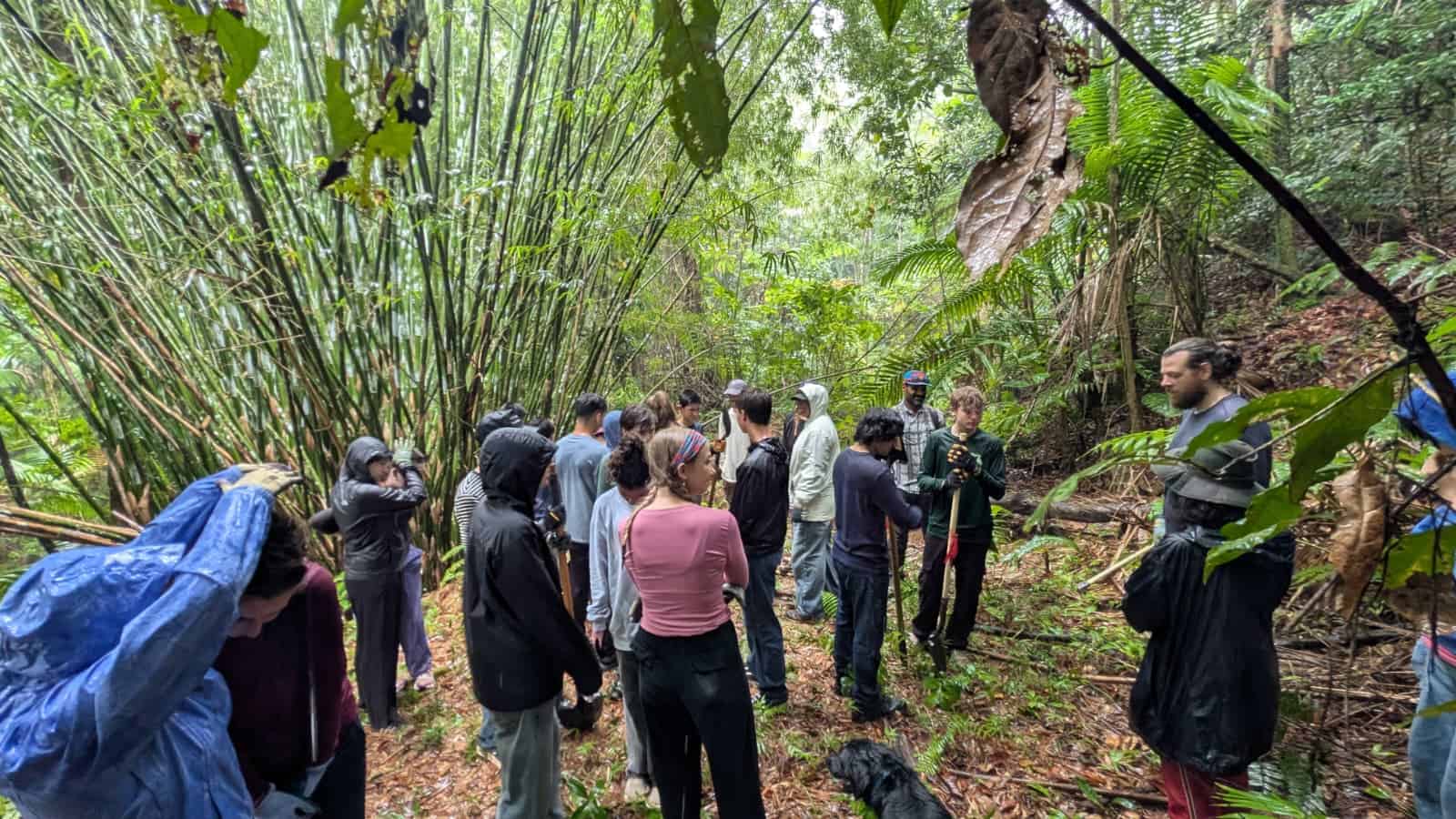
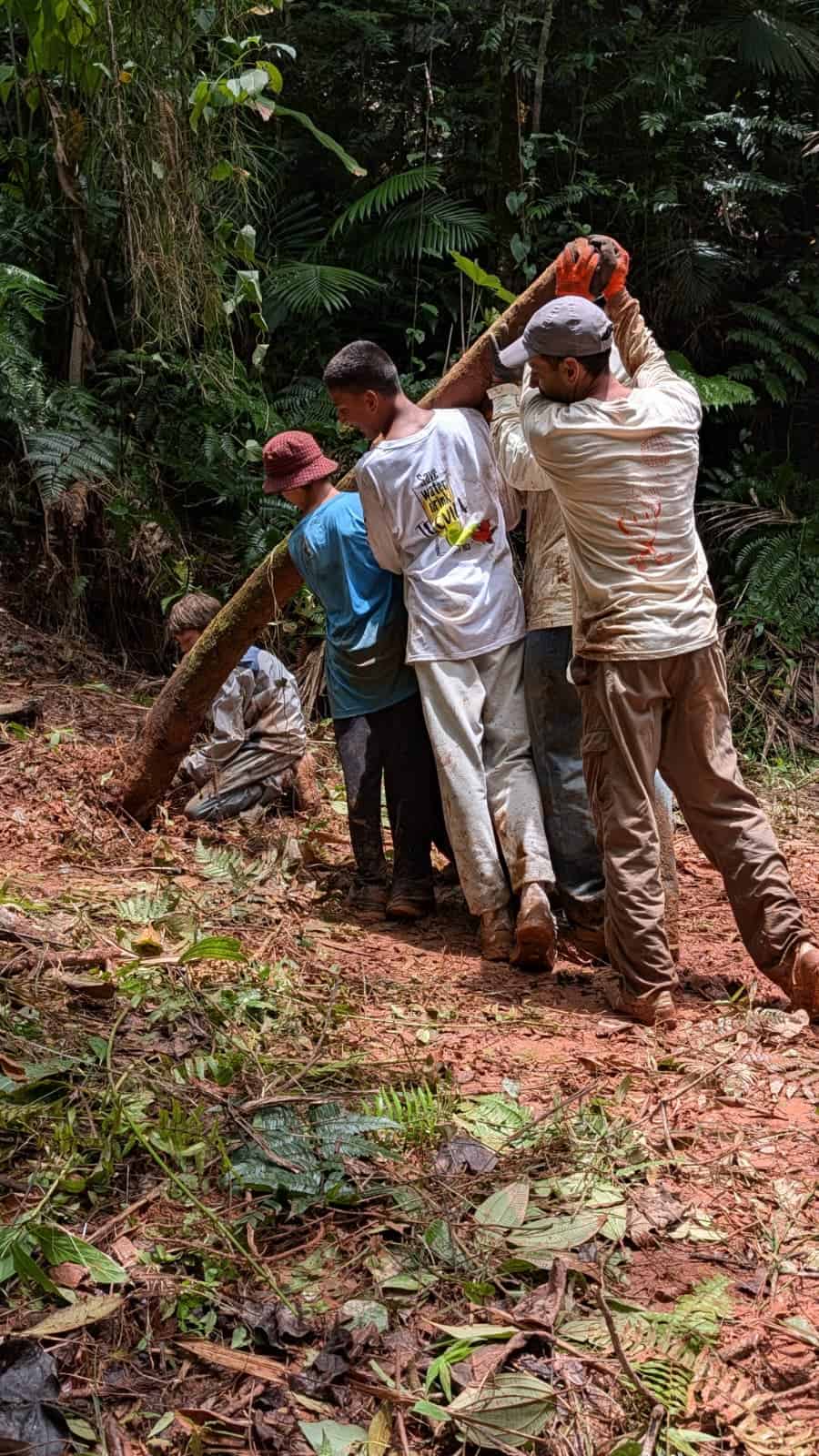
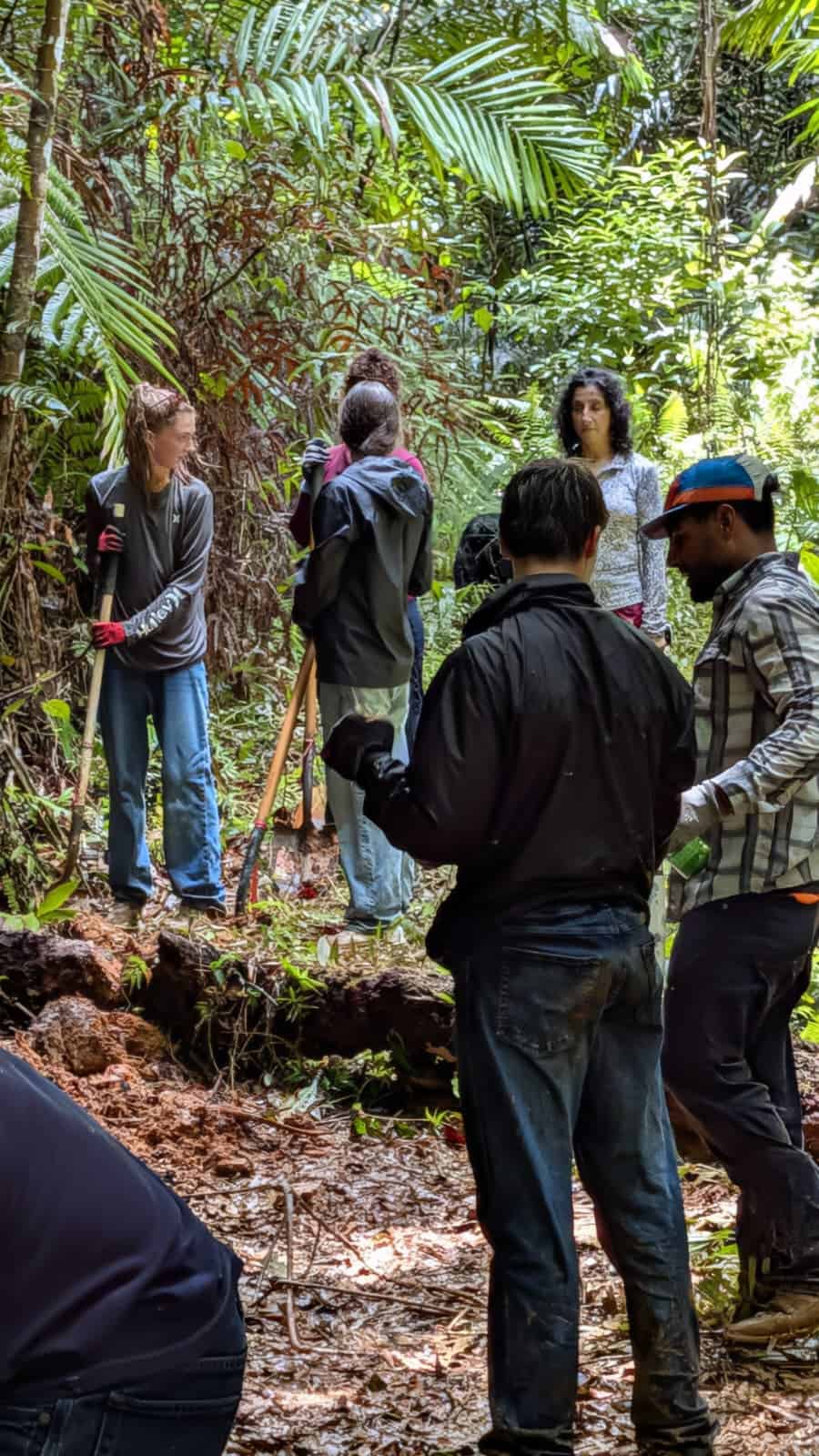
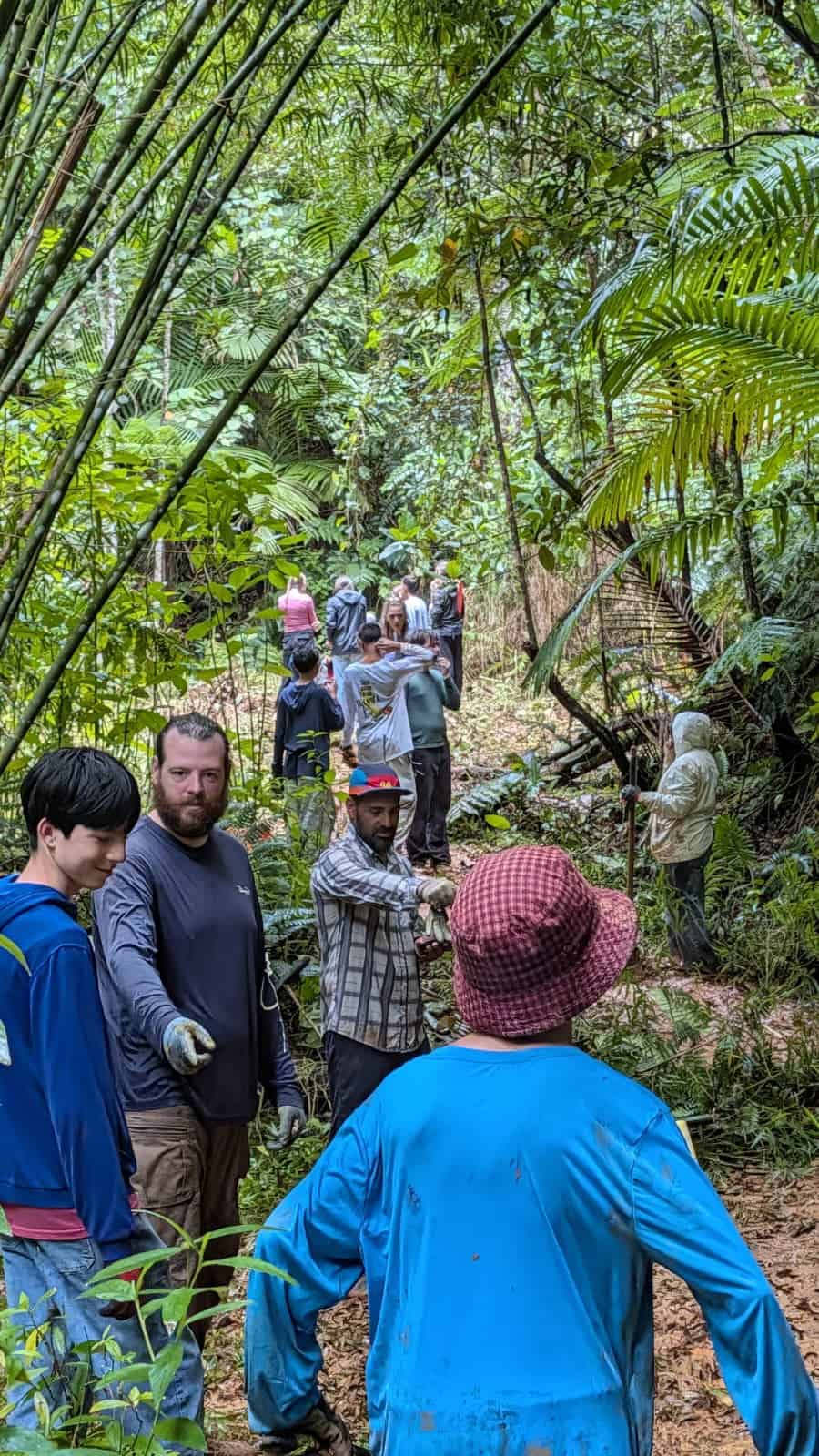
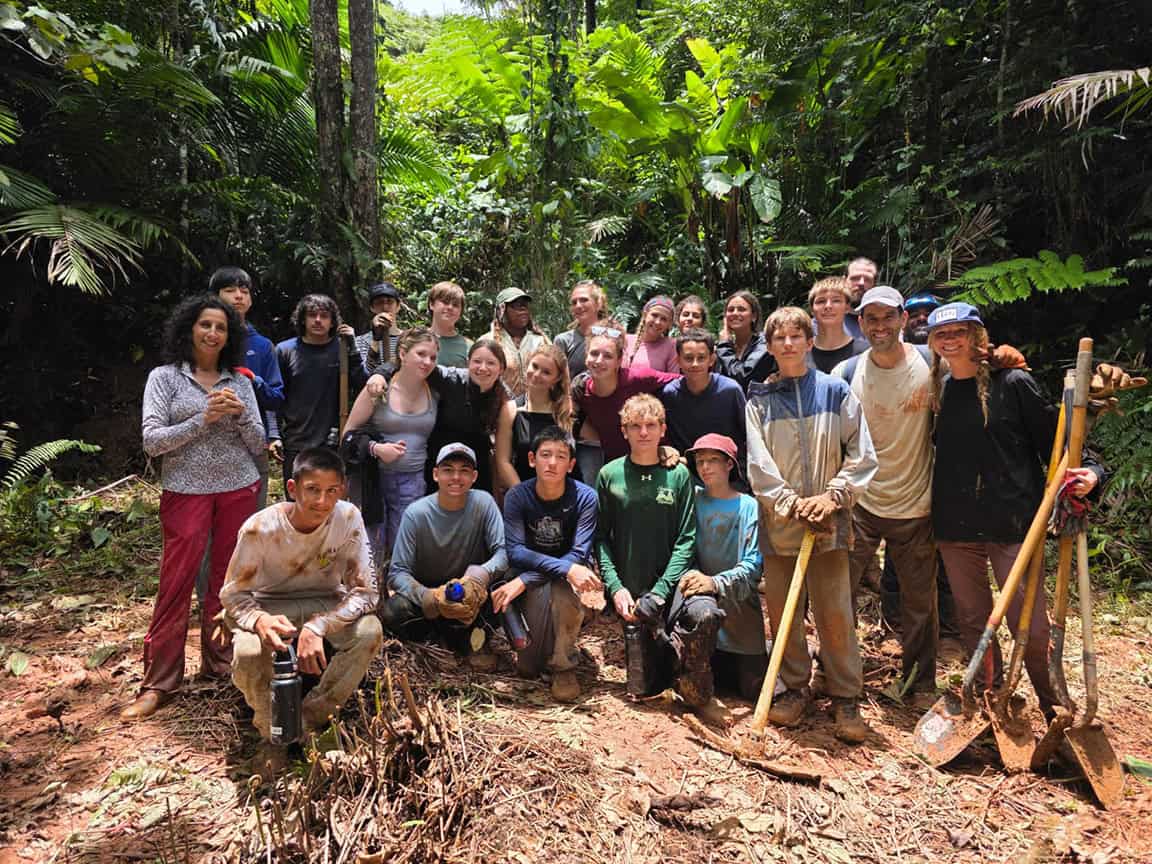
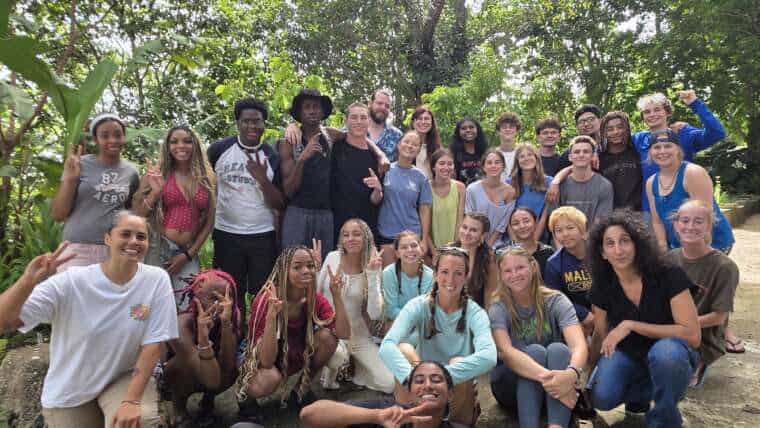
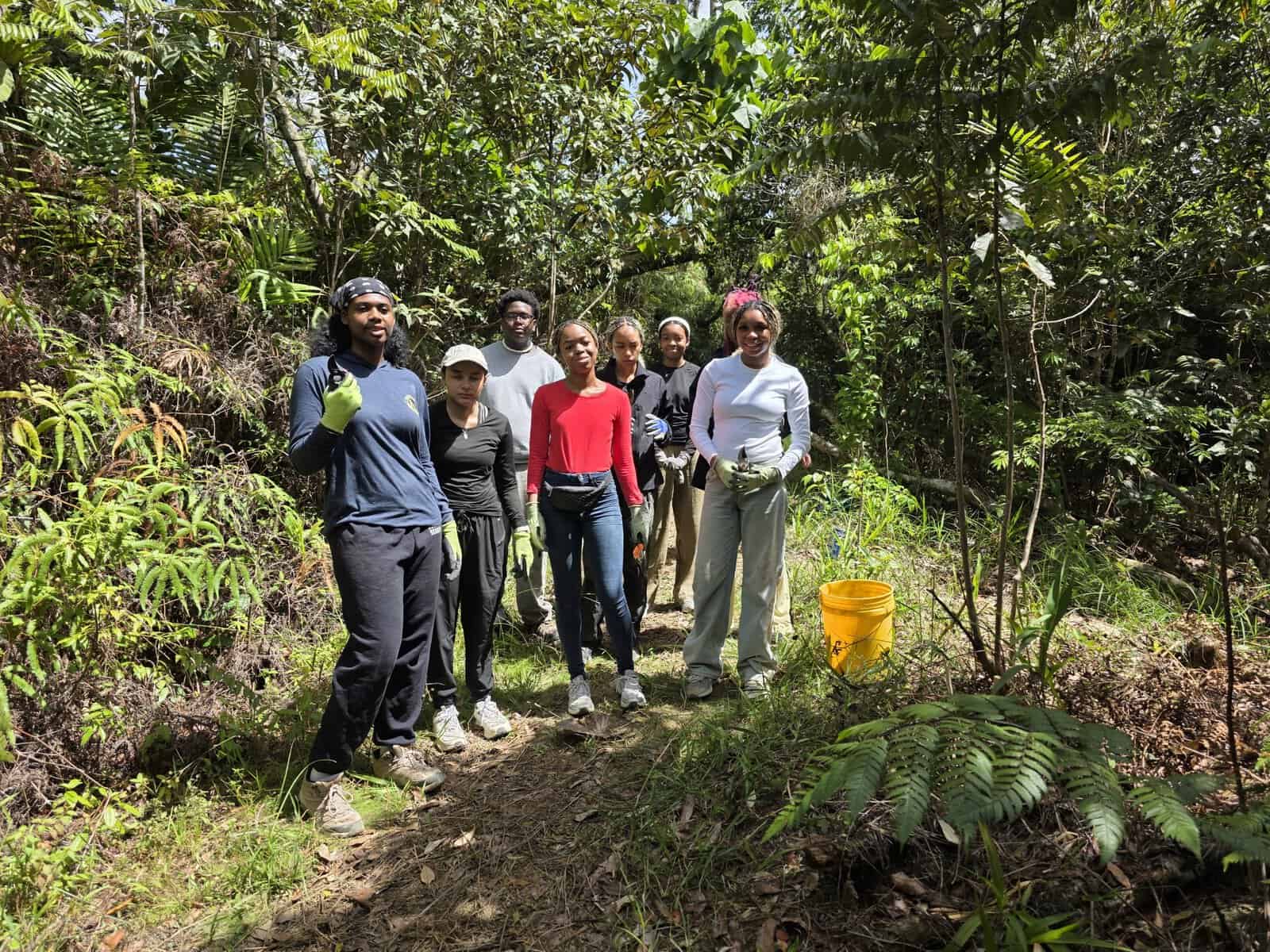
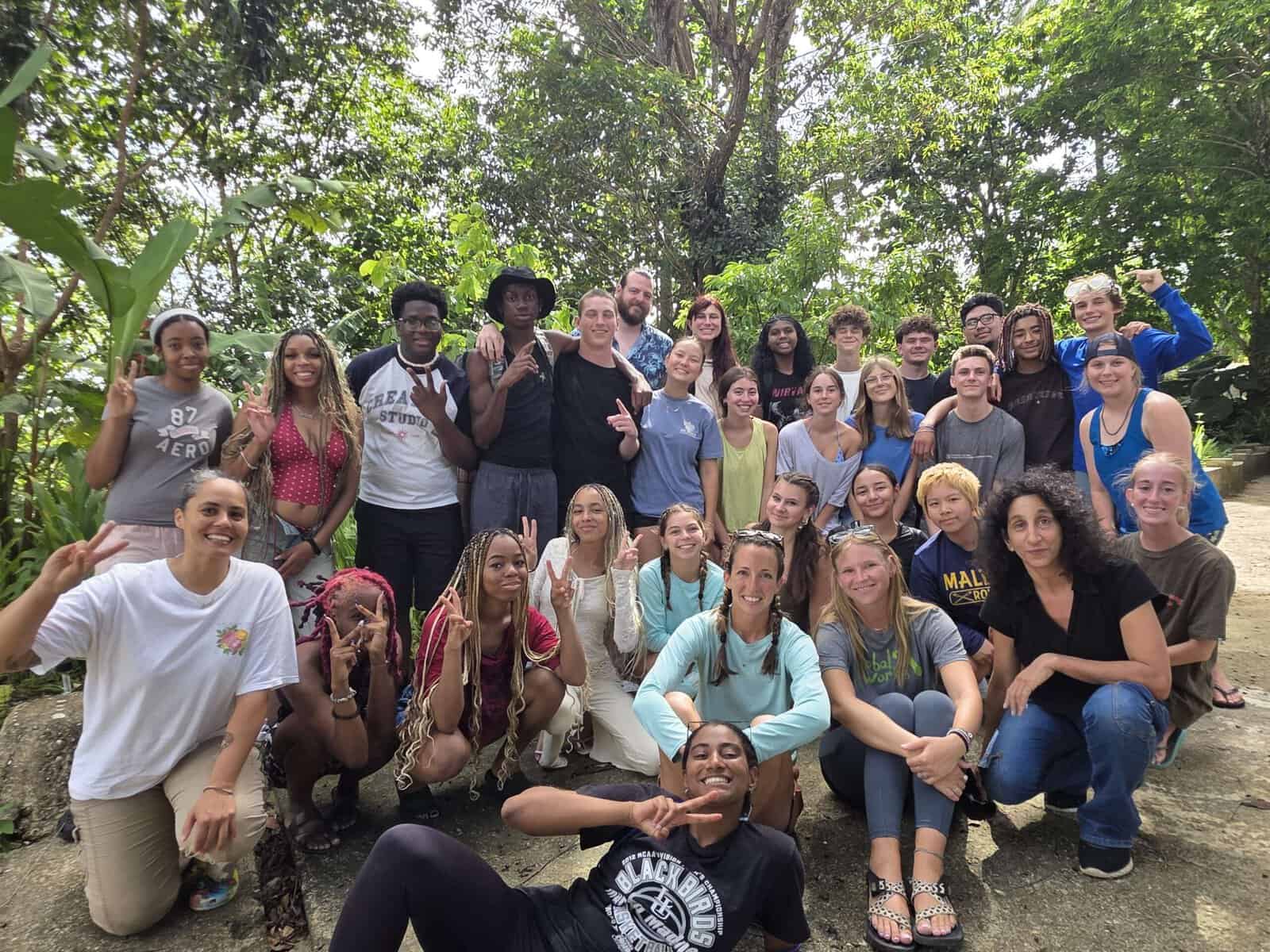
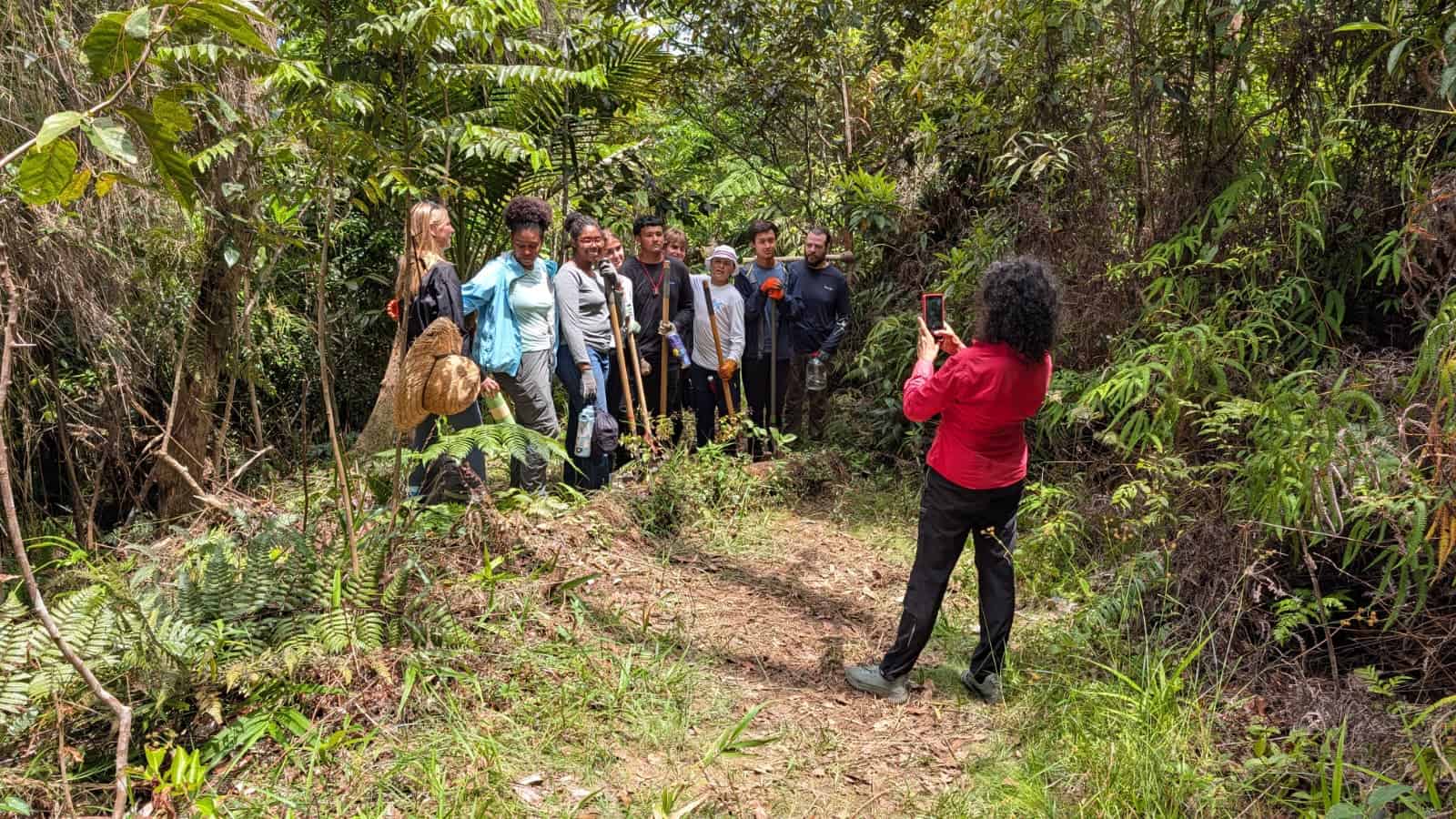
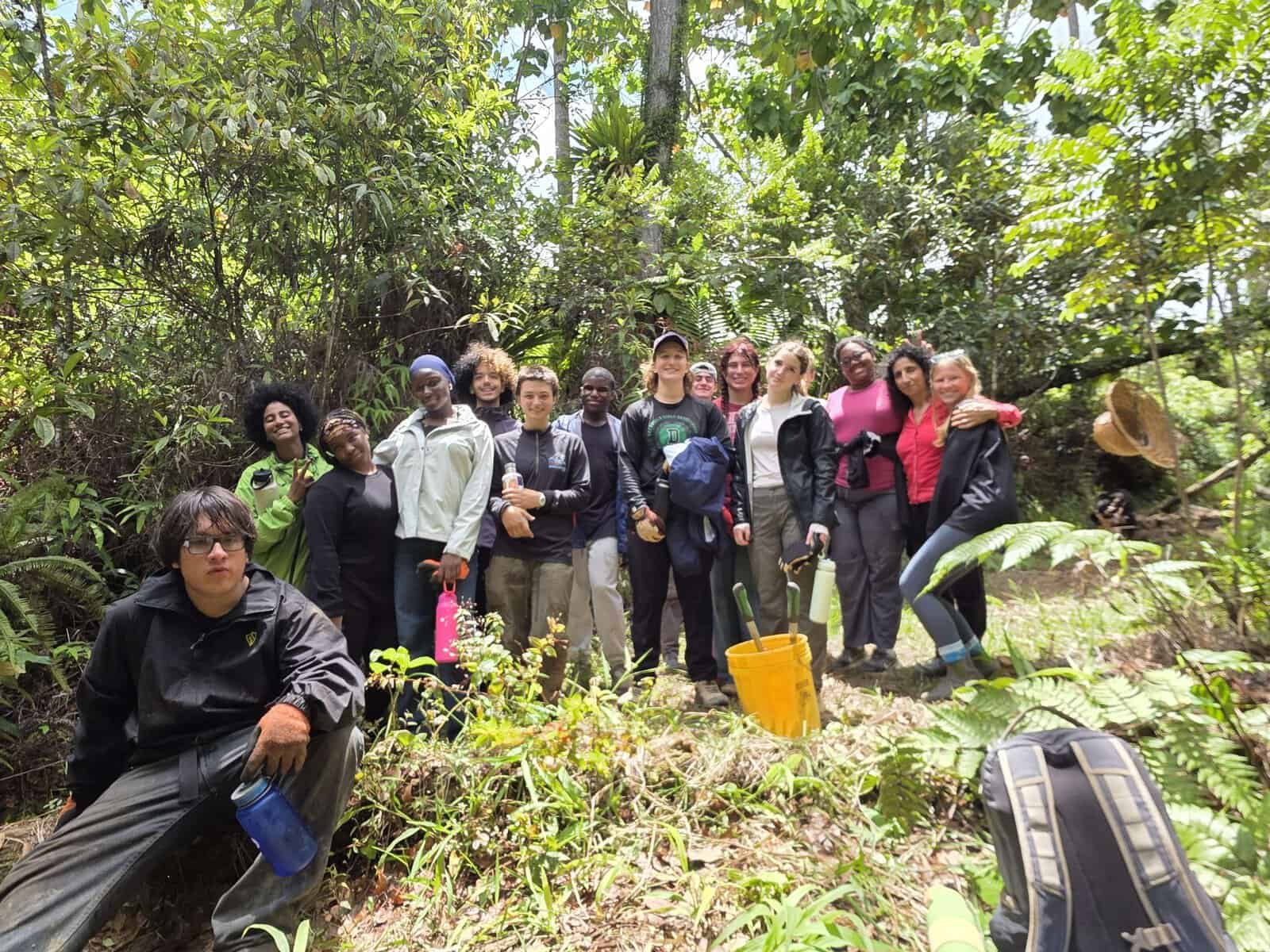
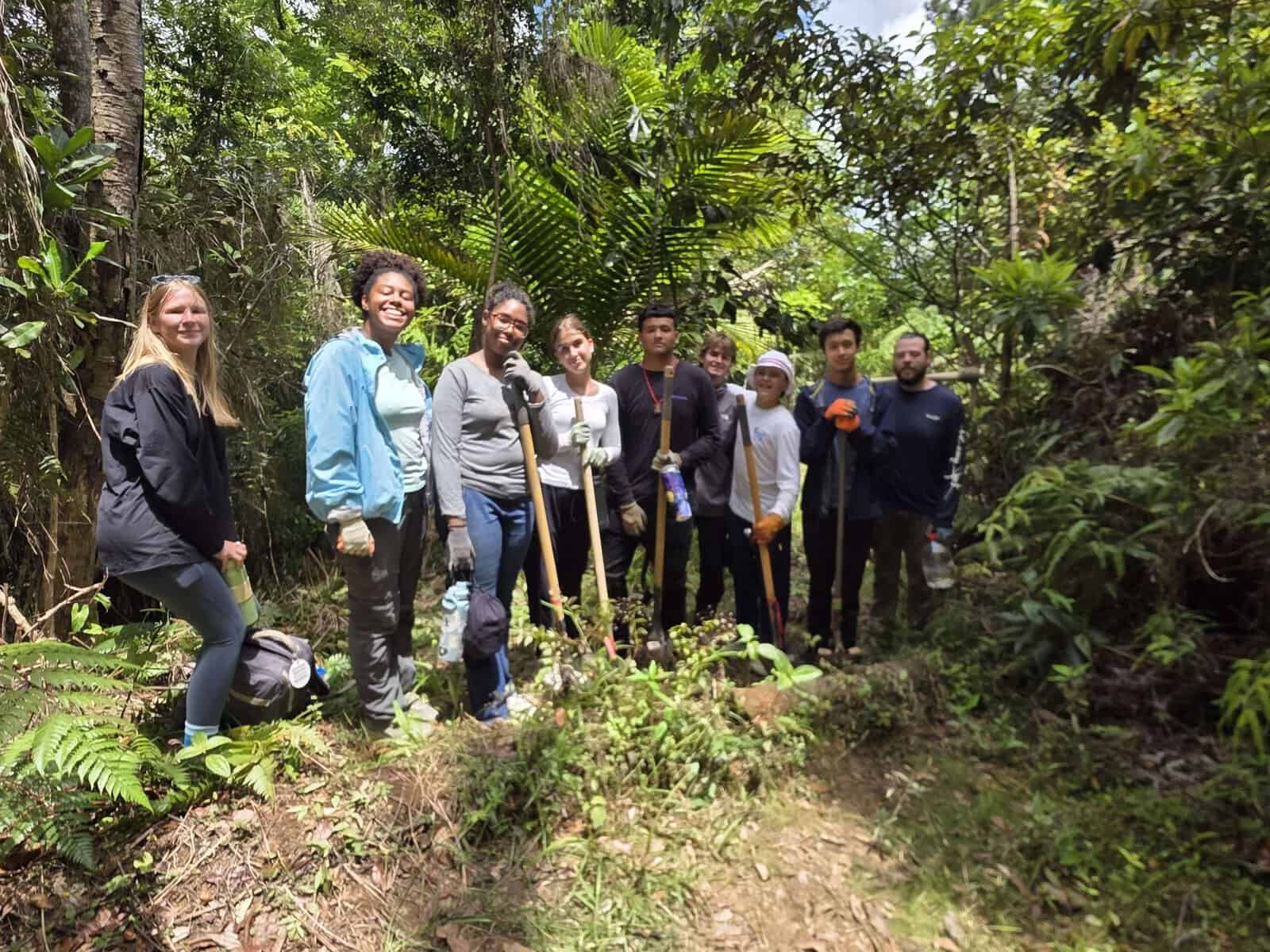
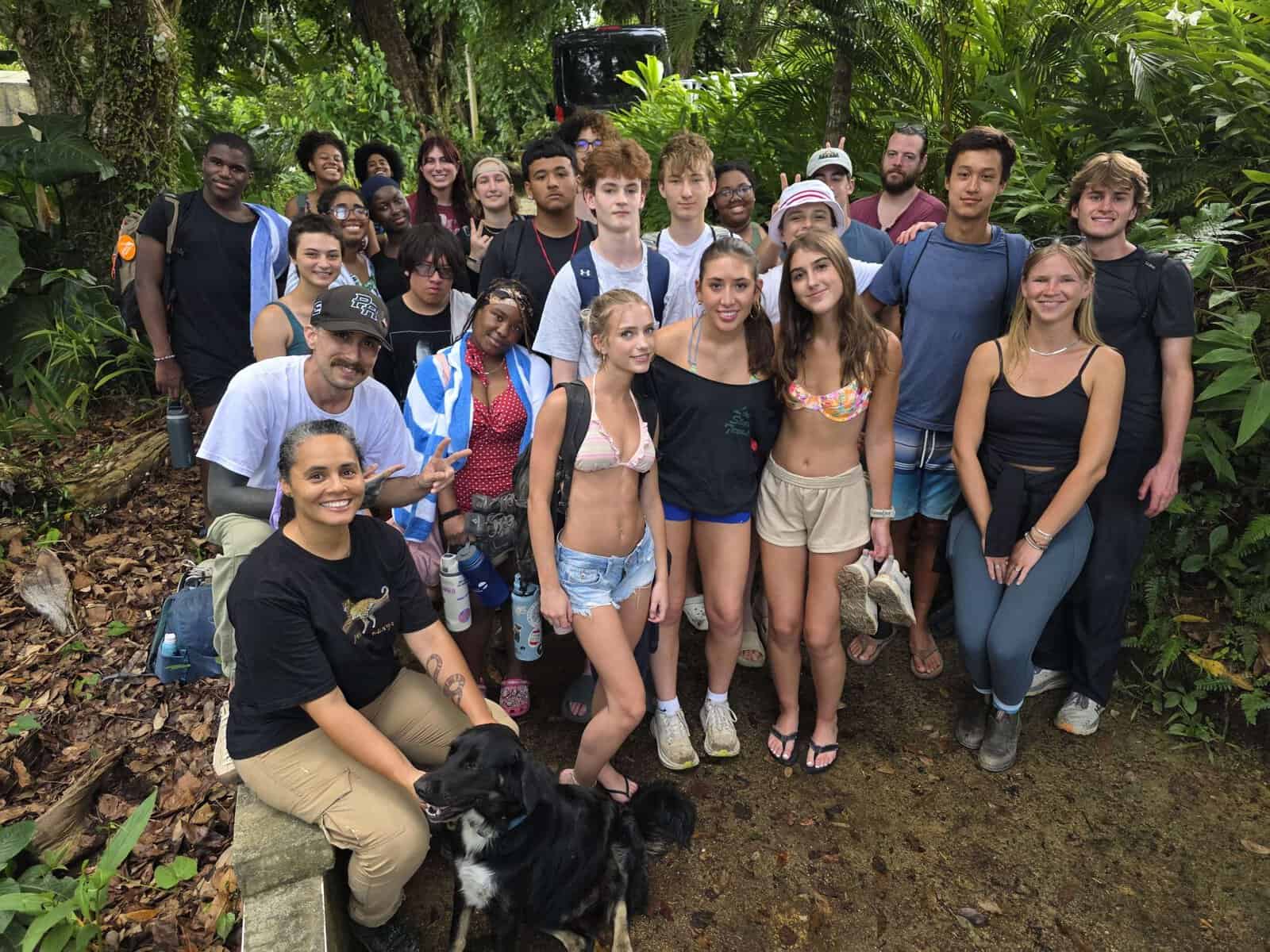
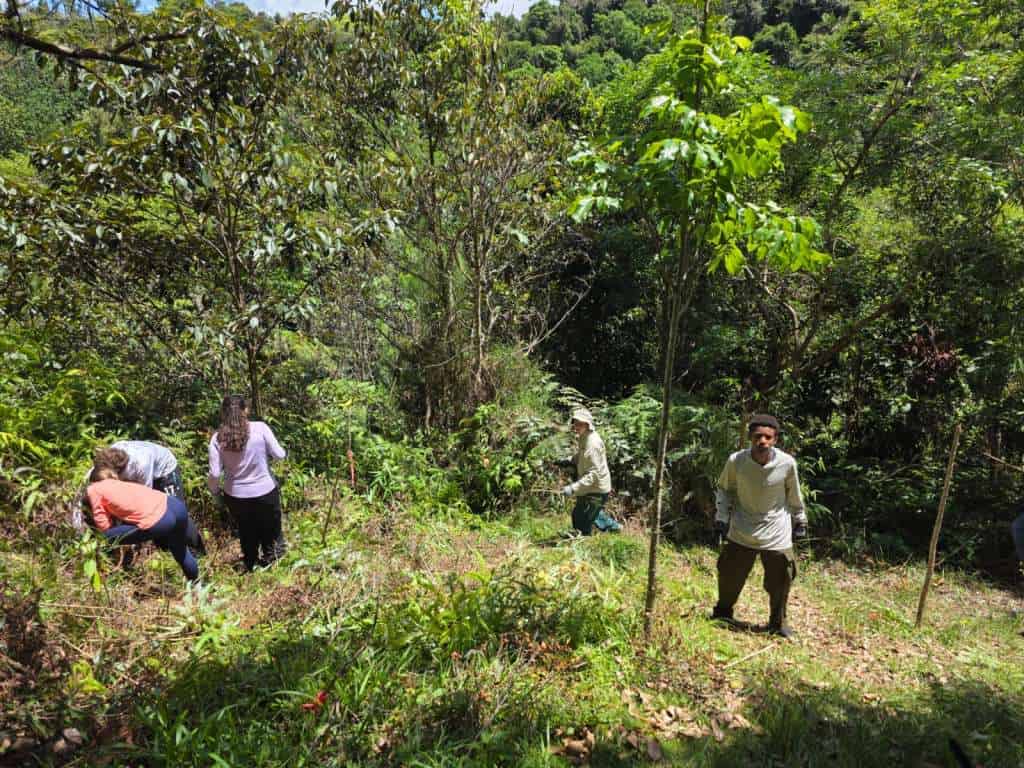
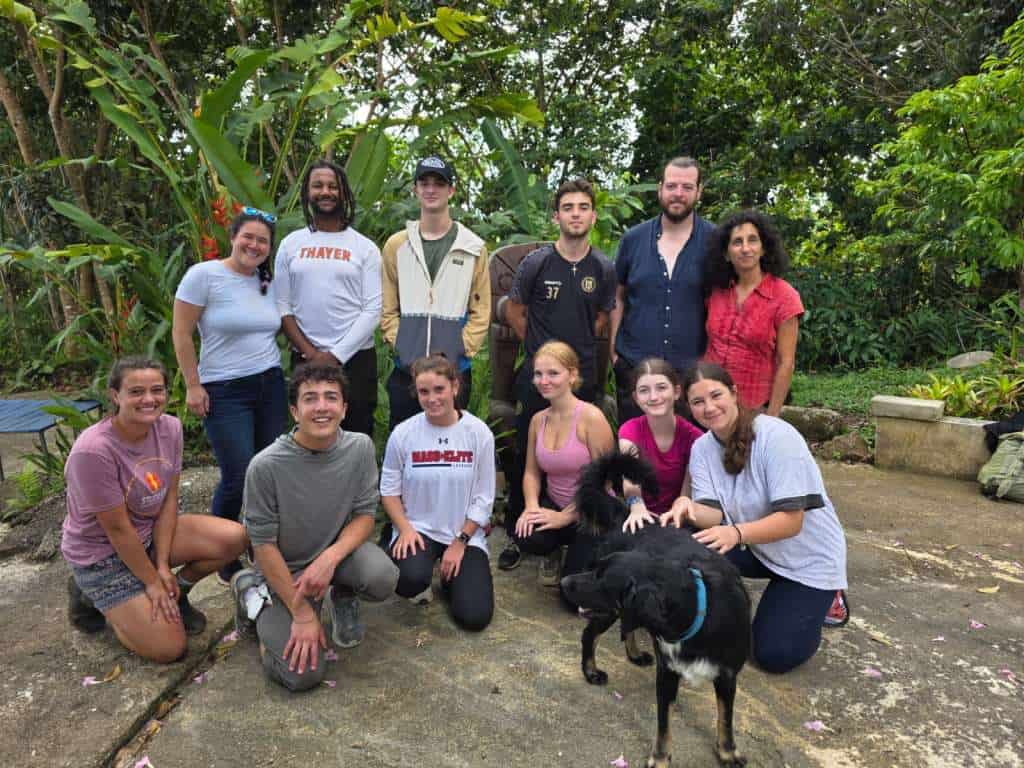
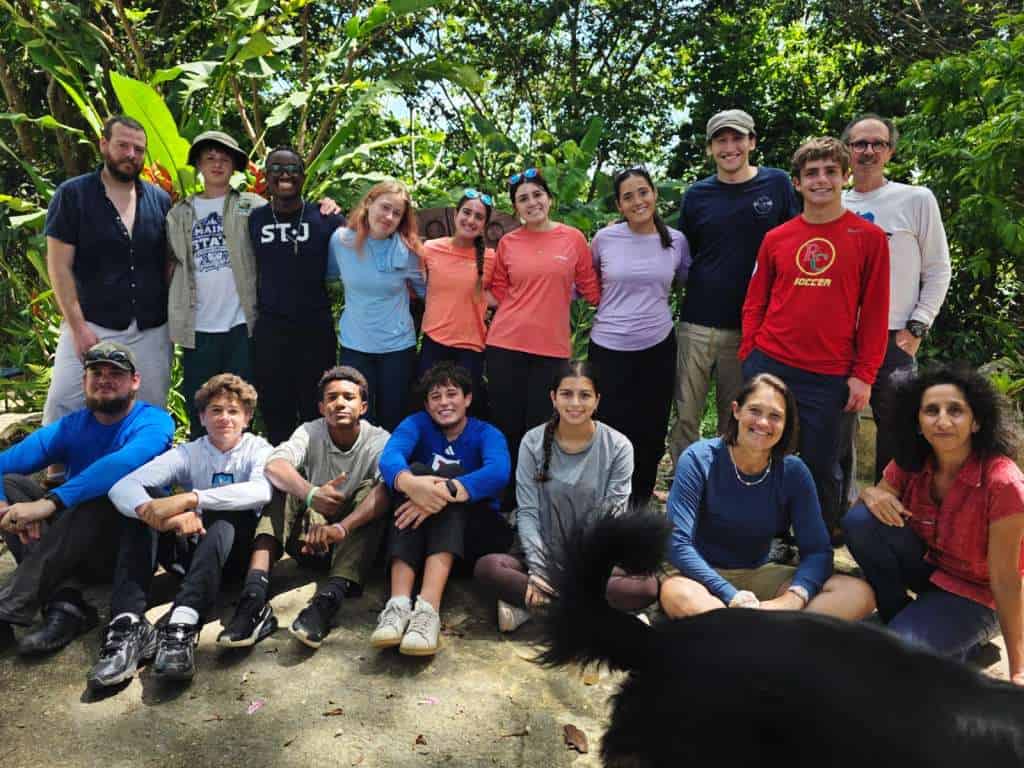
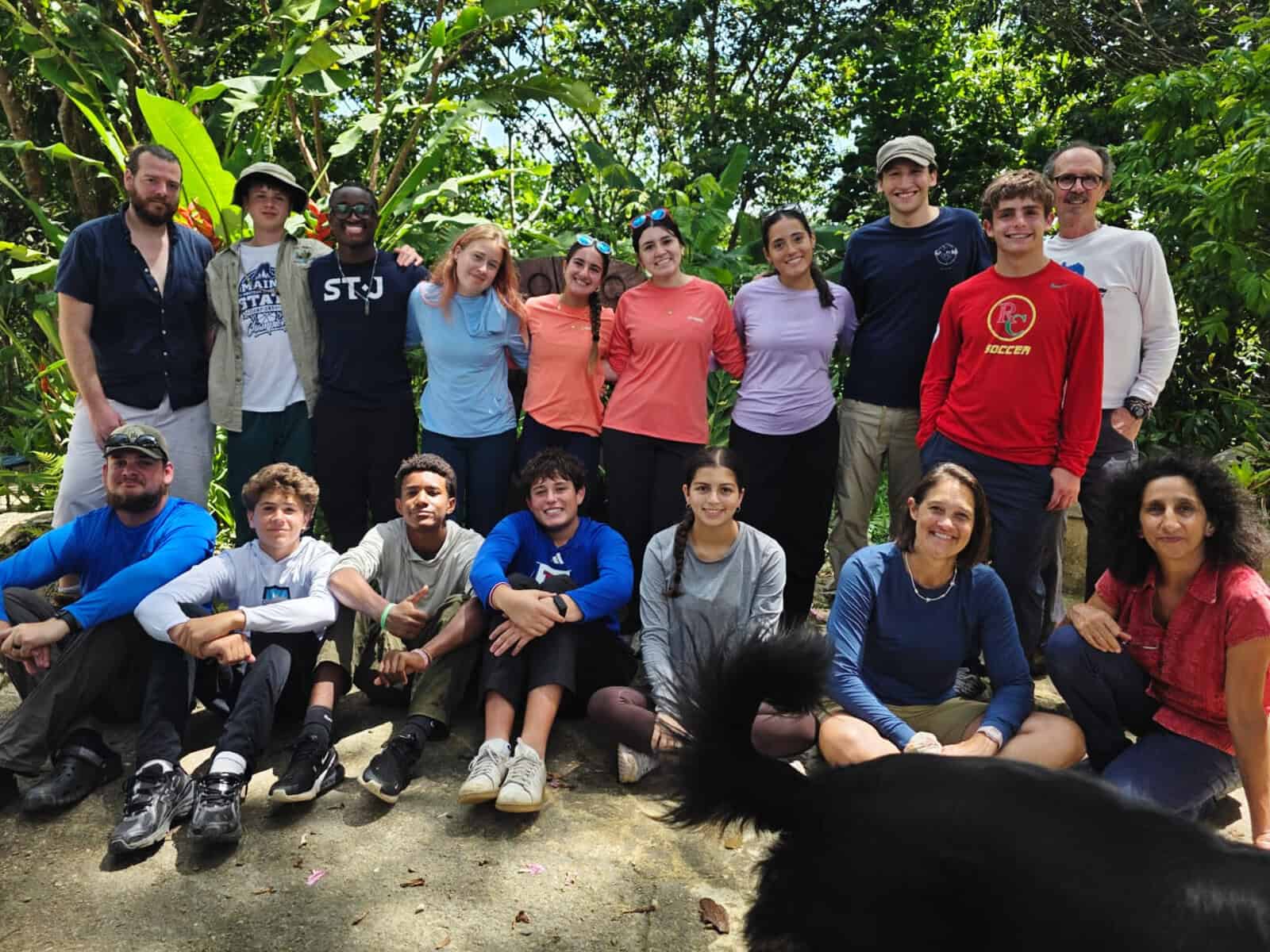
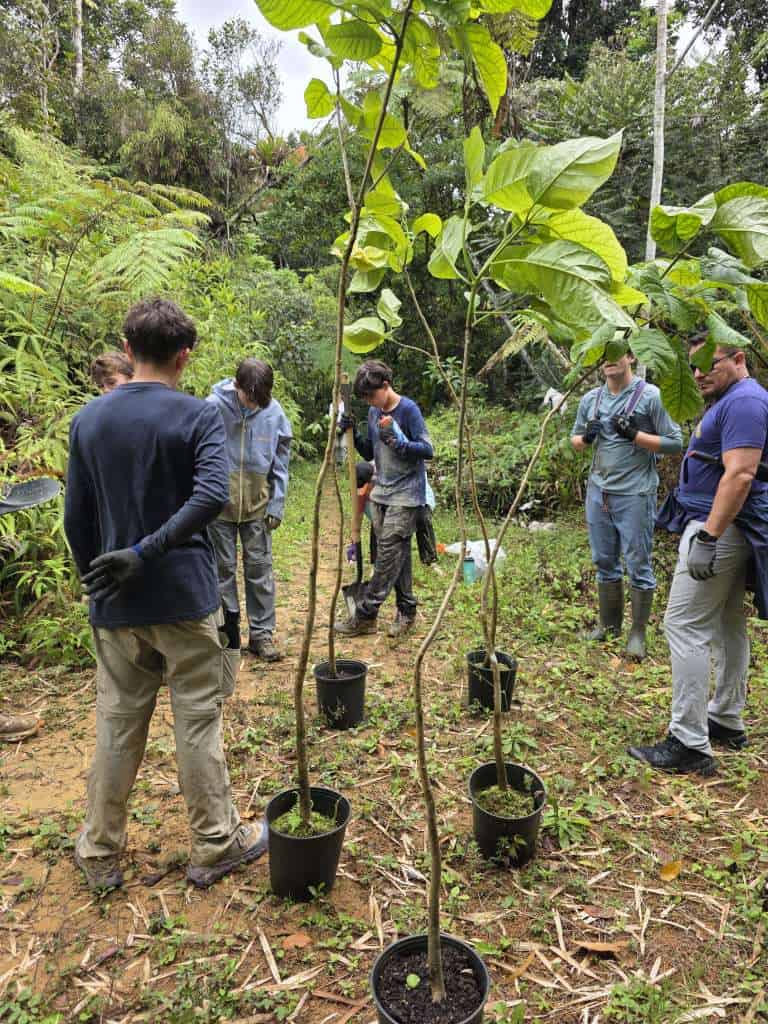
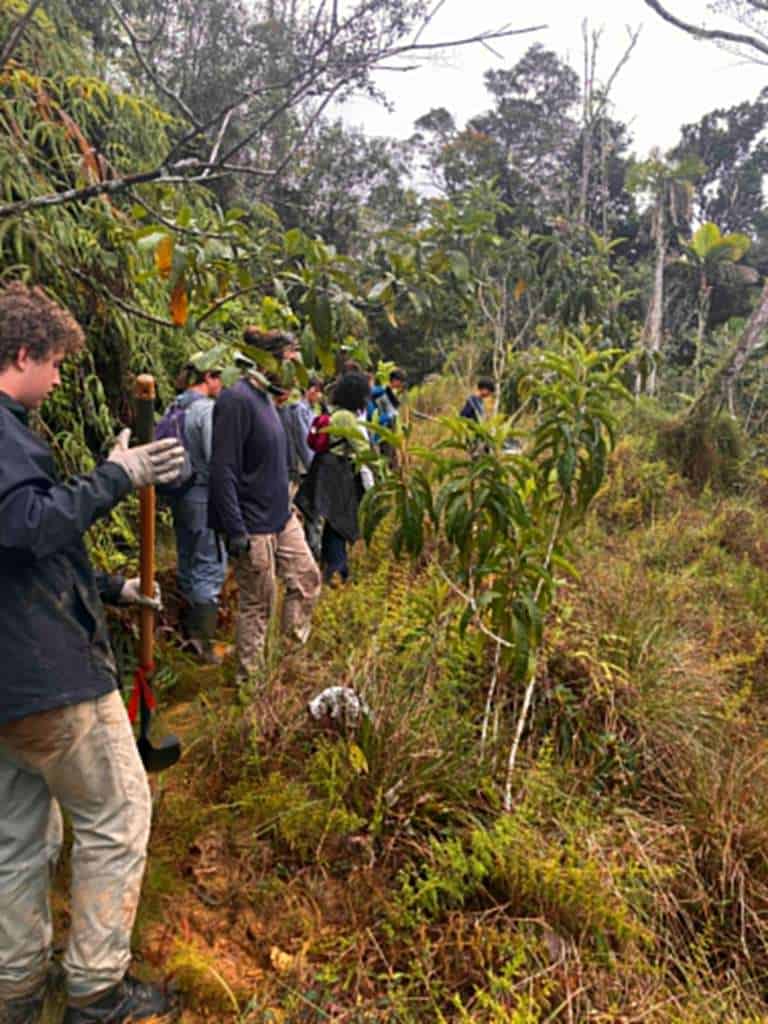
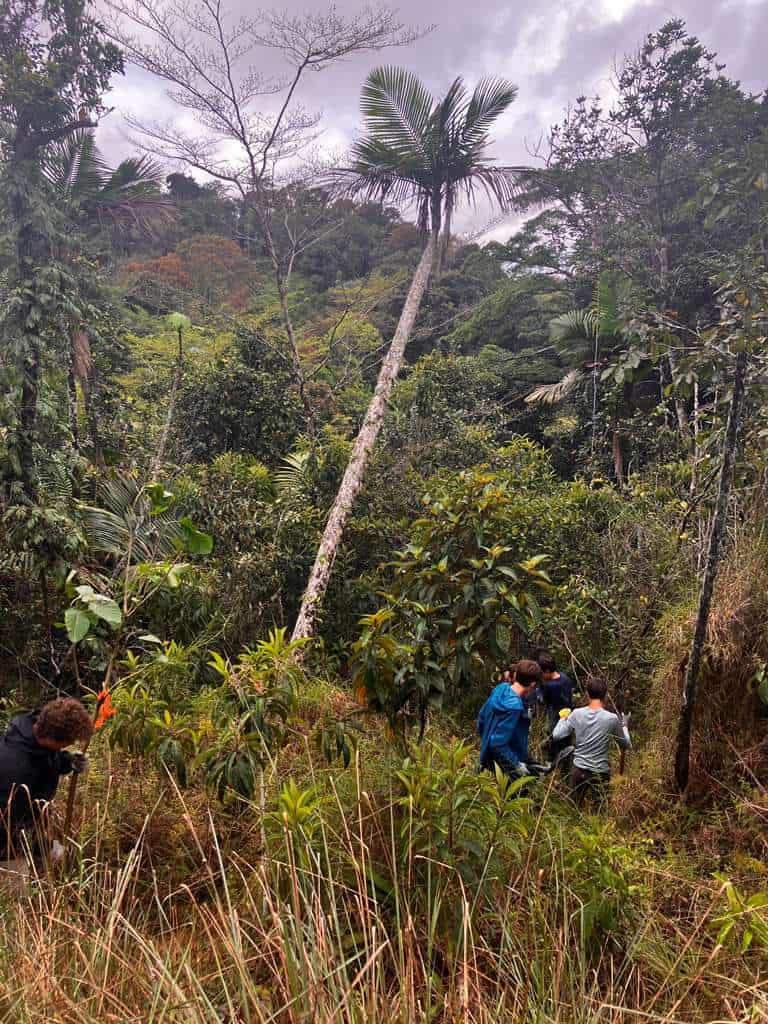
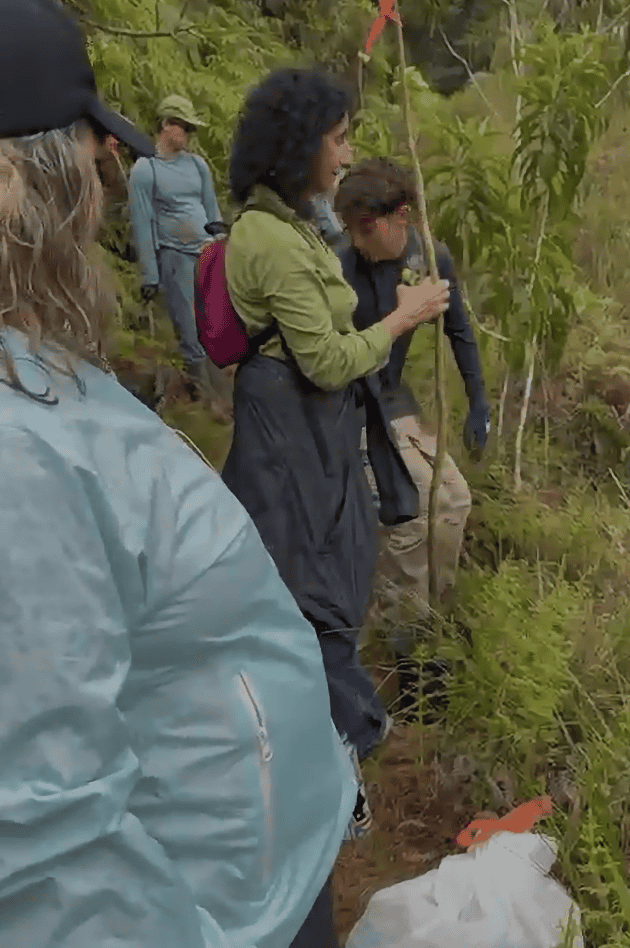
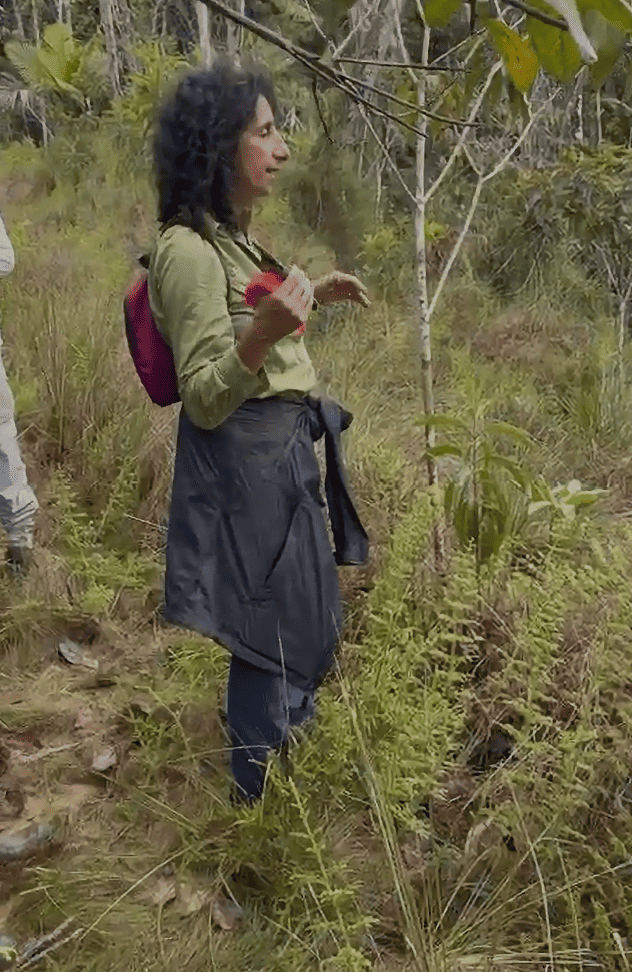
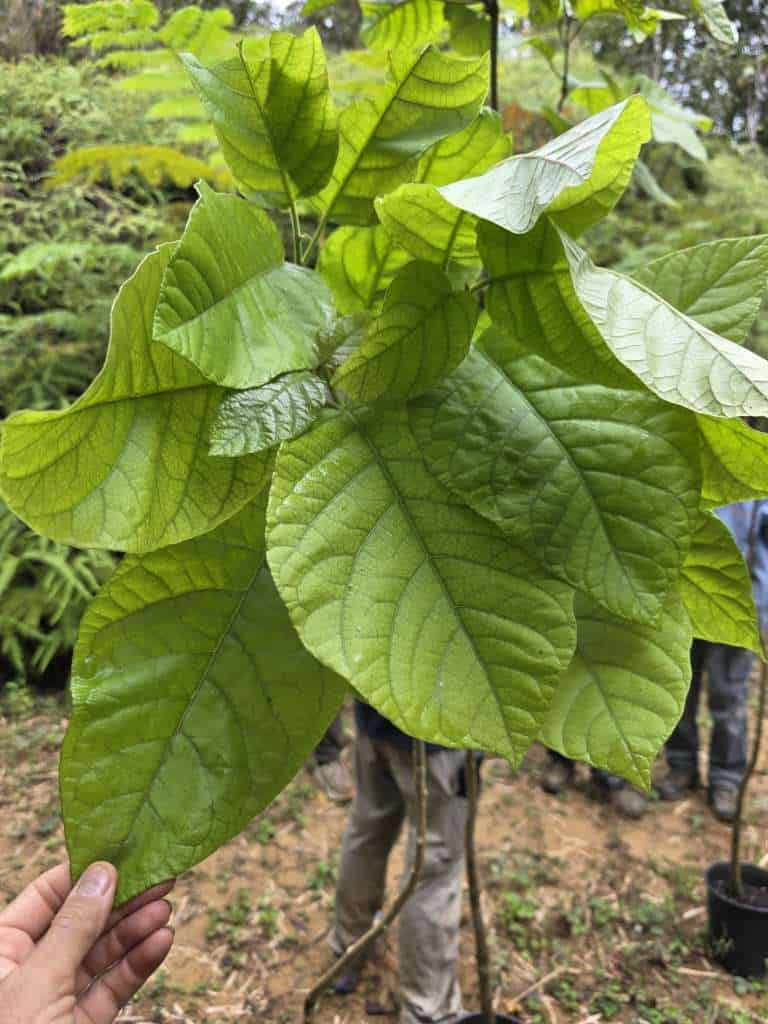
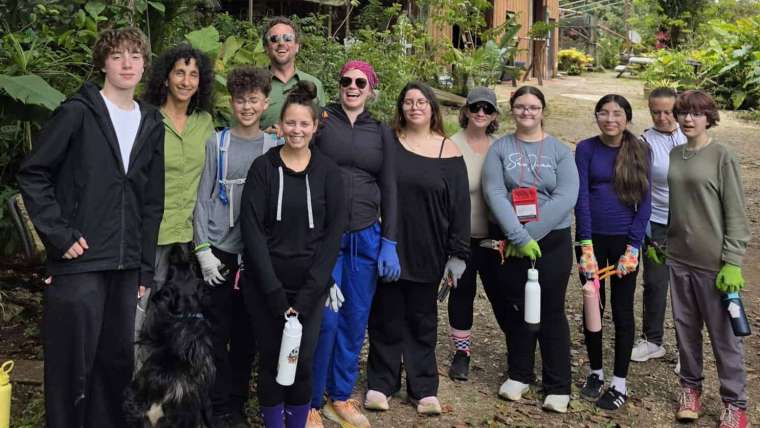
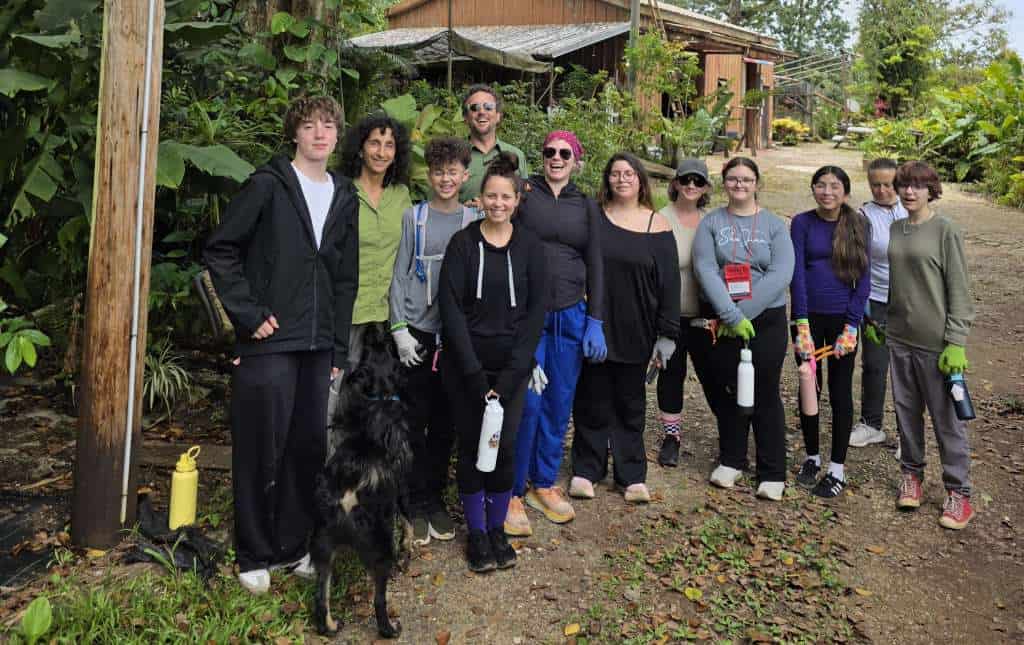
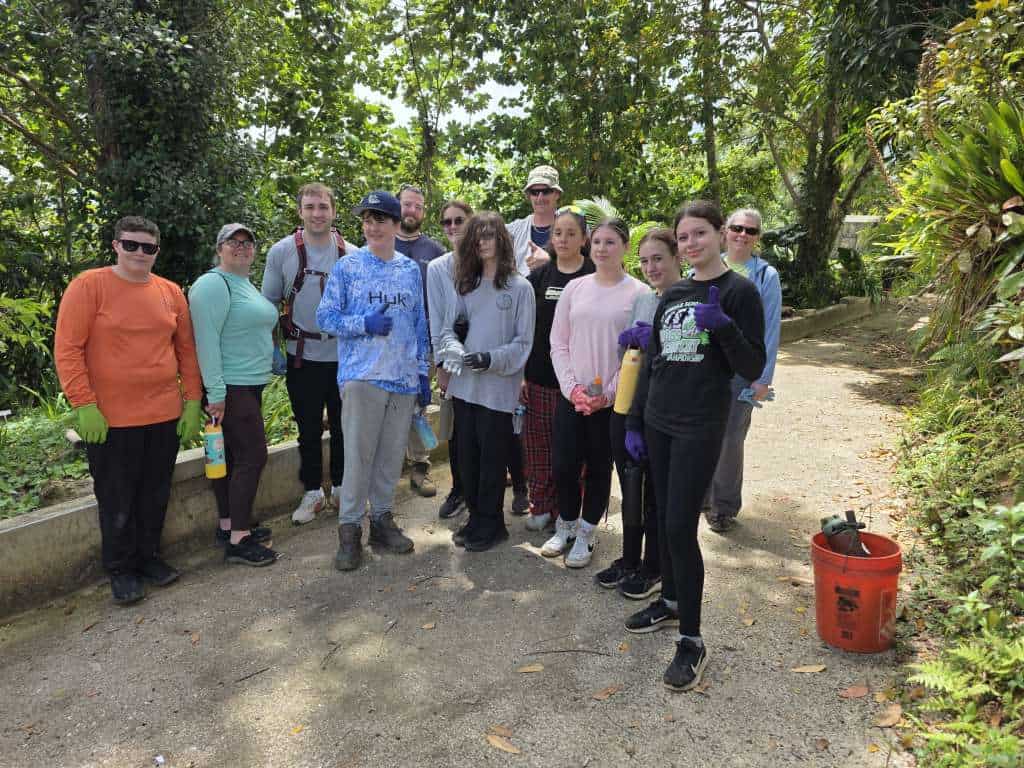
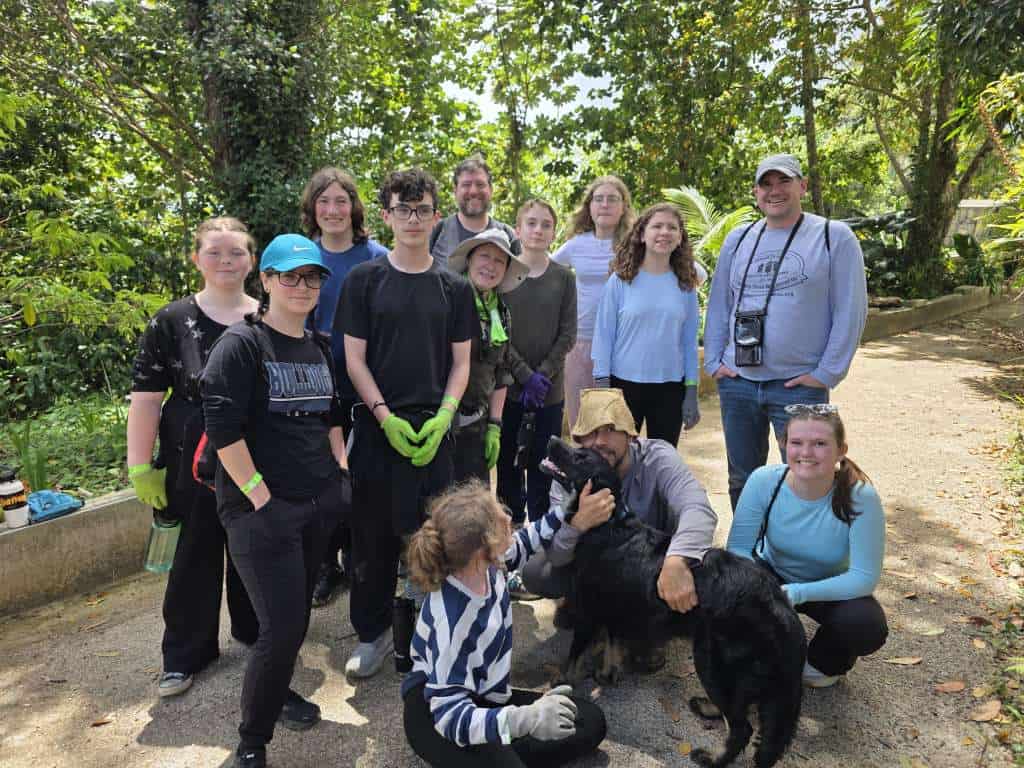
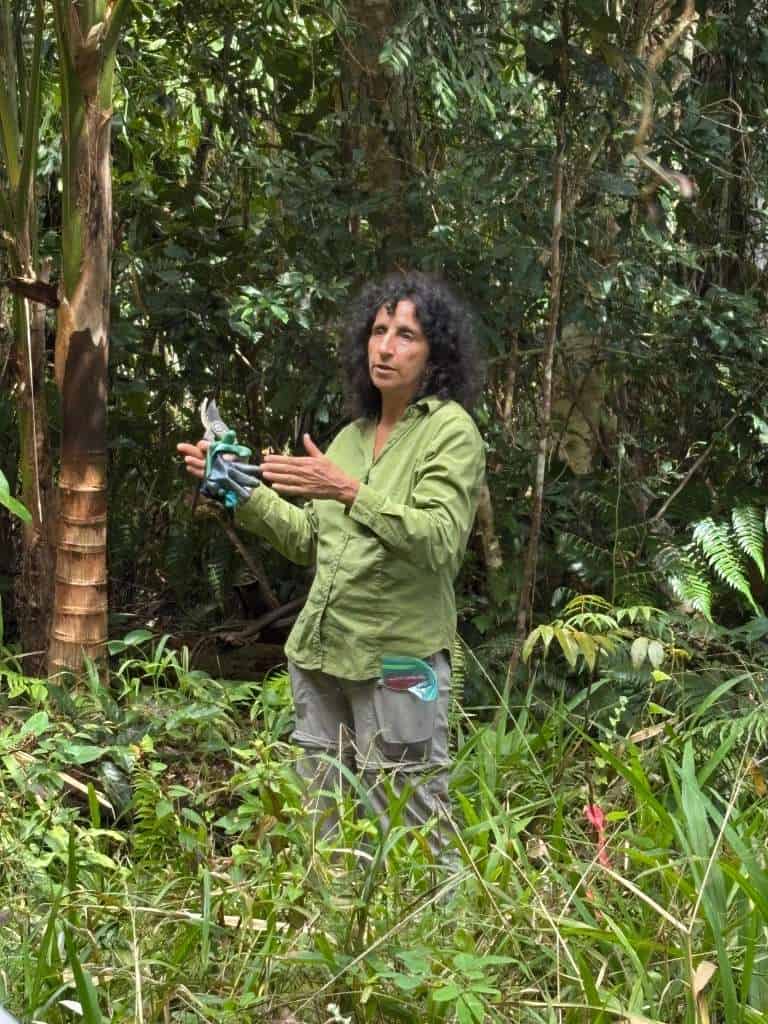
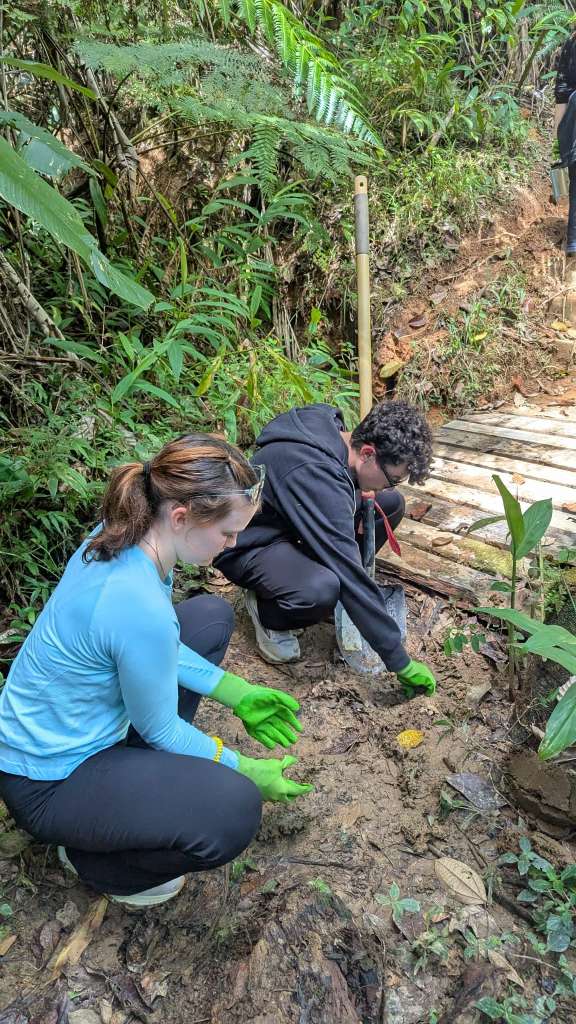
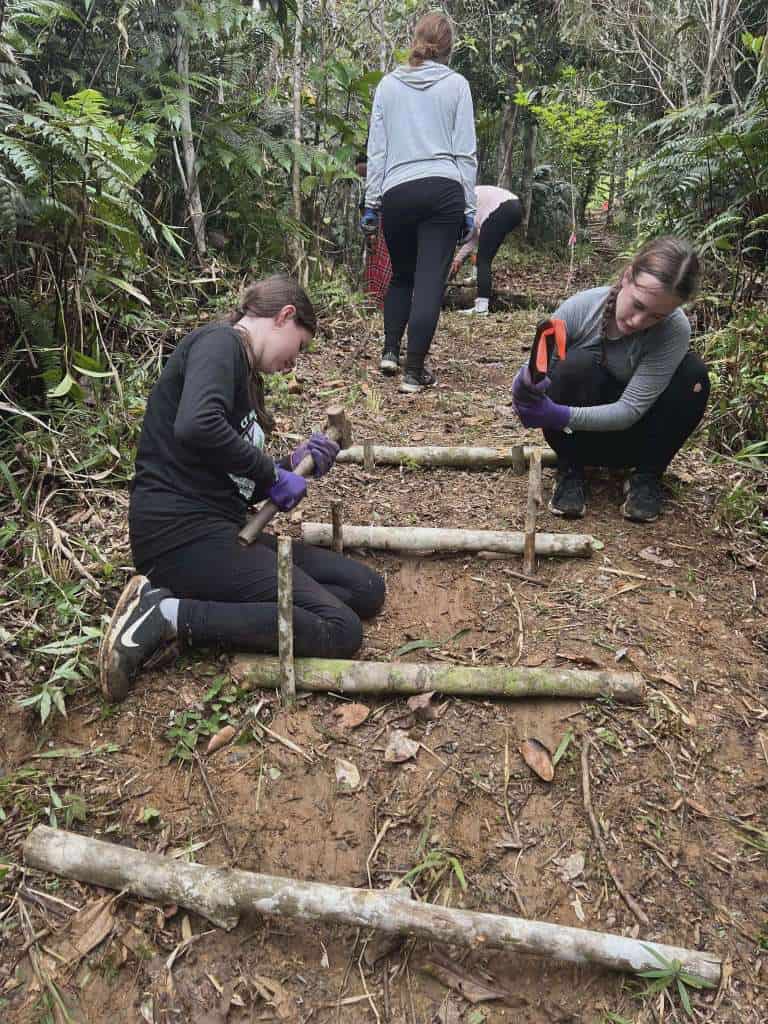
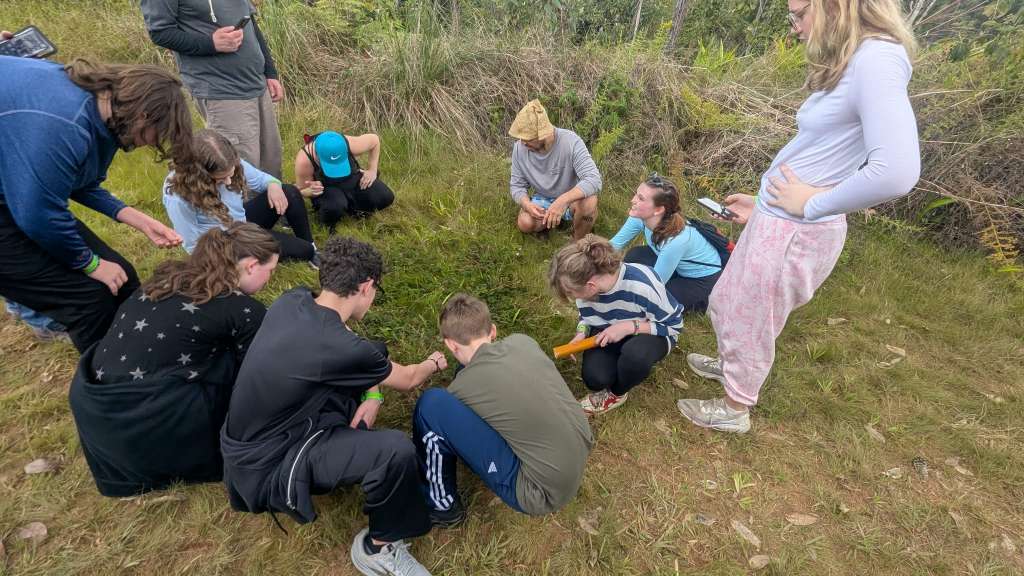
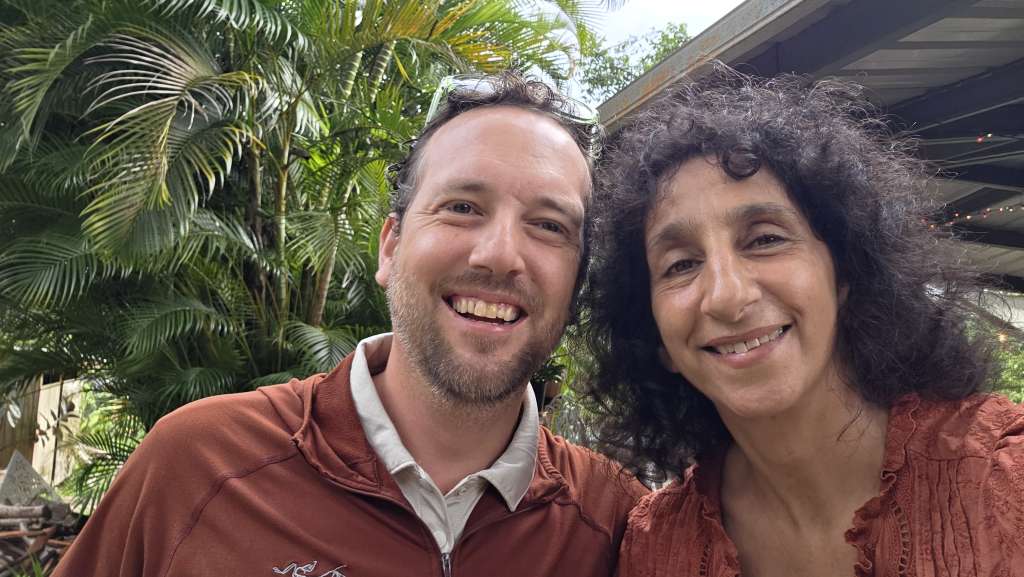
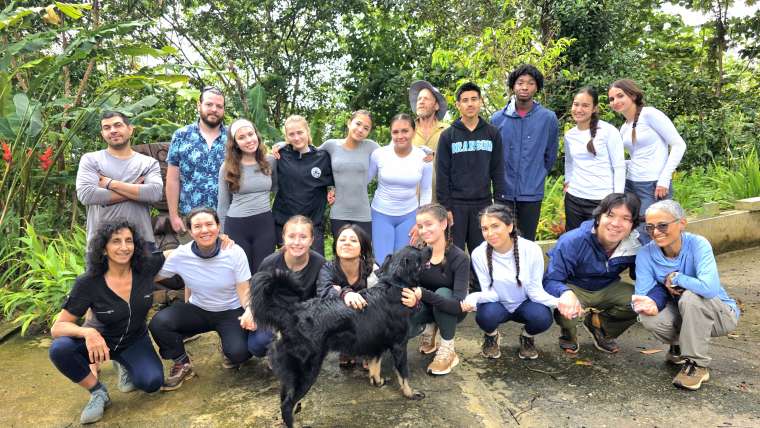
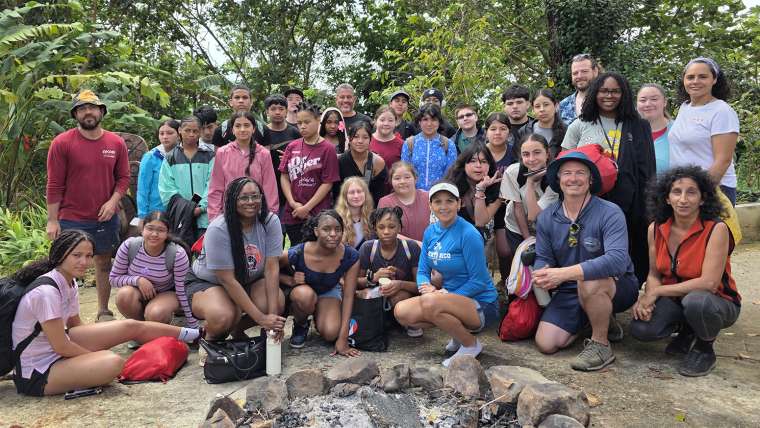
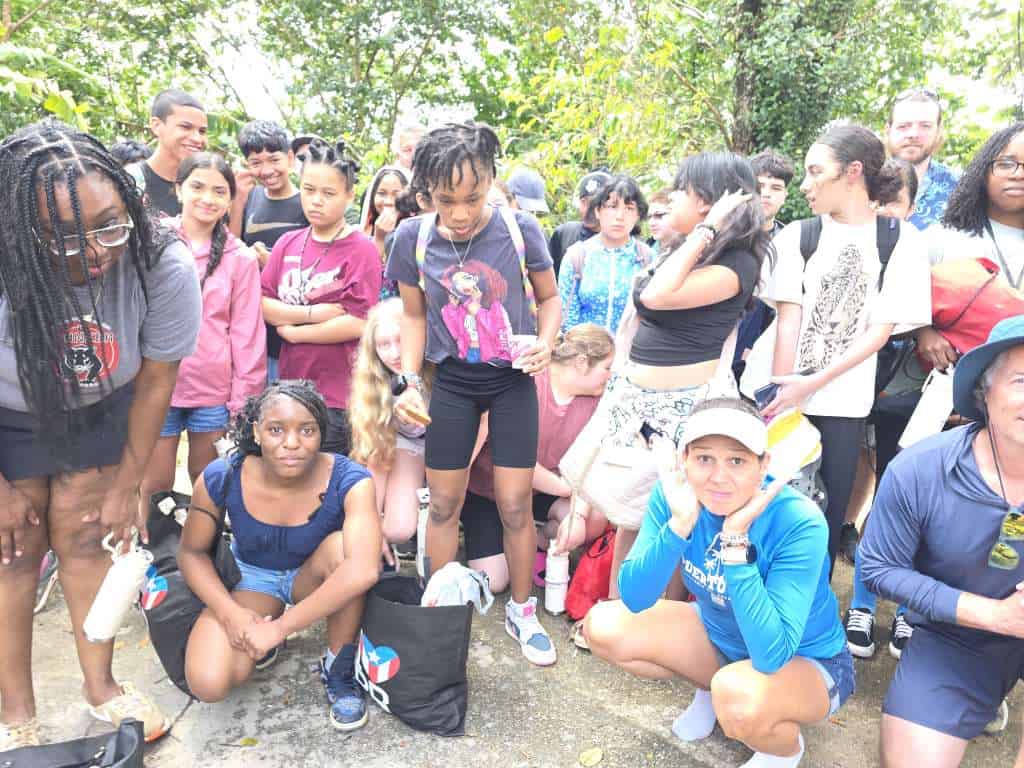
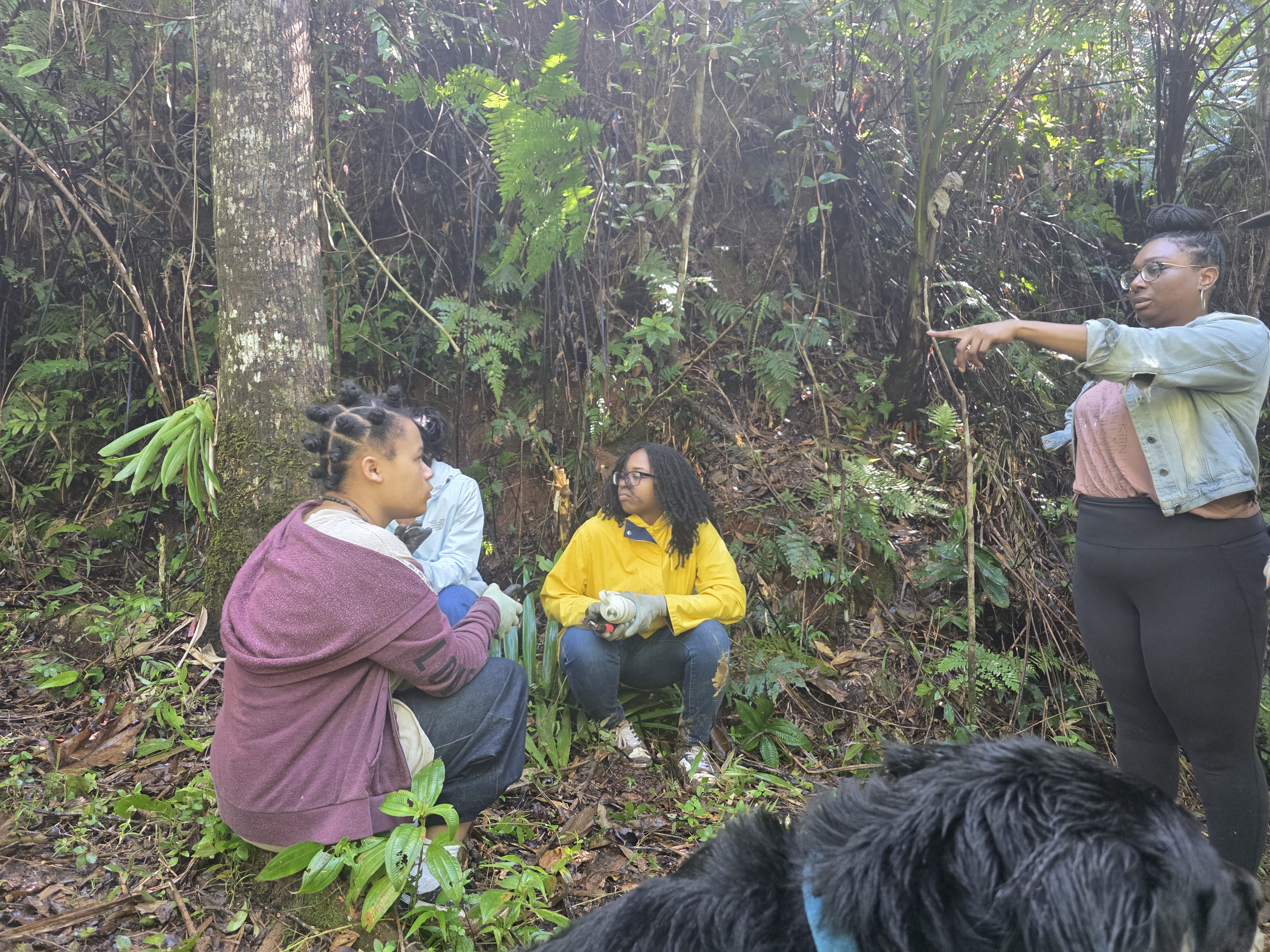
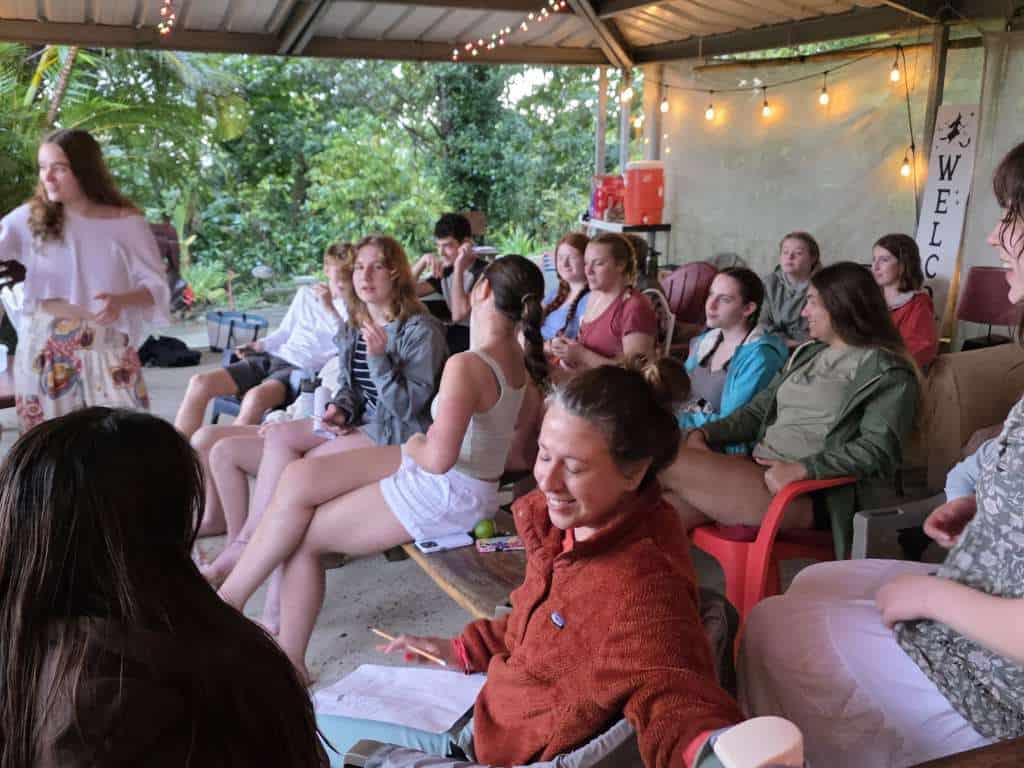
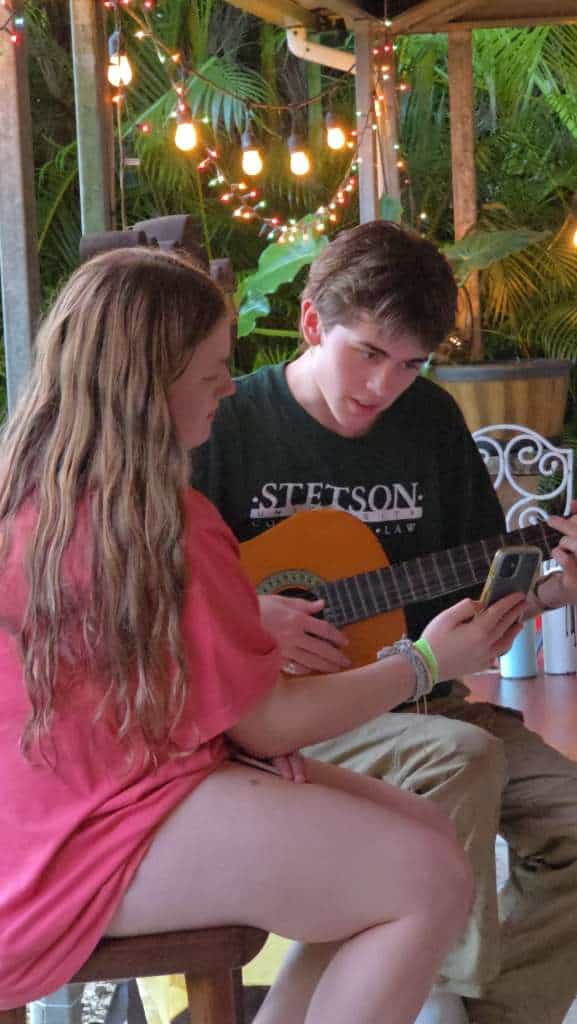
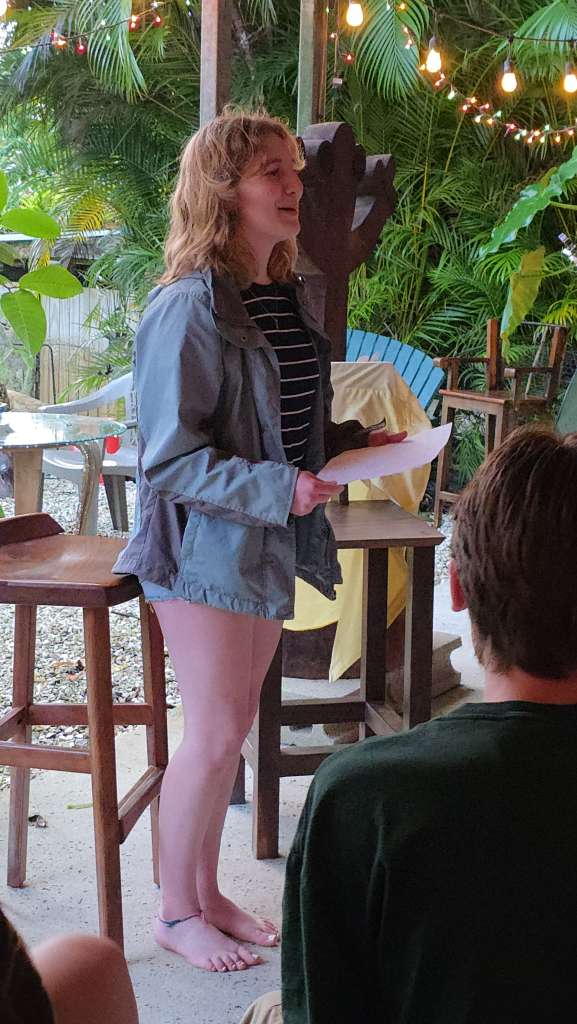
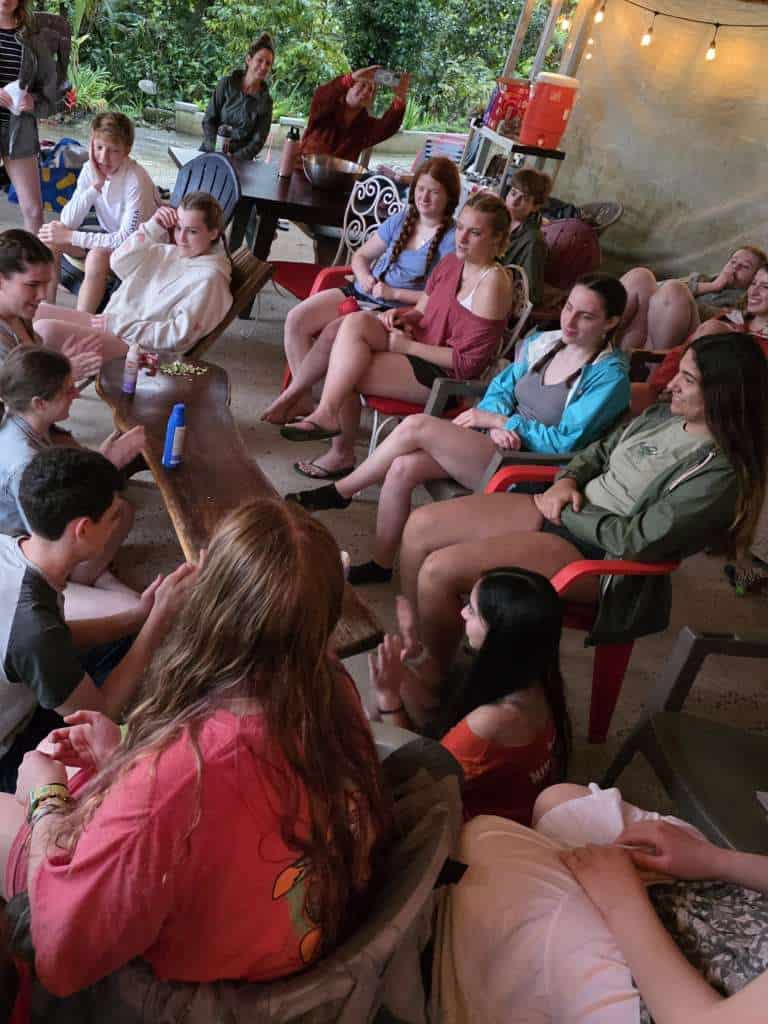
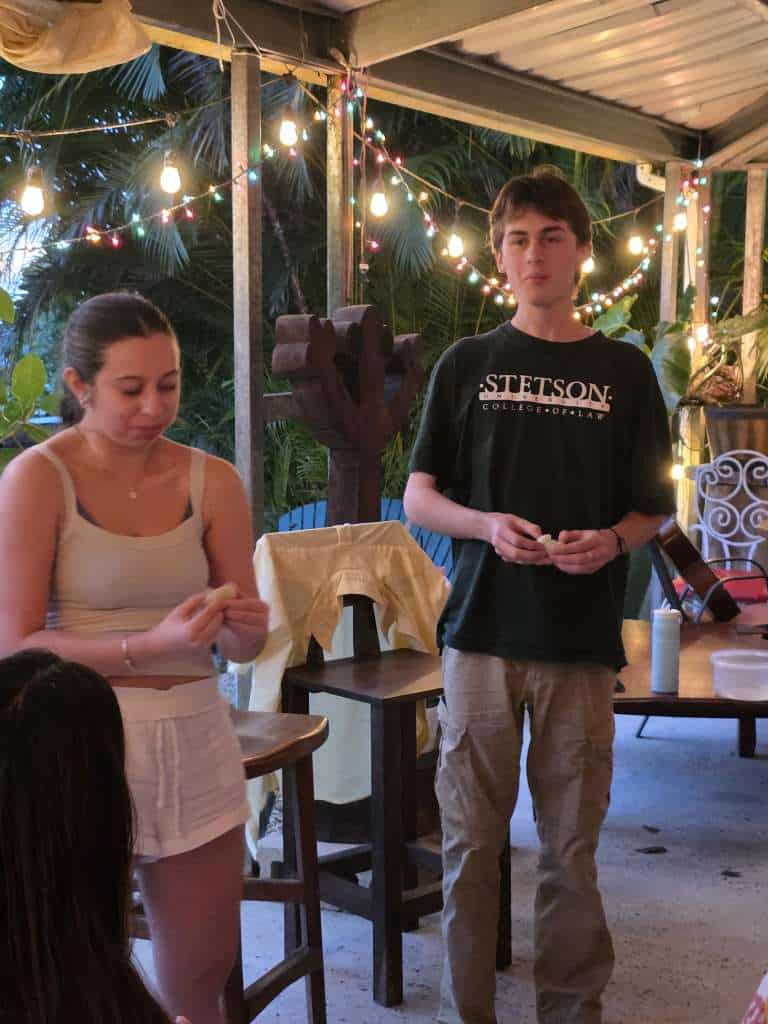
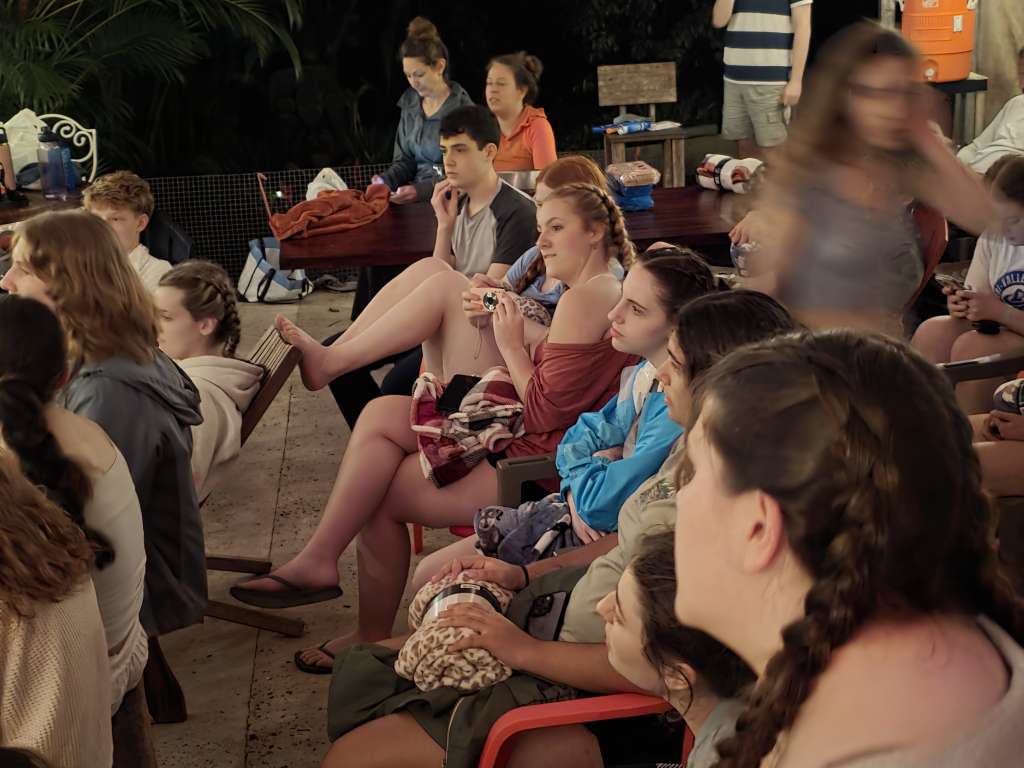
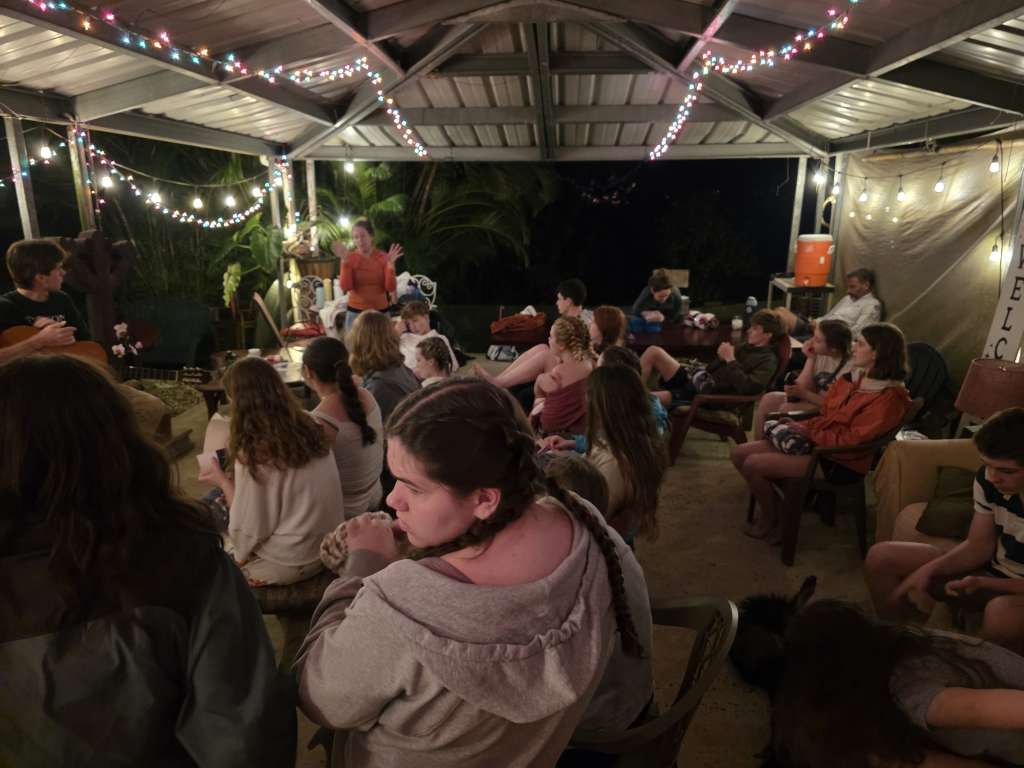
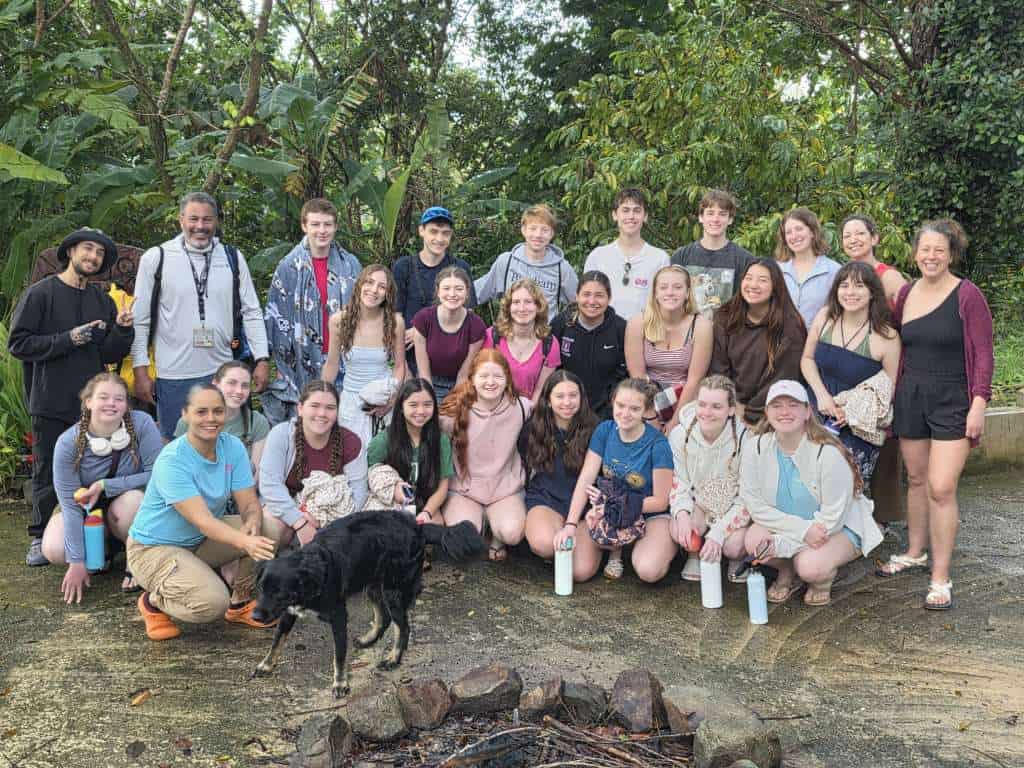
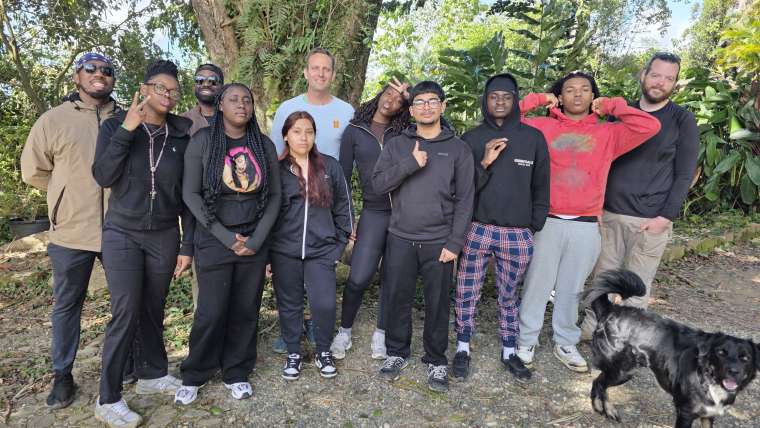
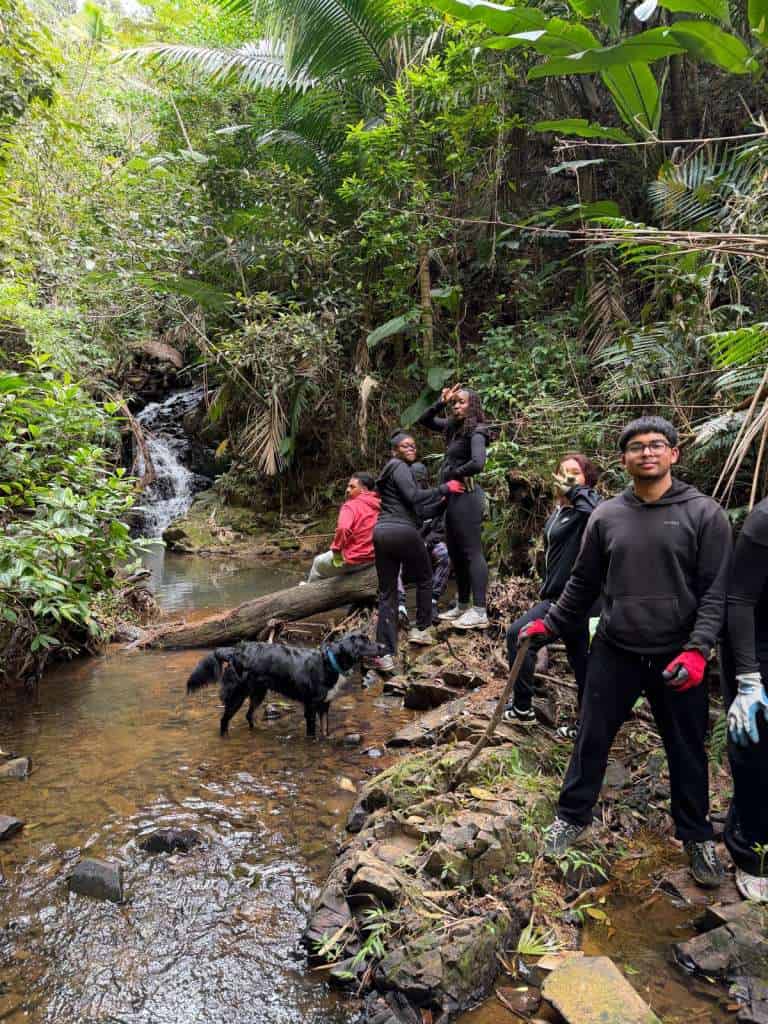
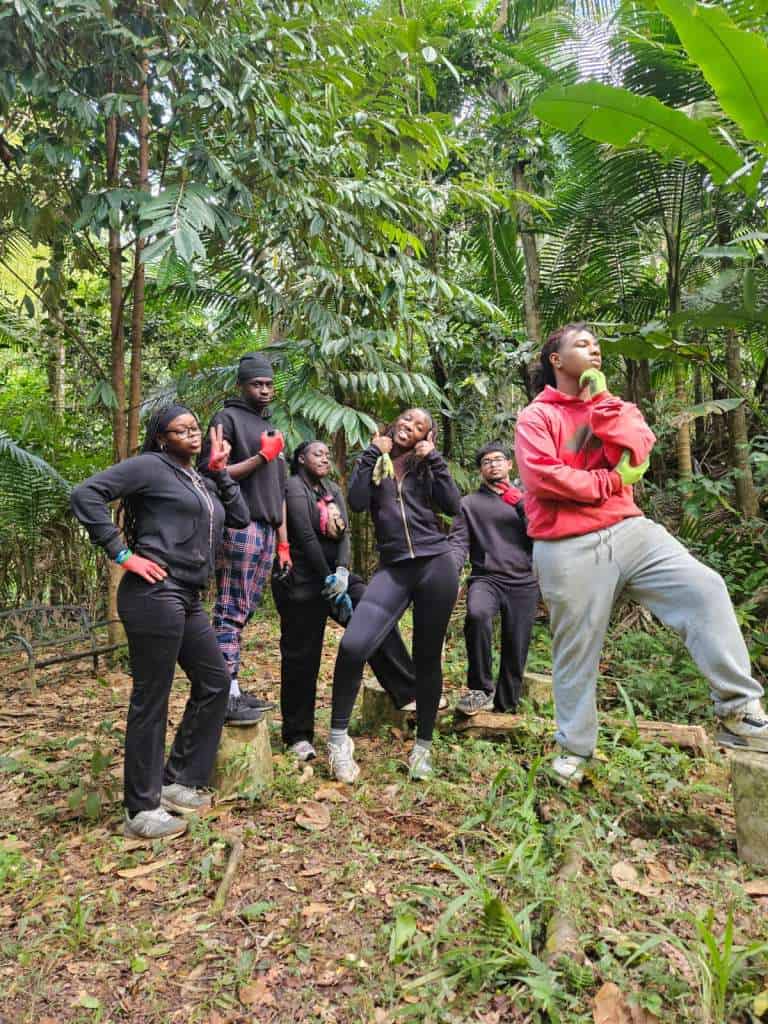
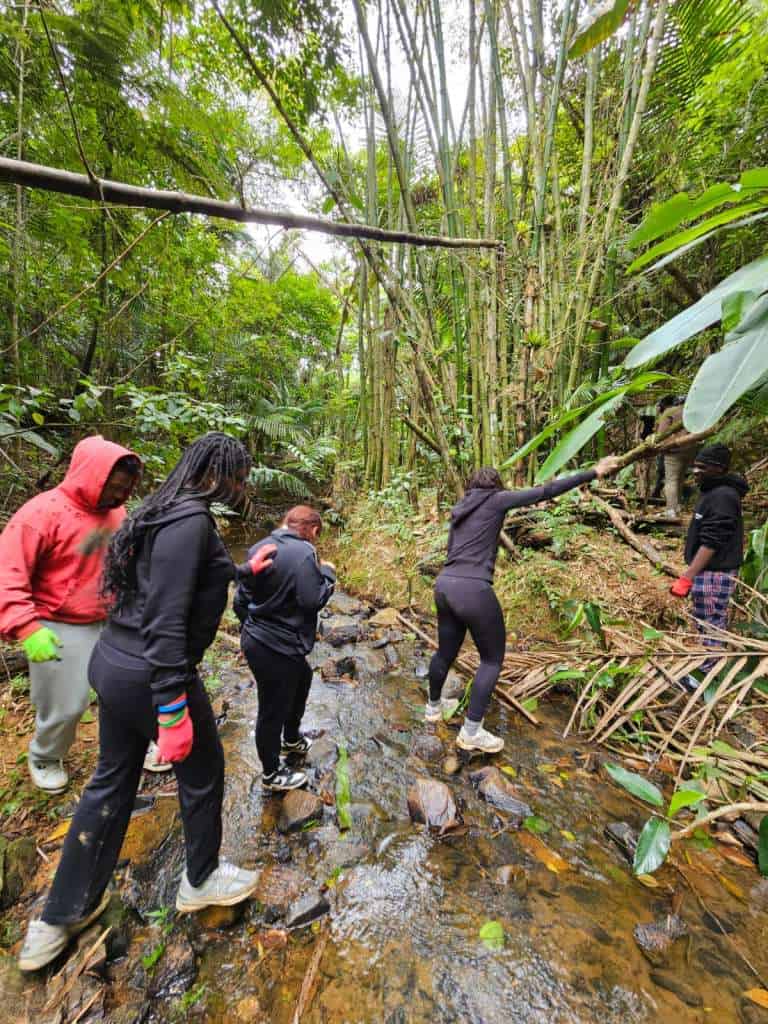
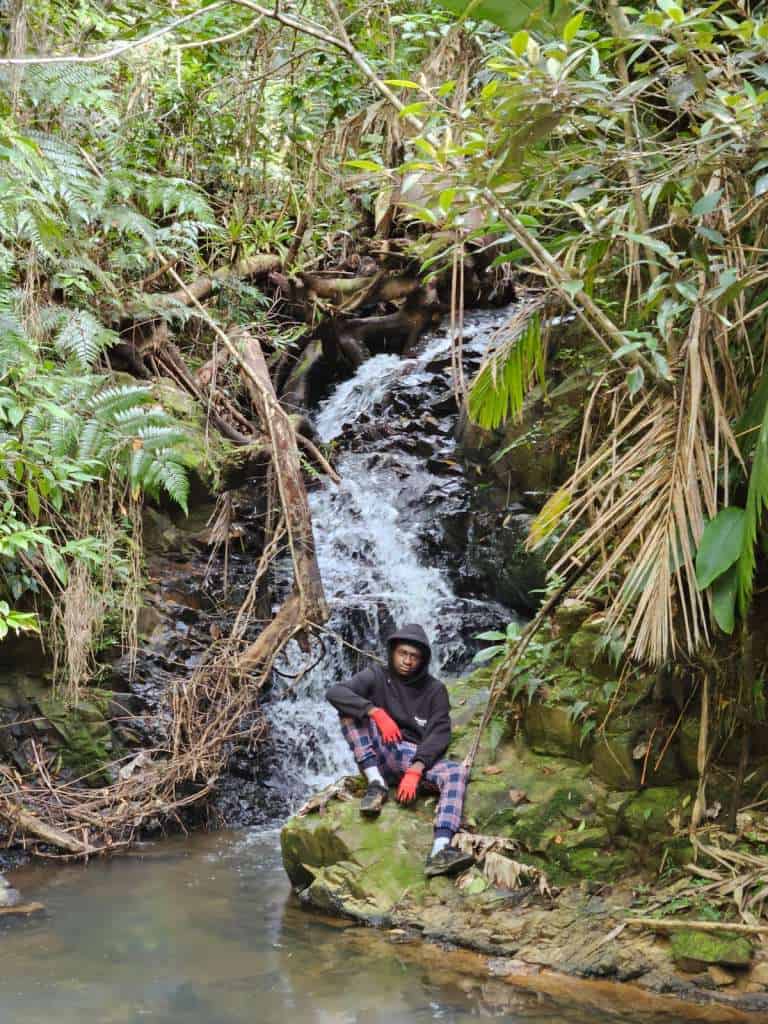
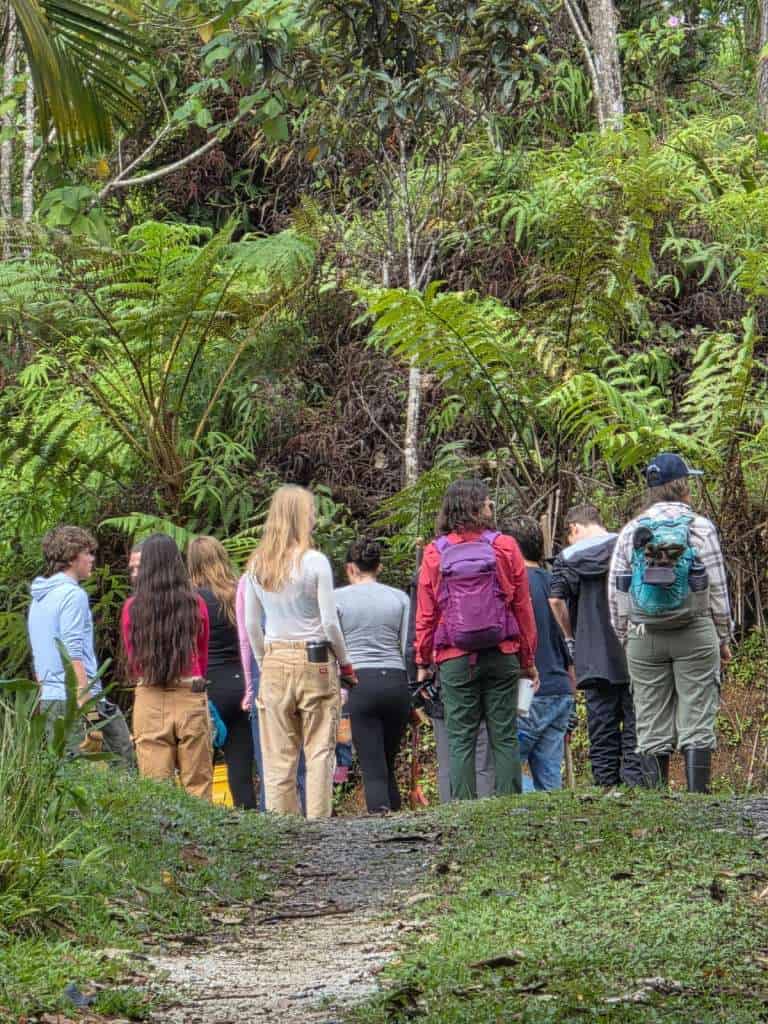
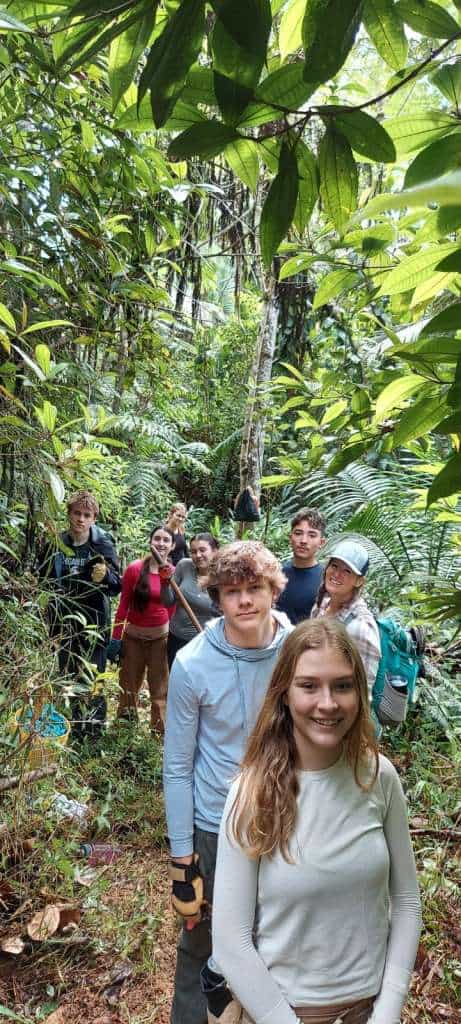
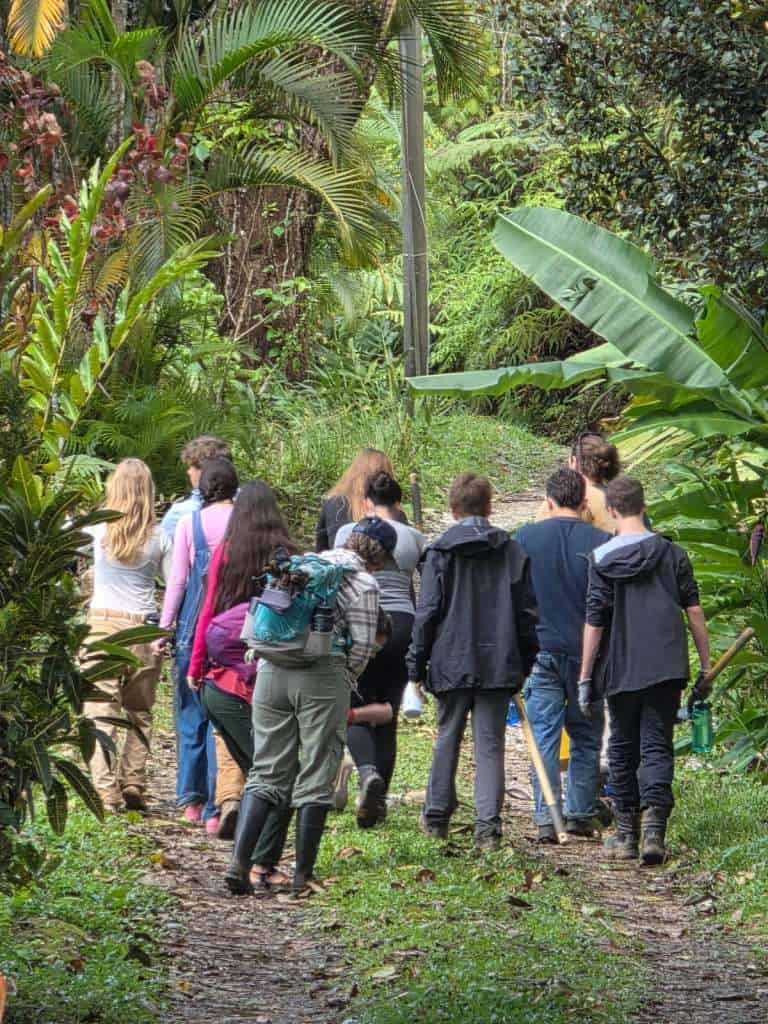
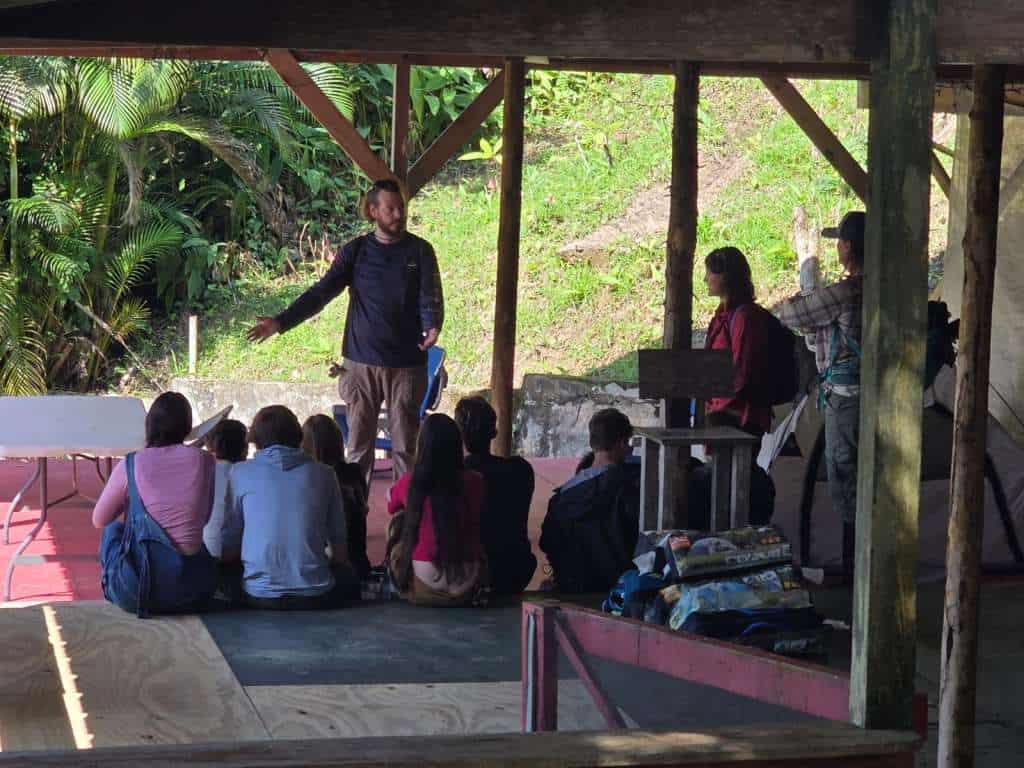
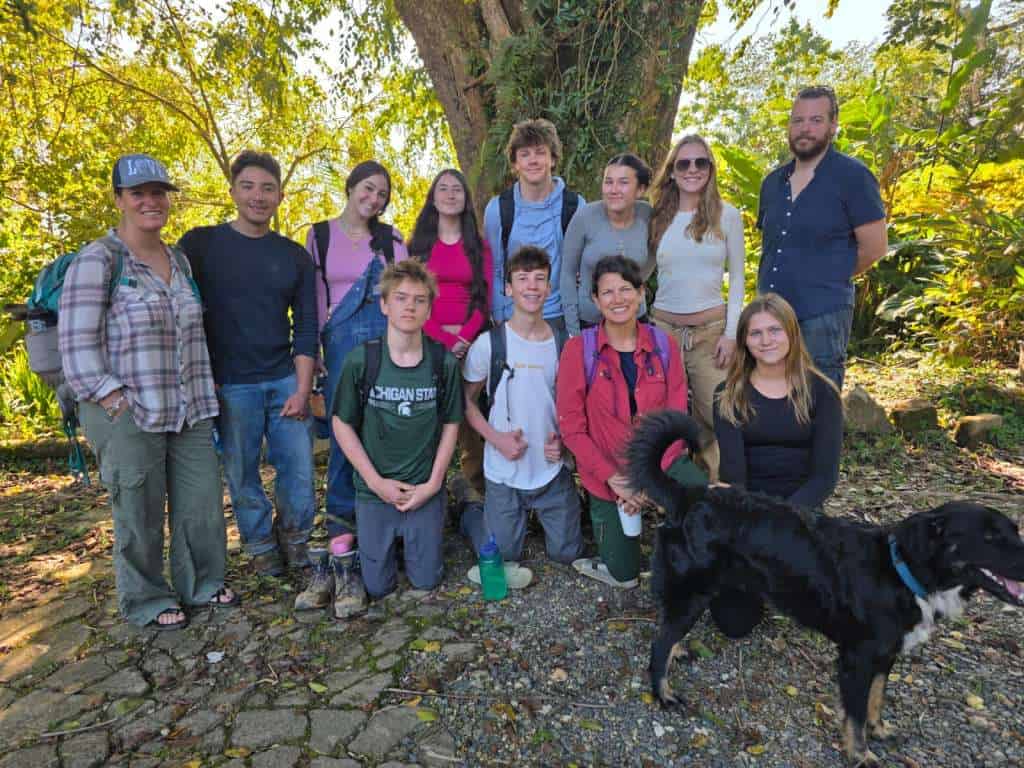
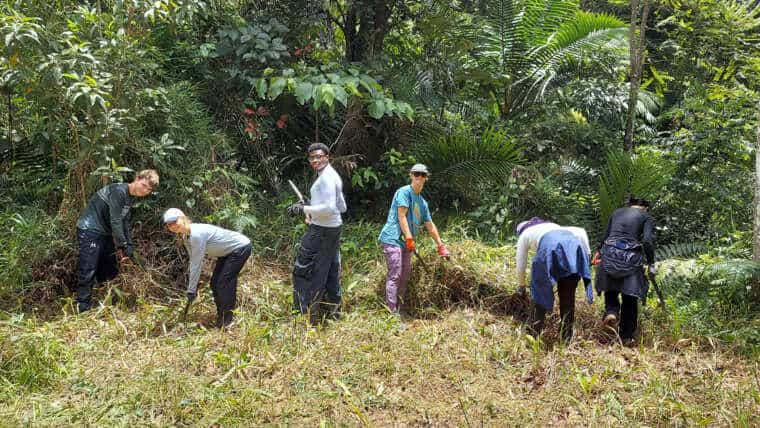
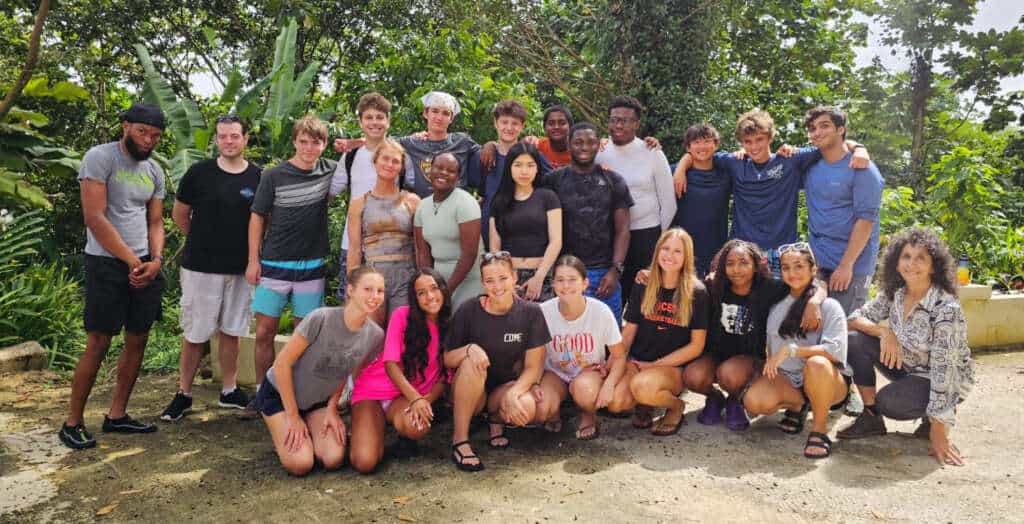
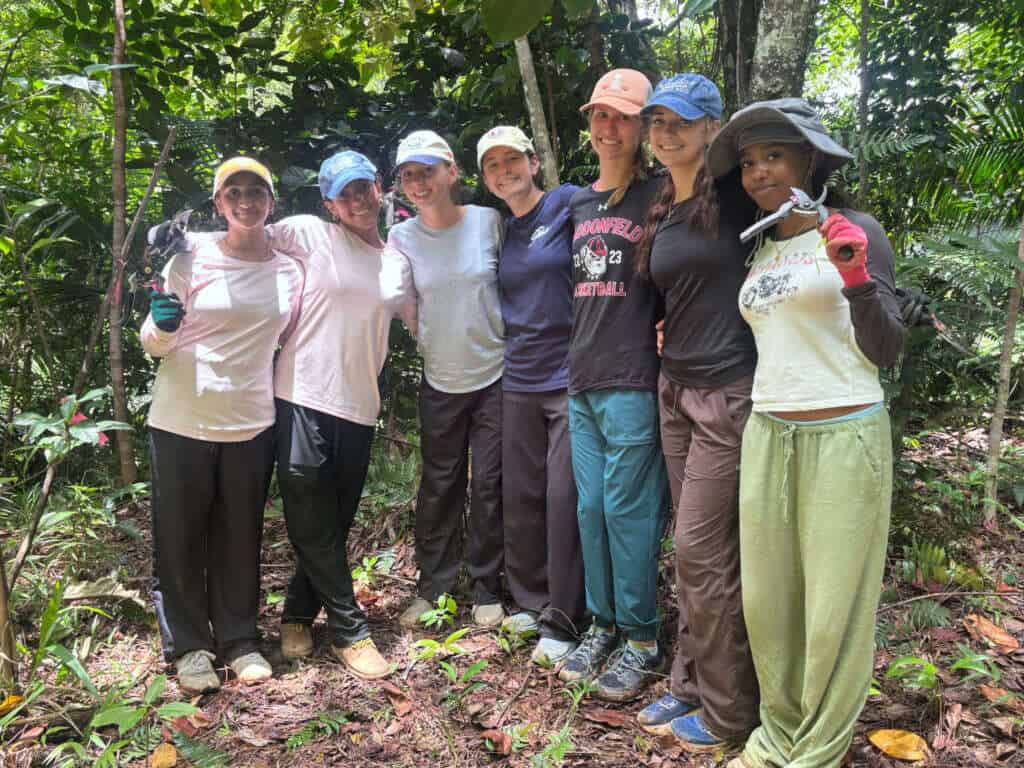
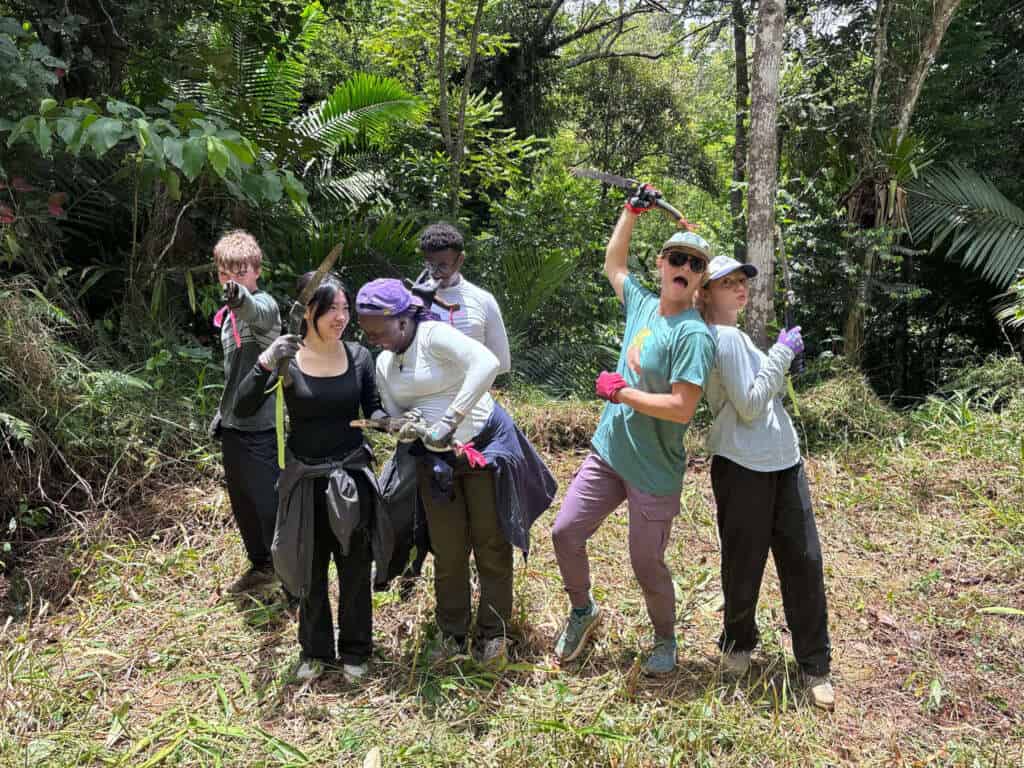
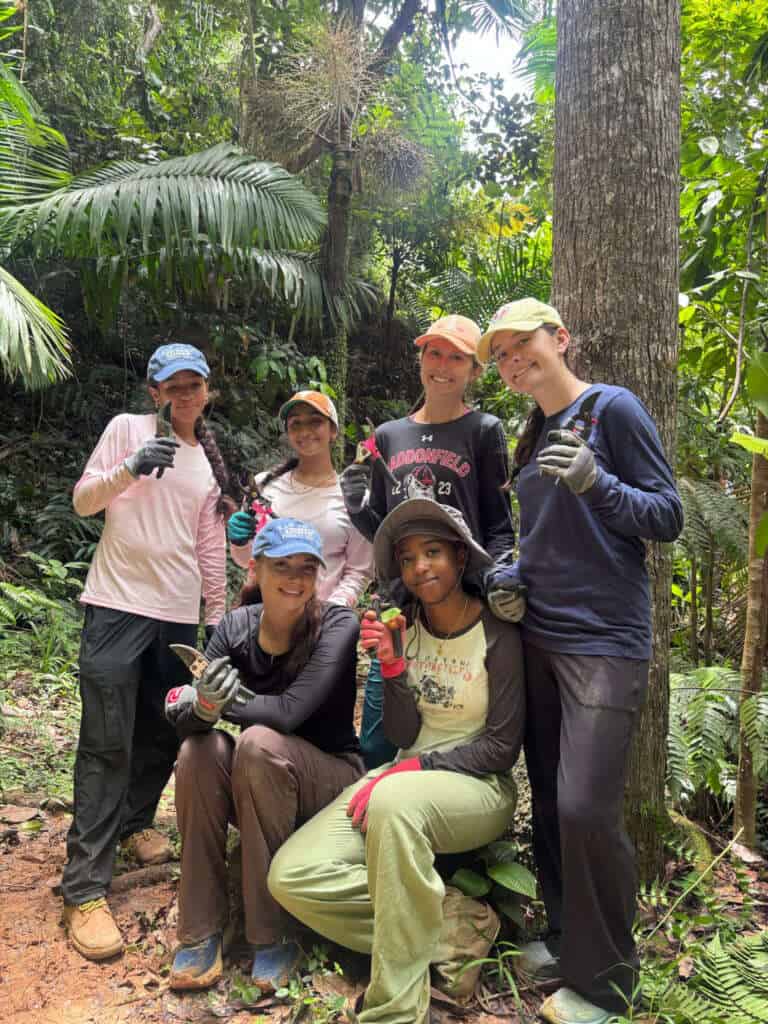
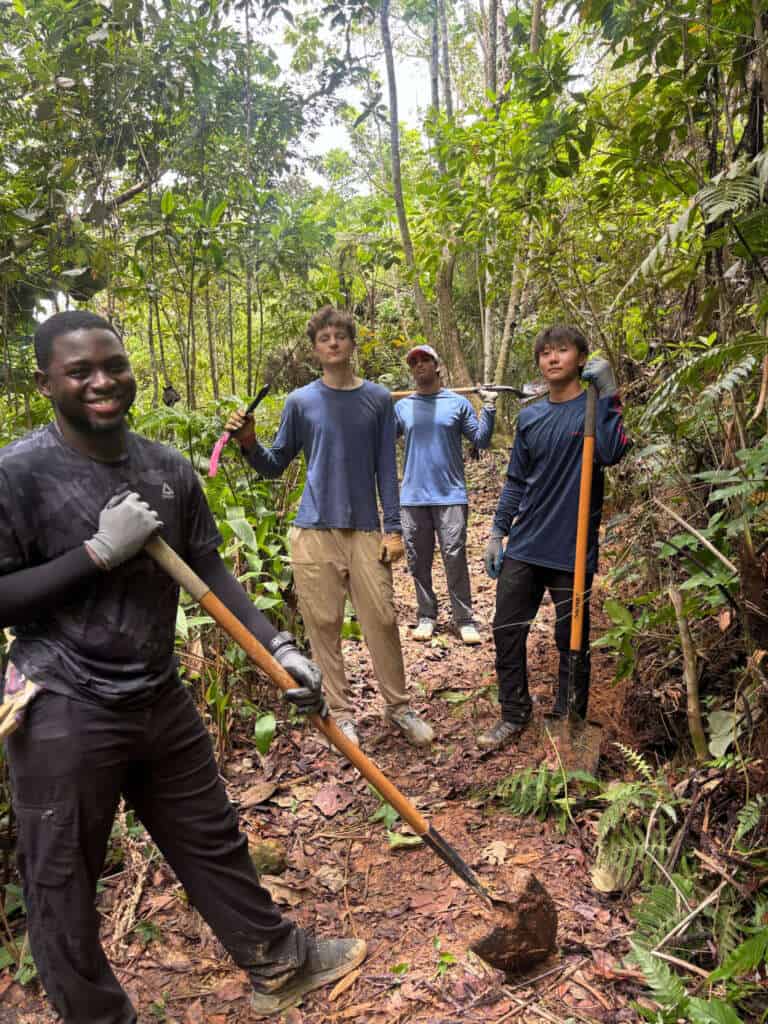
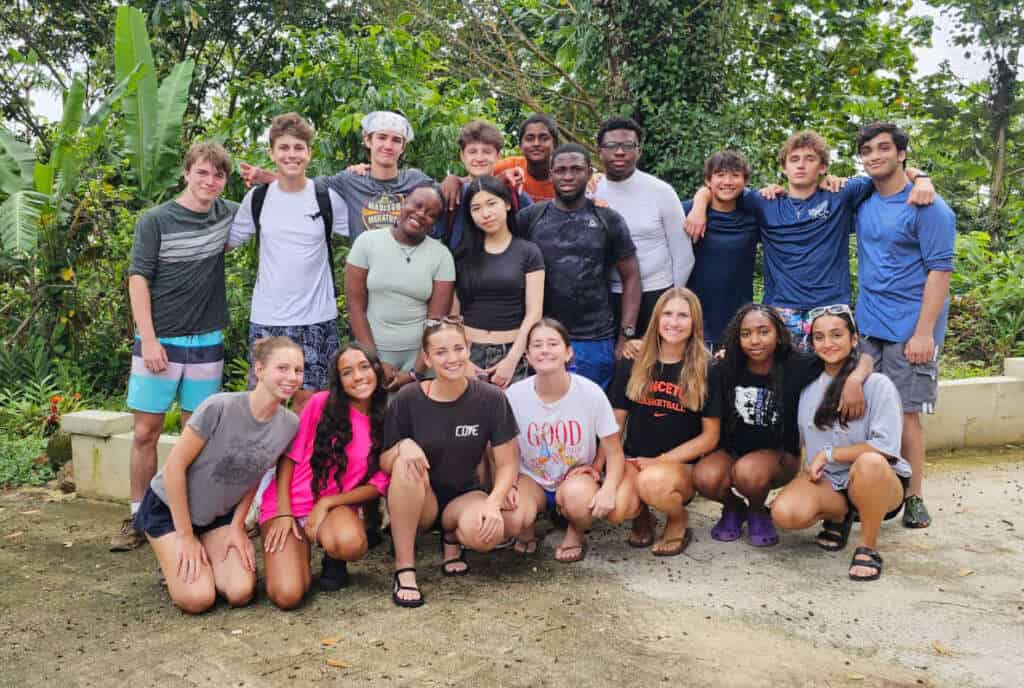
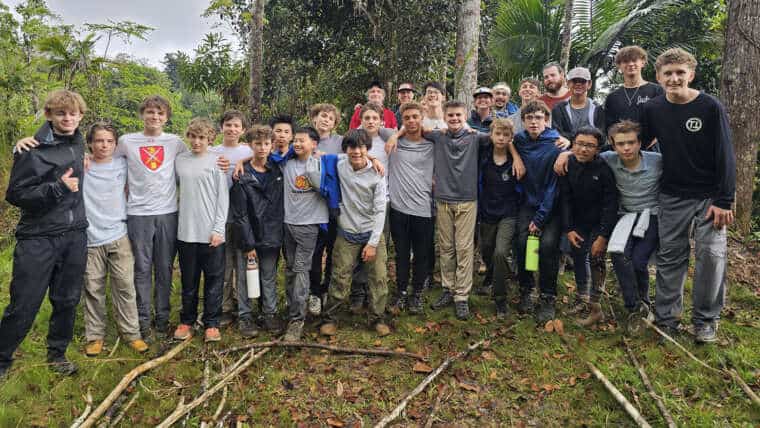
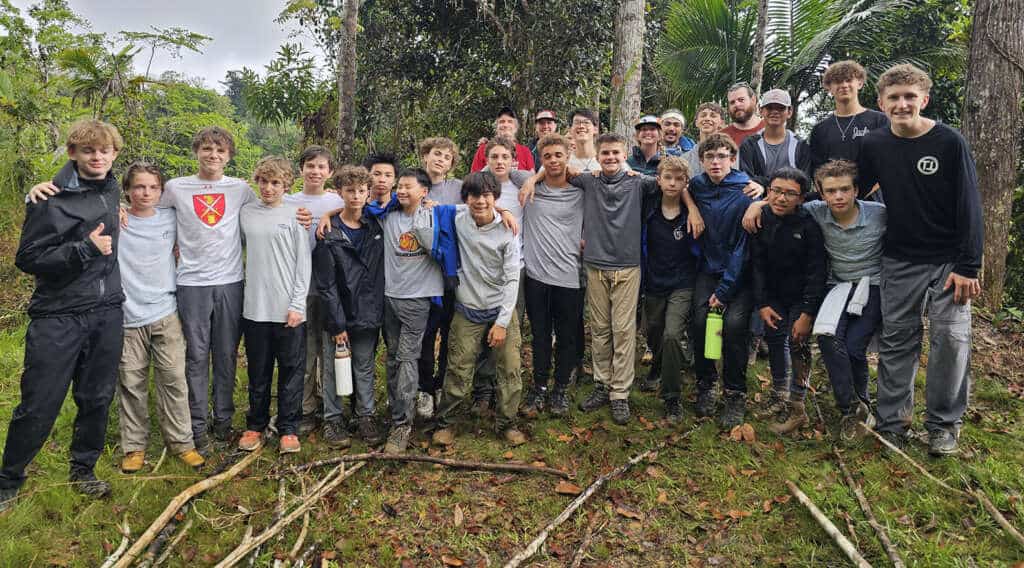
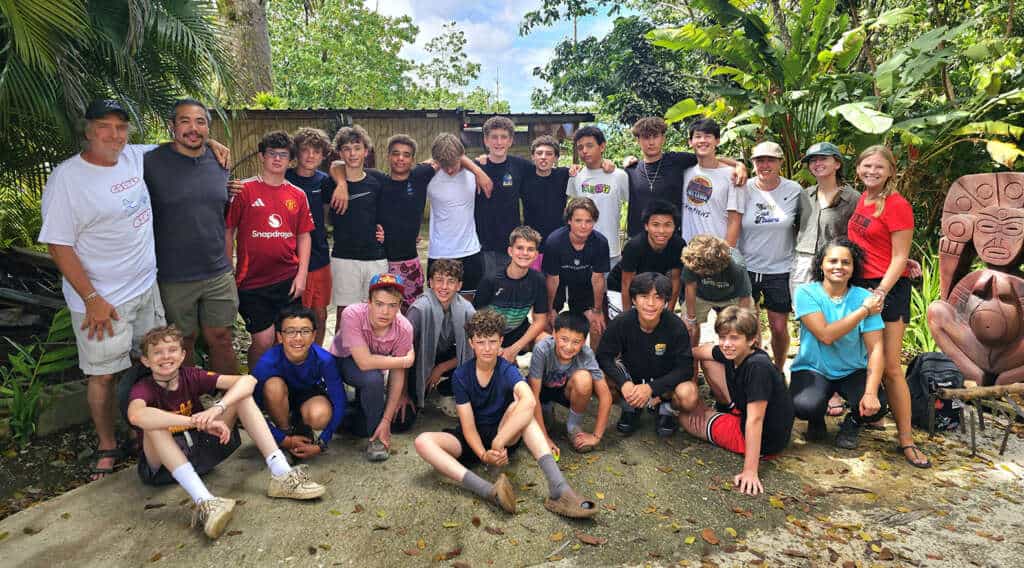
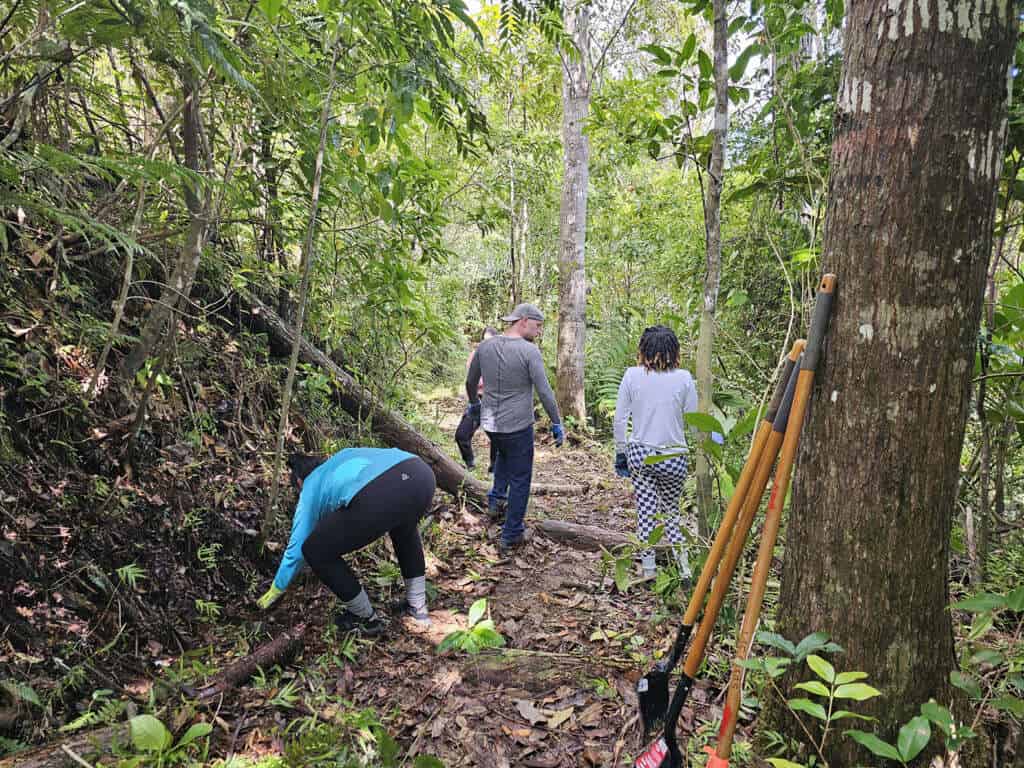
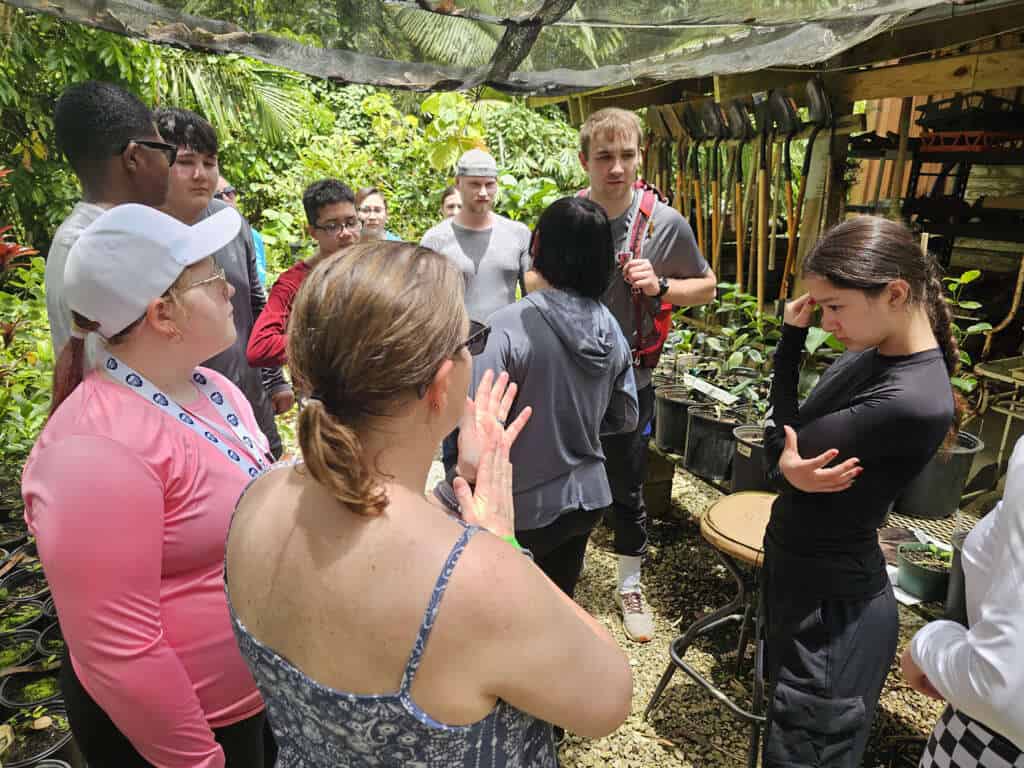
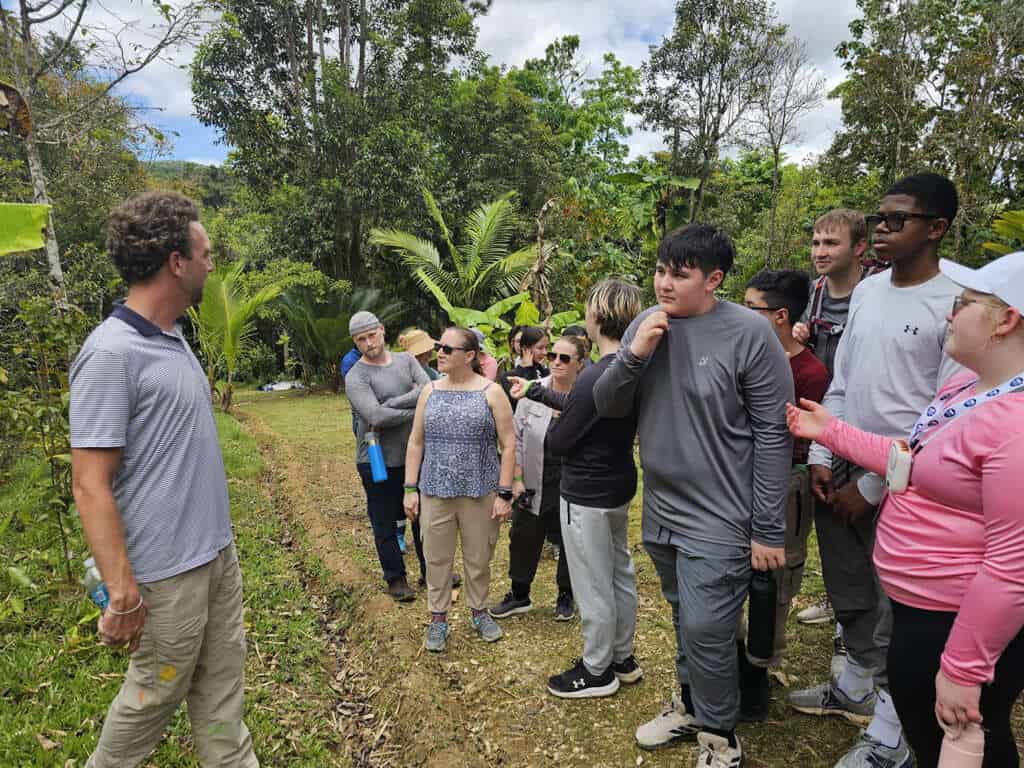
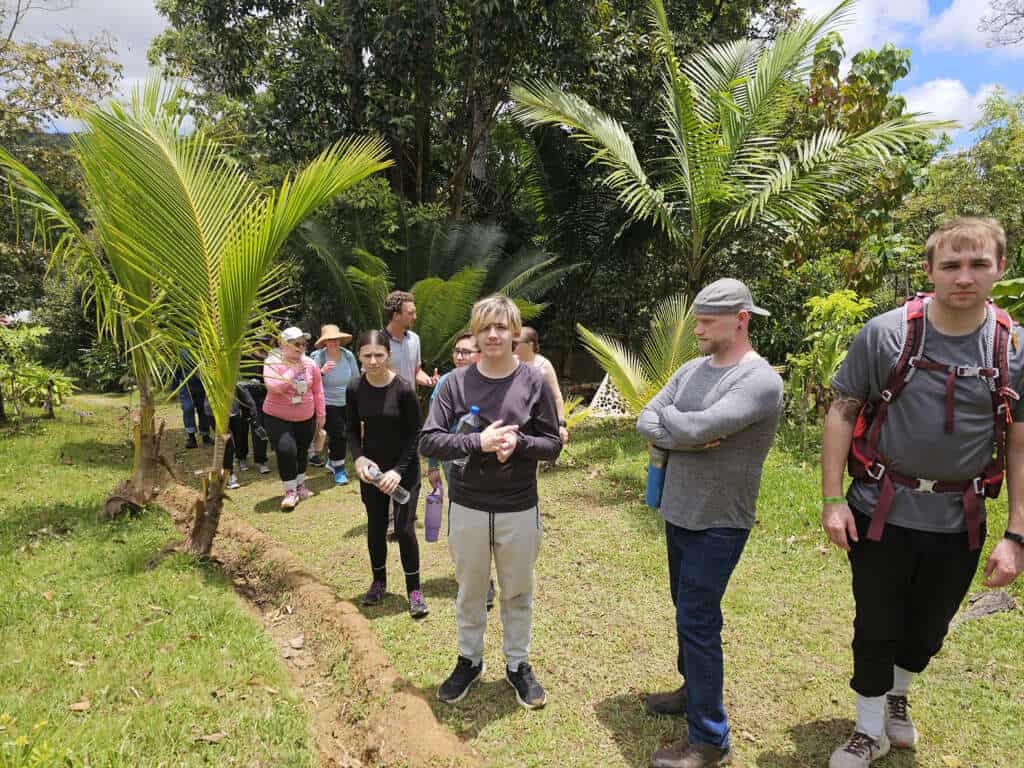
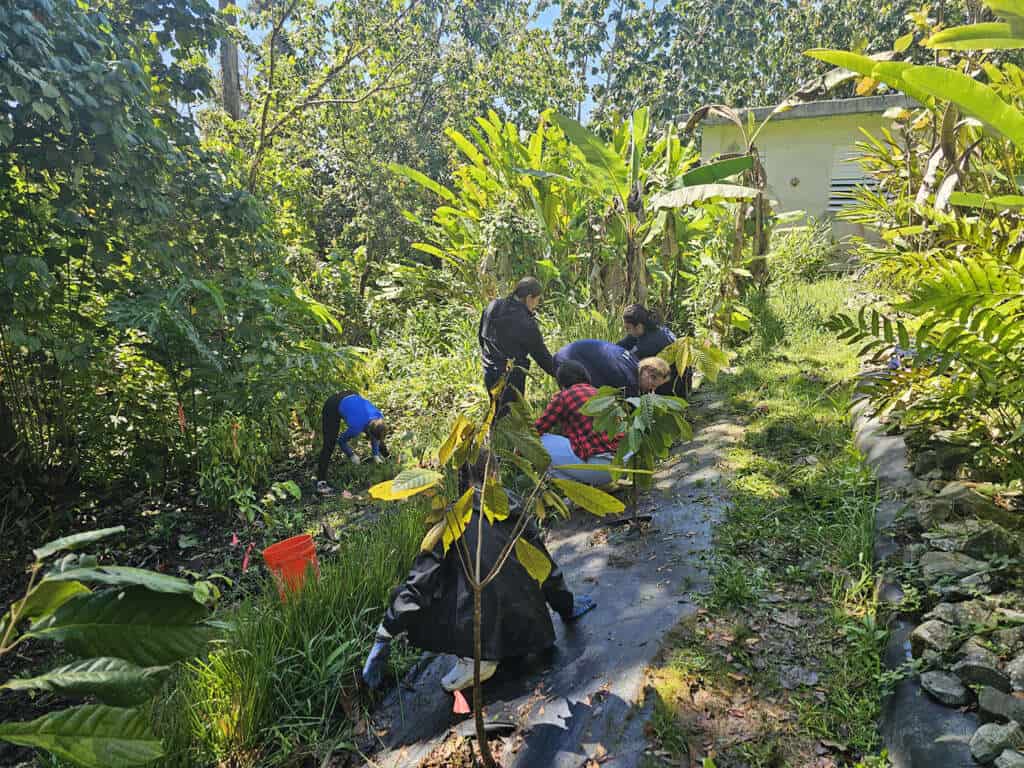
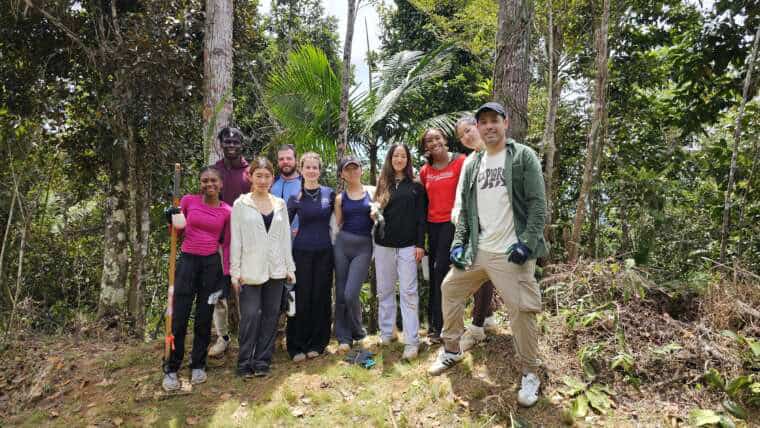
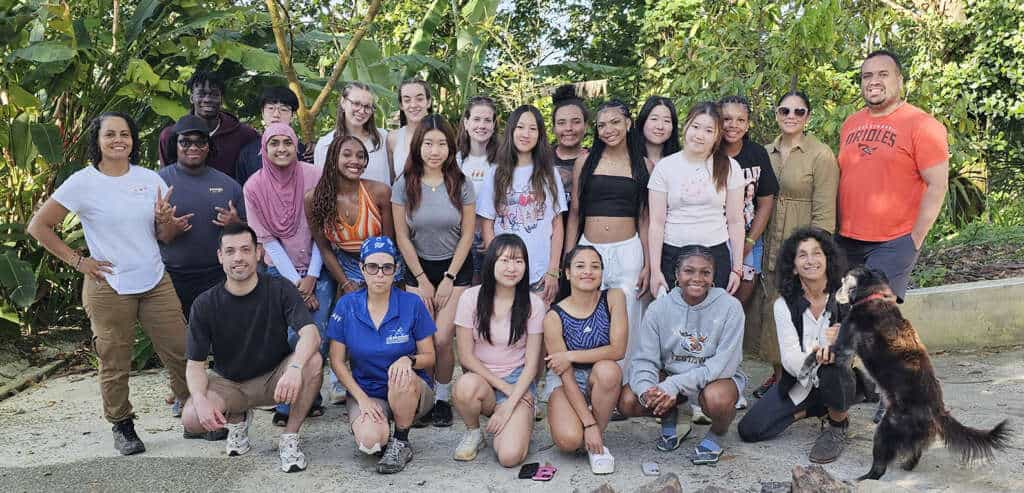
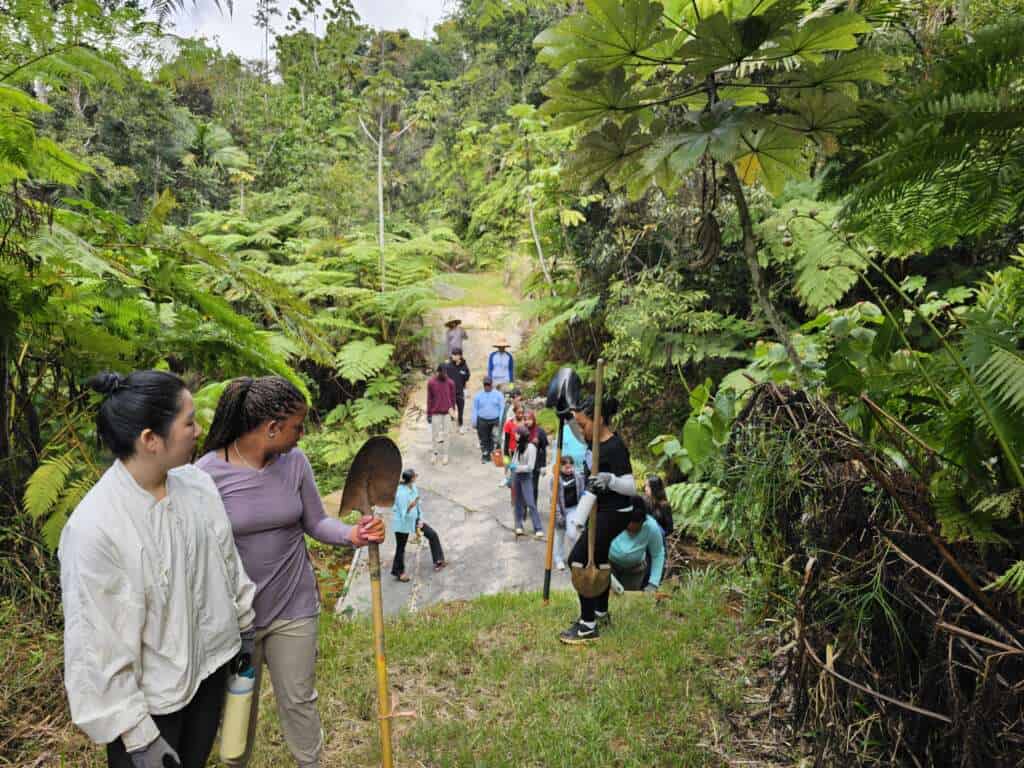
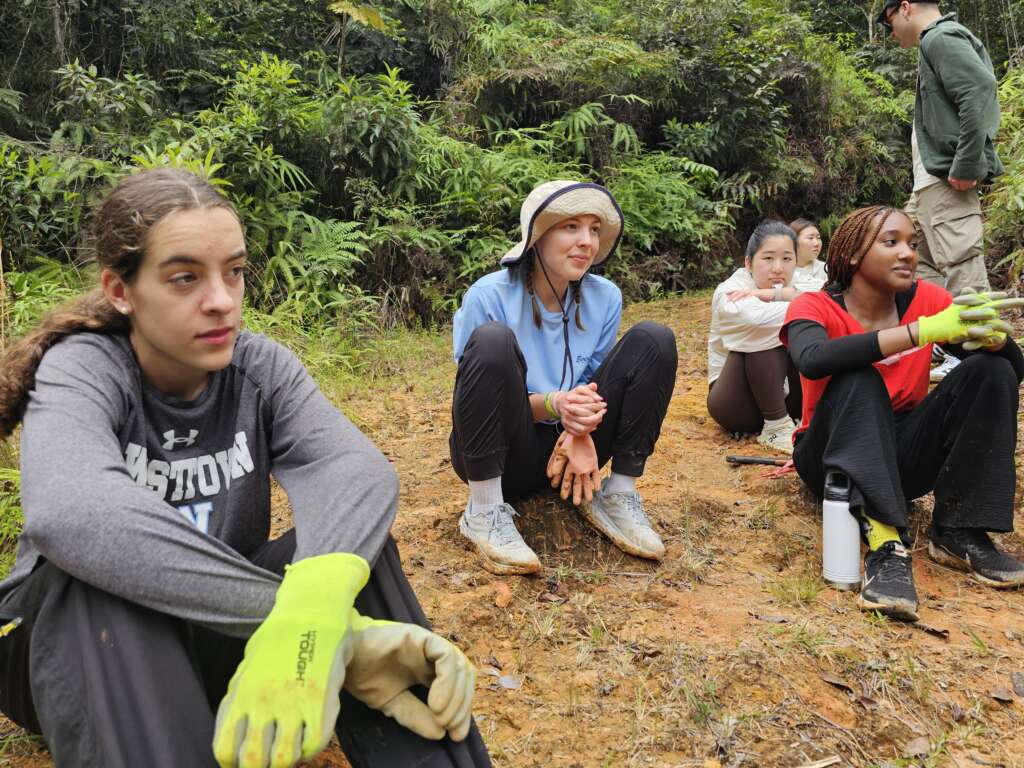
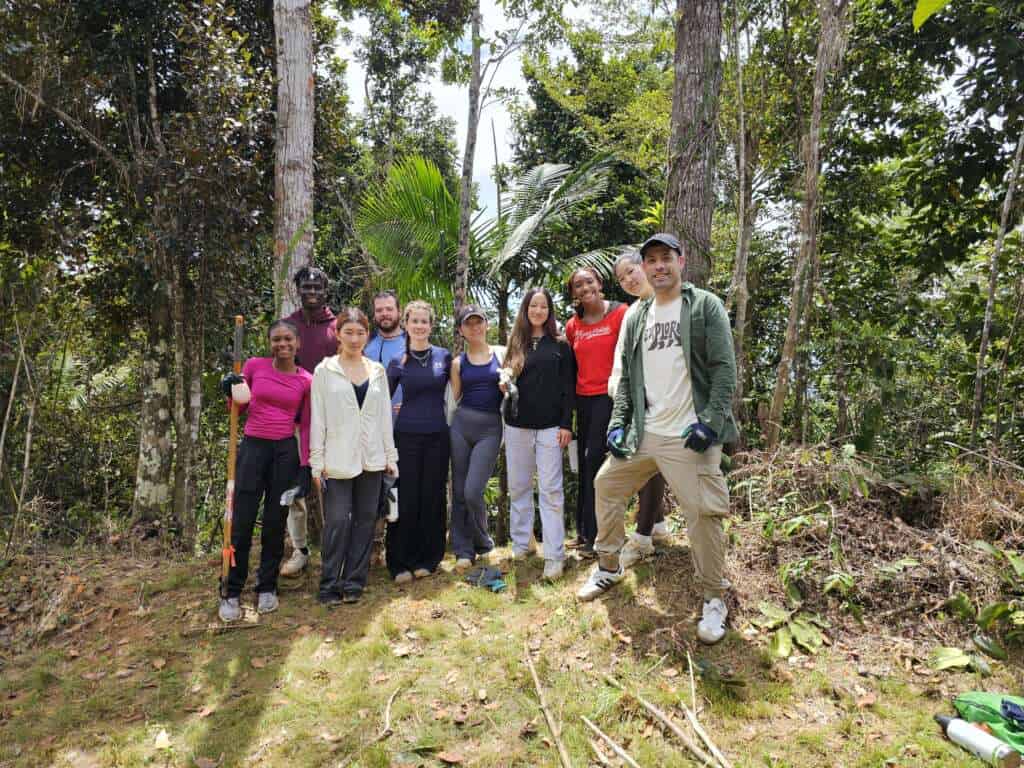
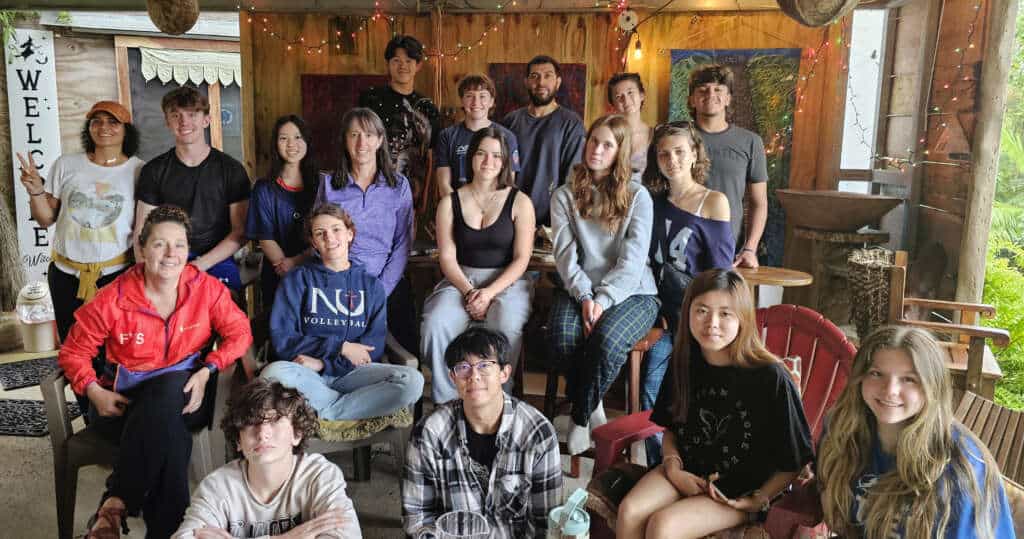
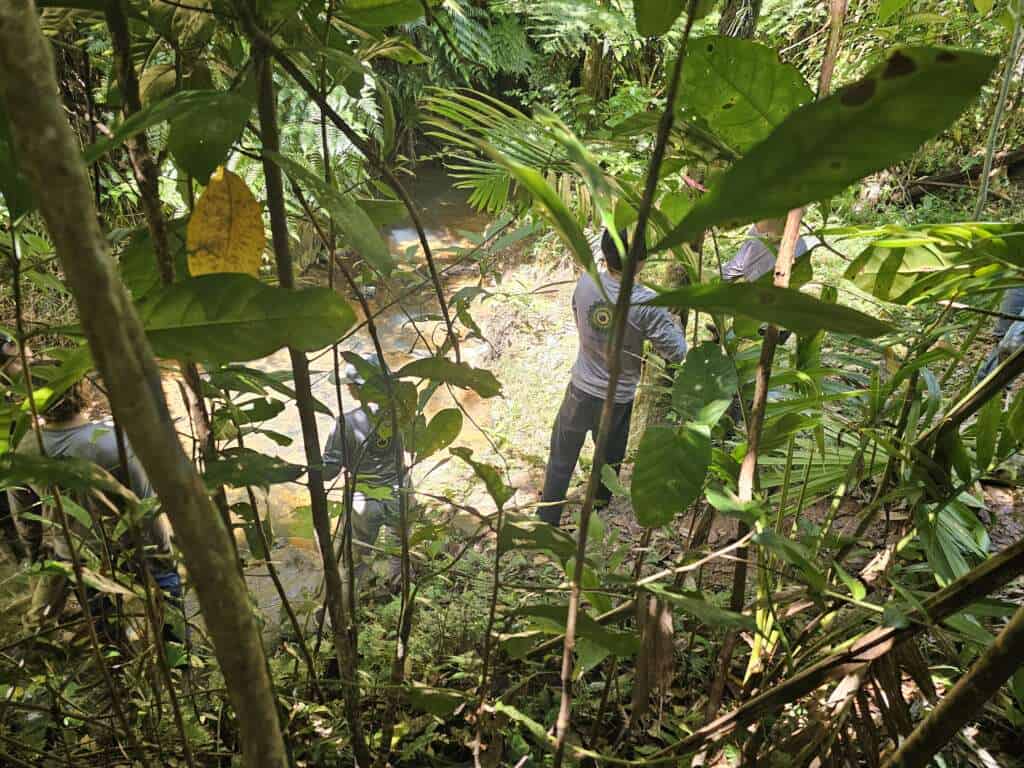
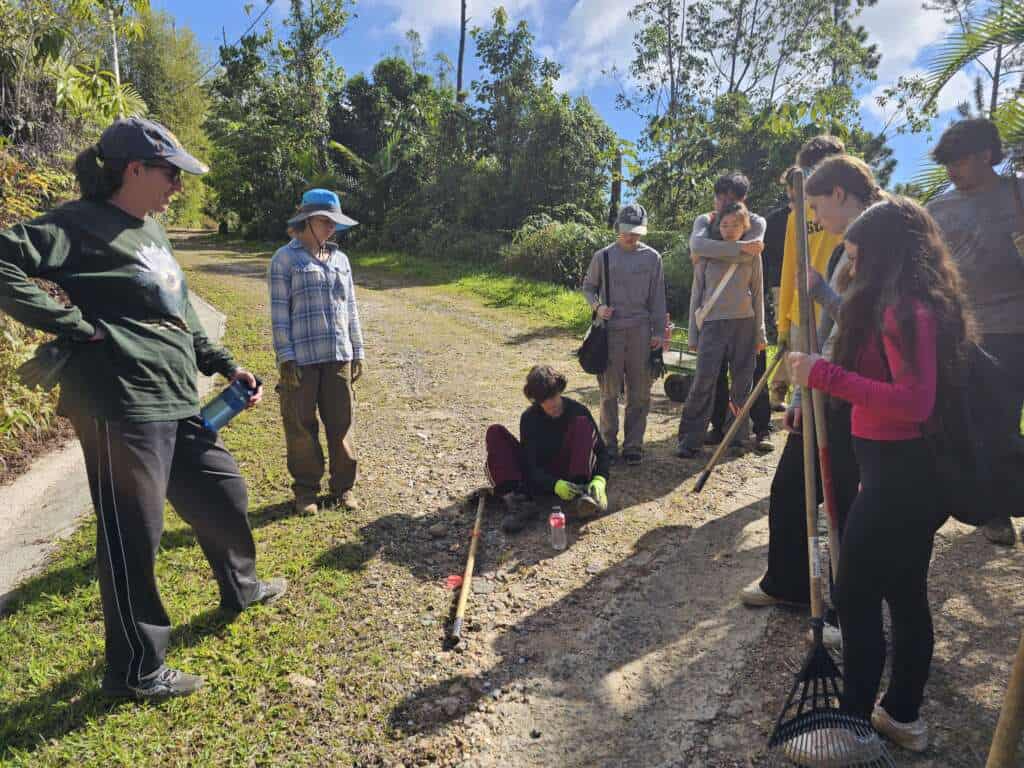
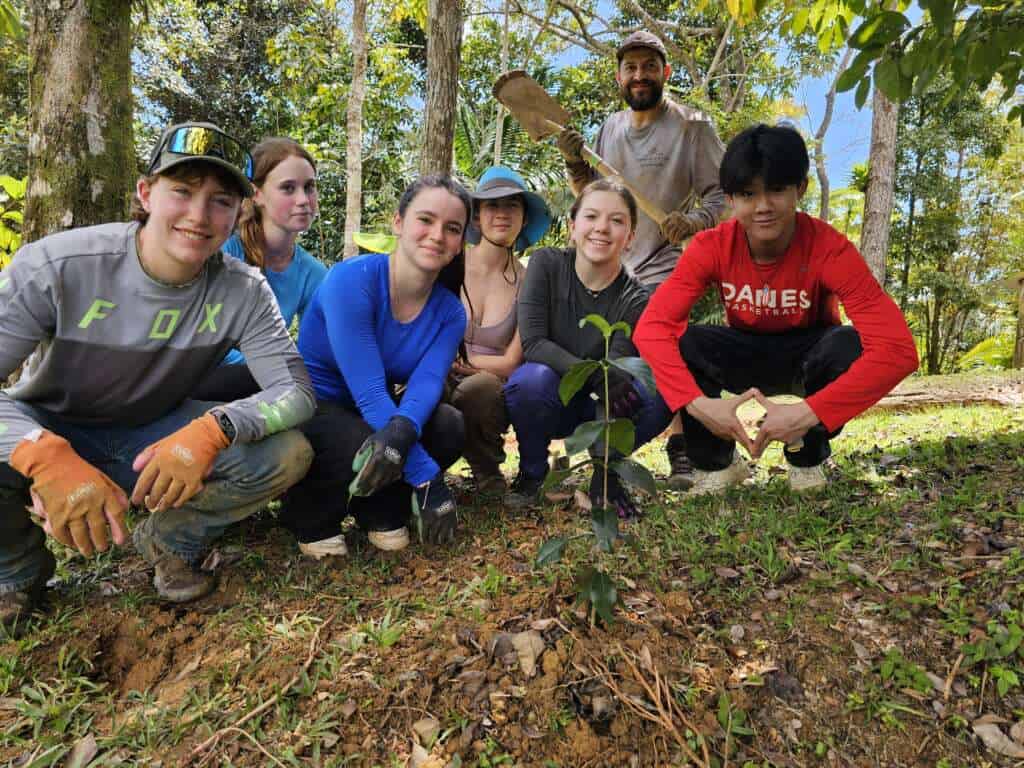
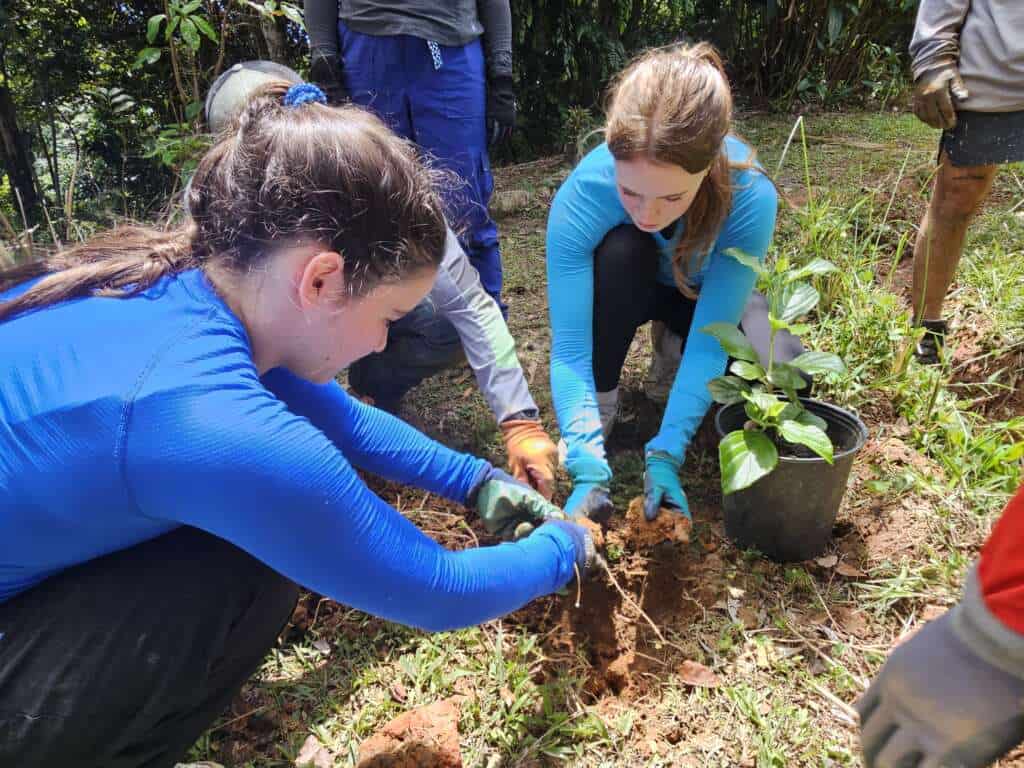
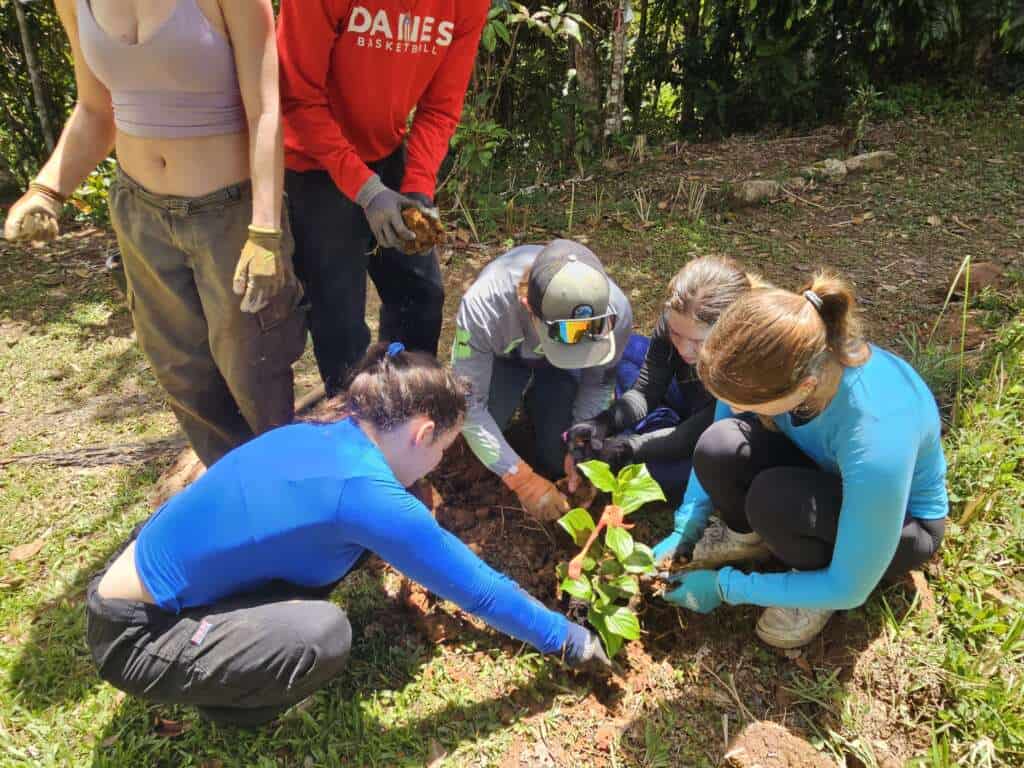
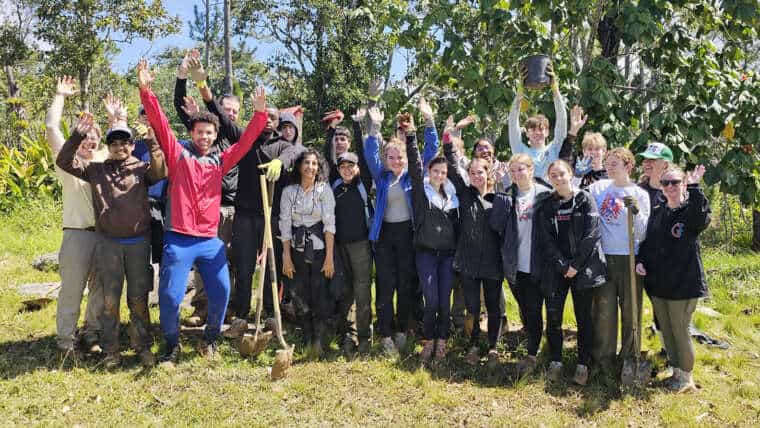
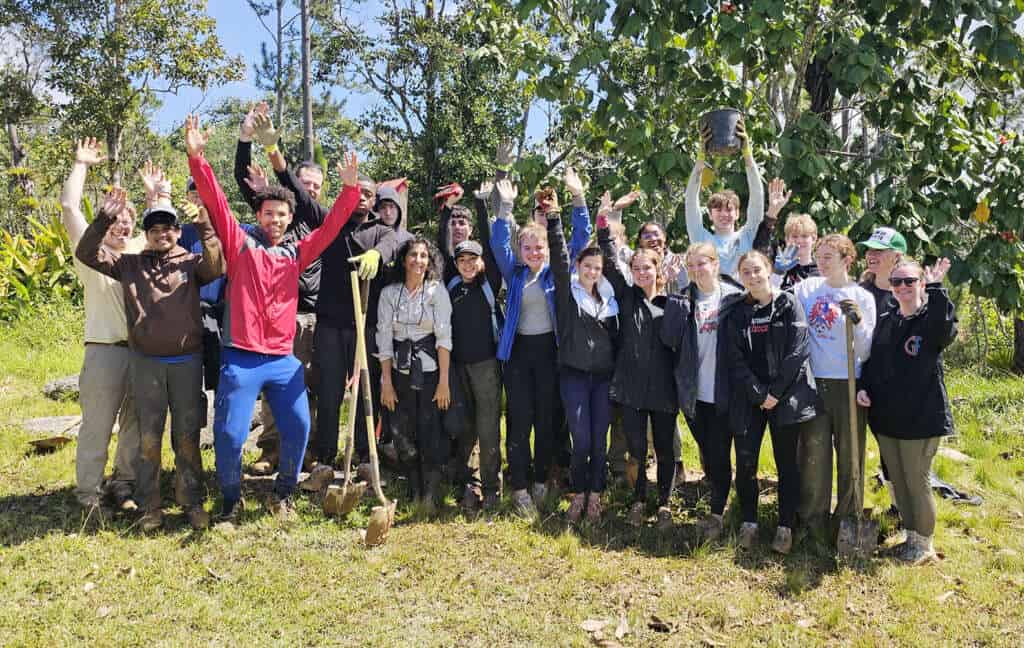
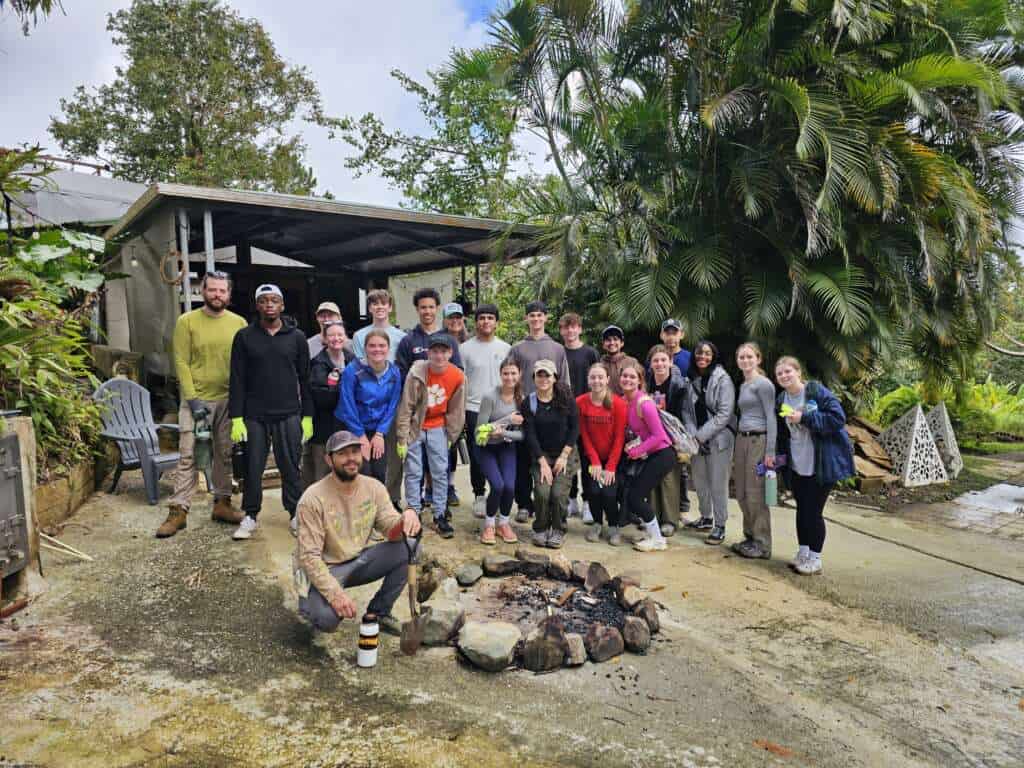
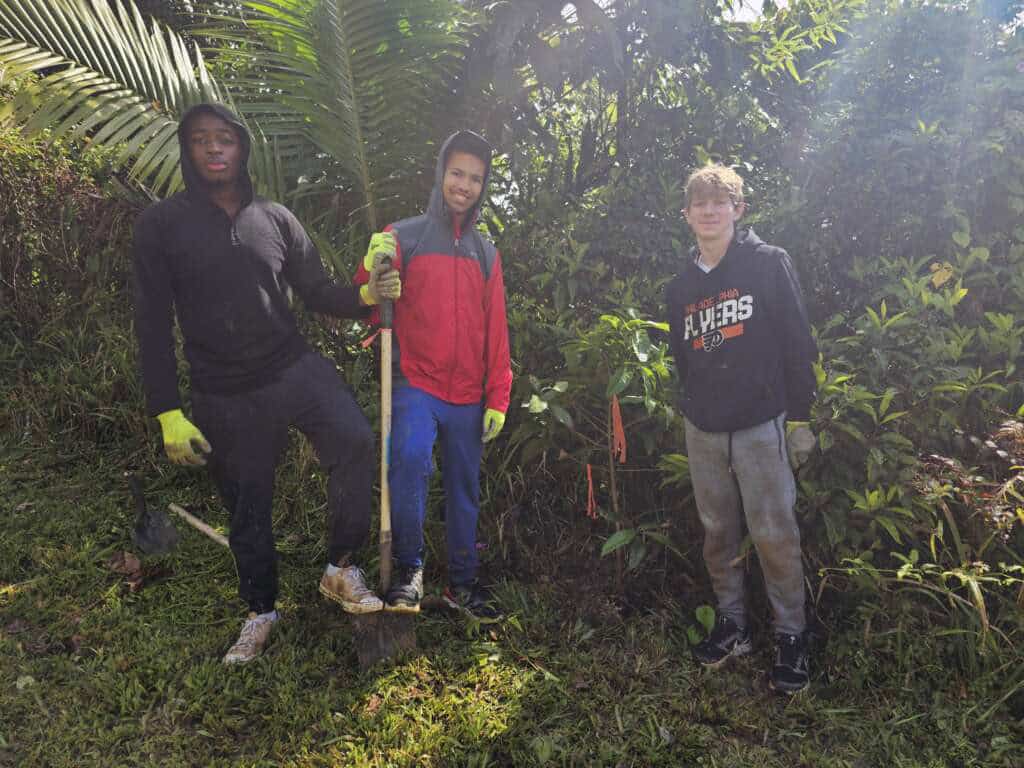
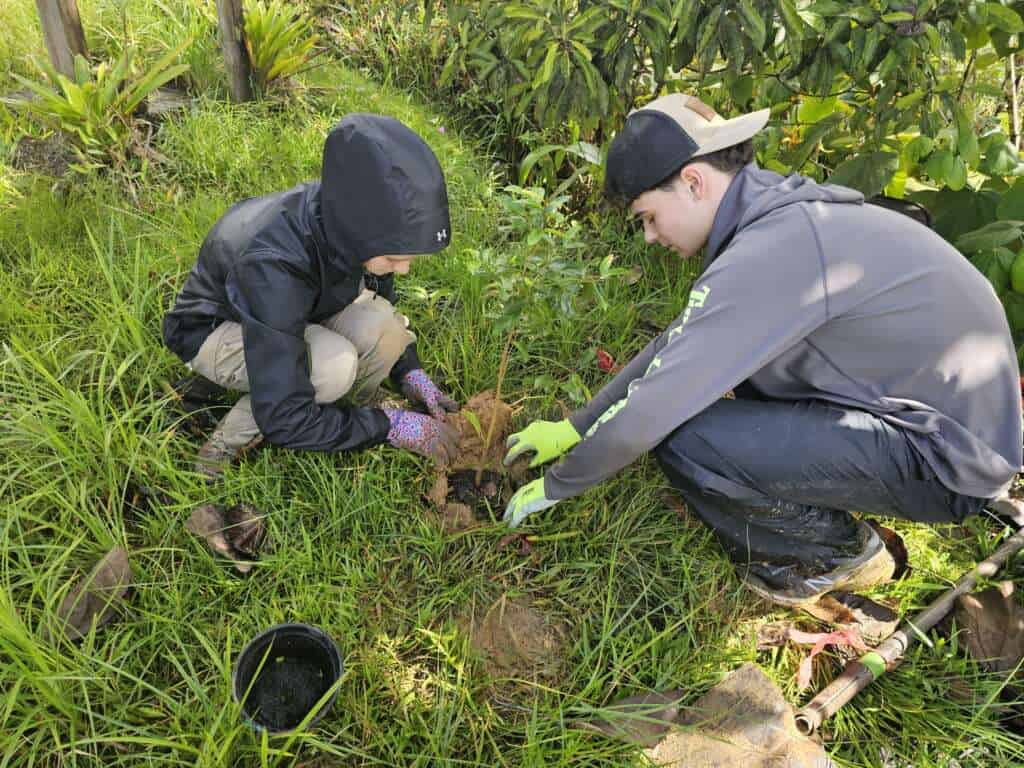
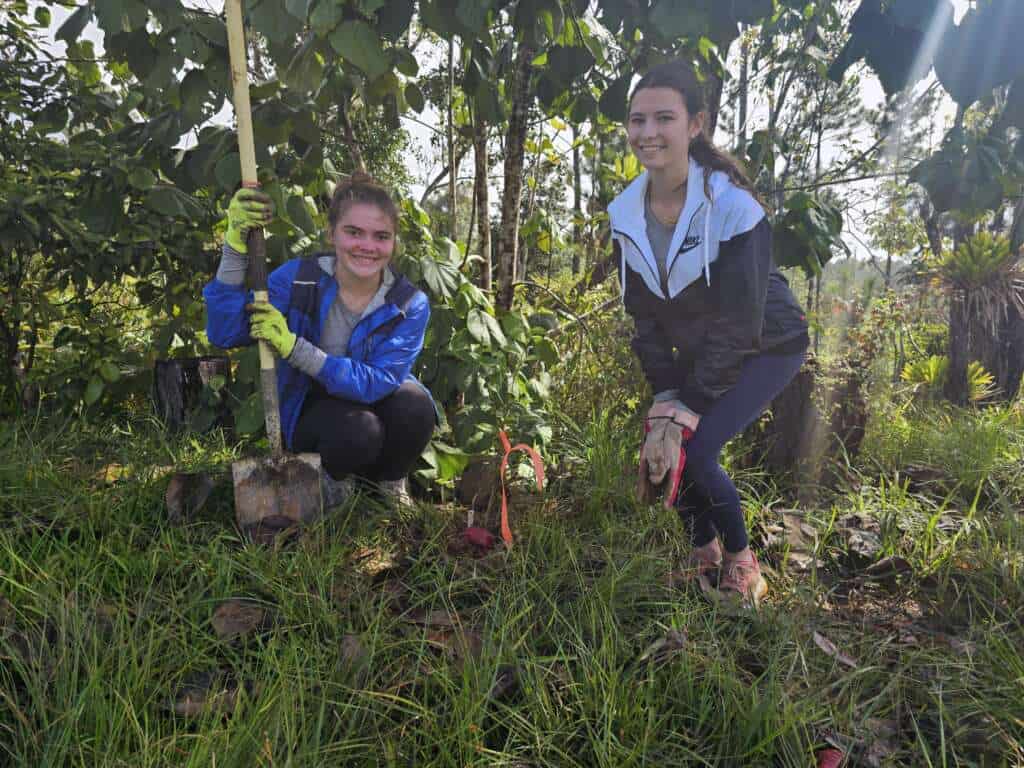
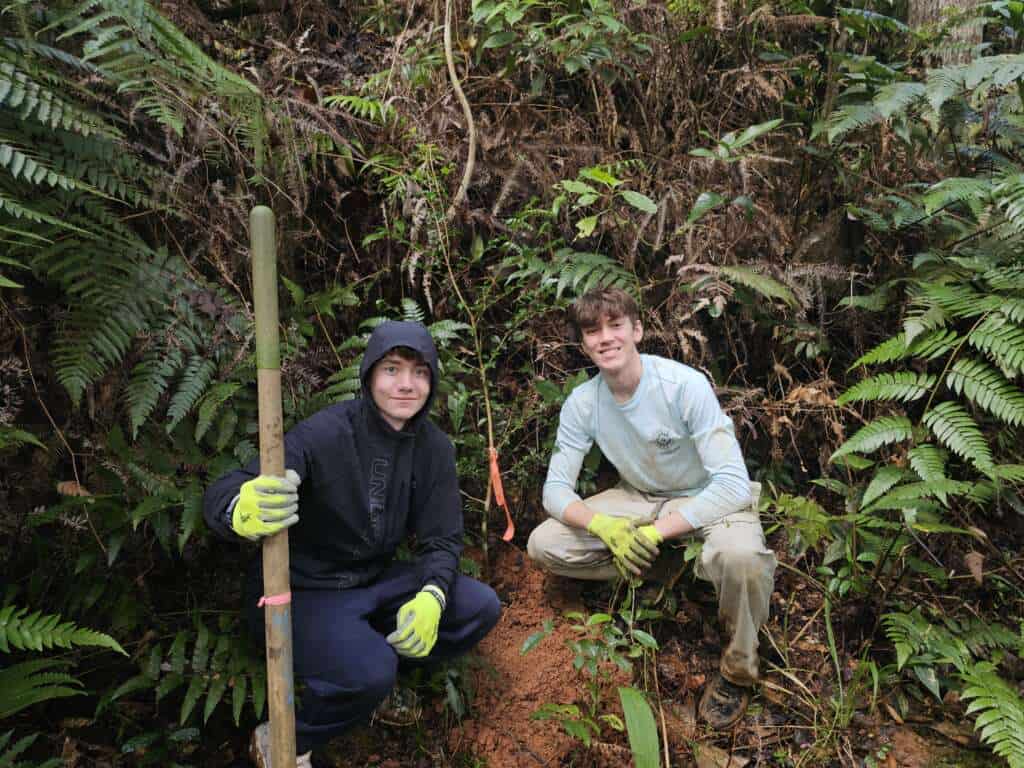
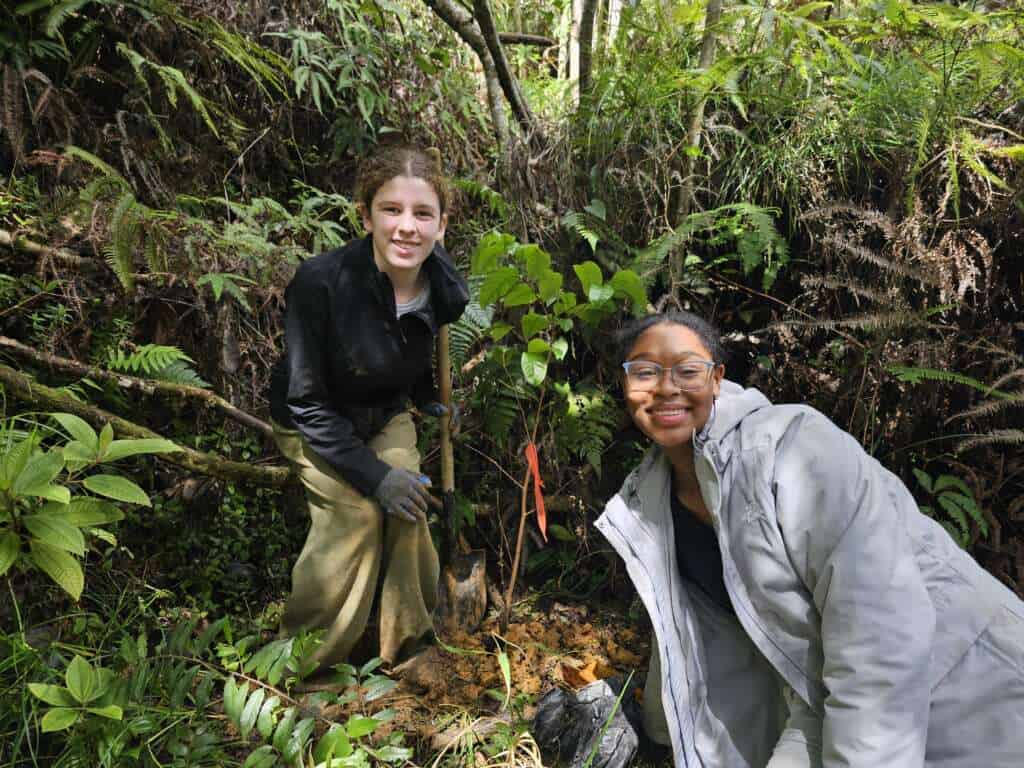
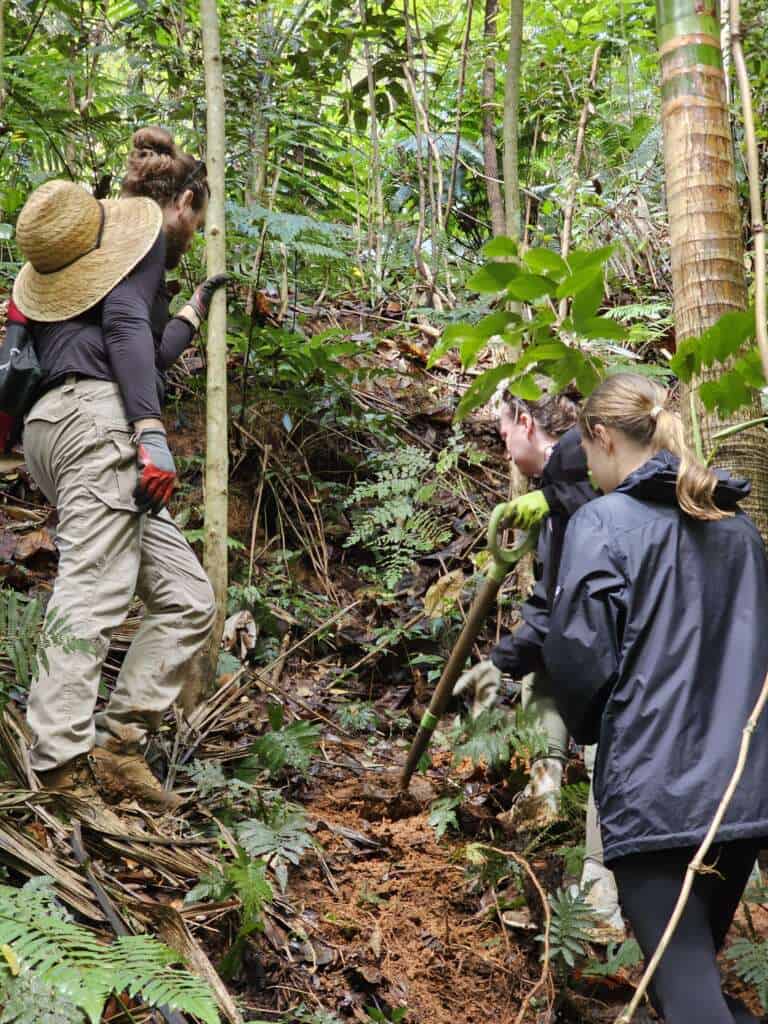
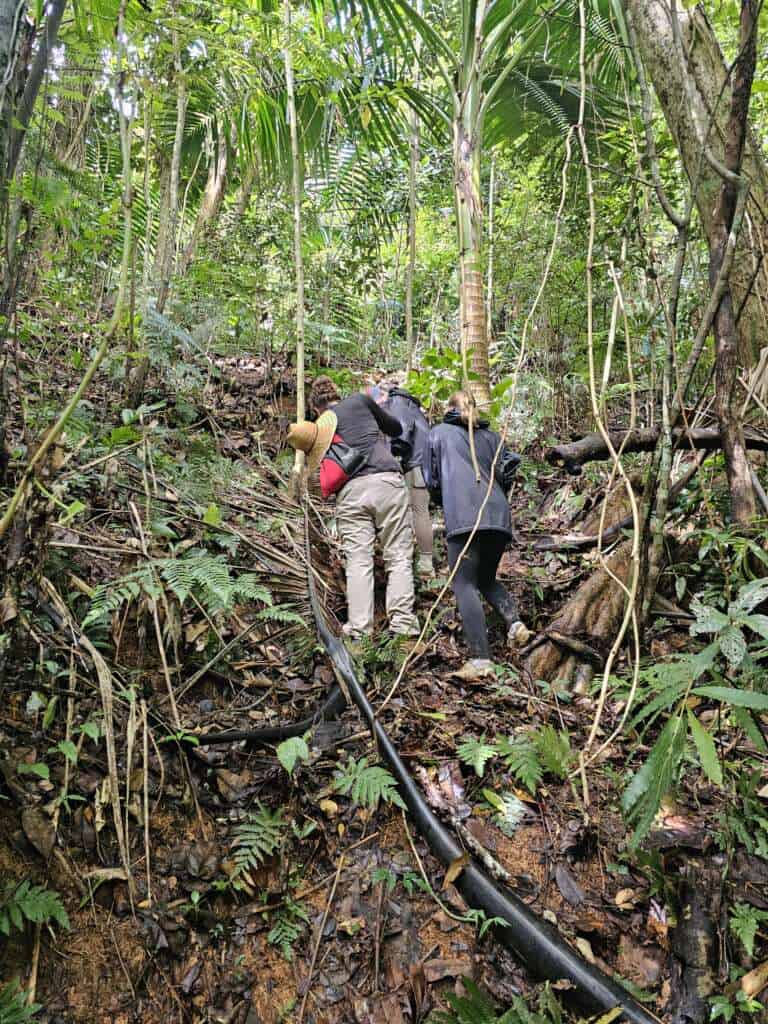
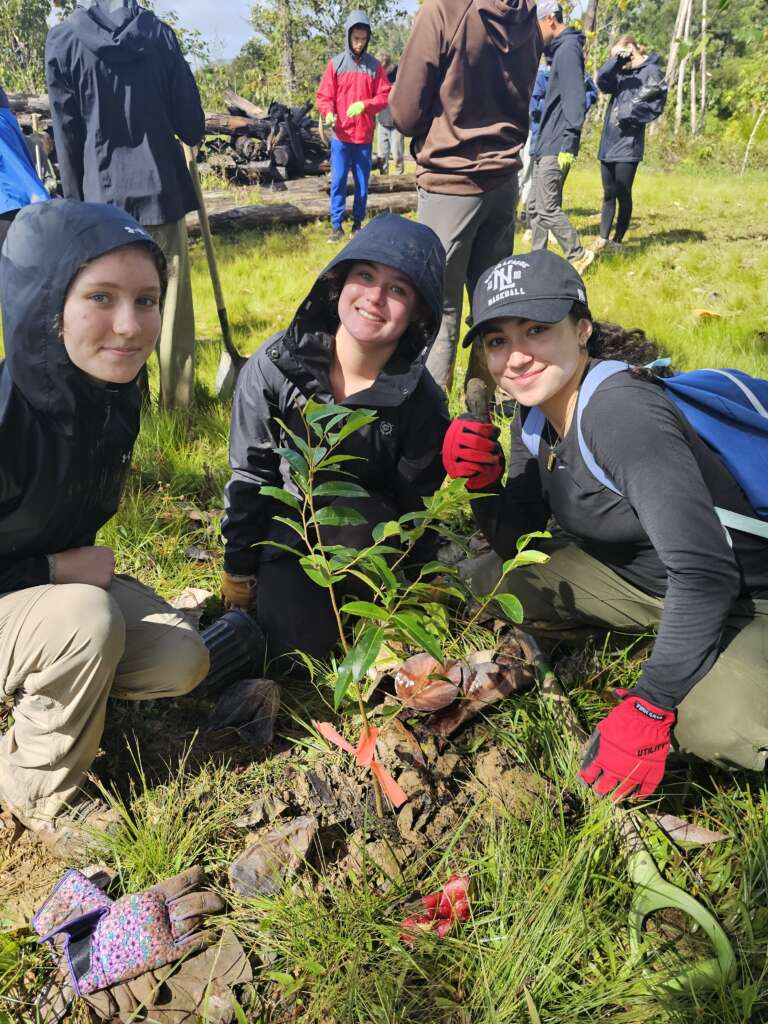
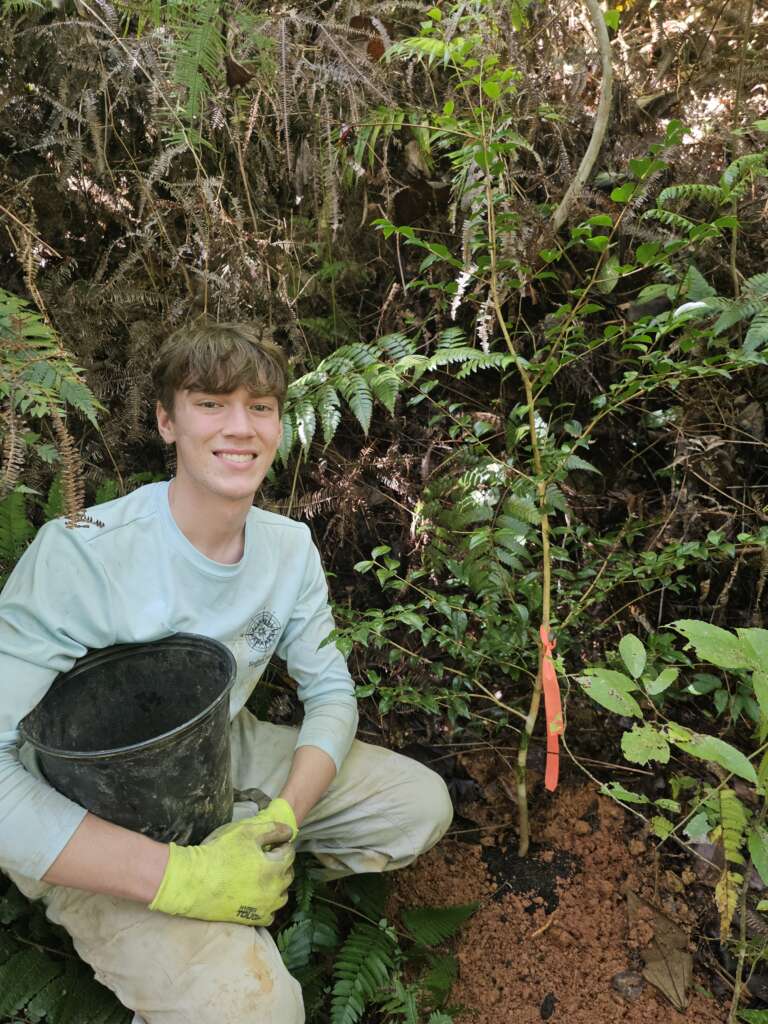
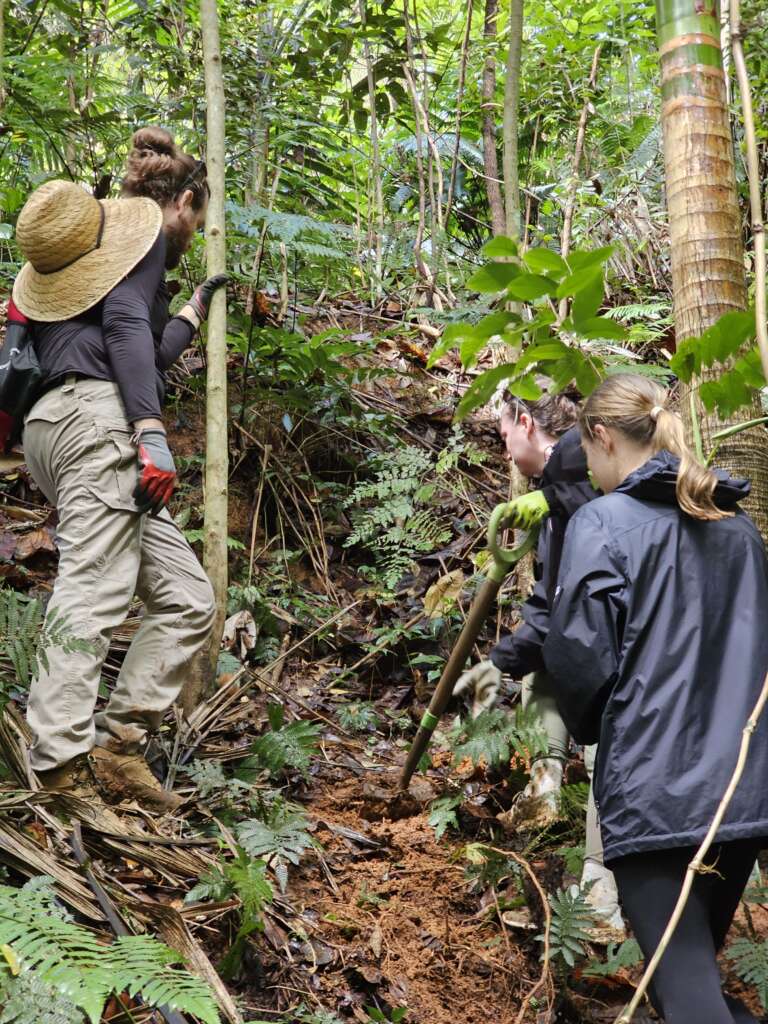
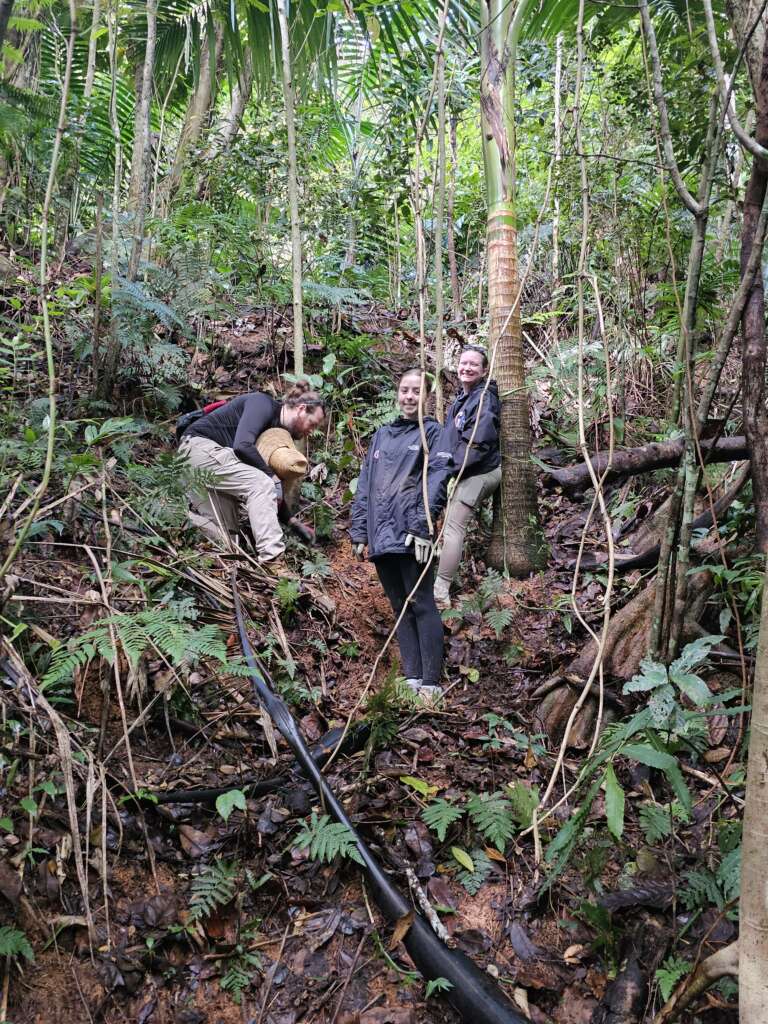
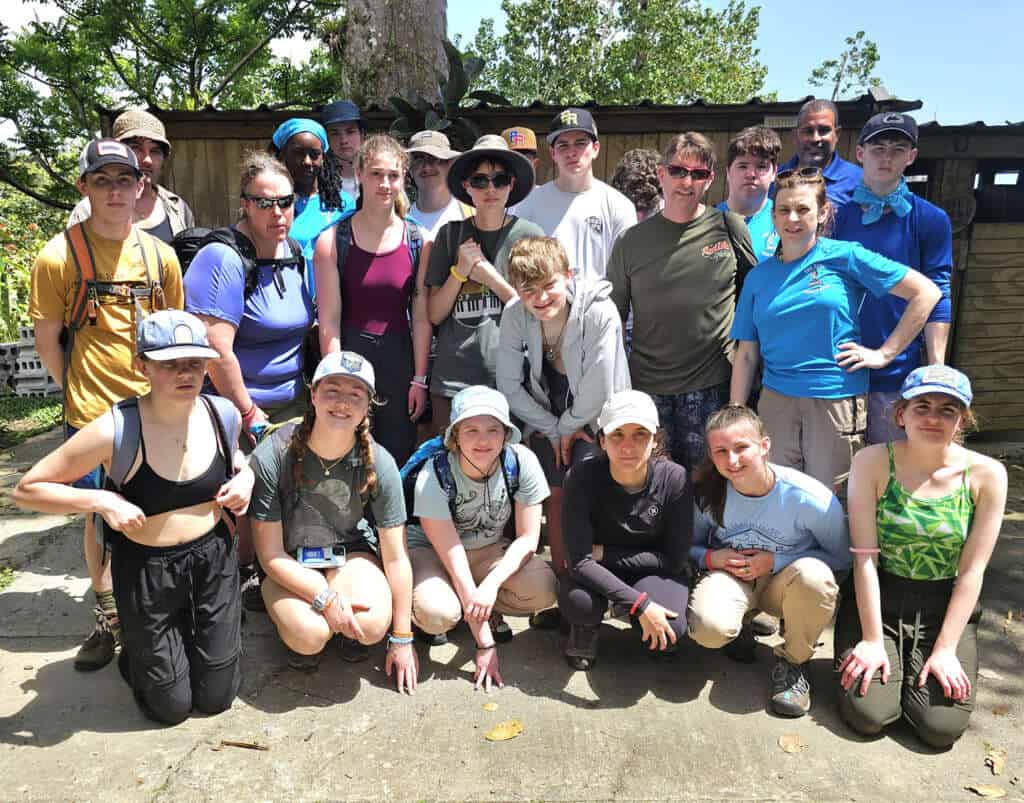
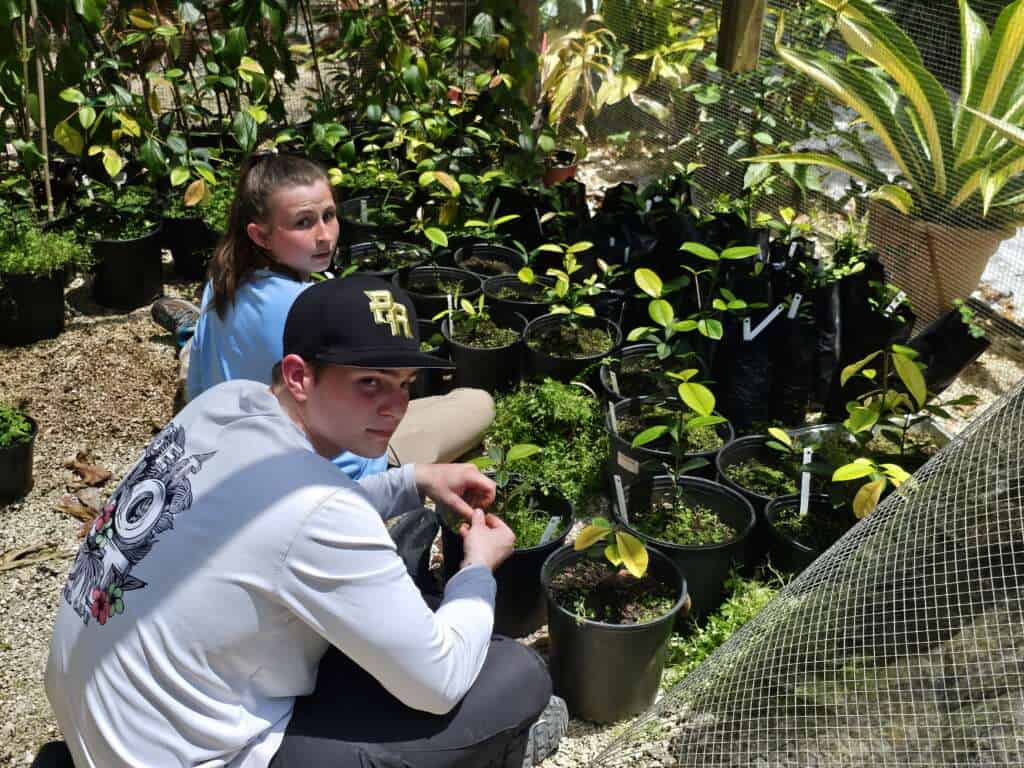
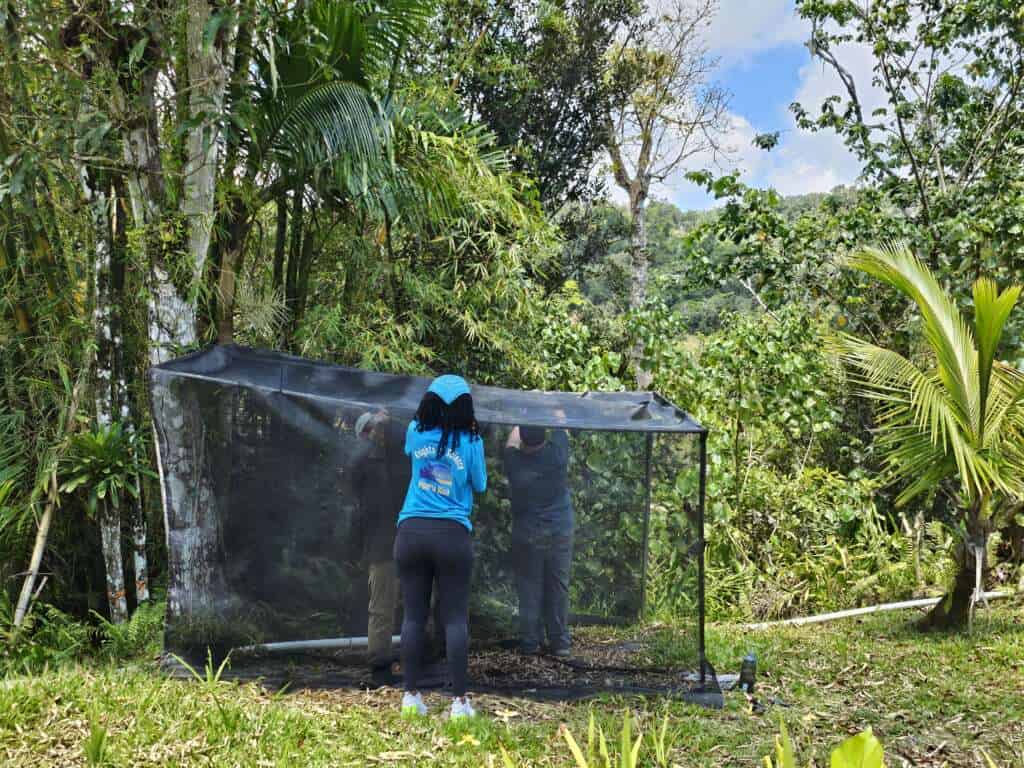
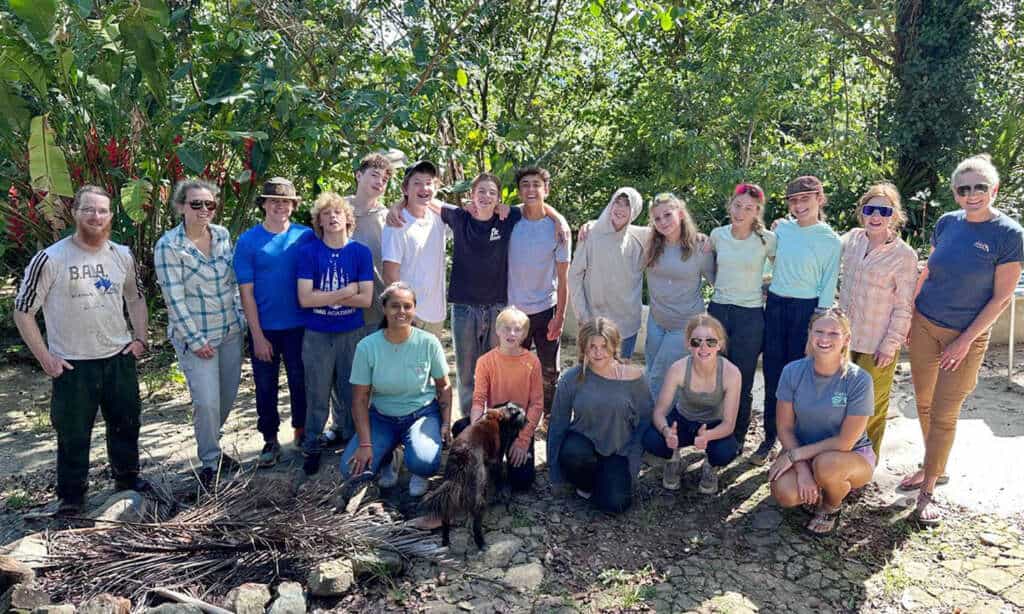
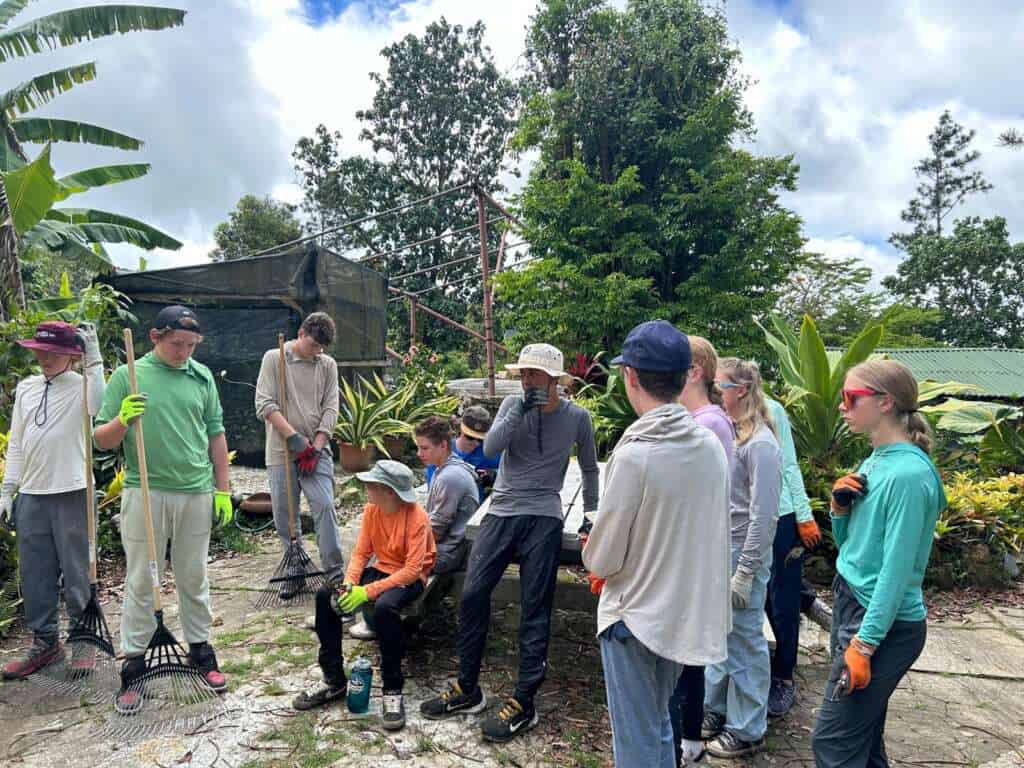
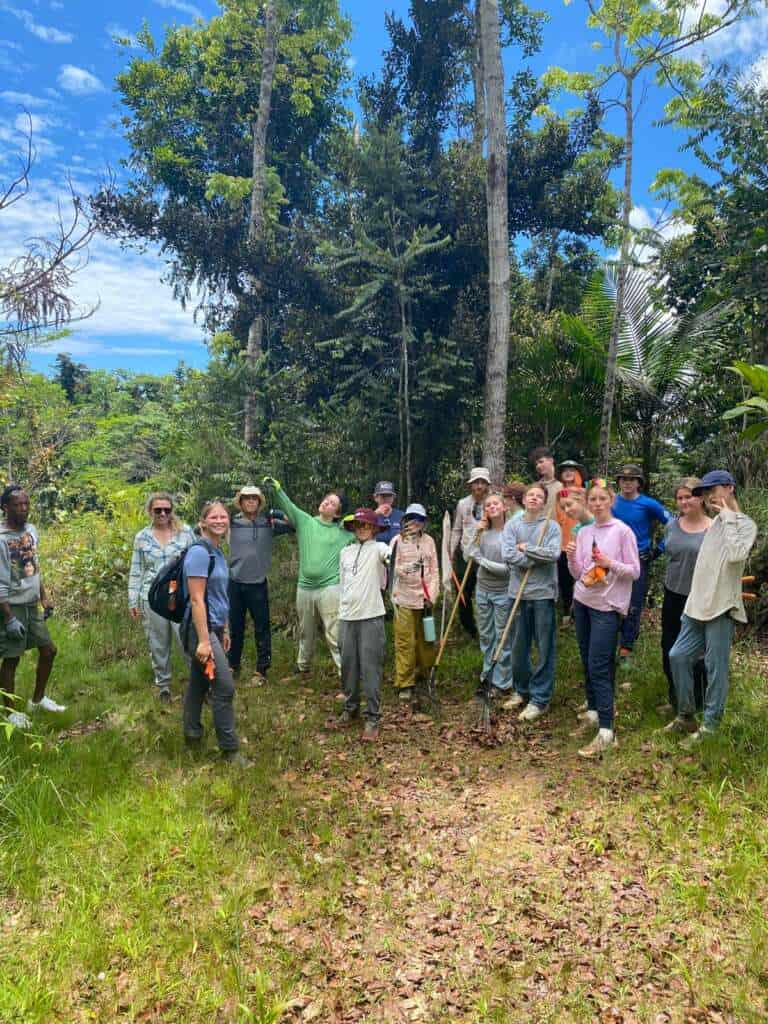
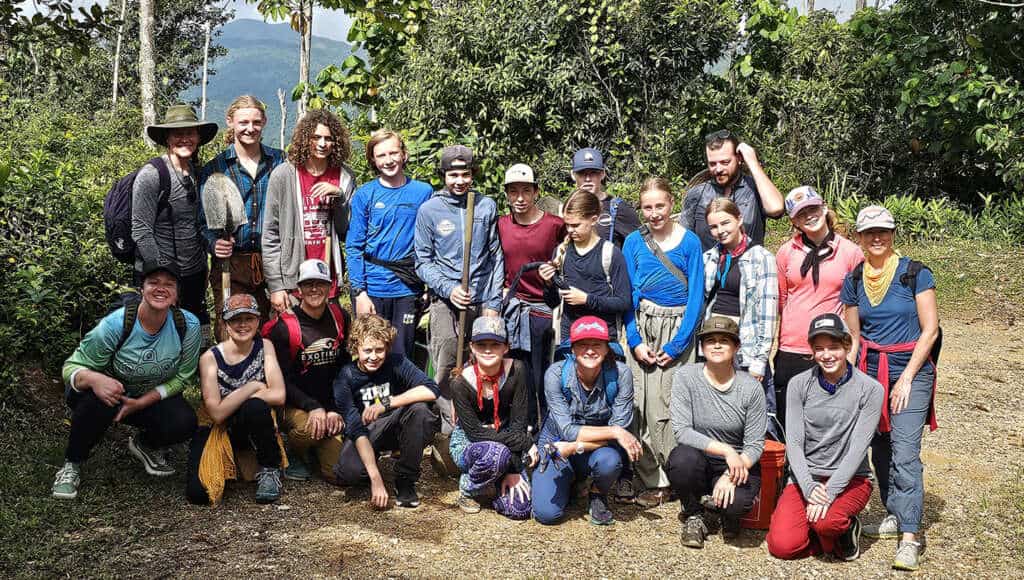
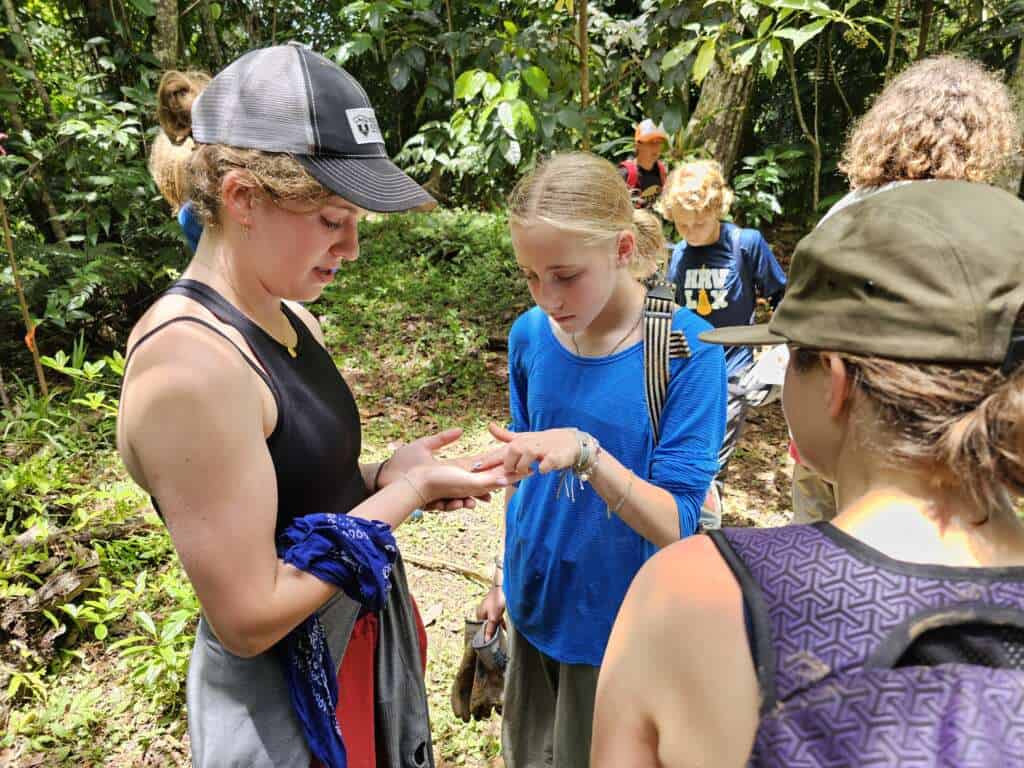
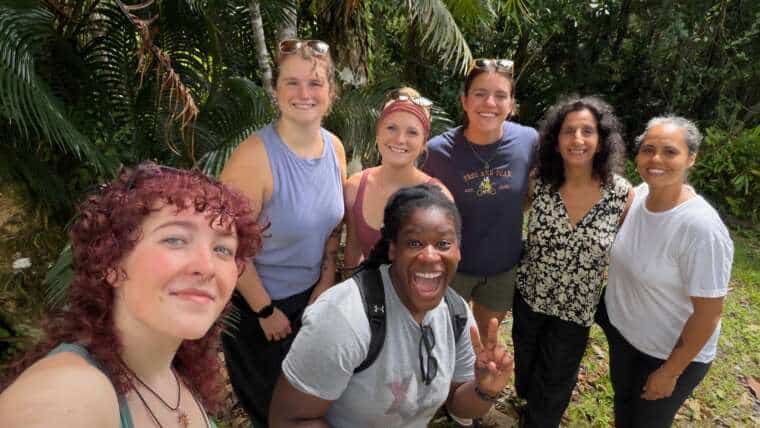
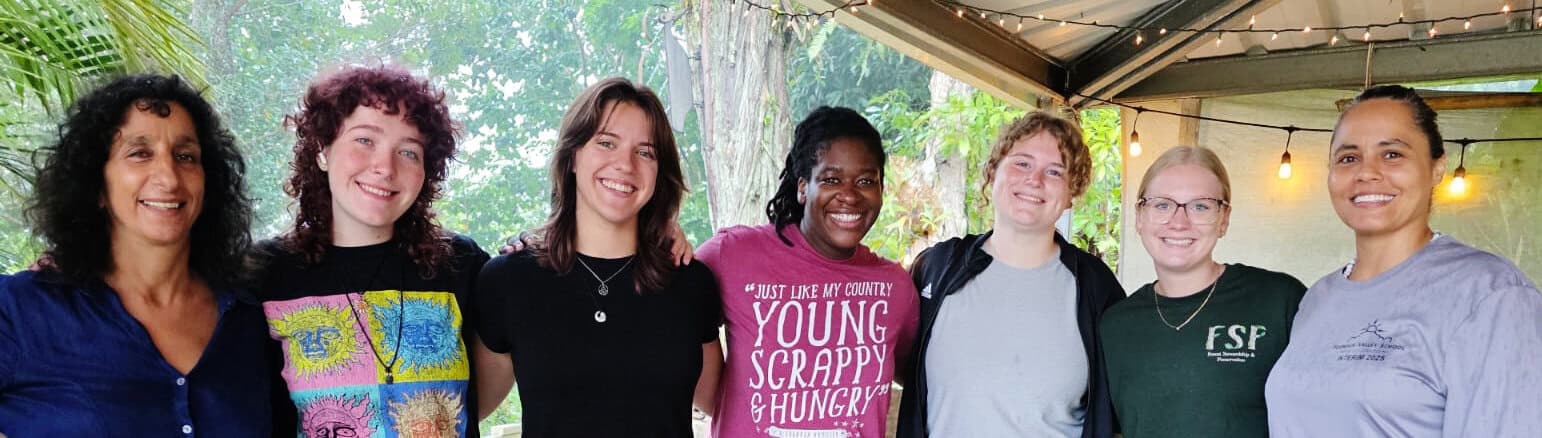
A second Global Works team—25 teenagers accompanied by staff members Lauren, Sam, and Darielys—arrived on 11th July ready to continue the work. Led in the forest by 3t Vakil and Jon Warwick, the group moved beyond the newly opened access route and deeper into the area where Swietenia x aubrevilleana (Mahogany), Manilkara bidentata (Ausubo), and Hibiscus elatas (Blue Mahoe) trees had been planted on land that was regaining secondary forest. Shade at an early age was imperative for the growth of these tropical hardwoods.

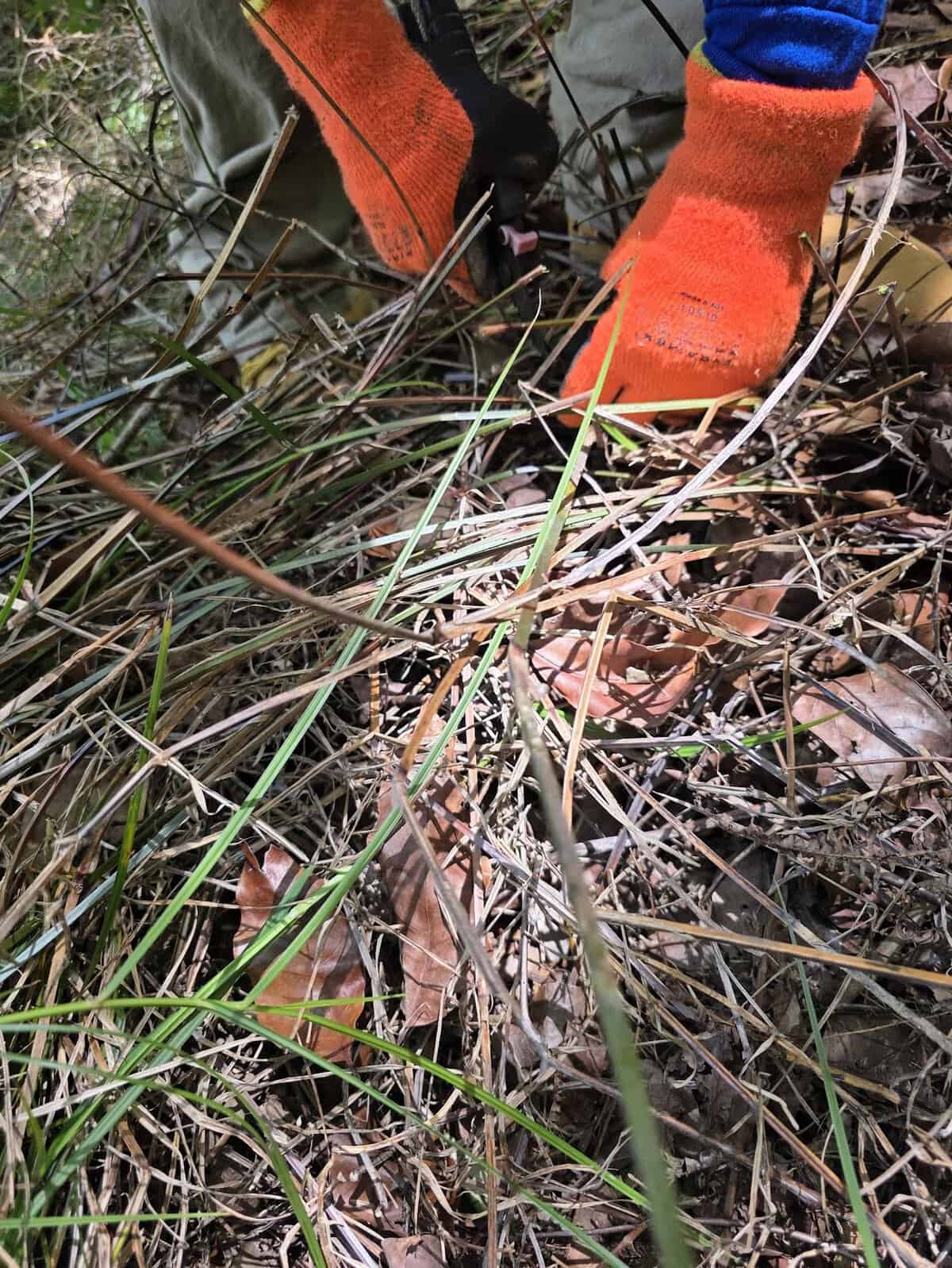
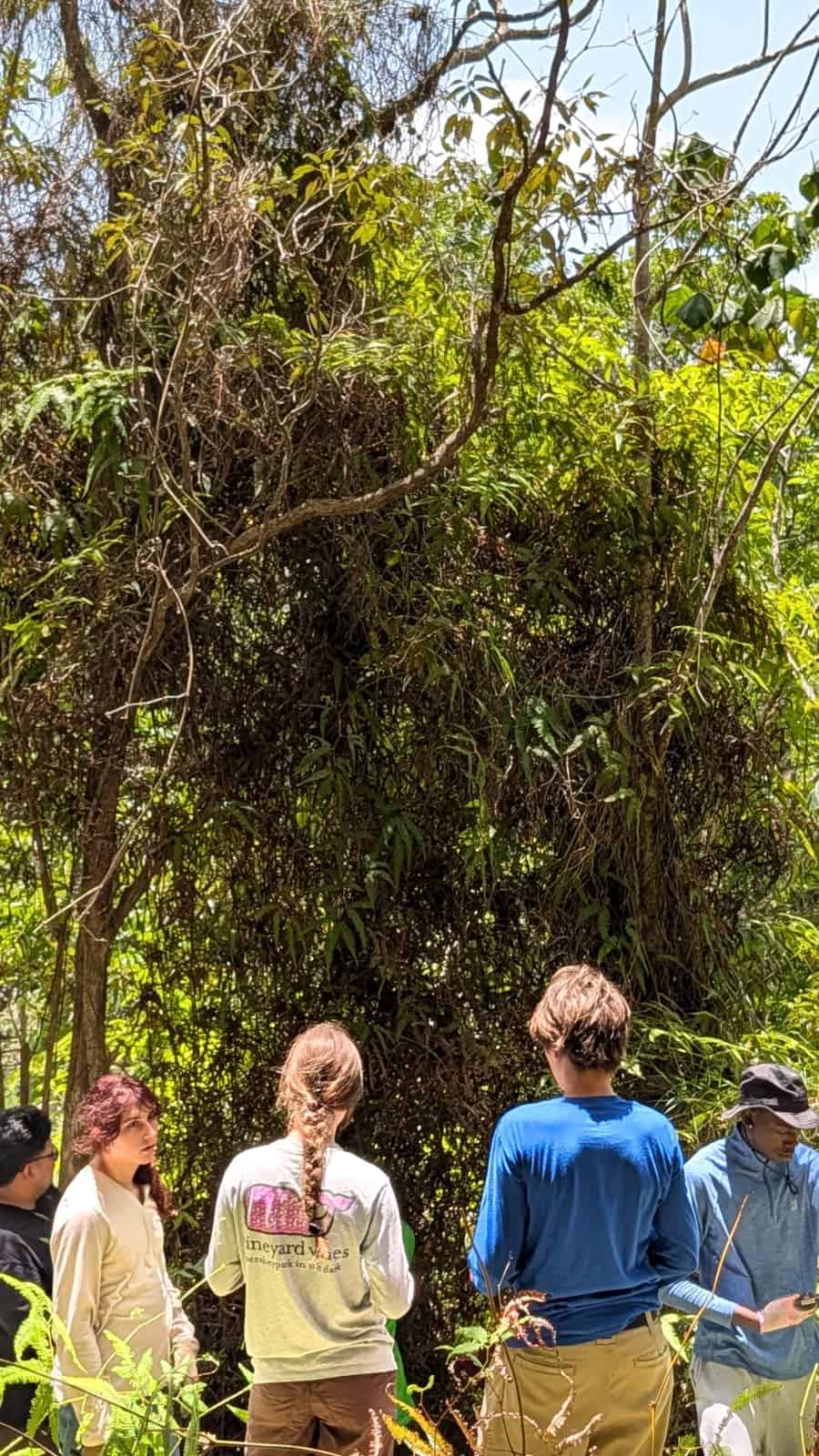
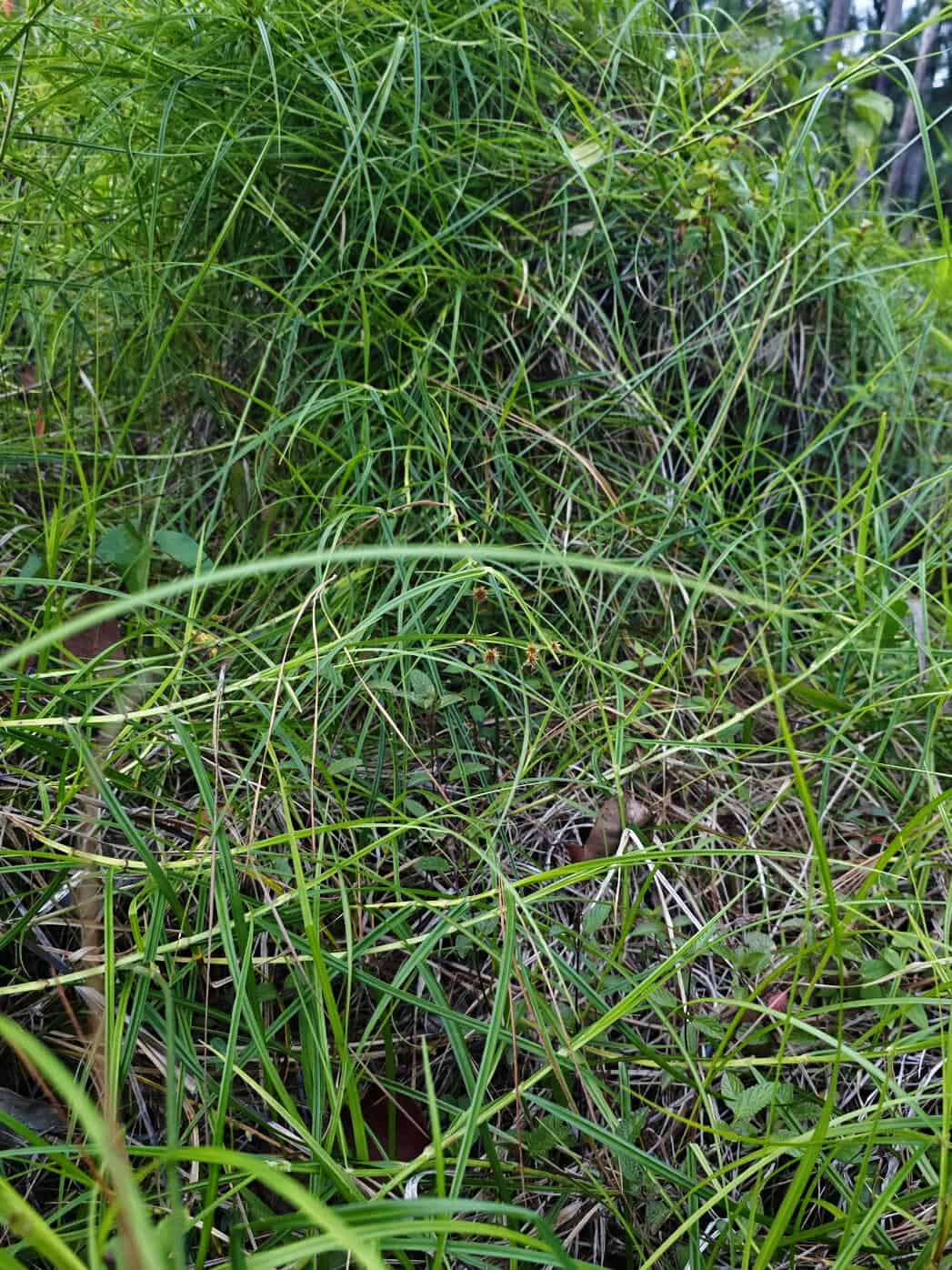
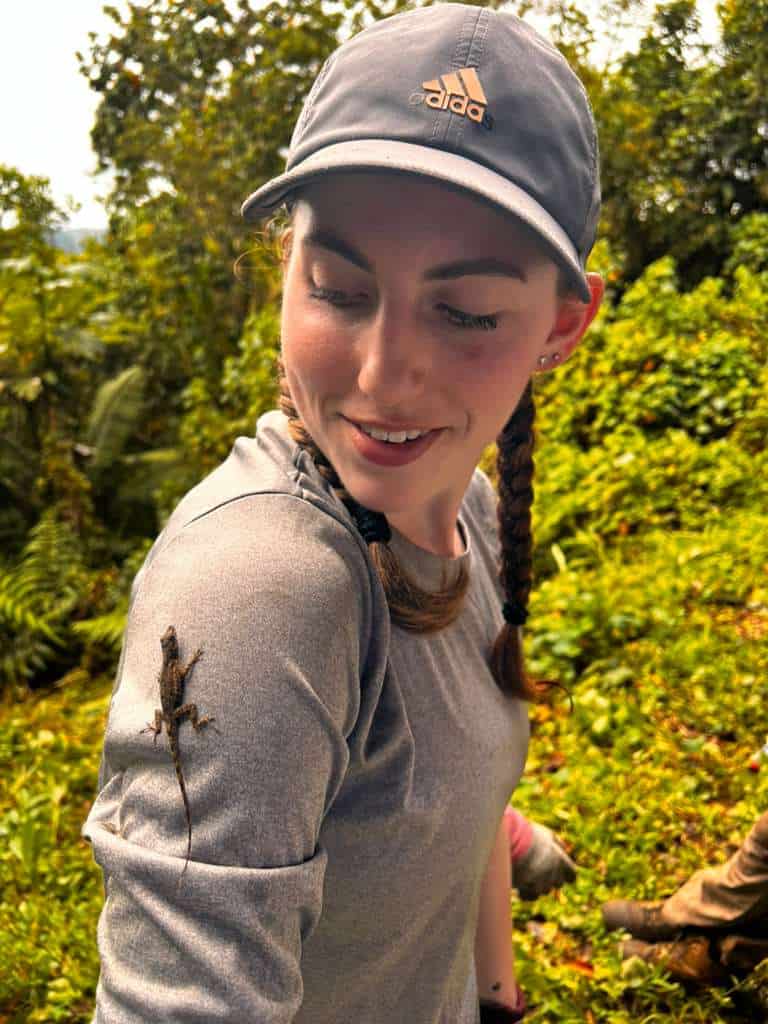
Scleria secans is a large, scrambling sedge native to tropical America. Unlike a true grass, it belongs to the sedge family, Cyperaceae. Its triangular stems and long leaves have razor-sharp, saw-like margins capable of cutting exposed skin—hence the fitting name “razor grass.”Scleria is a genus of approximately 200 flowering plant species, commonly known as nutrushes. They are found mainly throughout the tropics, although some species extend into temperate regions. The genus name comes from the Greek word for “hardness,” referring to the plants’ characteristically tough seeds.

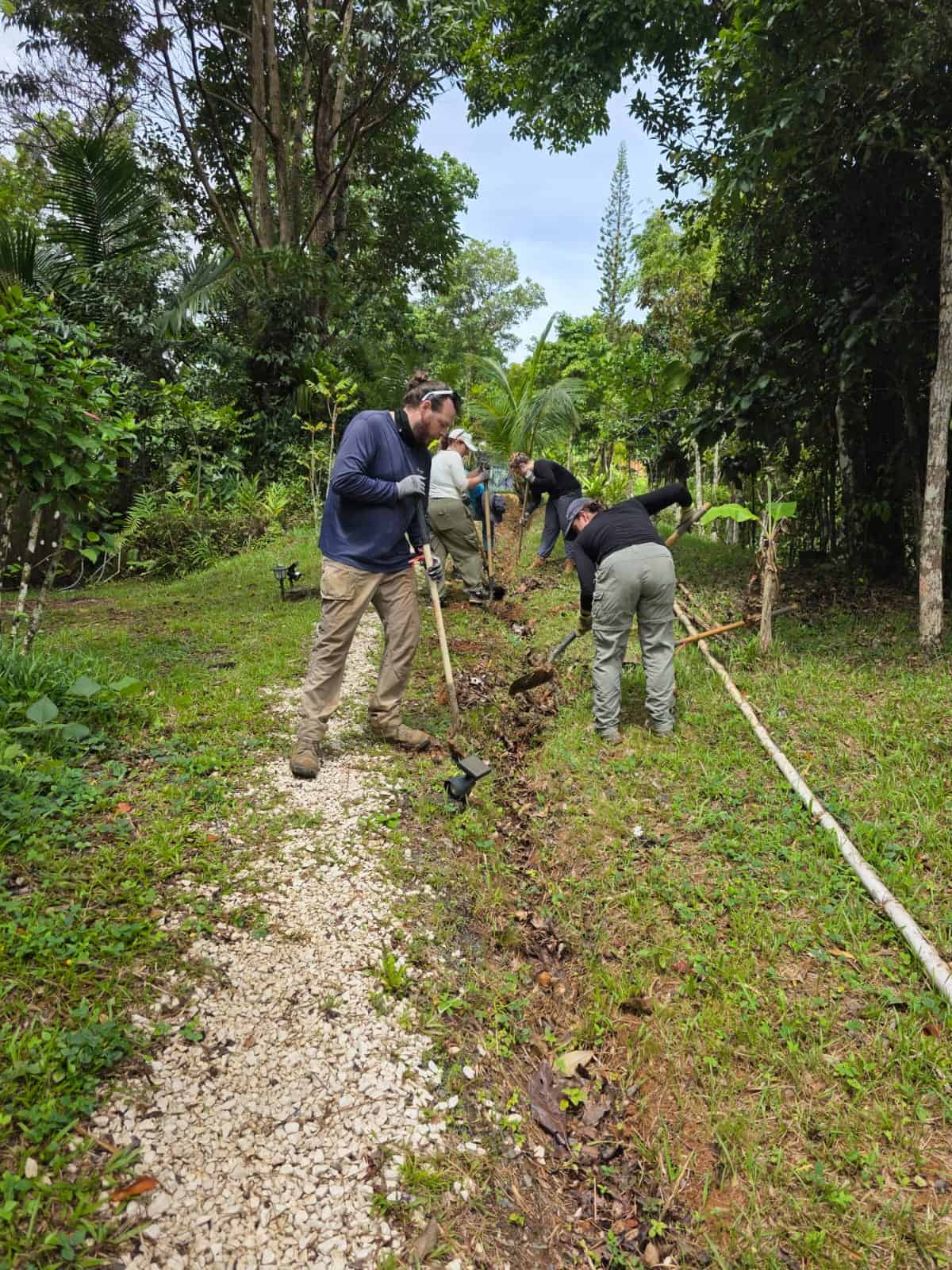
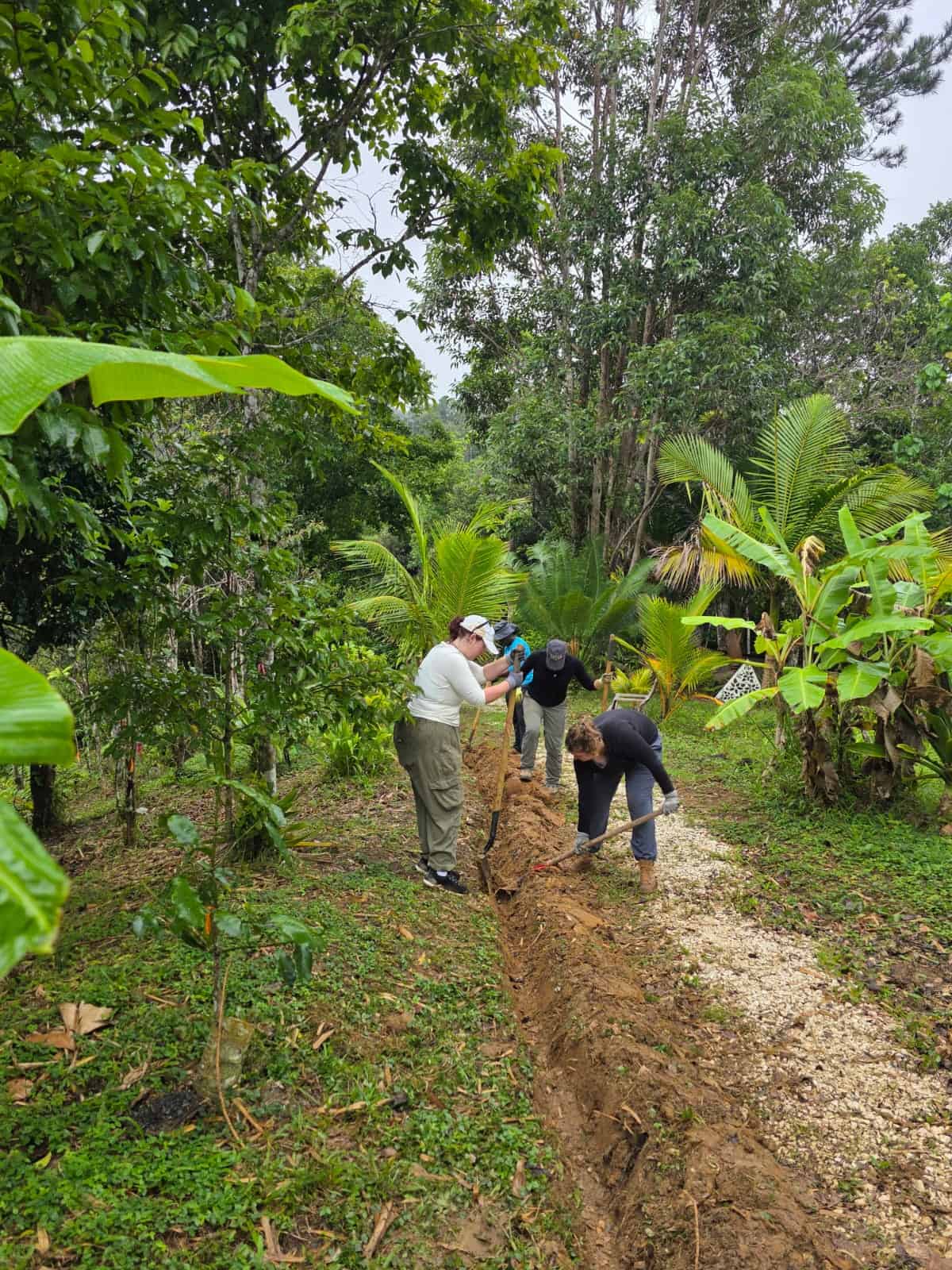
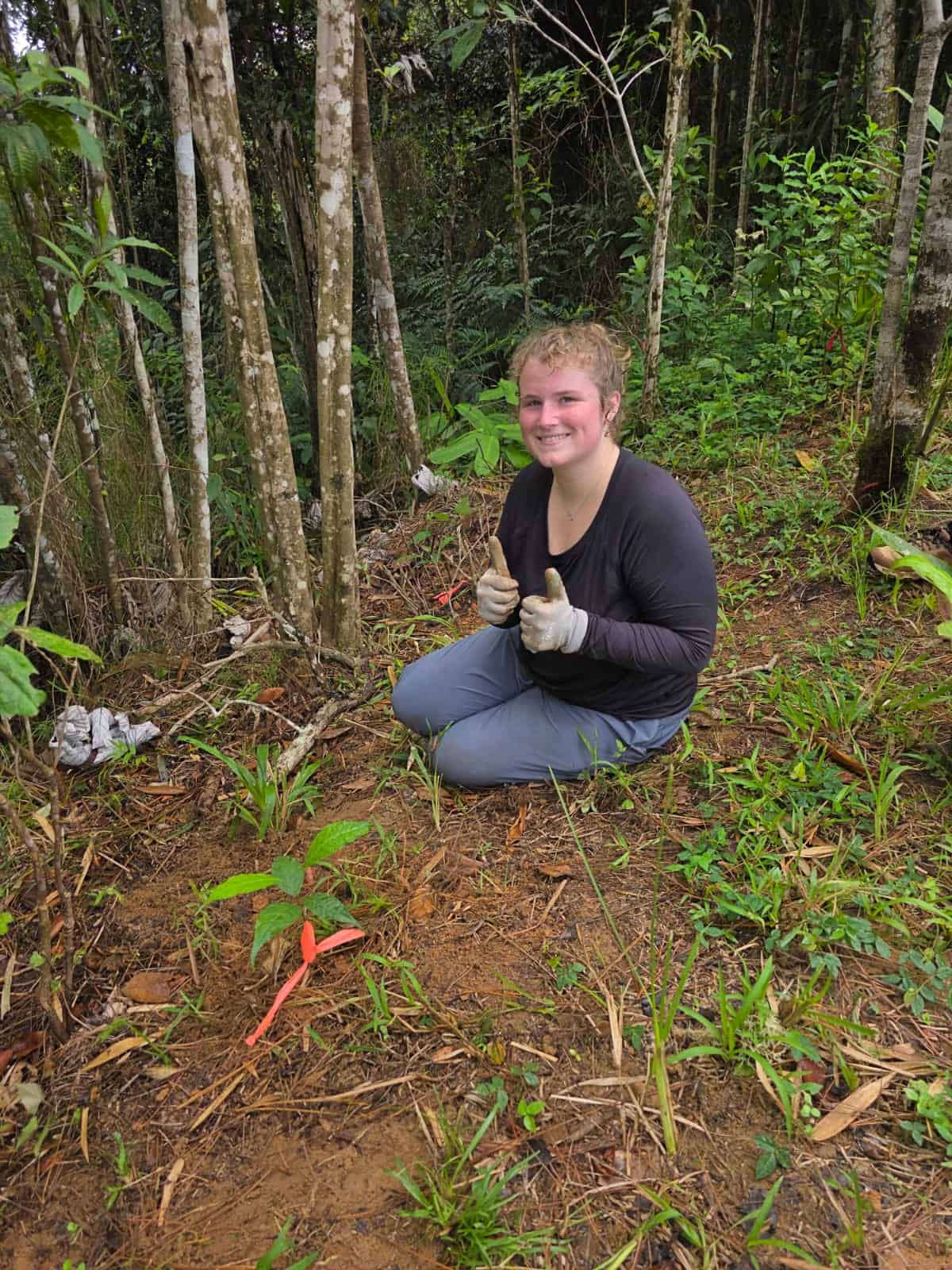
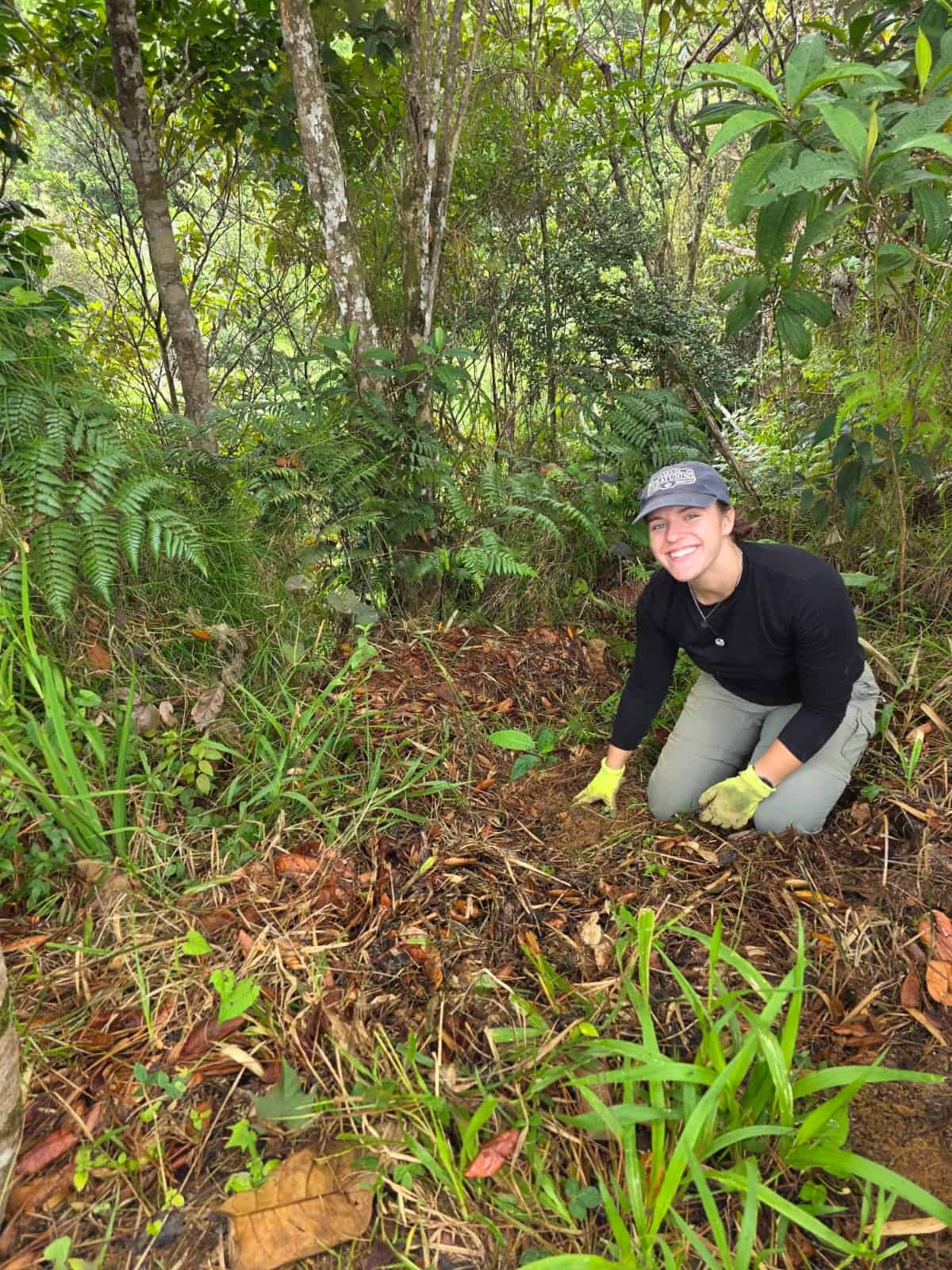
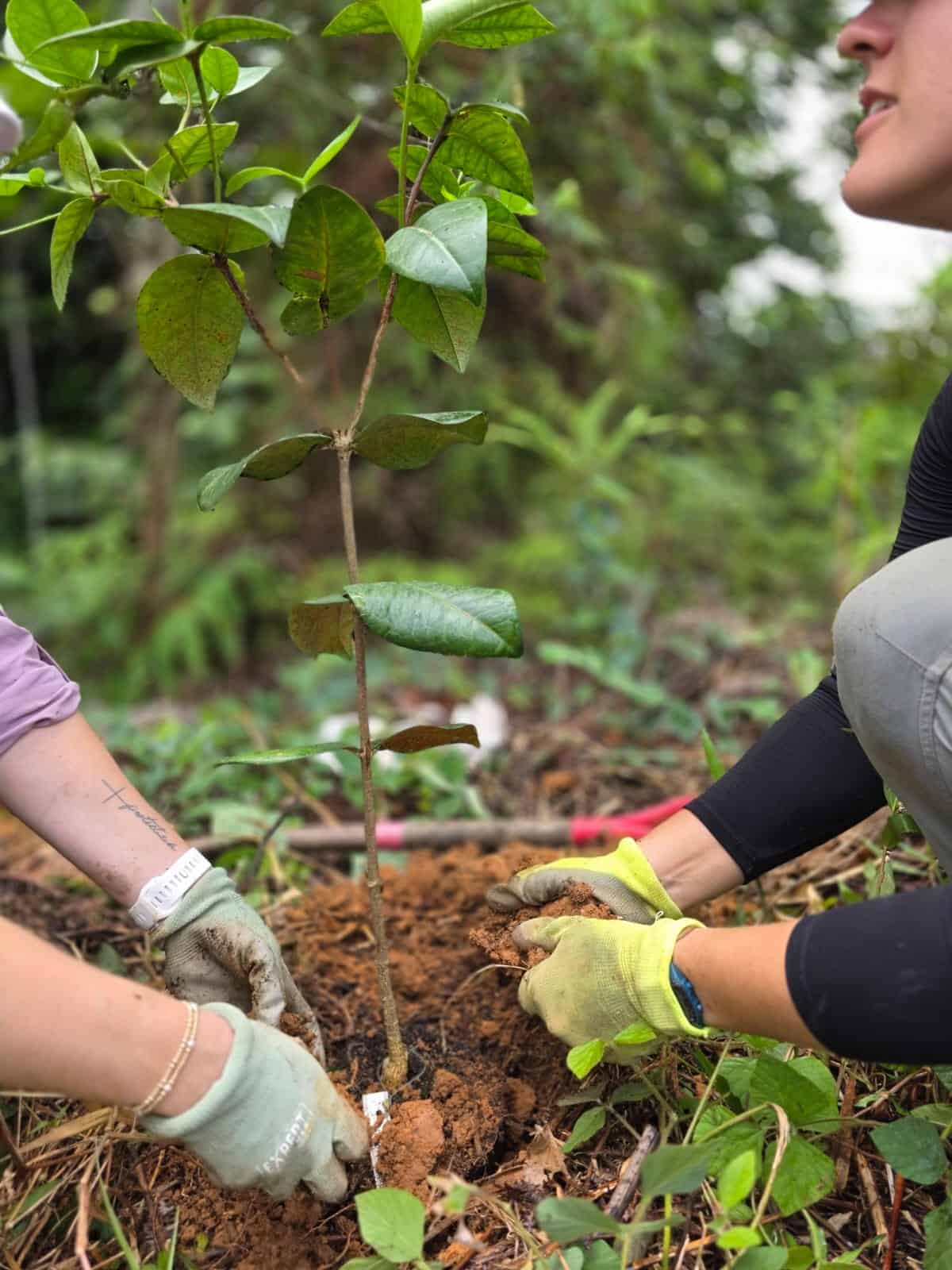
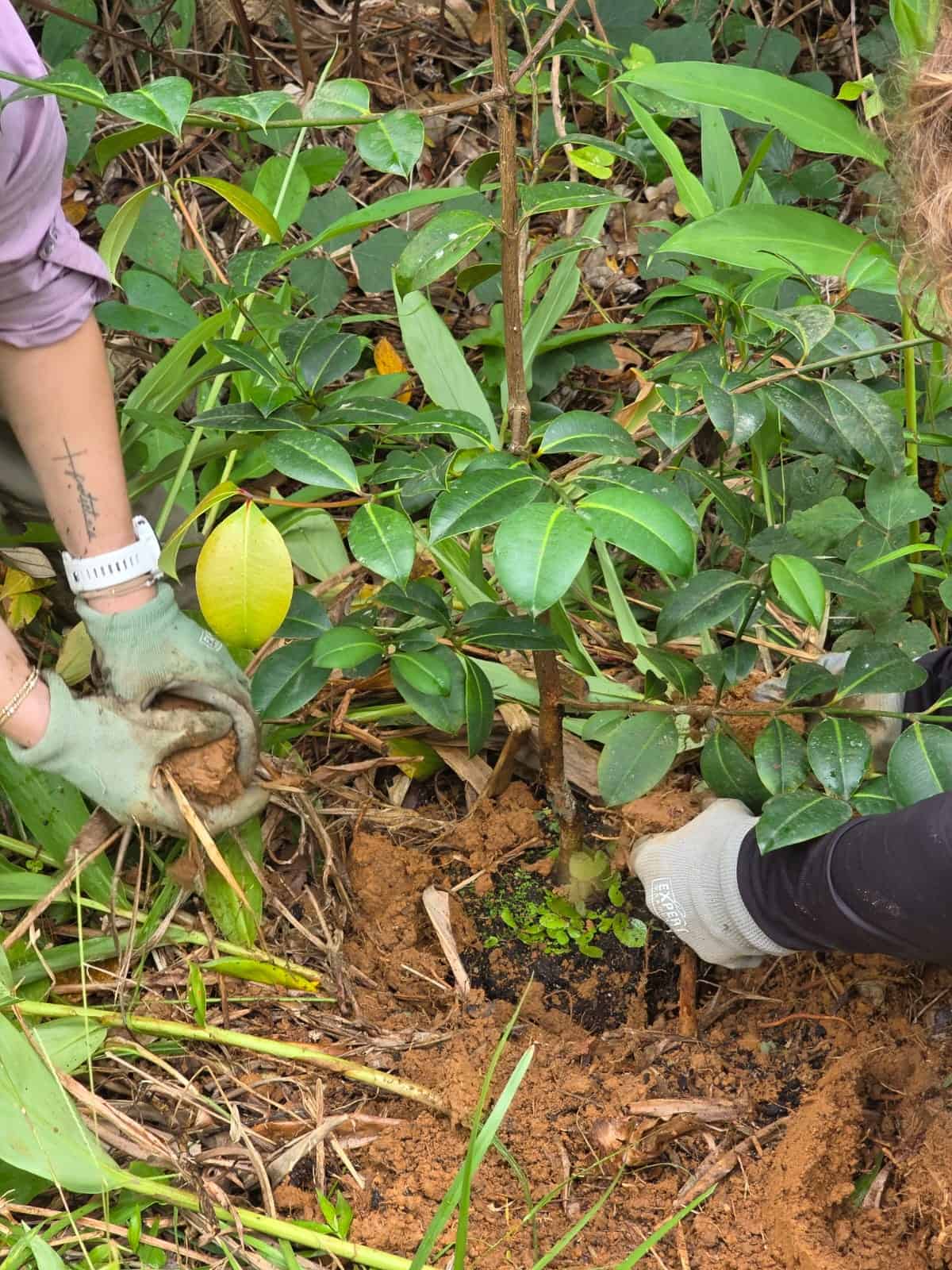
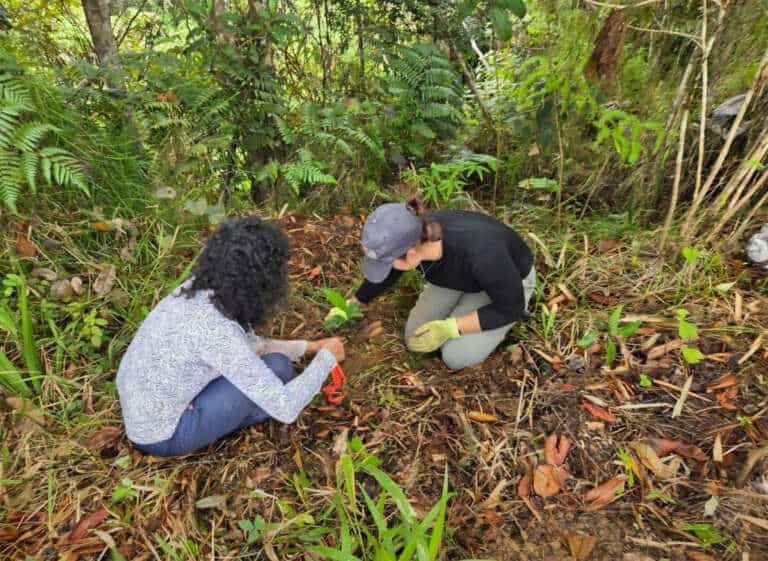
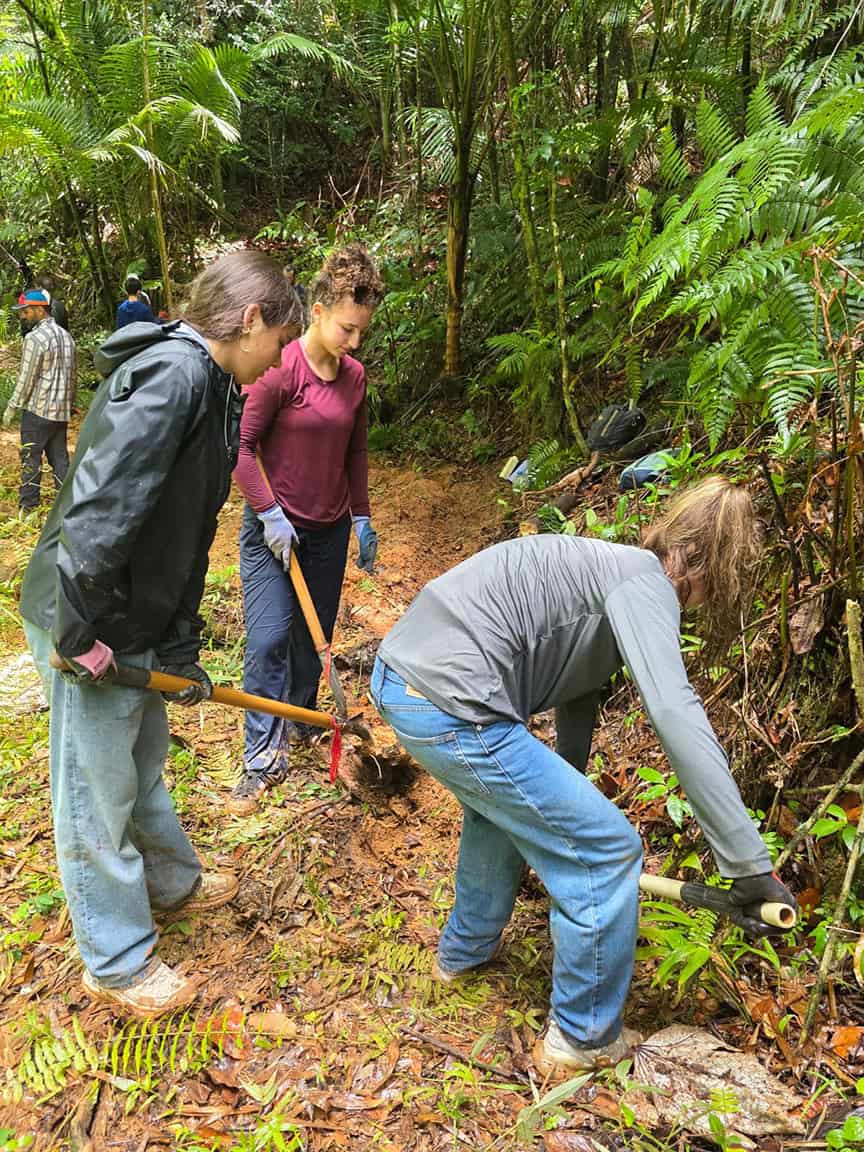
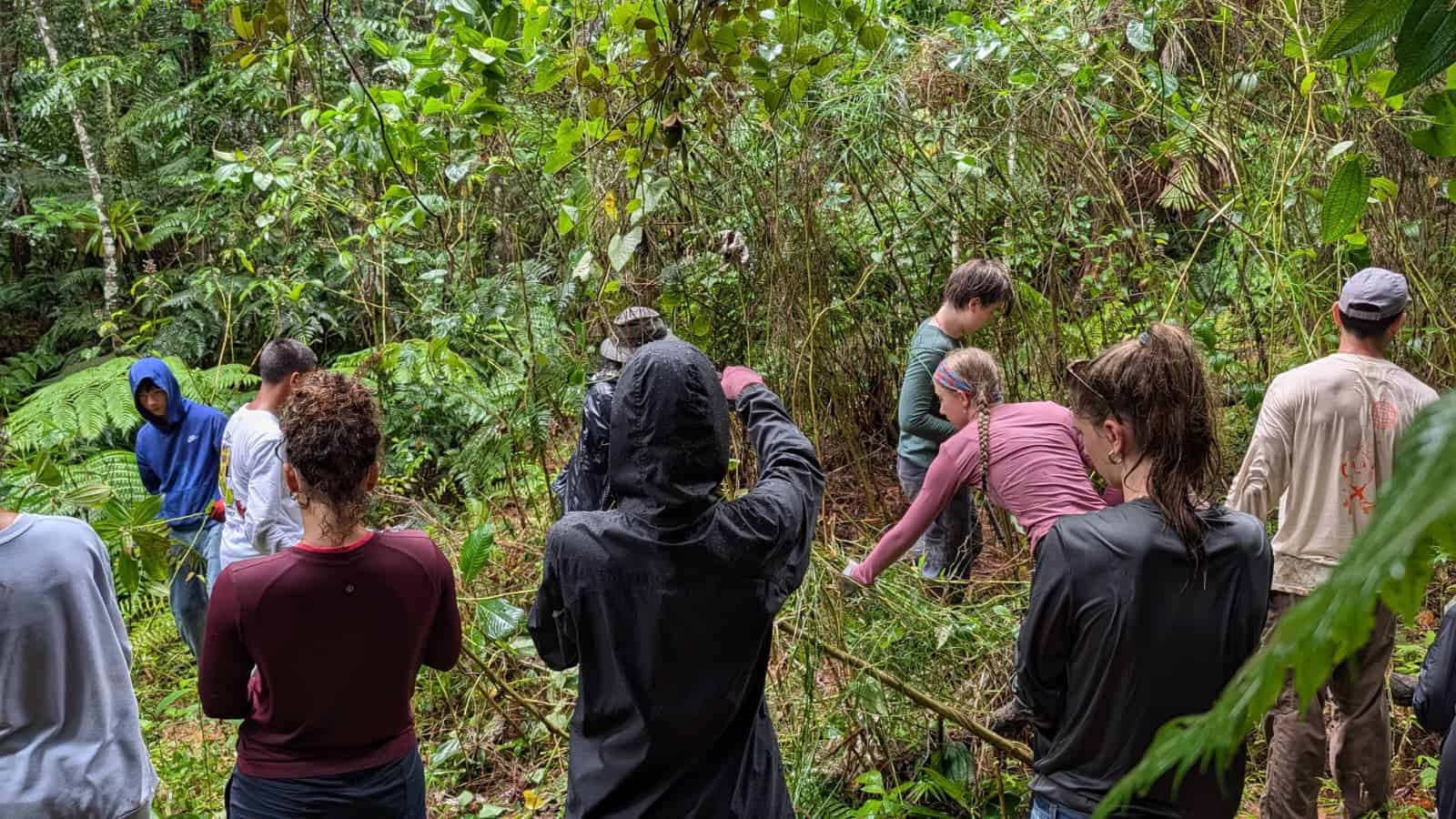
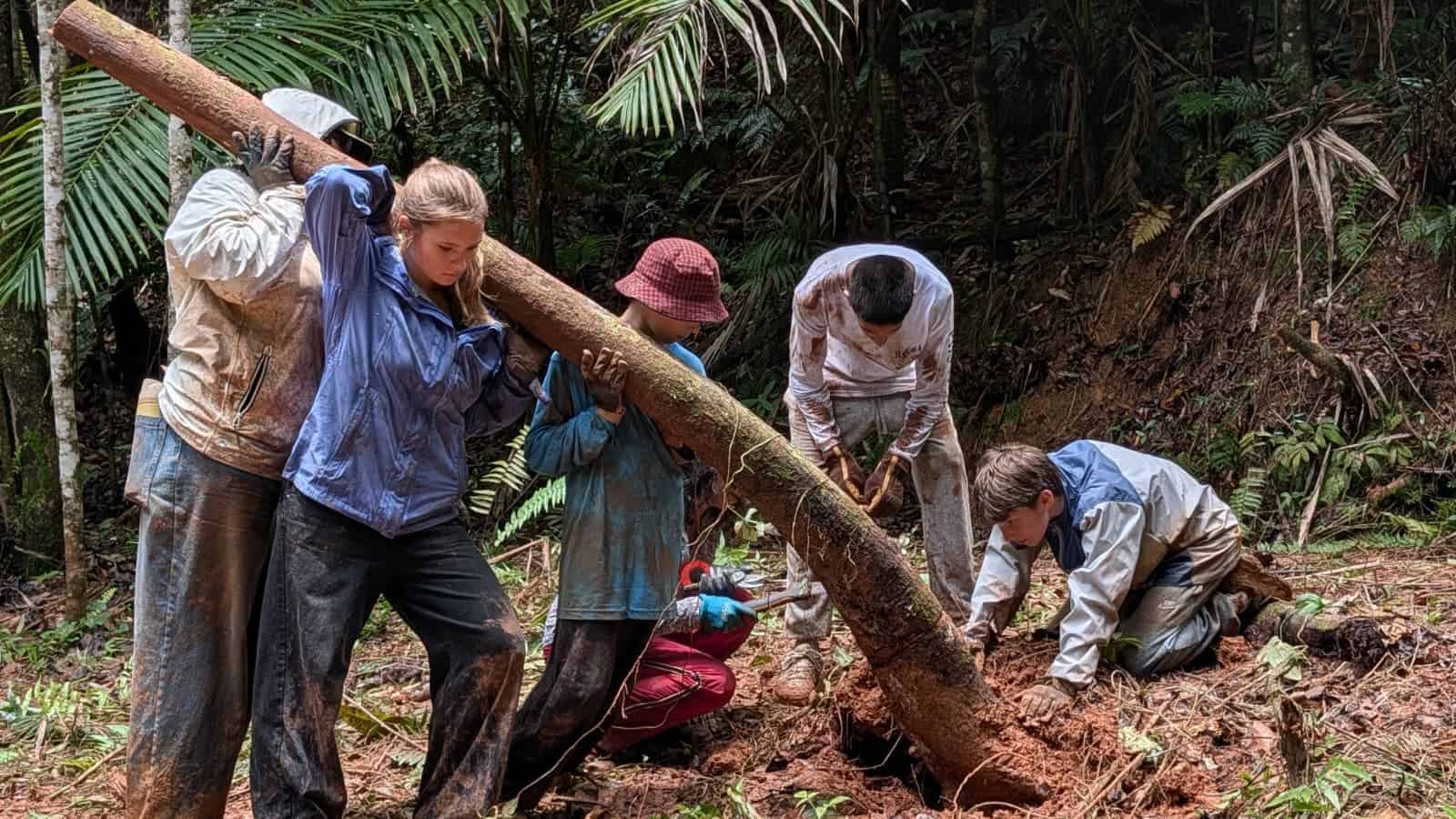
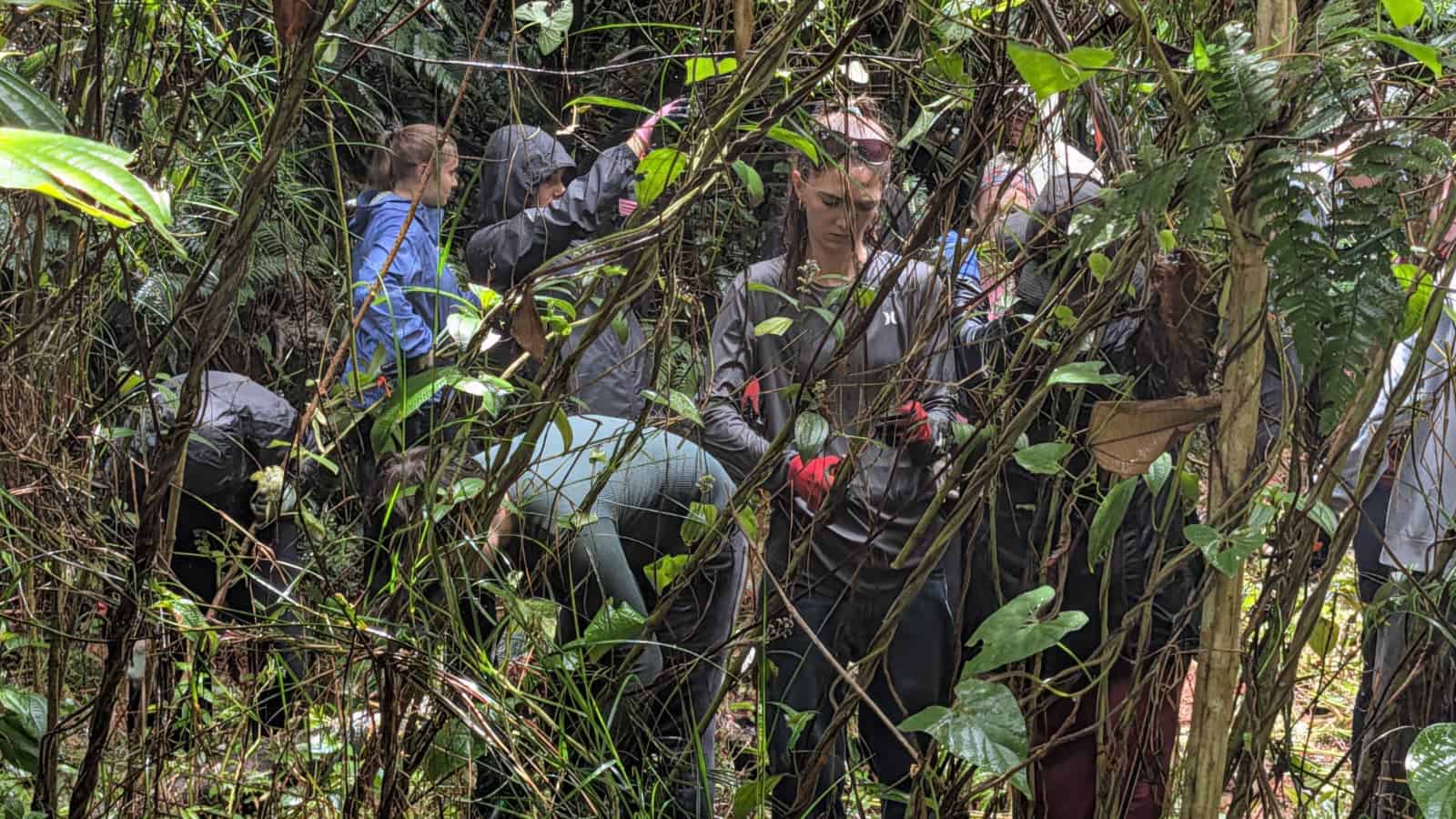
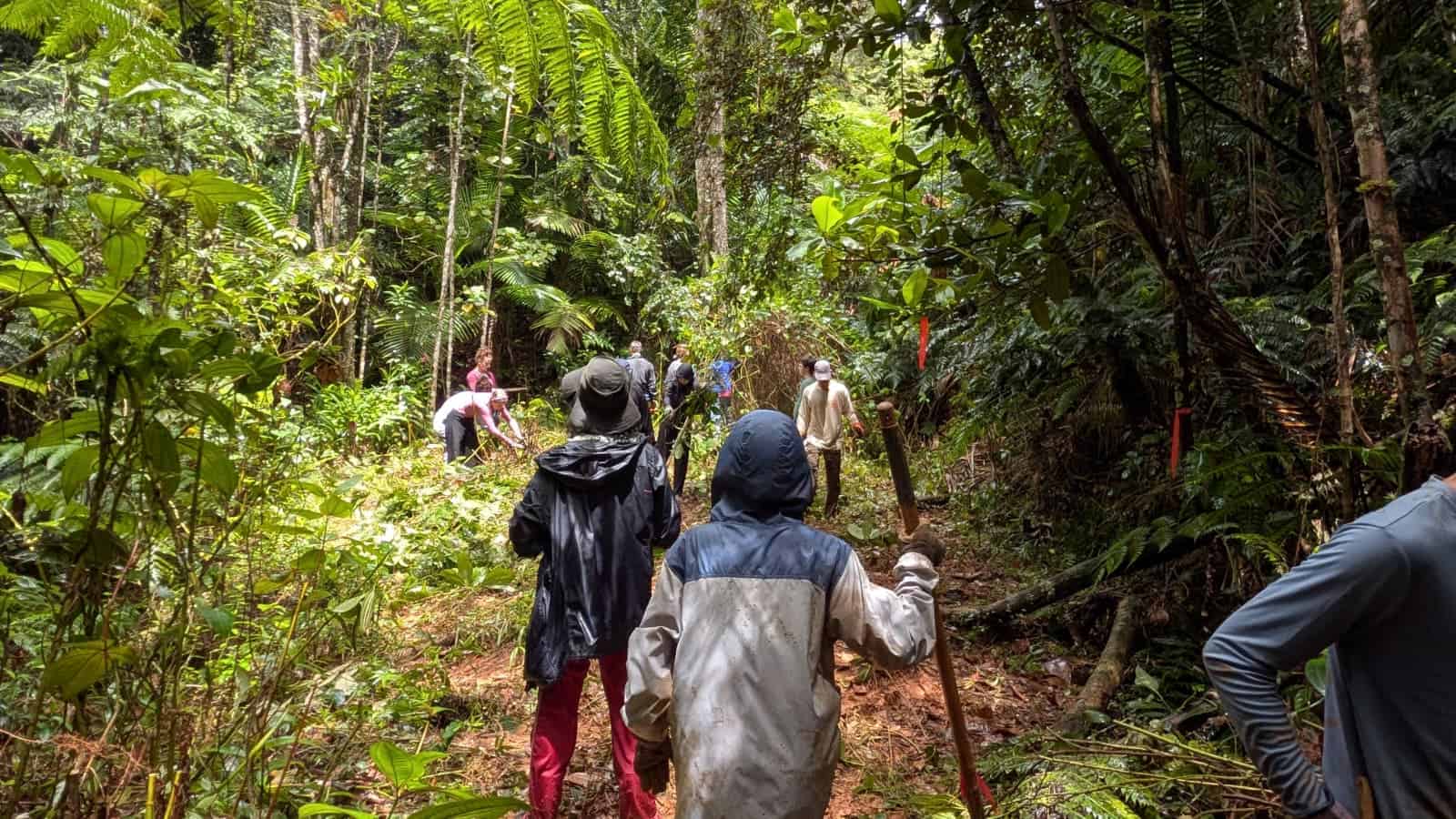
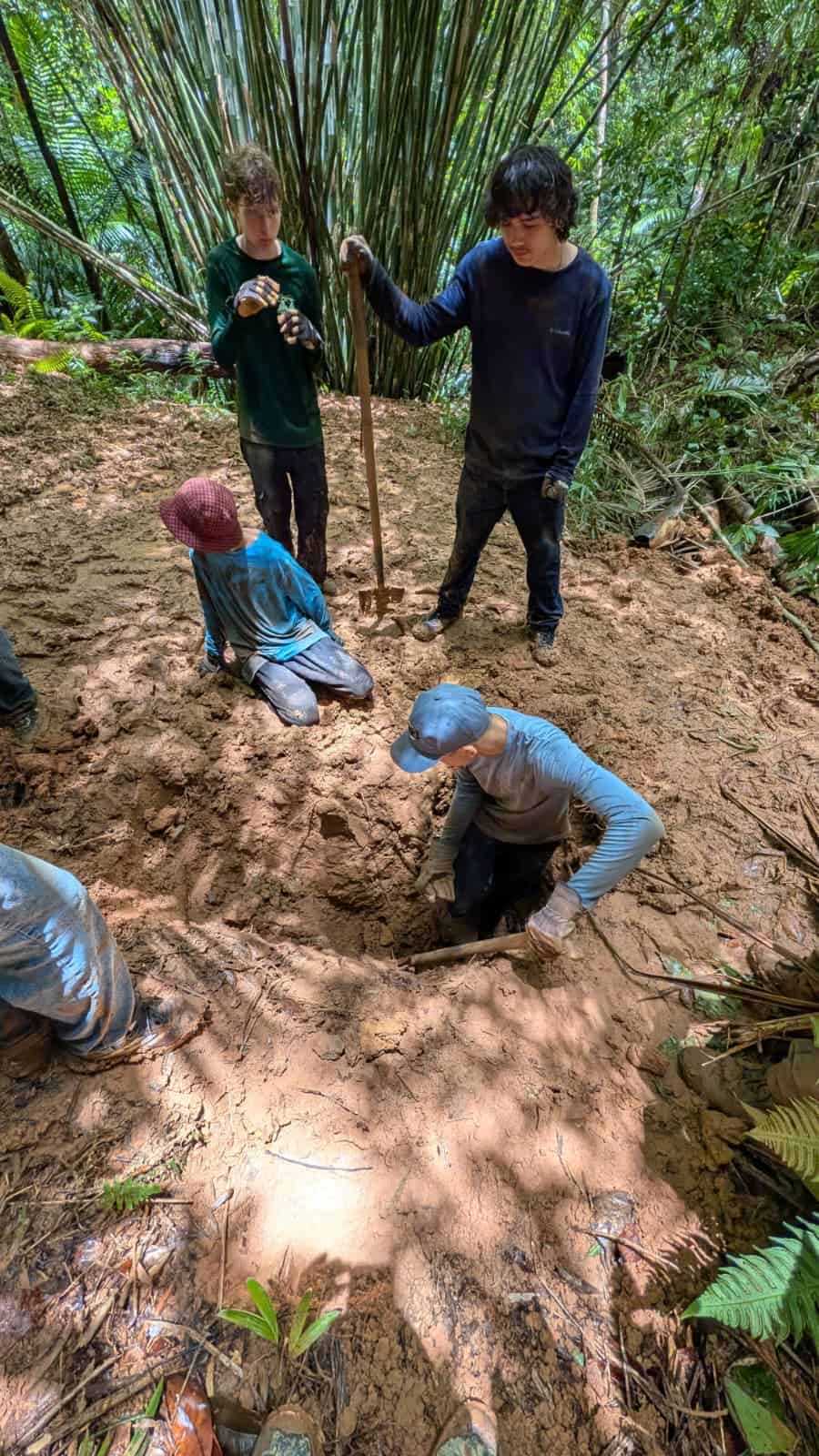
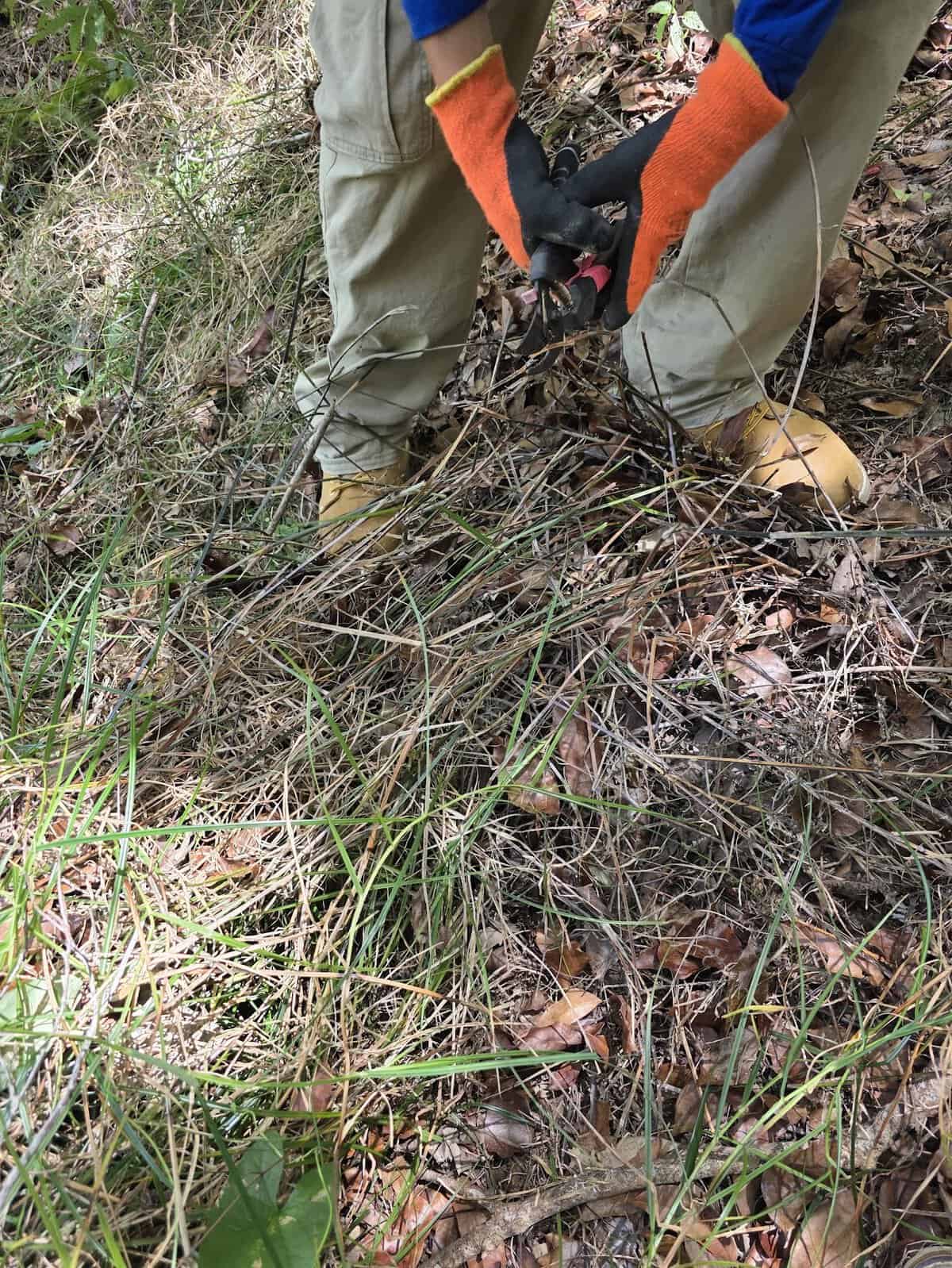
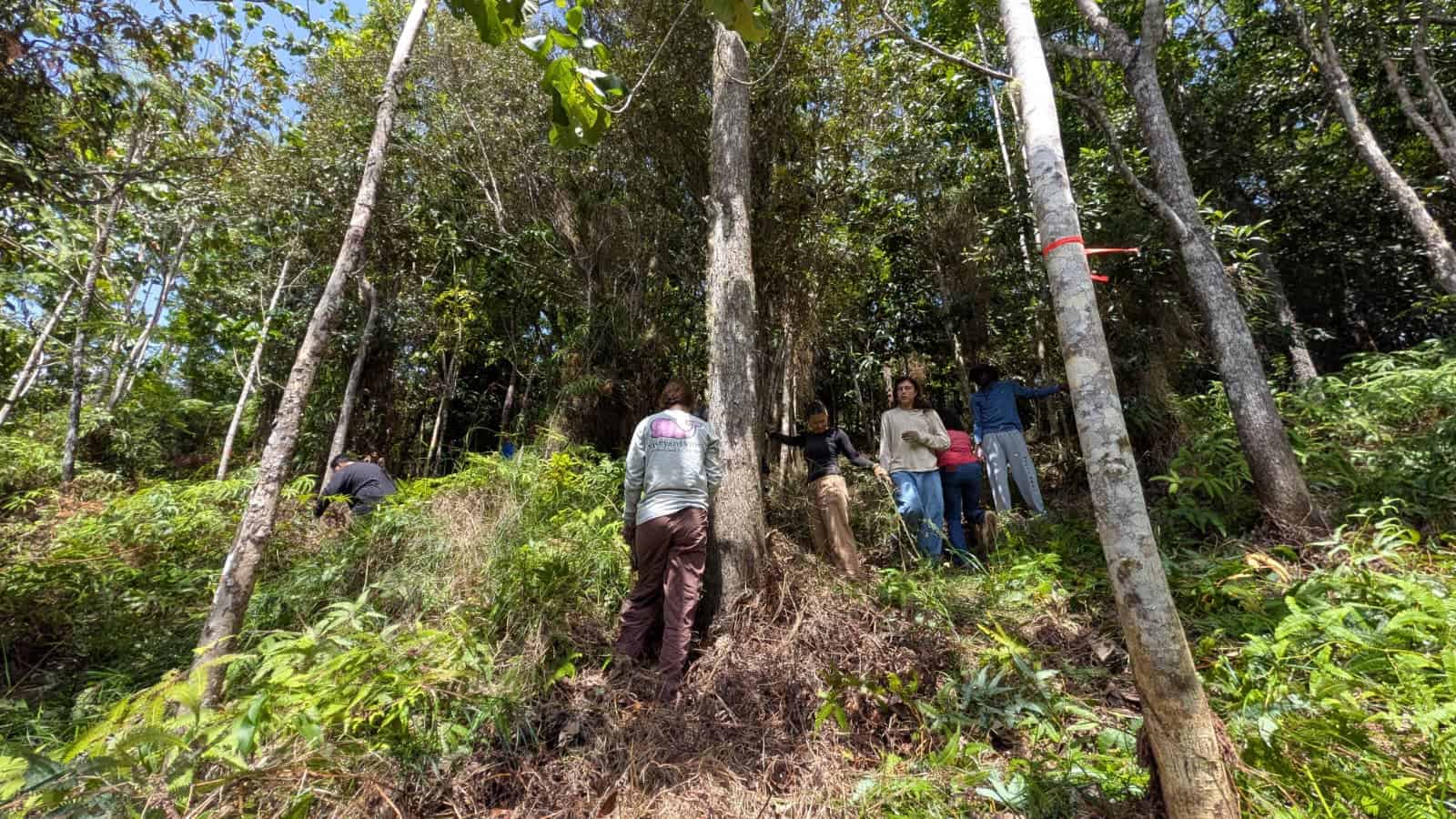
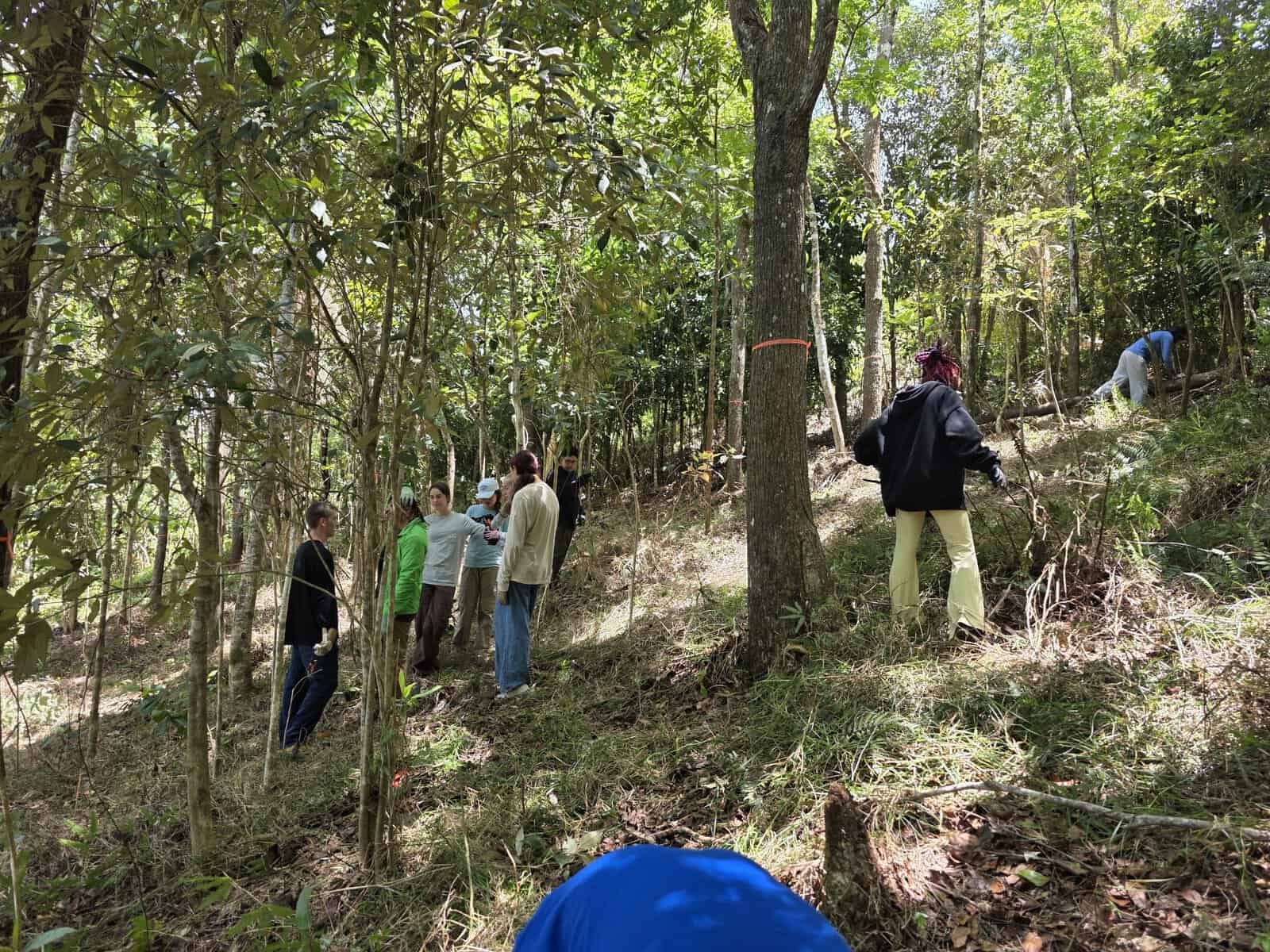
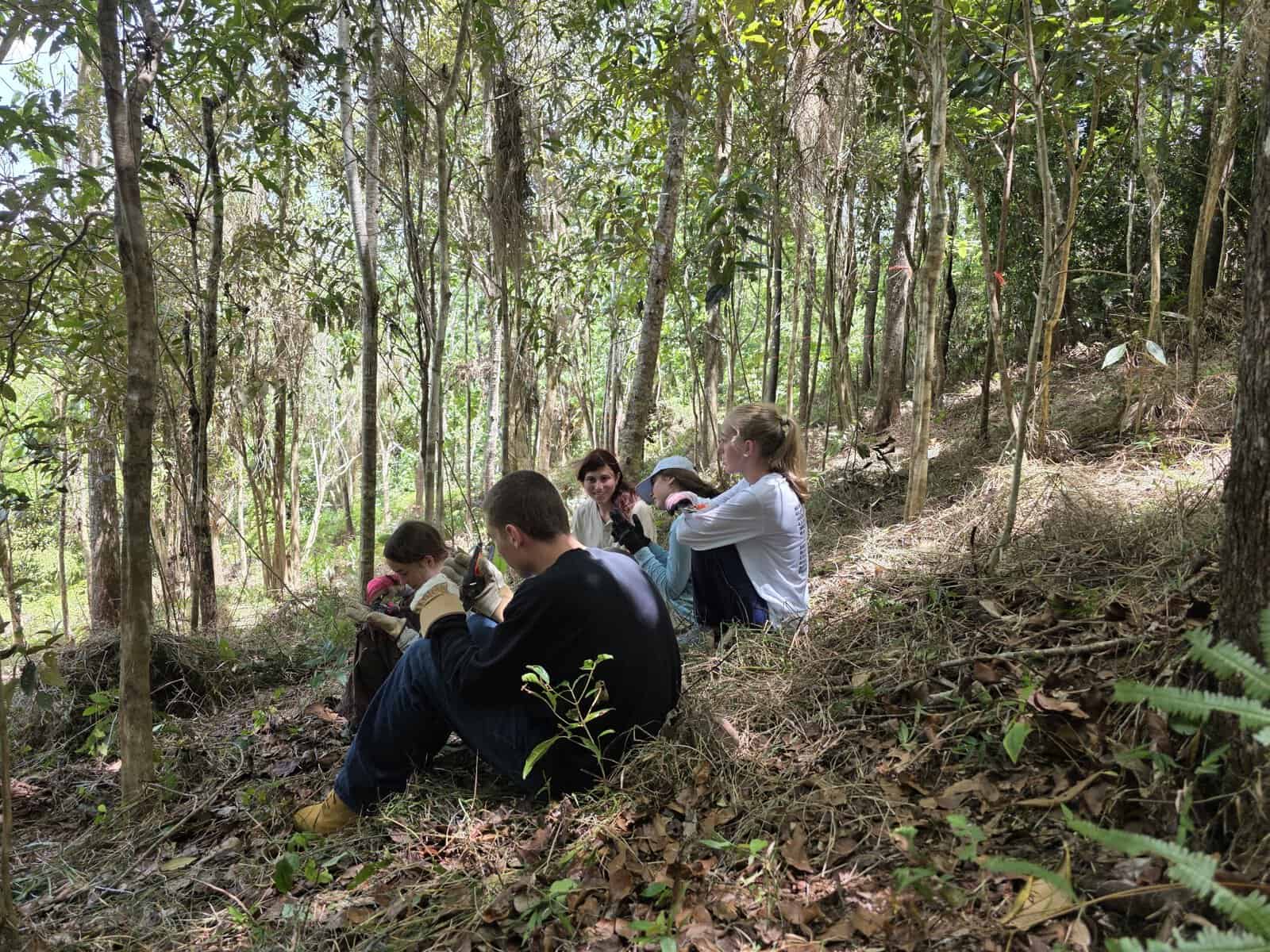
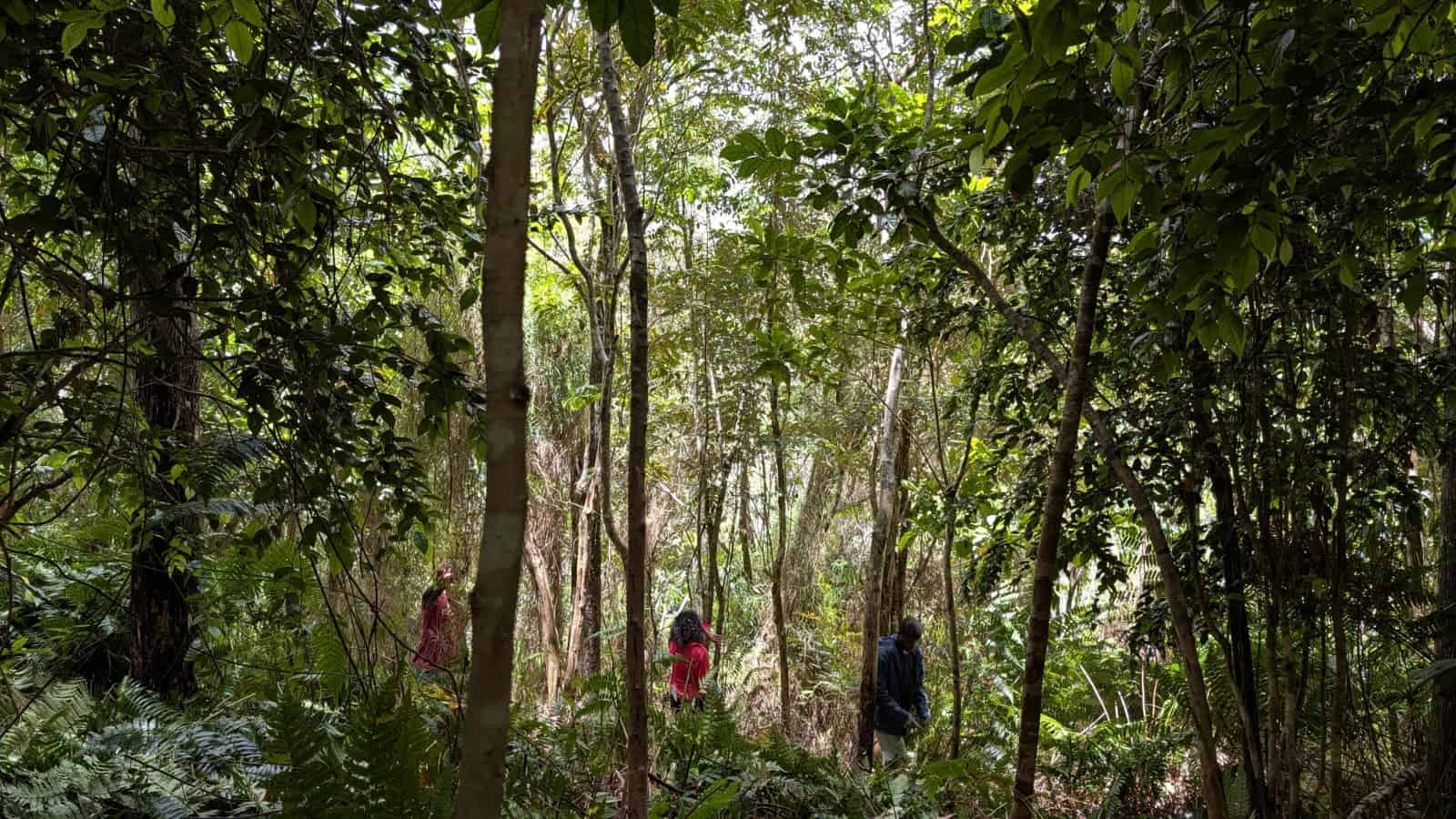
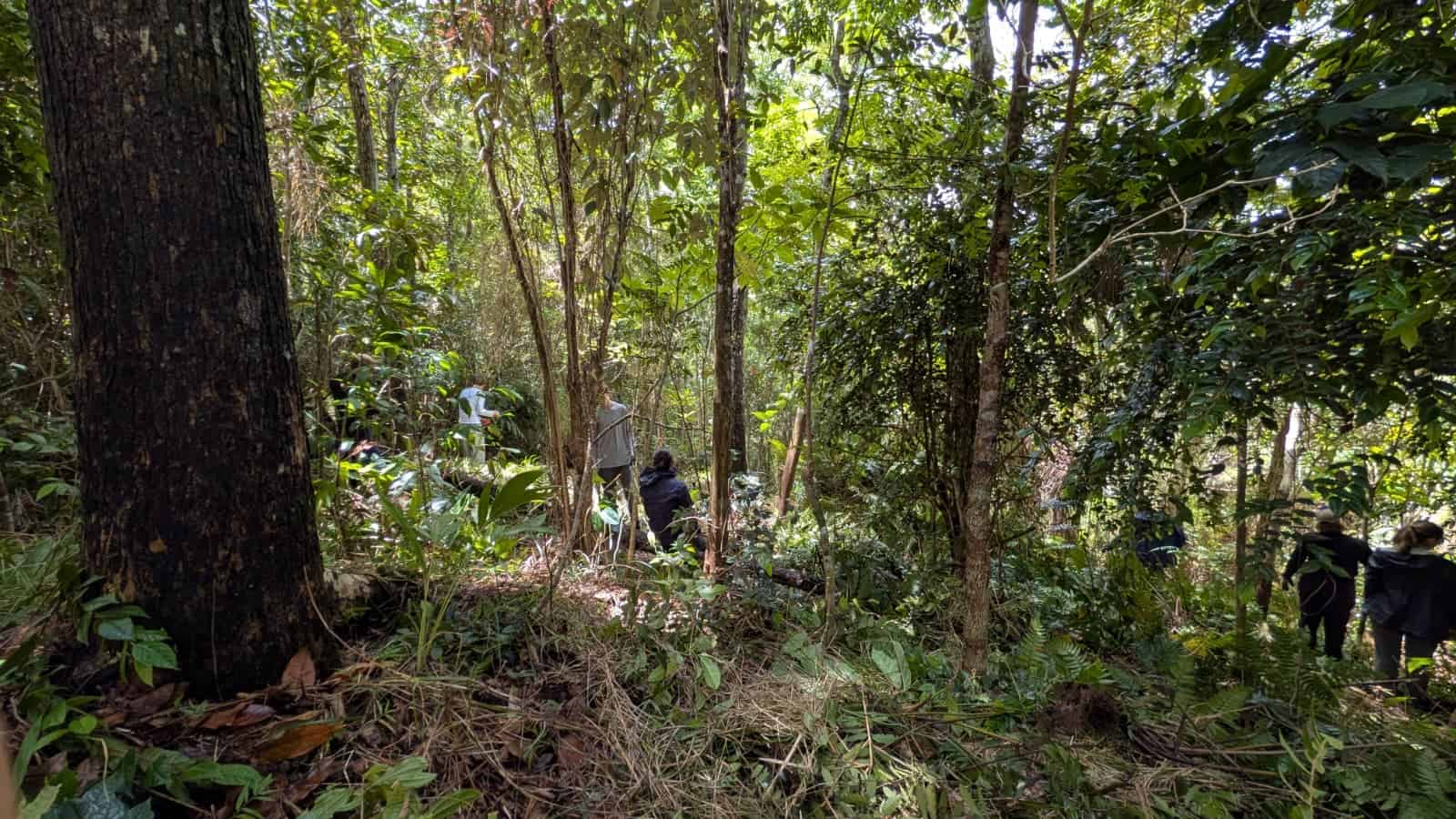
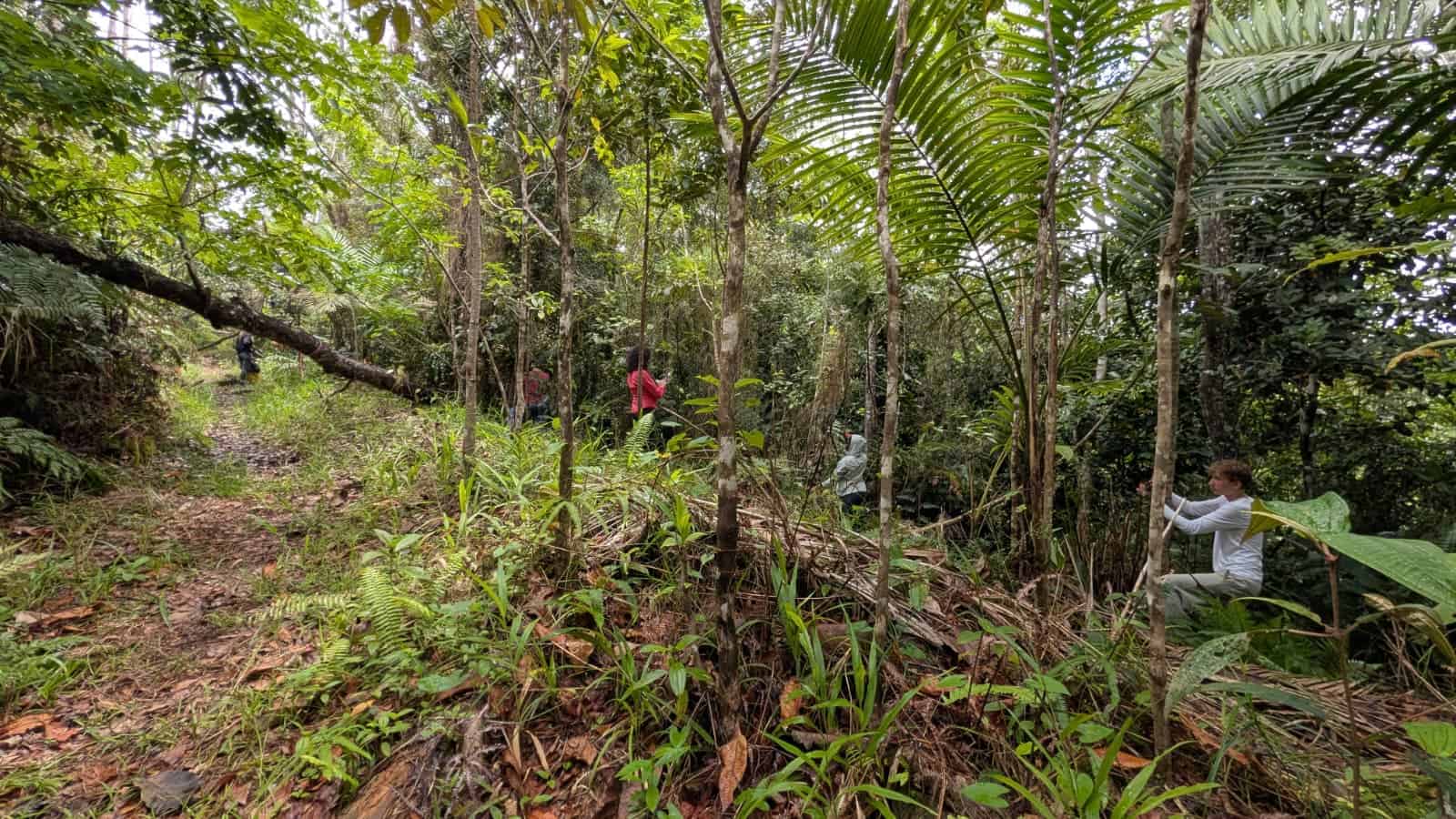
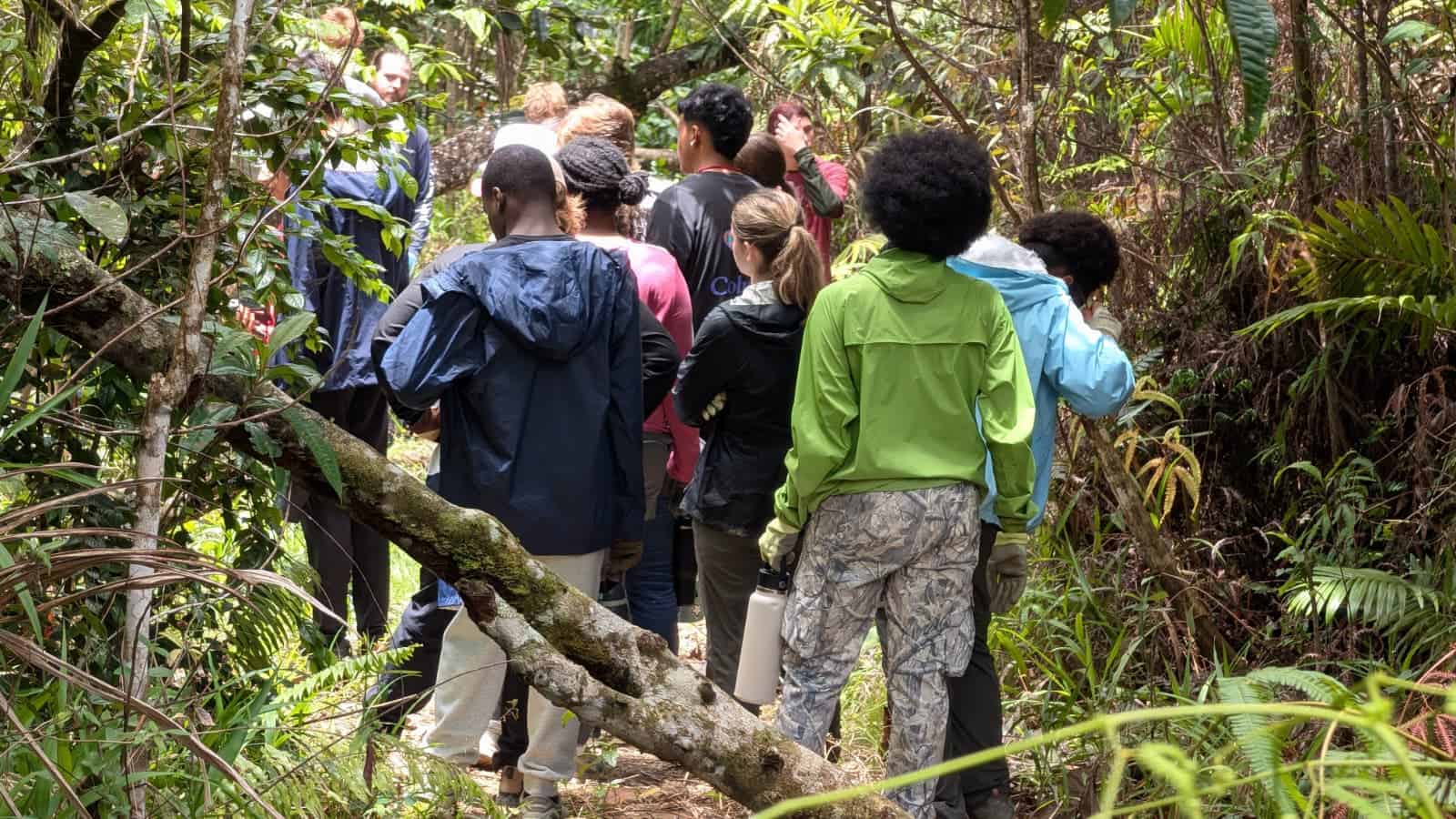
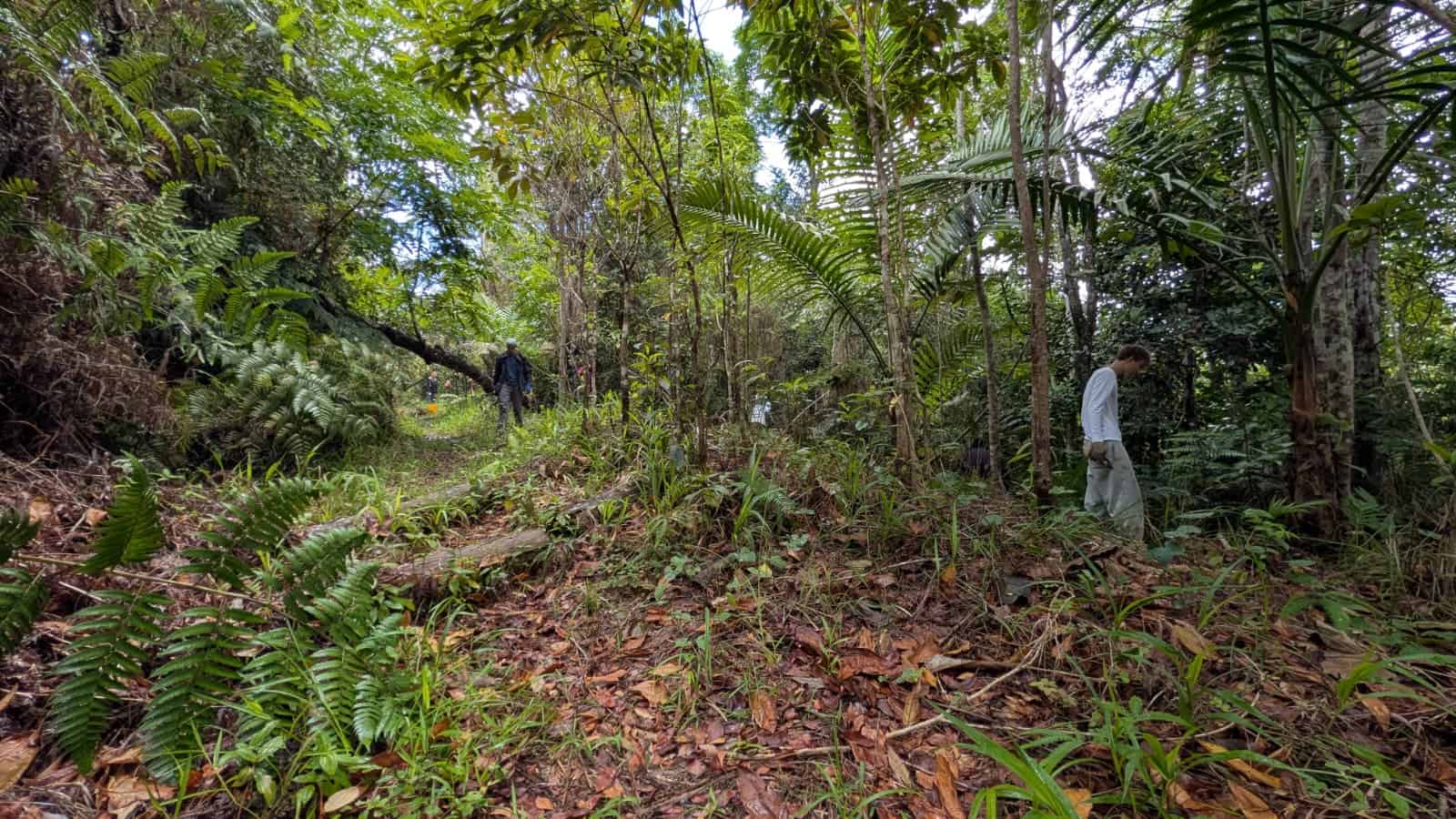
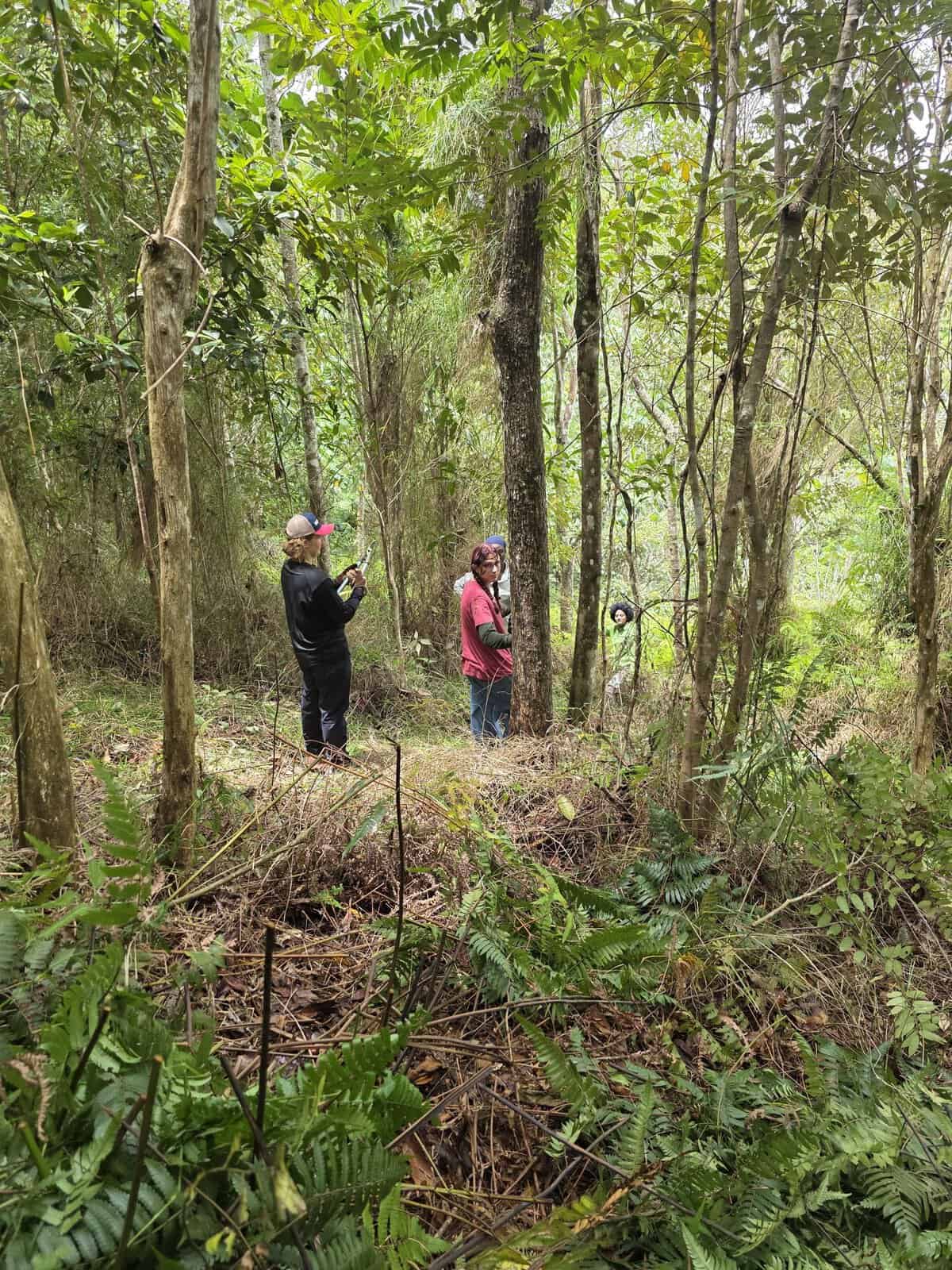
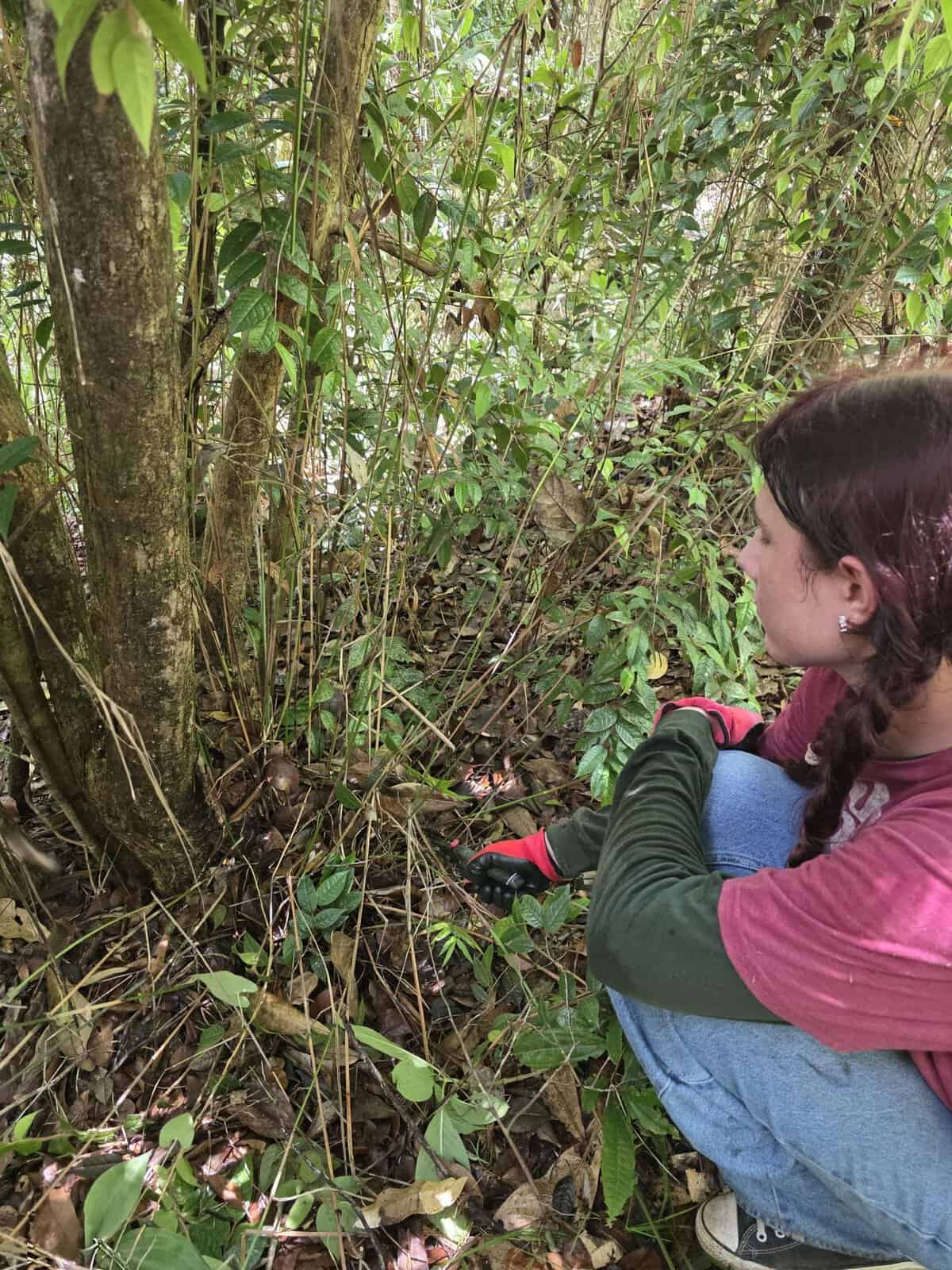
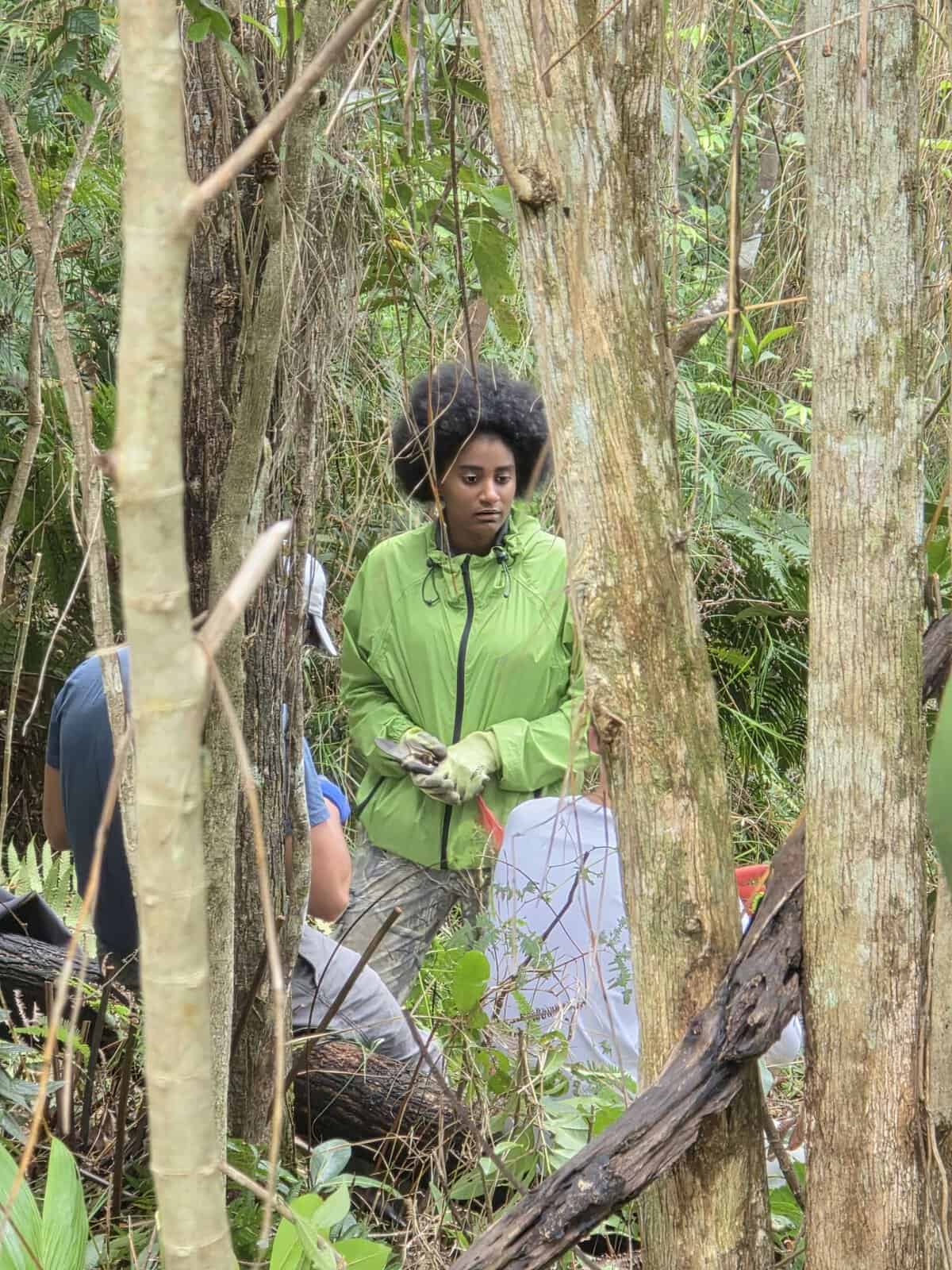
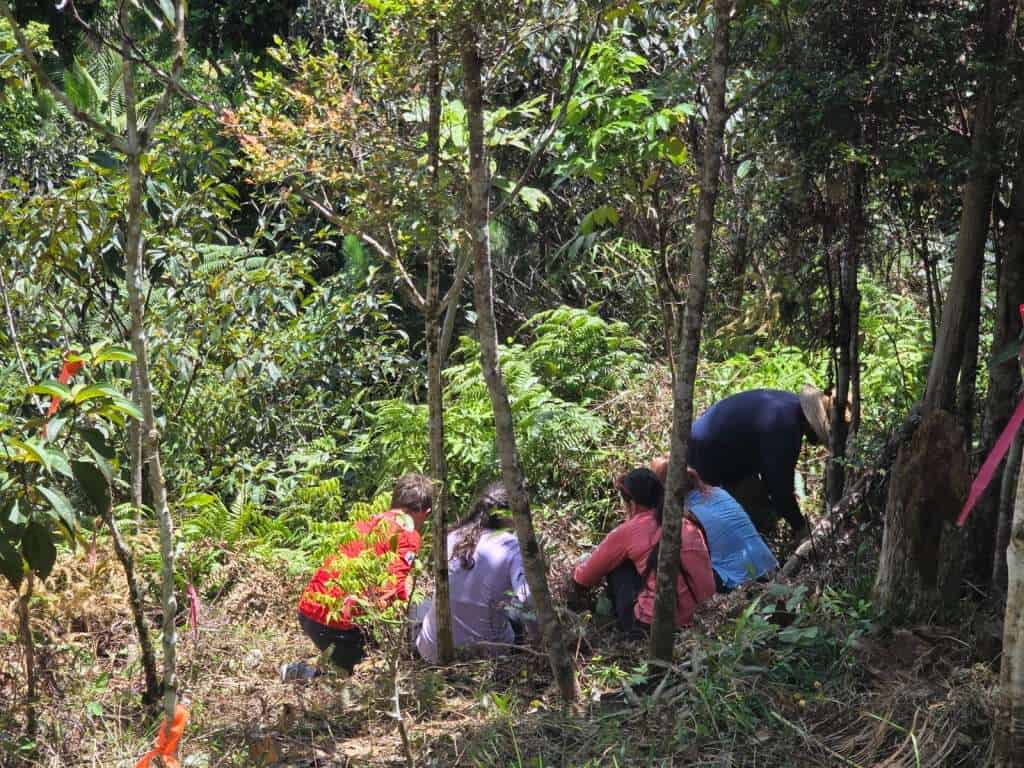
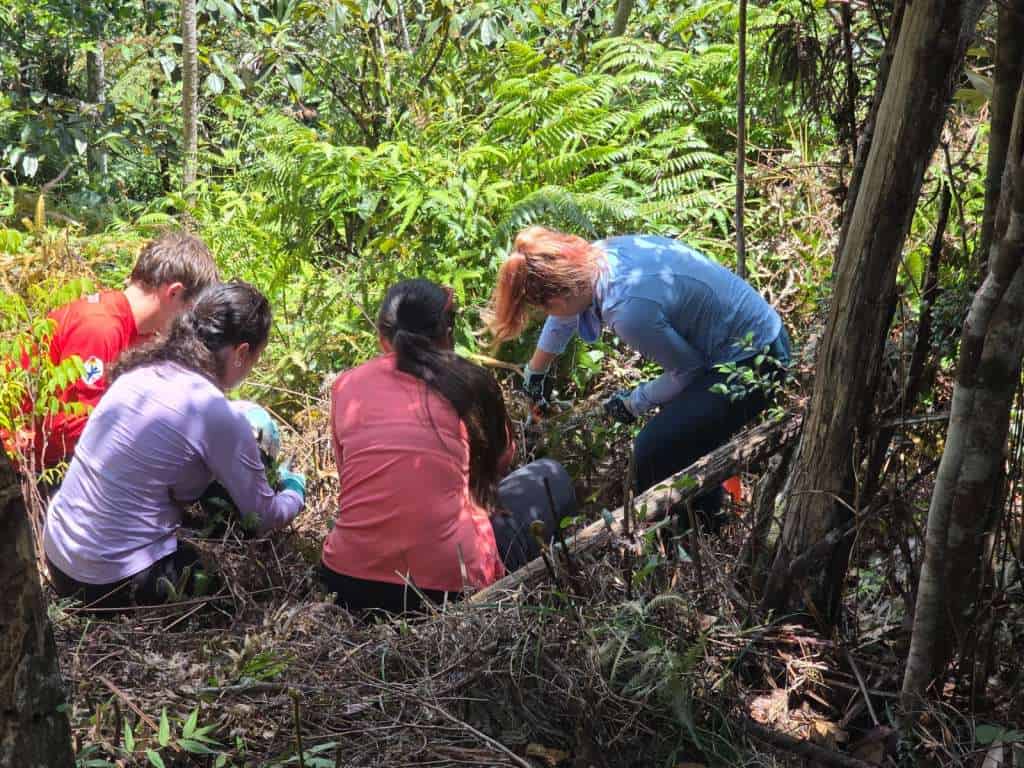
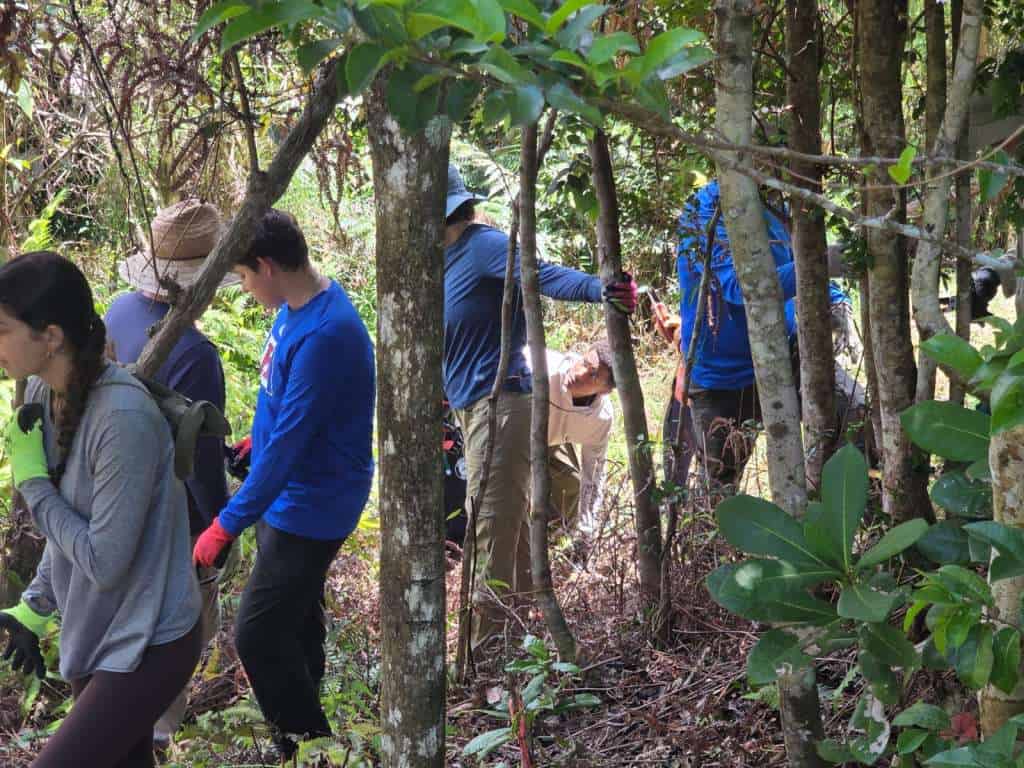
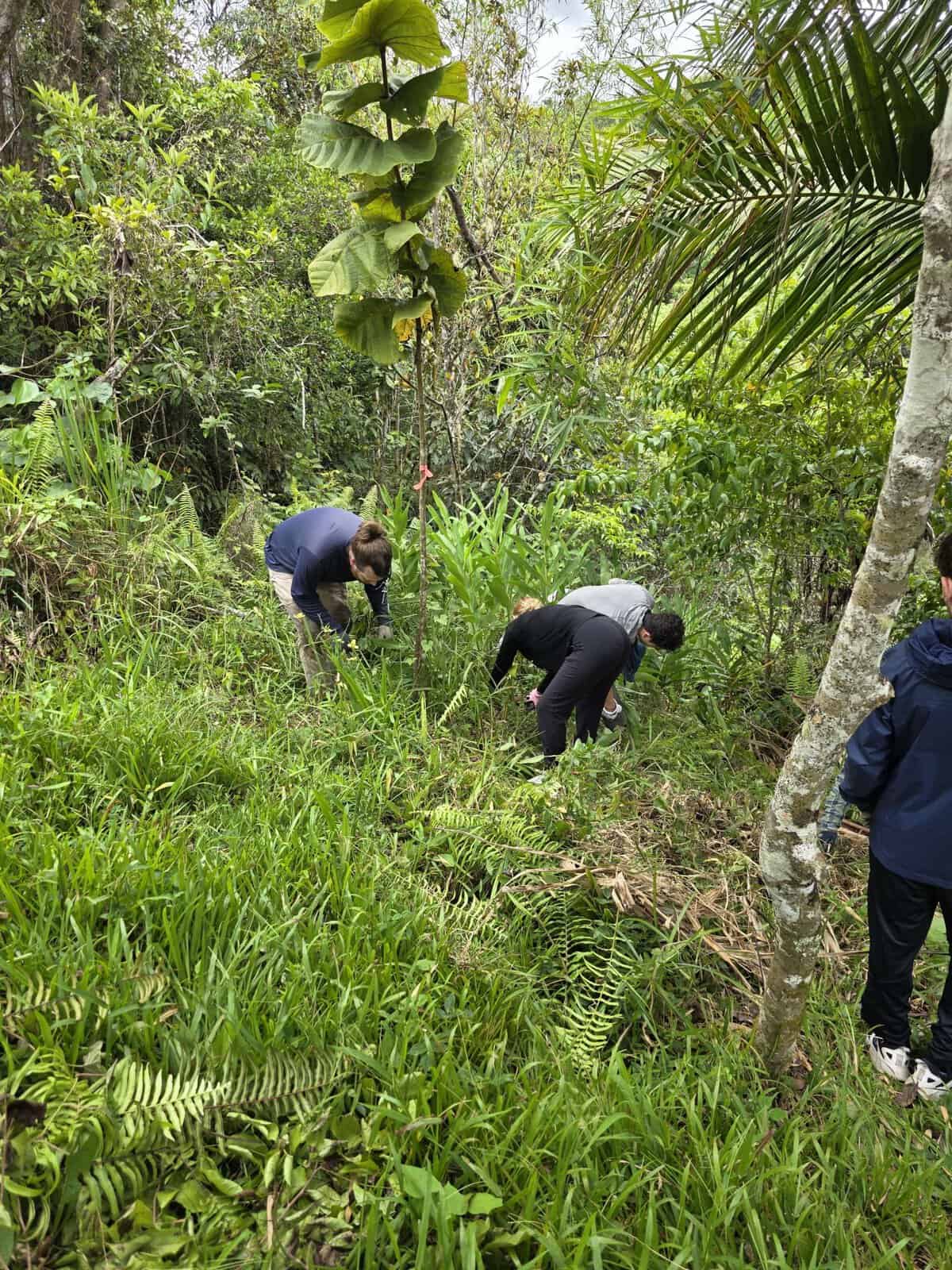
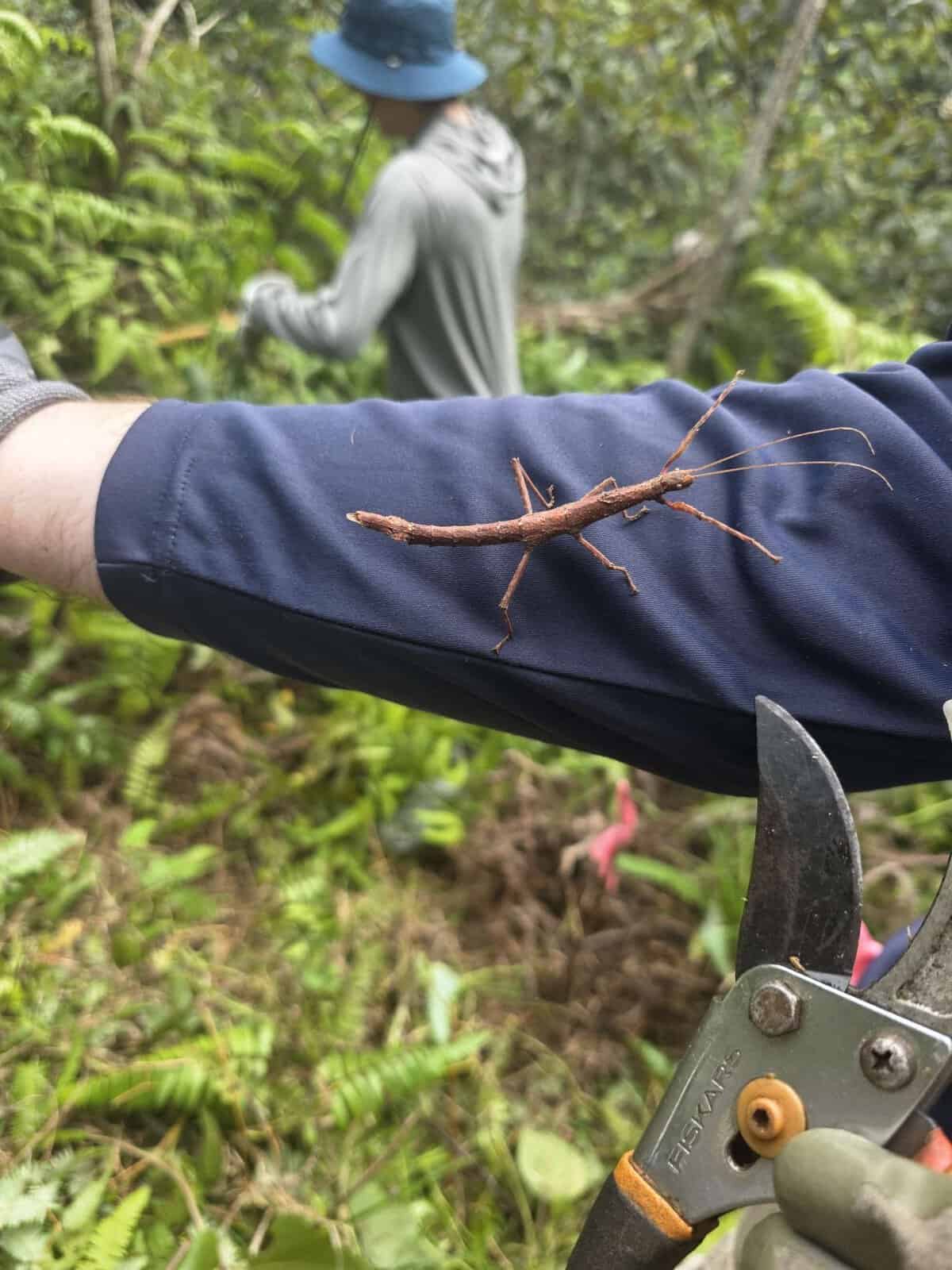
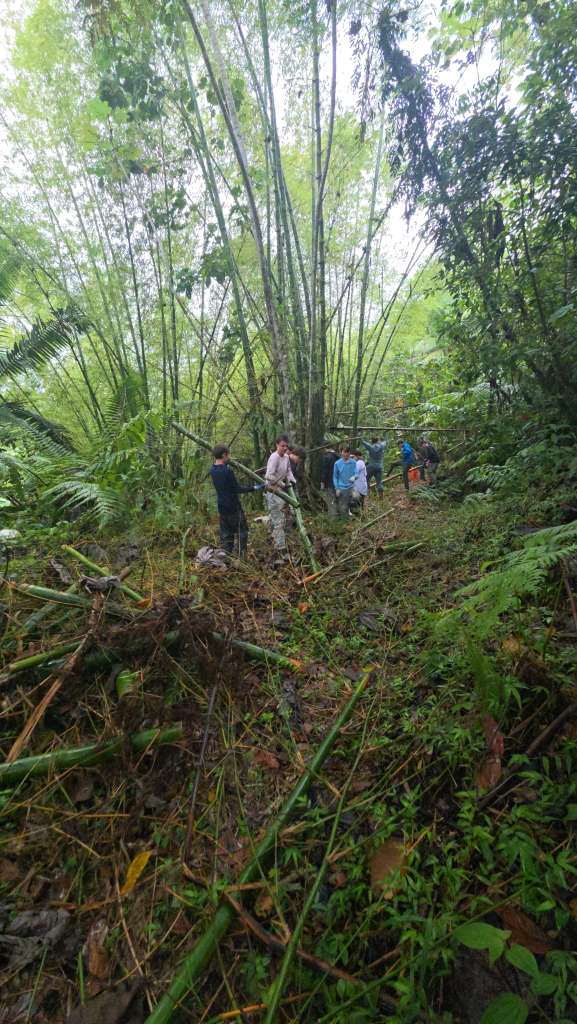
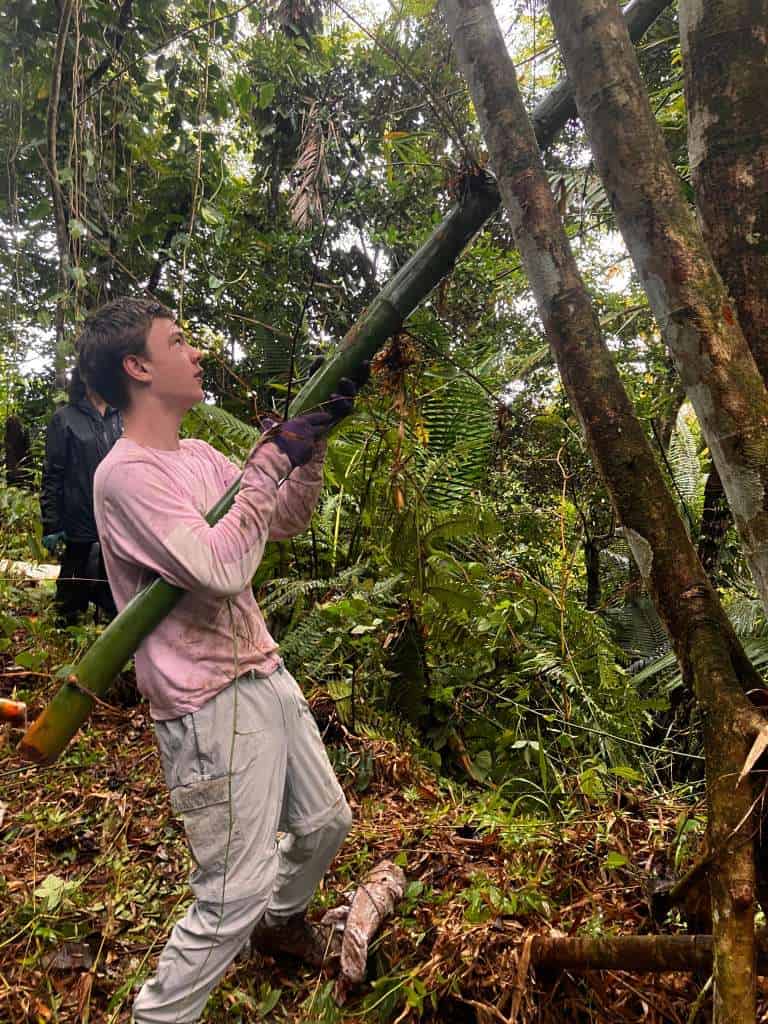
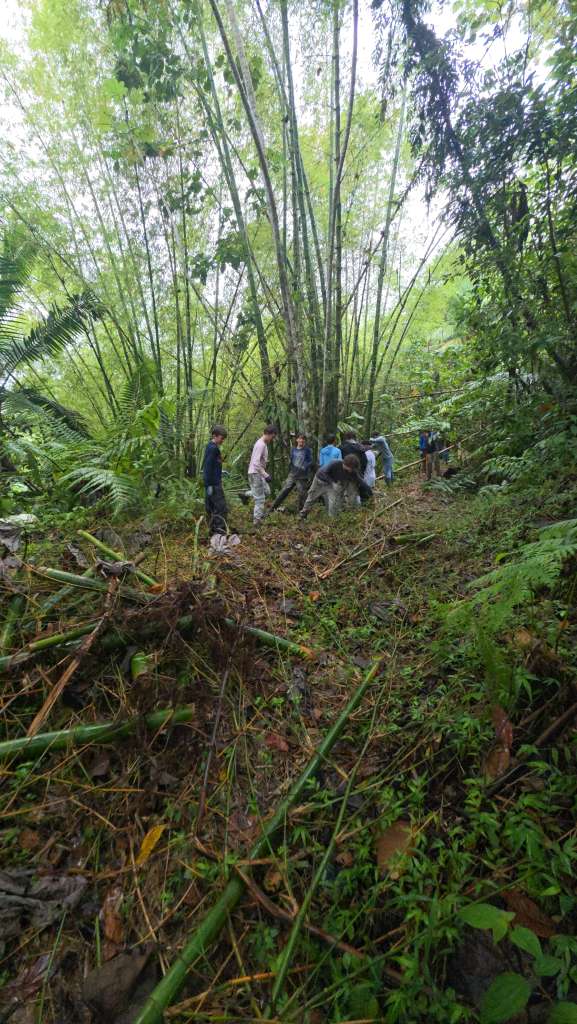
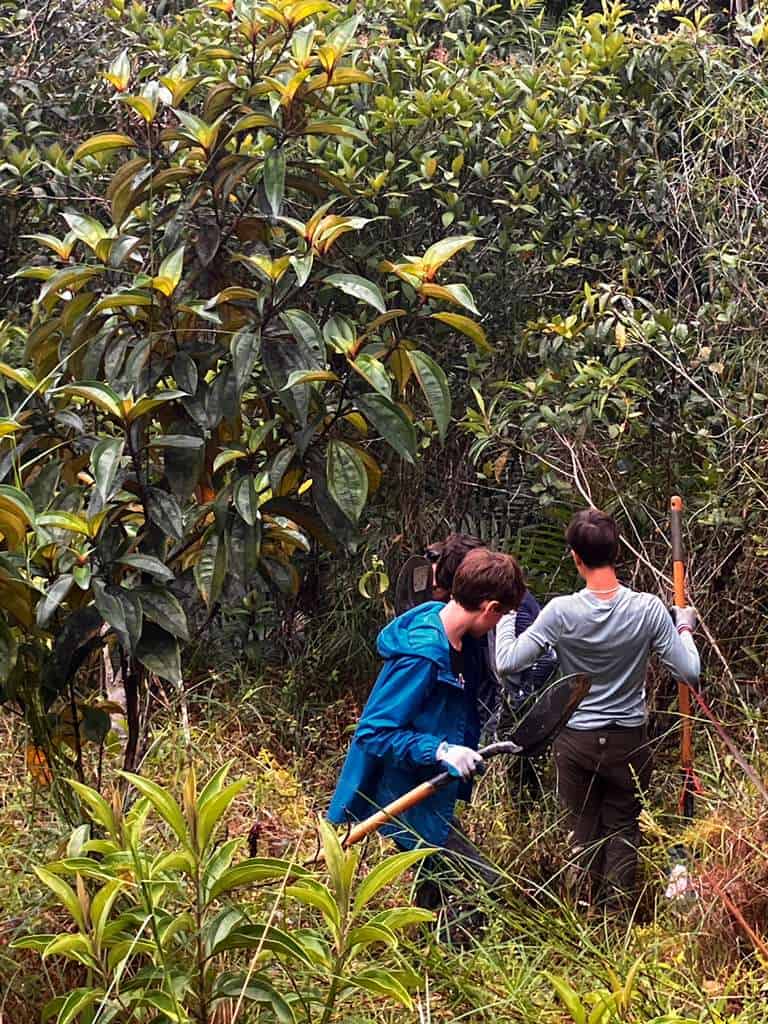
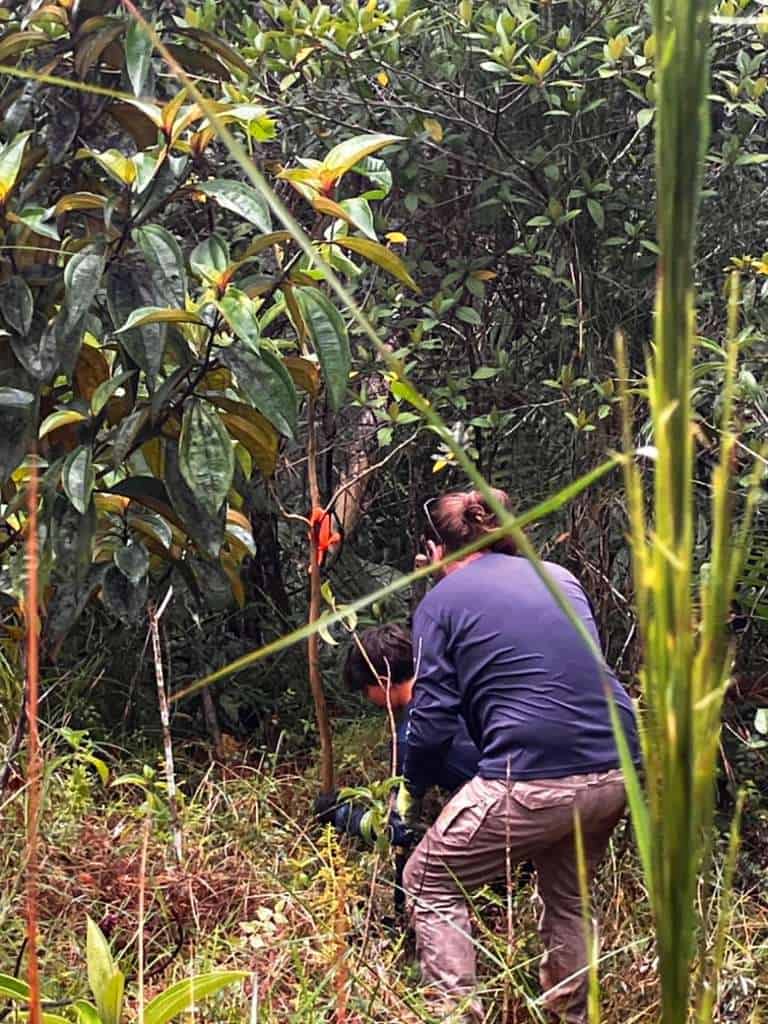
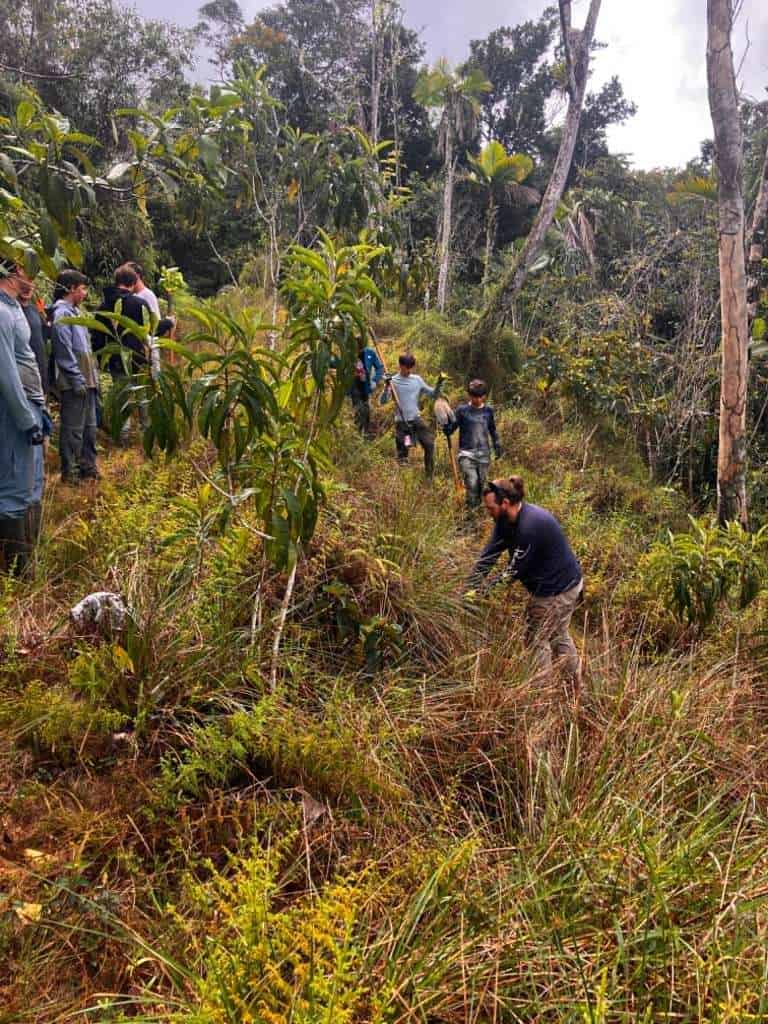
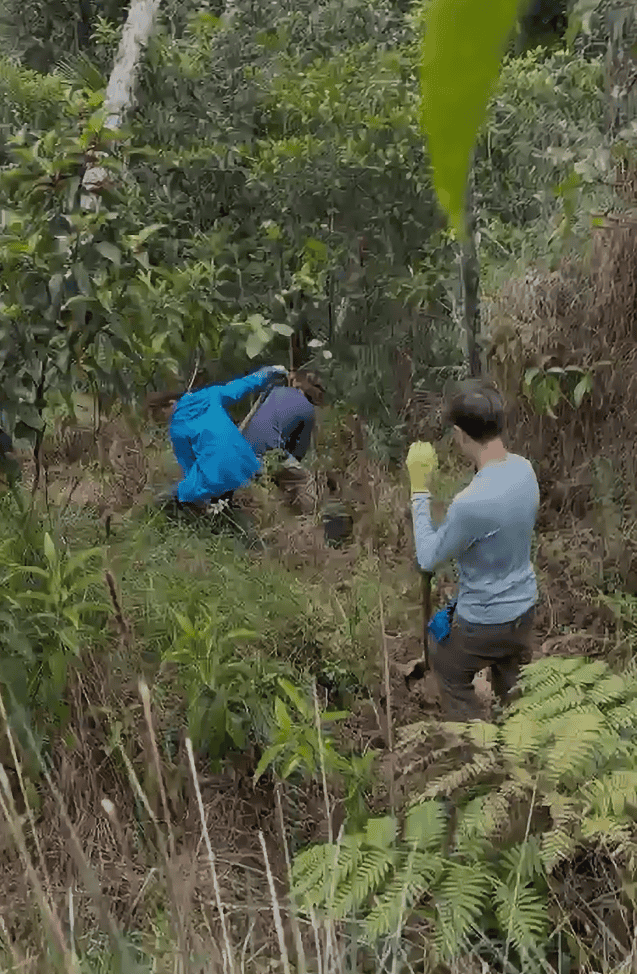
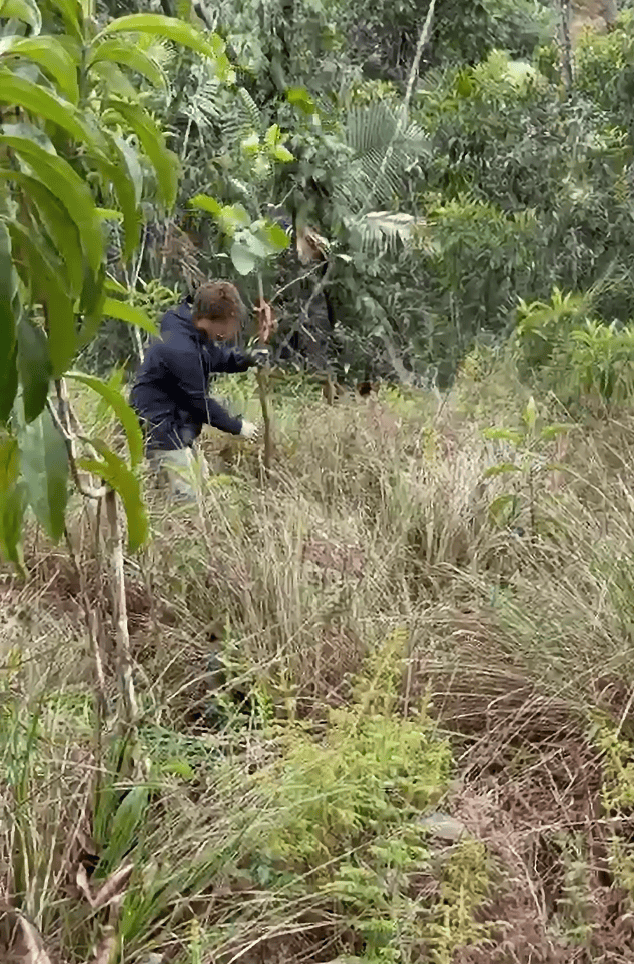
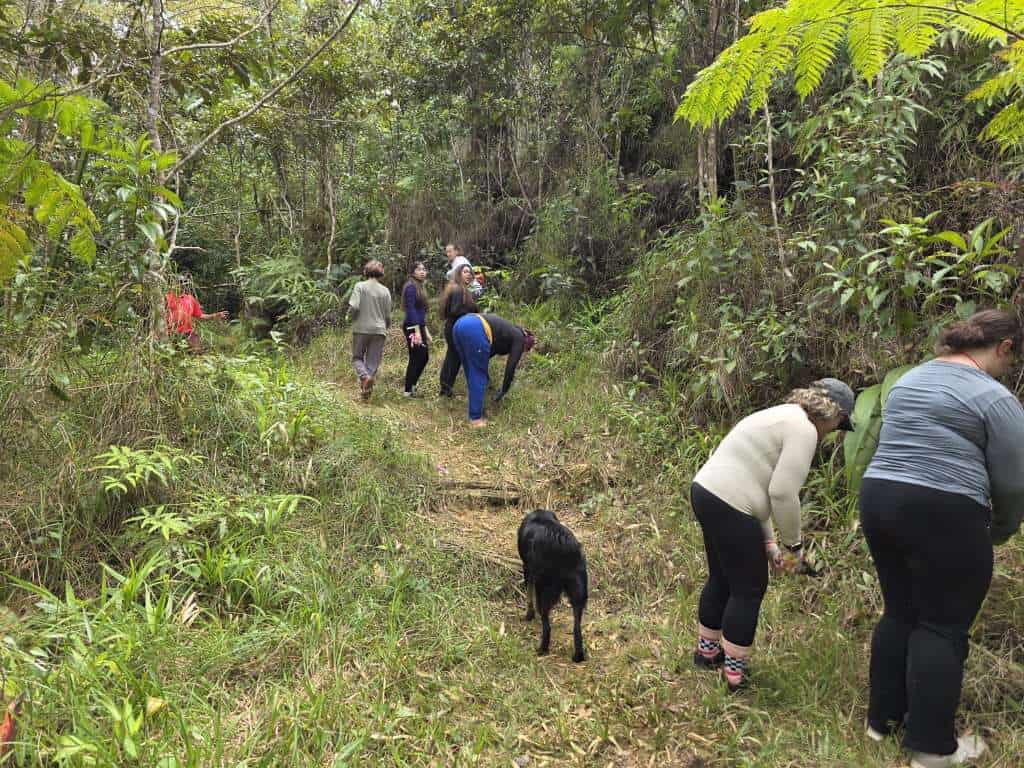
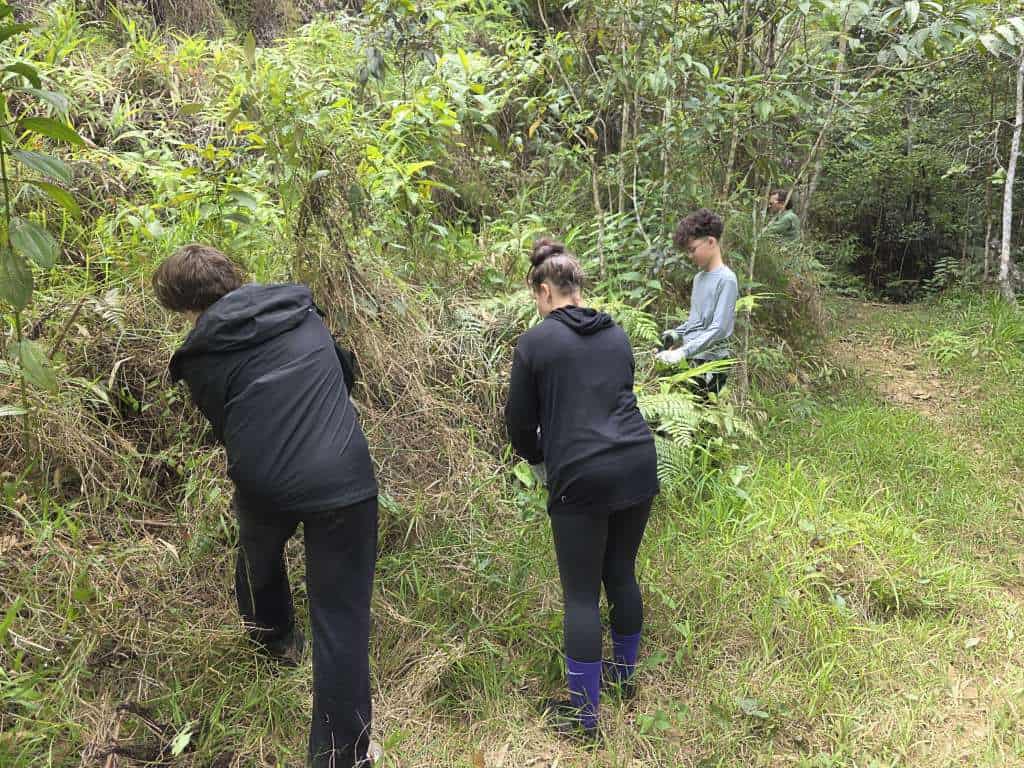
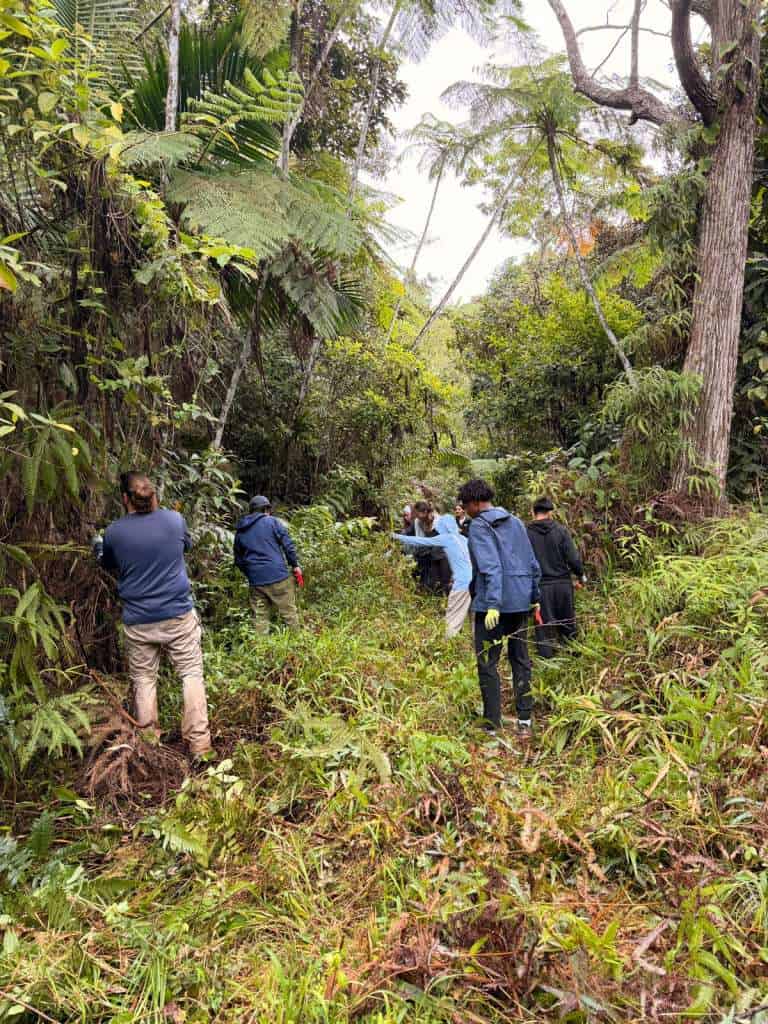
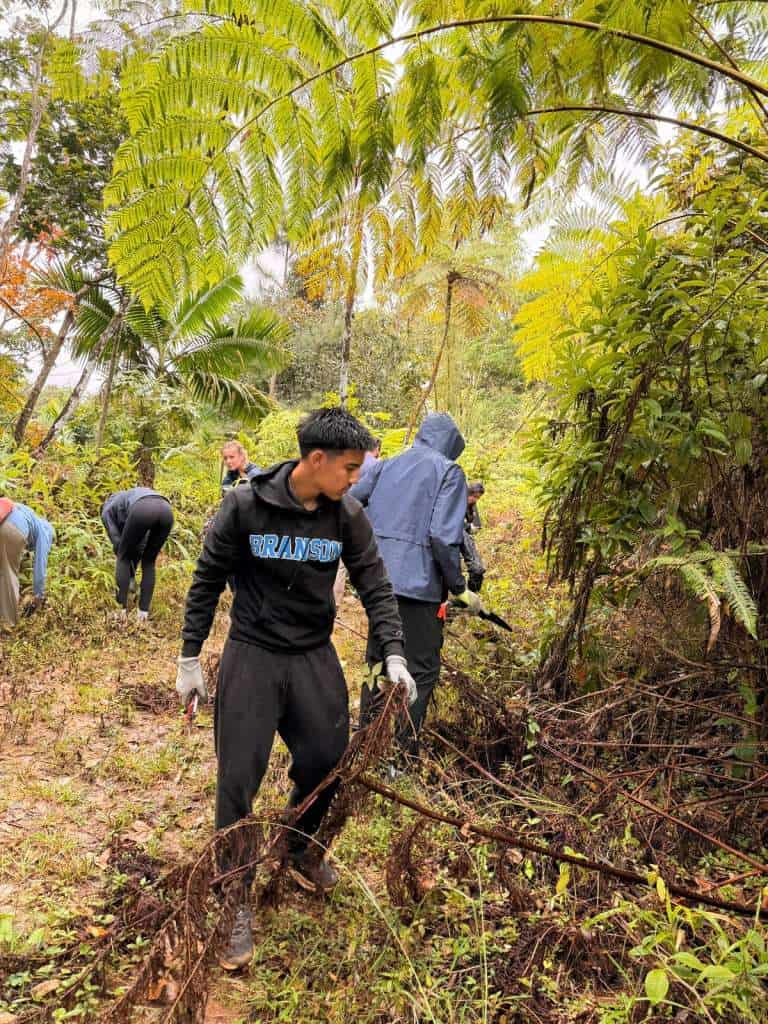
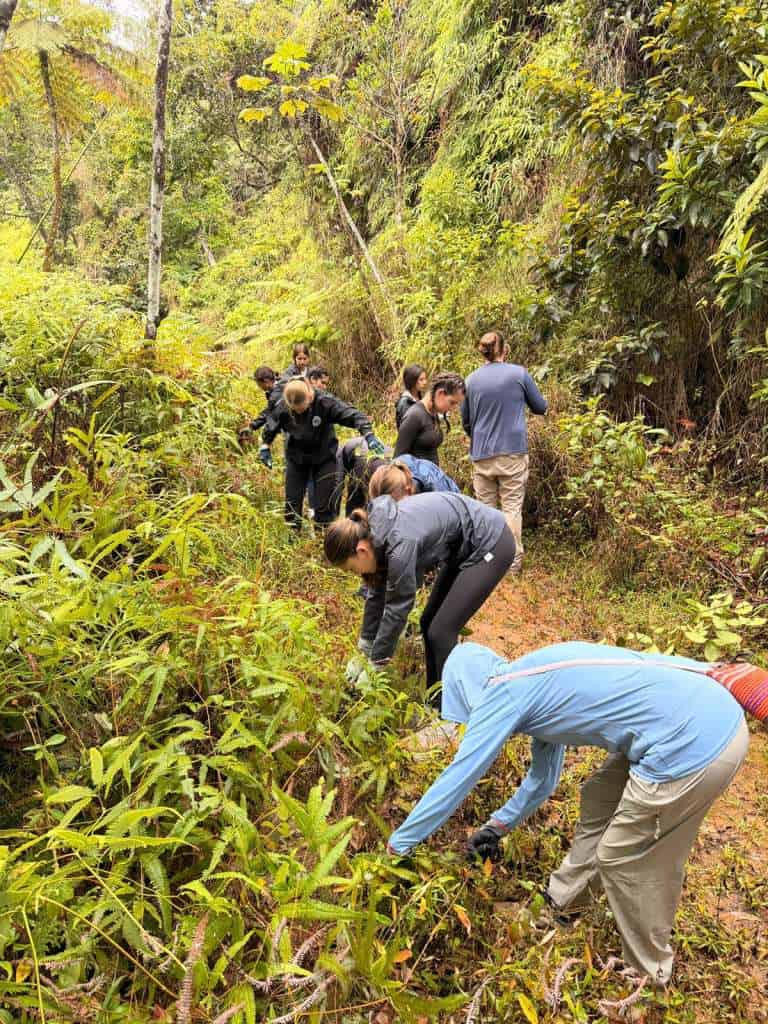
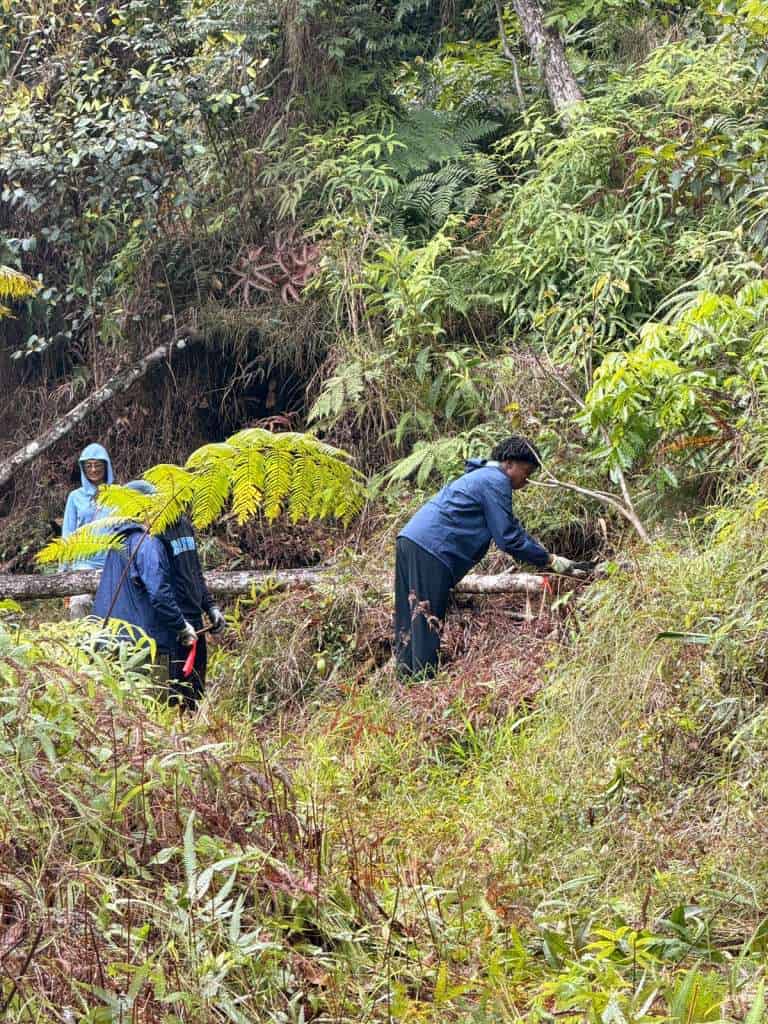
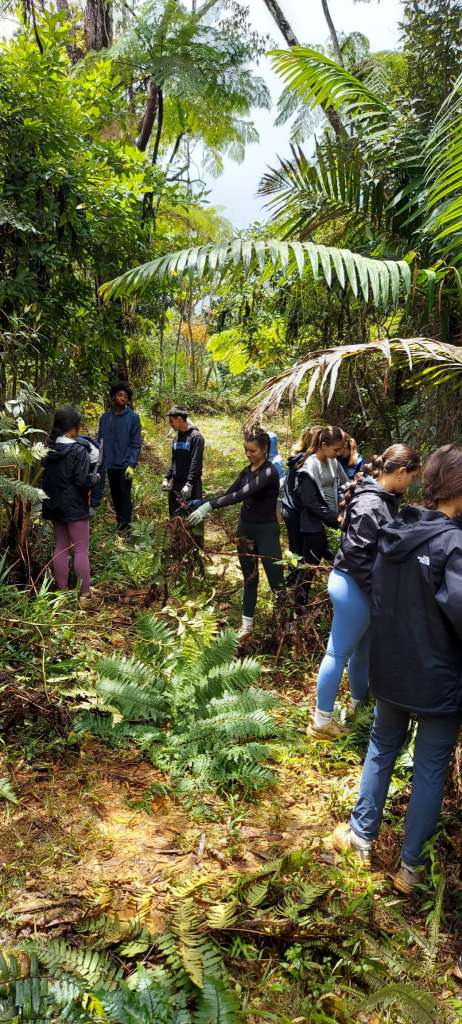
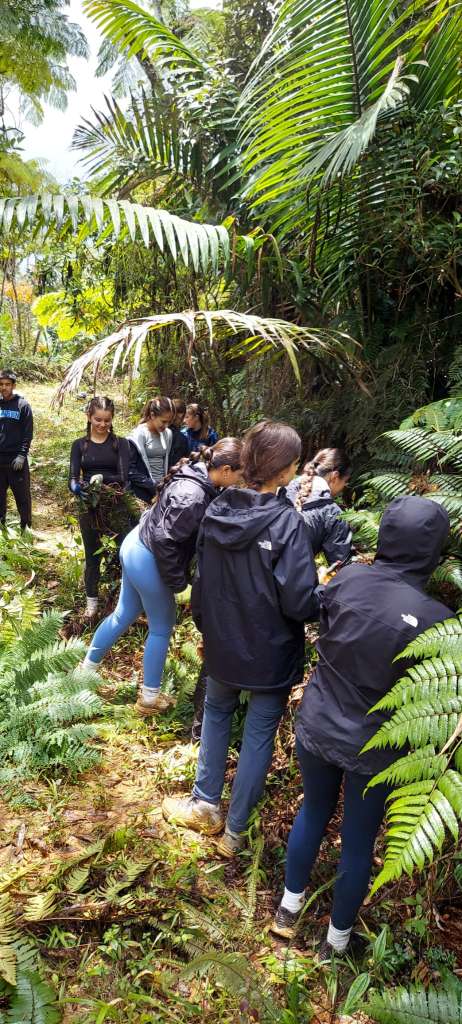
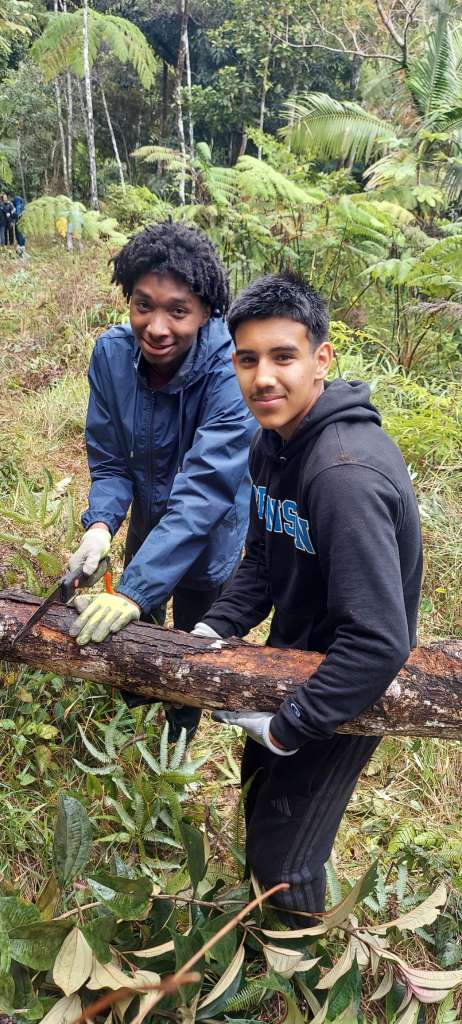
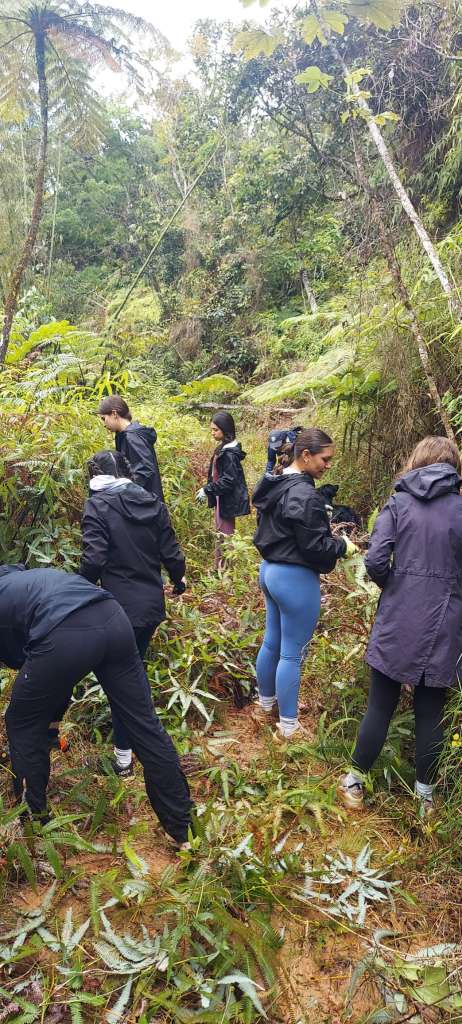
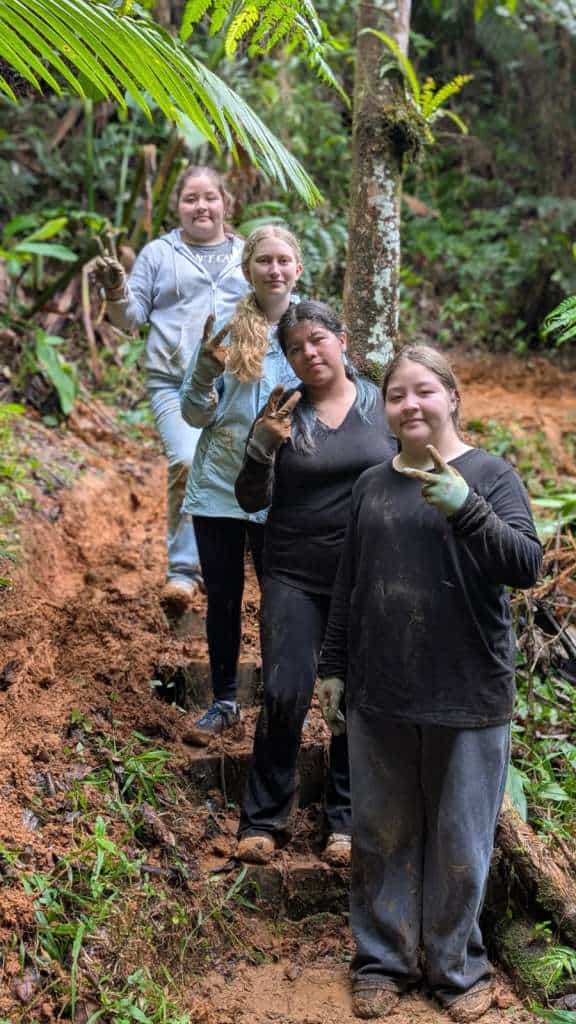
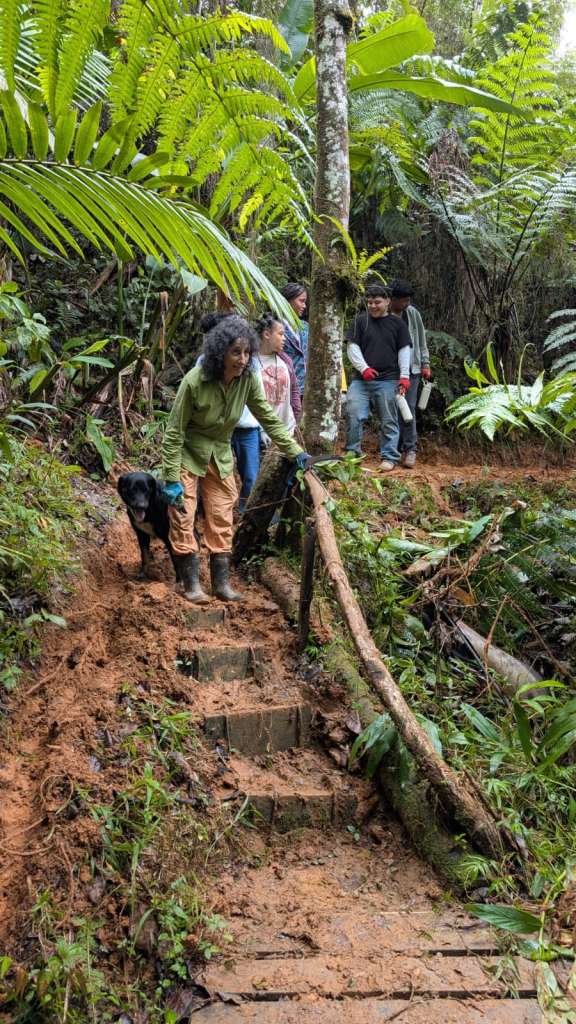
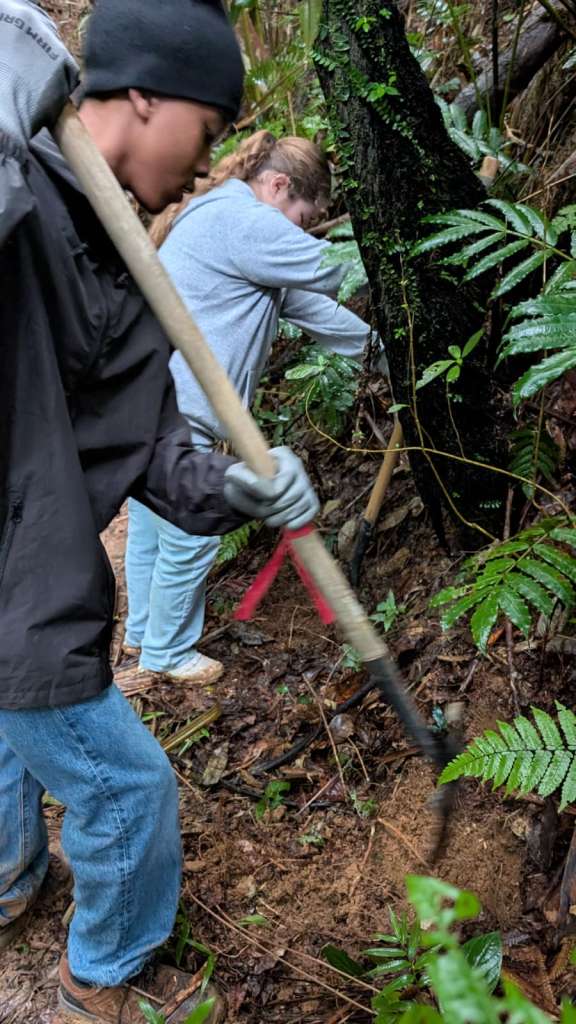
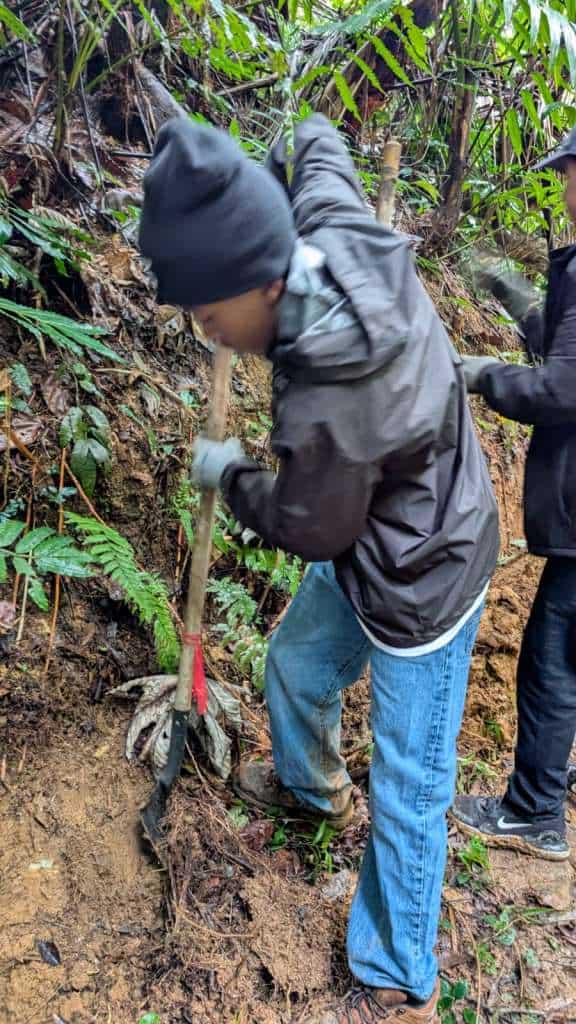
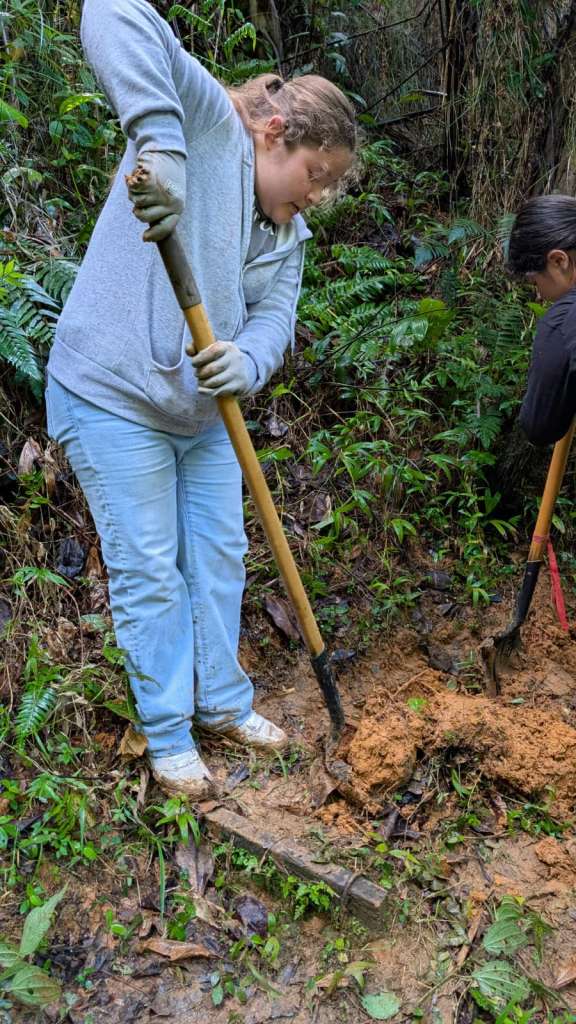
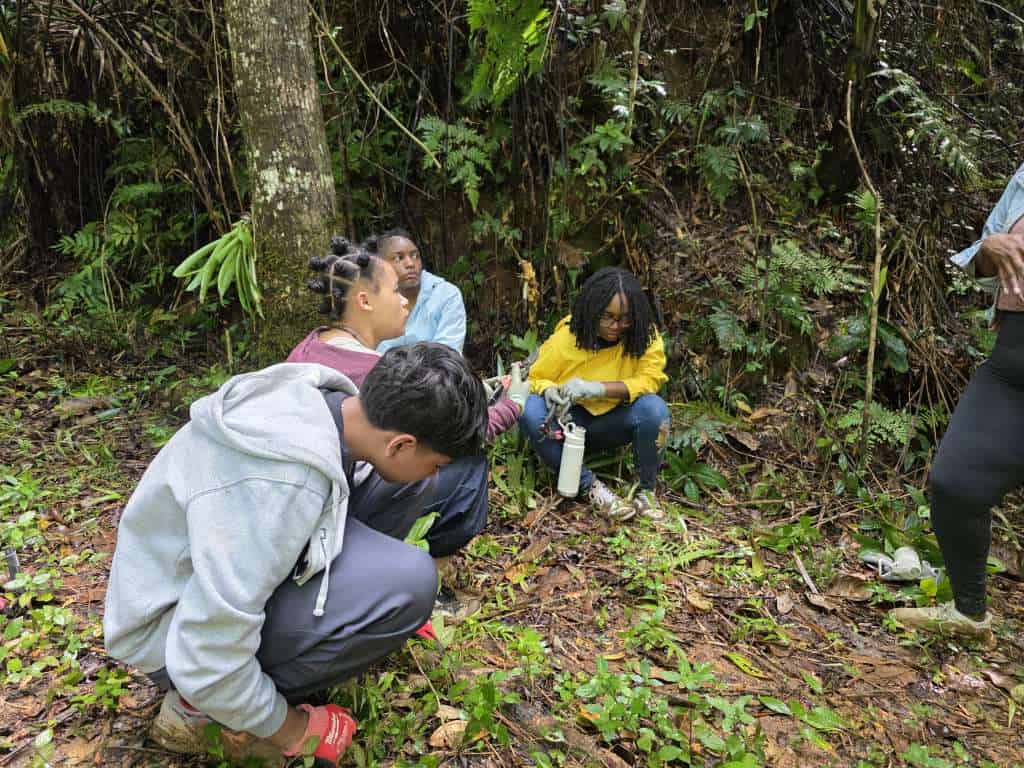
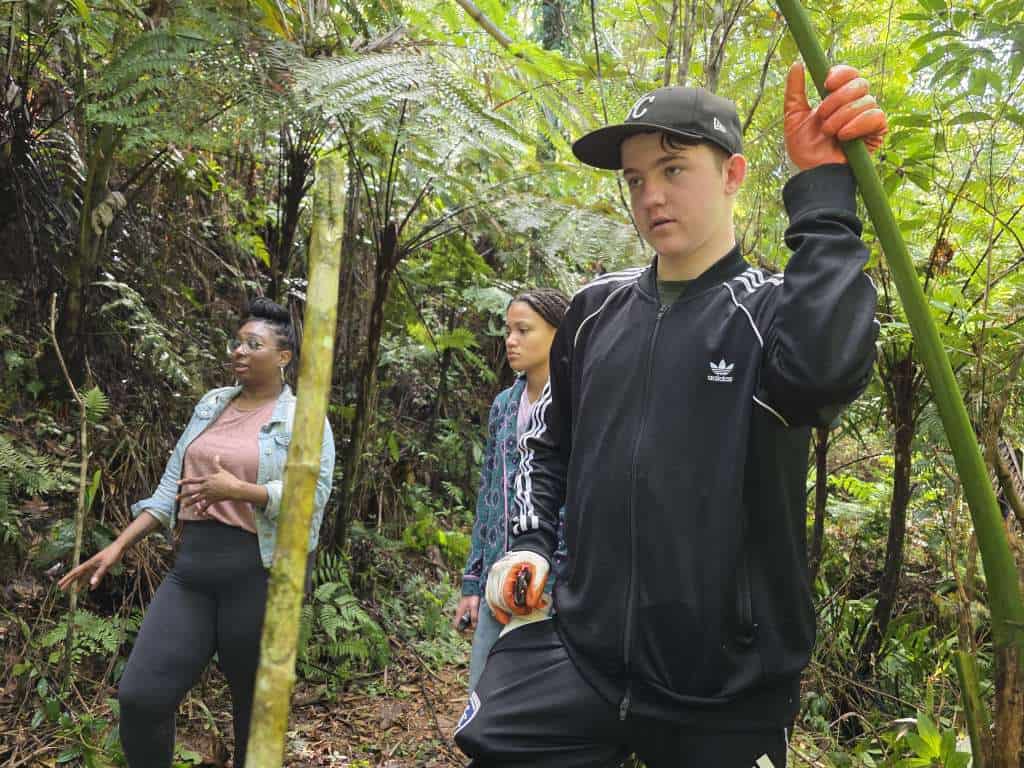
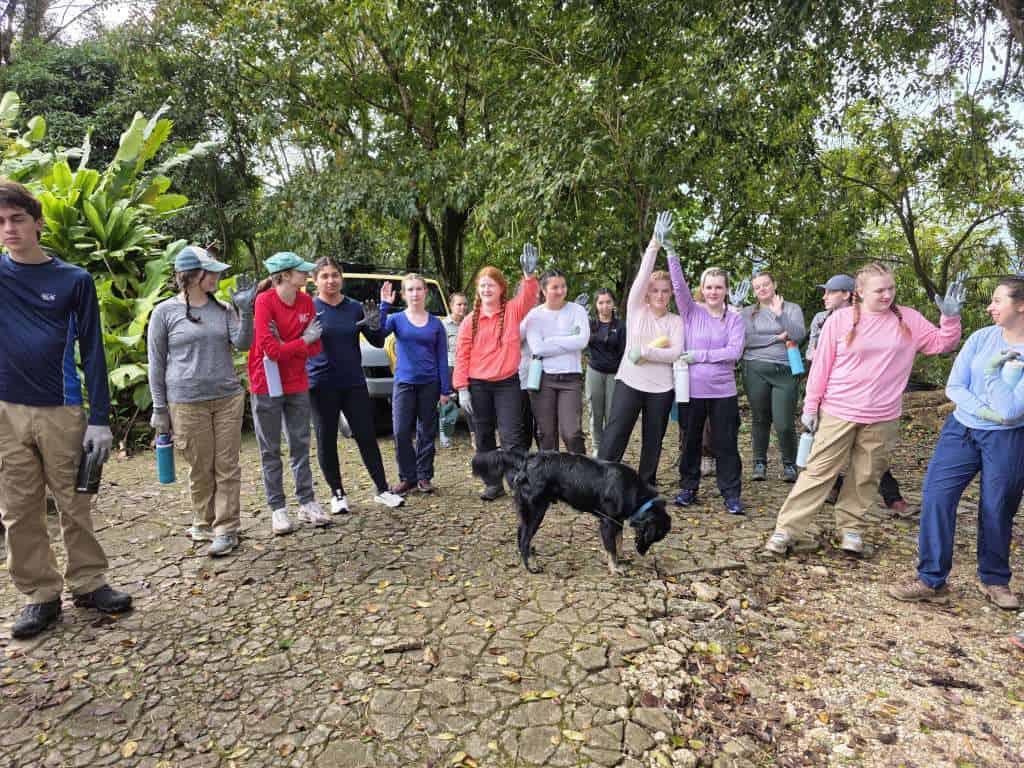
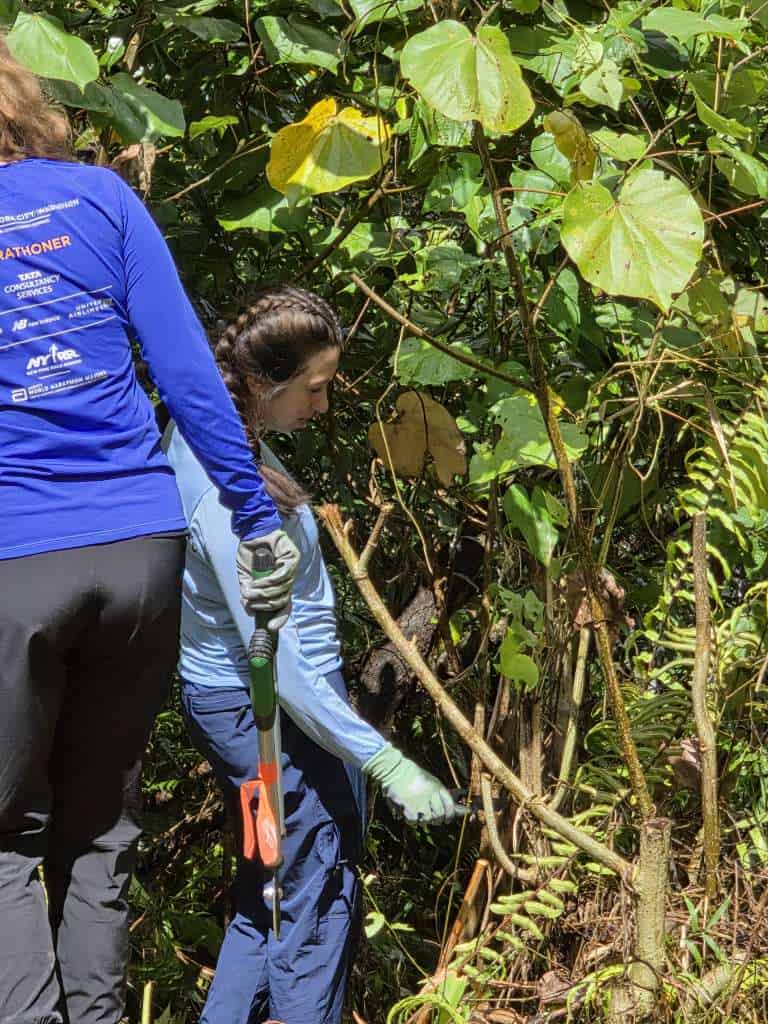
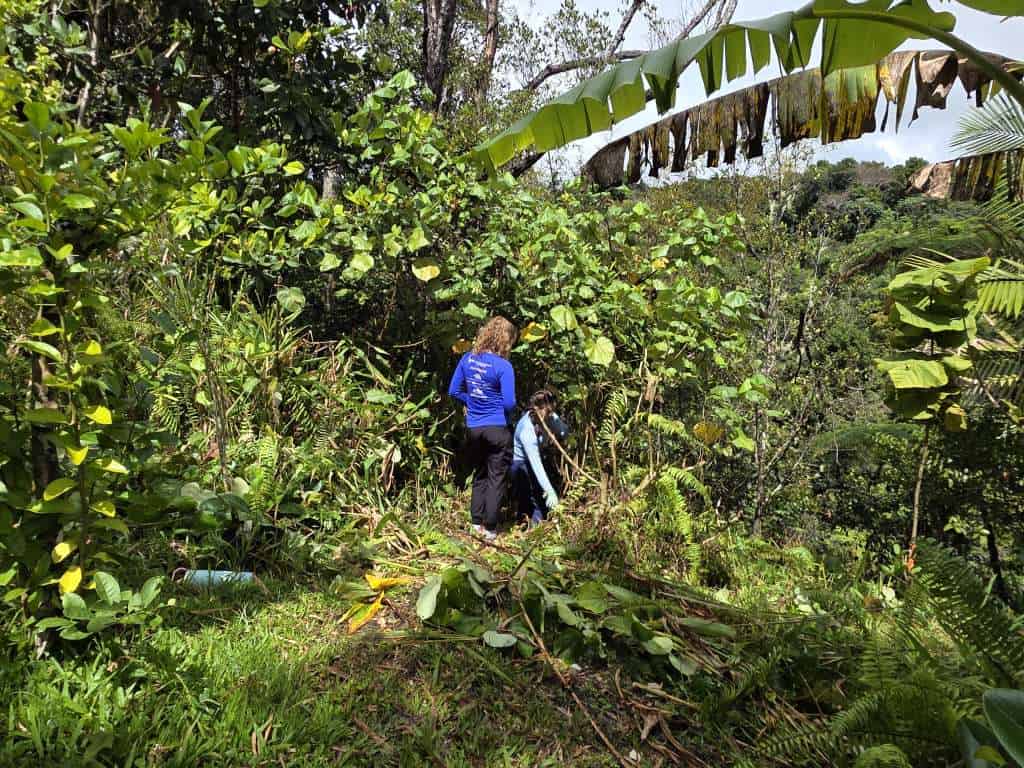
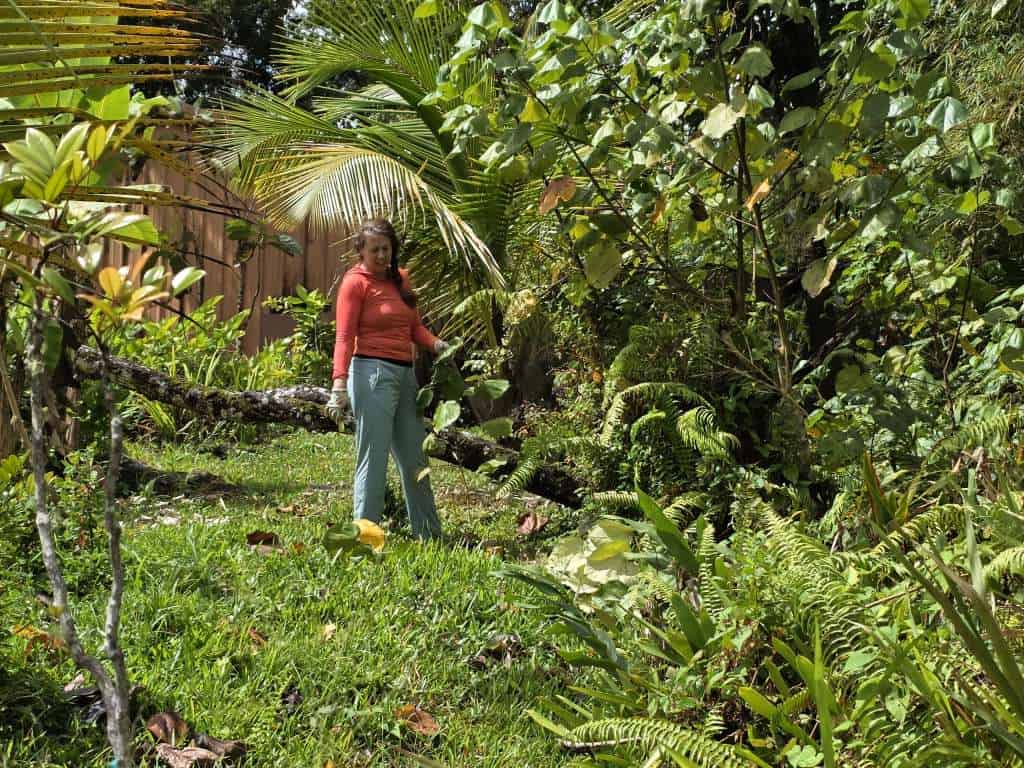
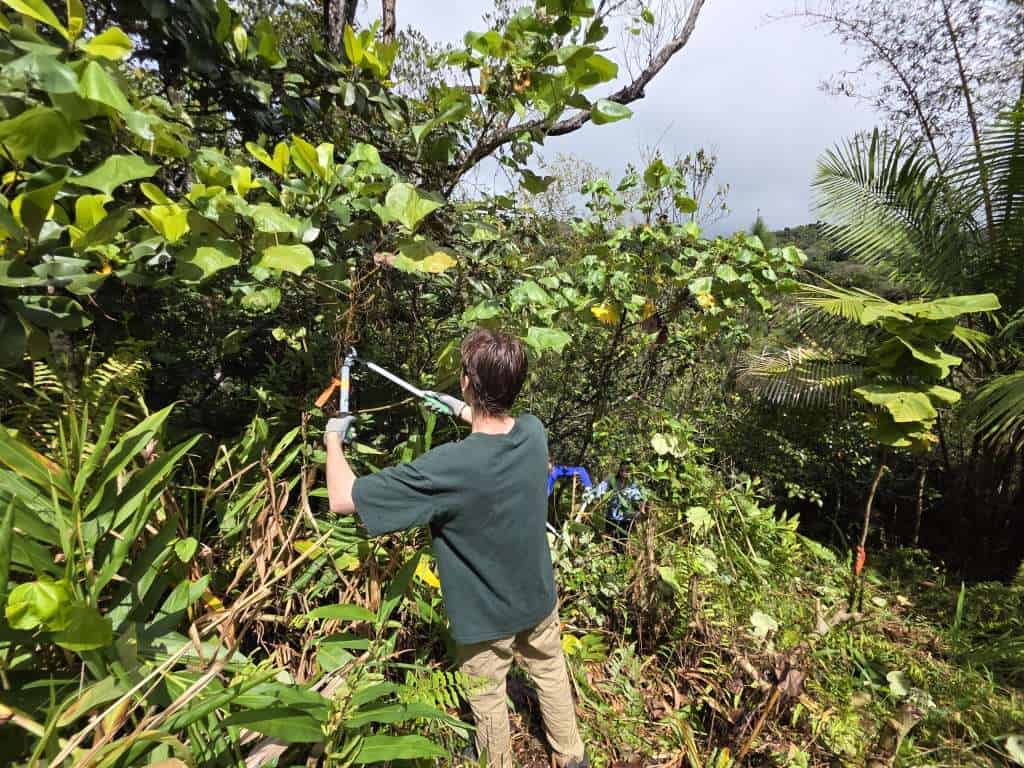
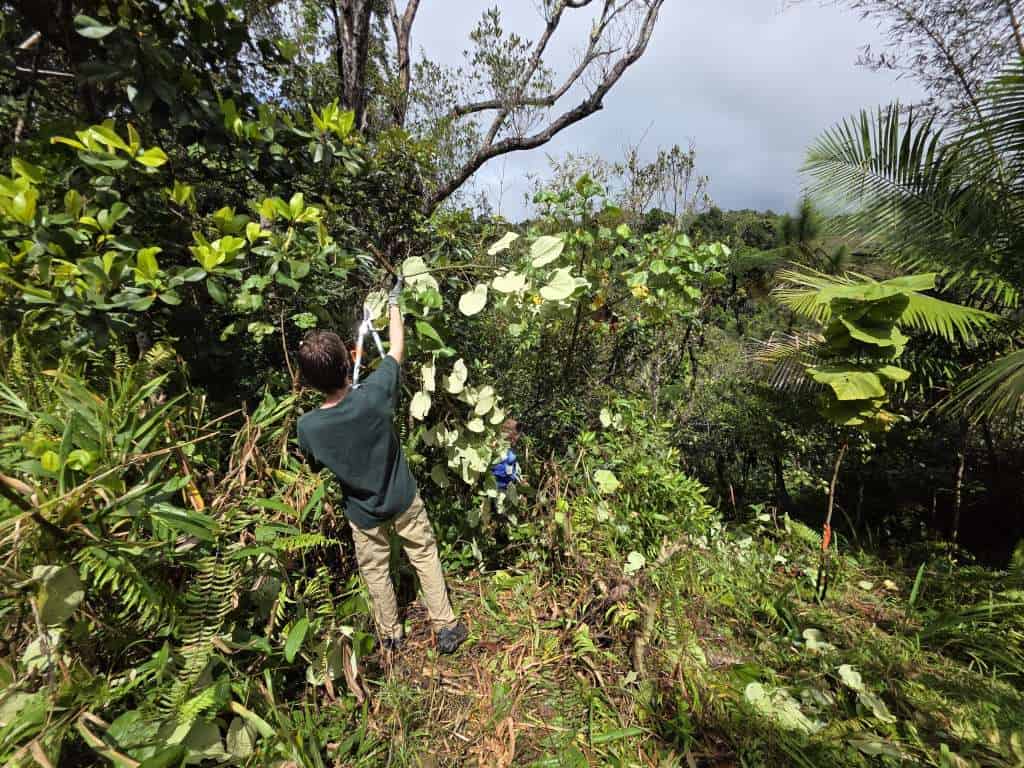
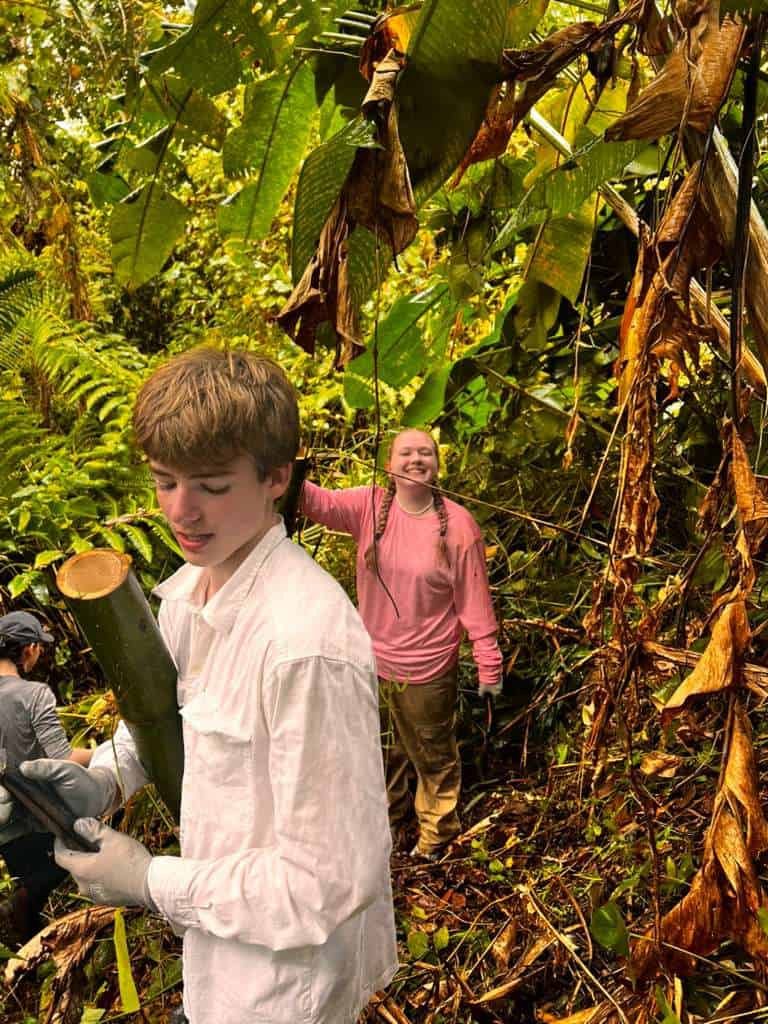
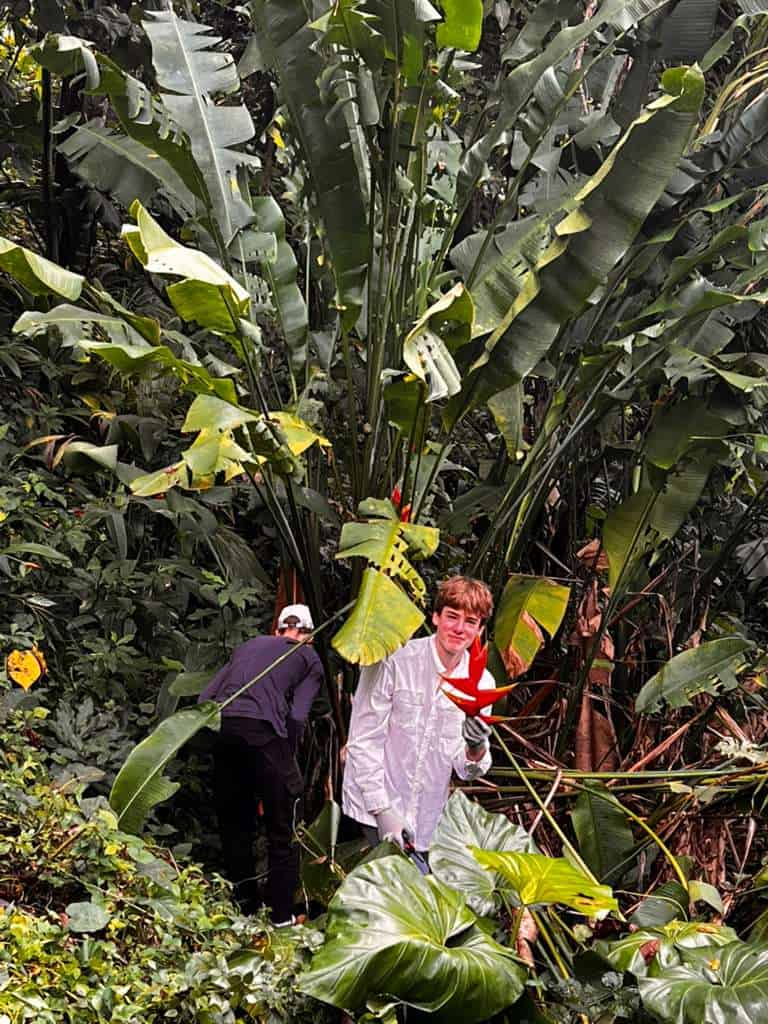
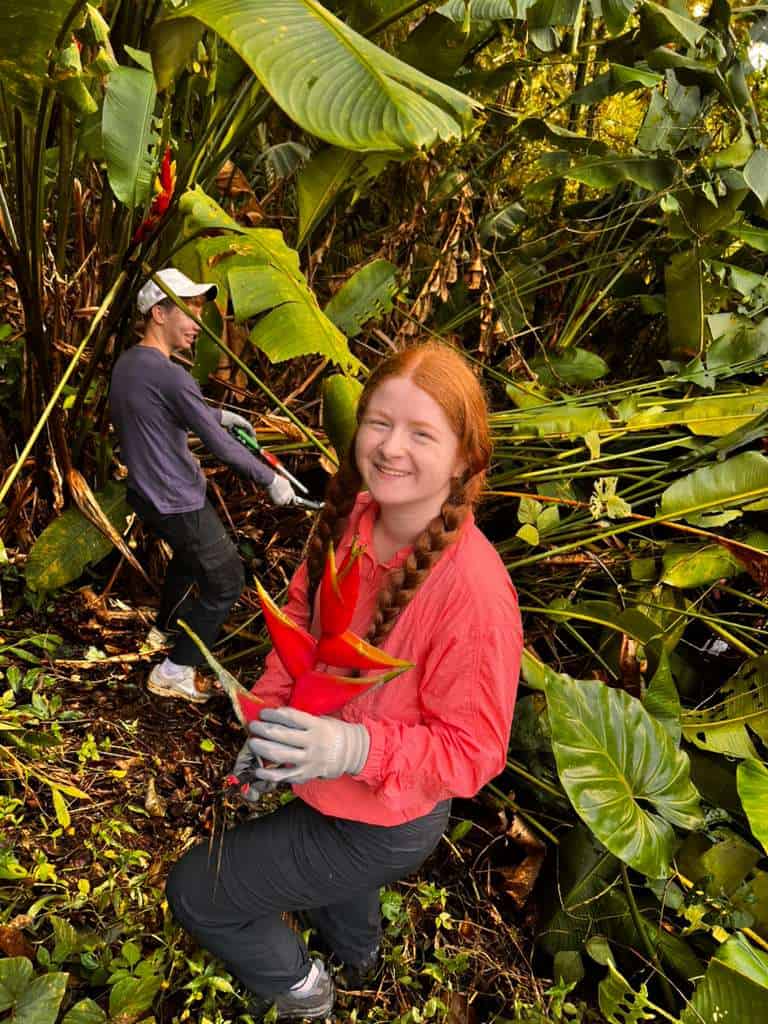
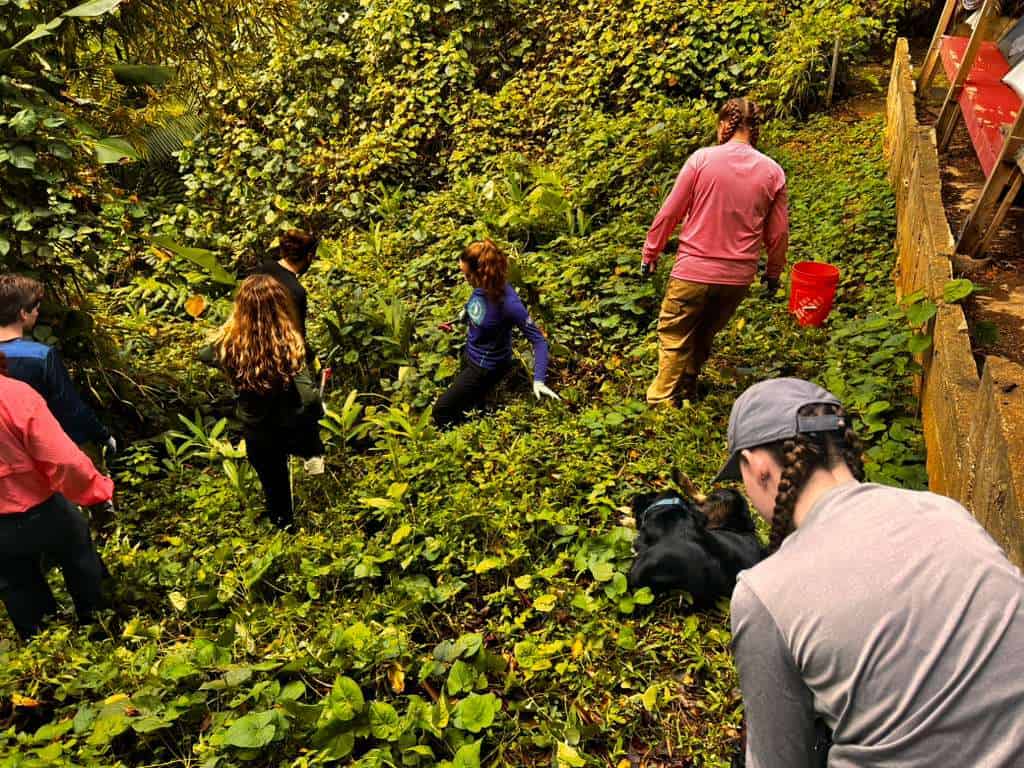
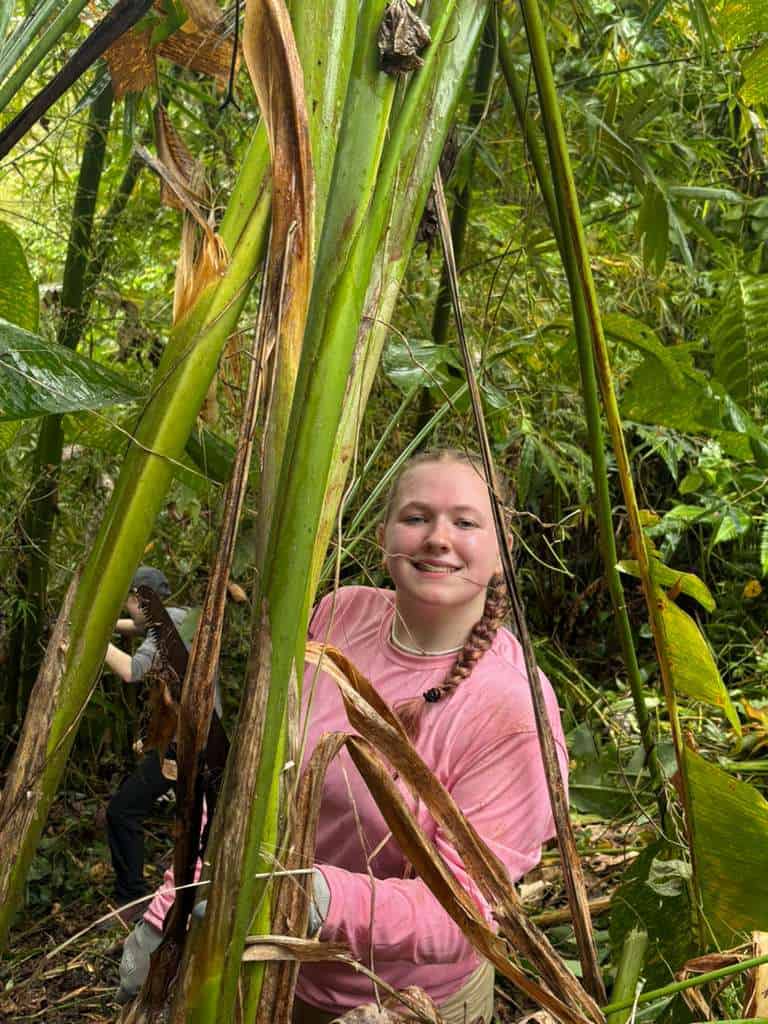
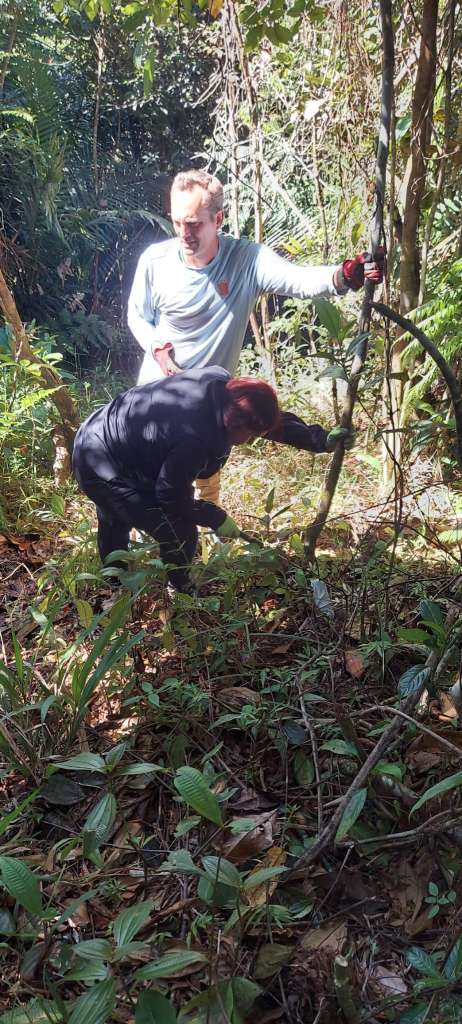
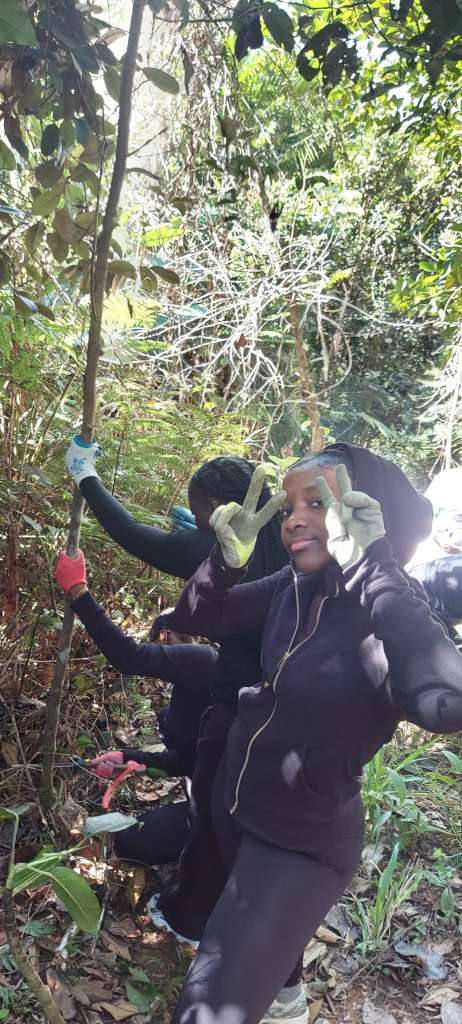
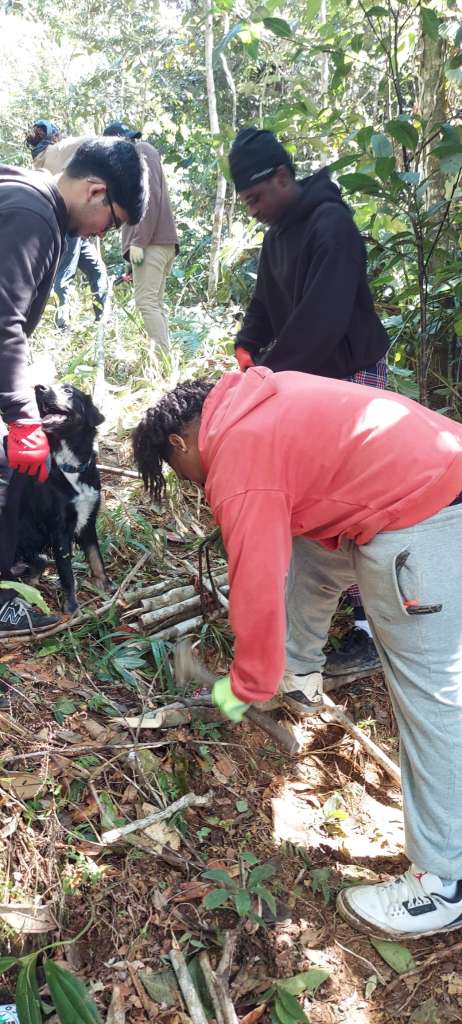
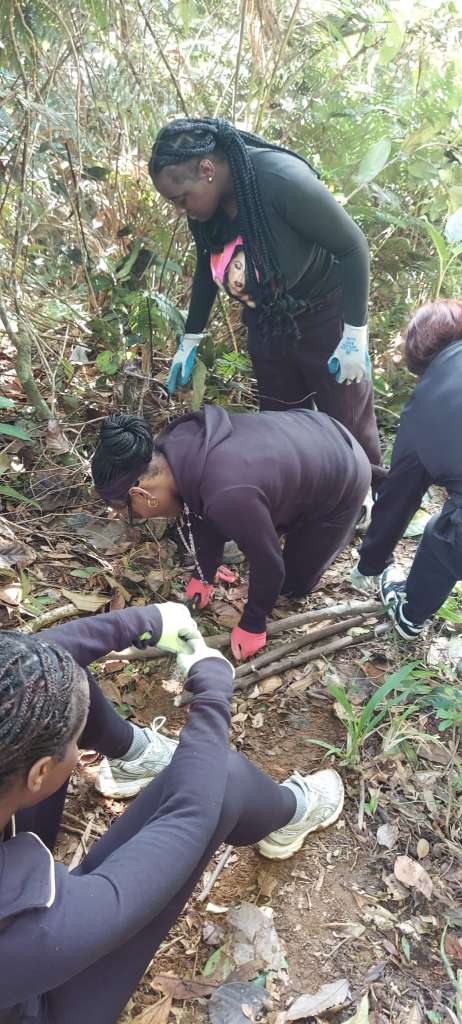
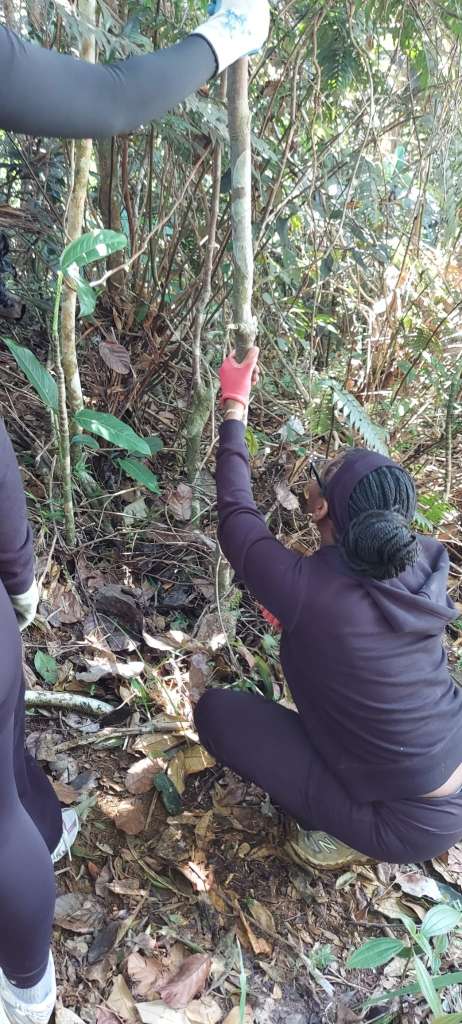
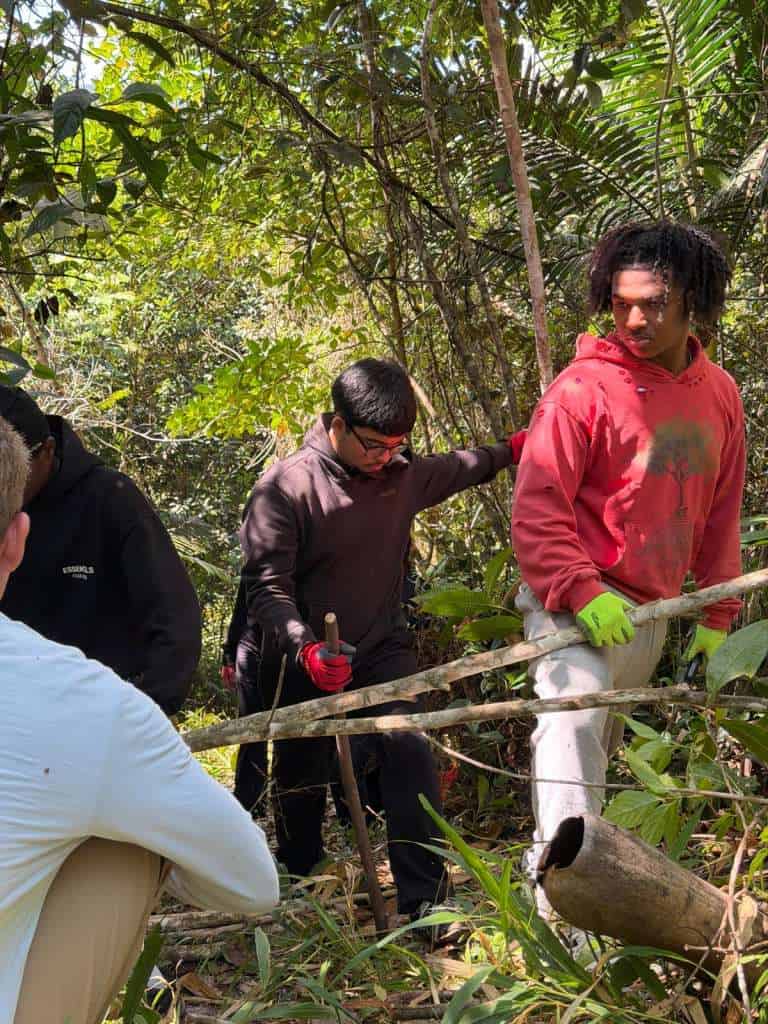
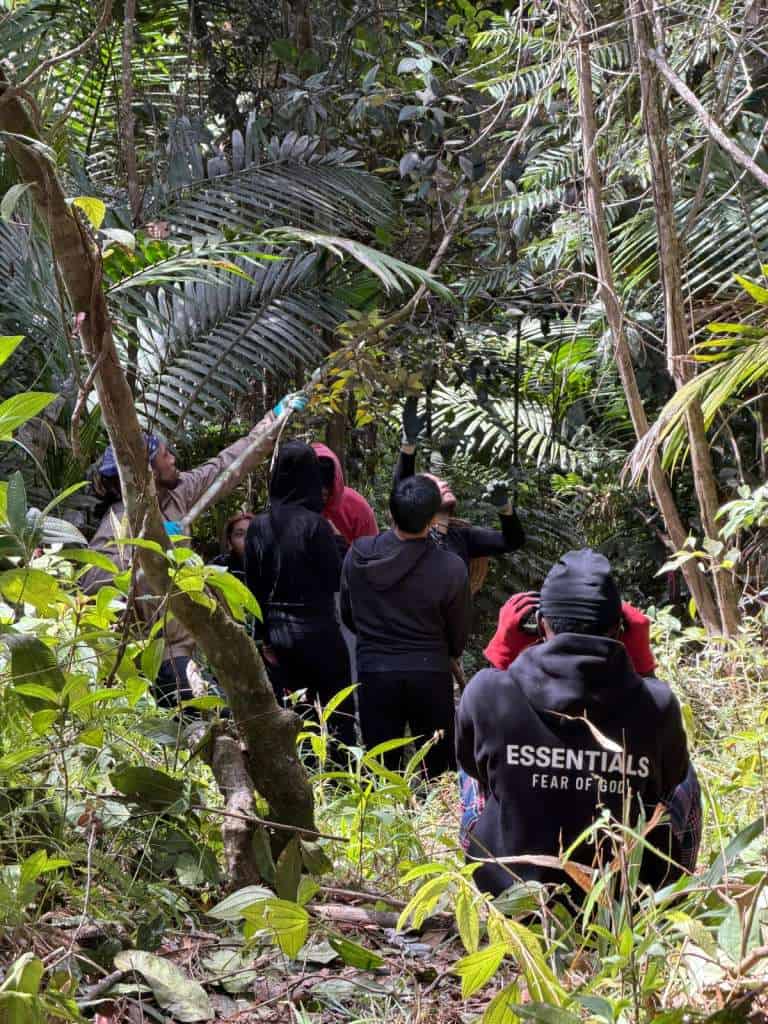
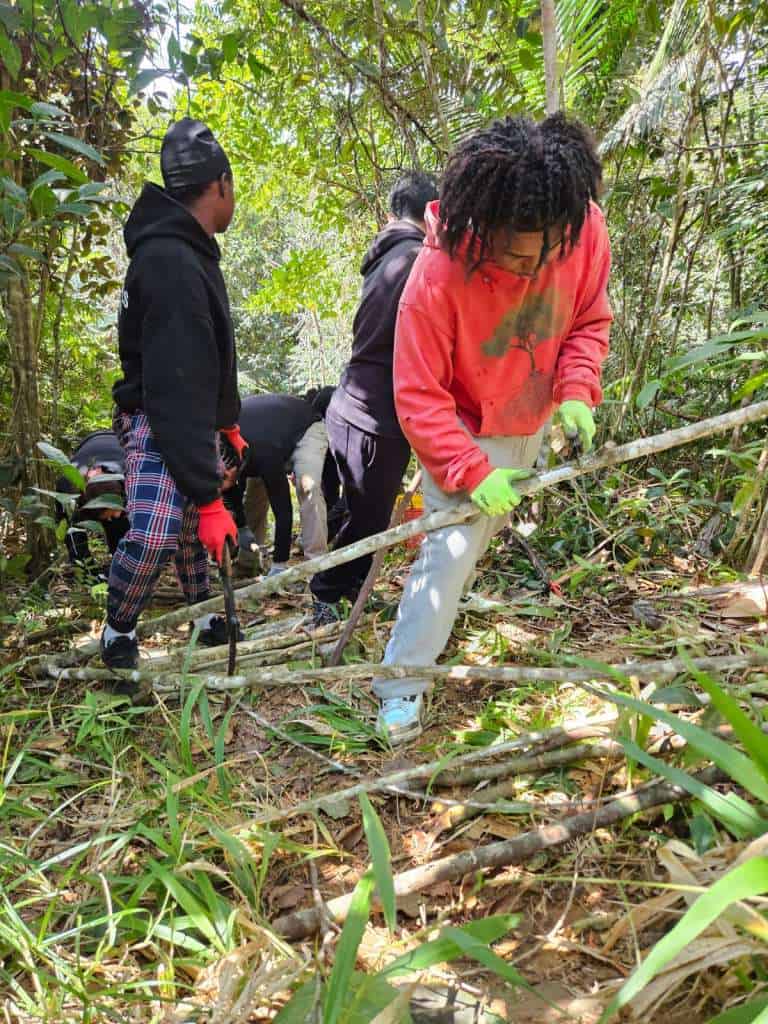
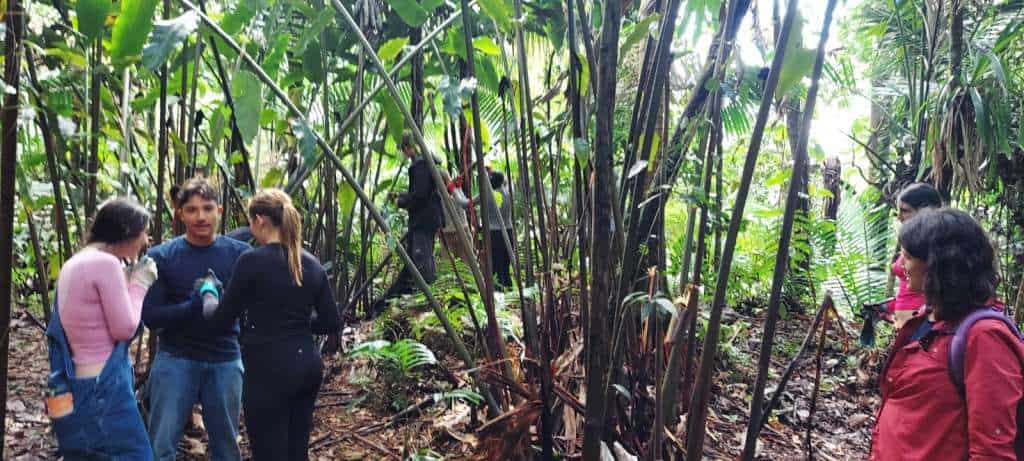
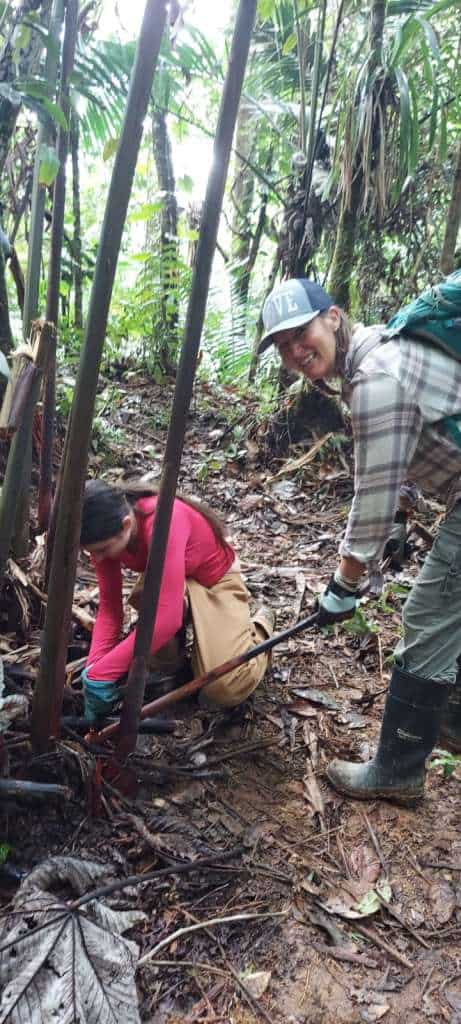
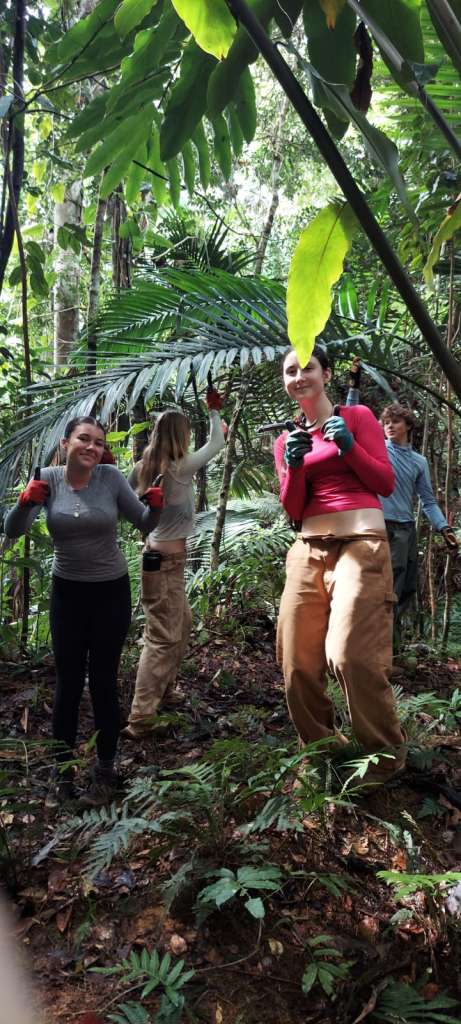
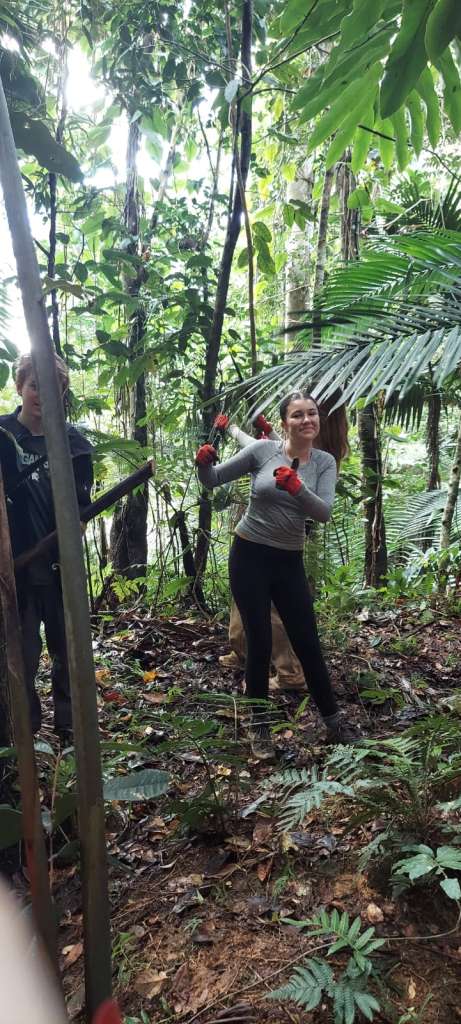
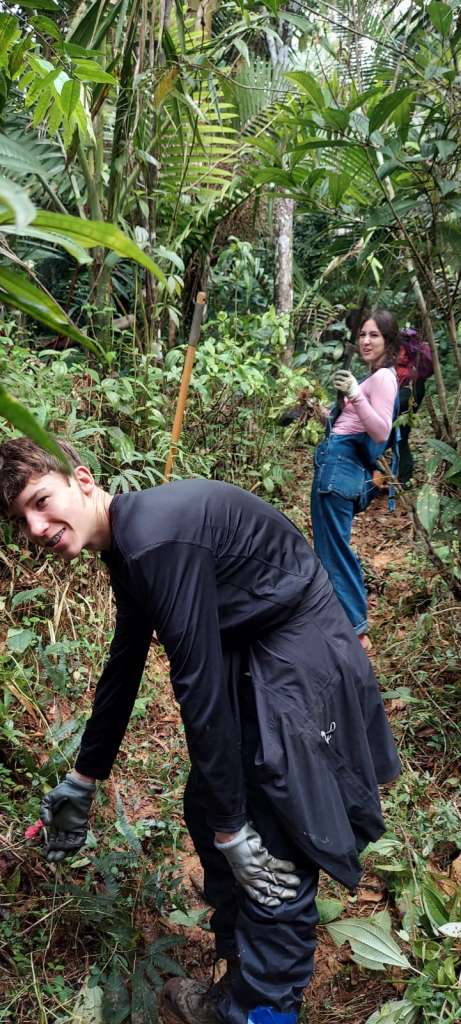
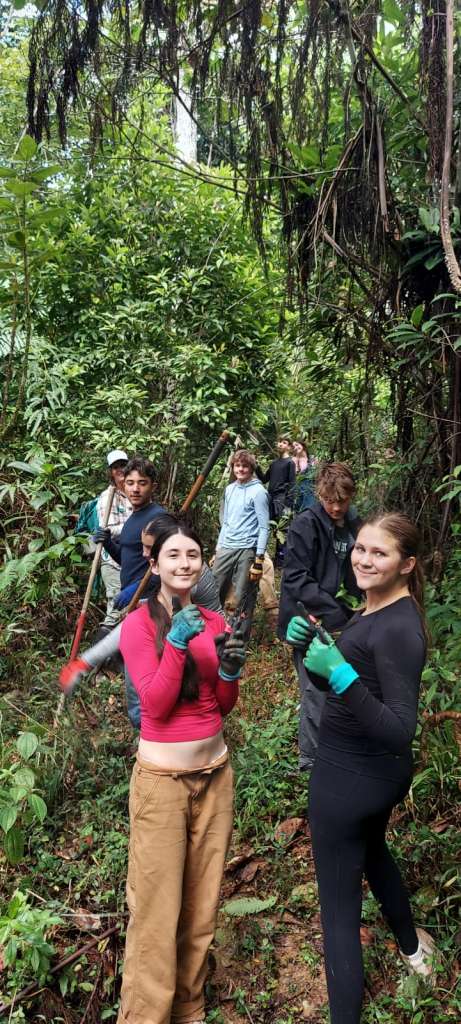
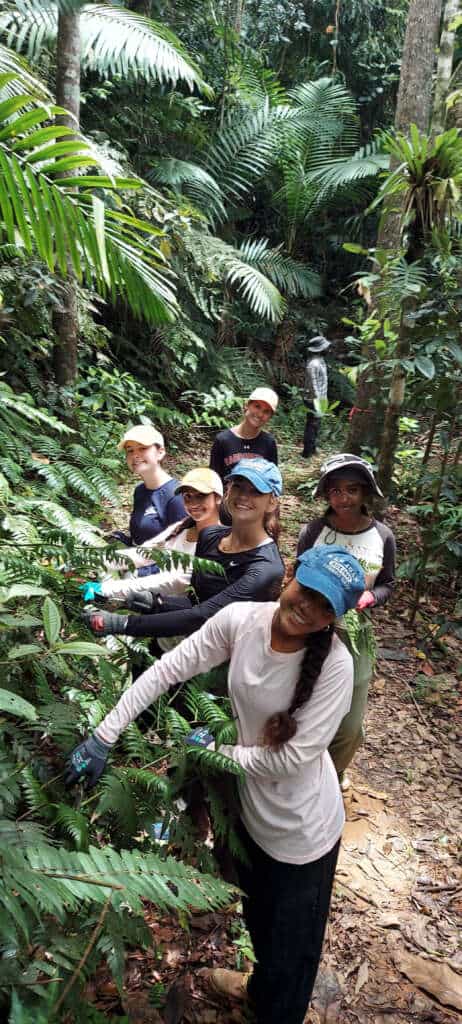
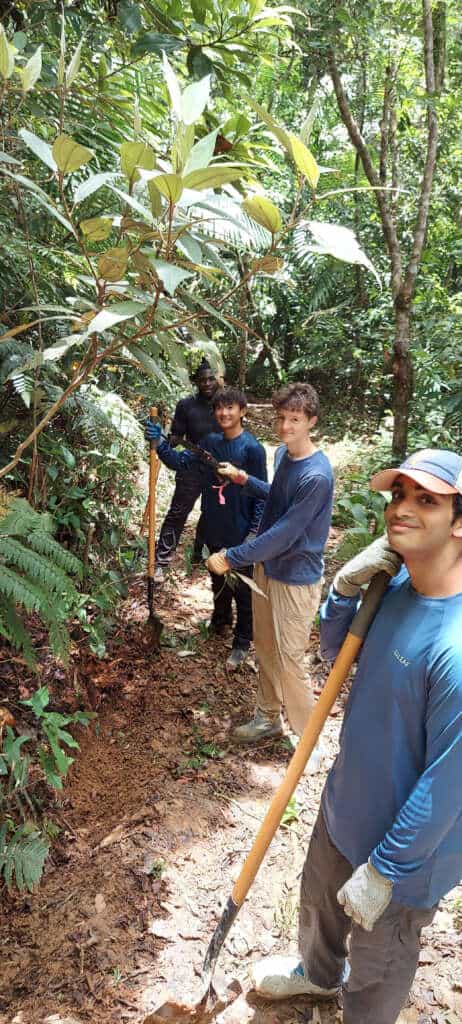
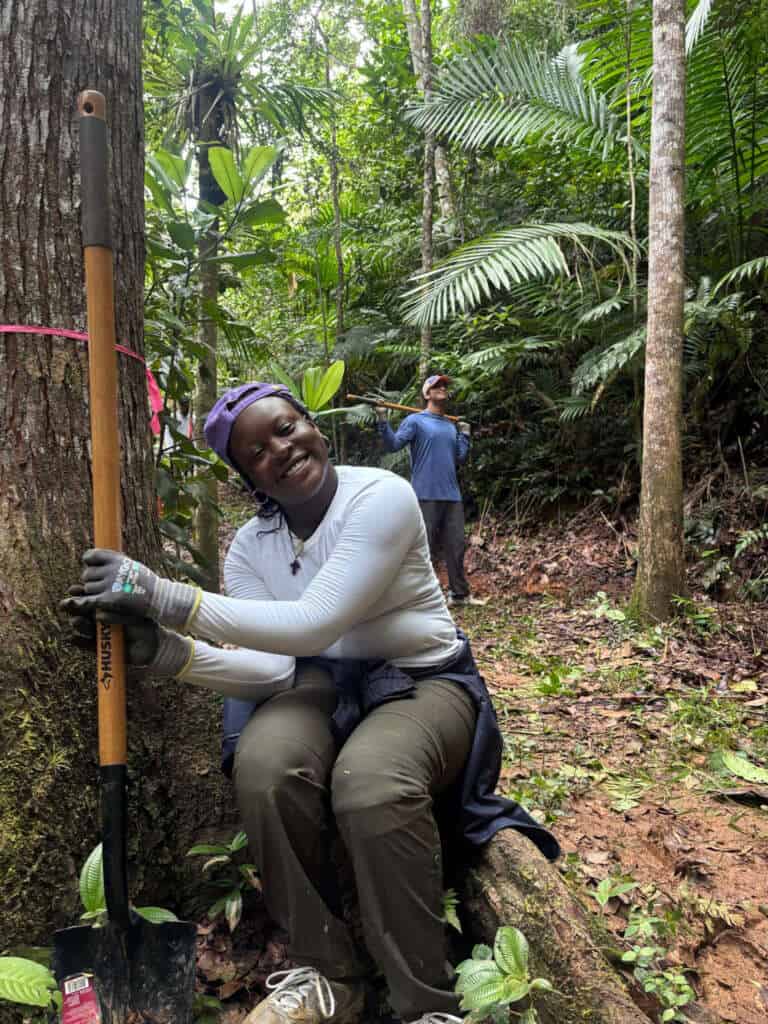
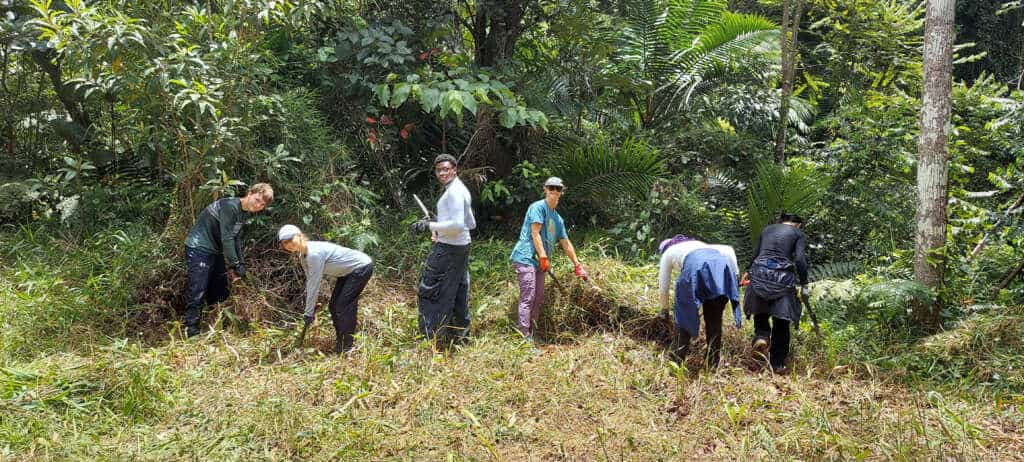
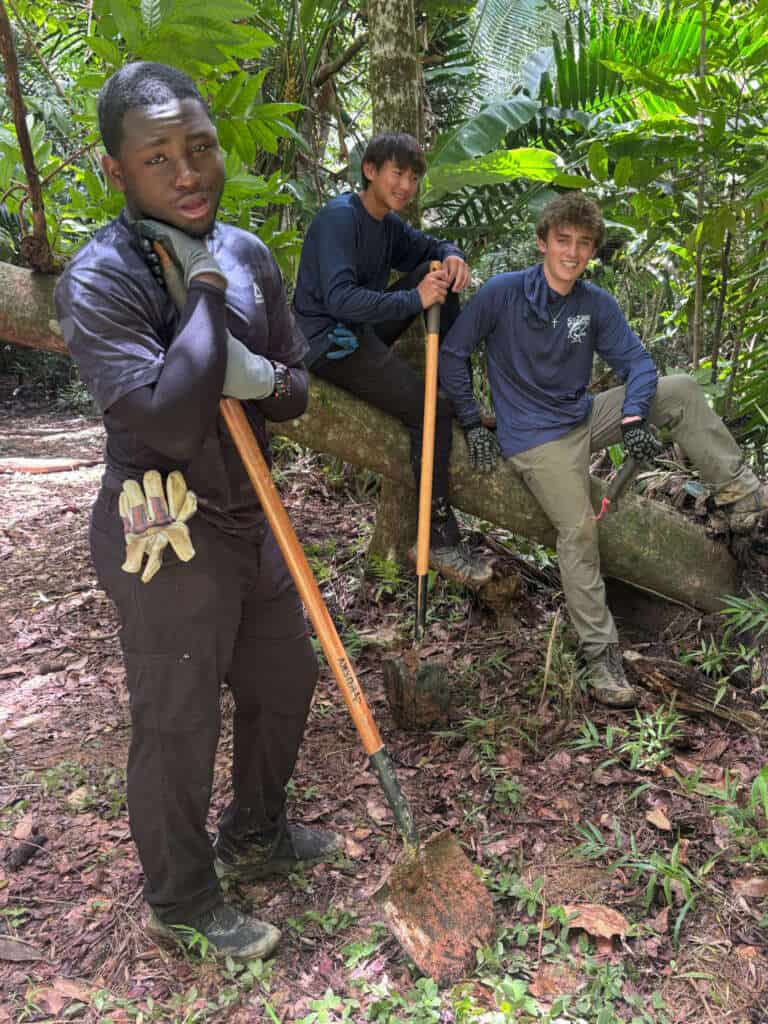
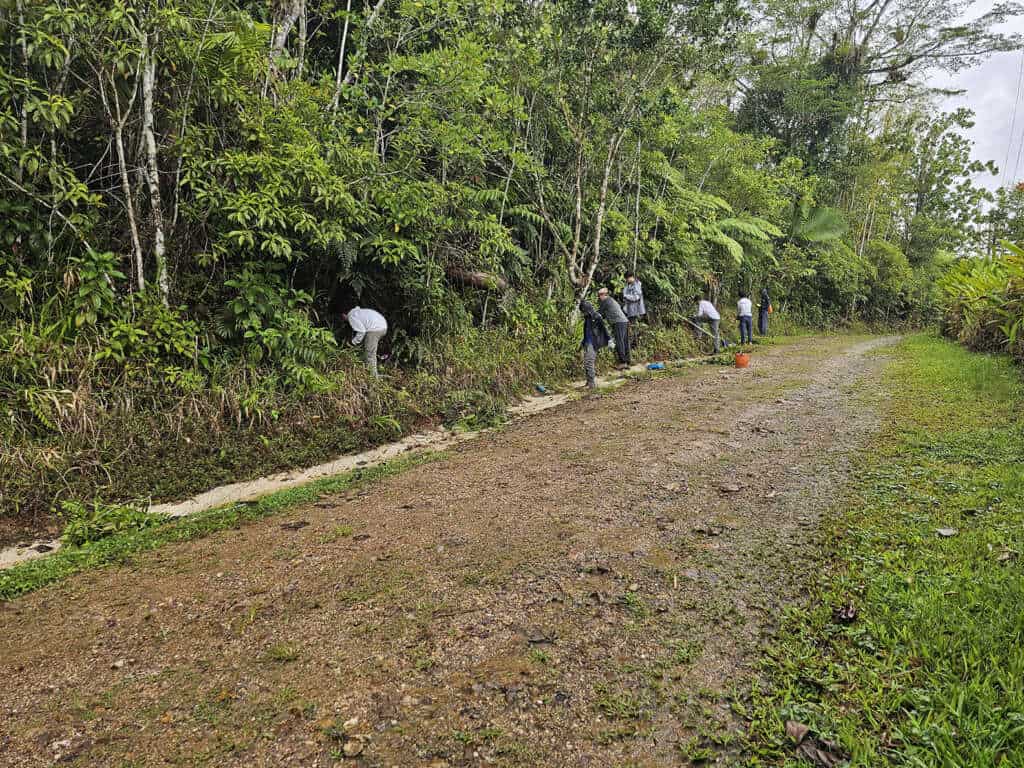
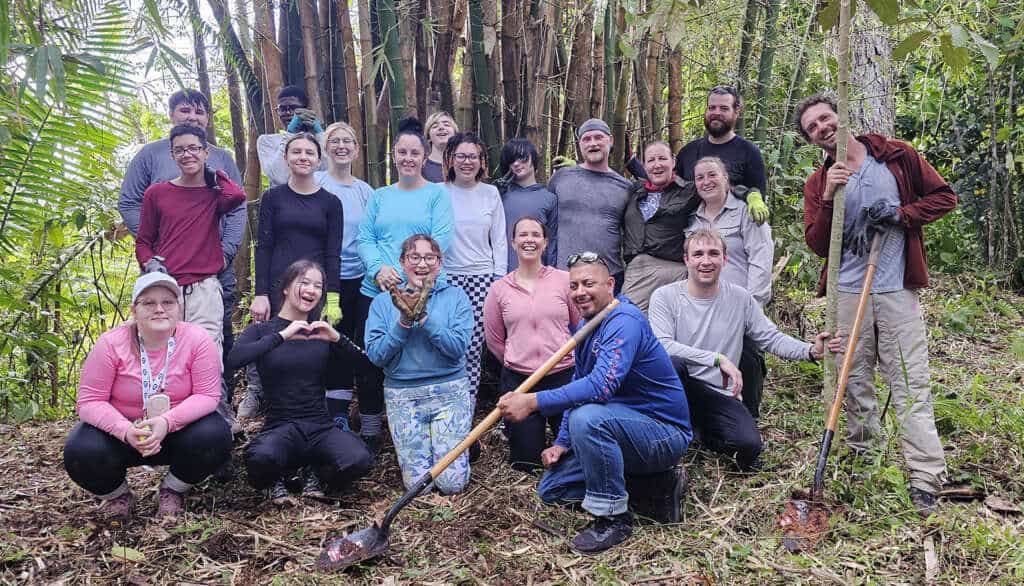
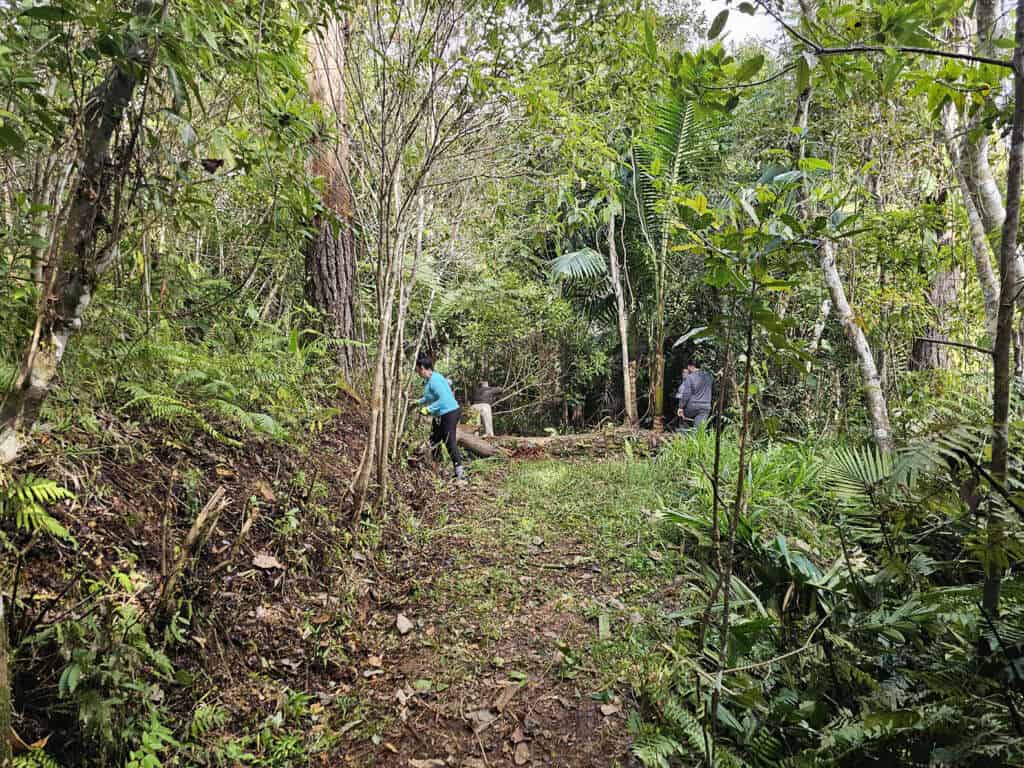
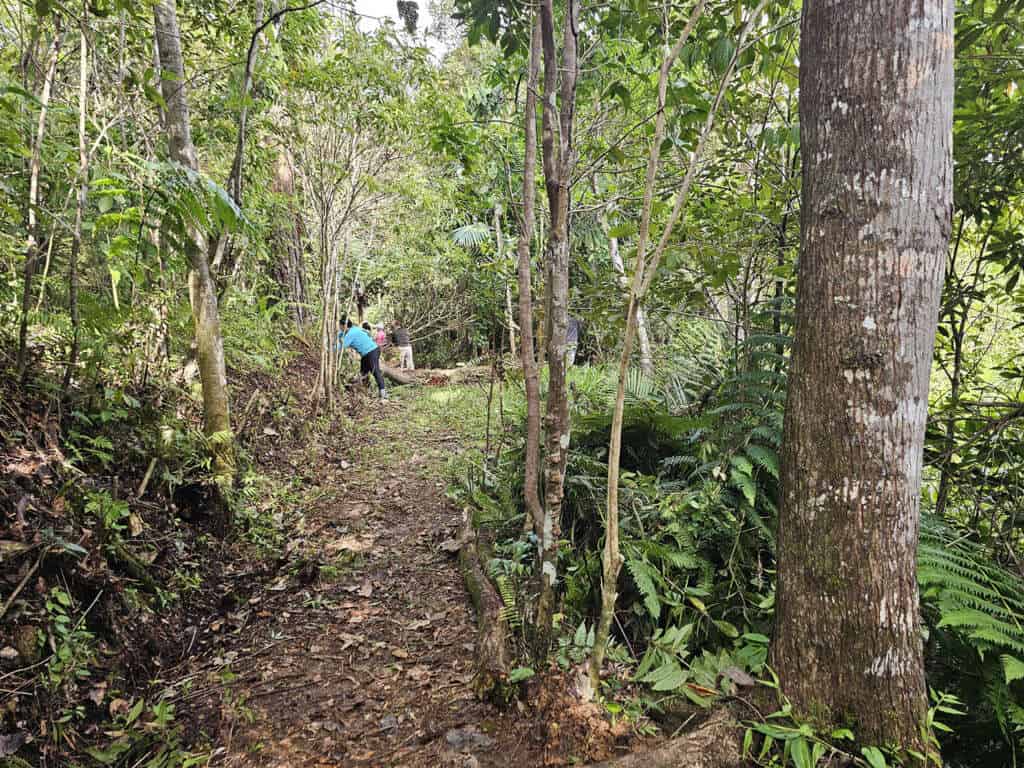
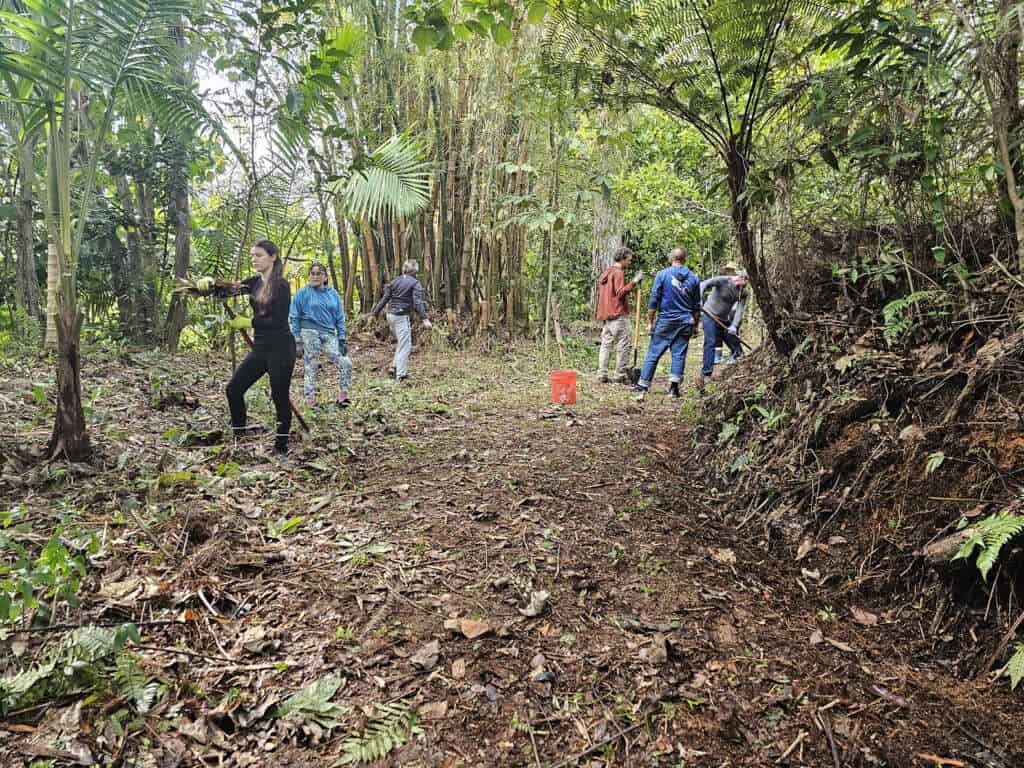
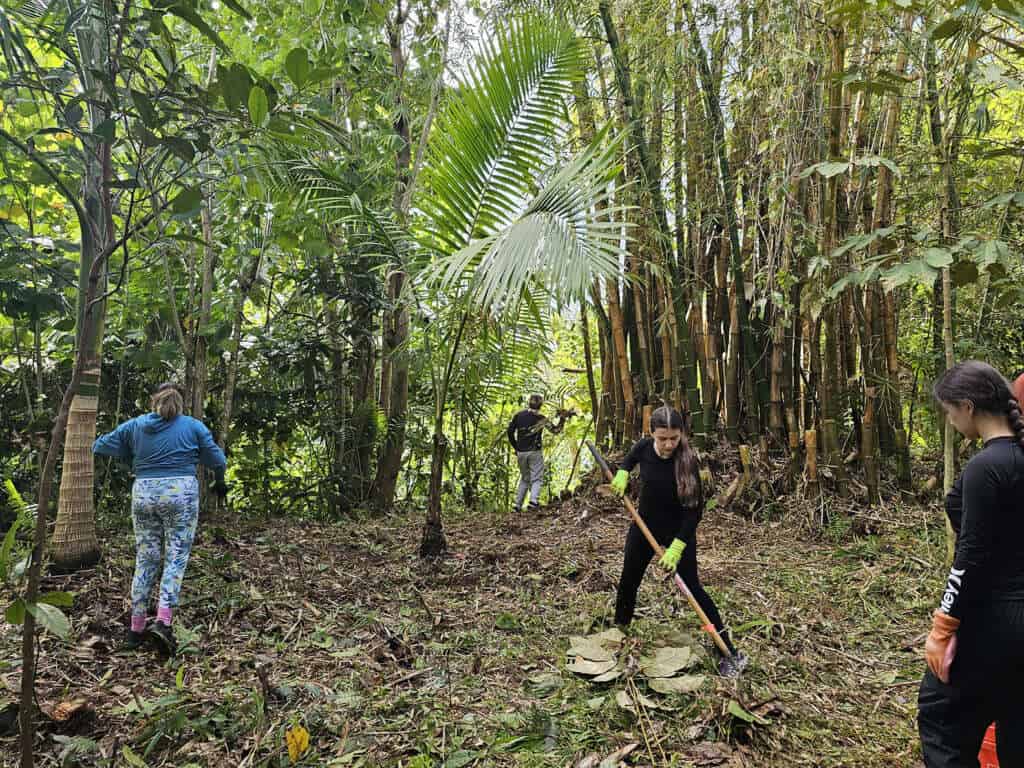
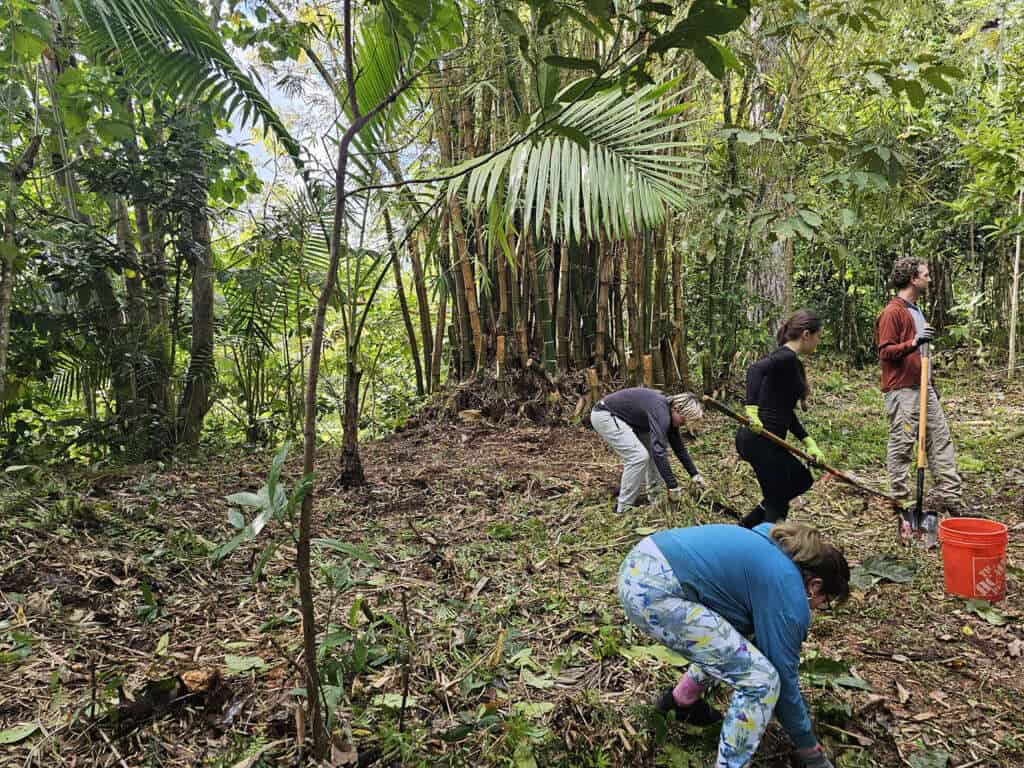
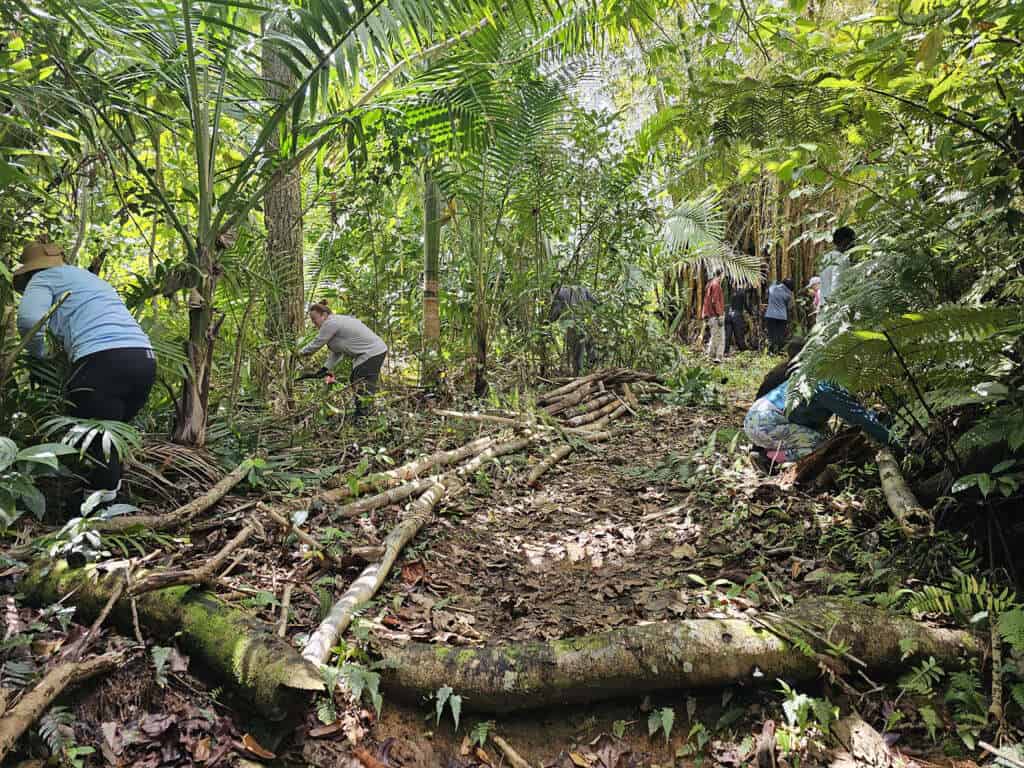
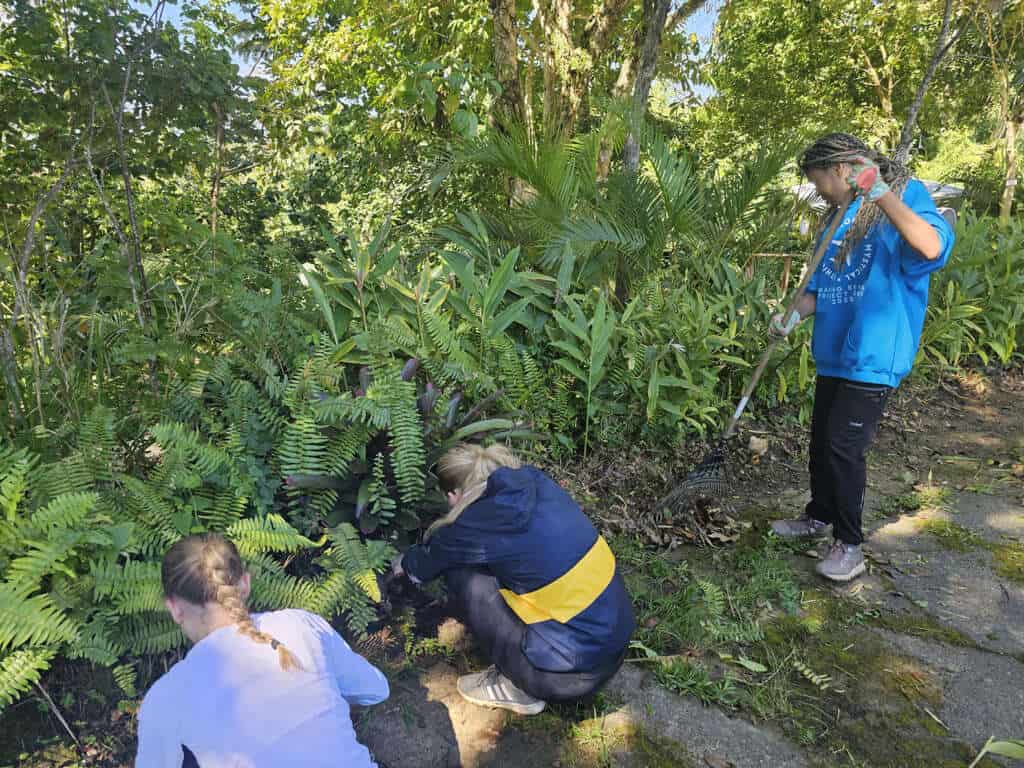
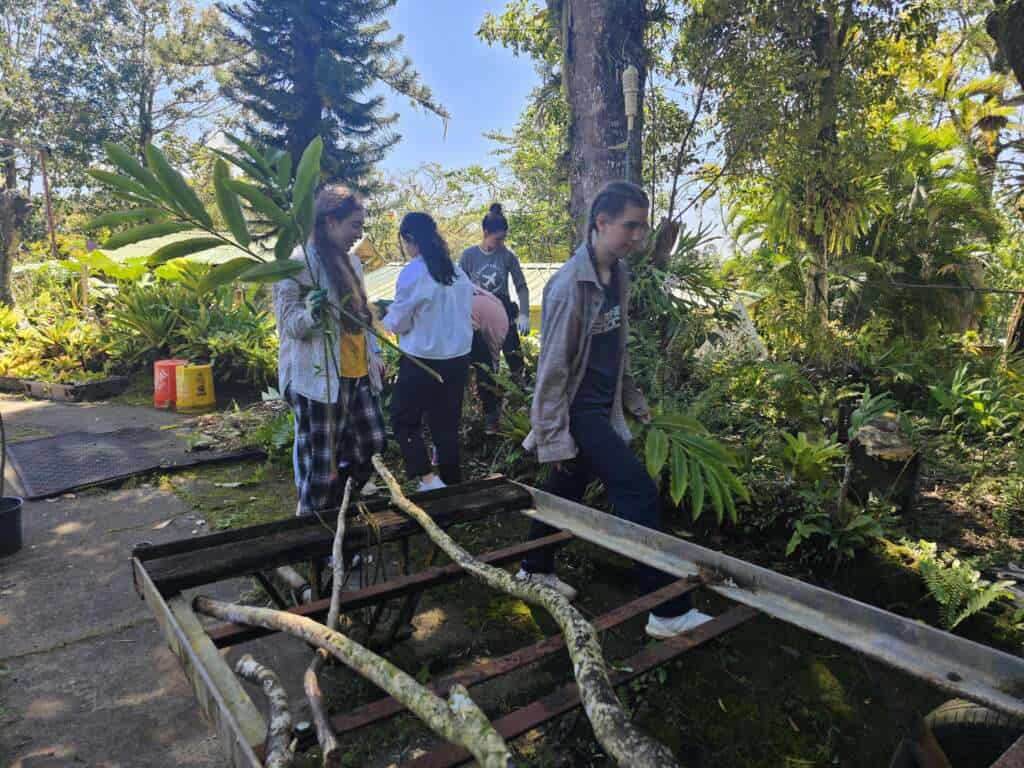
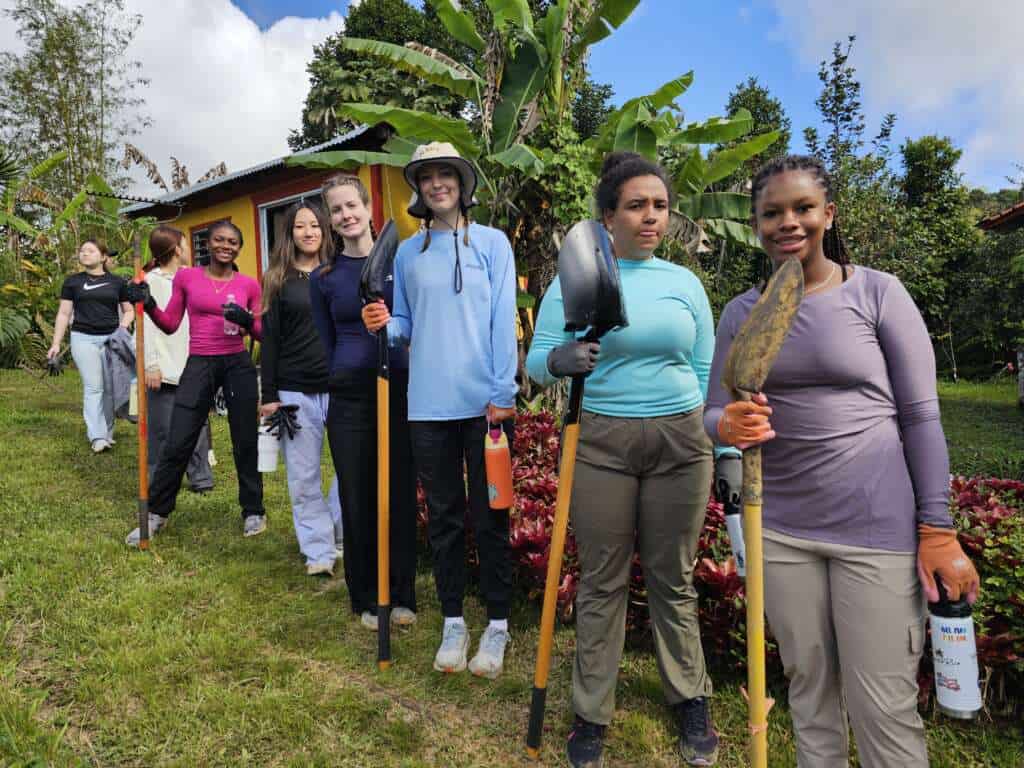
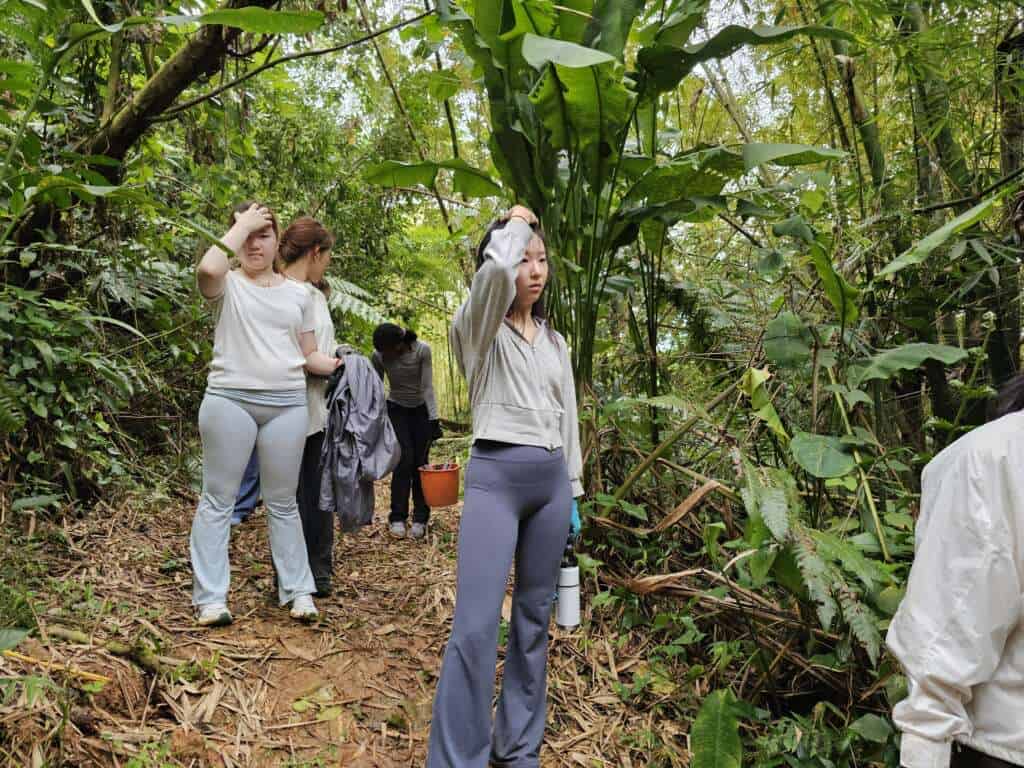
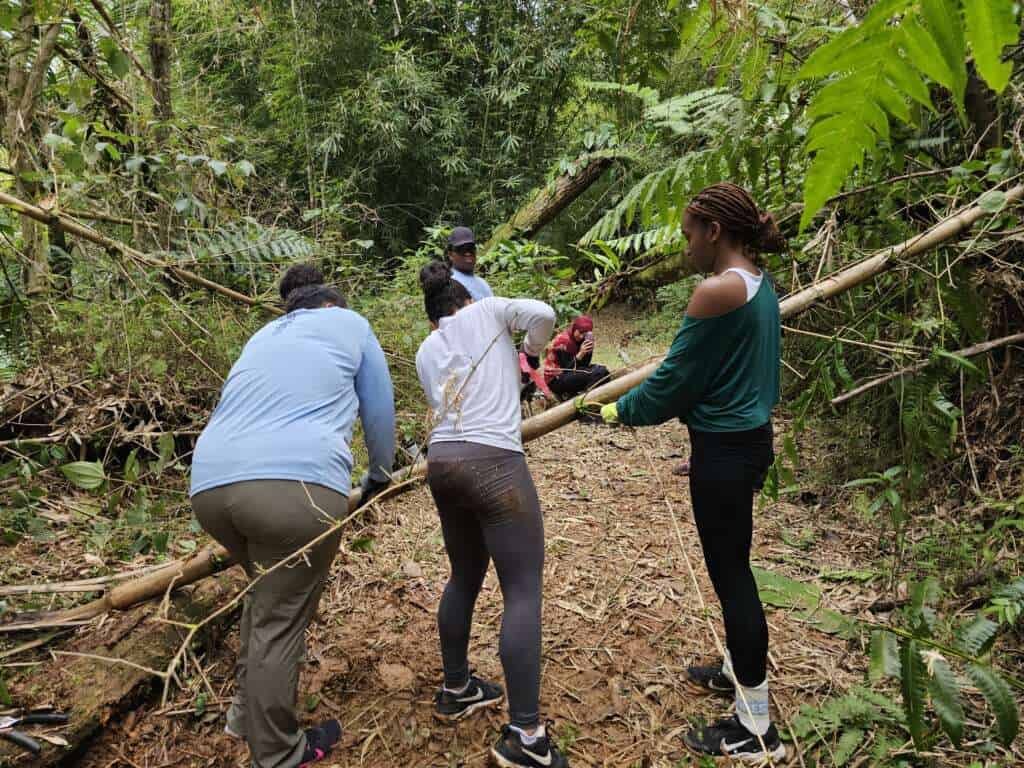
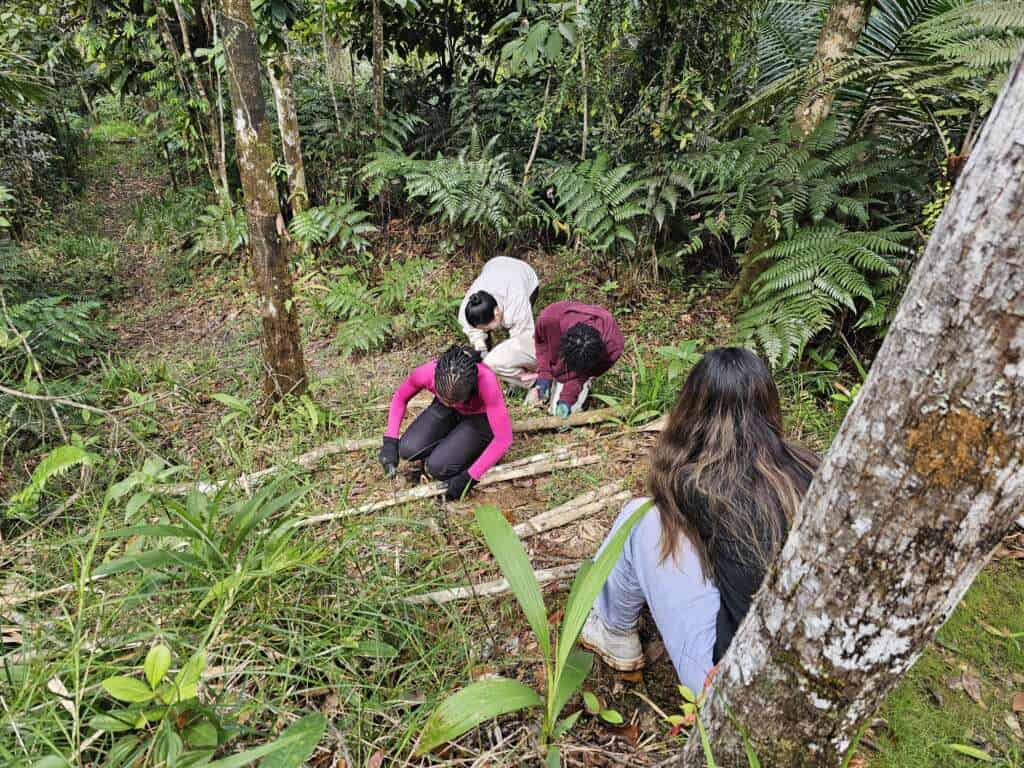
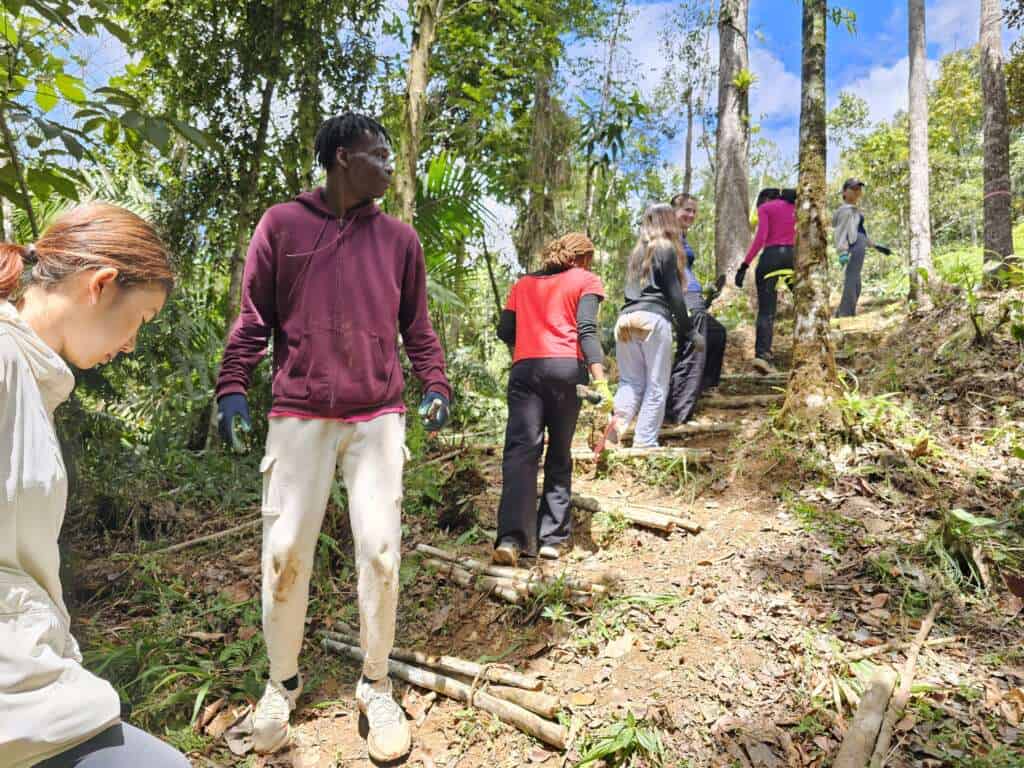
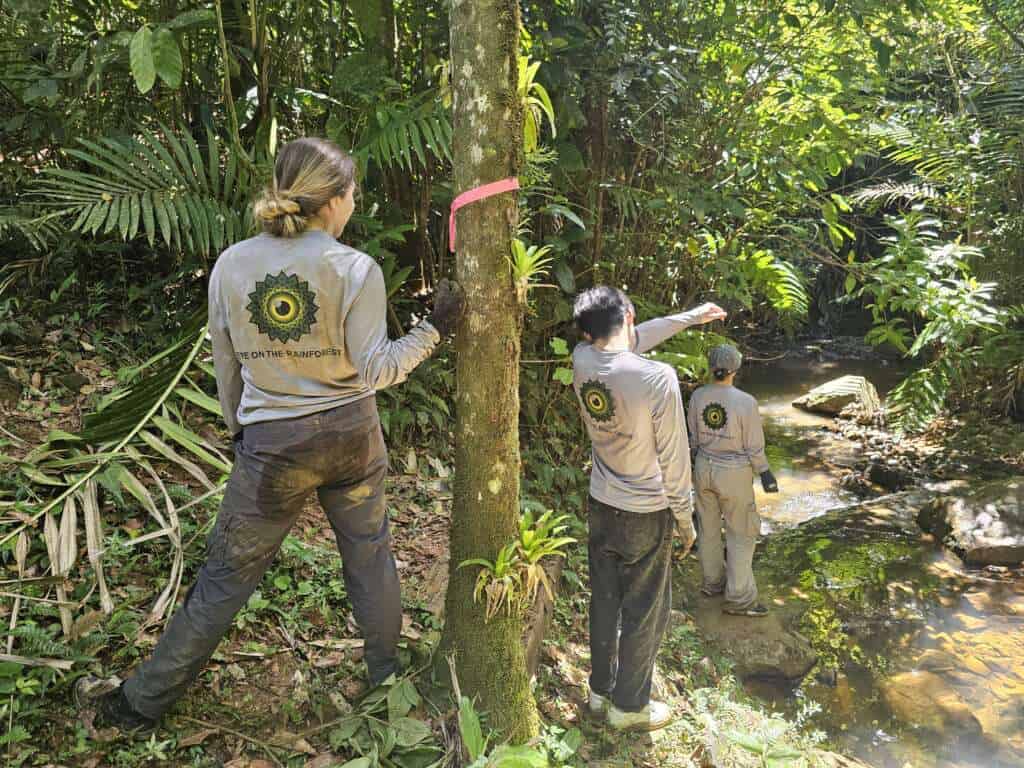
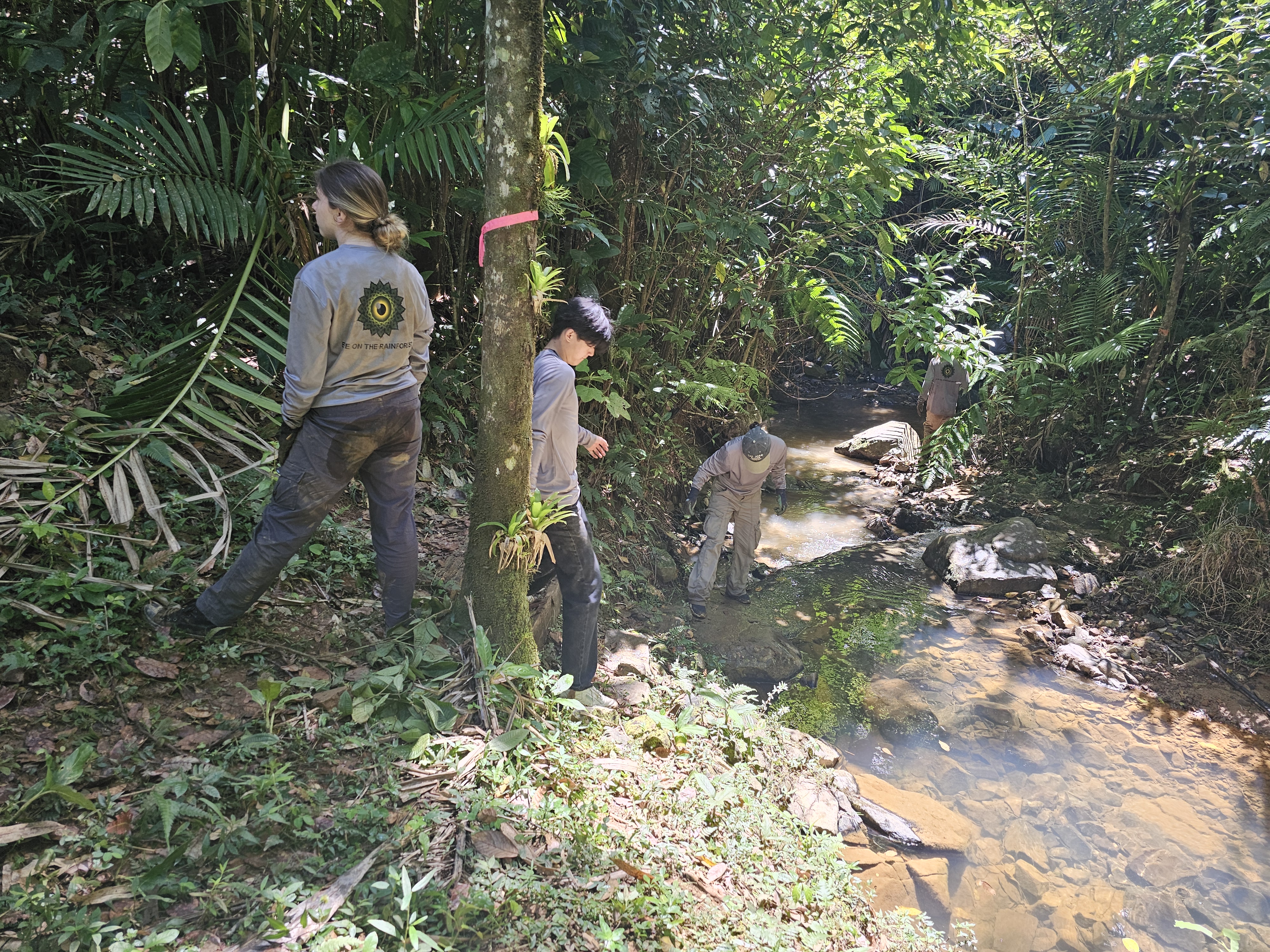
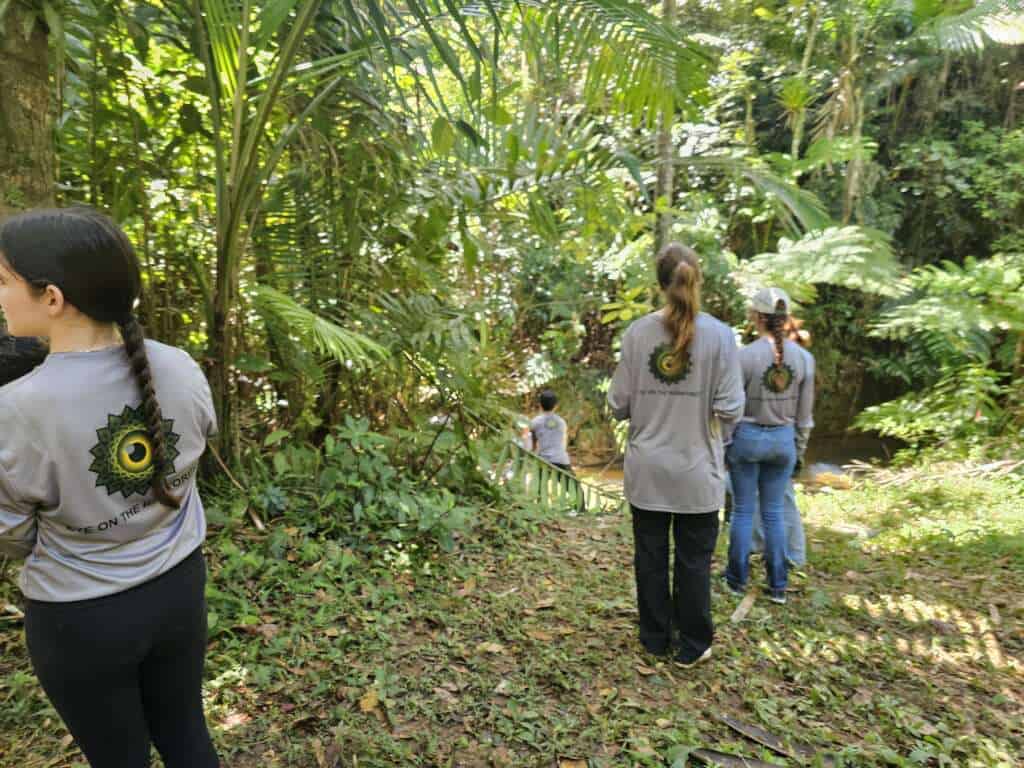
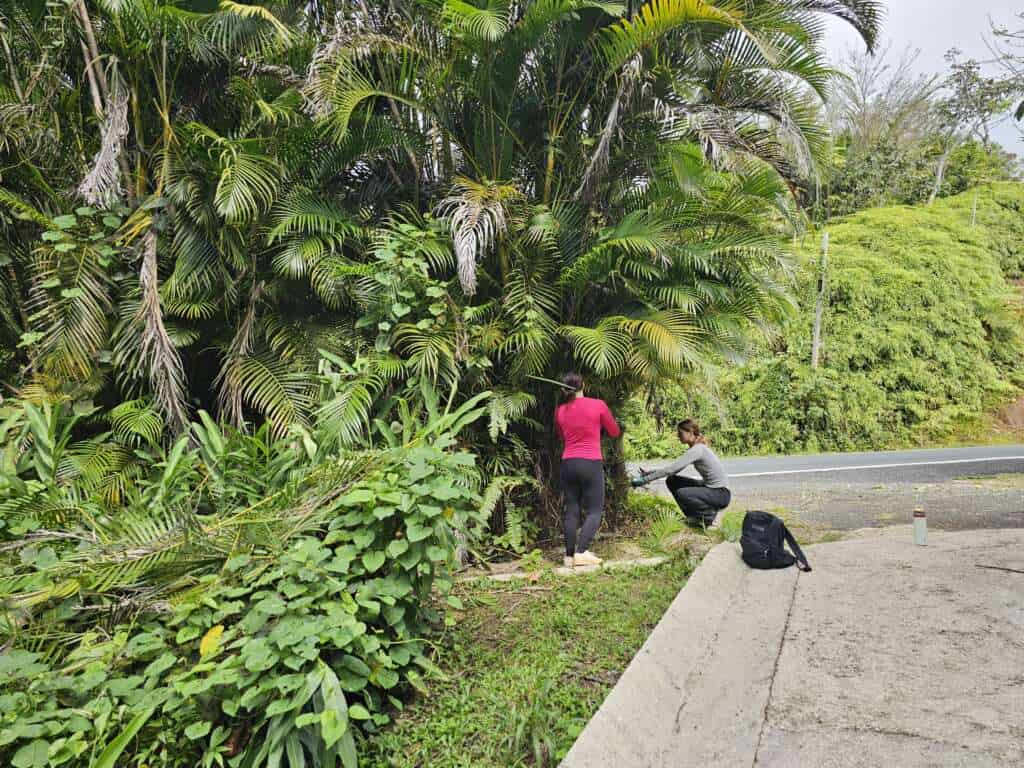
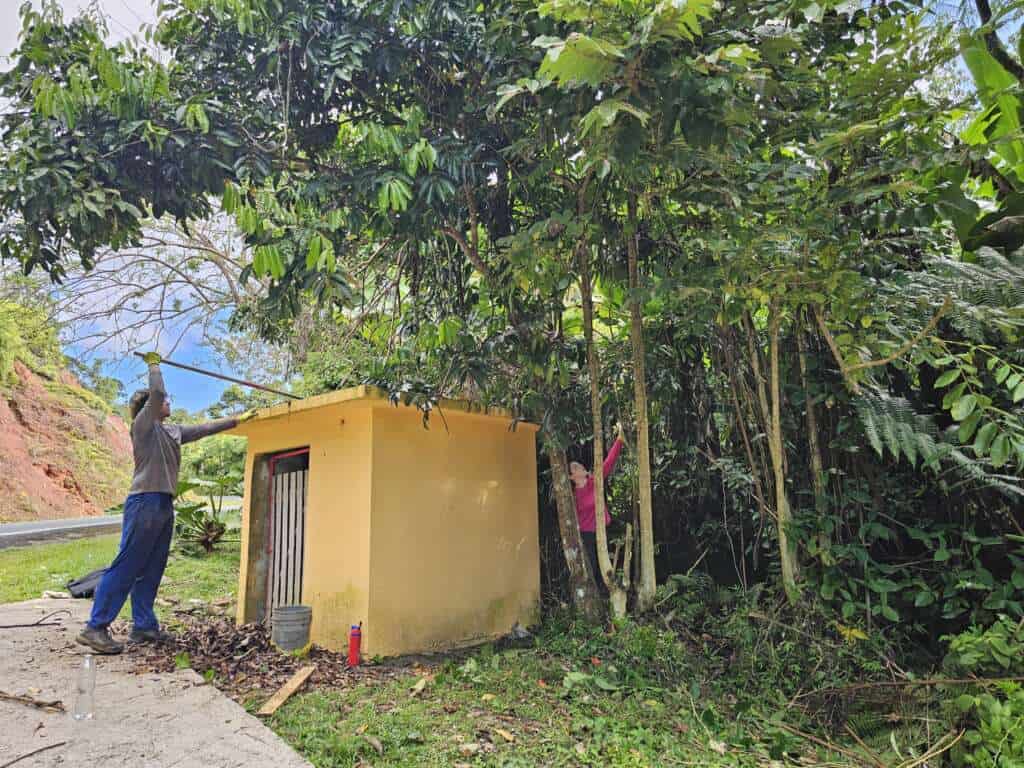
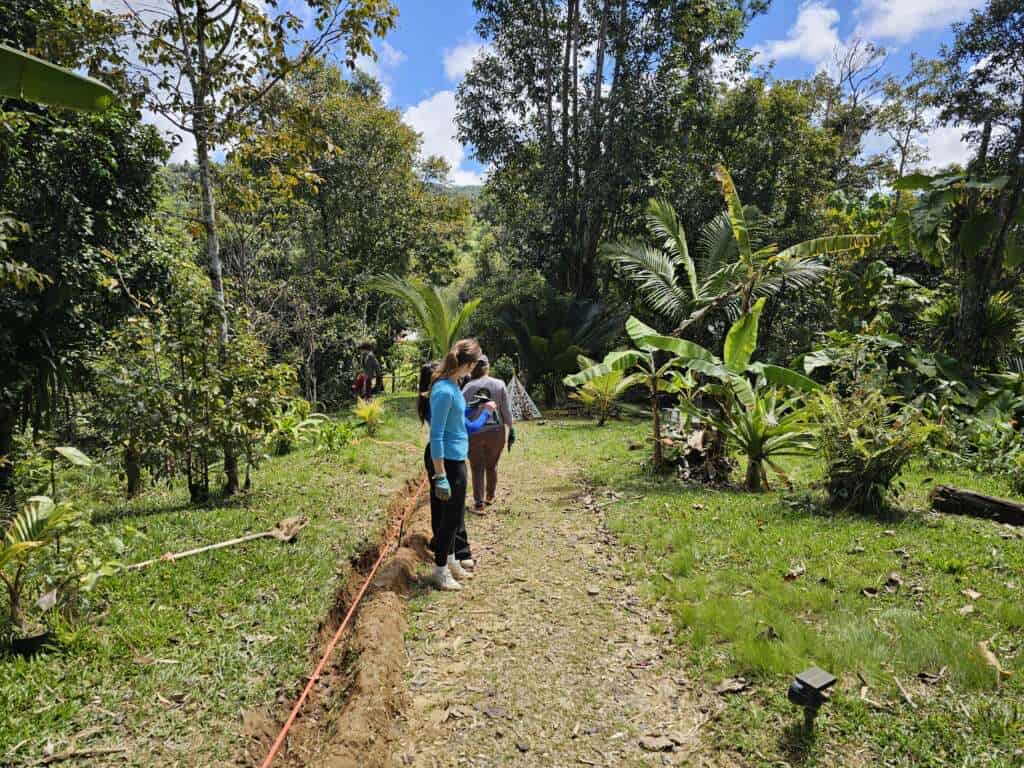
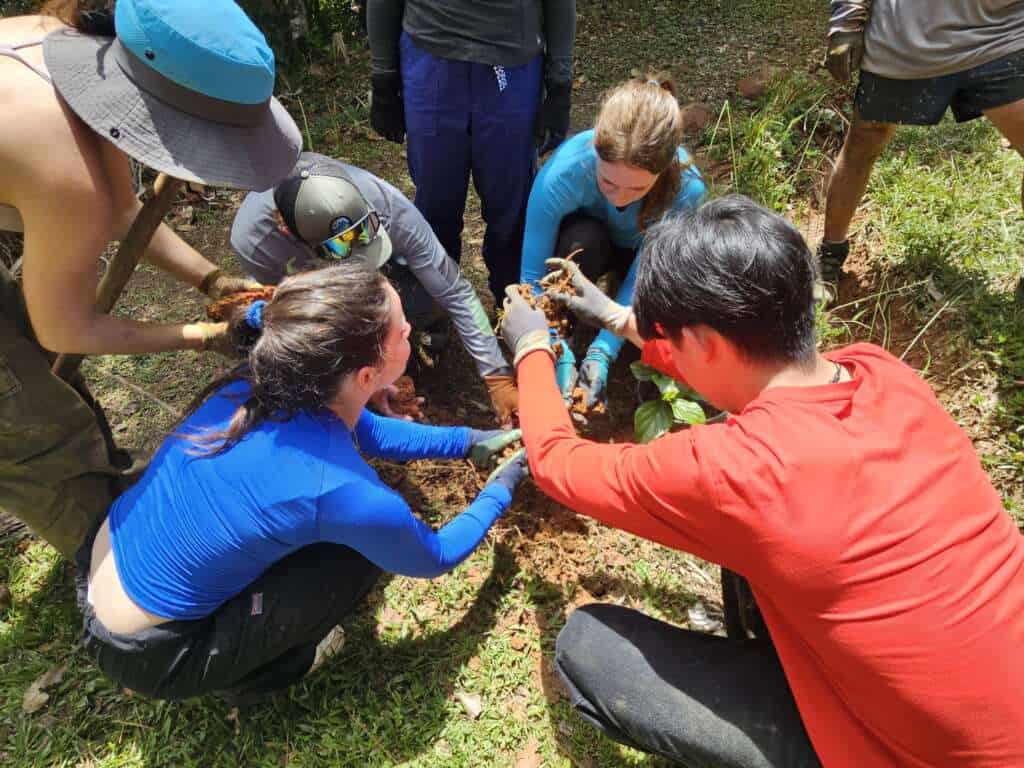
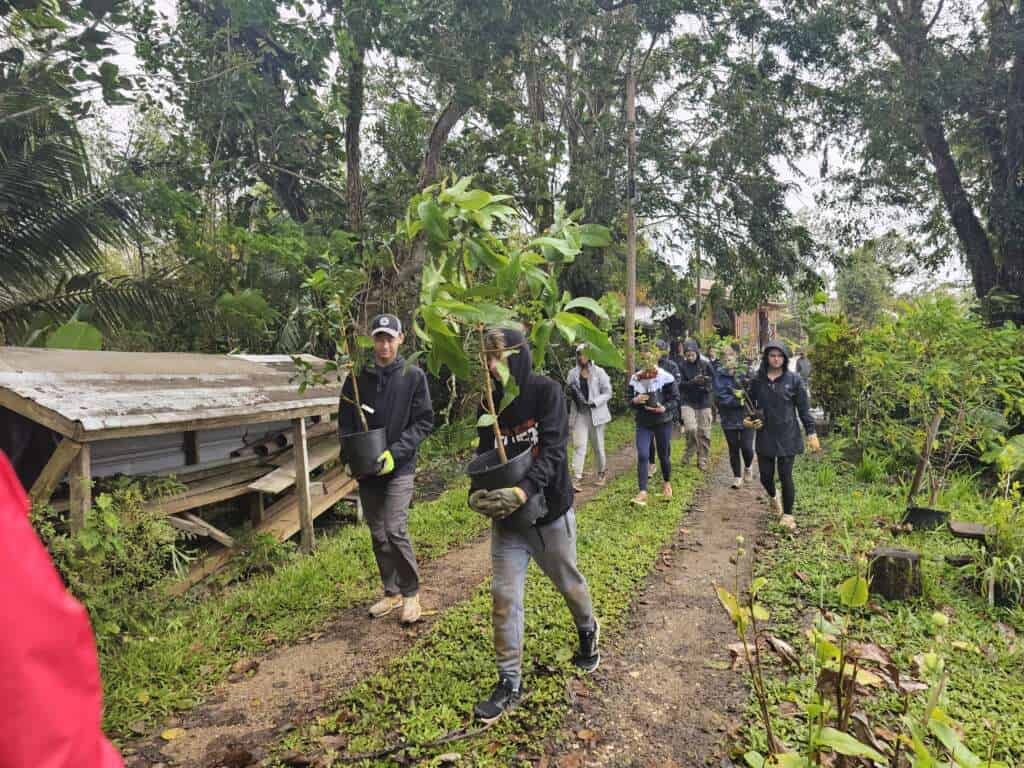
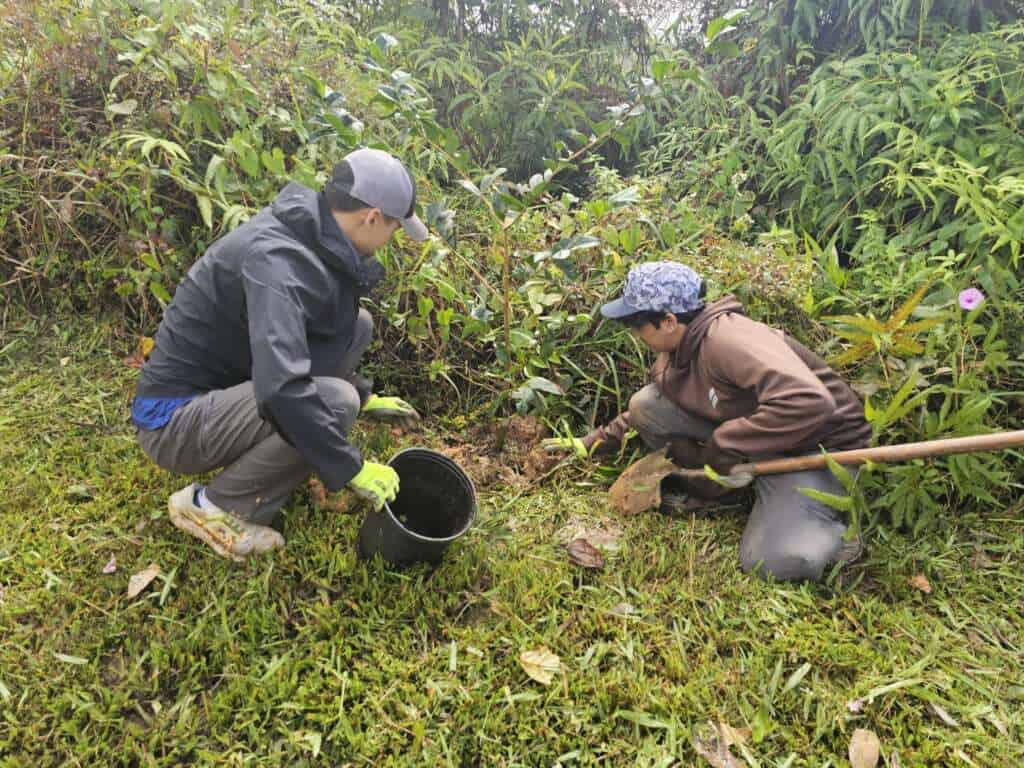
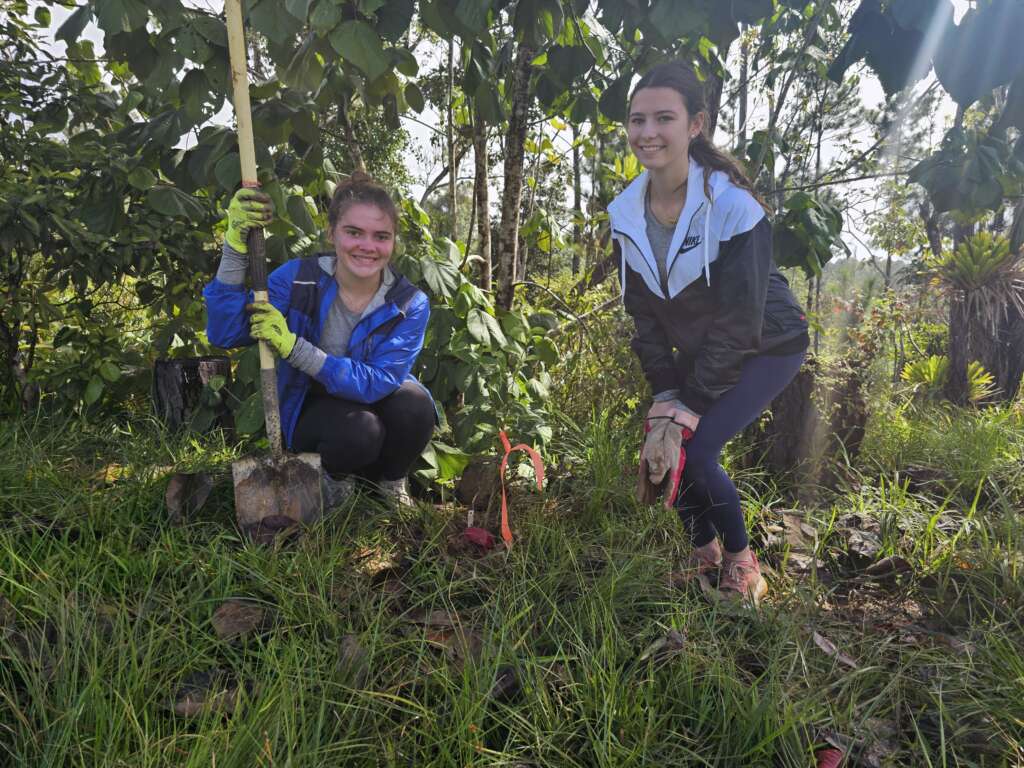
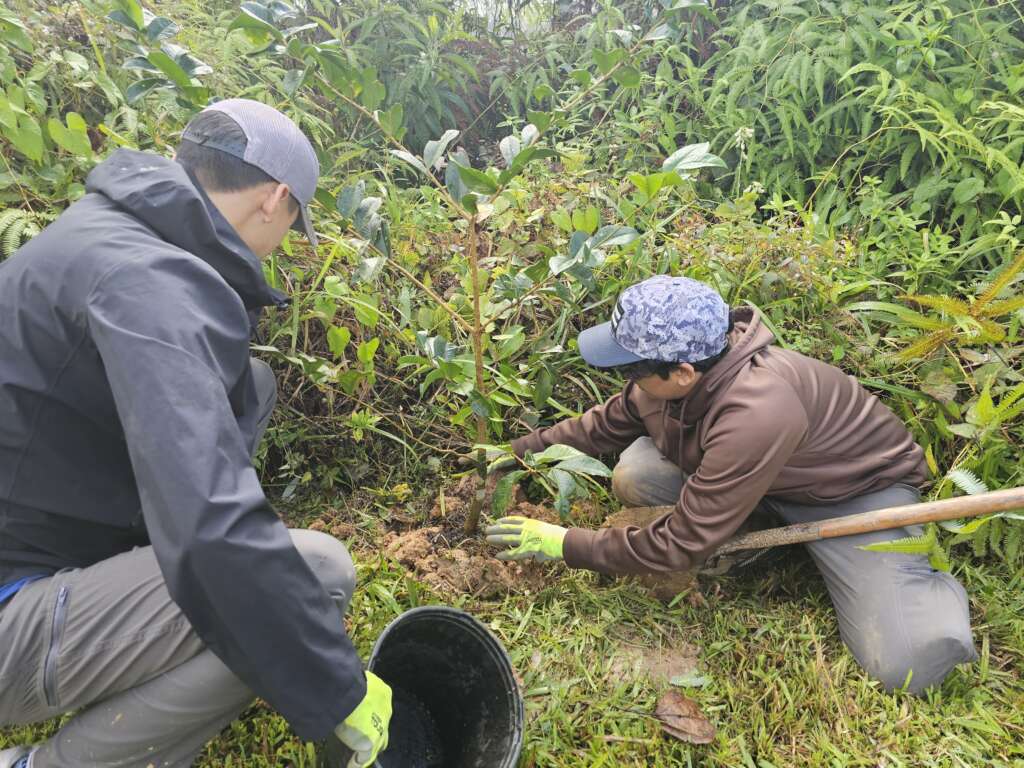
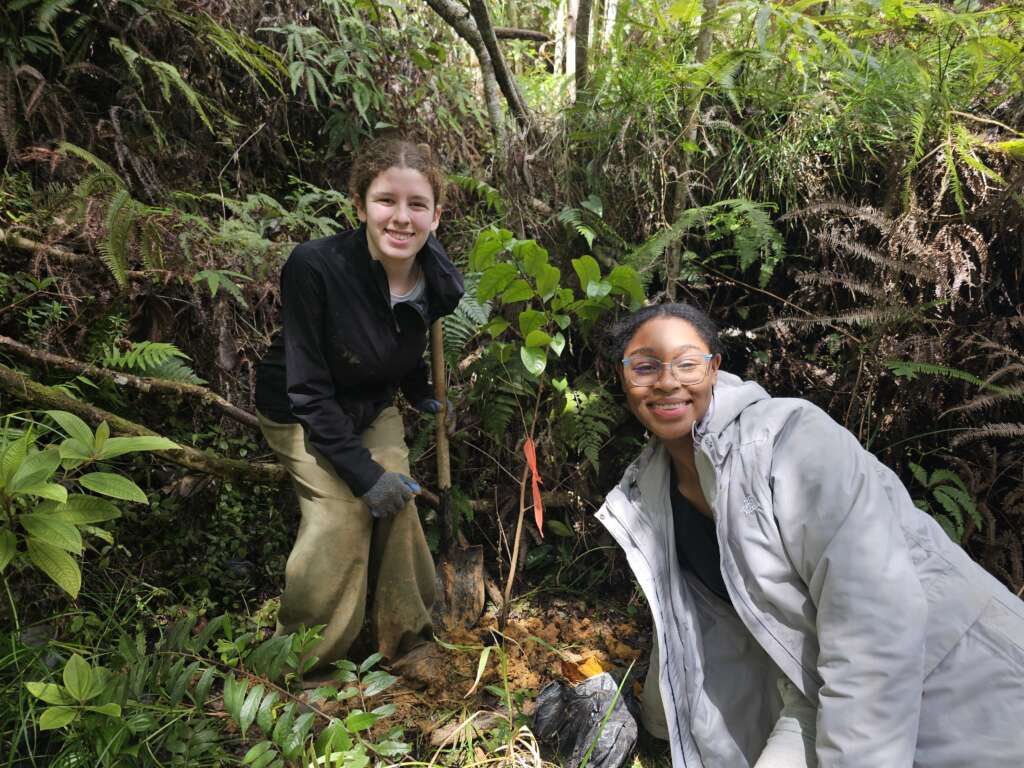
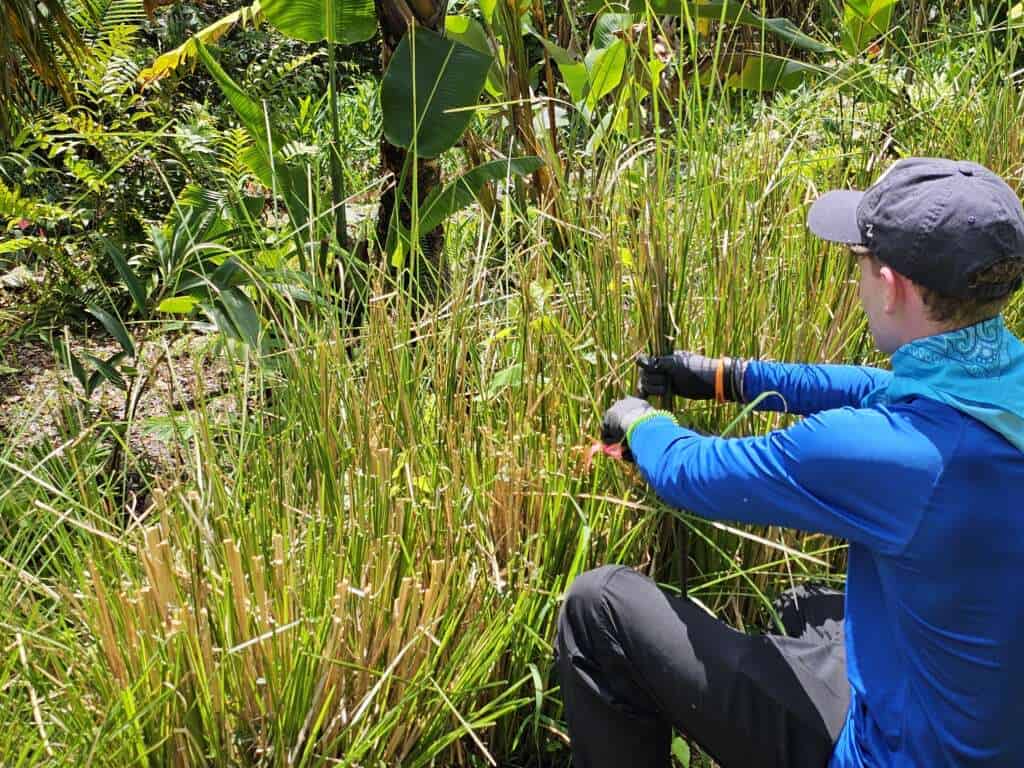
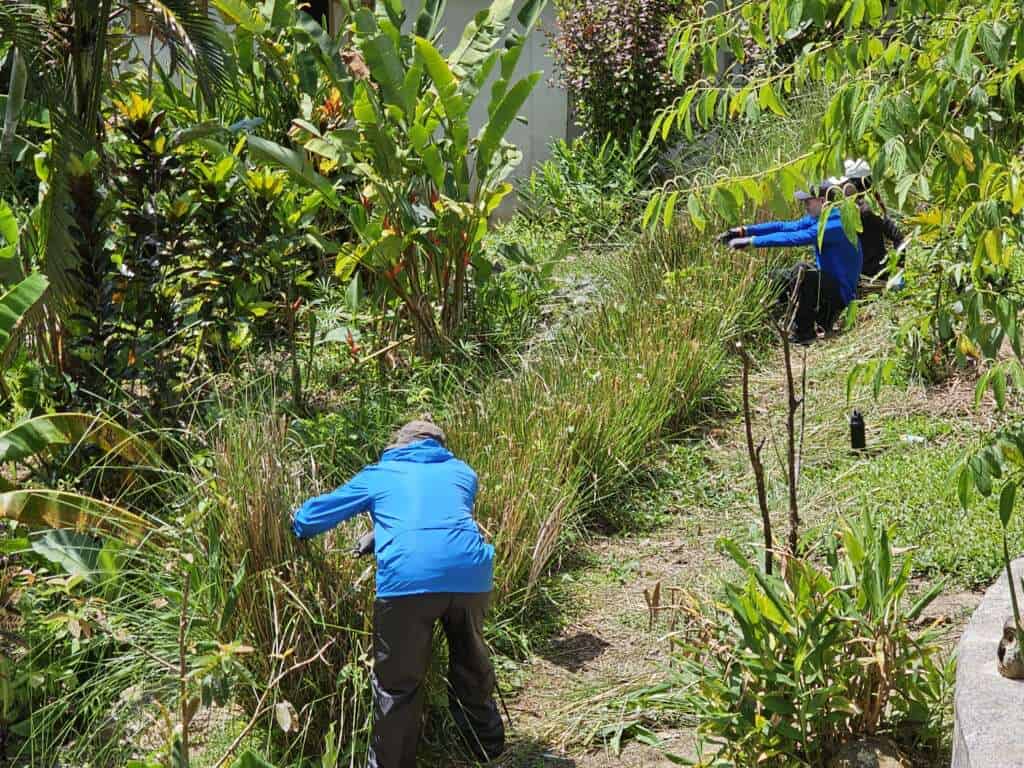
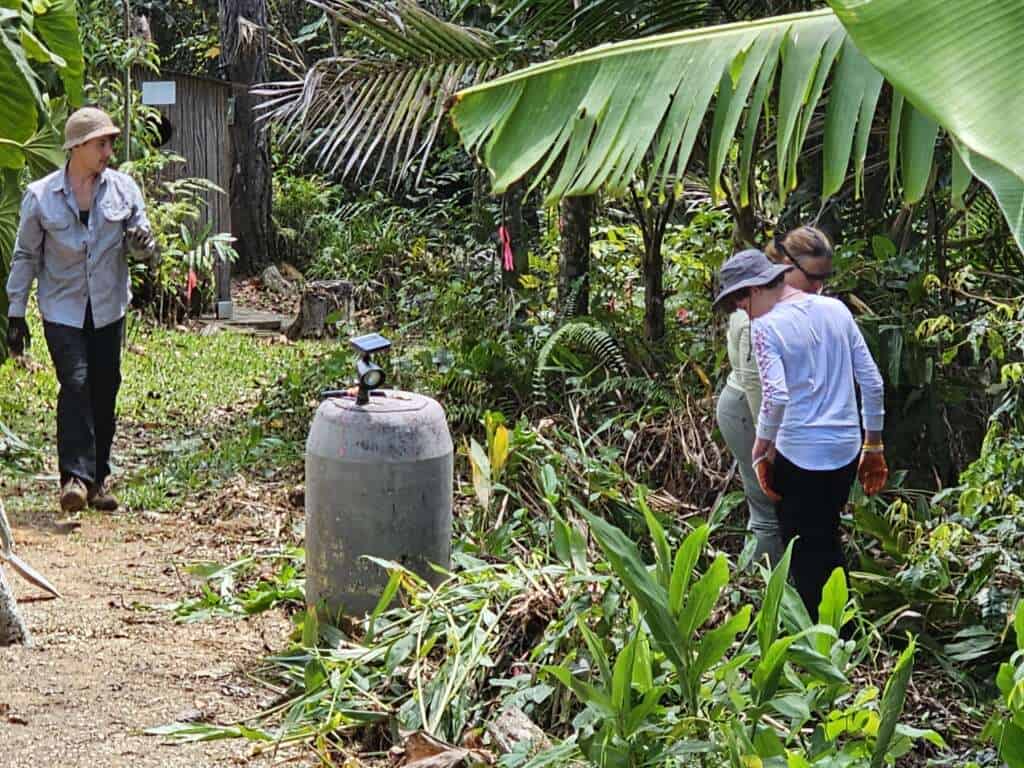
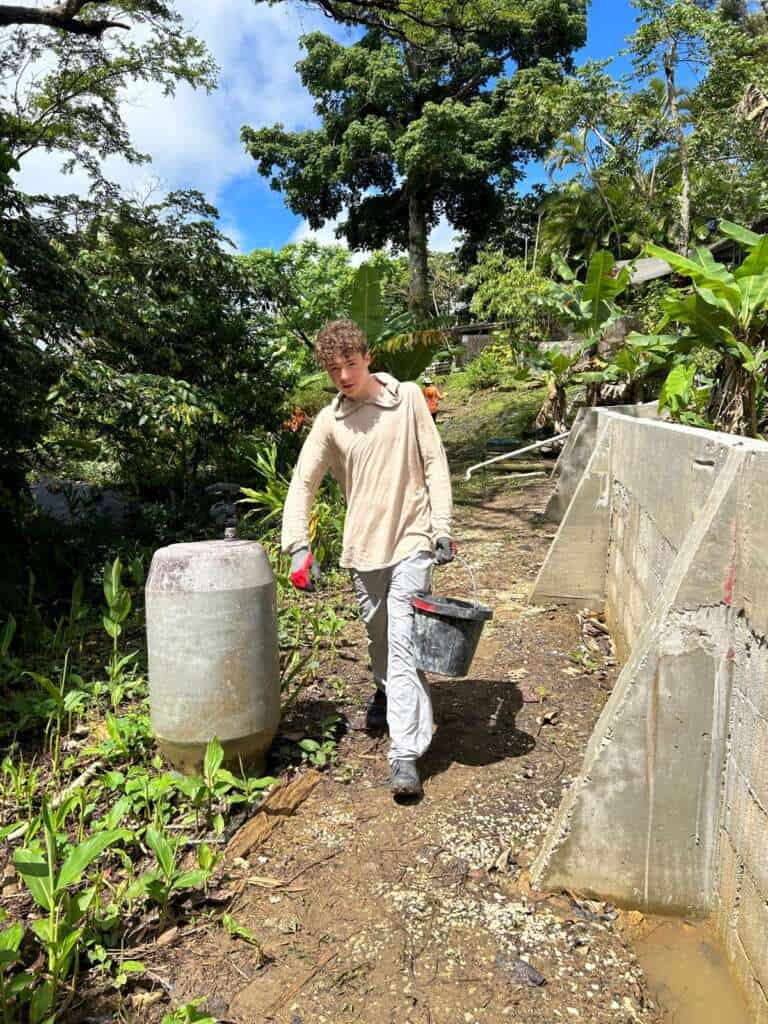
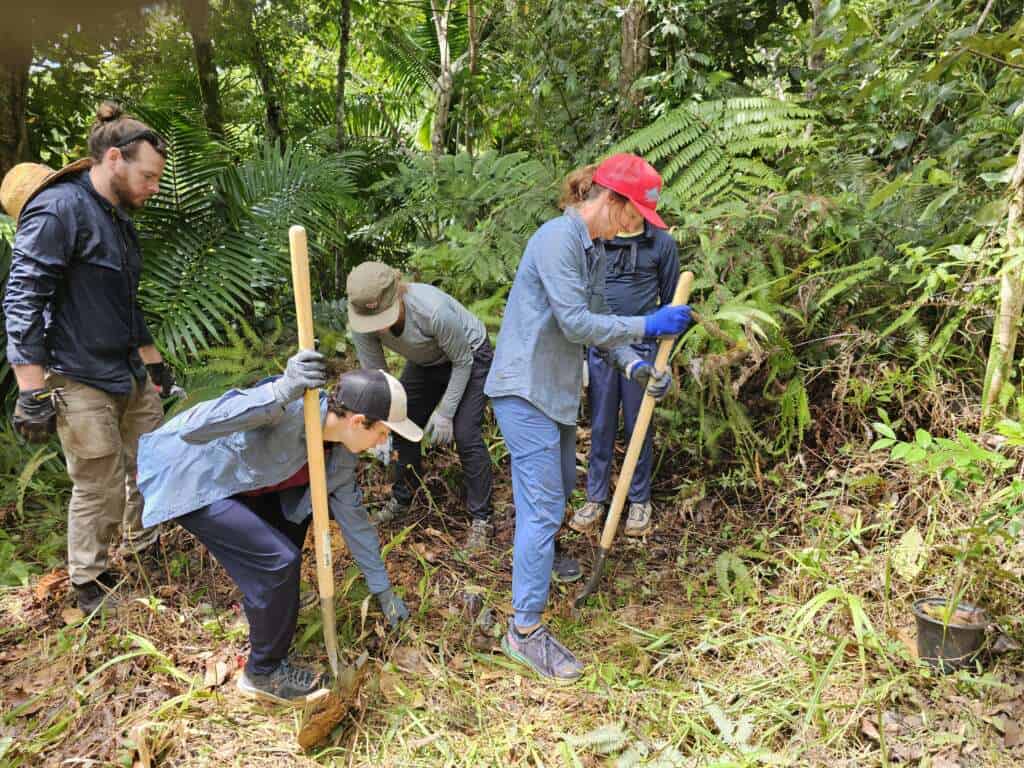
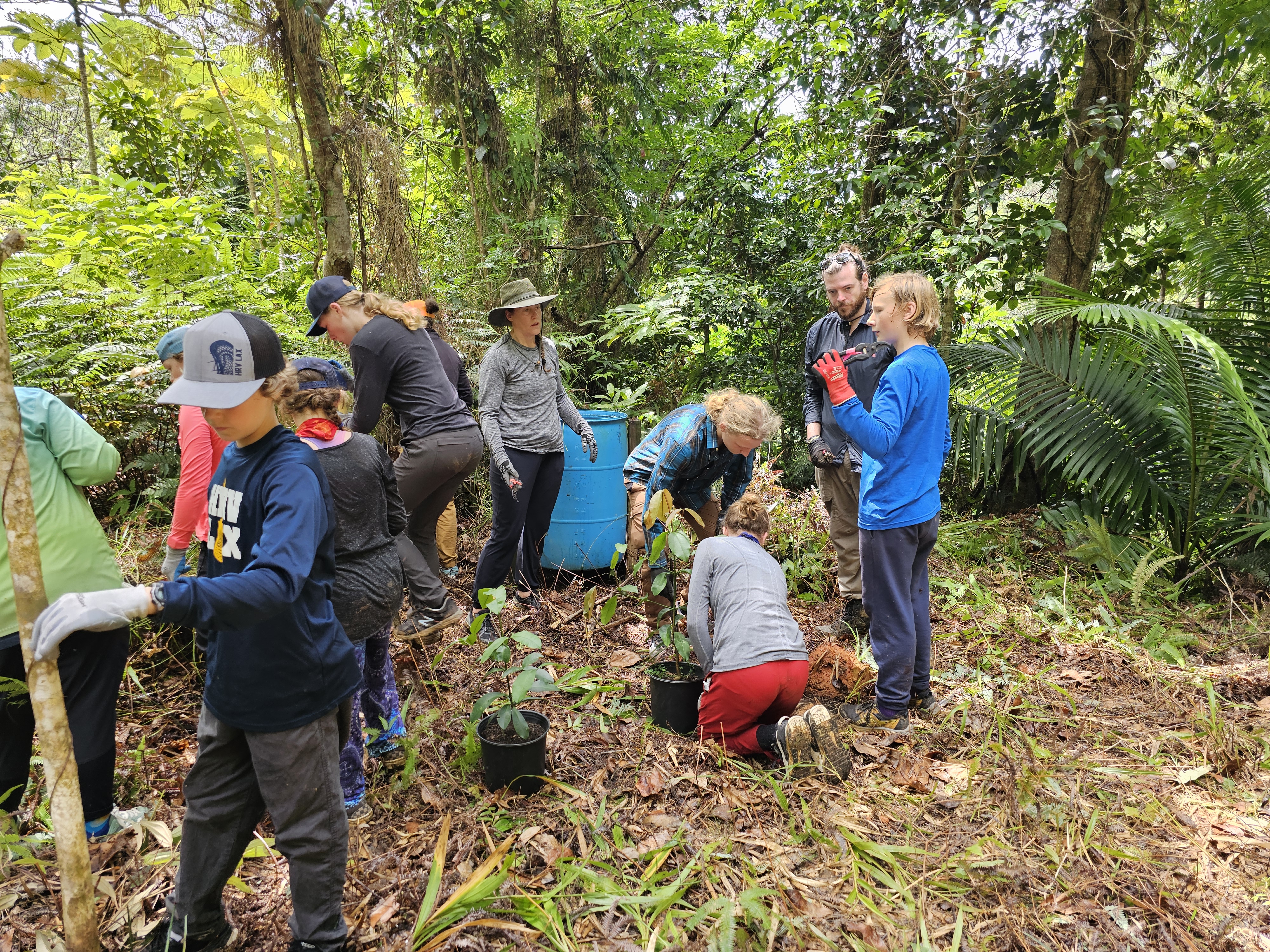
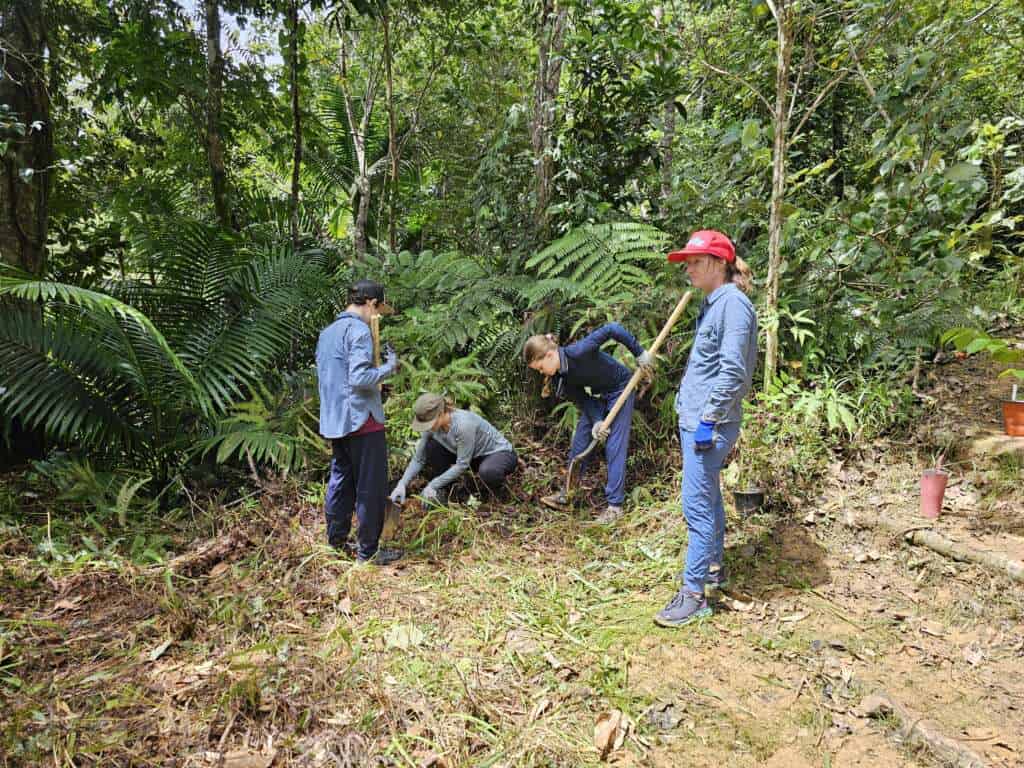
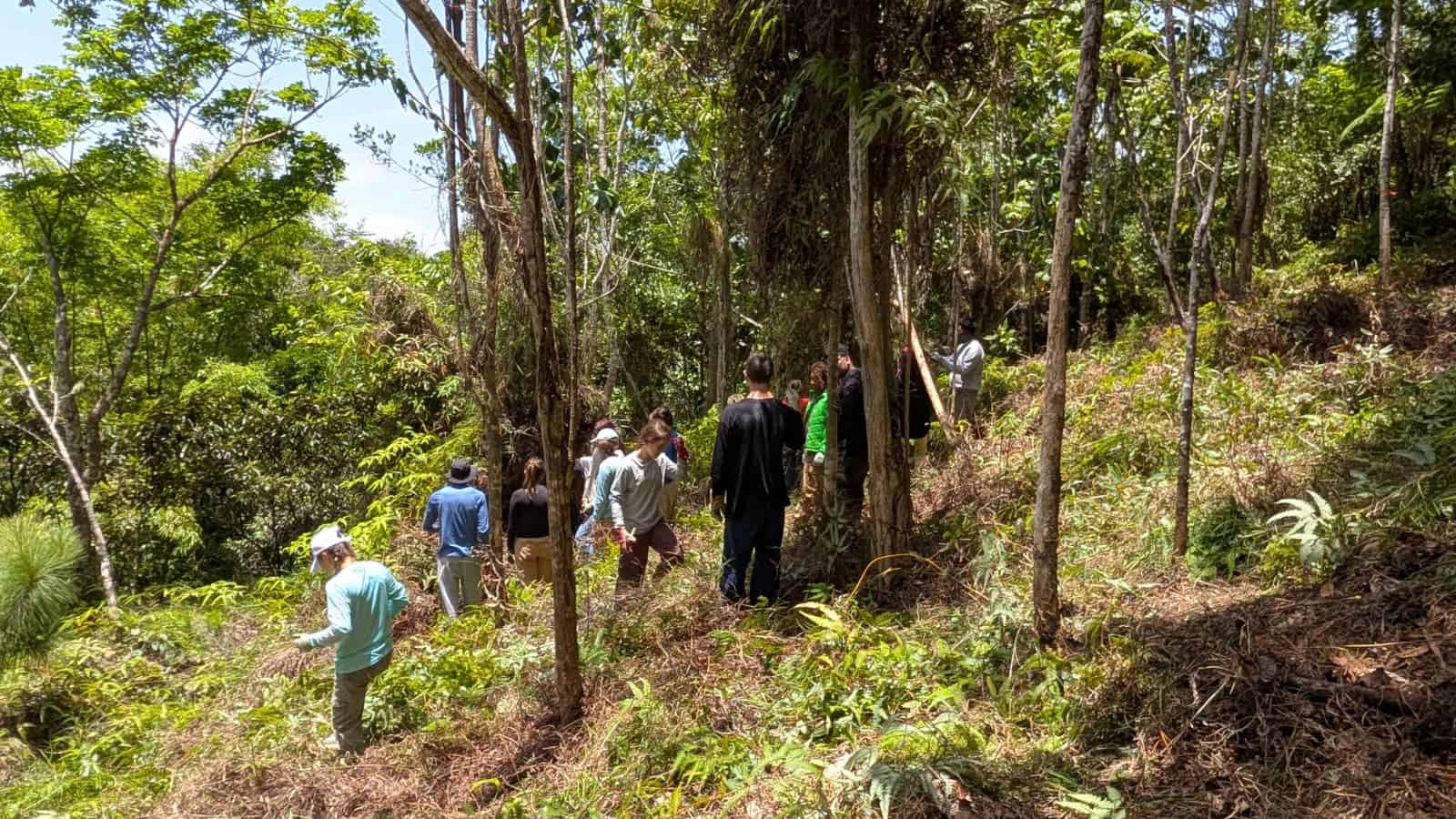
This time, we were no longer simply trying to find a way through. The goal was to begin clearing the razor grass from around the planted trees themselves, opening enough space to see the forest properly, assess the trees, and move safely through the area.The razor grass had occupied every available opening created by Hurricane Maria. Its long, sharp leaves tangled together with vines and other vigorous vegetation, concealing the ground and obscuring even substantial trees. Clearing it required patience and close teamwork. The teenagers worked steadily with gloves, loppers, and pruning shears, cutting carefully and passing the vegetation away from the trees.

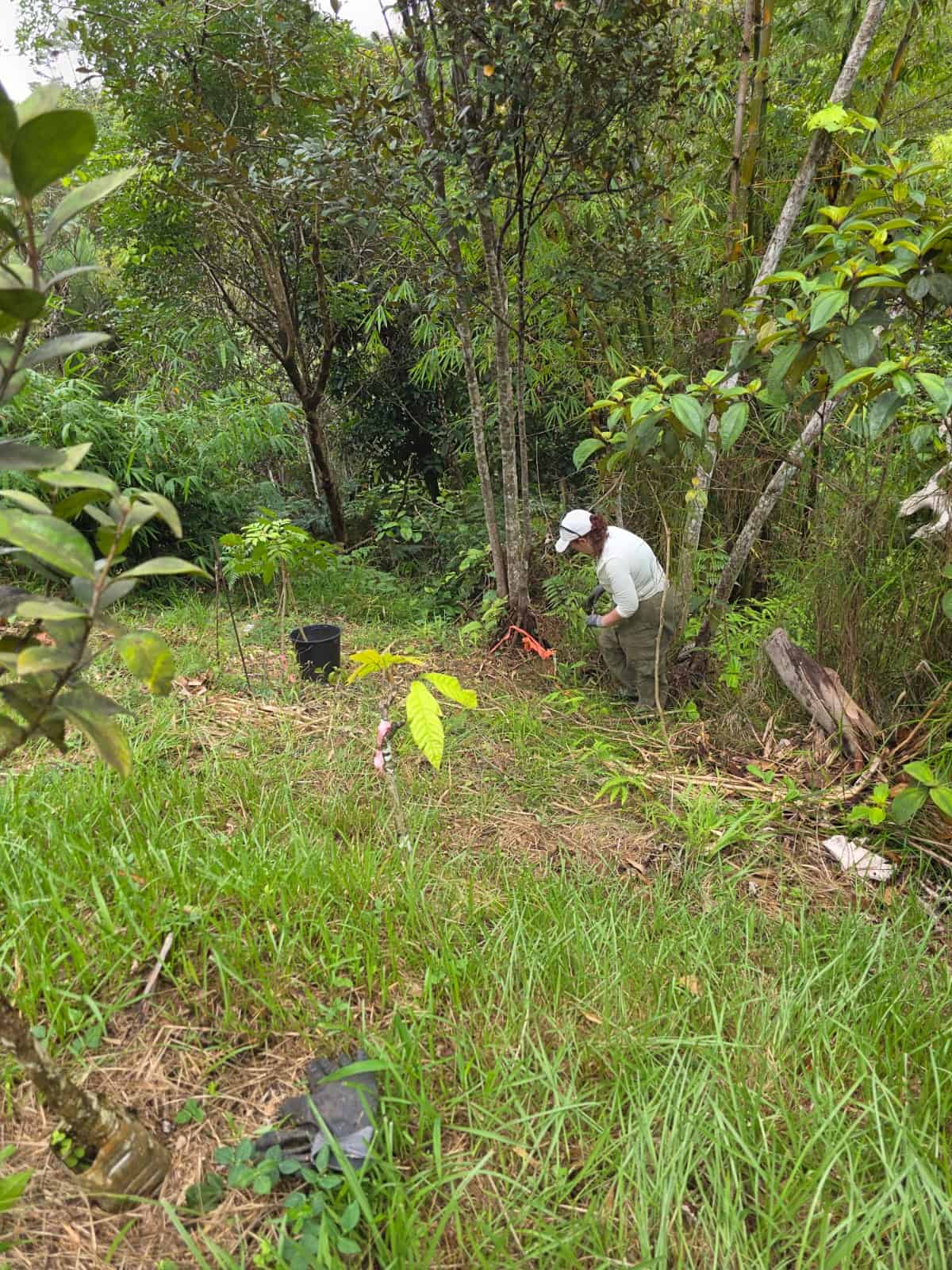
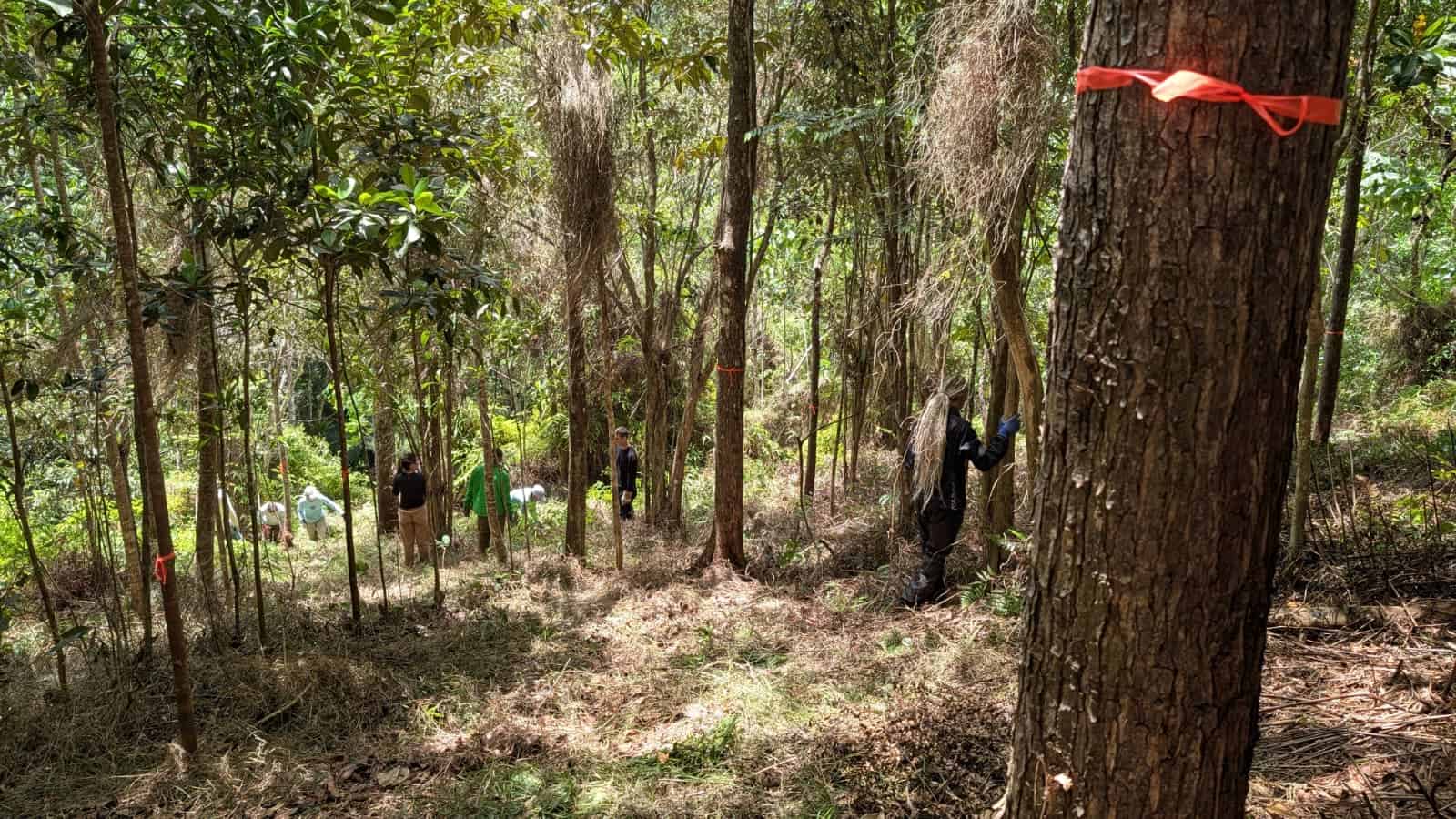
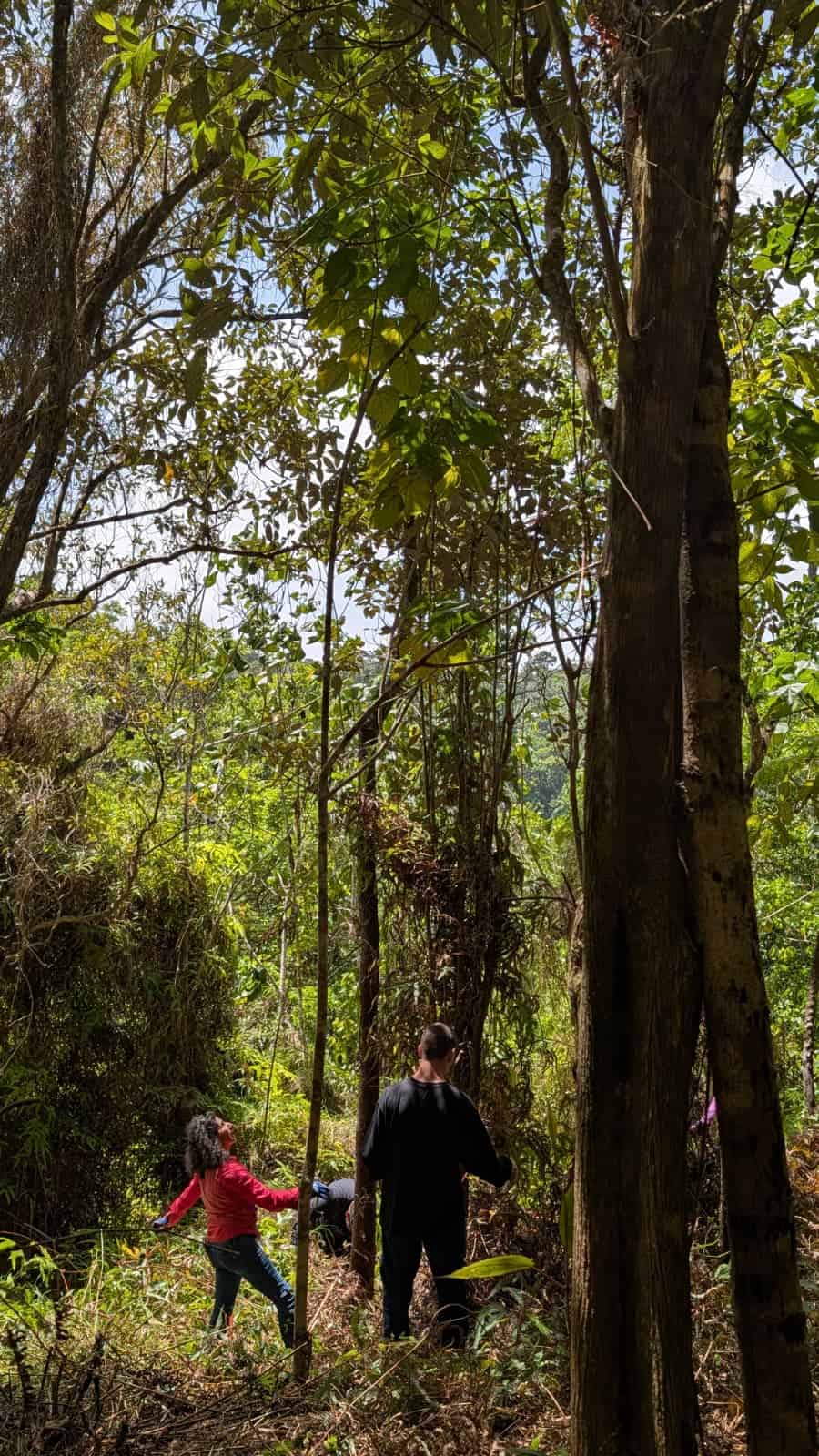
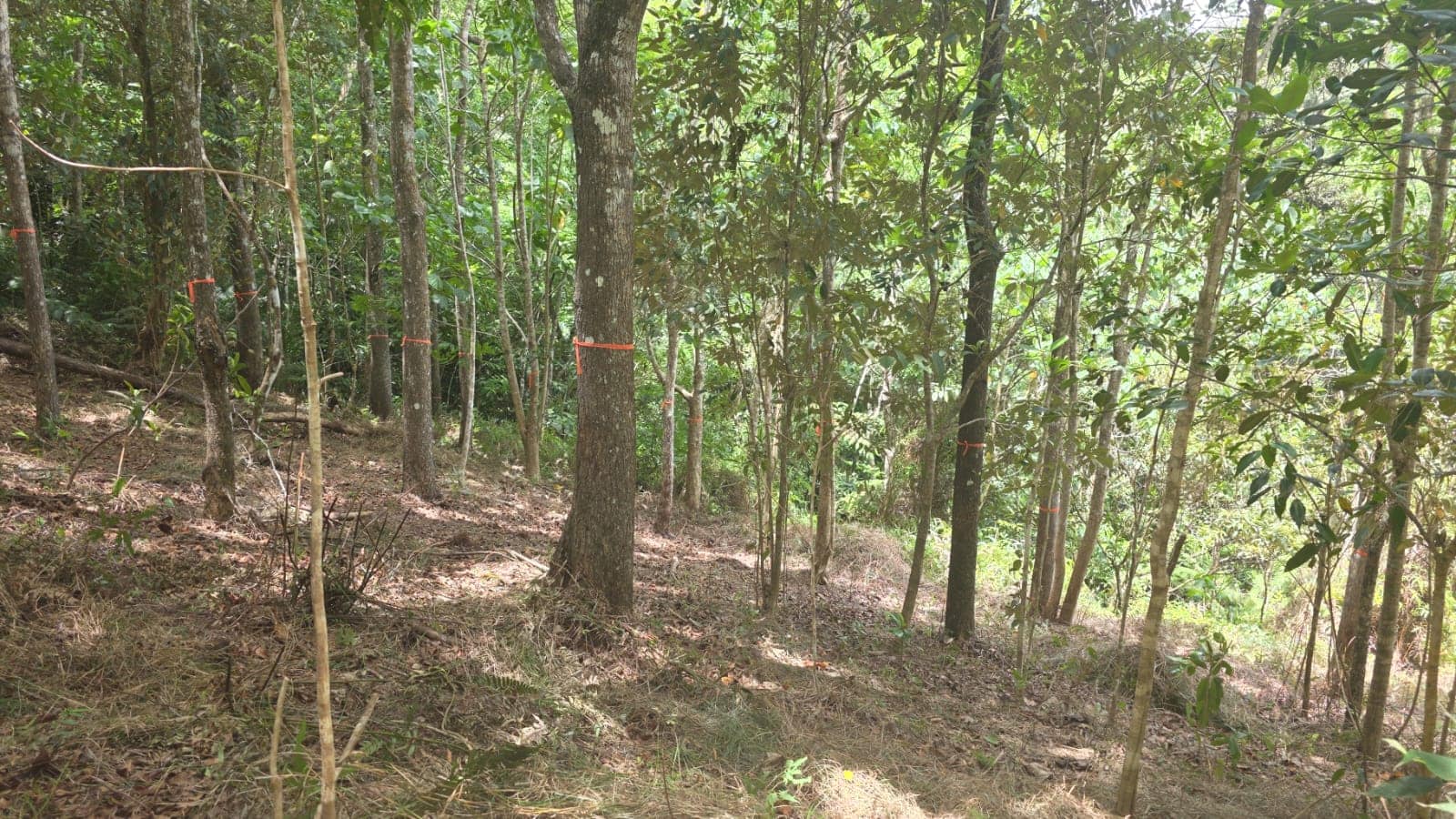
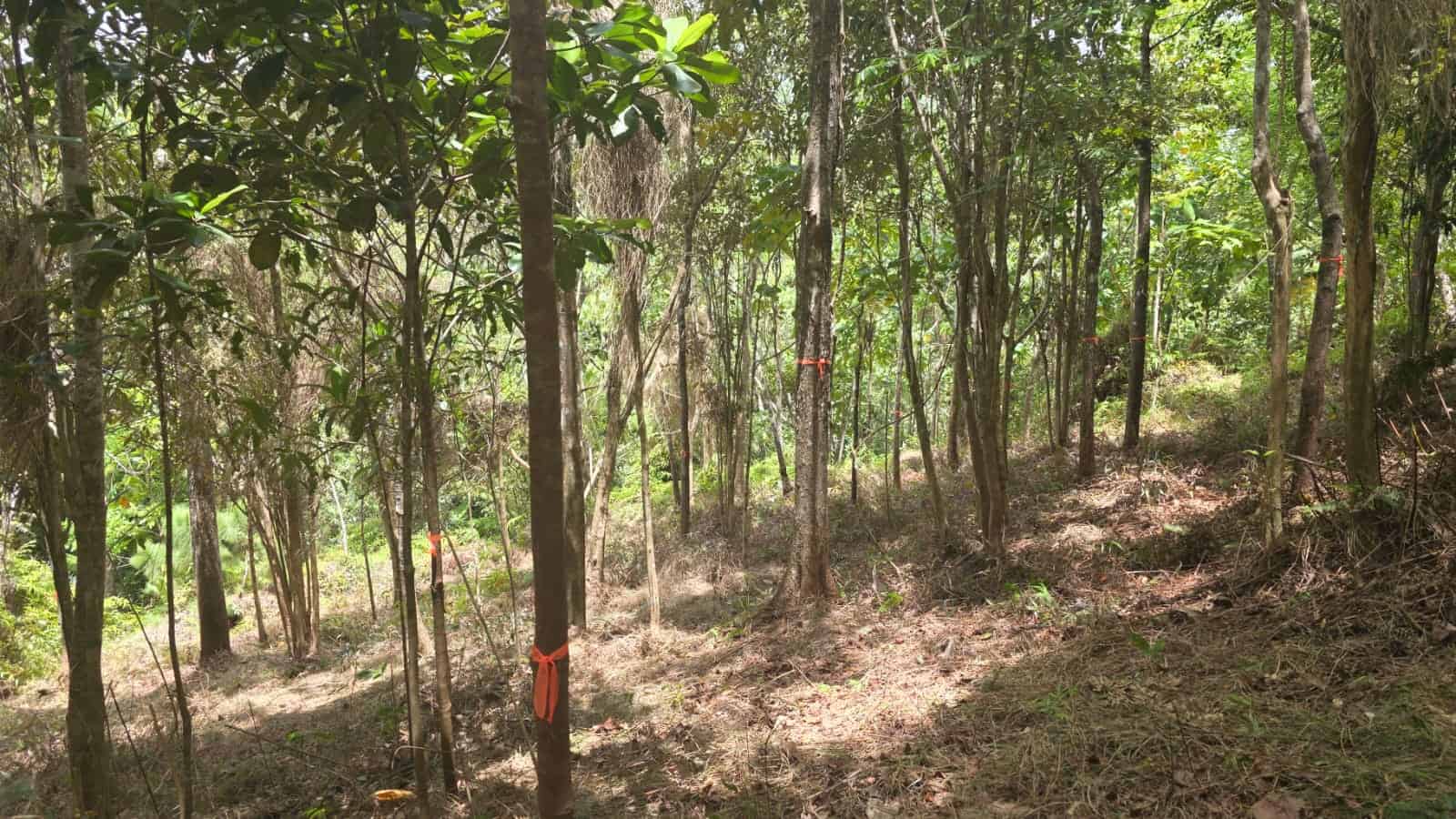
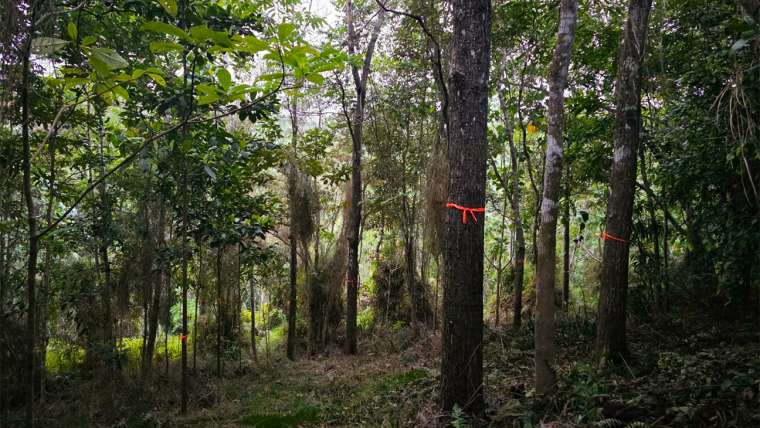
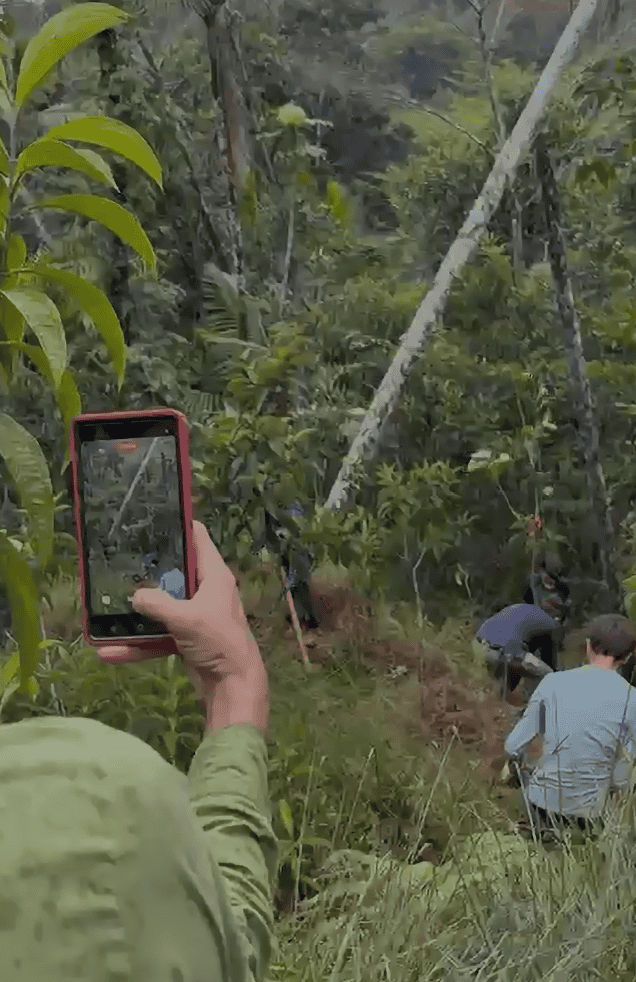
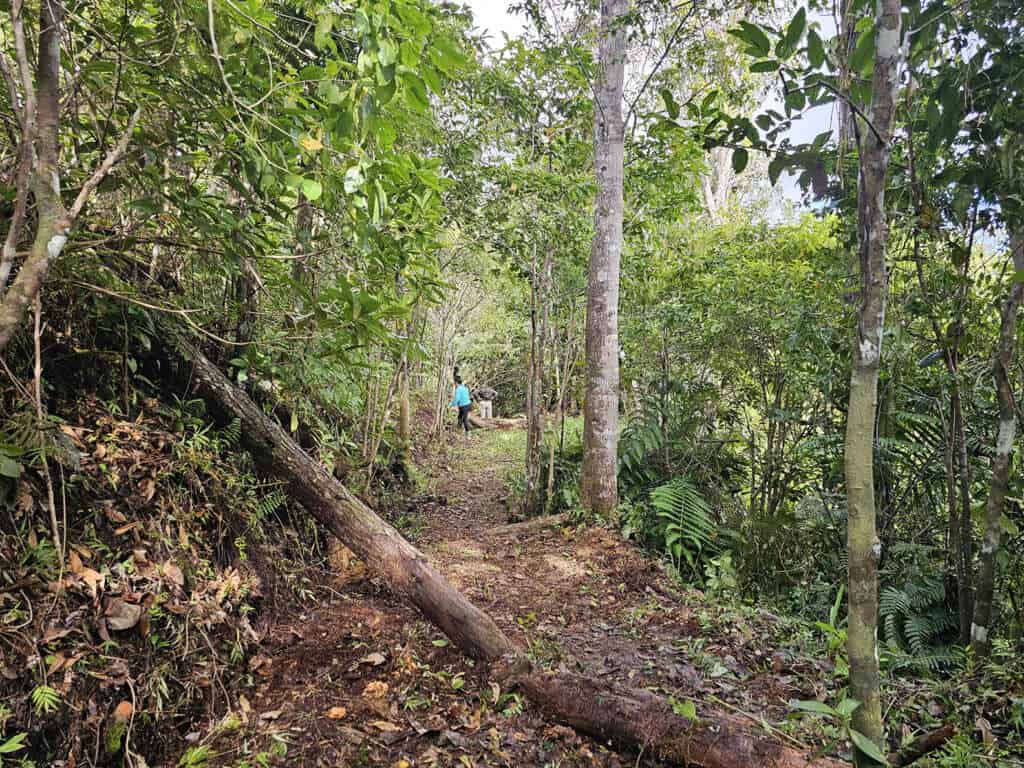
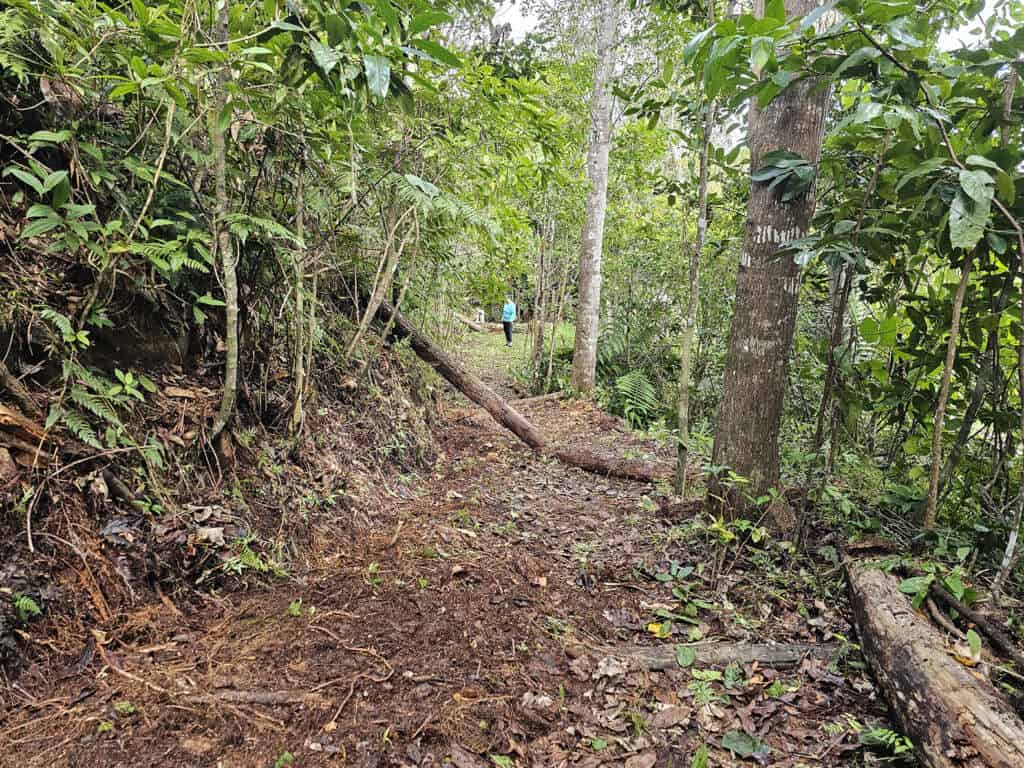
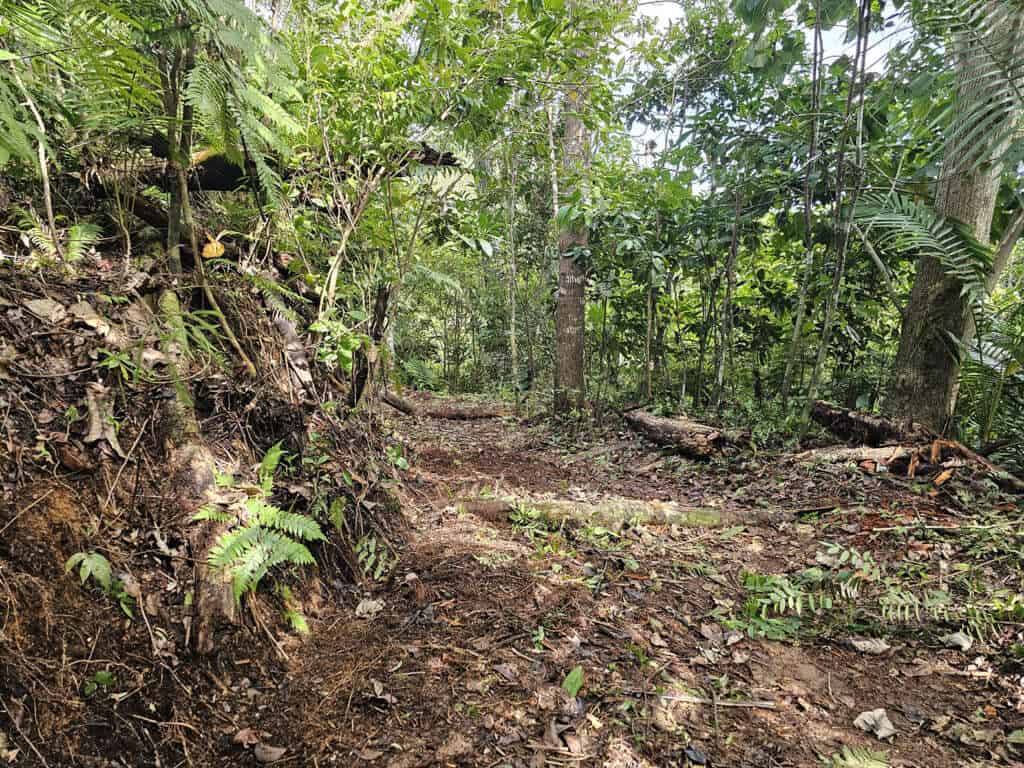
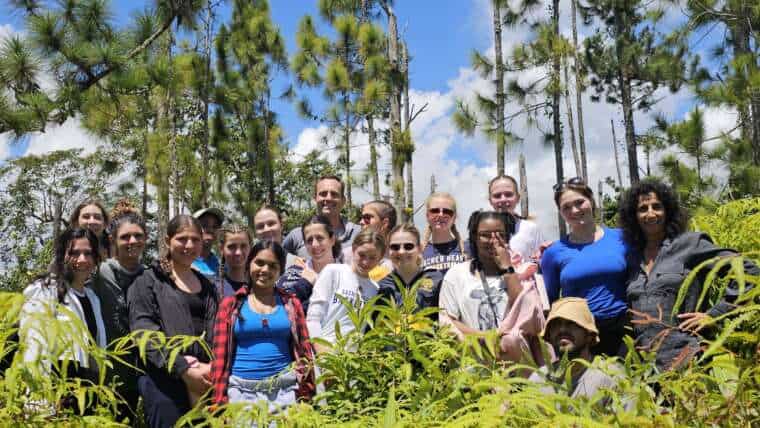
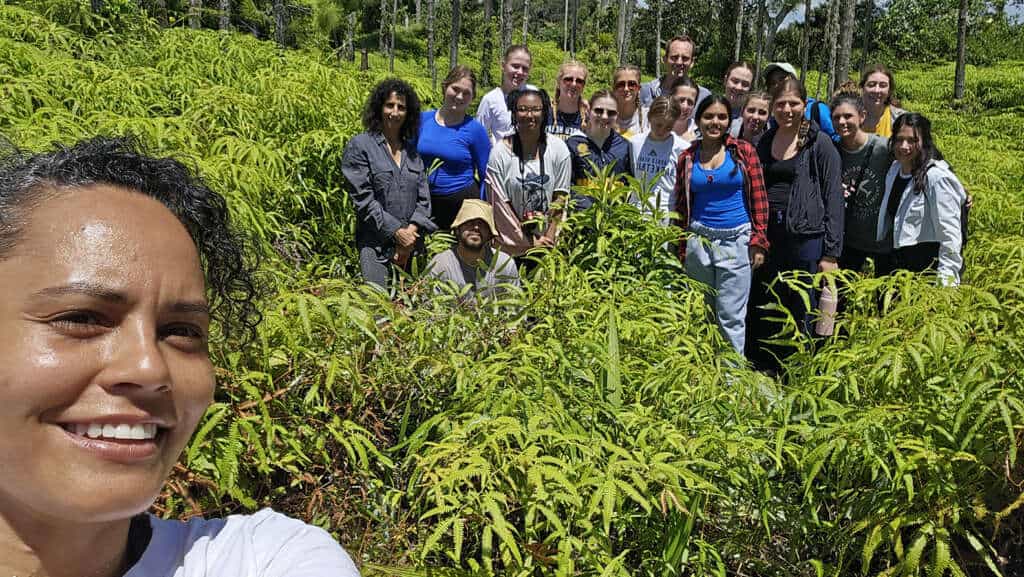
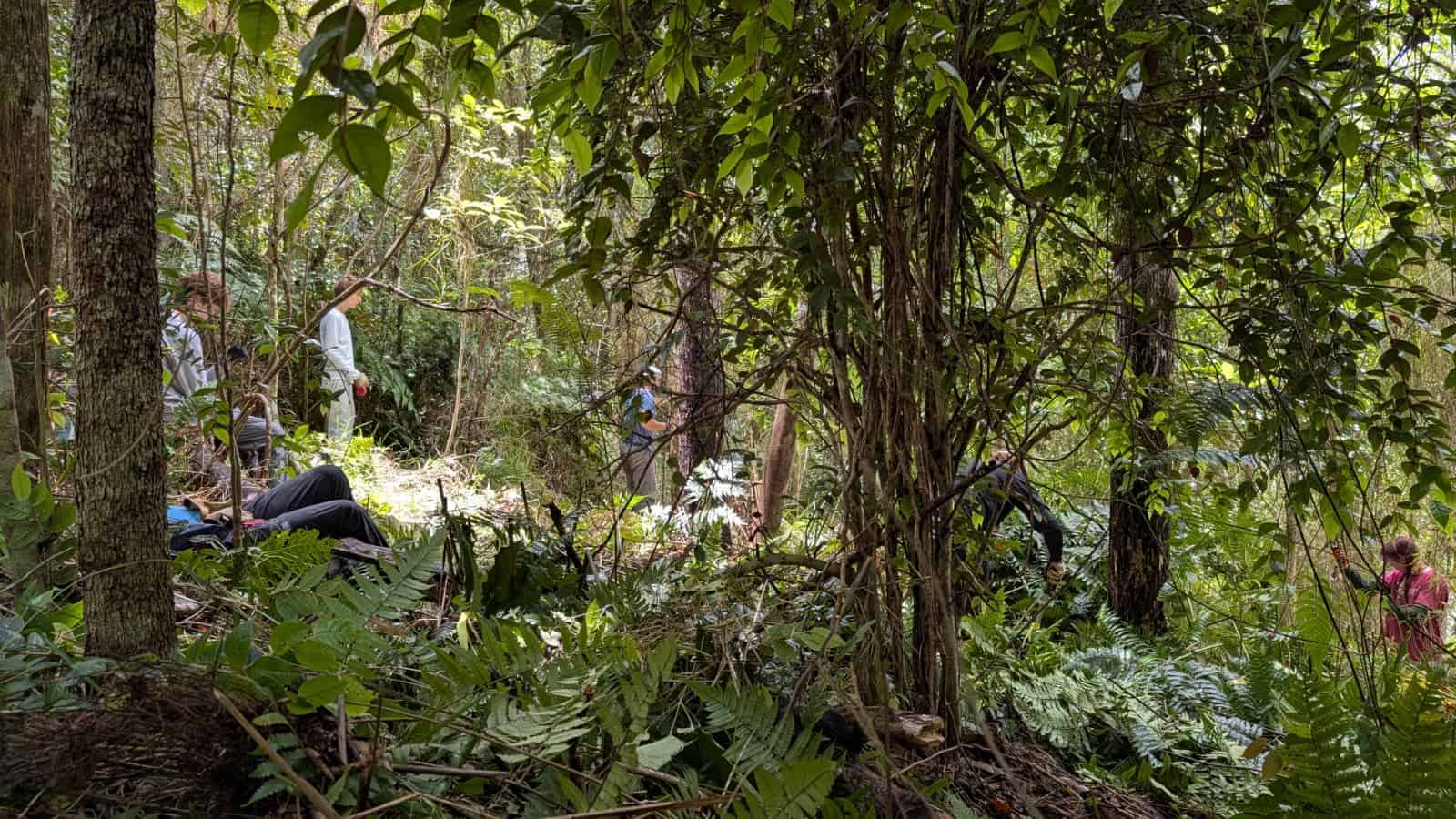
Little by little, the character of the place began to change. Individual tree trunks emerged from the tangled growth. Space opened between them. The steep contours of the hillside became visible again. We could finally look across an entire section of the planted forest rather than catching only brief glimpses through a wall of razor grass.

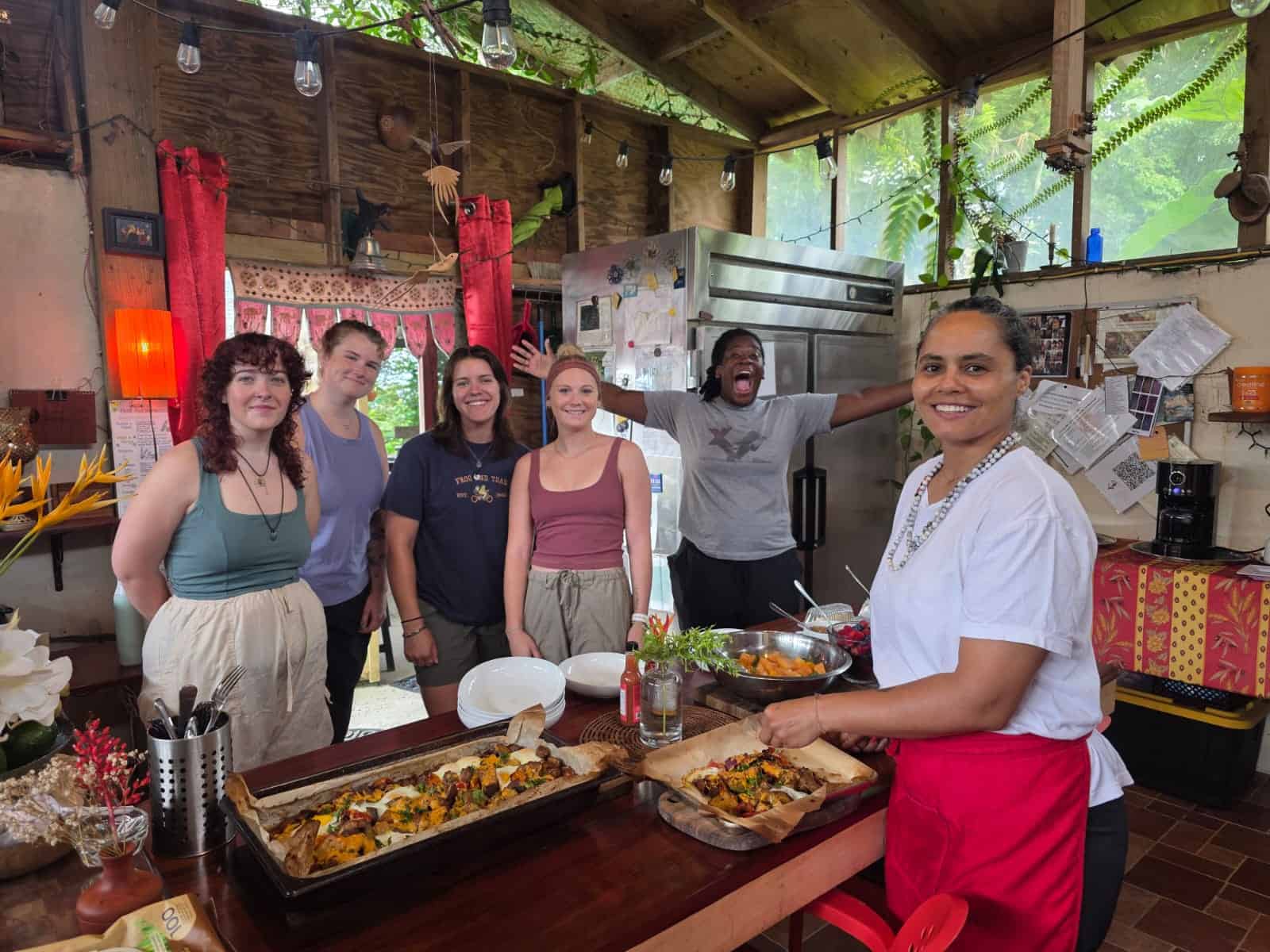
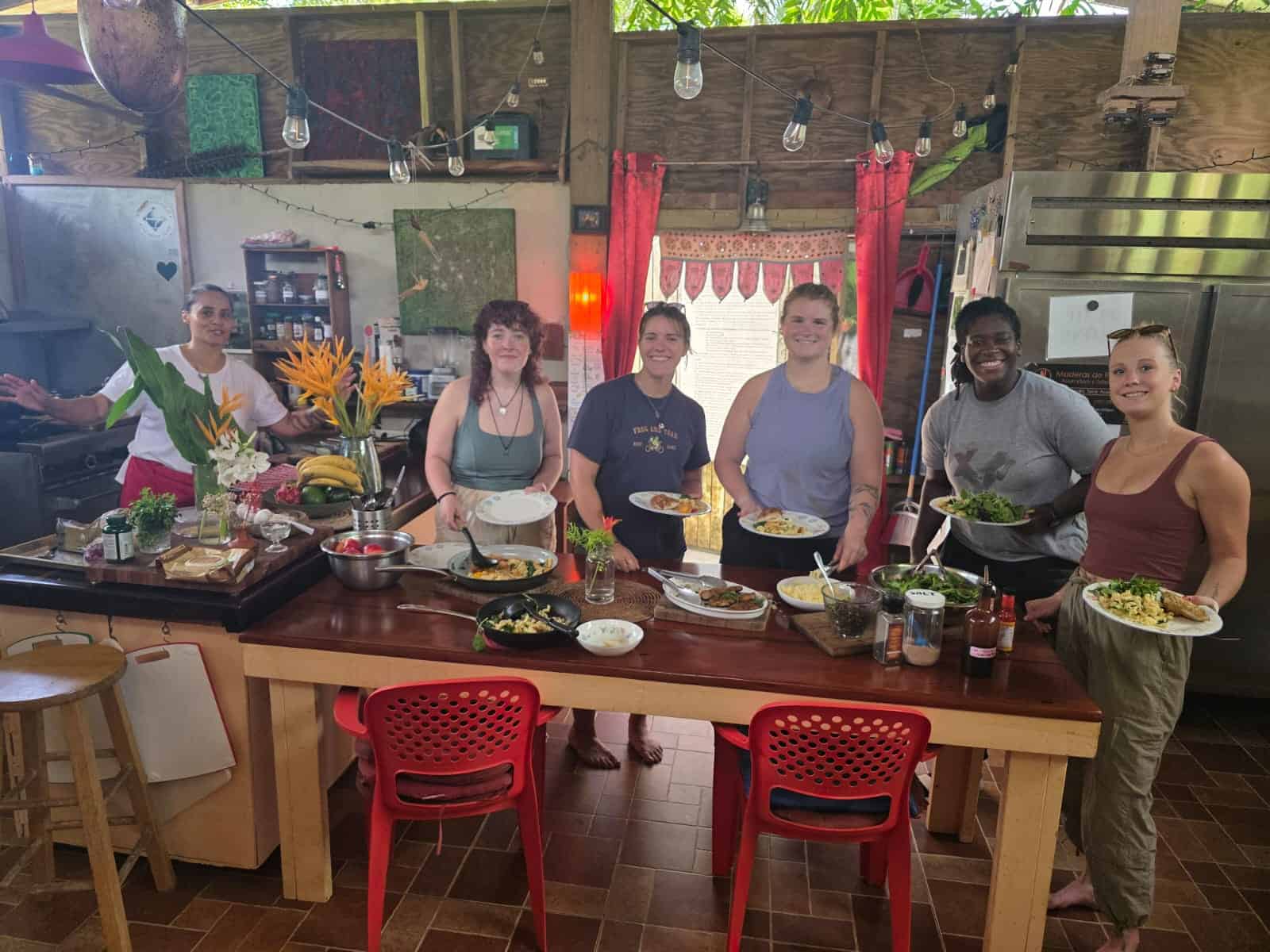
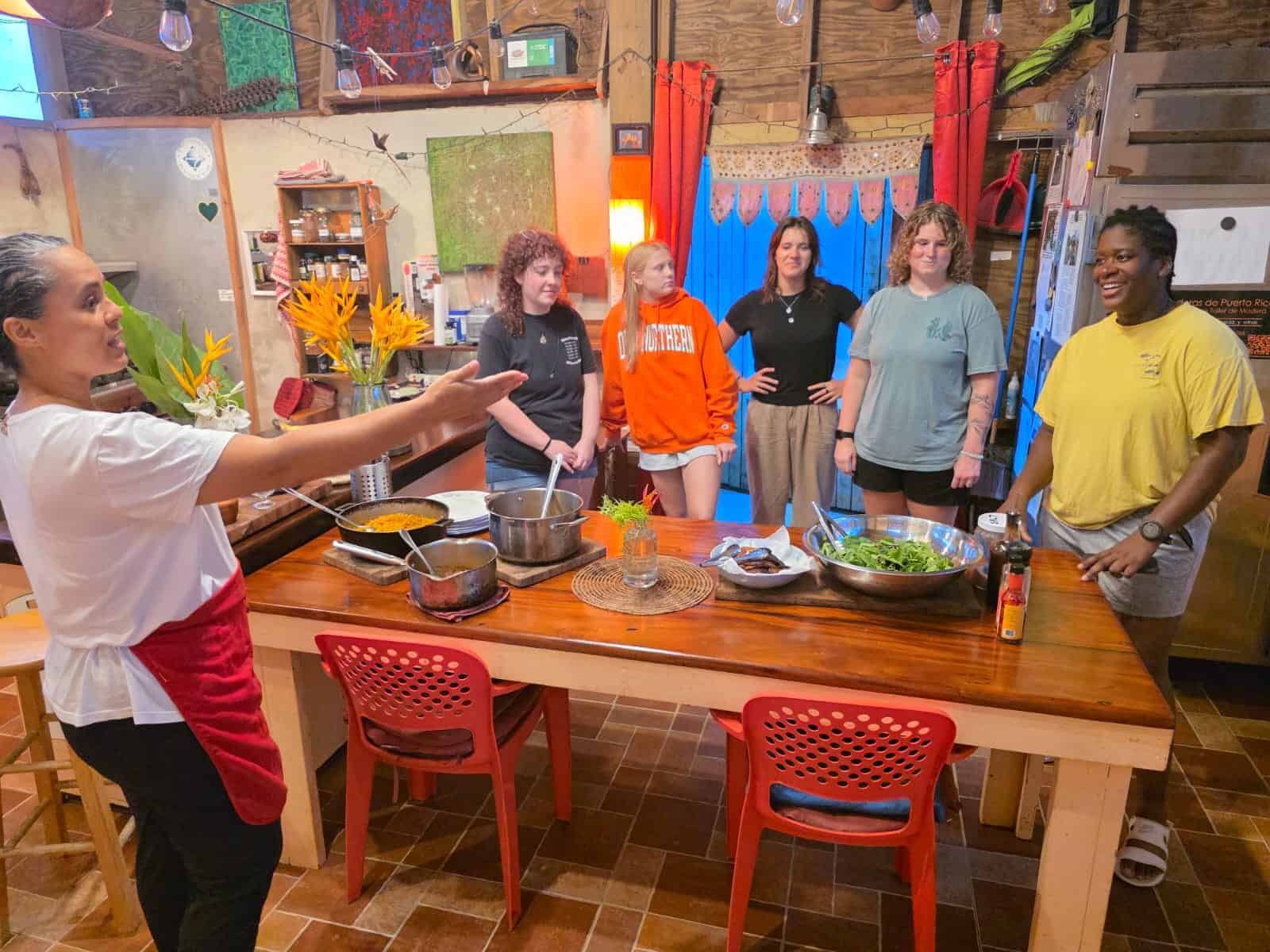
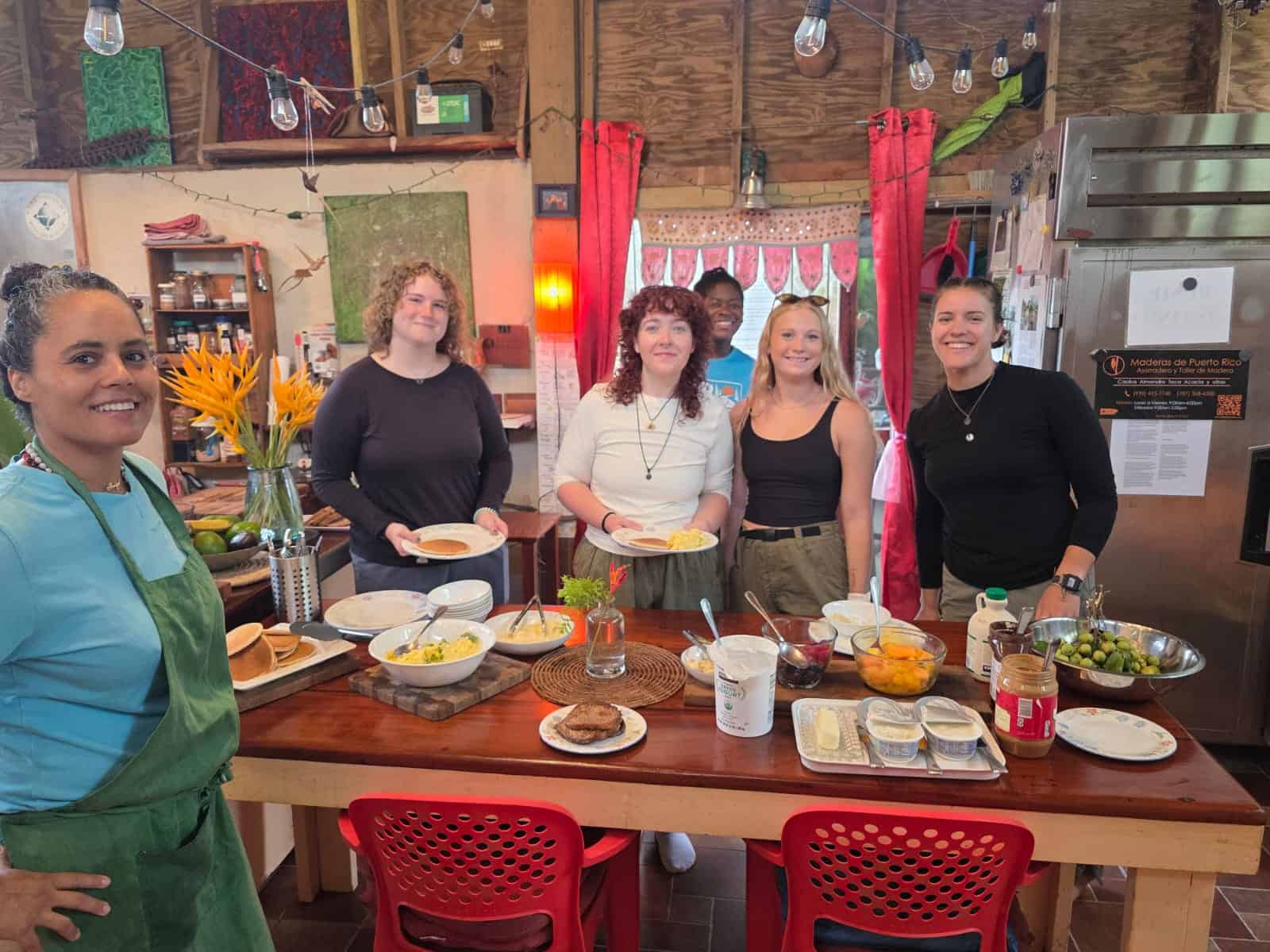
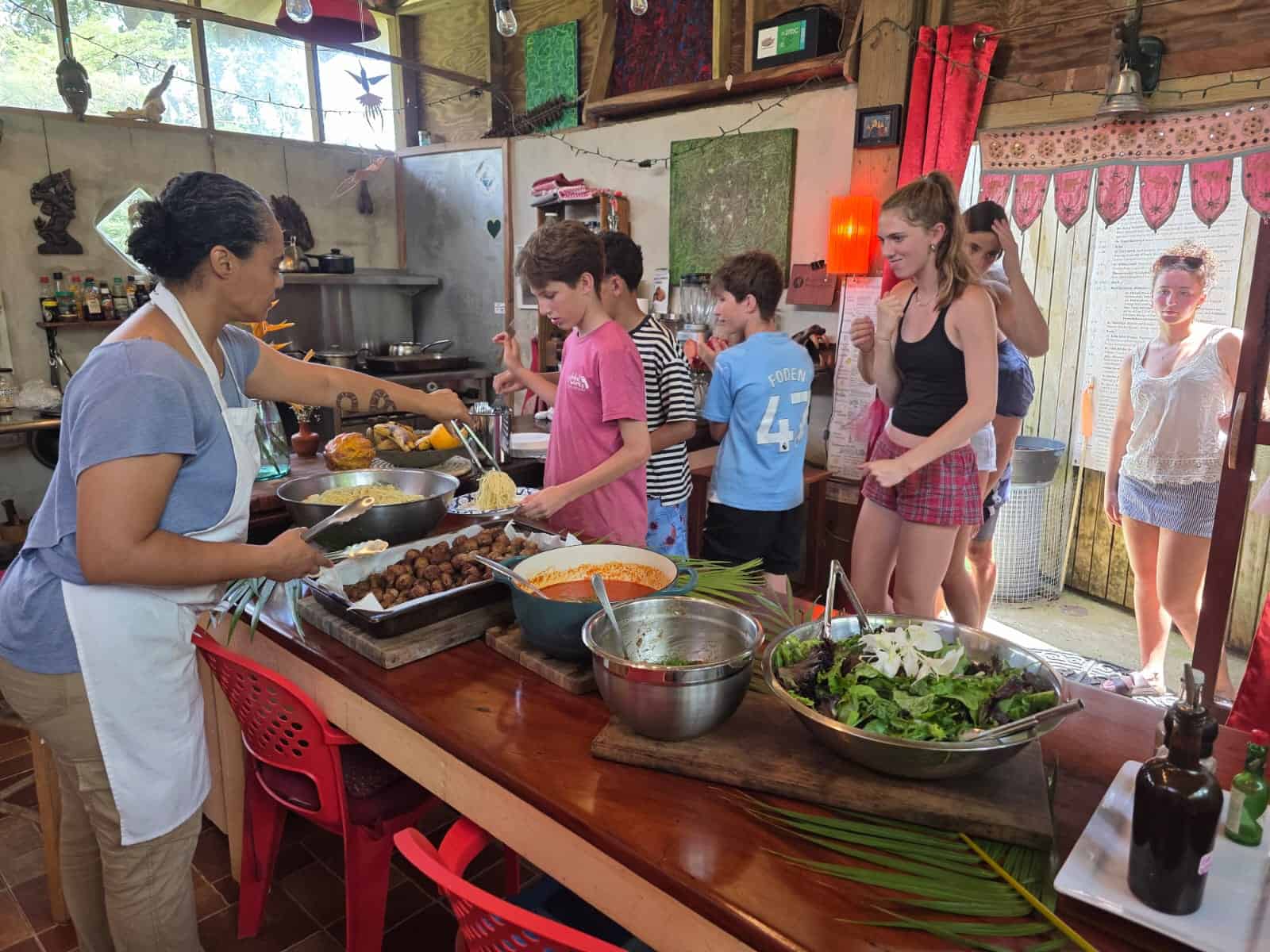
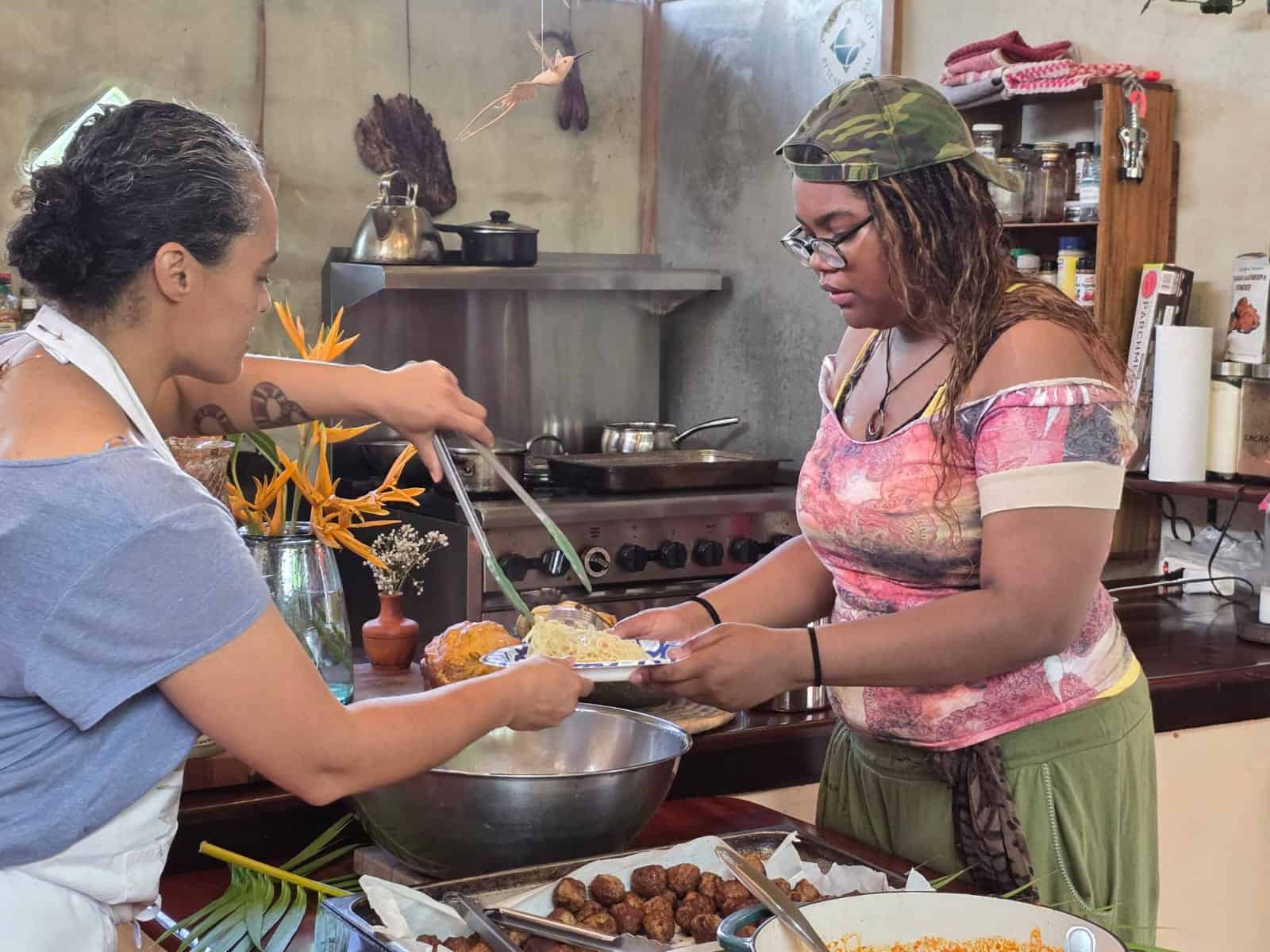
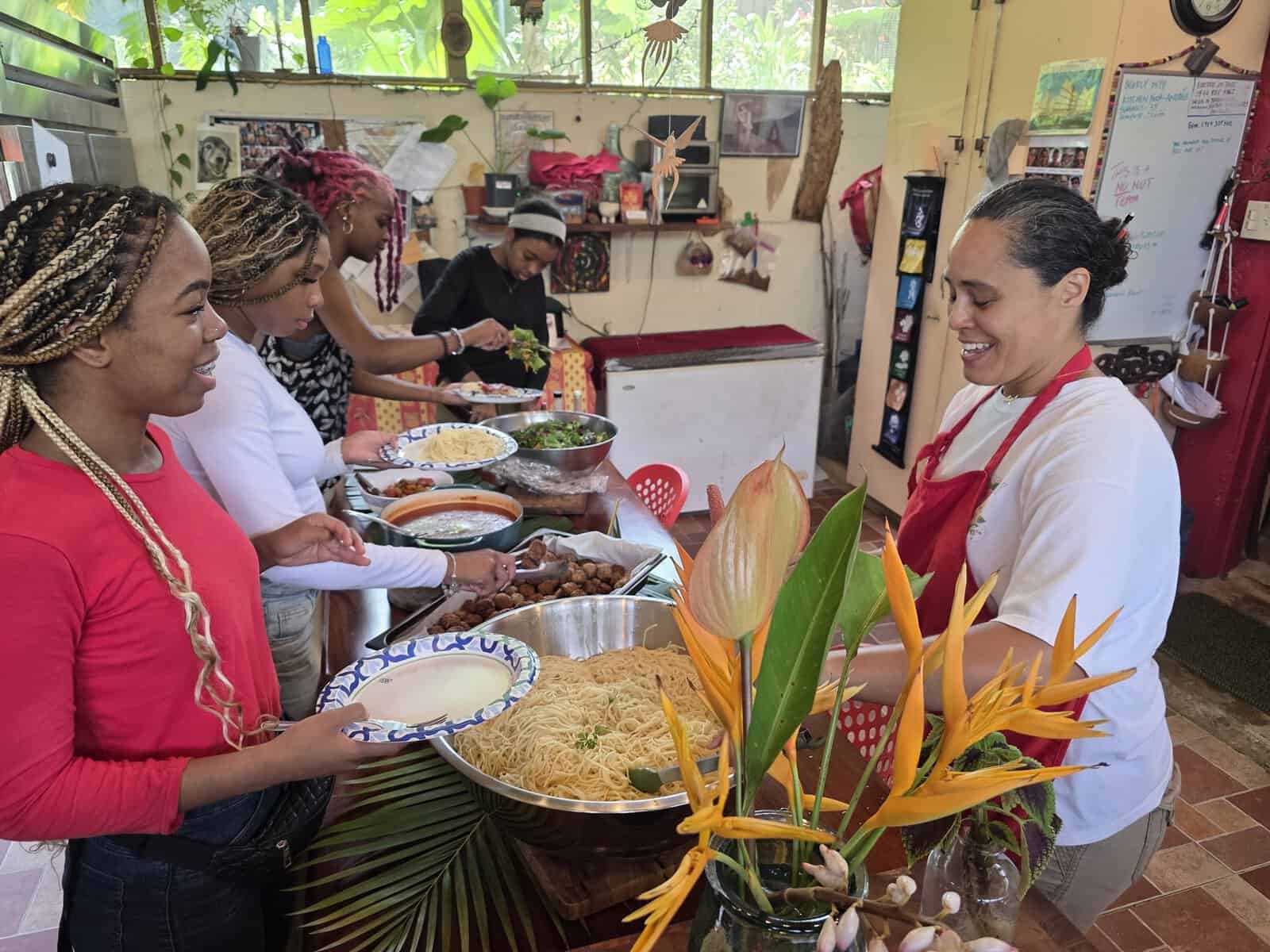
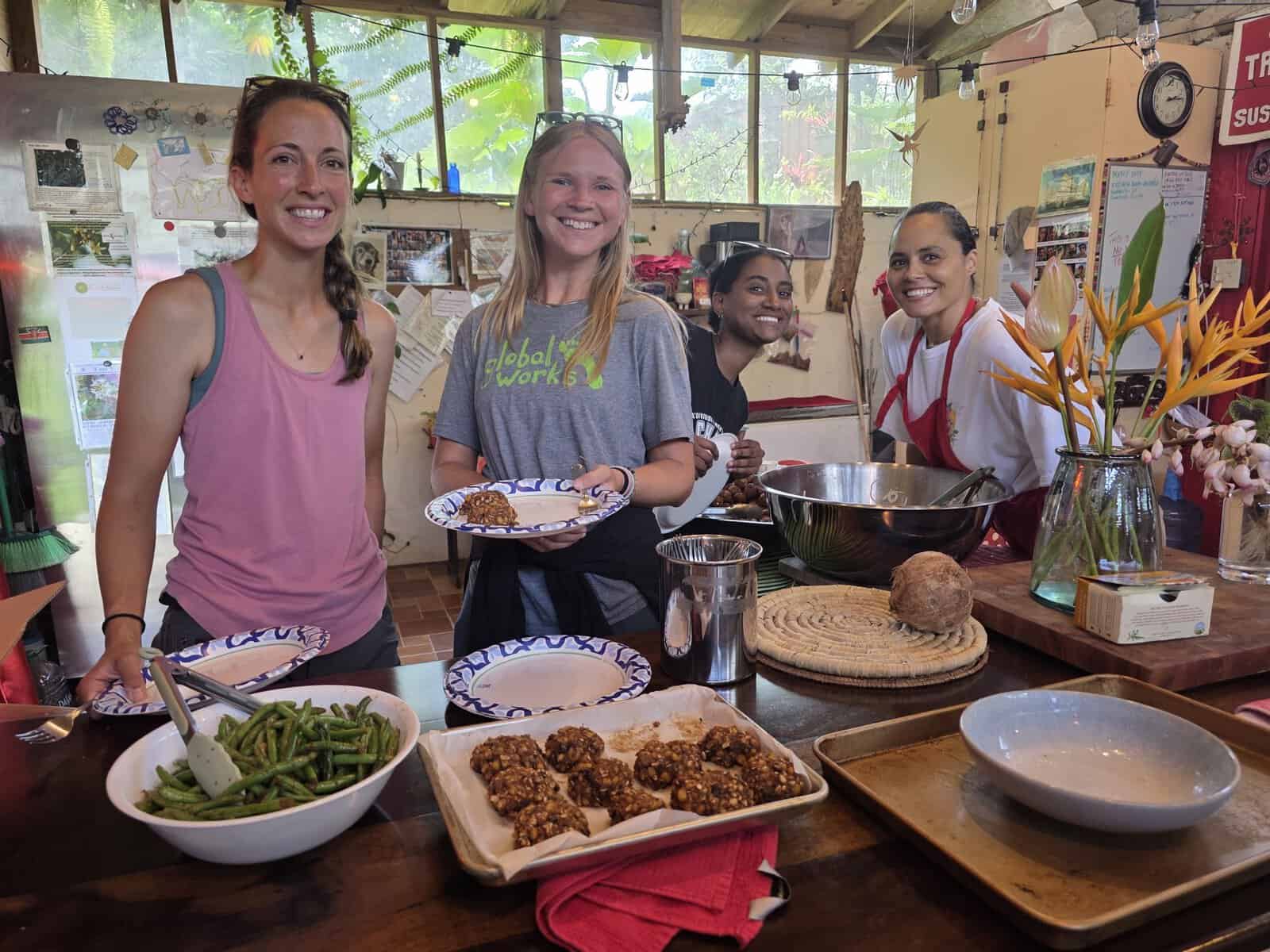
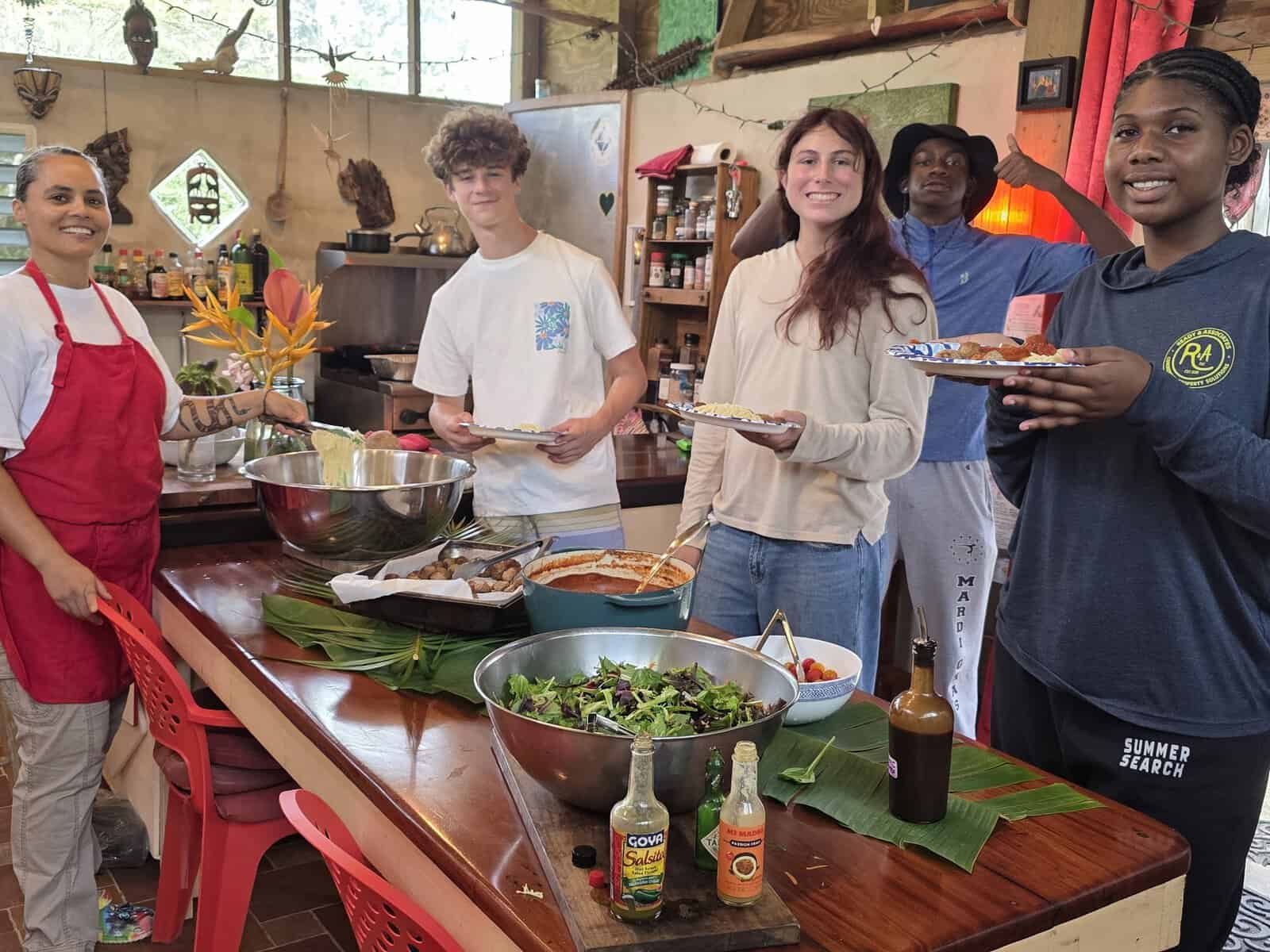
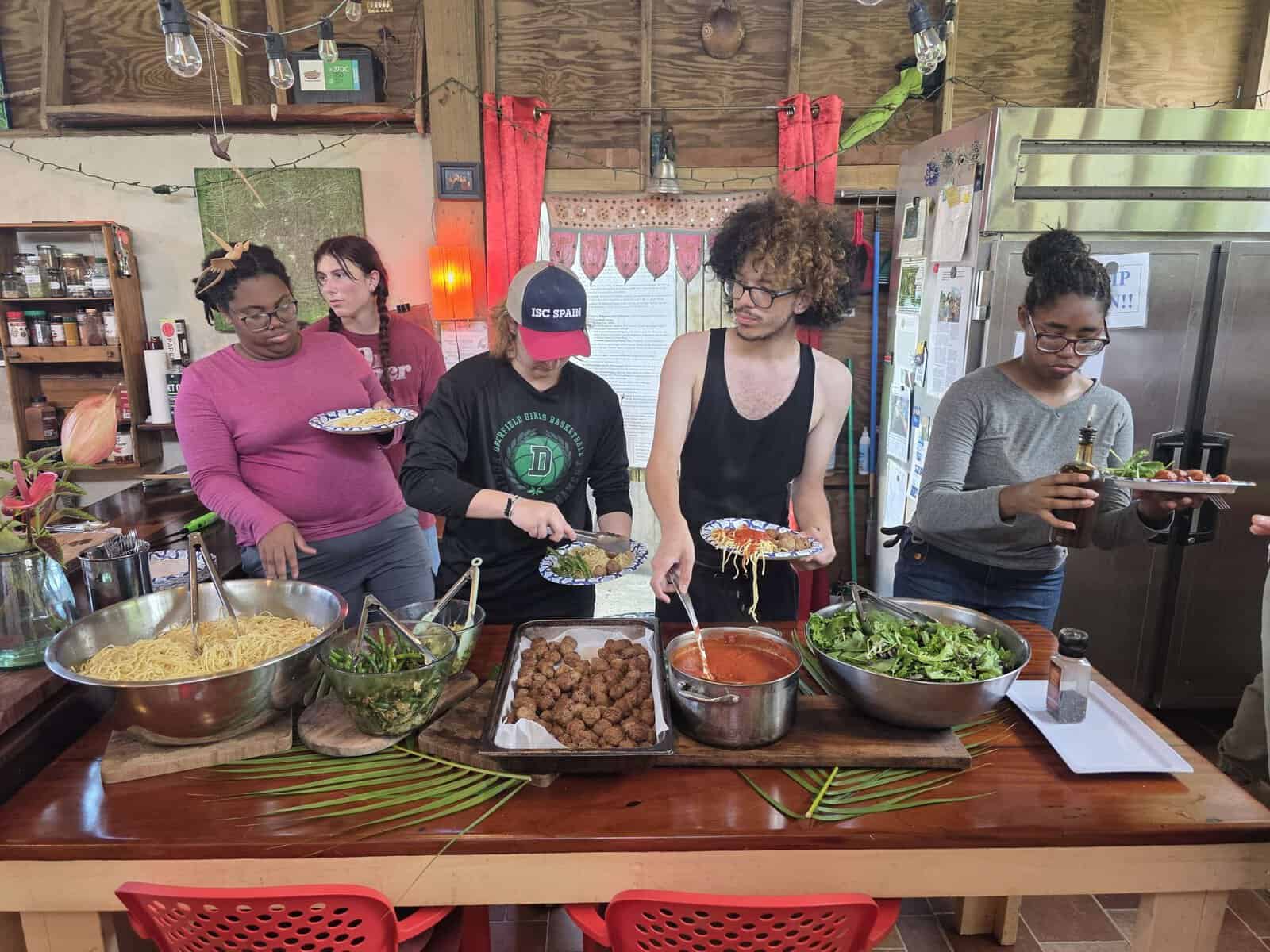
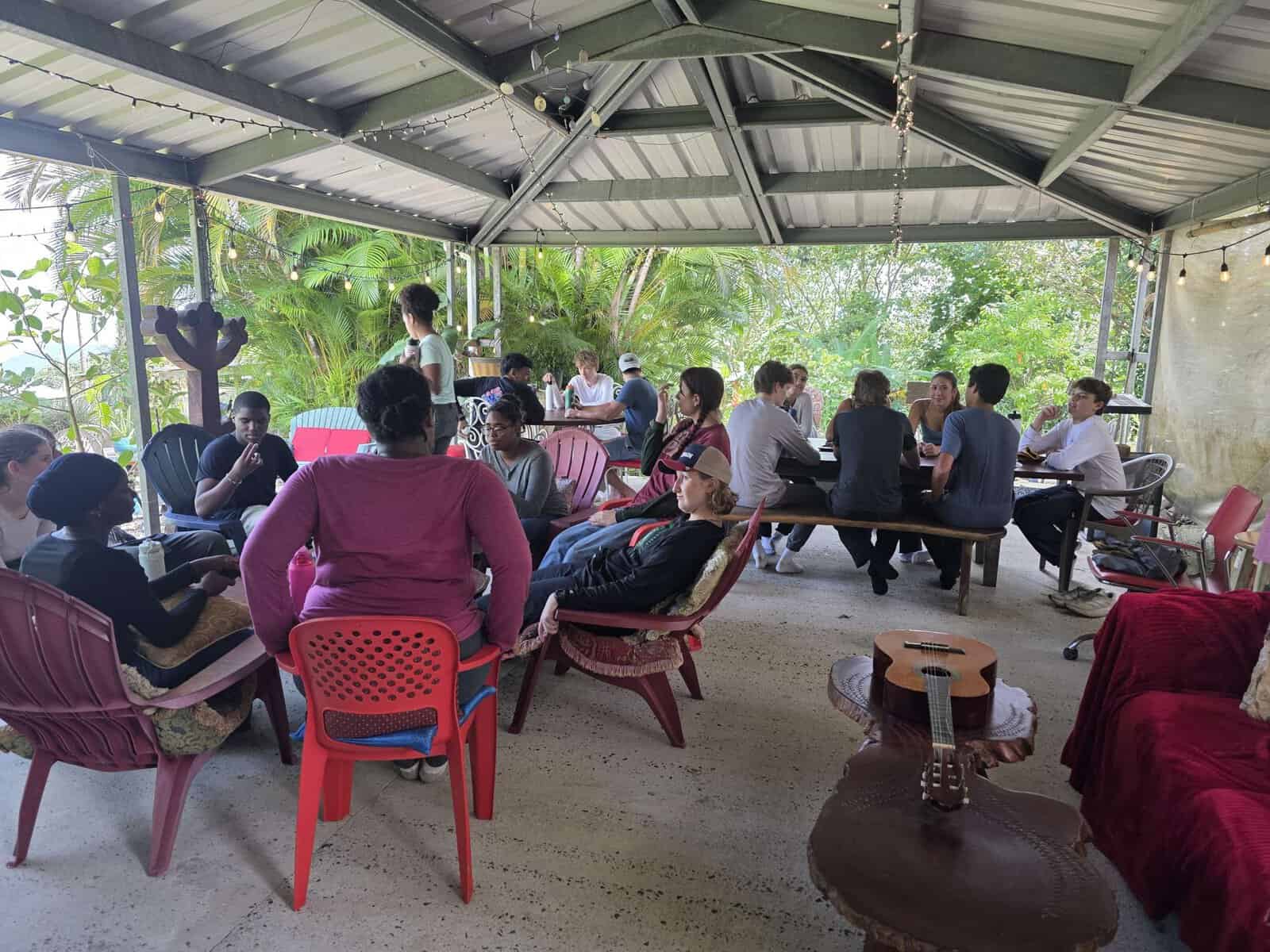
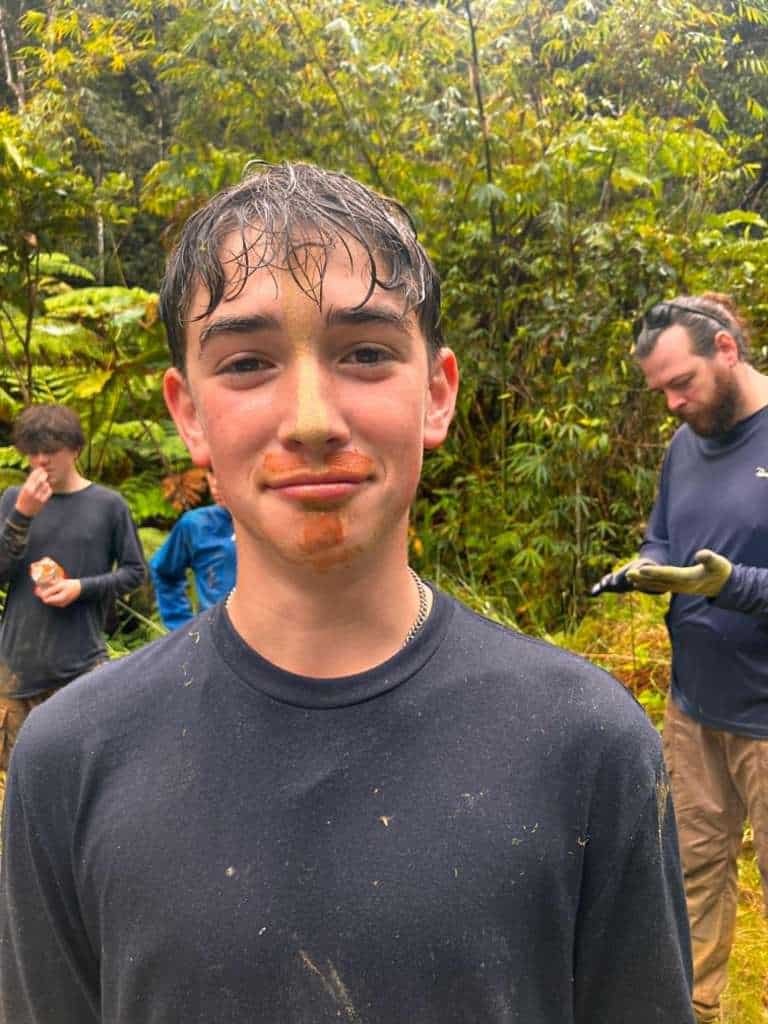
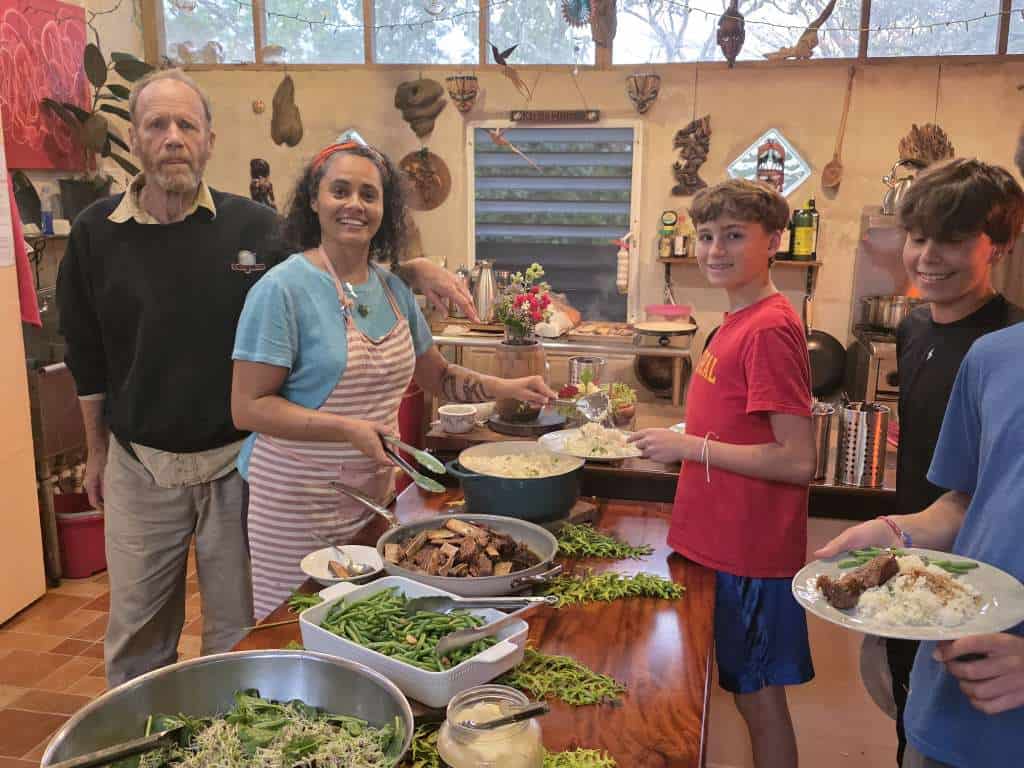
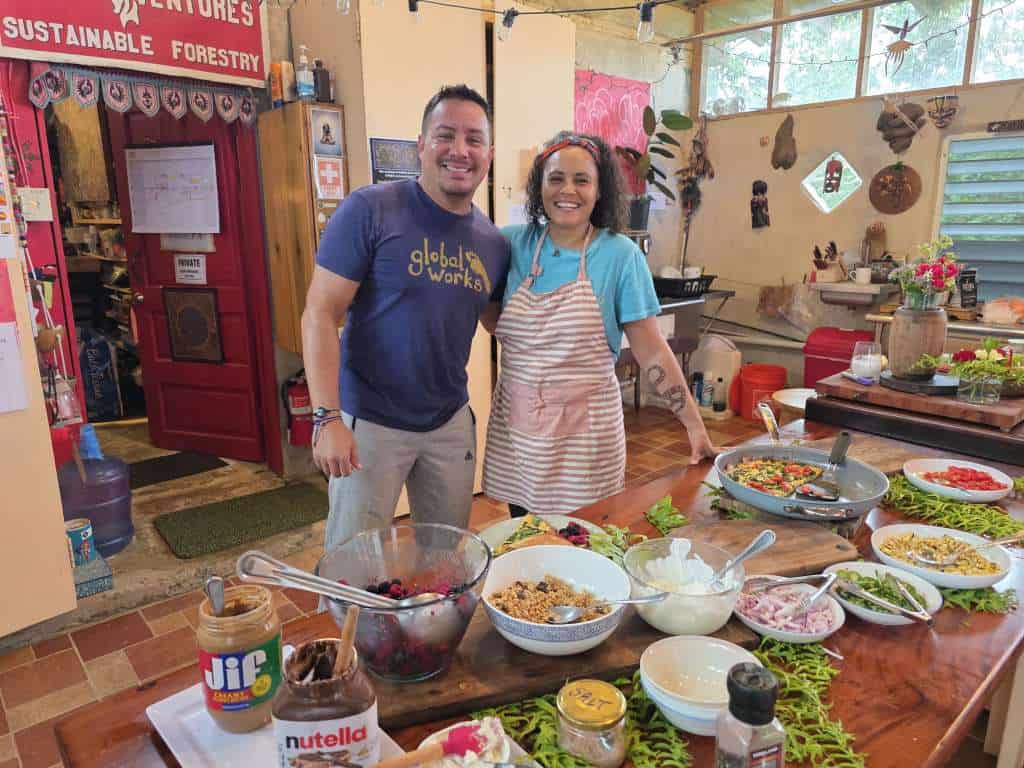
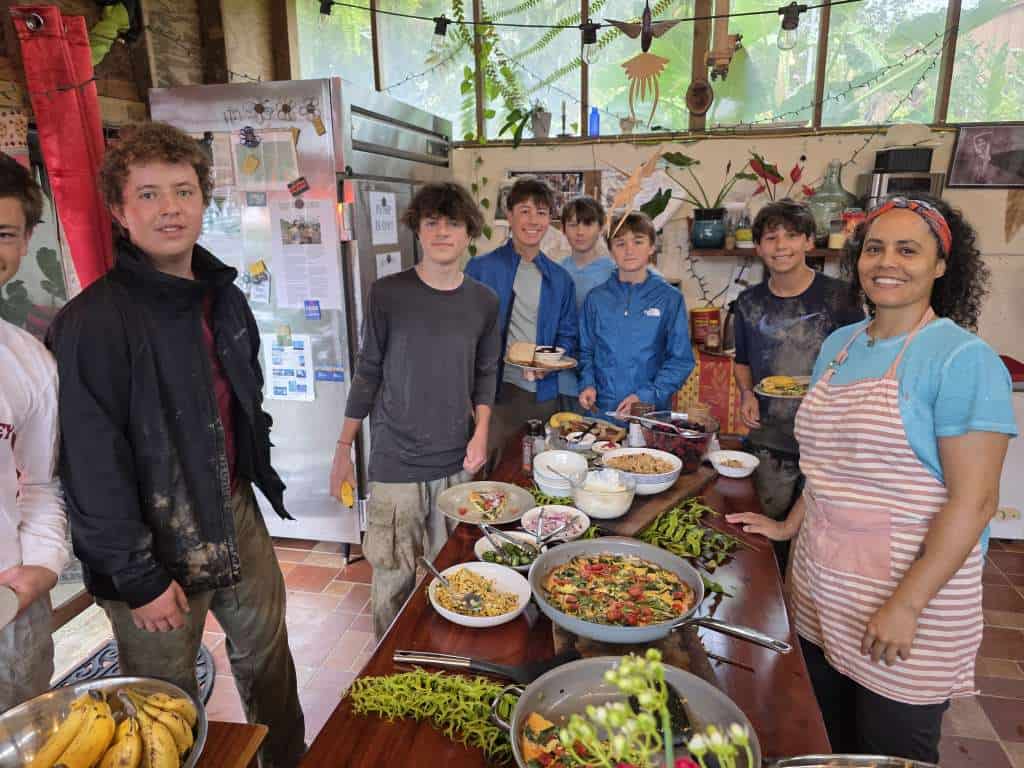
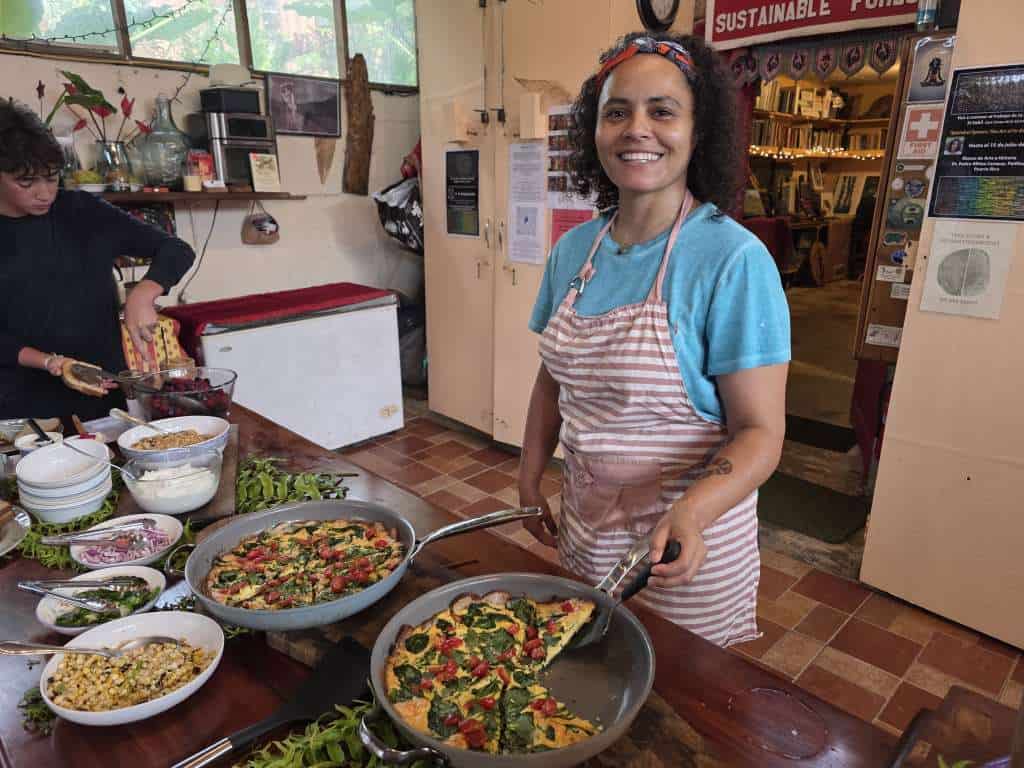
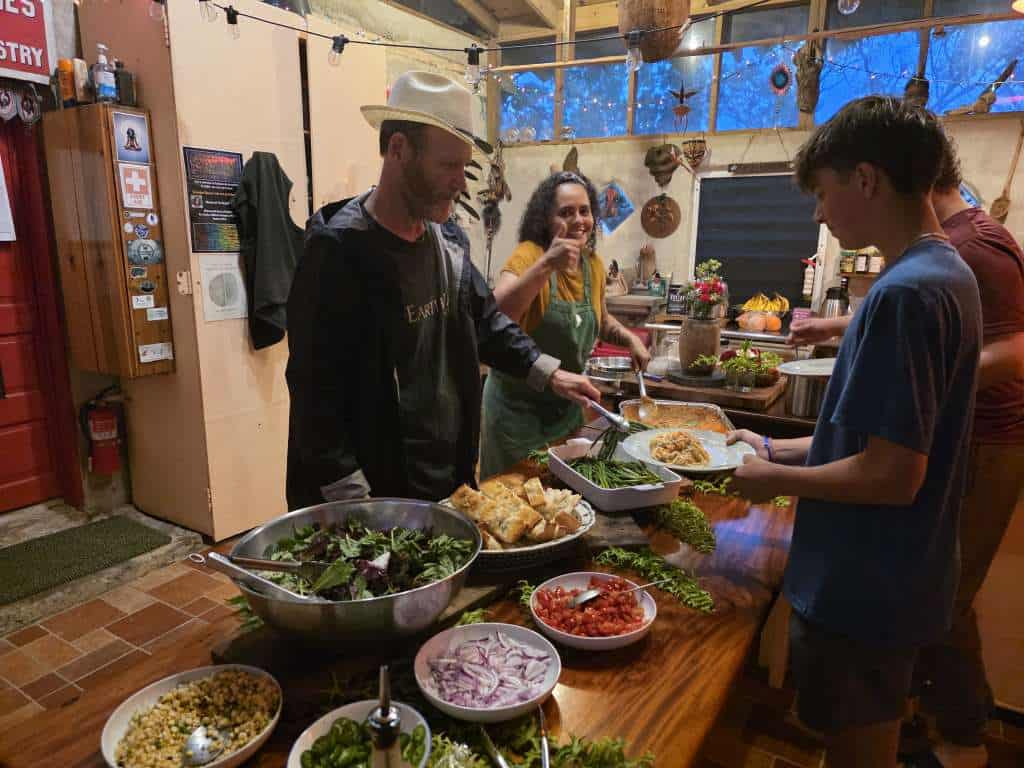
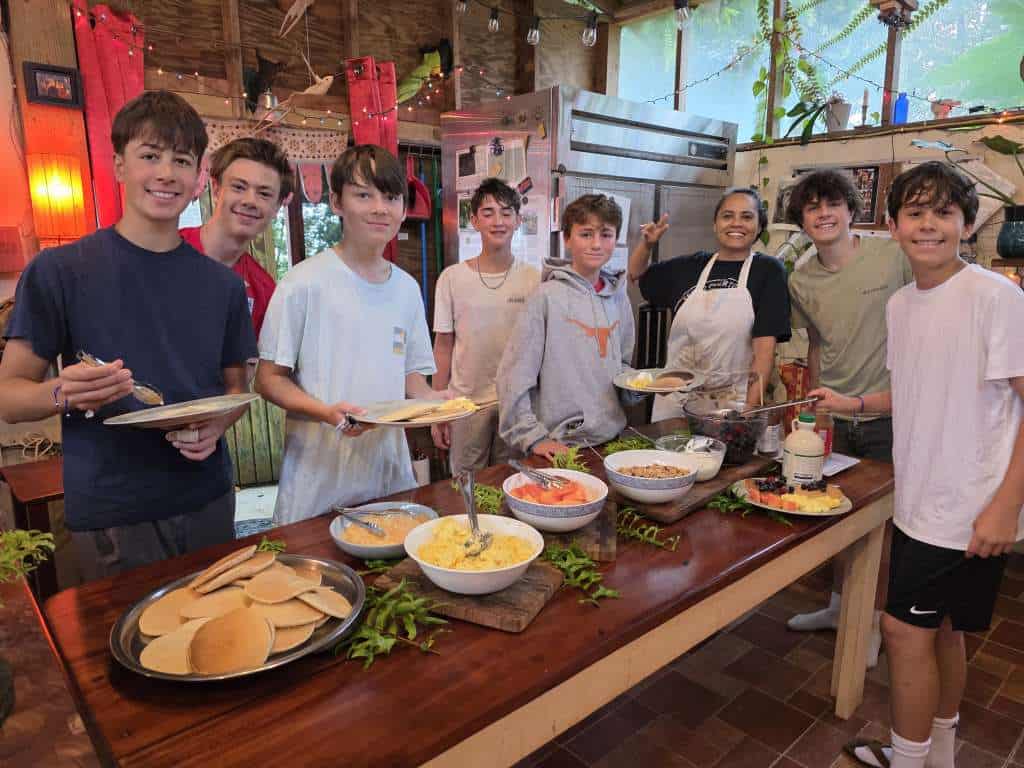
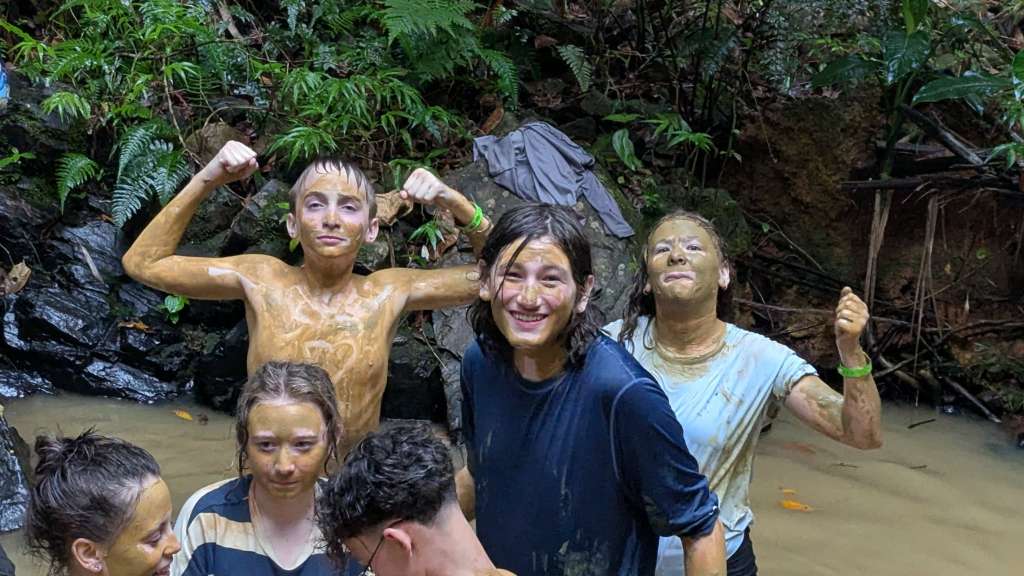
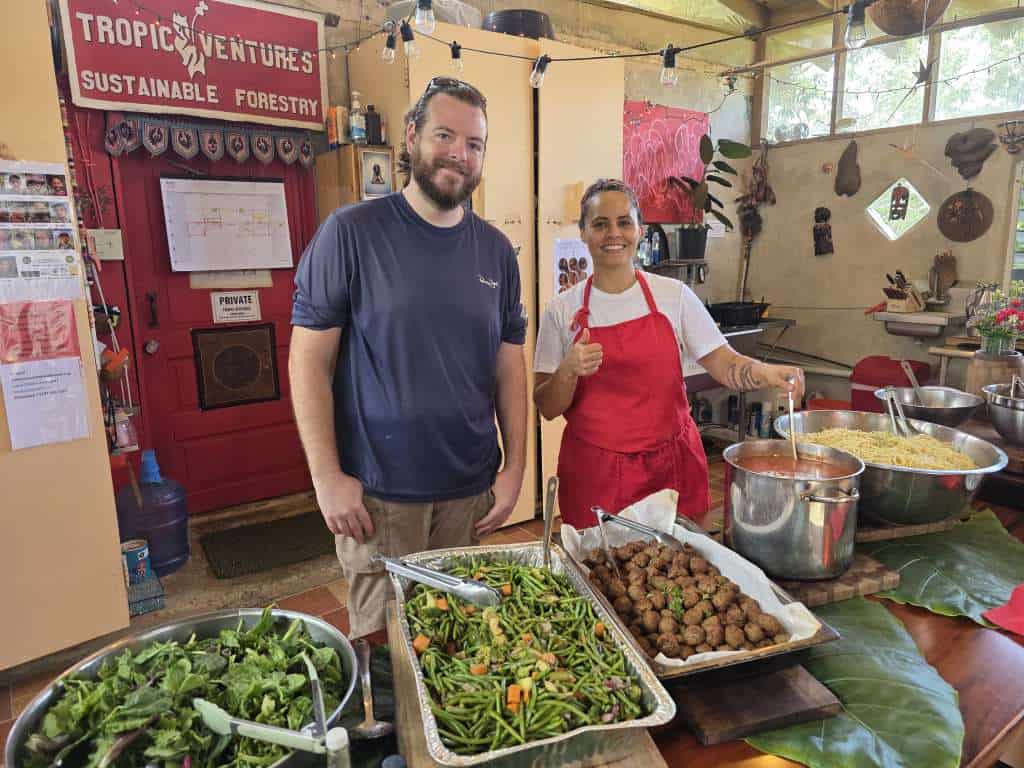
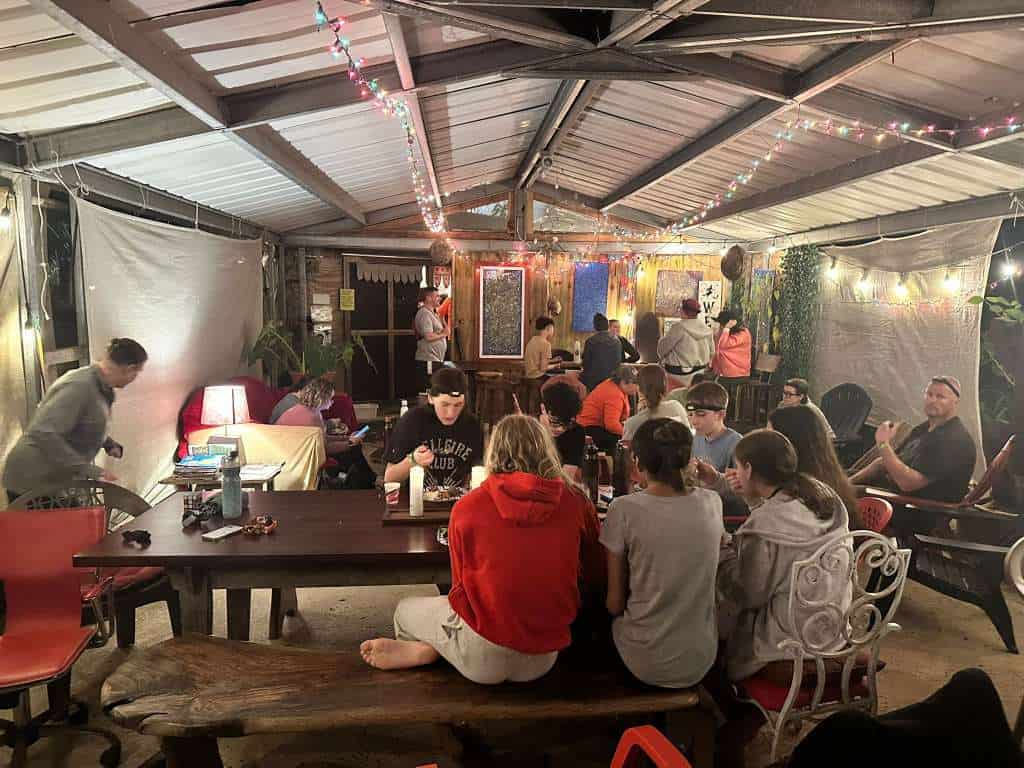
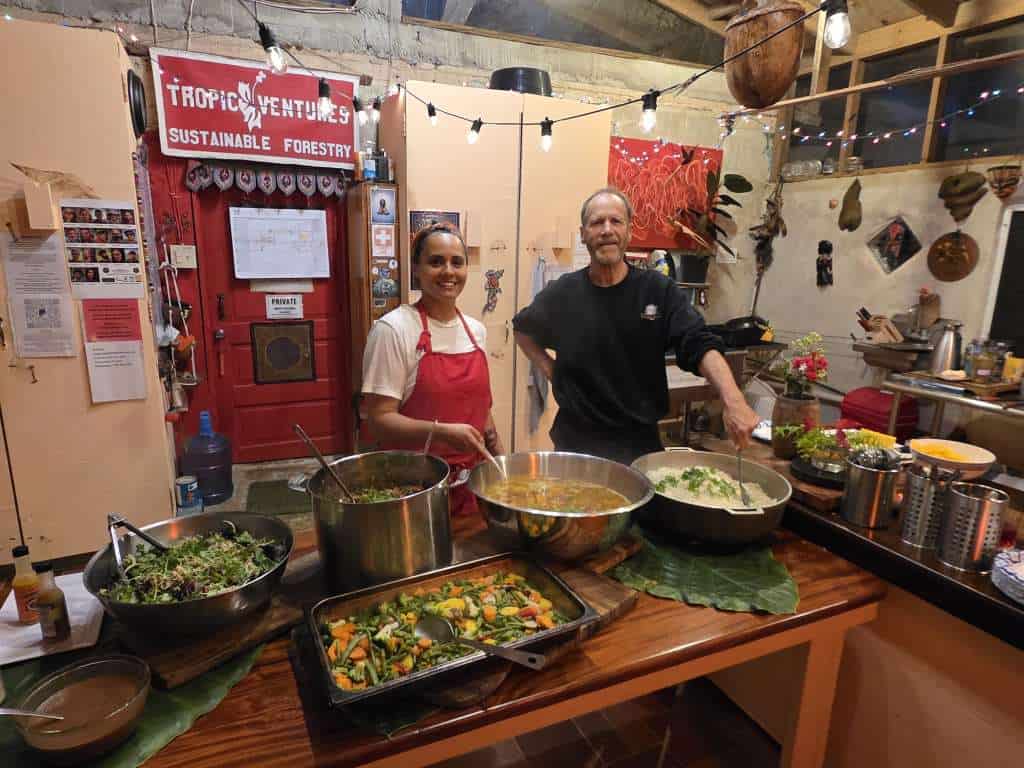
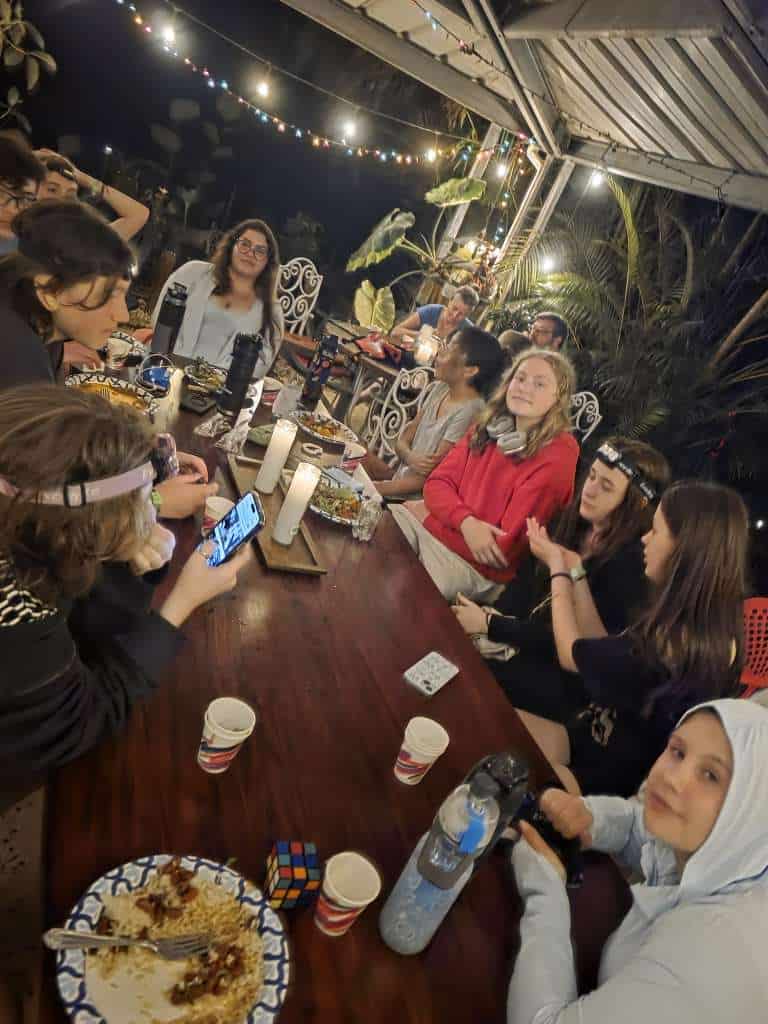
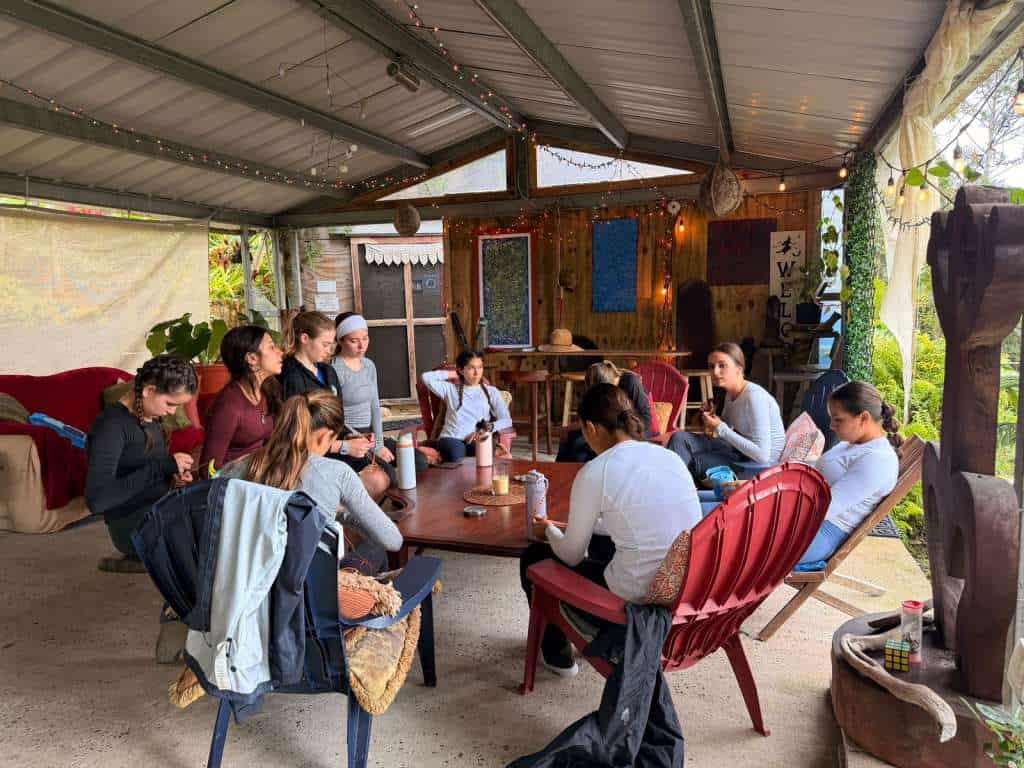
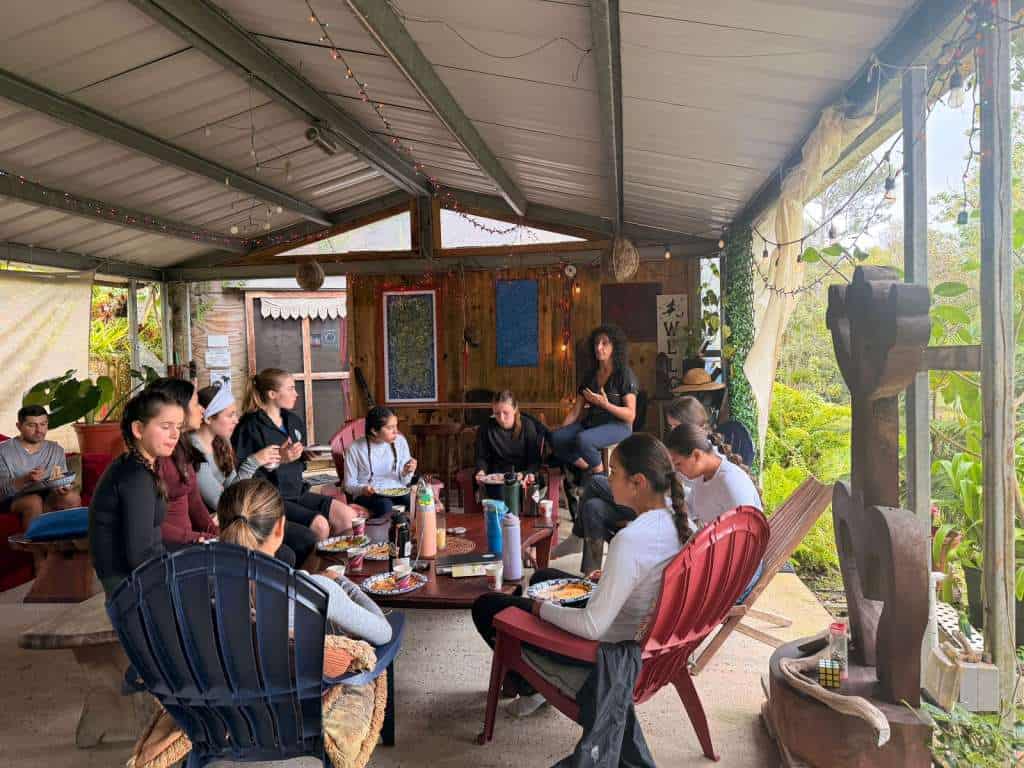
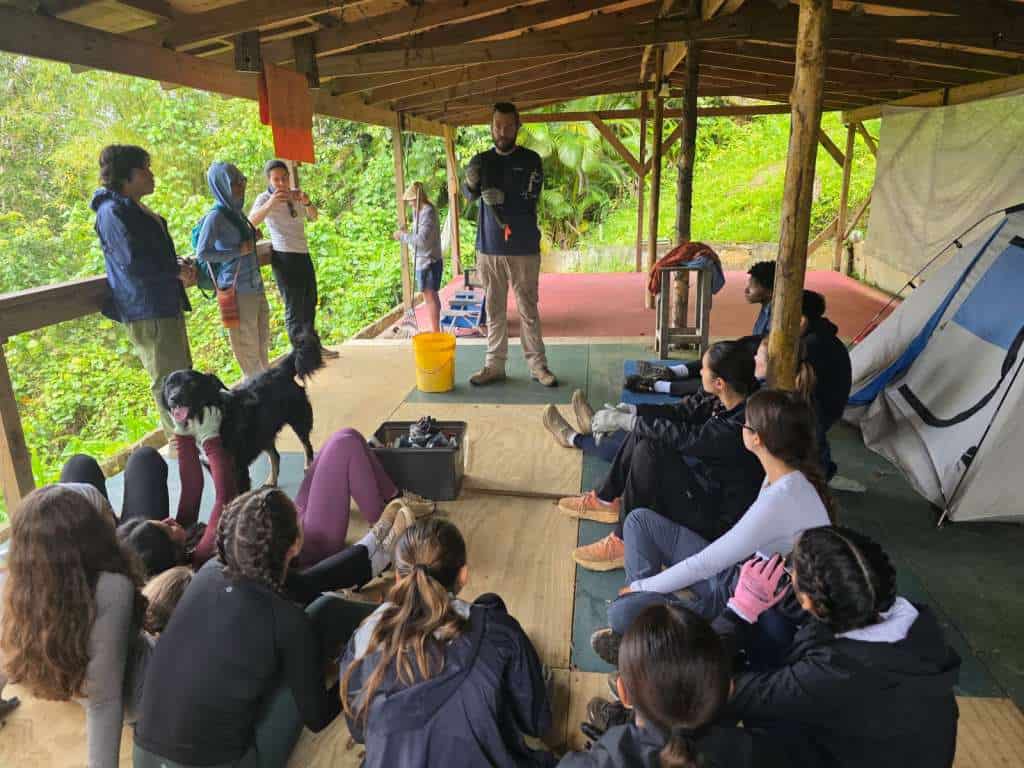
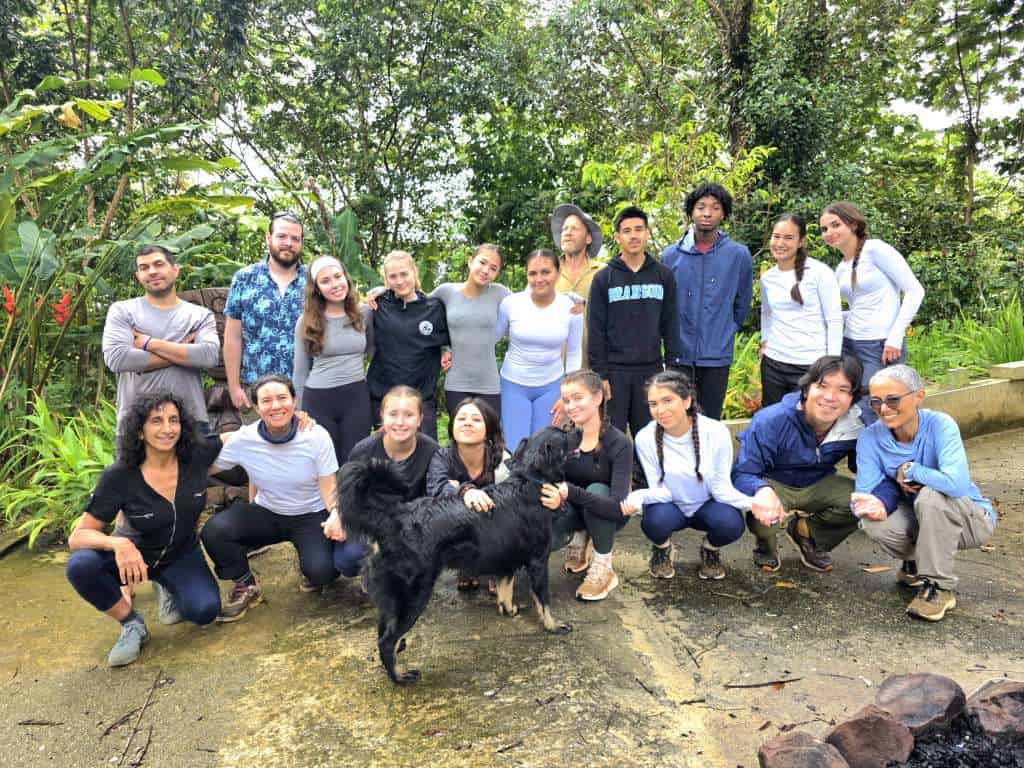
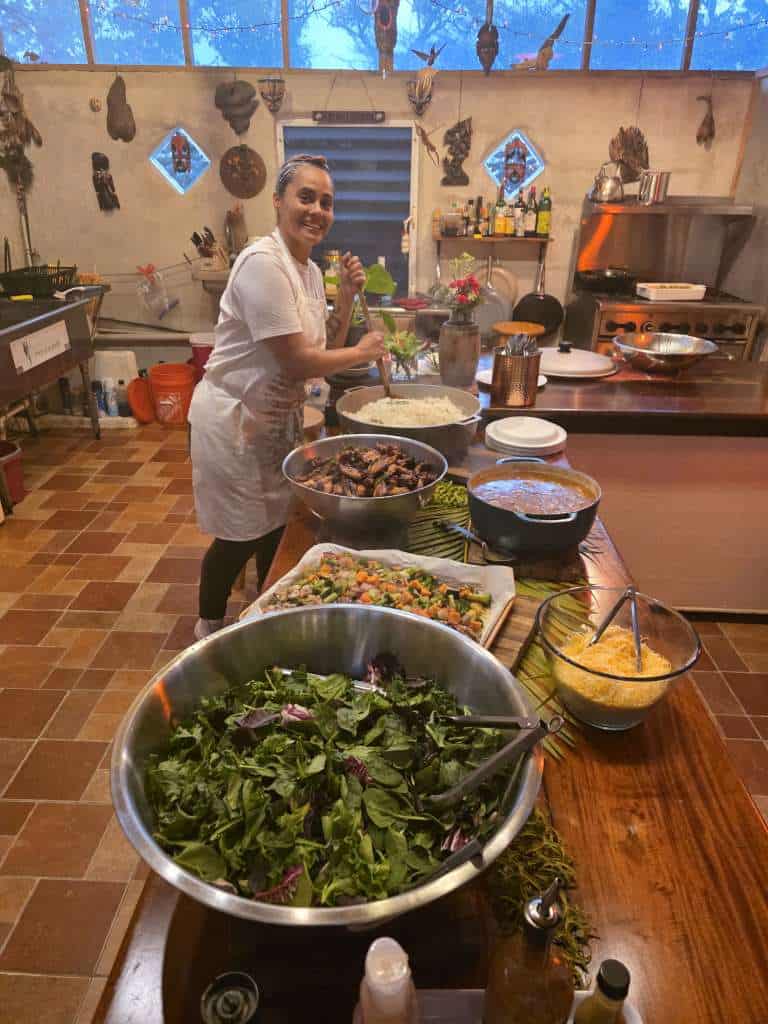
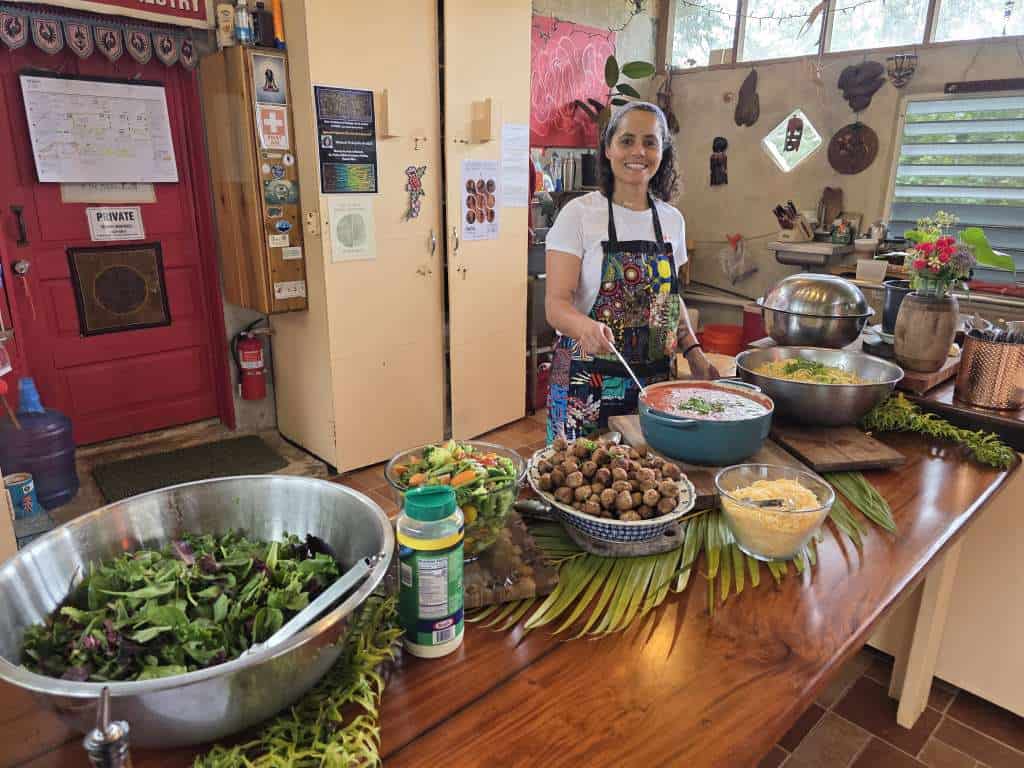
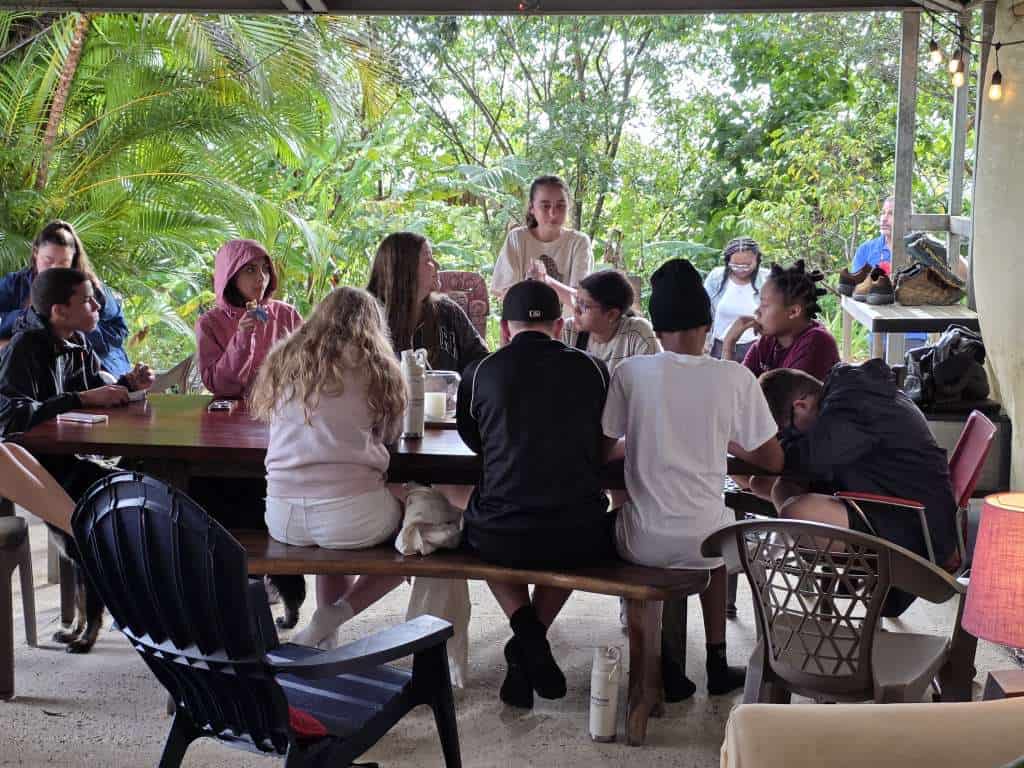
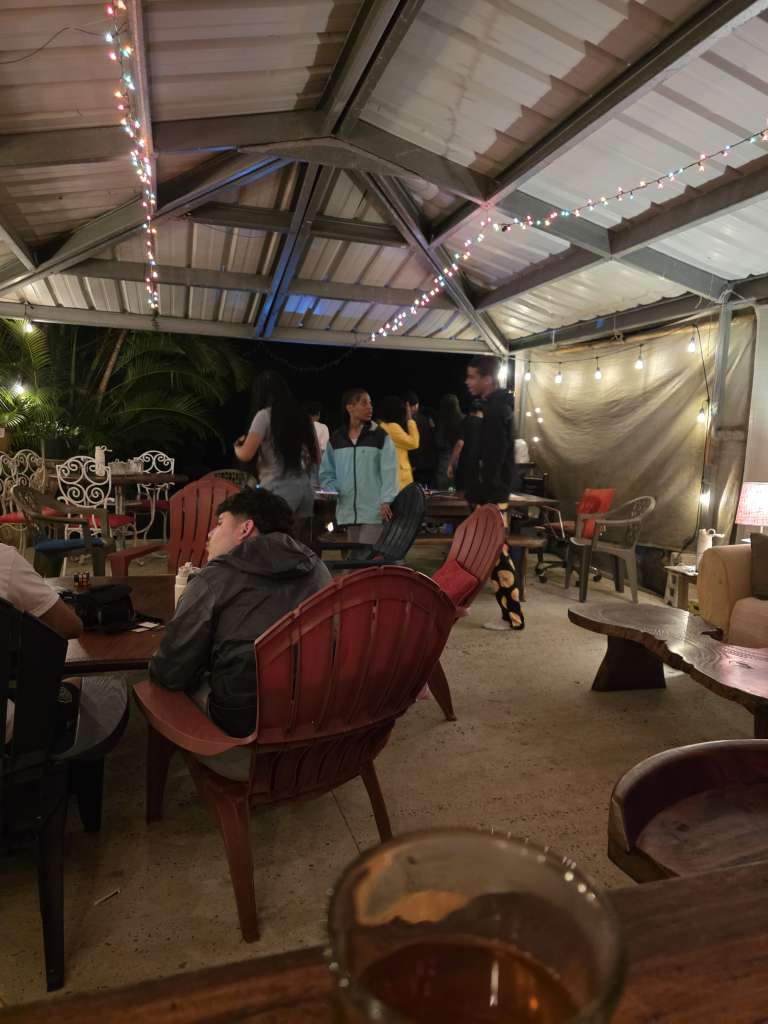
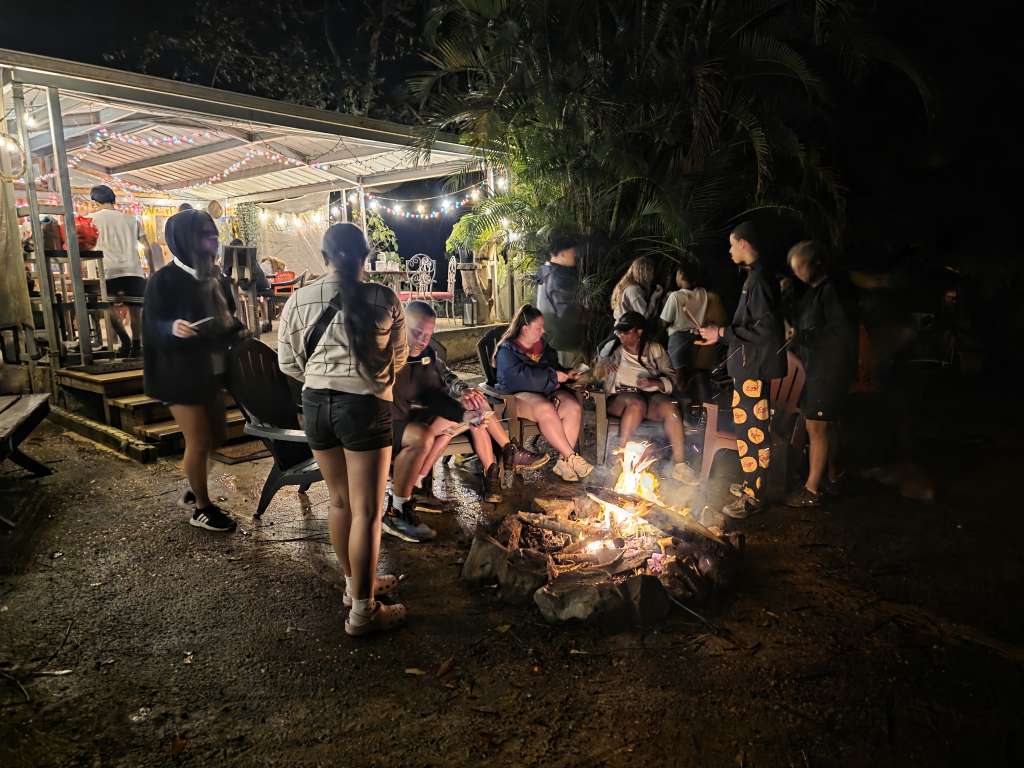
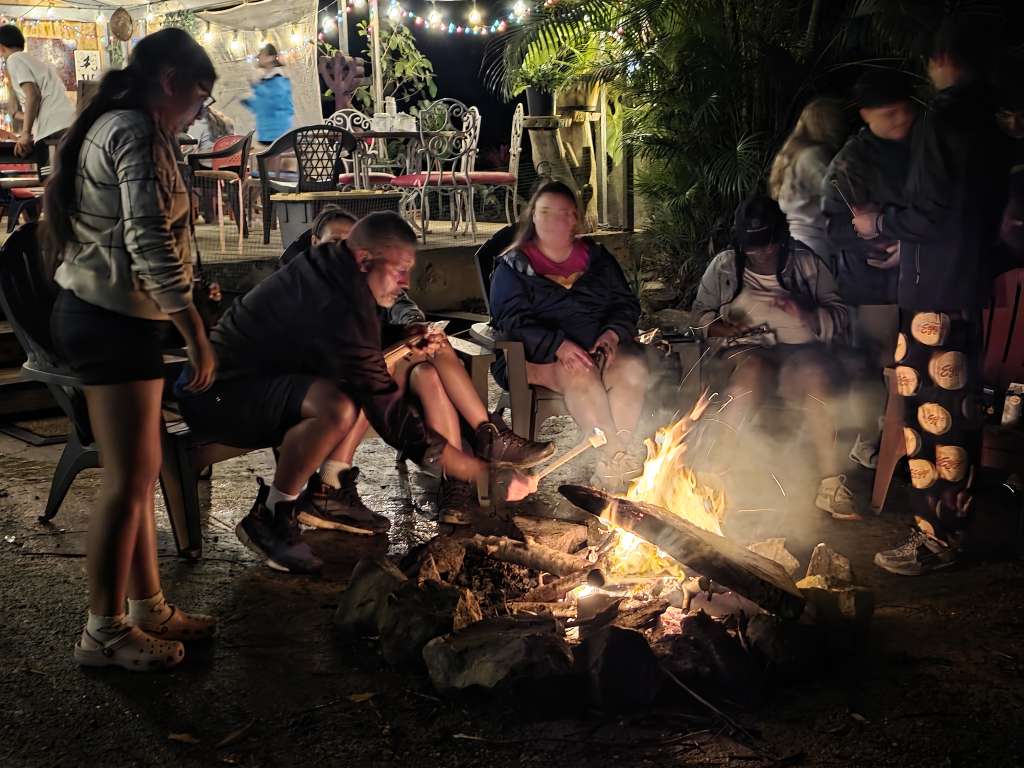
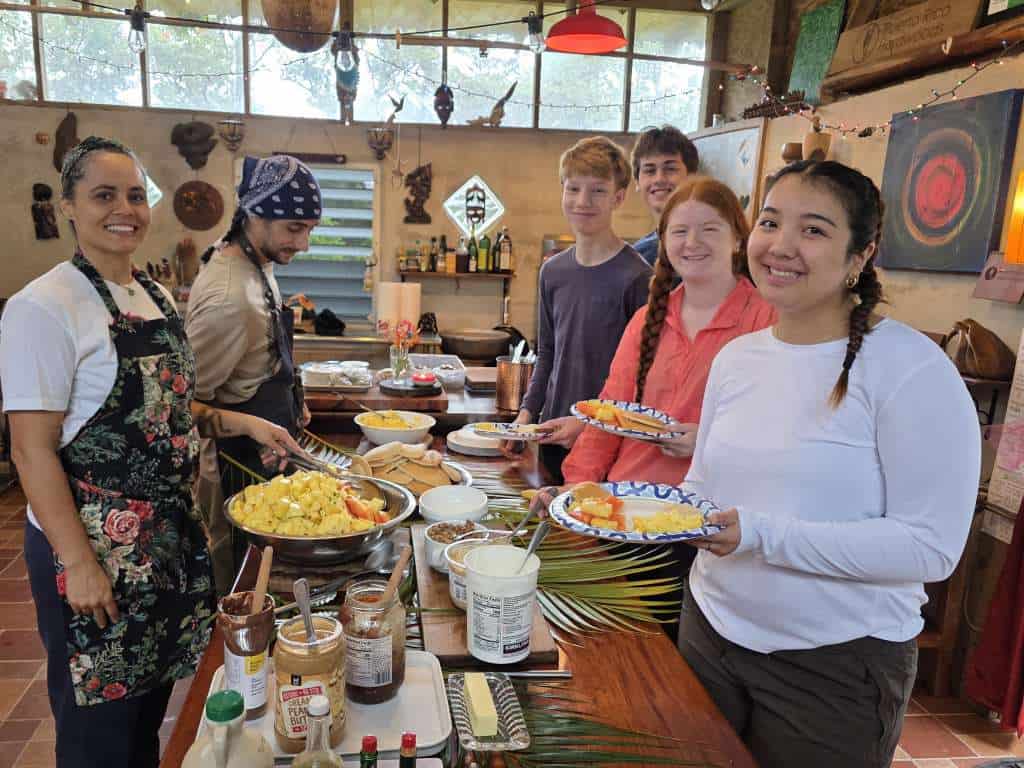
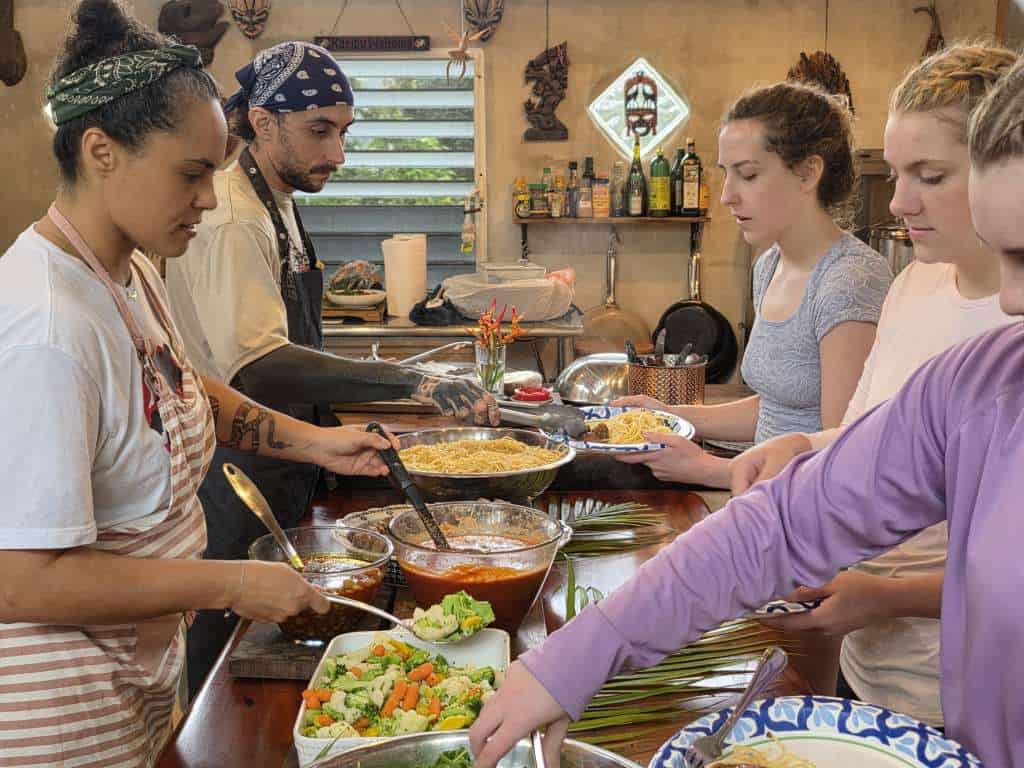
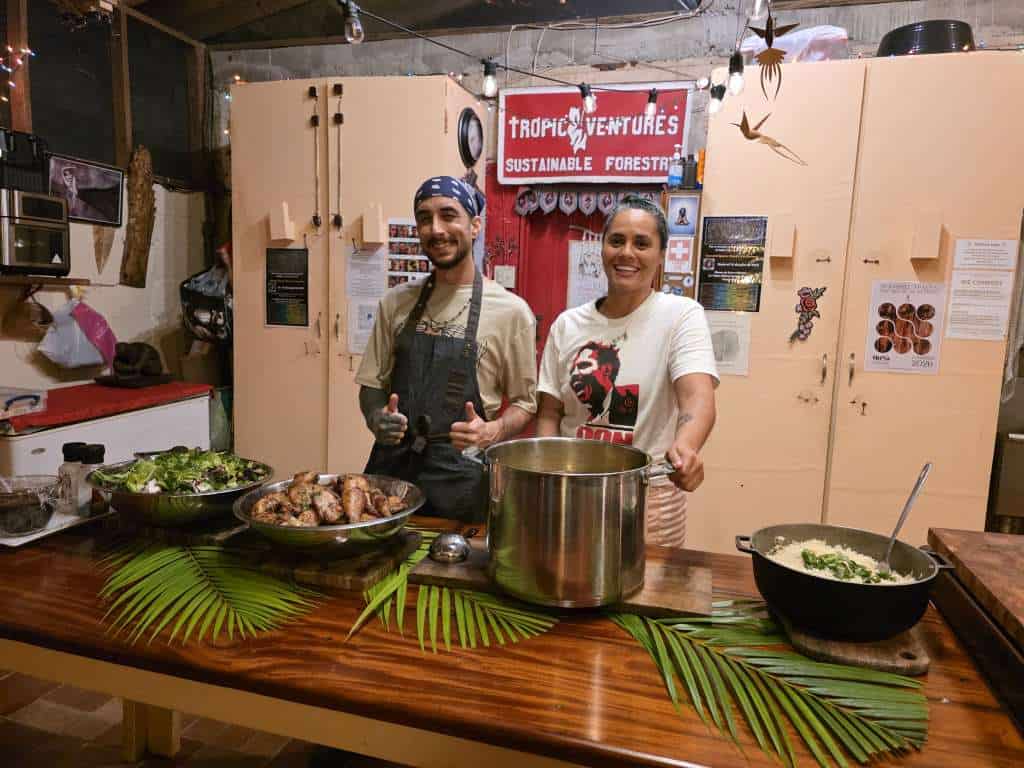
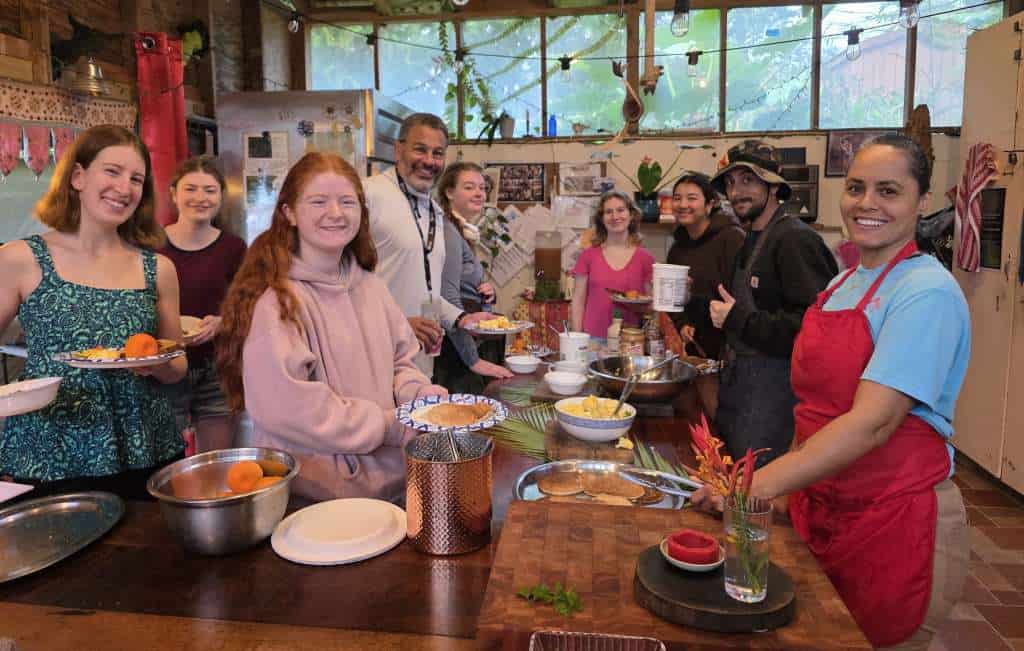
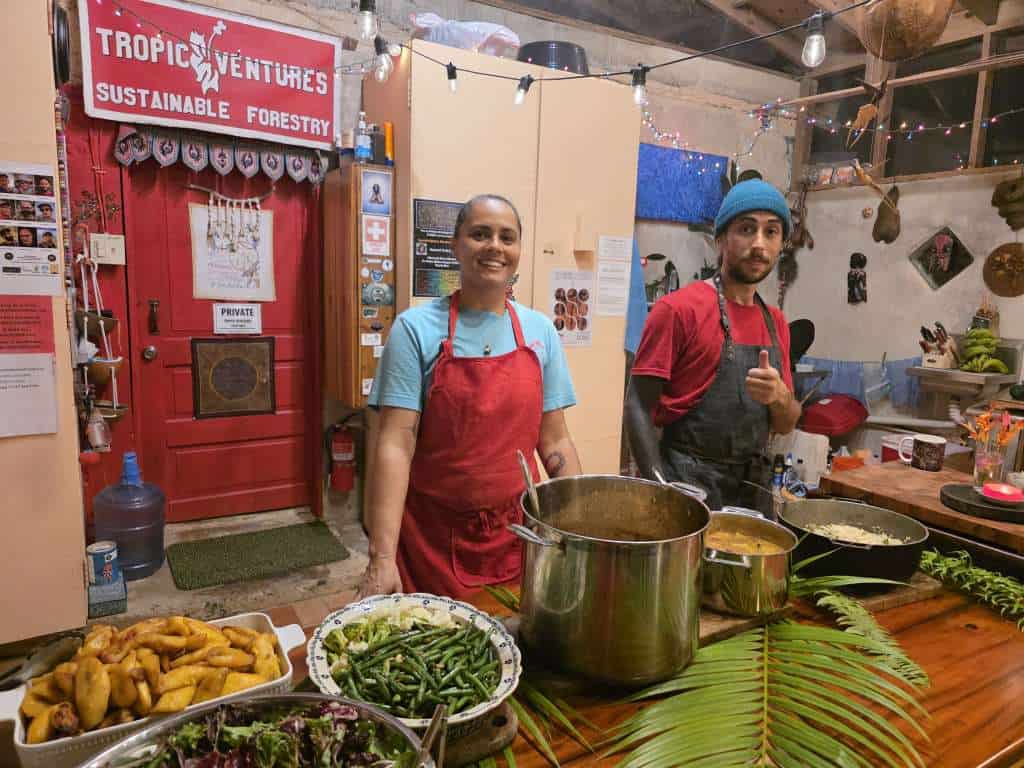
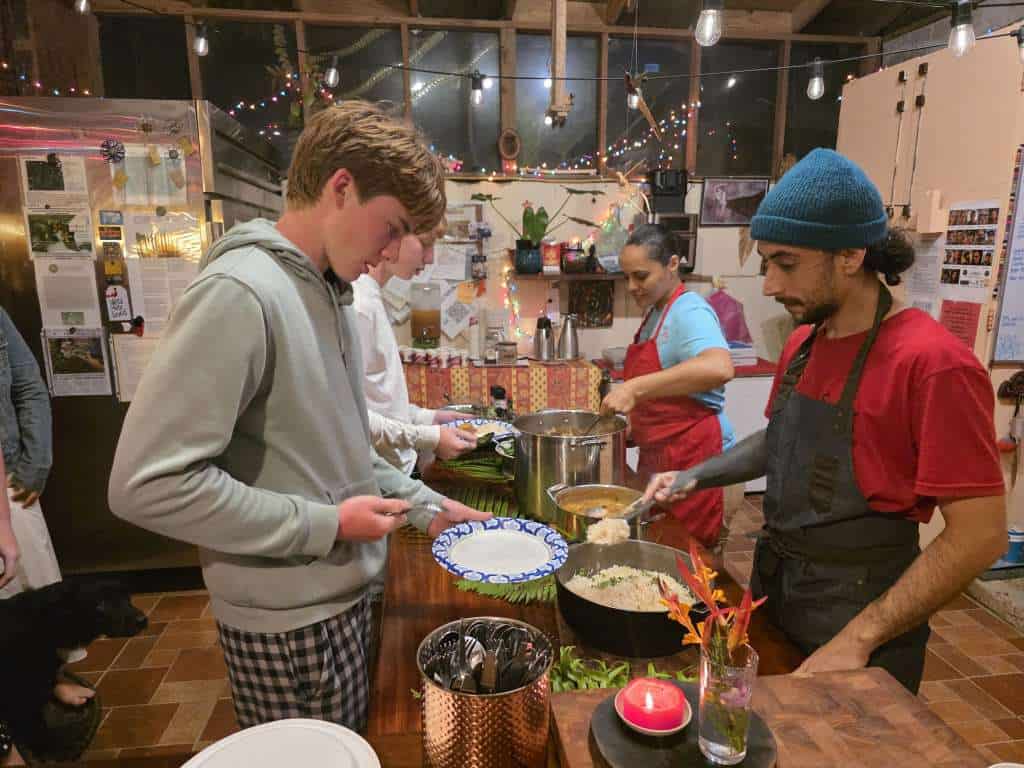
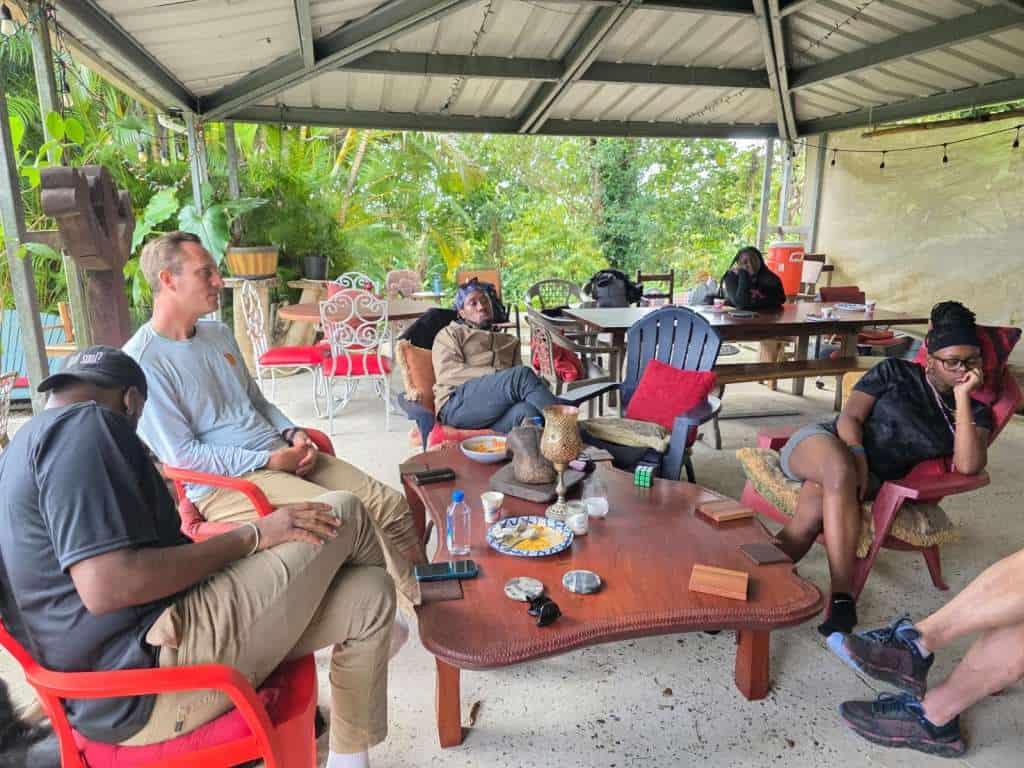
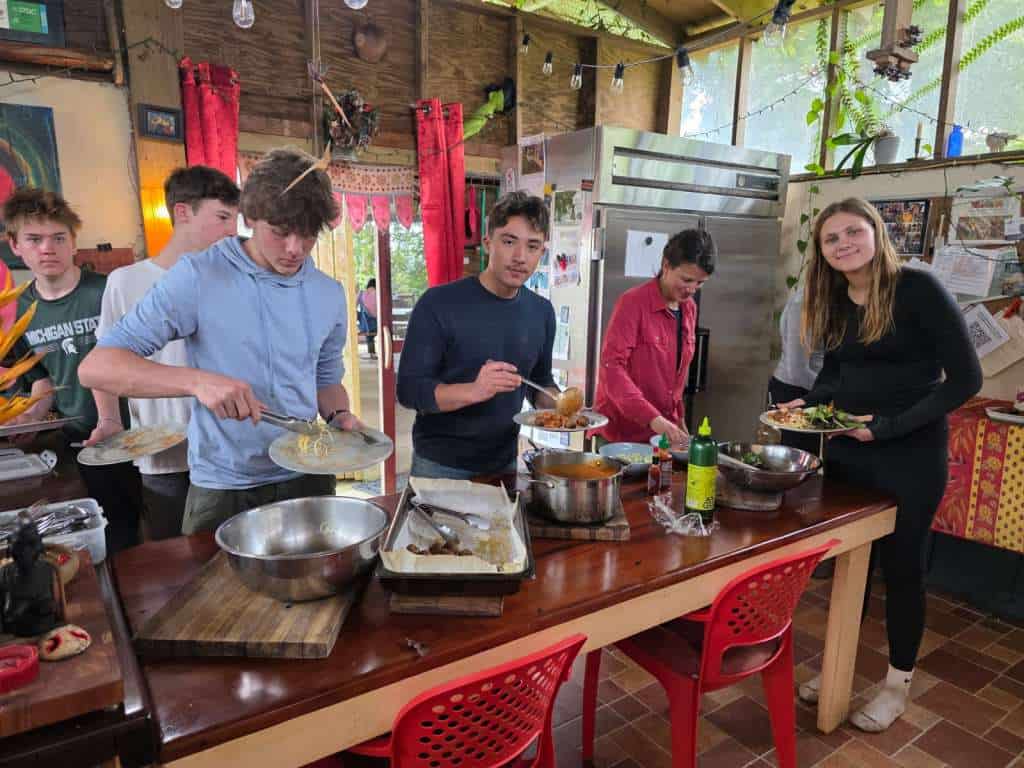
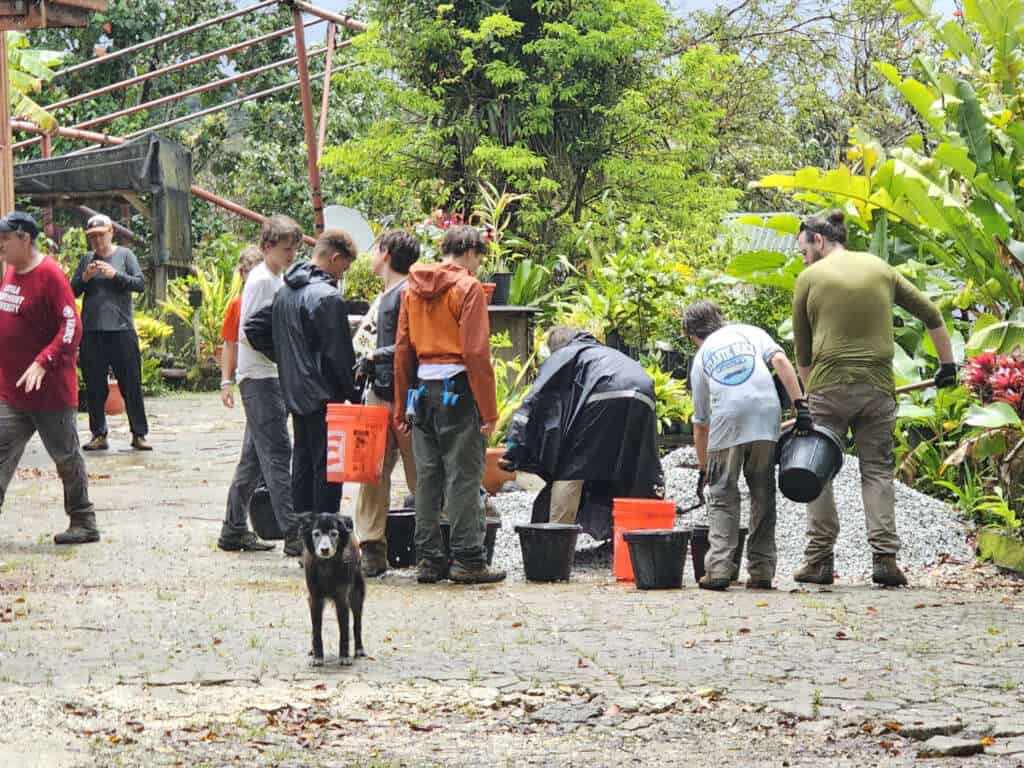
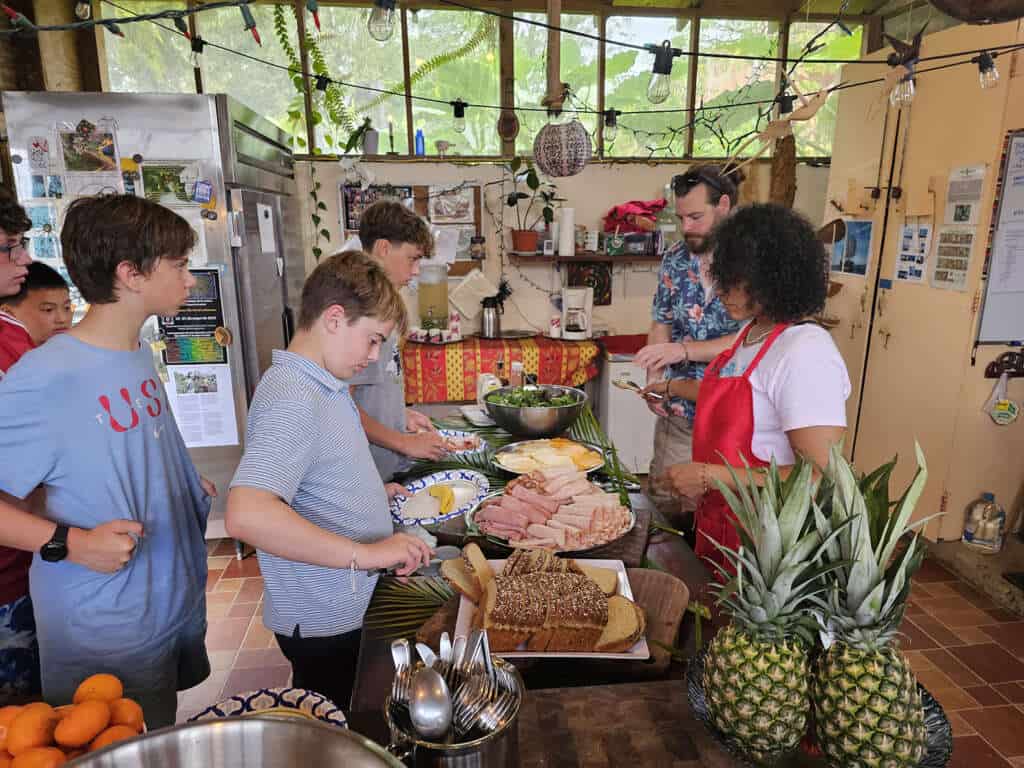
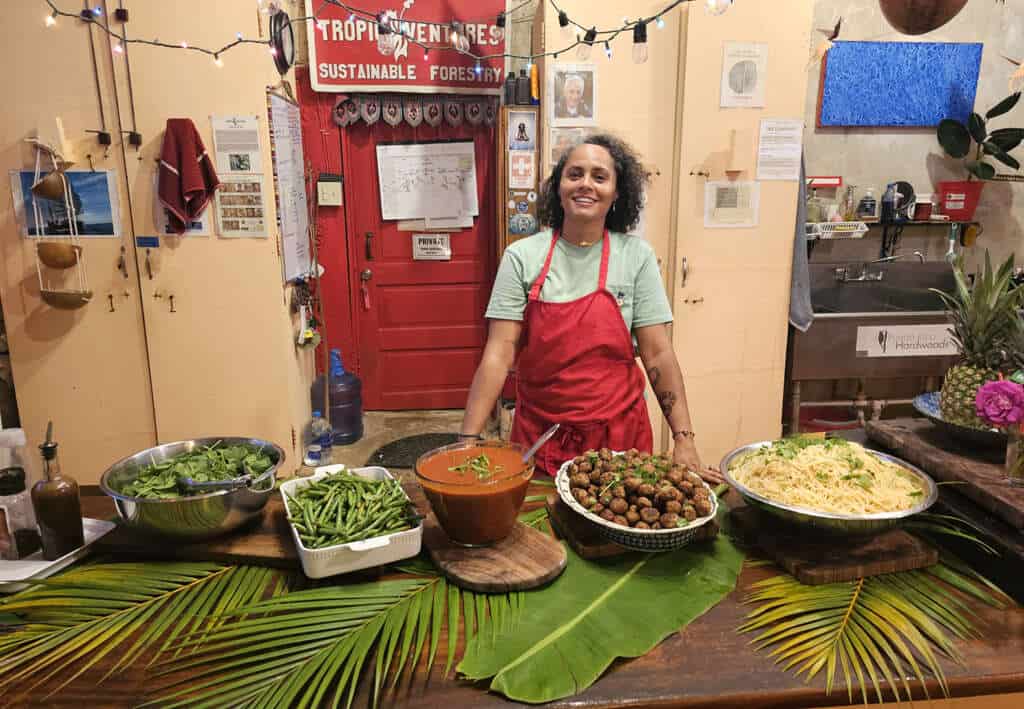
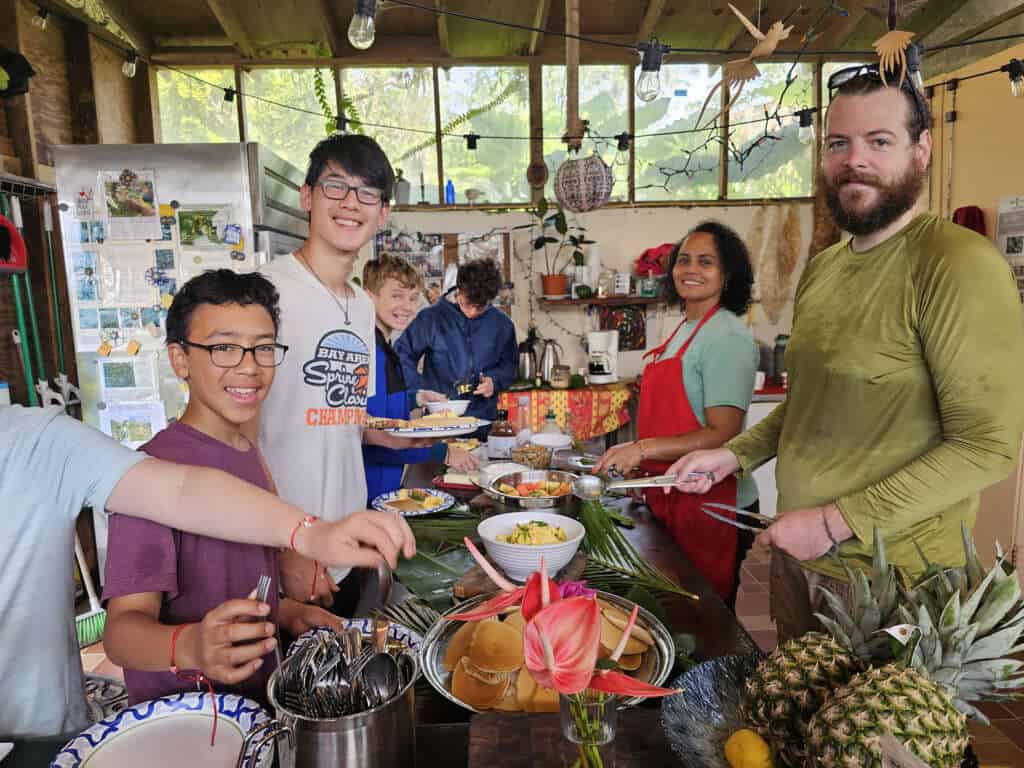
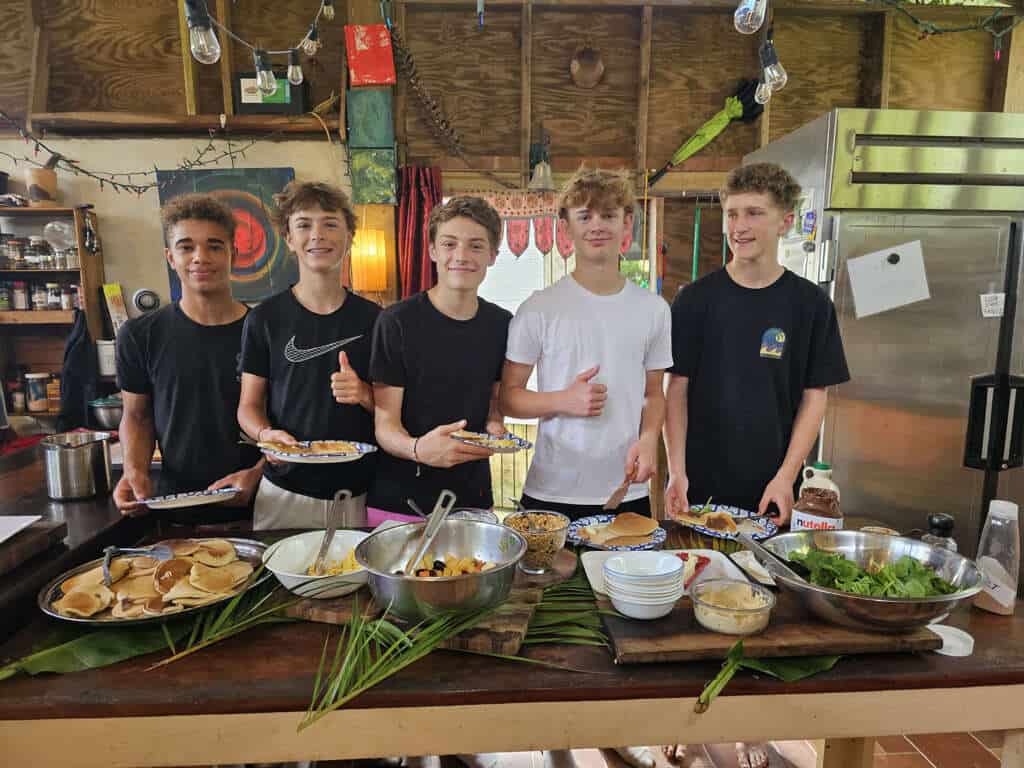
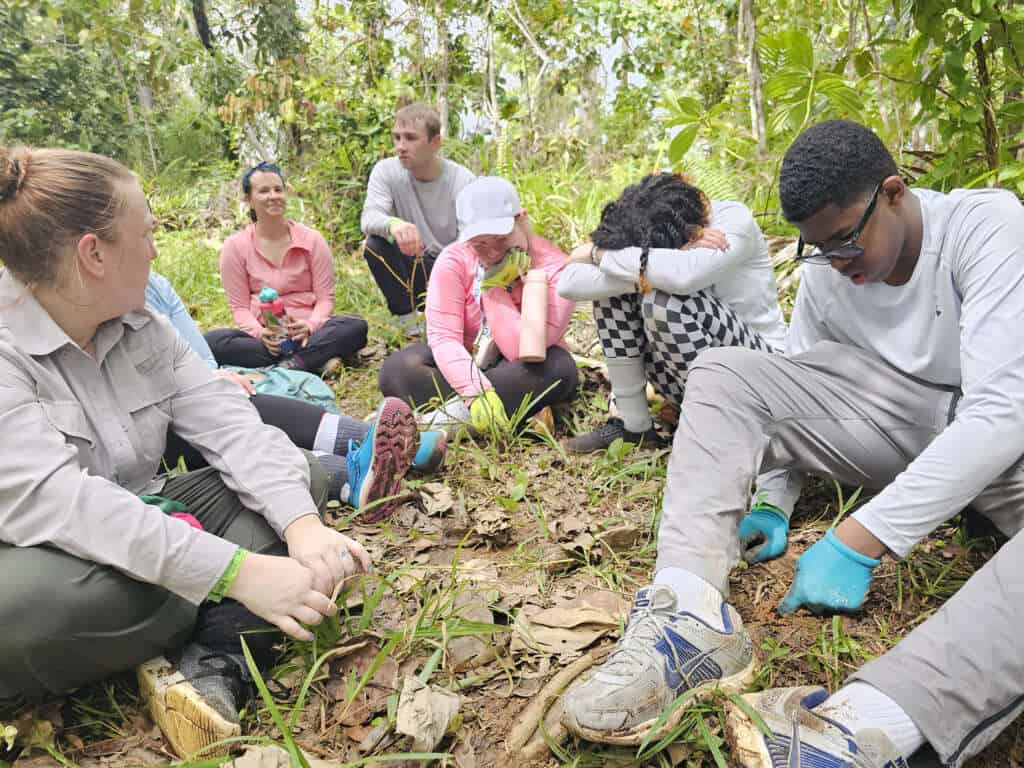
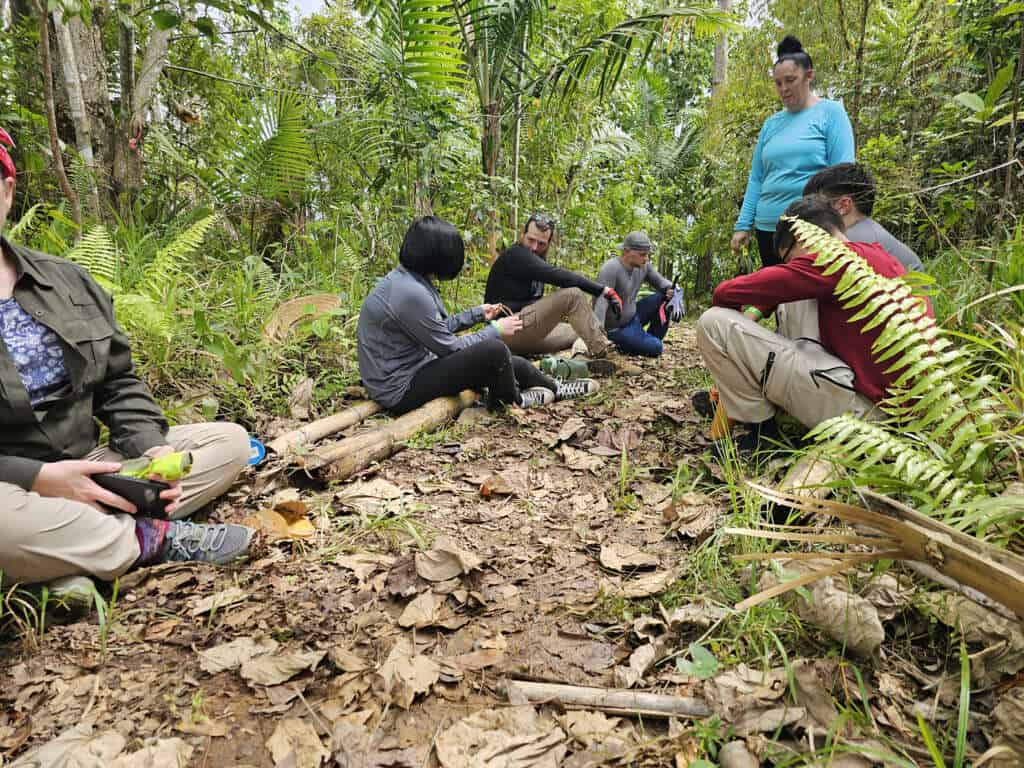
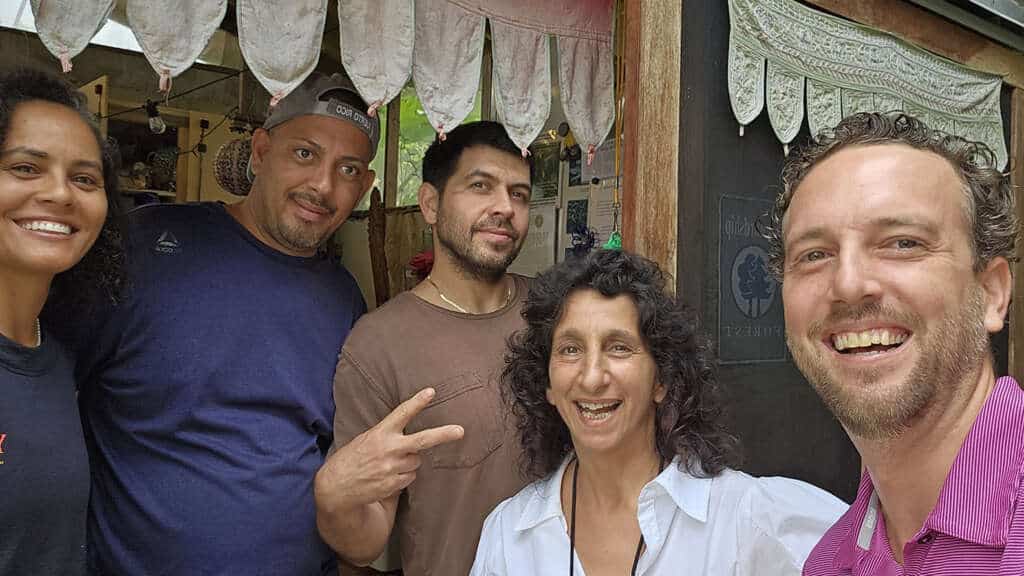
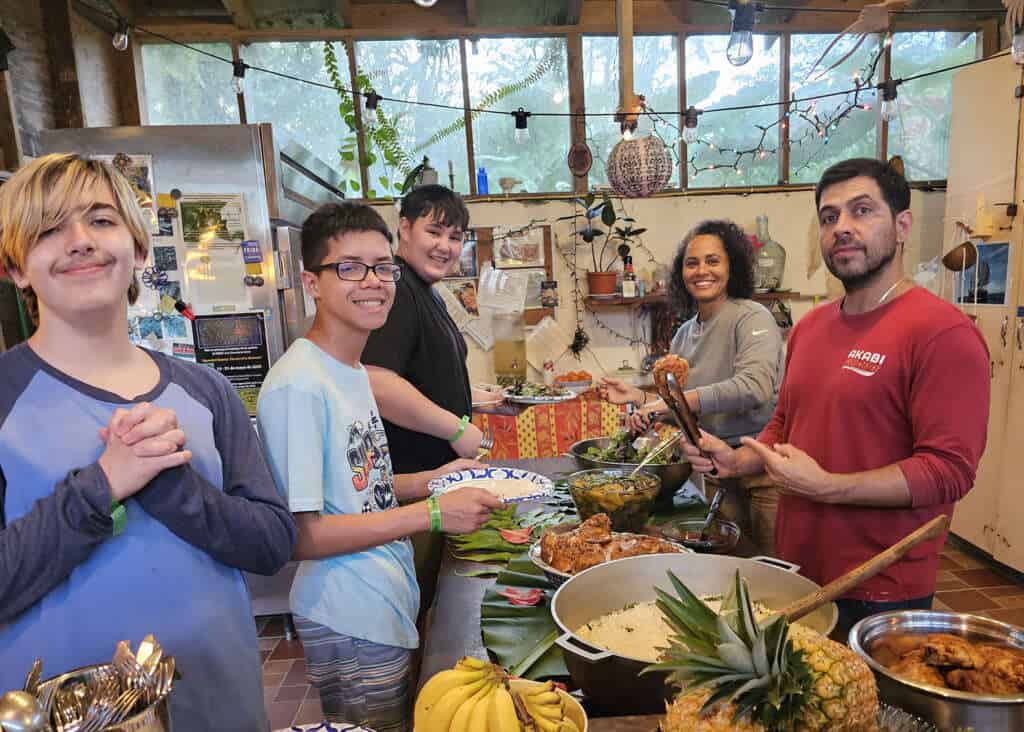
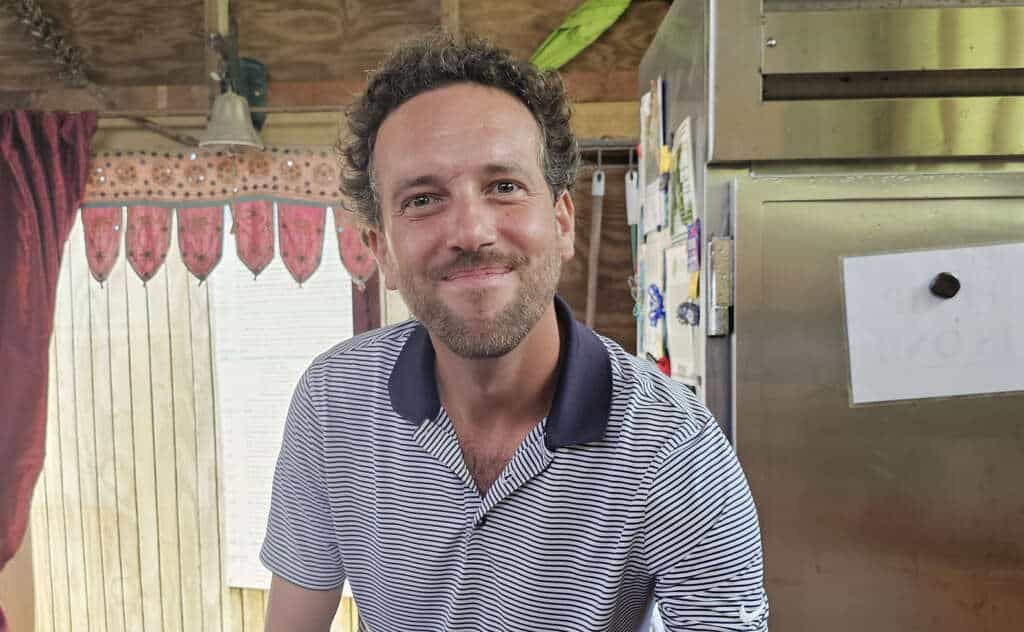
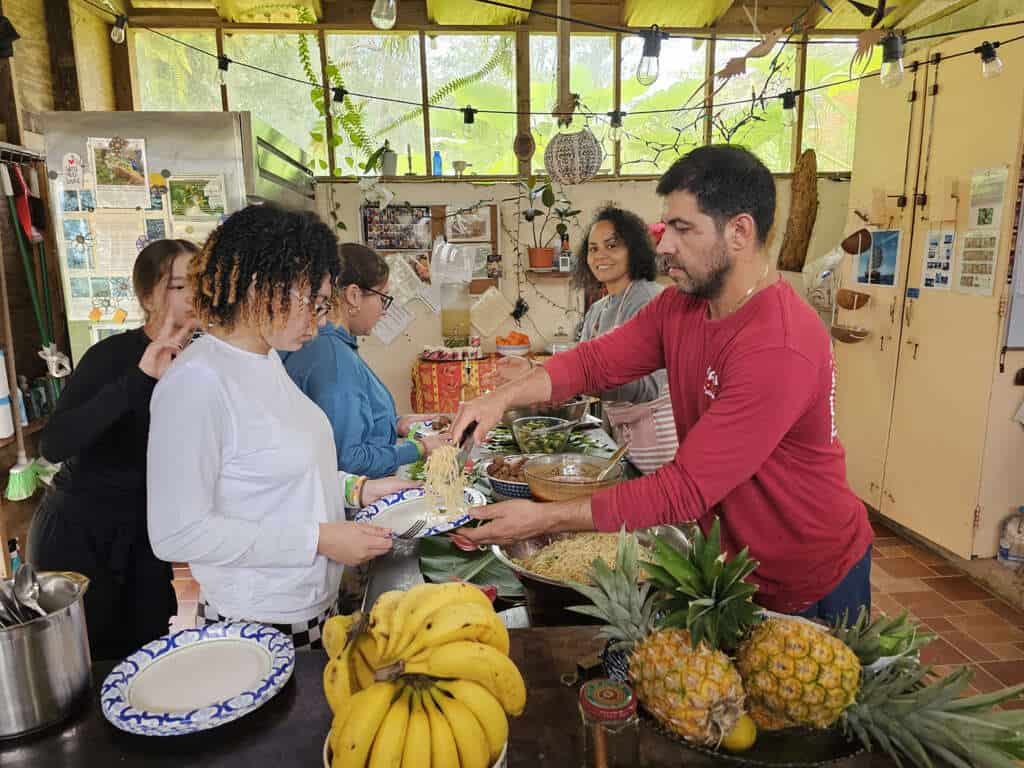
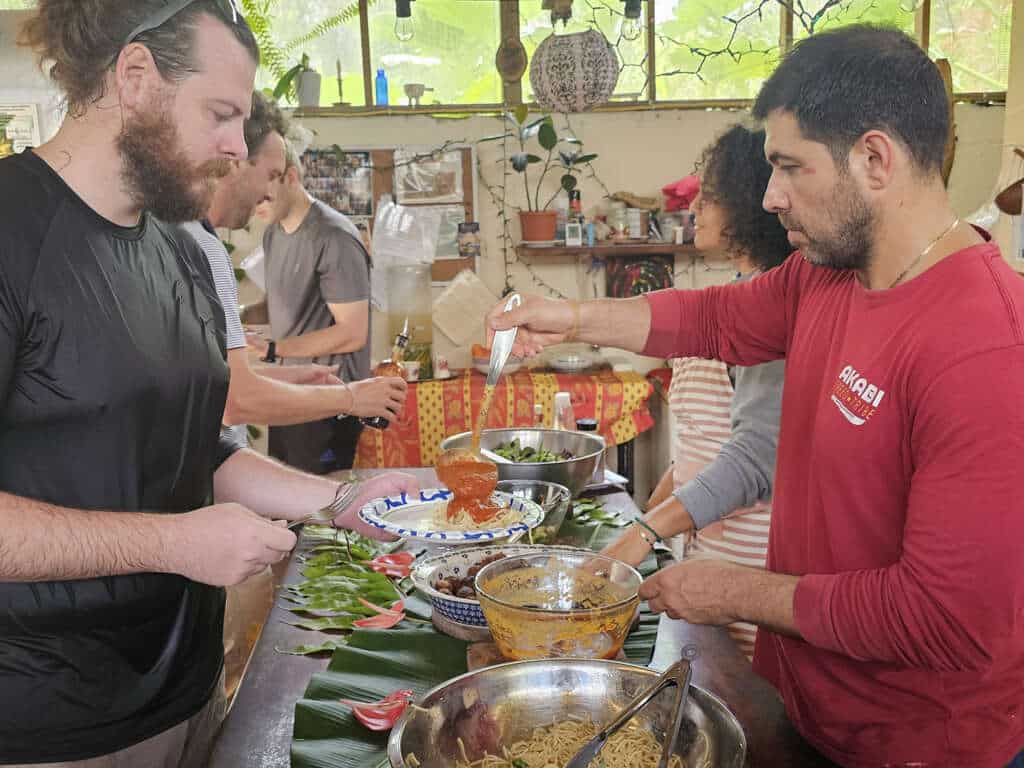
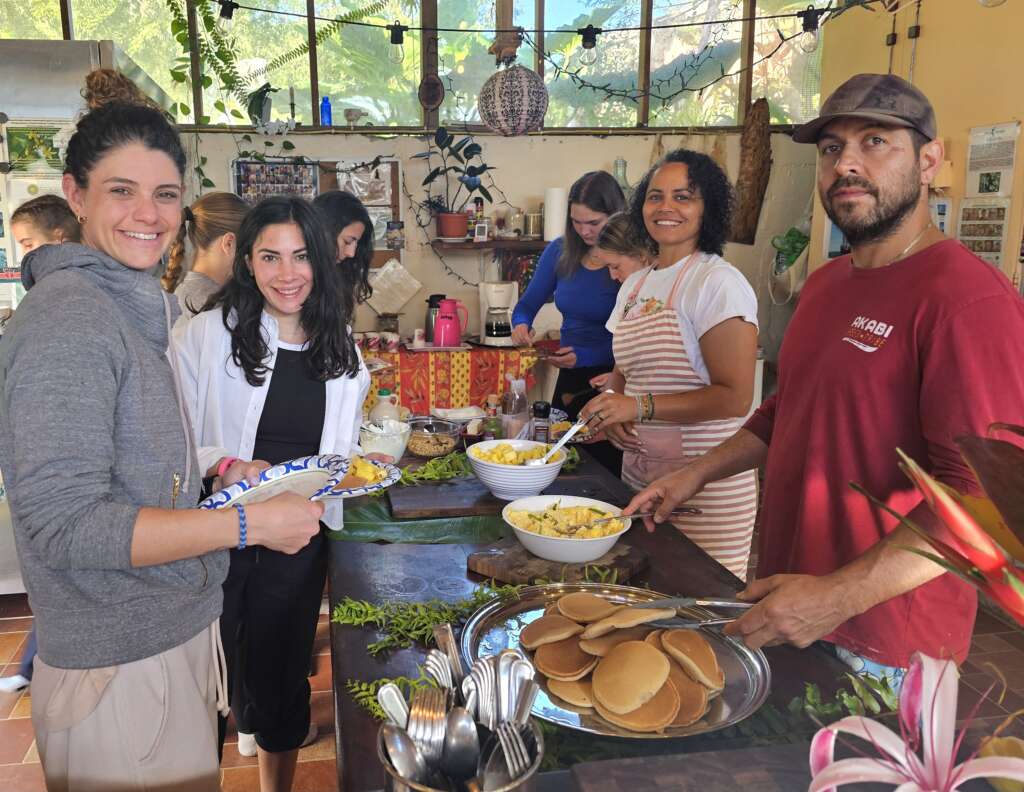
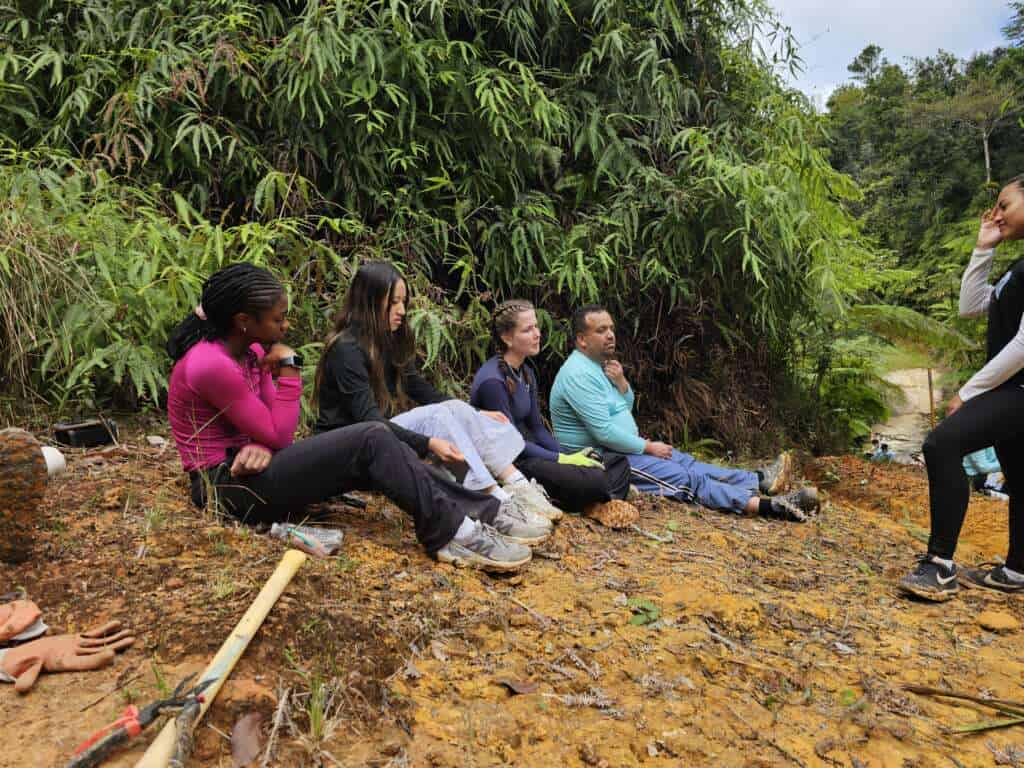
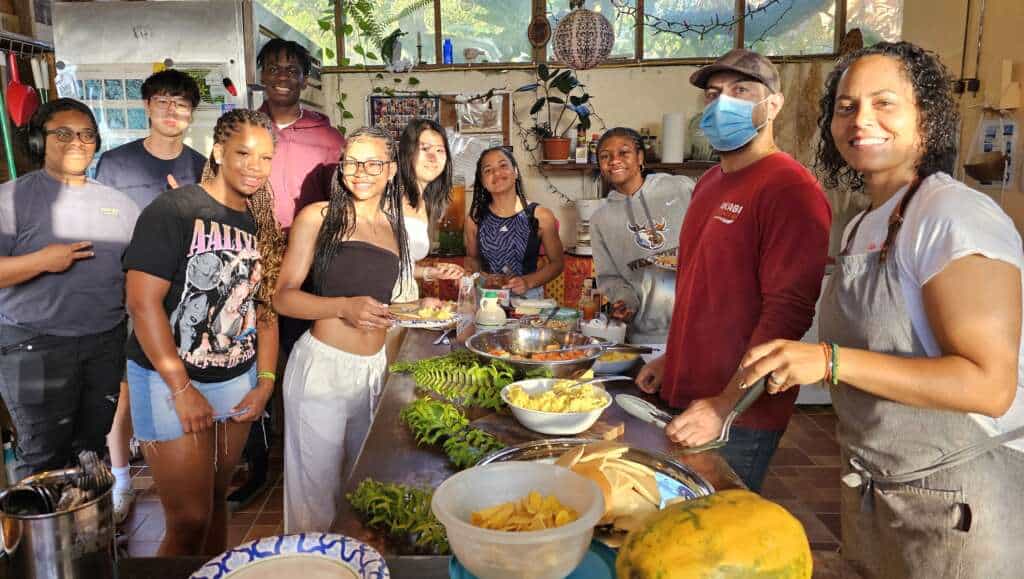
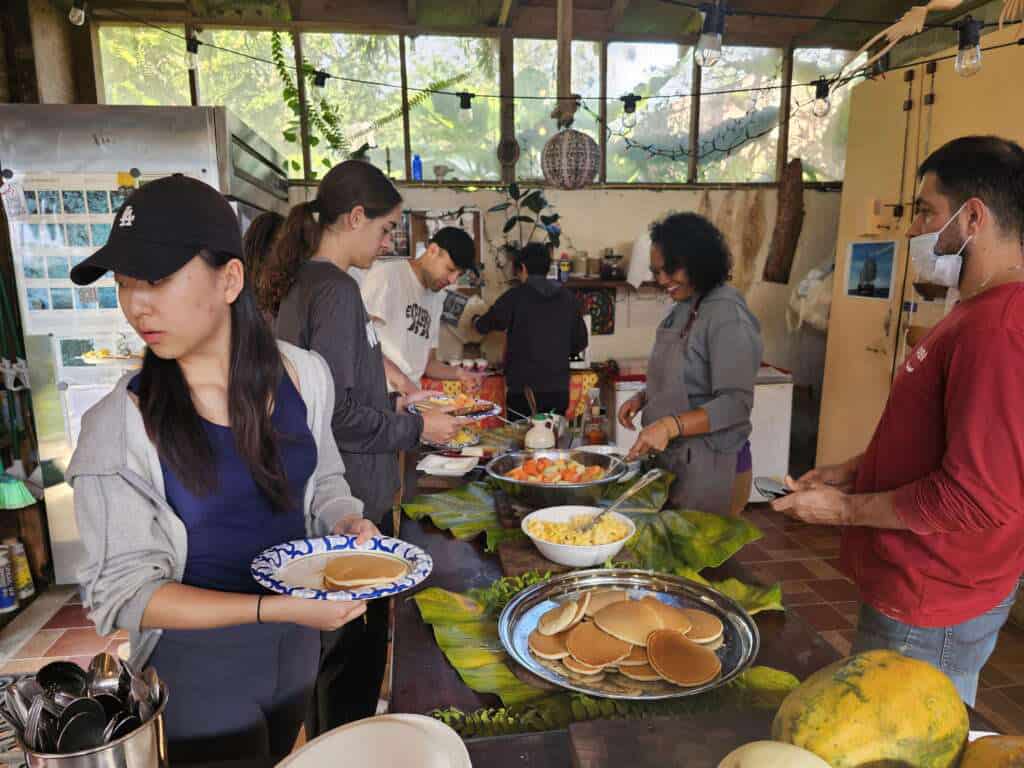
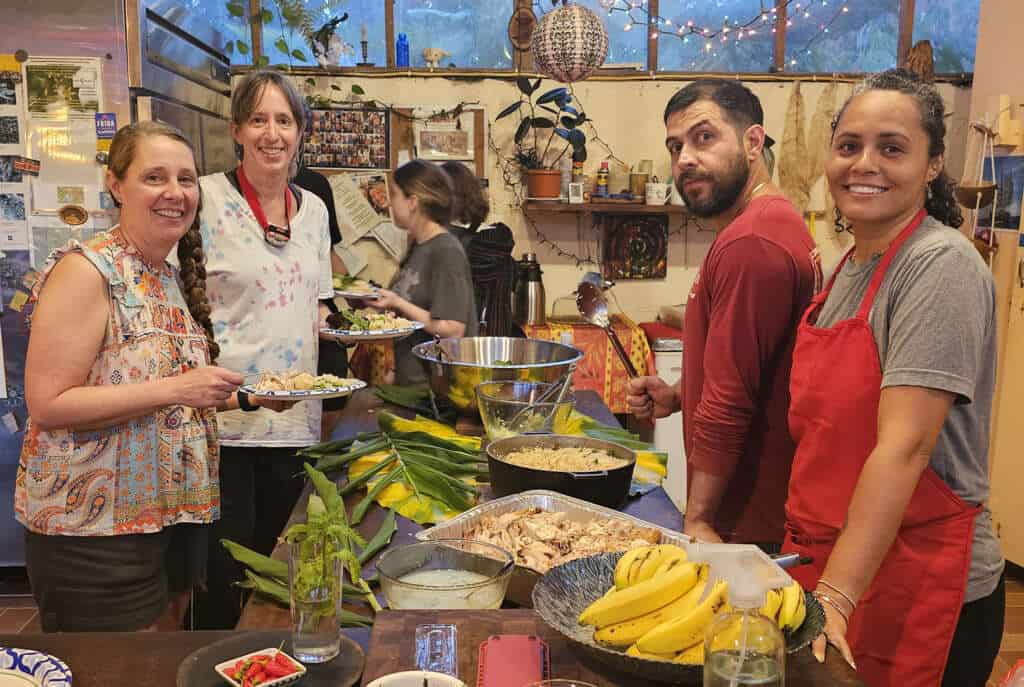
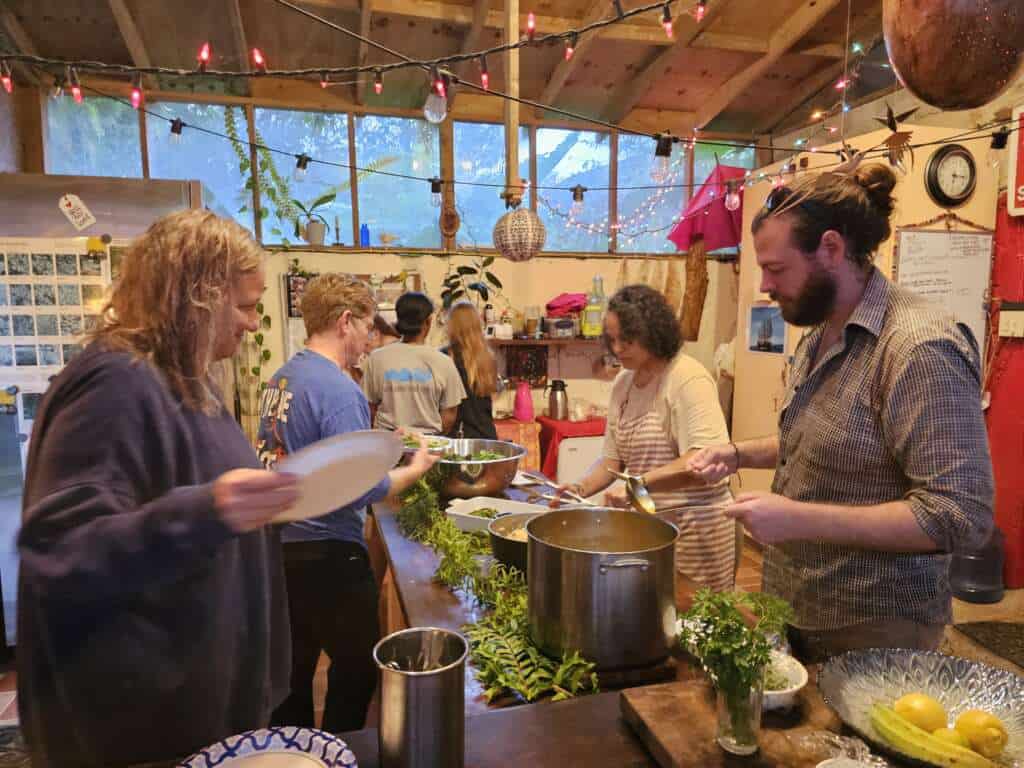
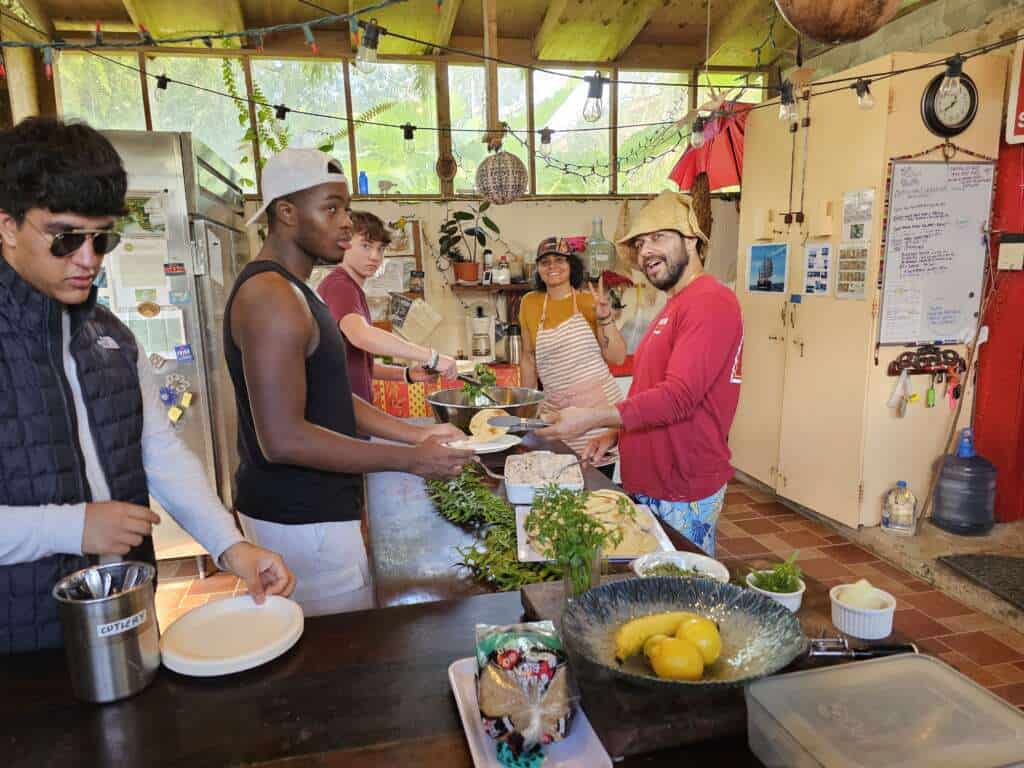
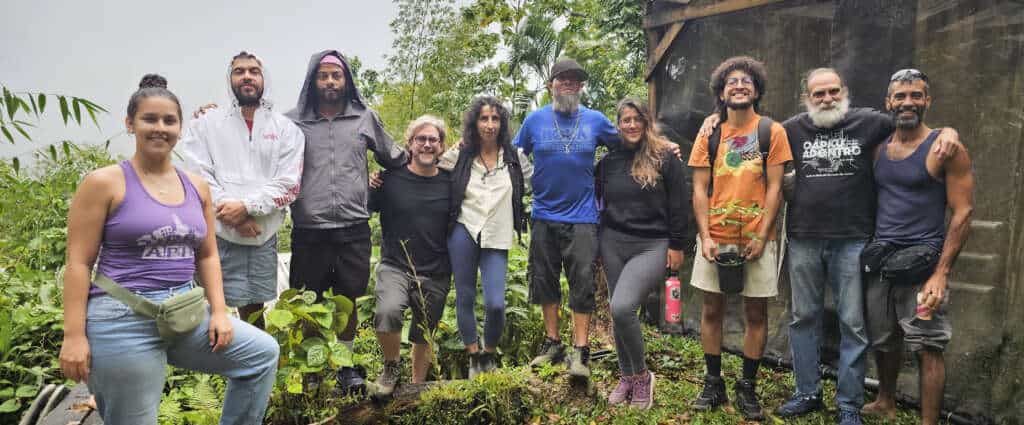
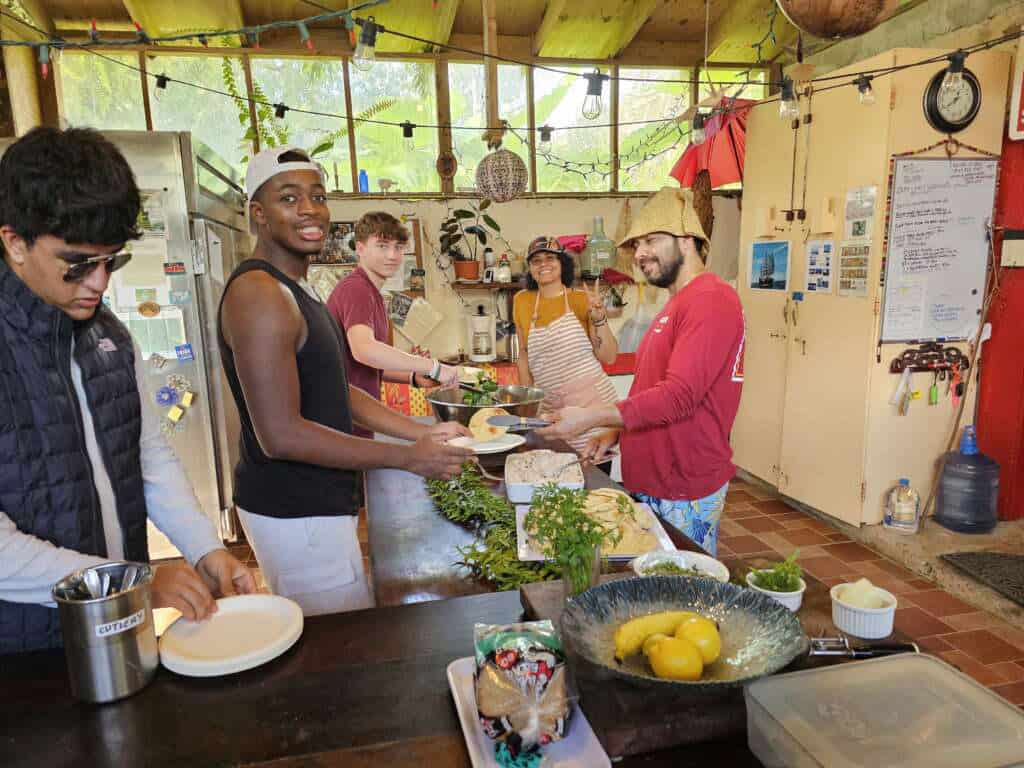
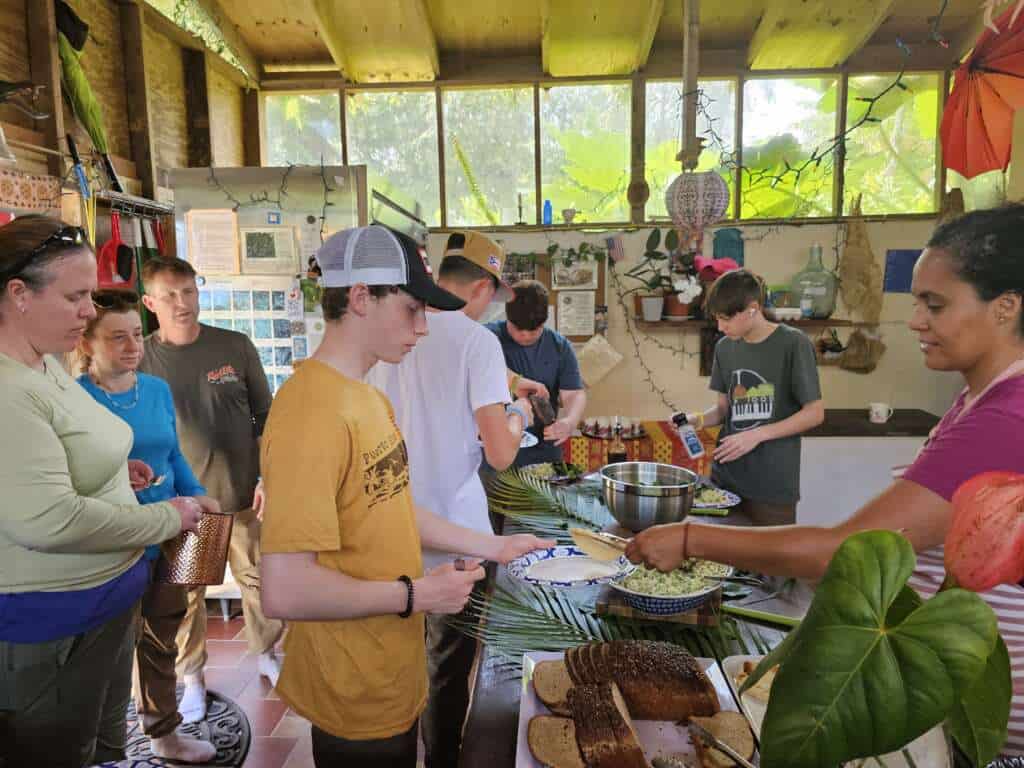
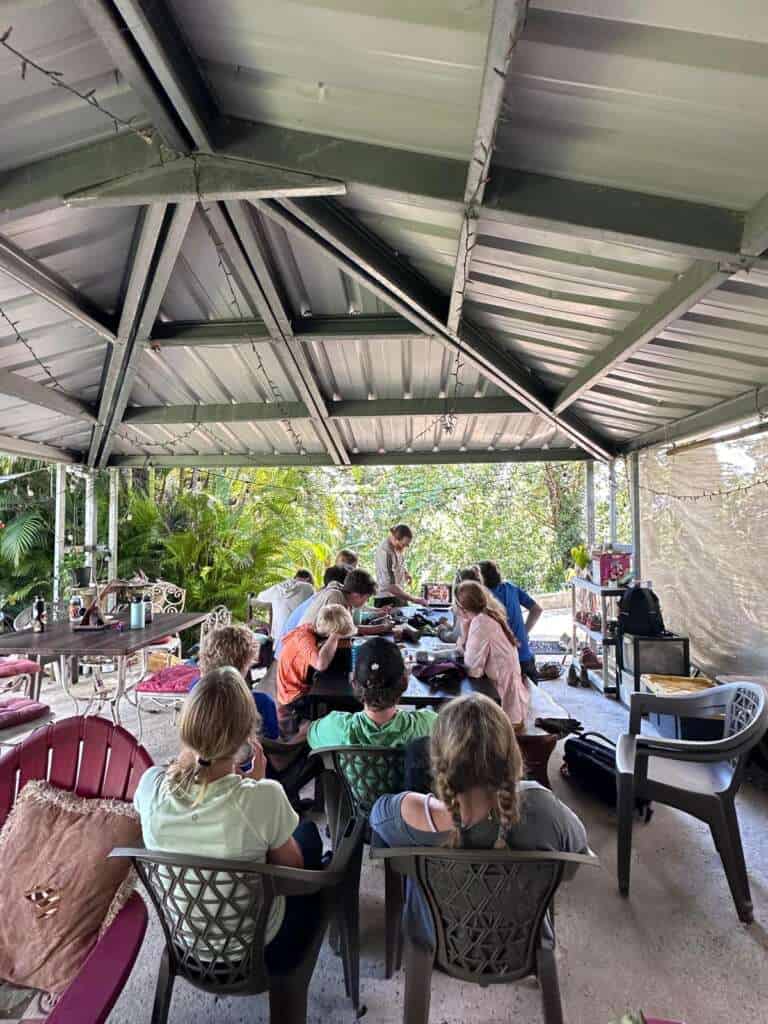
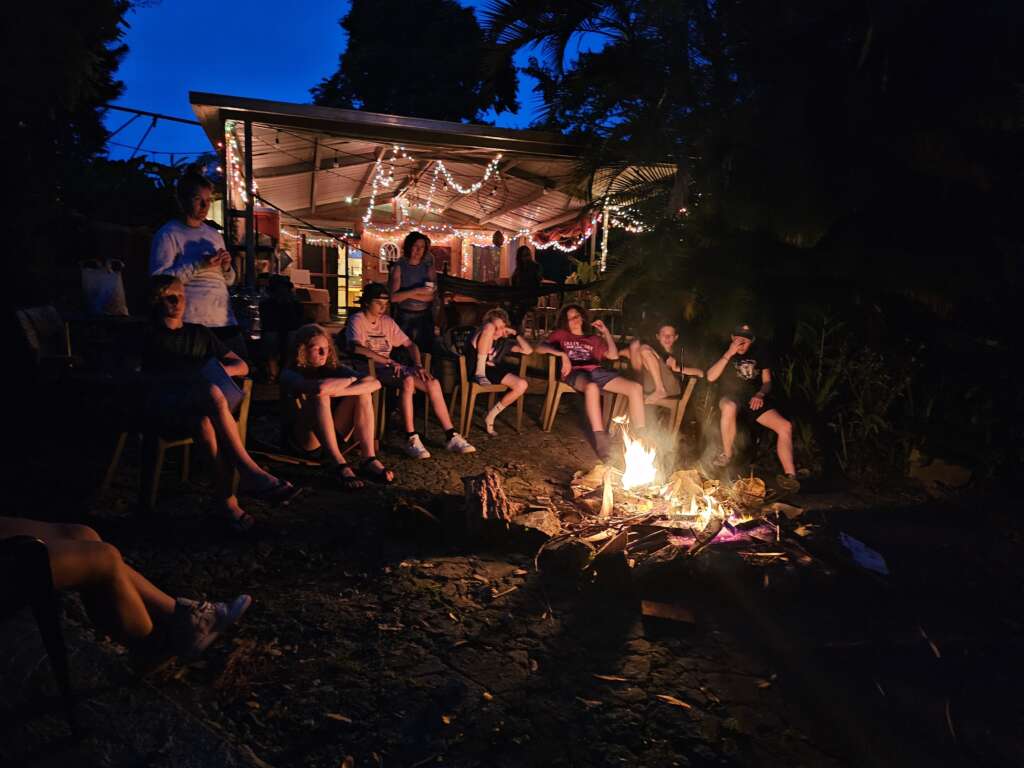
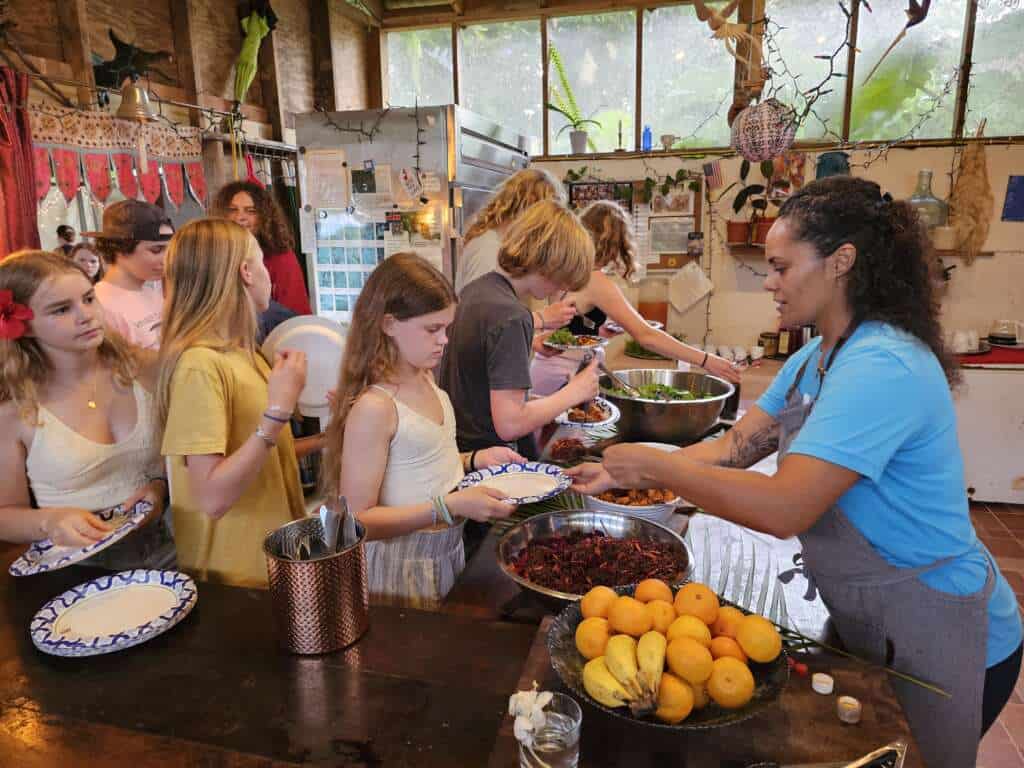
Our neighbor Mike Alvarez joined the team once again, as did local teenager Rio Collazo, who returned to lend her energy and enthusiasm to the day’s work. Monique Nieves was once again our chef, keeping the entire team well fed and restoring everyone’s energy after hours of demanding work in the forest. Her delicious food and generous care are always an essential part of these long volunteer days.

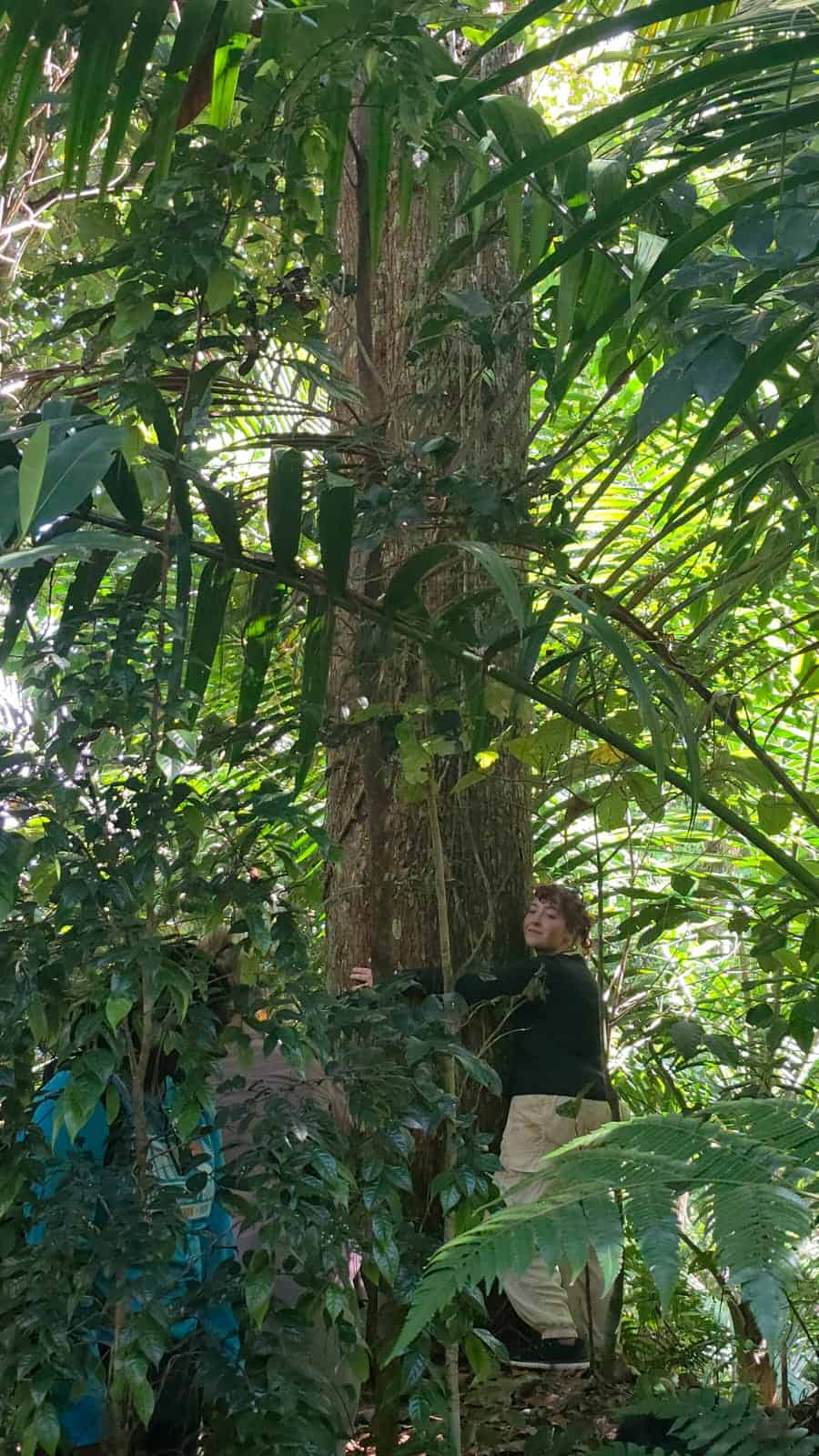
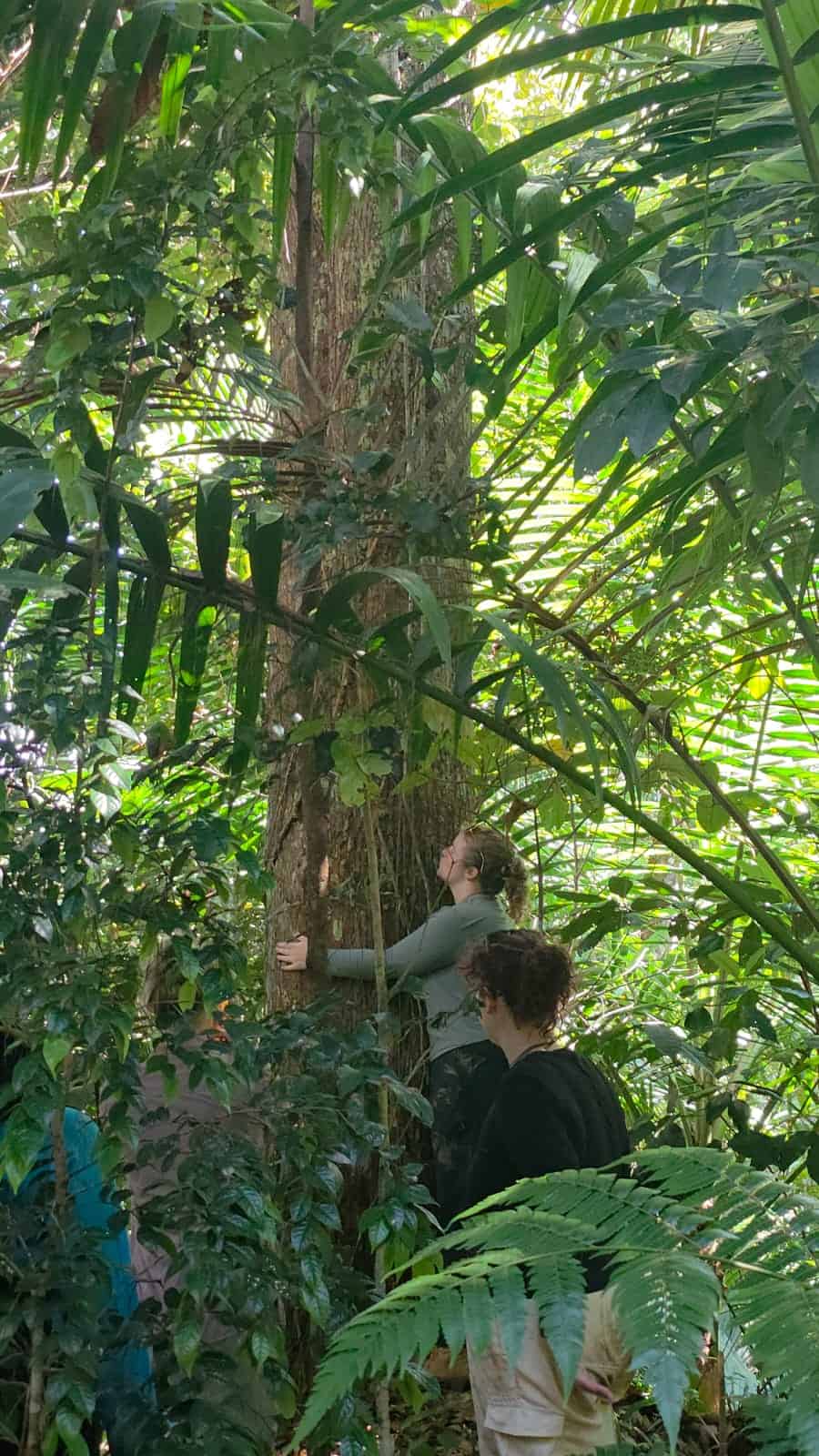
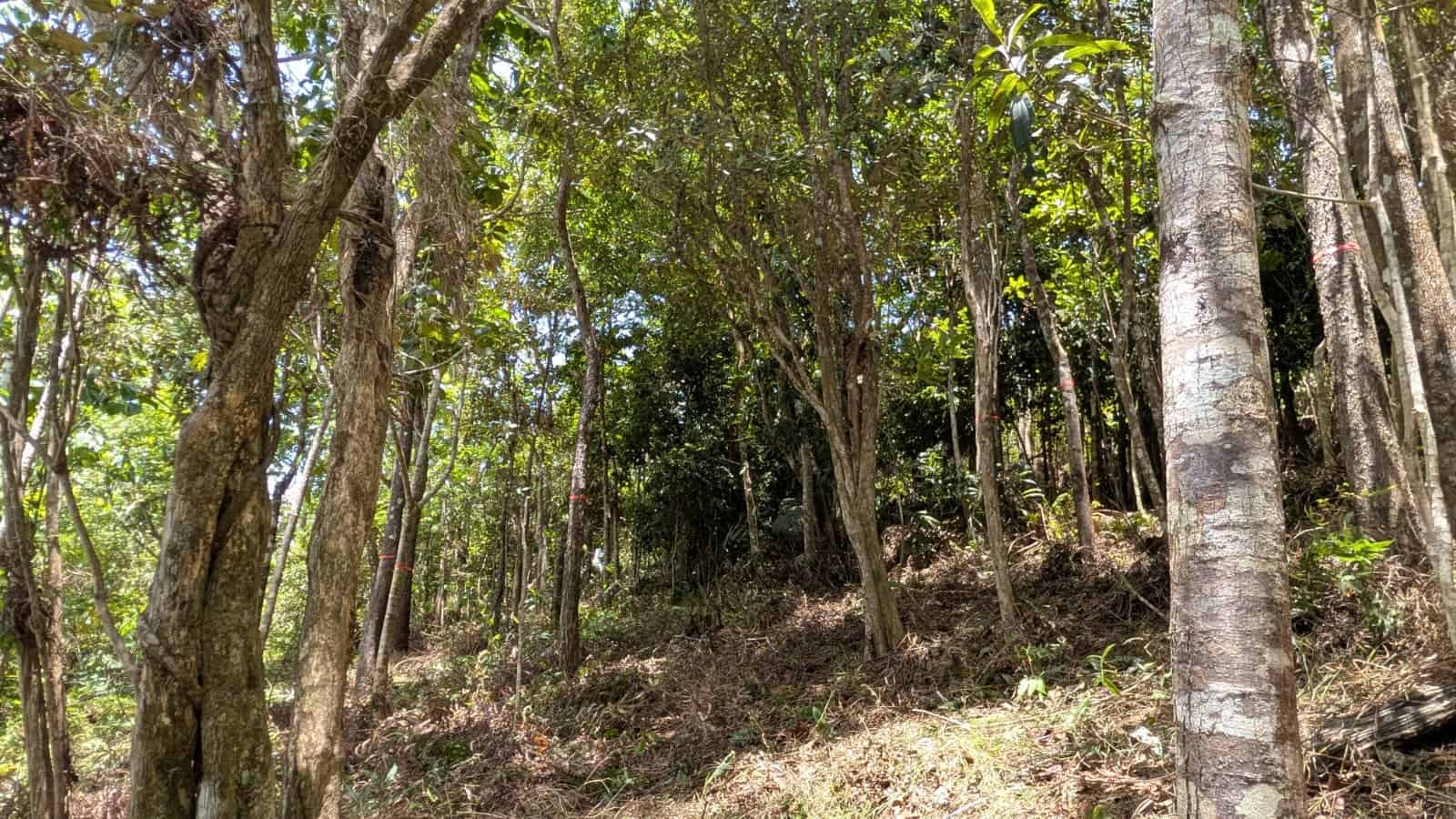
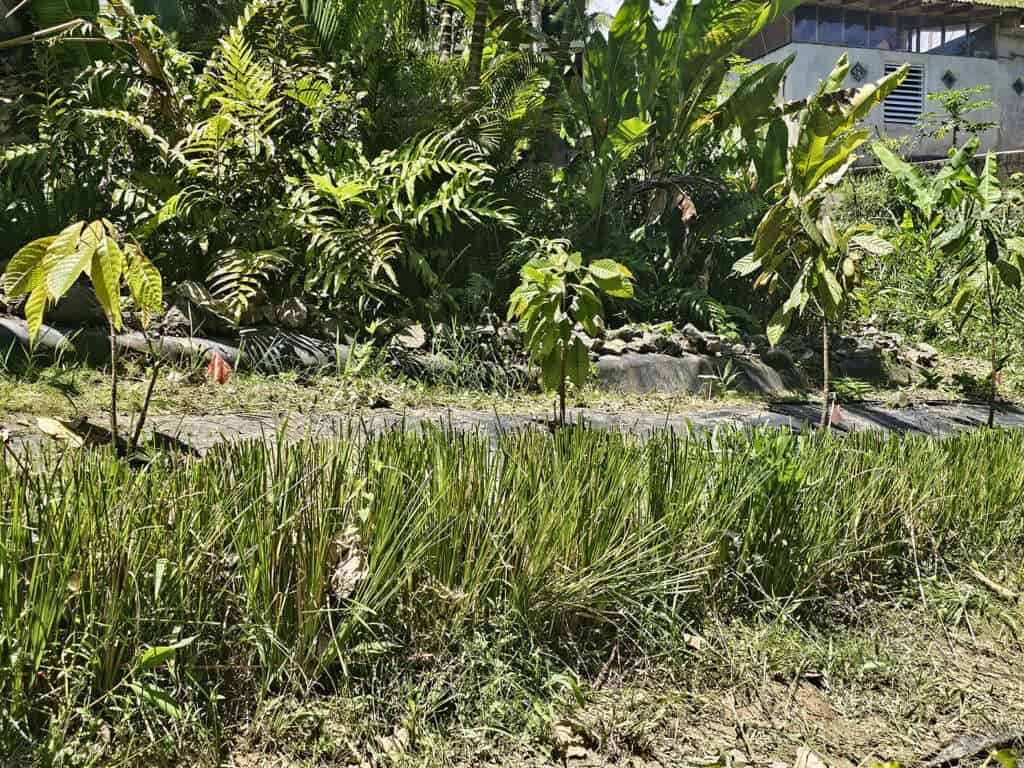
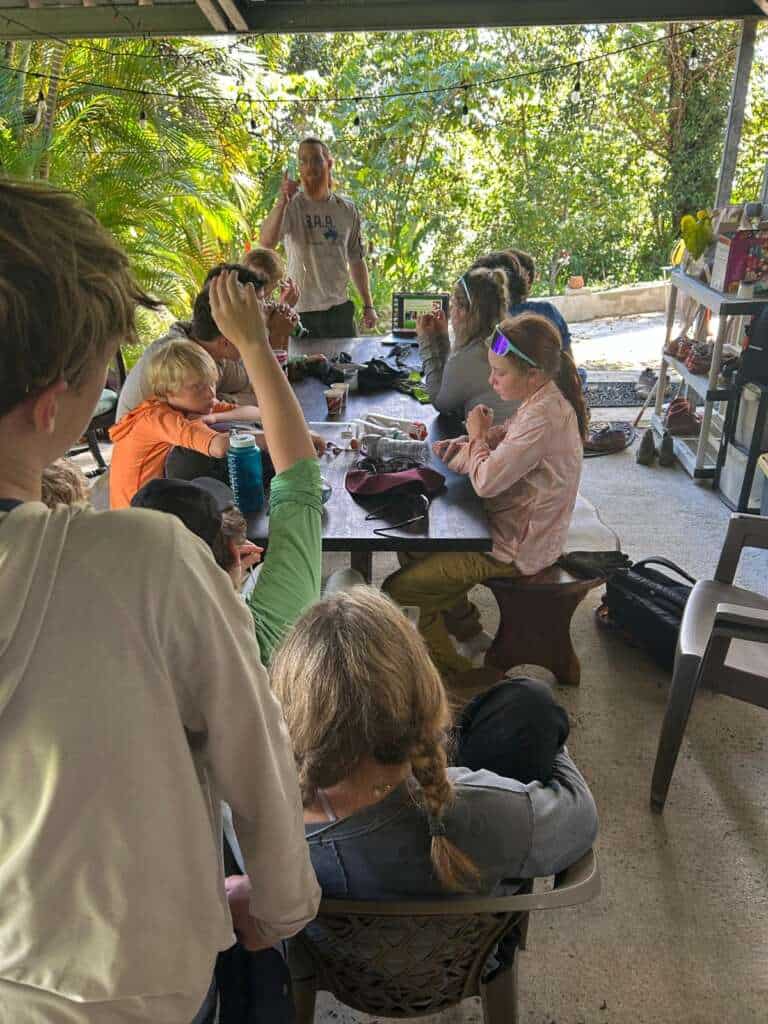
By the end of the day, a whole area was clear. For the first time in years, we could stand back and see the forest. Our planted trees now stood visibly among the naturally regenerating forest. Some had grown tall and straight; others had adapted to storms, competition, and changing light. Around them were ferns, mosses, fungi, young native trees, and the remains of fallen trunks slowly returning to the soil.The work did more than make the area look clearer.

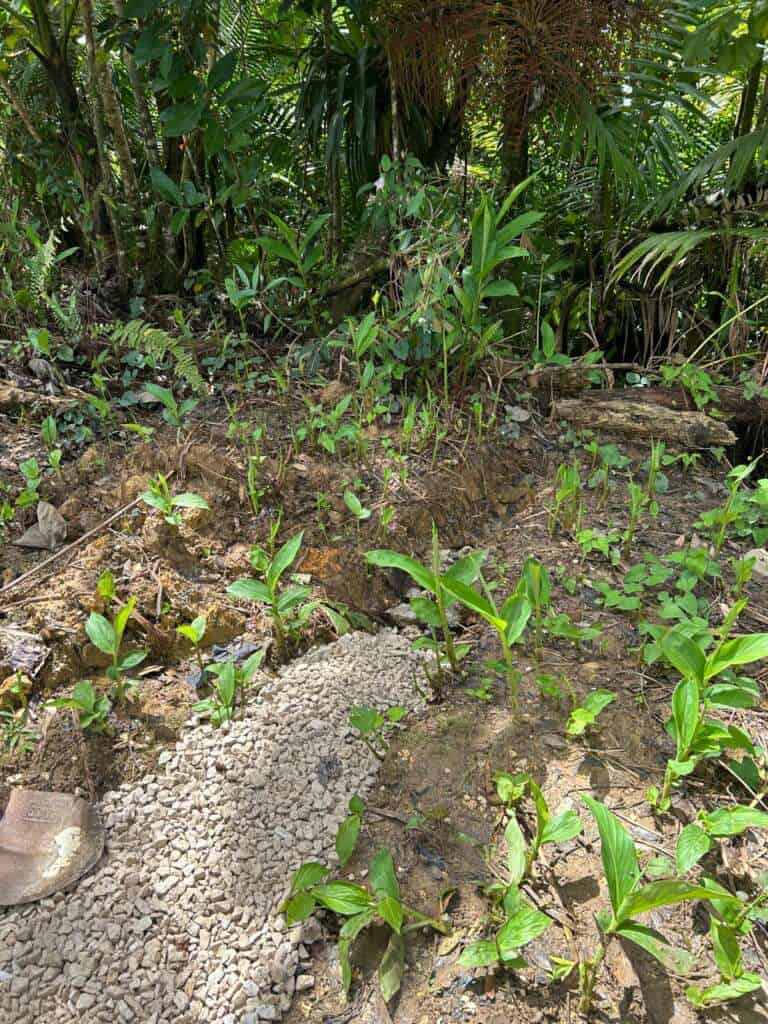
Removing the dense grass and vines gave us access to inspect the planted trees, monitor their condition, and identify where future stewardship will be needed. It also reopened space for the forest canopy to continue closing over the site. As shade increases, the sun-loving razor grass should gradually lose some of its advantage.

There was something deeply satisfying about seeing this progression across two Global Works teams. The first group made the breakthrough and brought us back to the trees. The second carried the work forward, expanding the opening until a hidden plantation became a visible forest once again.The teenagers may have arrived seeing a hillside covered in difficult vegetation.

By the end of the day, they could see the result of their collective effort: a real and dramatic transformation.This is how long-term forest stewardship happens. One tree is planted. Years pass. Storms intervene. Trails disappear. Then many hands return—cutting, clearing, observing, and caring—and another chapter in the life of the forest begins.The razor grass had hidden this place for years. Now, at last, we can see the forest beyond it.

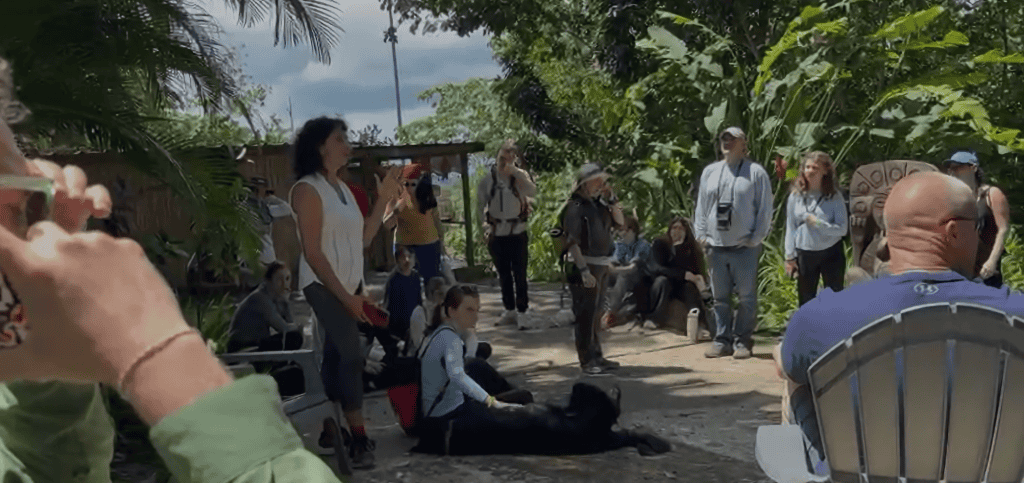
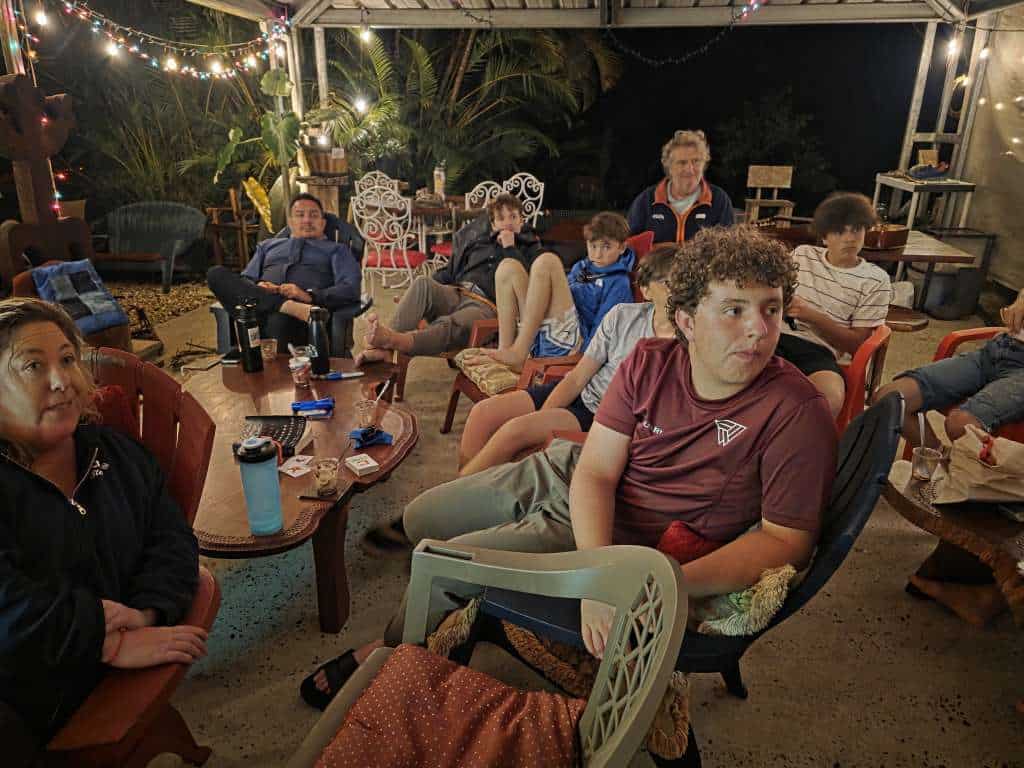
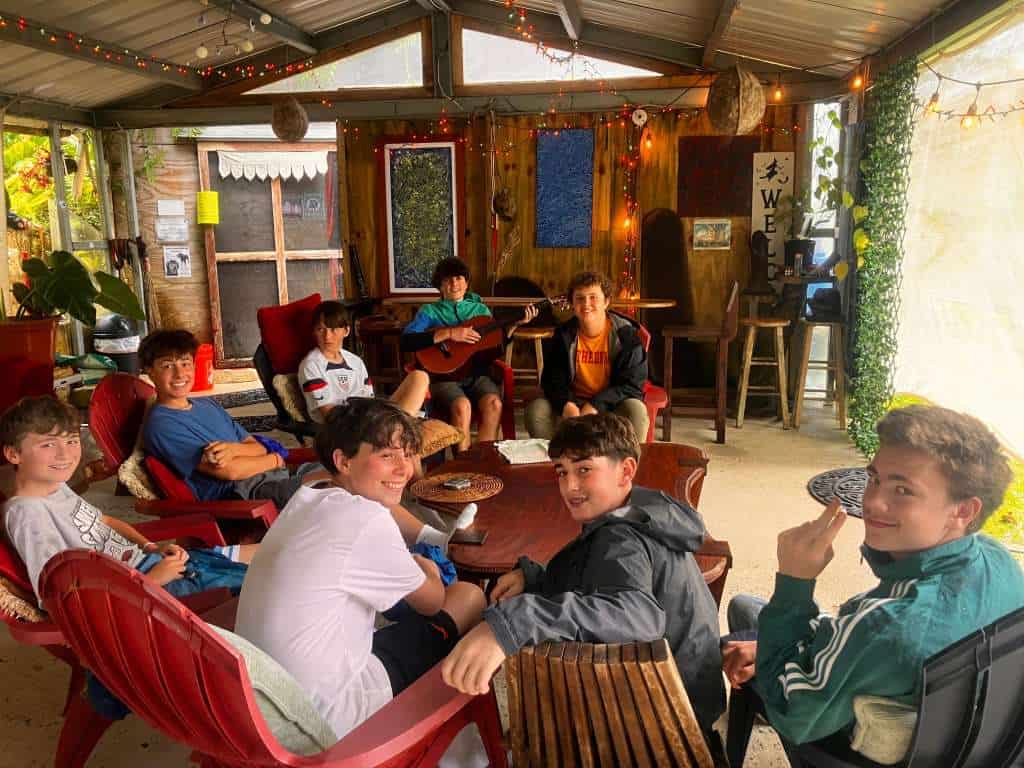
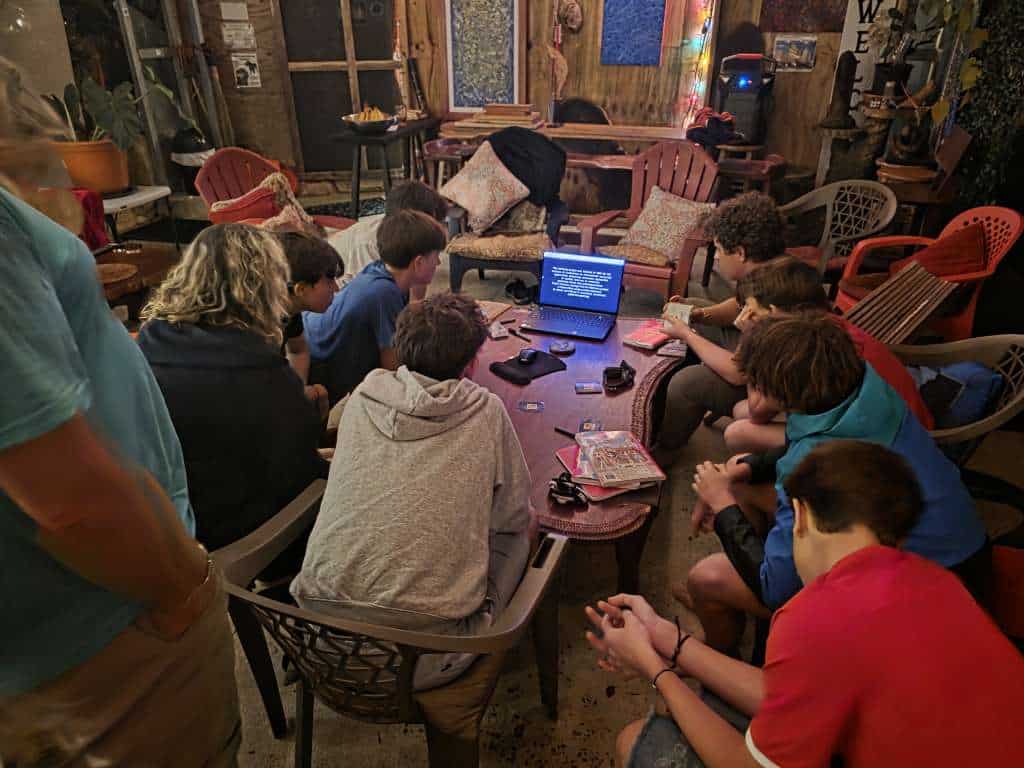
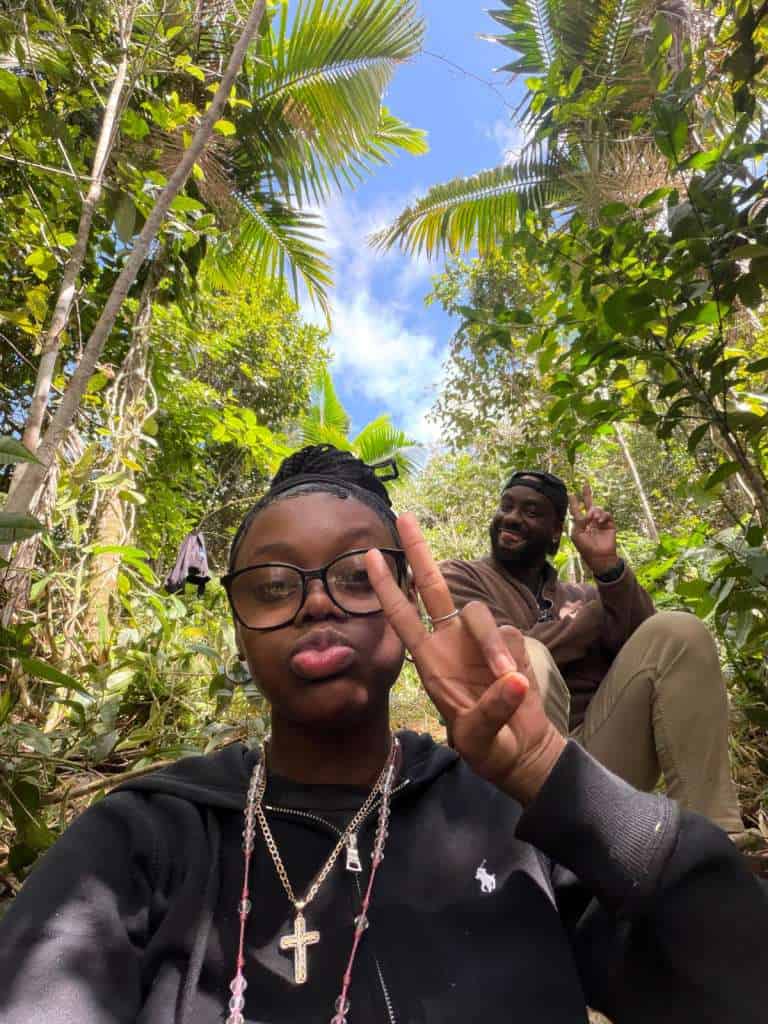
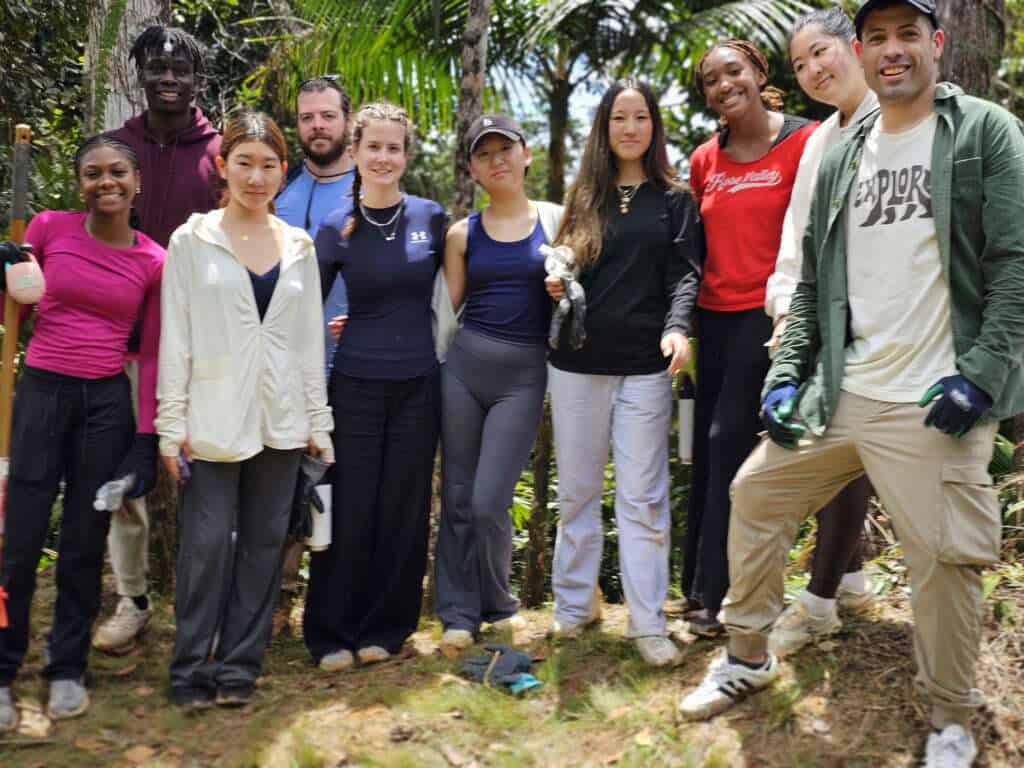
Photos by Mike Alvarez and 3t Vakil, 11 July 2026

Globalworks Teen Team: Beyond the razor grass! 29th June 2026

Beyond the Razor grass: a reunion in the rainforest

There are places in the forest that become almost mythical. You know they are there. You remember planting the trees, carrying saplings carefully on slopes, and imagining what the forest might look like years into the future. But then time, storms, and circumstance create barriers, and those places slip beyond reach.

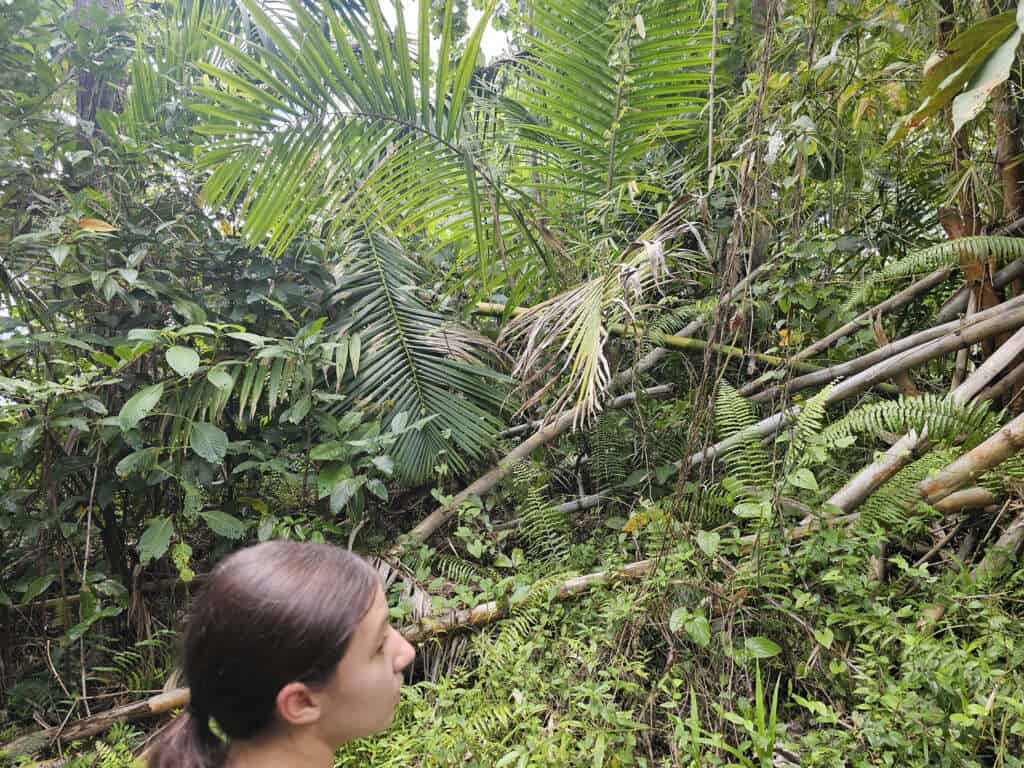
One such place exists at Las Casas de la Selva. Following Hurricane Maria, the forest changed dramatically. Vast areas lost much of their canopy, and suddenly sunlight poured onto the forest floor. Nature, of course, does not leave empty spaces unoccupied for long. A profusion of sun-loving plants surged upward, among them one of our most formidable adversaries: razor grass.

Razor grass (Scleria secans), is aptly named. Its leaves are sharp enough to cut exposed skin, and it forms dense, tangled masses that can become nearly impenetrable. Along with other vigorous grasses and vines, it quickly reclaimed the disturbed areas of the forest. Trails vanished. Landmarks disappeared. Slopes we had once visited regularly became hidden behind walls of green.

One of these lost places was a hillside which had been planted with Ausubo, Mahogany and Blue Mahoe back in the late 80s and where, in my era, we had planted trees in the growing forest in 2000, 2001, 2007, 2008, and 2009. On those steep slopes, we had planted more mahoganies, more ausubos, and mahoe trees, believing that one day they would become part of the next generation of forest. And after Hurricane Maria in 2017, we simply could not get back in. Years passed.

The trees continued growing somewhere beyond the razor grass. We wondered about them often. Had they survived? Had they been overtaken by vines? Had landslides damaged the site? Were there still trees standing where we had once planted saplings no taller than us? This summer, we finally had the opportunity to find out.

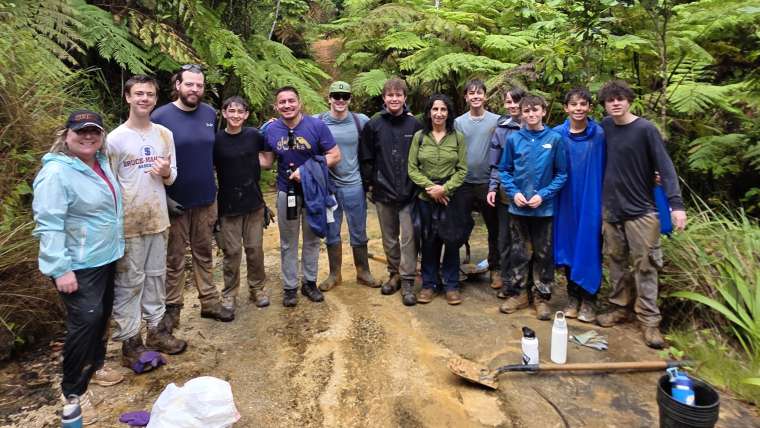
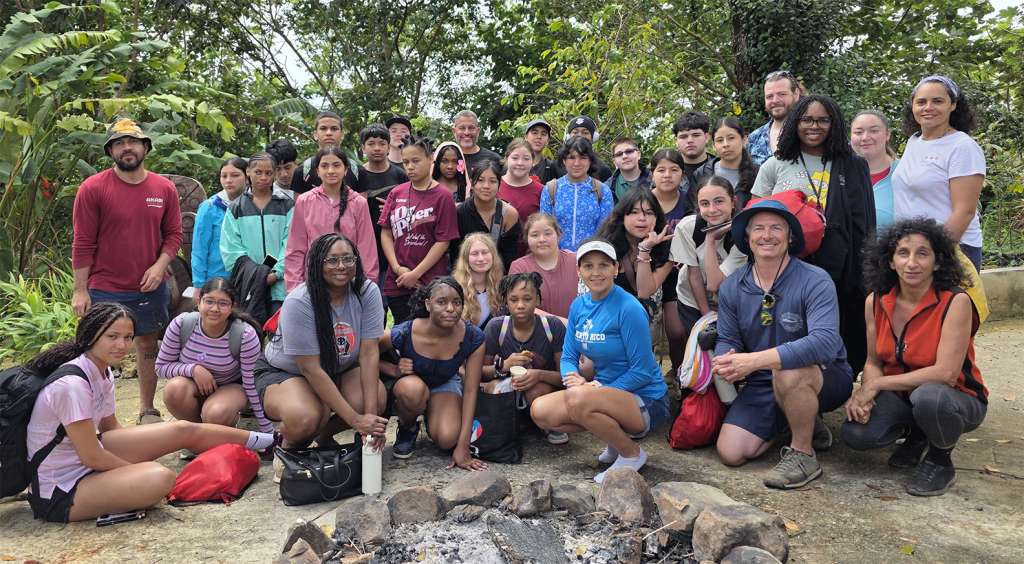
Twenty teenagers and three staff arrived at Las Casas as part of a Global Works group. From the beginning, the young people threw themselves wholeheartedly into the task. Armed with gloves, loppers, and pruning shears, as well as plenty of enthusiasm, they set about reopening the spaces between trees, access to the forgotten slope. Progress was slow. Every metre had to be earned.

Several groups before this team had also put in hard labor to enable us to get in further down slope. Razor grass resisted every advance, its long floating tendrils looking innocently like grass, dense growth grabbing at clothes like angry velcro. Yet the group remained cheerful, determined, and remarkably hard-working. Gradually, a path began to emerge. Then came one of those magical moments.

The forest opened, and suddenly, there they were. Trees. Not saplings. TREES! Mahoganies reaching skyward; Ausubos establishing themselves confidently on the slope; Blue Mahoe trees thriving in the recovering forest.

Some were far larger than any of us had imagined. They had not simply survived. They had grown. They had persisted through hurricanes, torrential rains, and years of neglect and isolation. For 3t, it was an especially emotional moment.

To stand among these planted trees was deeply moving. There was an almost childlike joy in rediscovering them.
"They made it!"

Sunlight filtered through recovering canopies. Mosses, fungi, and tall ferns carpeted fallen logs. Young trees occupied gaps left by the hurricane. Birds moved through the branches overhead. Everywhere there were signs of renewal and resilience. It was also a powerful reminder of one of the fundamental lessons of forestry and restoration work: trees operate on timescales far longer than our own immediate concerns.

When we planted these seedlings in 2000, 2001, 2007, 2008, and 2009, we were making a commitment to a future we could barely imagine. Hurricanes came and altered our plans. Trails disappeared. Life changed. Yet the trees kept growing.

Forestry teaches patience, and it rewards you with moments like this.

For the teenagers, the experience became much more than a day of clearing vegetation. They were not simply cutting a path. They were reconnecting us with a piece of our own history. They helped reveal nearly twenty years of forest growth and allowed us to witness the remarkable resilience of both planted trees and the ecosystems that surround them. The work was also a beautiful example of collaboration.

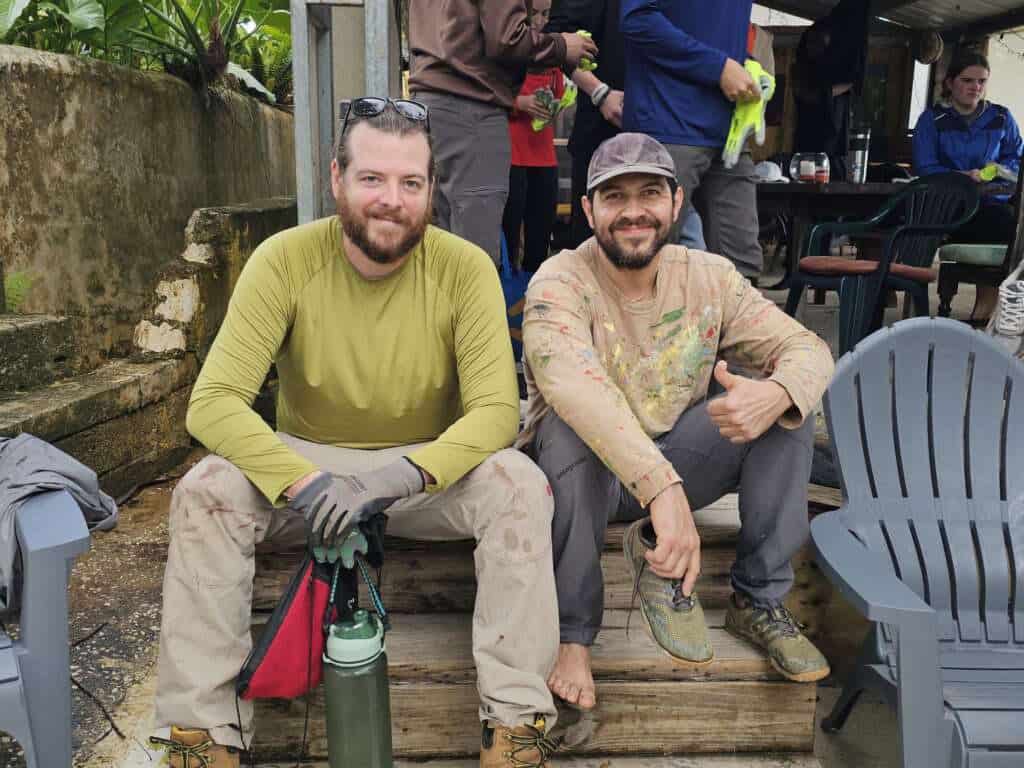
Monique Nieves kept everyone well fed with a delicious meal that restored energy after long hours in the field. 3t and Jon Warwick led the work crews with enthusiasm and determination, guiding the students through challenging terrain and sharing stories of the forest's history. Rio Collazo, age 15, volunteered with the group and helped in all areas. Mike Alvarez, a neighbor, recently back on the island after a lifetime away, joined the activity, to see what we get up to here in the mountains!

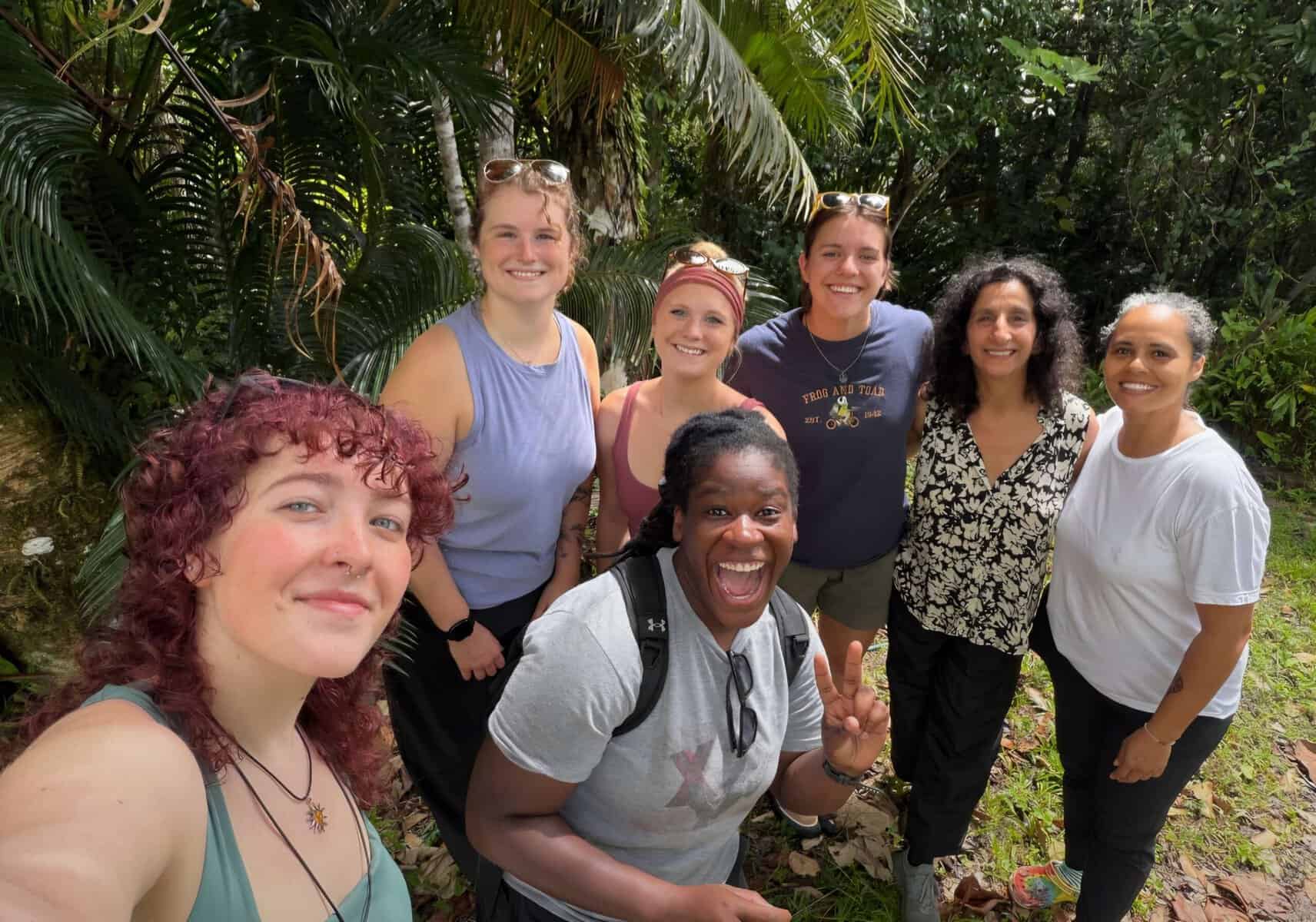
The Global Works staff, Lauren, Nahely, and Darielys, were wonderful partners, supporting the group and helping create an atmosphere of curiosity, teamwork, and adventure. By the end of the day, we had reopened access to a place we thought might remain hidden indefinitely. More importantly, we had rediscovered something precious.

Learn more about how to participate in a Teenage Globalworks adventure, see link below.

Conservation work often unfolds quietly. The victories are rarely dramatic. They come in seedlings taking root, forests slowly recovering, and young people choosing to spend their day cutting through razor grass so that others can reconnect with trees planted long ago.

Photos by Mike Alvarez & 3t Vakil, 29 June 2026

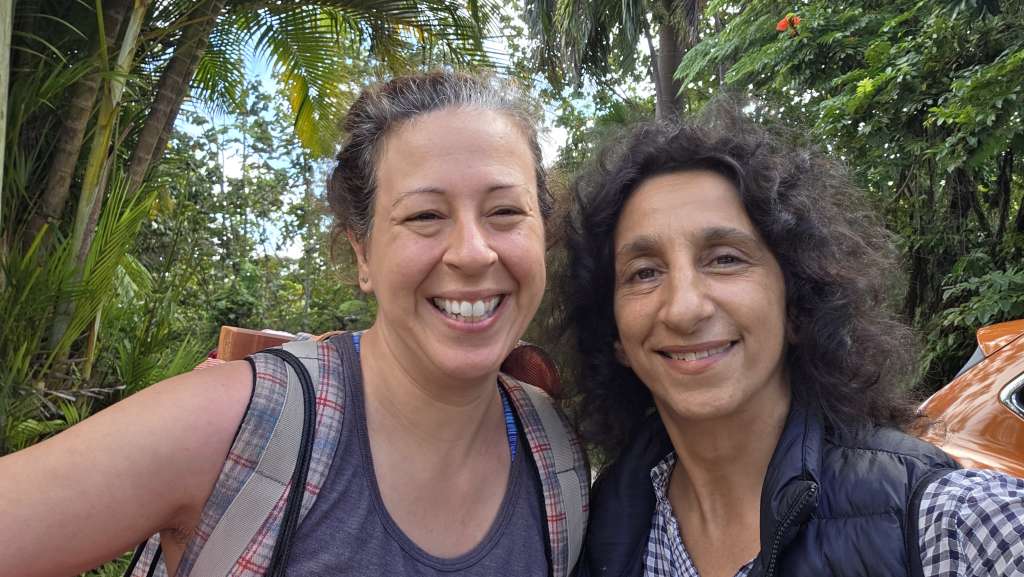
It was heartwarming to welcome back Darielys Dijol Mercedes.

In 2023, she first came to Las Casas de la Selva as a 17-year-old participant with a Global Works group, experiencing the rainforest and conservation work firsthand. 

Just three years later, she returned in a very different role, as a Global Works facilitator, helping lead and inspire a new generation of teenagers.

Watching young people grow into leaders who then guide others through these same experiences is one of the greatest rewards of educational and conservation work.

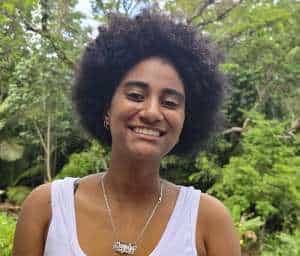
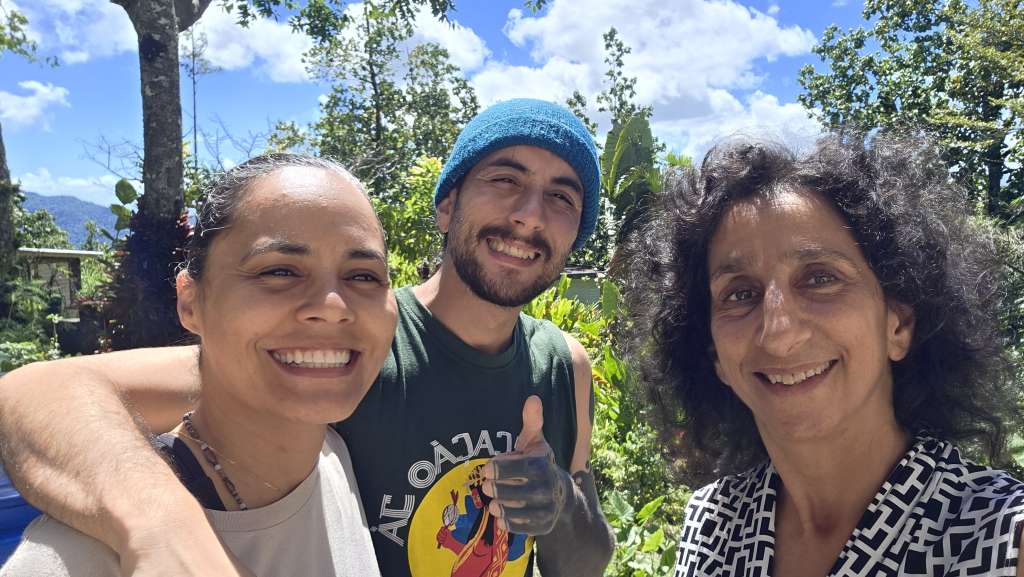
We were delighted to have local teenager Rio Collazo, age 15, join the Global Works group as a volunteer.

Rio has been eager to become involved at Las Casas de la Selva and embraced the opportunity with enthusiasm. She was helpful in every area, lending a hand wherever it was needed; sensitive to group dynamics whilst out in the field, and an invaluable member of the team.

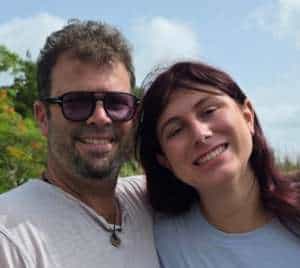
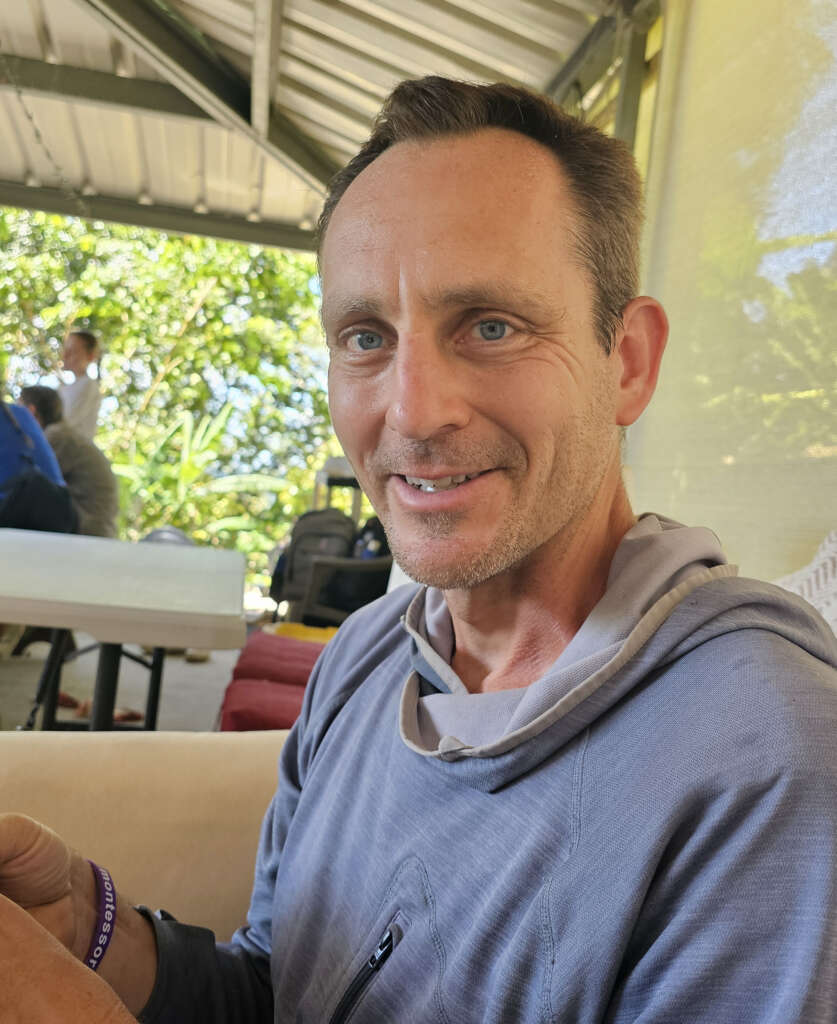
It was wonderful to see her positive energy, willingness to work with others, and genuine interest in the forest and its conservation. Photo of Rio with her father, Angel, a neighbor and very good friend of the project.

Shoulder-to-Shoulder: Clearing the way for tomorrow’s forest, 14 & 18 June 2026

Shoulder-to-Shoulder: Young hands preparing tomorrow’s forest

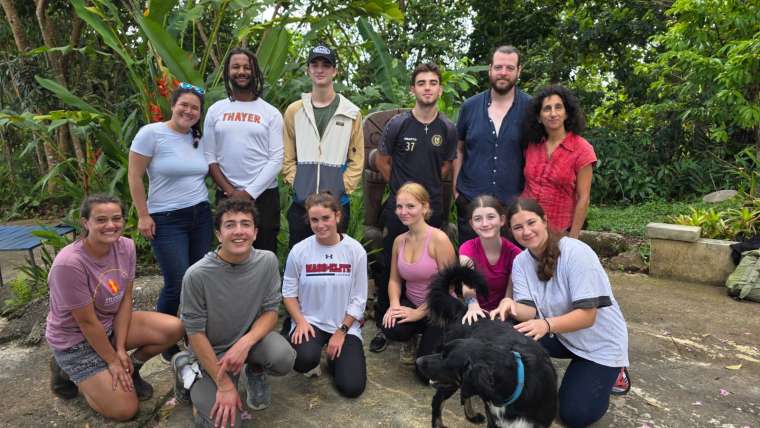
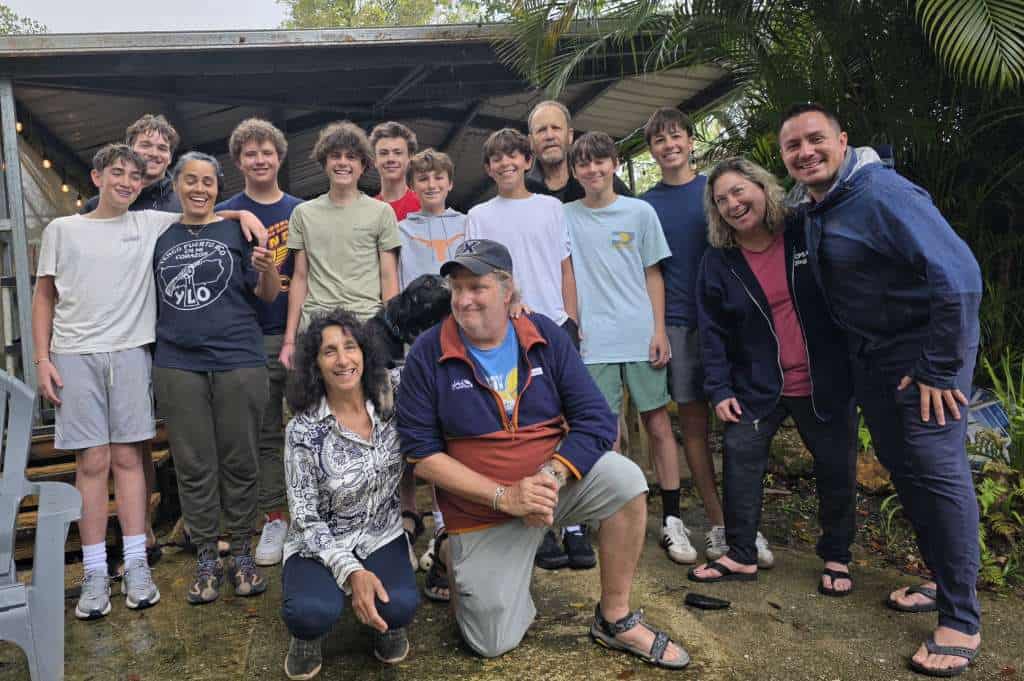
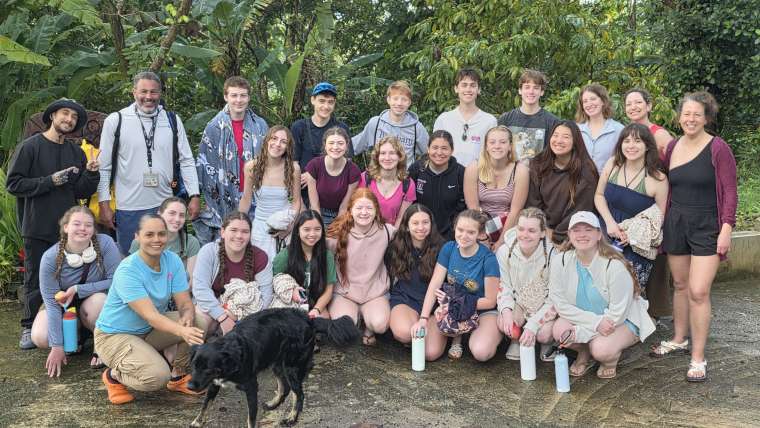
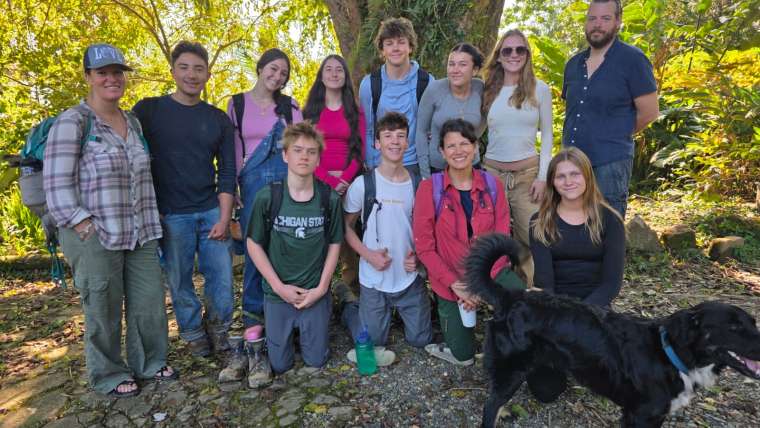
This June, Las Casas de la Selva had the pleasure of welcoming not one but two remarkable groups through the Shoulder-to-Shoulder (SStS) program. One group was made up of students from Thayer Academy, Braintree, Massachusetts, and their staff, Sarah, Matt, and Leanna, and the second brought together high school students from across the United States, with staff Cassandra, Jim, and Ben. Though they came from different schools, backgrounds, and communities, they shared something important: a willingness to work hard, learn deeply, and contribute to something larger than themselves.

Their task was not glamorous; they took on a most important and physically demanding job in rainforest restoration—clearing hillsides of fern and razor grass in preparation for future tree planting.

Anyone who has worked in a tropical mountain forest knows that preparing a site for planting is often harder than the planting itself. Steep slopes, dense vegetation, and the relentless growth of tropical plants like razor grass require determination and teamwork. Yet these students embraced the challenge. Armed with loppers, hand tools, gloves, and a great deal of enthusiasm, they cleared pathways and planting areas that will soon become home to new trees.

The work was led by Jon Warwick, who guided the crews with patience, good humor, and an eye for both safety and purpose. Under his leadership, the students learned that restoration is not simply about planting trees. It is about understanding landscapes, working as a team, and recognizing that meaningful environmental stewardship often begins with tasks that demand persistence and care.

Every branch cut and every patch of hillside cleared represented an act of preparation for something that may take decades to fully reveal itself. Forest restoration is an exercise in optimism. The people who prepare the ground may never sit beneath the full canopy of the trees they make possible. Yet they work anyway; their efforts are an investment in the future.

At Las Casas de la Selva, we often say that forests are built by many hands over many years. The rainforest surrounding us today bears the marks of countless volunteers, researchers, students, and staff who have contributed their labor since the project began more than four decades ago. Trails, nurseries, drainage systems, restoration sites, and young forests all exist because people chose to invest their time and energy in a place they may only know briefly.

The students of Shoulder-to-Shoulder became part of that continuing story.

Their visit also reflected the larger mission of Shoulder-to-Shoulder itself. Founded in 2007 in response to a simple but profound question—“What can we do?”—the organization was created to provide students with opportunities to explore real-world challenges and discover meaningful ways to engage with them. What began with one school, thirty students, and three nonprofit partners has grown into a global network that now spans four continents, twelve program sites, and numerous partner schools and organizations.

At the heart of Shoulder-to-Shoulder is a belief that the world’s challenges require ethical leadership. The organization seeks to inspire and support generations of leaders who understand that progress cannot be measured solely by economic growth, but must also account for social responsibility and environmental stewardship. Ethical leadership asks people to work collaboratively, think critically, and act with an awareness of how their decisions affect communities and ecosystems.

These values were visible throughout the students’ time at Las Casas.

Rainforest restoration is, by its very nature, an ethical act. It requires people to consider timescales beyond their own lives and to make choices that benefit future generations. It asks participants to appreciate the intricate relationships between forests, watersheds, biodiversity, and human well-being. Most importantly, it reminds us that meaningful environmental work is rarely accomplished alone.

Shoulder-to-Shoulder’s model recognizes this reality. By bringing together schools, nonprofits, businesses, and philanthropists, the organization creates opportunities for collaboration across sectors that might not otherwise meet. It demonstrates that complex global problems require partnerships and shared responsibility.

For many of the students, this experience was also a lesson in the value of physical work. Clearing vegetation on steep rainforest slopes under tropical conditions demands endurance and resilience. The labor encourages teamwork and reveals something that is increasingly difficult to experience in modern life: the satisfaction of accomplishing something tangible with one’s own hands.

At the end of each day, tired but smiling students returned from the hillsides knowing they had made a real contribution. The cleared areas awaiting planting are visible evidence of their efforts, but perhaps the greater result is less tangible. Experiences like these often plant seeds of another kind.

A student who has spent a day clearing a hillside for future forest restoration may never again think of trees as abstract environmental symbols. Forests become places that require care, patience, and human commitment. Conservation becomes something one participates in rather than merely discusses.

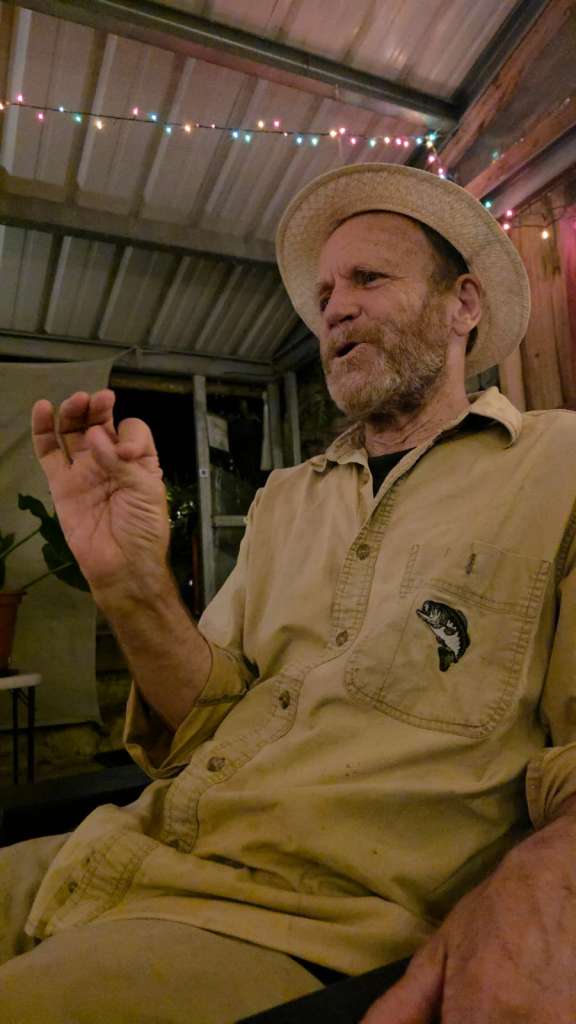
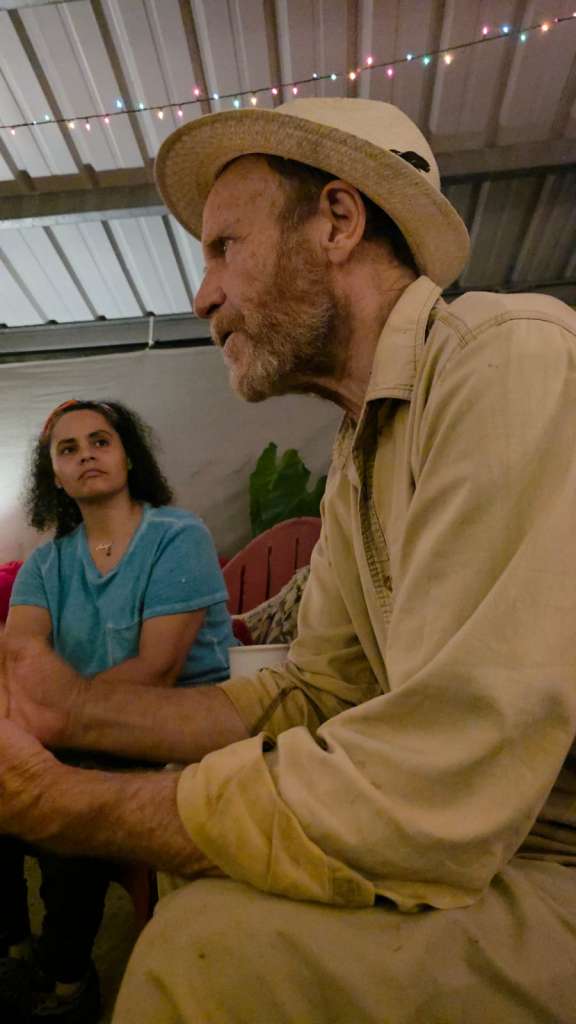
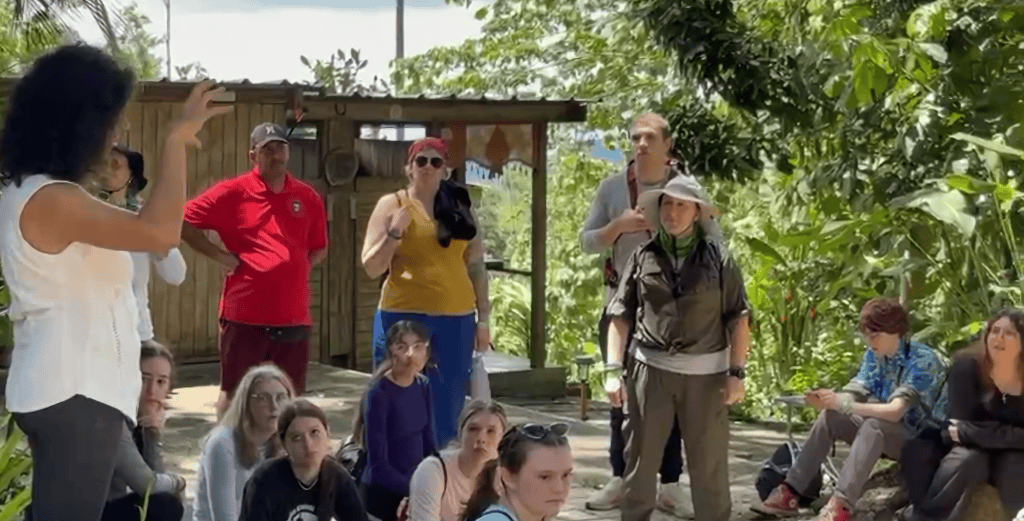
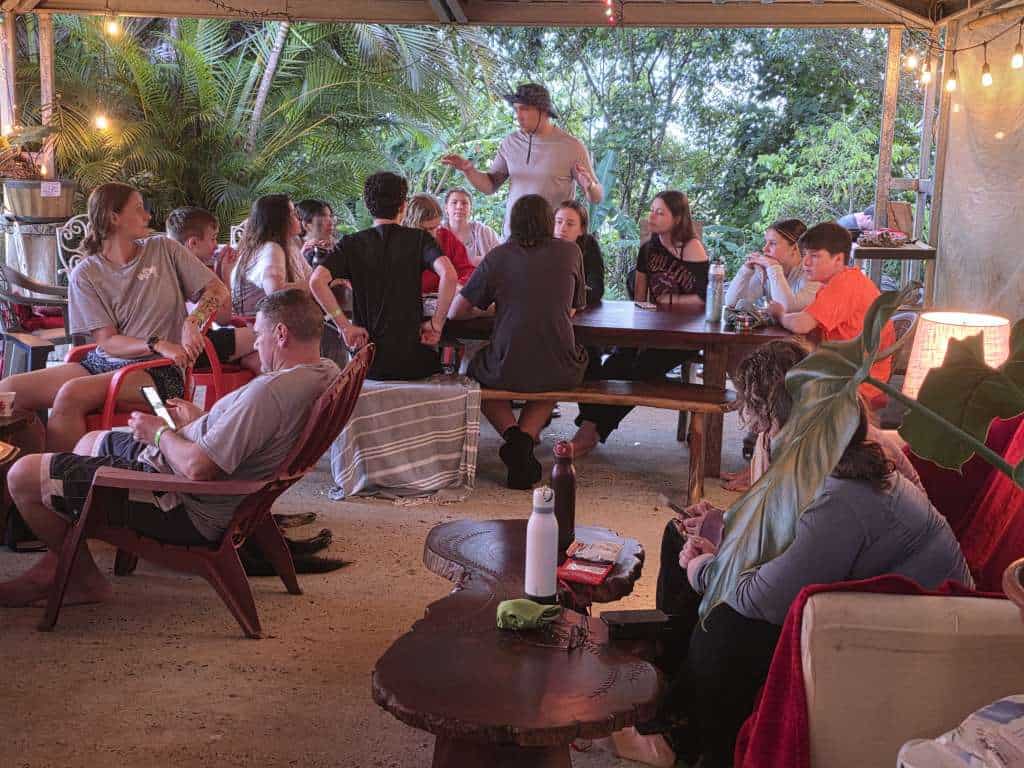
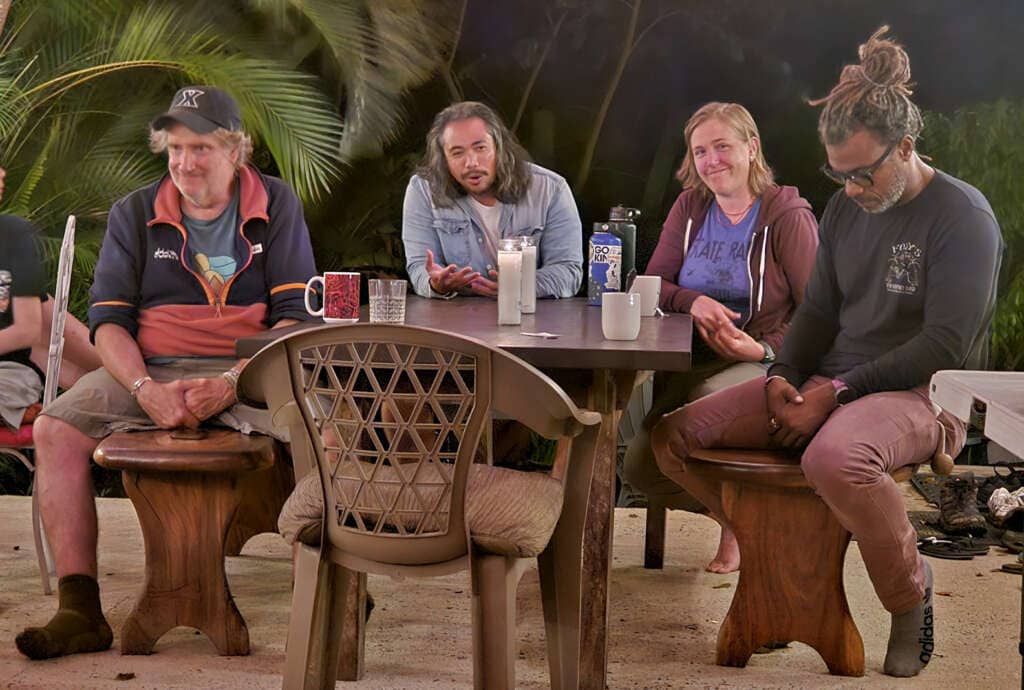
And, of course, no day of hard work in the rainforest would have been complete without good food. While Jon led the crews in the field, 3t made sure everyone returned to delicious home-cooked lunches, and a talk after lunch about the project. Sharing meals together is another important part of the experience—a time to rest, laugh, reflect on the day’s work, and build friendships across schools and communities. Sometimes moments around a table often become some of the most enduring memories of service experiences. They remind us that community is built not only through shared labor but also through shared meals, conversations, and moments of appreciation.

As we look at the cleared hillsides and anticipate the upcoming tree planting, we are grateful to both Shoulder-to-Shoulder groups for their energy, curiosity, and willingness to contribute. The trees that will one day grow there will stand as living reminders that restoration begins with preparation and that meaningful change often starts with people who are willing to ask a simple question:

What can we do?

This year, the answer was clear. They came to a rainforest in Puerto Rico, picked up tools, worked together on steep hillsides, shared meals, and helped prepare the ground for a forest that future generations will inherit. That is ethical leadership in action.

Thanks to Bill Cotter, Director of International Programs SStS, for bringing these teams to us.

Cathedral School, California, with Global Works, 16-18th April 2026

Cathedral School students Planting Pisonia horneae in the Sierra de Cayey 16-18 April 2026

In April we welcomed 14 year old students from Cathedral School, San Francisco, CA, brought to us by Global Works.

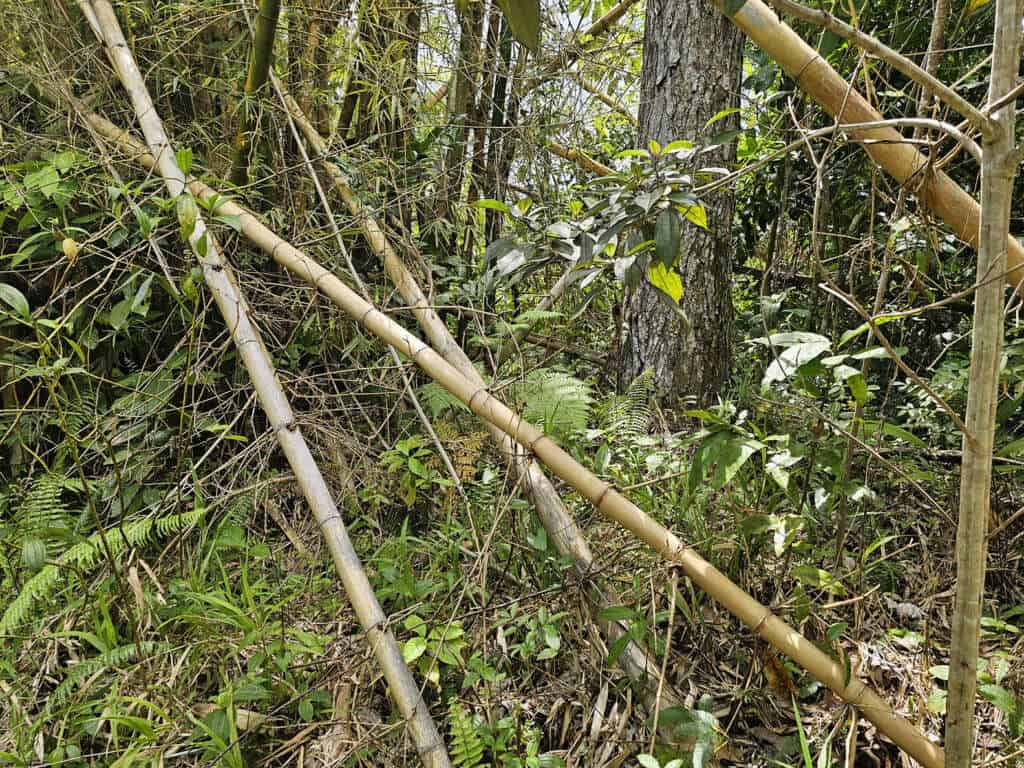
Founded in the mid-1950s, Cathedral School for Boys was built on the idea that strong academics should be matched by equally strong character. The school emphasizes intellectual rigor alongside values of community, integrity, and service, with a clear belief that what students do with their learning matters as much as the learning itself. On the first afternoon of arrival, despite the rain, we went out to clear an area that had broken bamboo that was leaning on one of the trails.

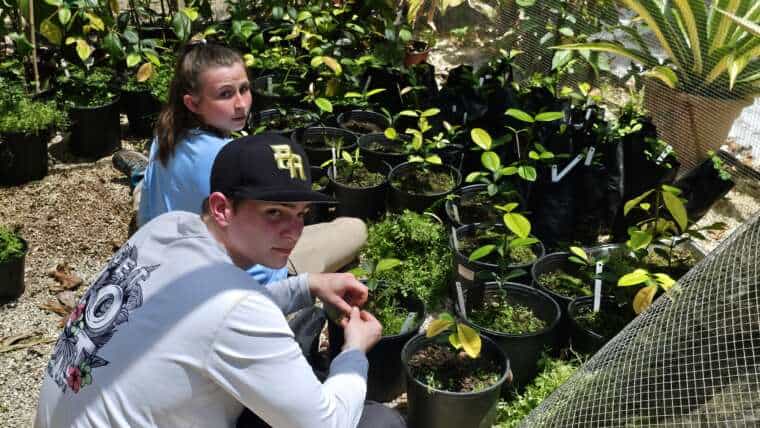
The next day, 17th April 2026, we planted 8 Pisonia horneae saplings in the Eye on the Rainforest landscape here in the Sierra de Cayey. These trees were grown from seeds collected by botanist Steve Maldonado from wild individuals in the karst area of Aguadilla, Punta Borinquen in 2021. Now they are back in the ground where they belong. 3t was ecstatic as she, Jon Warwick, and multi-media artist and writer-in-residence Gregg Dugan, led a team to plant these saplings into the forest.

The Caribbean is one of the most biologically rich regions in the world. Even now, new plant species are still being described. Puerto Rico, despite being one of the best-studied islands in the region, continues to reveal species that went unrecognized for decades. Pisonia horneae is one of those. For years, specimens of this tree were misidentified, lumped under other species, or left unresolved. Botanists working through old collections, field observations, and living material eventually realized they were looking at something distinct. It was formally described in 2017 and named after Frances Horne, an illustrator who spent 45 years documenting the plants of Puerto Rico, much of her work never fully acknowledged. https://www.sciencedirect.com/org/science/article/pii/S1314201117000716

The tree itself belongs to the genus Pisonia, often called “birdcatcher trees.” The name comes from their seeds, which are coated in sticky glands. In some species, these can cling to birds and use them for dispersal. This is not a tree you notice easily. It does not dominate. It appears in small numbers, often as single individuals or small clusters, usually in recovering forest. You find it on slopes, ravines, and rocky ground, places where forest has been disturbed and is rebuilding. It sits in that middle layer of the forest. Not canopy, not understory, just part of the structure.

Right now, it is considered imperiled. There may be as few as 1 to 250 individuals remaining. Across Puerto Rico, it is scattered and fragmented. In the north, there are a few places where it is more common. Outside of that, especially in the east, it becomes extremely rare. In some historical locations, it is no longer found. There have been a few individuals recorded in the Sierra de Cayey. That is why planting here matters.

By the end of the morning, 8 young trees were in the ground. This is what restoration looks like. Not large numbers. Not quick results. Just the steady return of species that should already be here. Puerto Rico now has six known species of Pisonia. This is one of the rare ones. Watching these teens plant the saplings was a joy! Now we watch them grow…the teens as well as the trees!

Chef Monique Nieves provided delicious meals throughout, and Dugan was extra help in the kitchen.

Gregg Dugan, who helped build the RV Heraclitus and was Captain of the ship for several years had the students enthralled with stories of sea adventures on one evening. Dugan is writer-in-residence at Las Casas de la Selva for two months, March and April 2026.
See Dugan’s website: https://www.2birdshrs.com/

Cathedral School, California, school staff: Chris Corrigan and Caitlyn Toropova.
Chris has been bringing teen school groups to Eye on The Rainforest for over a decade now.
Brought to us by Global Works – International Community Service with leaders Randall Vargus Guido and Luke Southall. Thank you all.

See more images: https://photos.app.goo.gl/ZN8pWenzRwG3x6XW6
Photos by 3t Vakil, Chris Corrigan, Gregg Dugan, and Caitlyn Toropova.


Charles H. Barrows STEM Academy: 13-14 April 2026

Charles H. Barrows STEM Academy: 13-14 April 2026

We had a large enthusiastic group with us from Charles H. Barrows STEM Academy, 21 students and 16 staff and parents for an afternoon of service and an overnight stay. They came ready to work, and that matters here. We split into three mixed teams of students and adults and moved straight onto the land.

Team Caoba

Team Caoba, led by 3t. On the slopes, teams prepared land for tree planting. This is careful work. Clearing just enough. Opening space without destabilizing the hillside. Understanding how water moves, how roots will hold, and where the next generation of trees can take hold.

Team Ausubo

Team Ausubo, led by Jon. On a steeper section, steps were built into the slope. Physical, repetitive, and precise. Each step placed to hold, to last, and to make the trail usable over time.

Team Tabonuco

Team Tabonuco, led by Mercury. On the ethnobotanical trail, another group focused on drainage. In the rainforest, water defines everything. If it is not guided, it erodes. If it is managed, it supports the system. Students worked to open channels, move debris, and keep the trail intact.

Everyone had to pay attention. The slopes don’t allow shortcuts, you have to read the ground, watch your footing, and work together. Their STEM focus showed up in the right way, not as something separate but embedded in the work. Water flow, soil stability, structure, all of it right there in front of them. At the same time, their 3 R’s were clear. Respect for the place and each other, responsibility for the job in hand, and reflection in the moments when they stopped and looked at what they had actually done.

At Las Casas, this kind of work has lasting impact. The trail holds its shape and allows walkers to traverse the forest safely; the water moves as it should, and the land is set for the next phase of planting.

They were here a short time, but they left work behind that will keep doing its job.

Bernardo Benetti and 3t Vakil

Thank you to Chef Monique Nieves for the food that kept everyone going through the day, and for taking a group out on a night walk. Thanks as well to Jon Warwick, and Mercury, artist in residence, for working alongside 3t on crew leadership, and to Gregg Dugan, writer in residence, for his work in the kitchen, and on the grounds, and thoughtful input throughout.

Appreciation to Nicole, Kim, and Nick for their steady leadership with the group, and to School Tours of America, together with Bernardo Benetti, for continuing to bring groups that show up ready to engage and do the work.

Photos by 3t Vakil, Nicole Bay, & Jon Warwick

April 2026

The Branson School, CA, 7th April, 2026

Branson School: A Day of Work in the Forest, 7th April, 2026

For a single day, 15 students (15-17 years), and staff from The Branson School, Marin County, CA, stepped into the working landscape of Las Casas de la Selva. It was a day of real service work.

They joined us on the forest road, where maintenance is constant and essential. Under the guidance of Jon Warwick, who led the crew with clarity and pace, the students got straight into it. Branches were cut back, ferns were cleared from the road edges, and bamboo was pruned where it had begun to close in. The goal was simple: keep the road open, safe, and functional in a place where growth never stops.

The work demanded attention and effort. Tools in hand, the group moved steadily along the road, learning quickly that in the rainforest, maintenance is not a one-time task. It is ongoing, physical, and necessary for everything else we do here to function.

What stood out was their willingness to engage. No hesitation. No standing back. They worked as a team, taking direction and finding rhythm in the process. This is where learning shifts. Not abstract, but grounded in action.

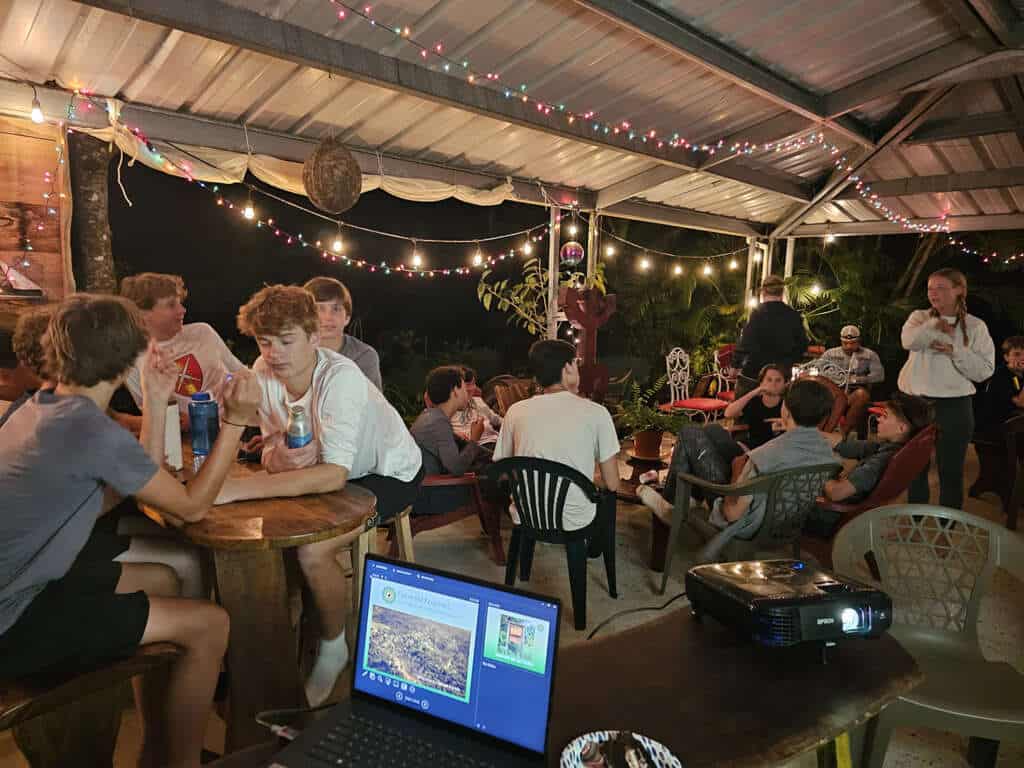
Back at base, 3t prepared a delicious lunch. Simple, direct, and well earned. Food really tastes different after a morning of physical work, it brings people together in a different way. Conversations and questions over lunch delved into the history of the project. Thanks to group leader, Adelina, and school staff, Sabrina and Matt. Writer, Gregg Dugan and visual artist Mercury, who are both on extended art residencies at Las Casas de la Selva, provided behind-the-scenes help with all and everything.

The visit reflects something important about Branson’s stated values: courage, kindness, honor, and purpose. These are not just ideas to talk about. They show up in how students step into unfamiliar environments, take on physical challenges, and contribute to something beyond themselves. At Las Casas, this kind of exchange matters. Students arrive for a short time, but the work they do stays. A cleared road section, a maintained path, a space that continues to function because of their effort.

About the Program

This visit was made possible through Shoulder-to-Shoulder, a program founded in 2007 to respond to a simple but urgent question: What can we do? Under the direction of Bill Cotter (director of programming), the organization connects students with real-world projects across multiple continents. What began with one school and a small group of students has grown into a global network spanning 12 sites, built on partnerships between schools, nonprofits, businesses, and philanthropists. Their focus is clear: developing ethical leaders who can navigate a complex world while balancing growth, social responsibility, and environmental stewardship. Programs like this one at Las Casas are where that intention meets action. One day. Real impact.

April 2026.

Foreign Language Academy, TN. March 2026

Foreign Language Academy Visit | March 22–23, 2026

From March 22 to 23, we hosted 25 teenagers (13-14-year-olds) from the Foreign Language Academy in Tennessee, traveling with Vamonos Tours and accompanied by chaperone Cruz Rodriguez. The group was led by school staff Michelle Aguirre-Hill, Lauren Jenkins, Michelle Aguirre, Ruth Aguilera, and Tim Nash.

They arrived in a wet stretch of weather and went straight to work. Rain was constant, the ground saturated, and conditions demanding. The focus of the work was the Ethnobotanical Trail. Working alongside crew leaders 3t, Jon, and Mercury, the group took on essential tasks across the trail system. This included cutting back aggressive razor grass (Scleria secans), a perennial scrambling sedge in the Cyperaceae family. Since Hurricane Maria opened the canopy, increased light has driven rapid growth of razor grass and vines, making this ongoing work critical.

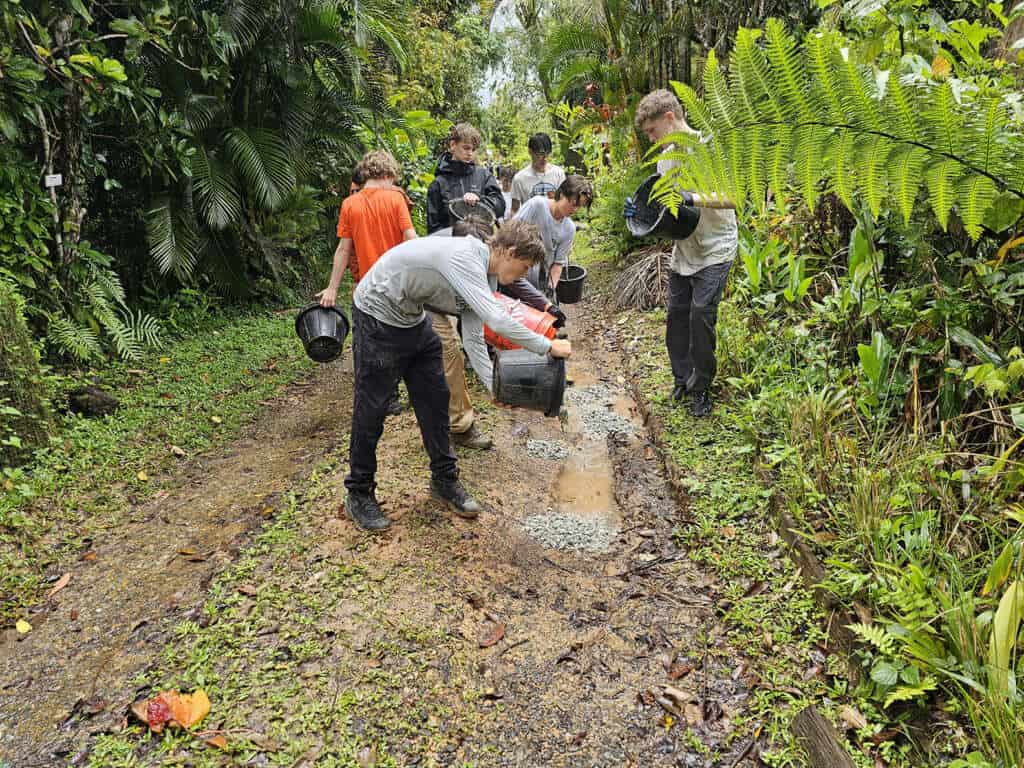
They also pruned along the trail corridor, opened new sections of trail, and built drainage to stabilize the path and move water effectively through the landscape.

The drainage work was especially important. In heavy rain, unmanaged water quickly damages trails, leading to erosion and long-term degradation. What they built will hold through future storms and continued use.

Despite the conditions, the group kept a strong pace. No complaints, no slowing down. Just steady work in the rain. The team stayed for two nights and, in that short time, made a clear and lasting impact on the trail system. Monique Nieves (below) kept everyone well fed with excellent meals throughout their stay.

This is the kind of work that matters here. Each group steps into something already underway, and what they contribute becomes part of a larger system that supports the forest, the trails, and those who come after. We really appreciate the effort, the attitude, and the willingness to work under real conditions.

Dedham High School, 14-17 Feb 2026

Dedham High School, 14-17 Feb 2026

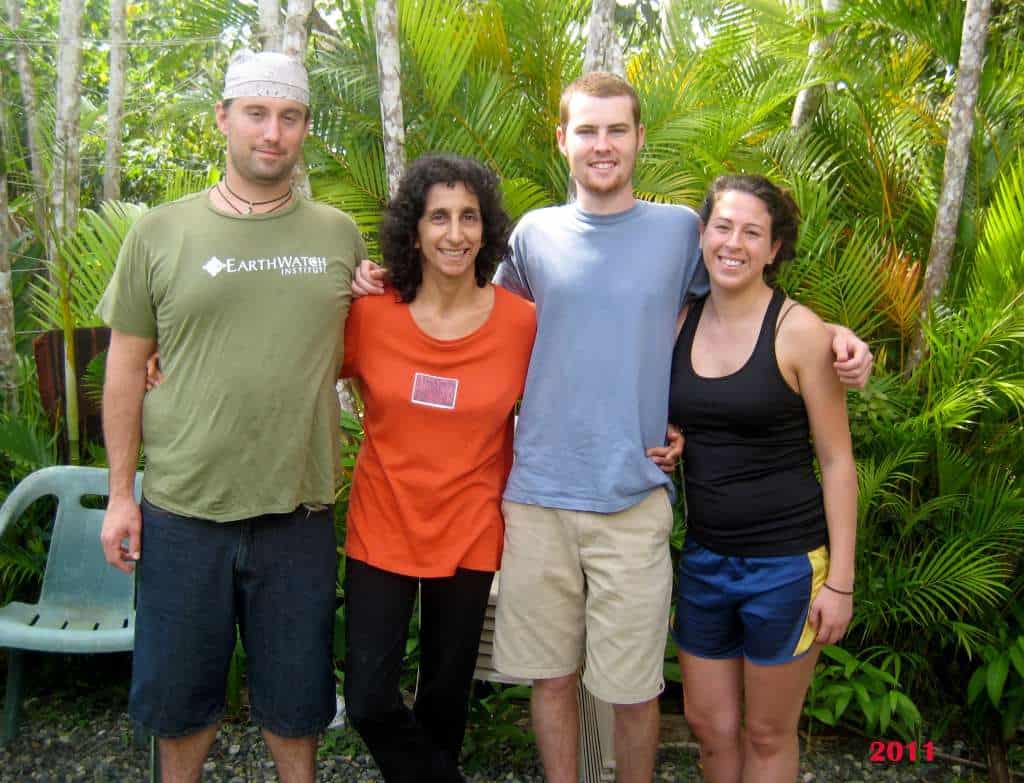
In 2011, Abby Zuckerman arrived at Las Casas de la Selva as a young volunteer. She was 20 years old at the time, curious, open, and ready for hard work in the rainforest. See image below. She really valued that time, and that early experience stayed with her. Years later, now a biology and environmental science teacher, Abby returned…this time with her students.

Dedham High School students came to Las Casas de la Selva for a four-day immersive stay. They arrived during a very rainy time and were quickly introduced to the reality of tropical fieldwork: heavy rains, slick trails, and humid days.

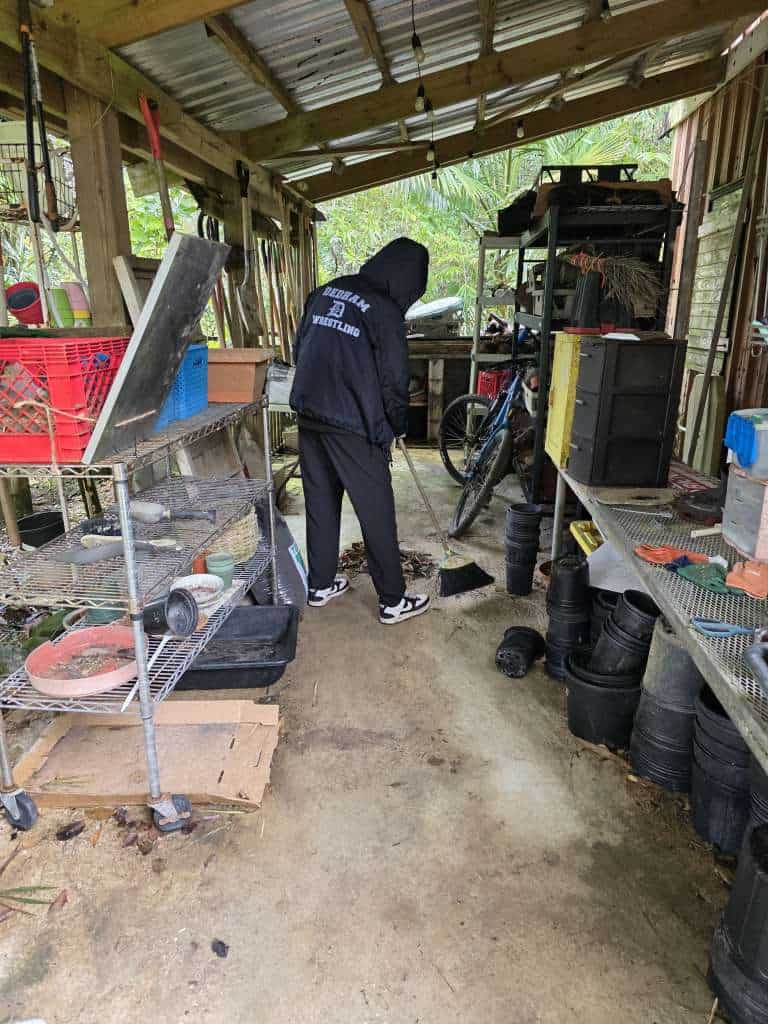
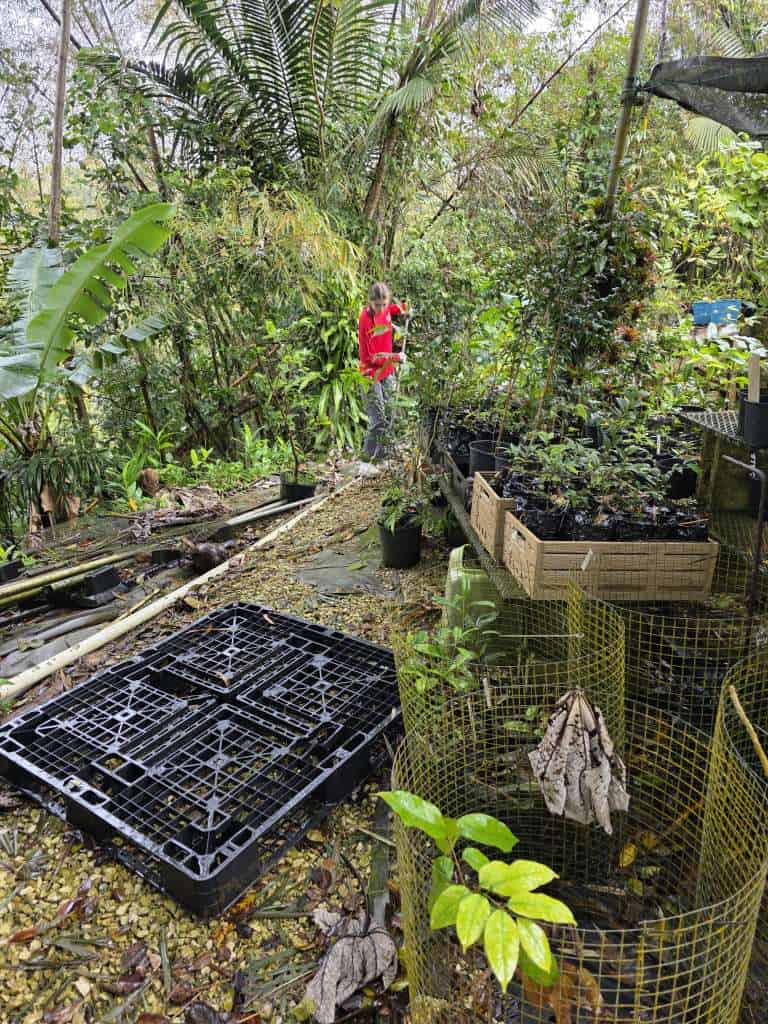
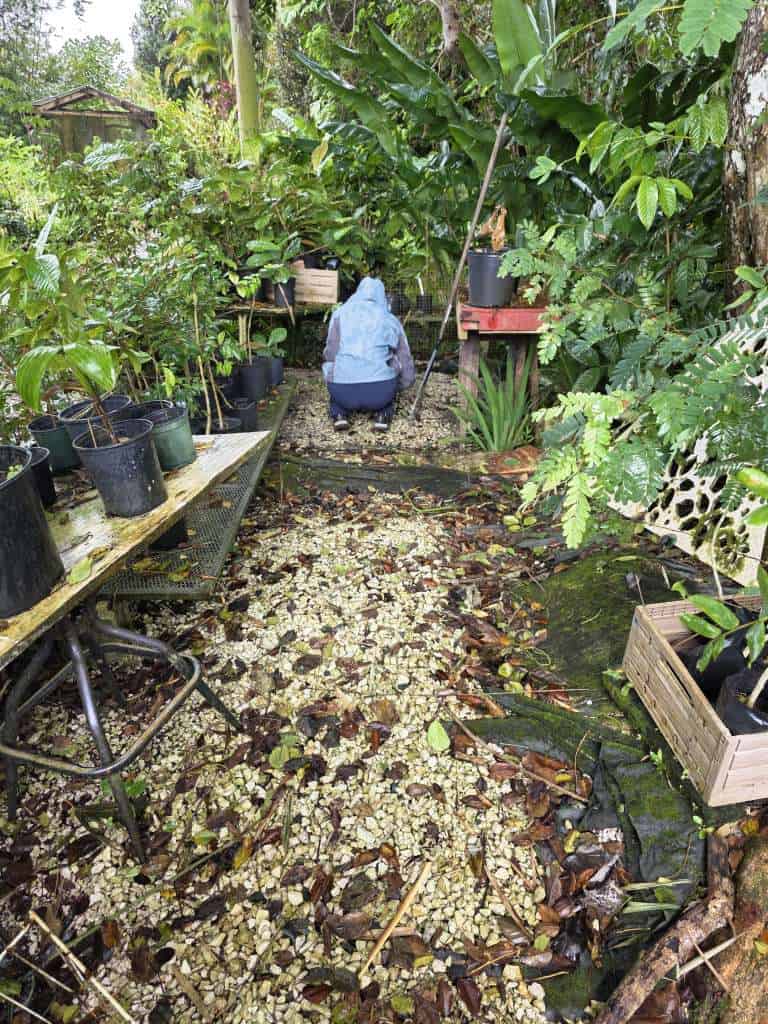
The students took on meaningful, hands-on tasks that directly support ongoing forest restoration efforts. Under the guidance of crew leaders 3t and Jon, they worked in the nursery, in the forest pruning bamboo, trimming trees, and clearing debris and razor glass from areas around saplings and new areas being prepared for new tree planting. It was real work—physical, muddy, and often challenging—but the group met it with energy, humor, and resilience.

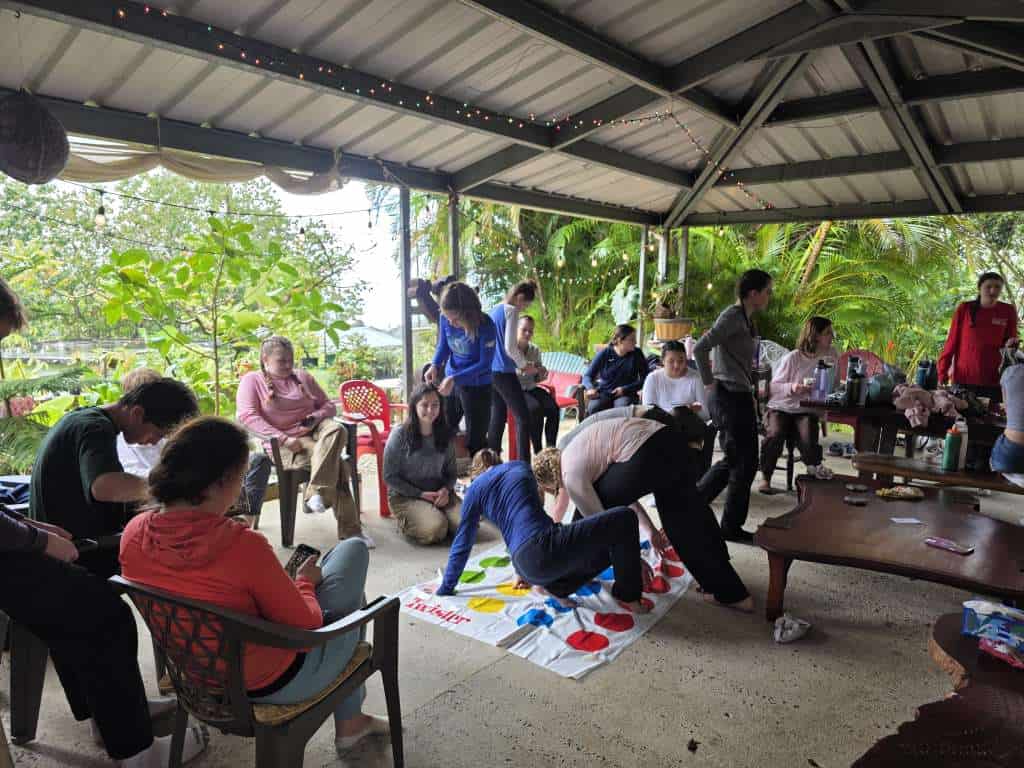
Behind the scenes, the days were anchored by the kitchen team. Monique Nieves and Jagüey kept everyone fed, warm, and grounded, creating a shared space where conversations from the field carried into the evenings over meals and laughter.

Despite the rain—or perhaps because of it—the experience was deeply connective. The students lived the rhythms of the rainforest, learned what ecological restoration looks like on the ground, and gained insight into what it means to work collectively in a living system that does not bend to convenience.

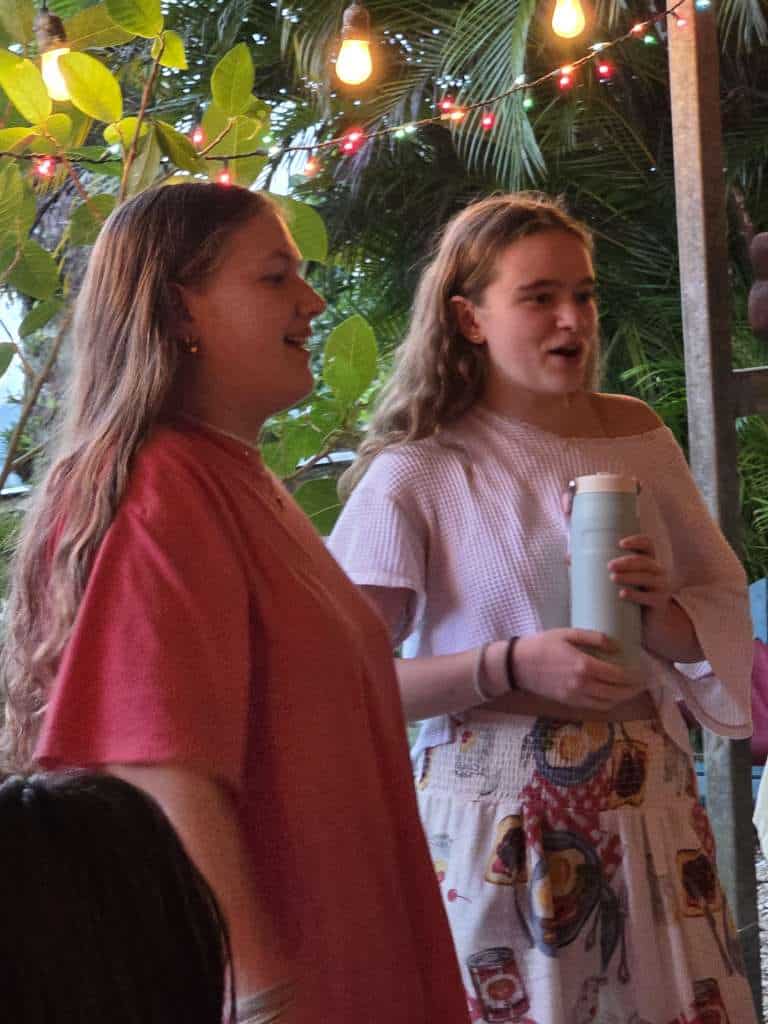
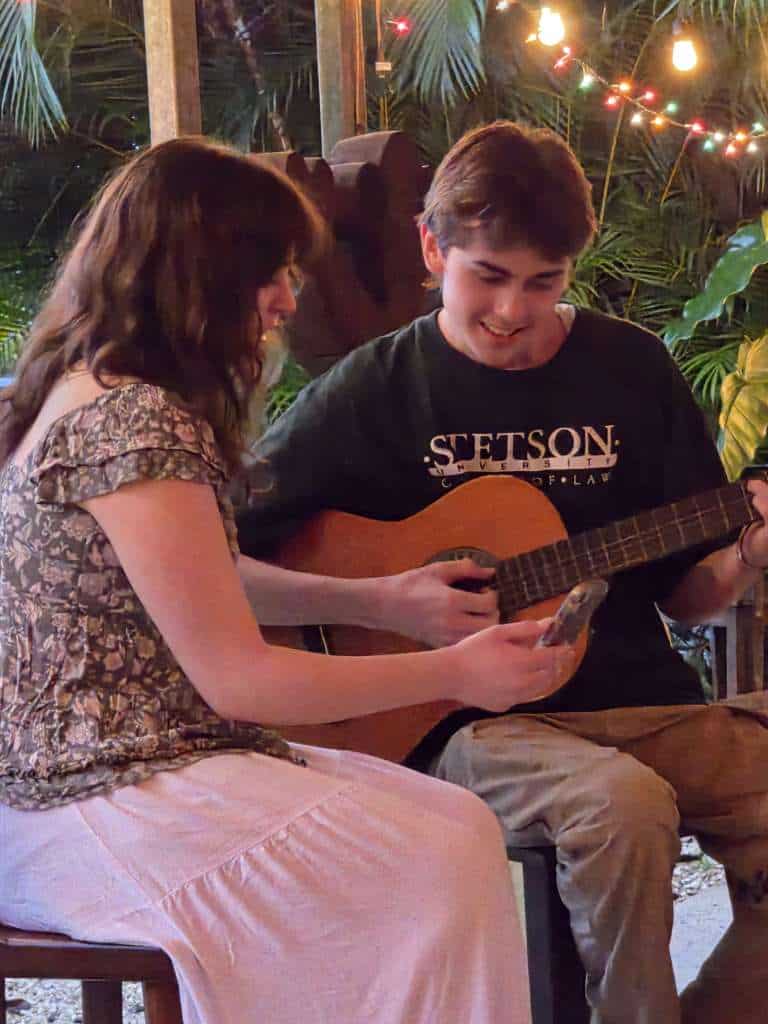
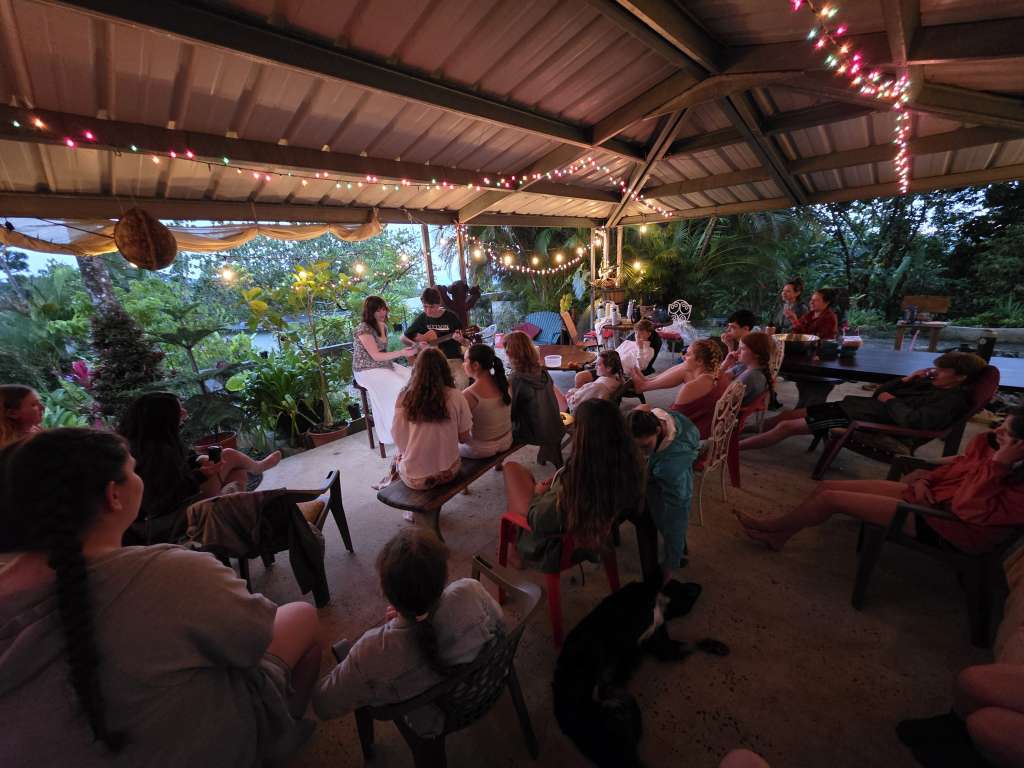
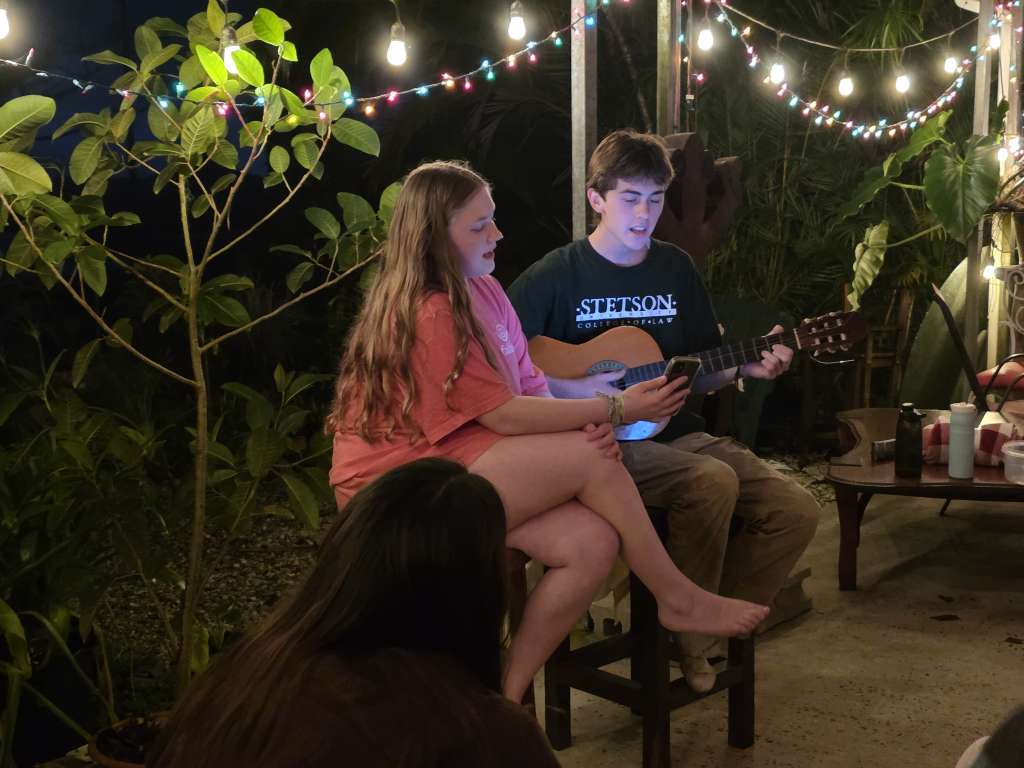
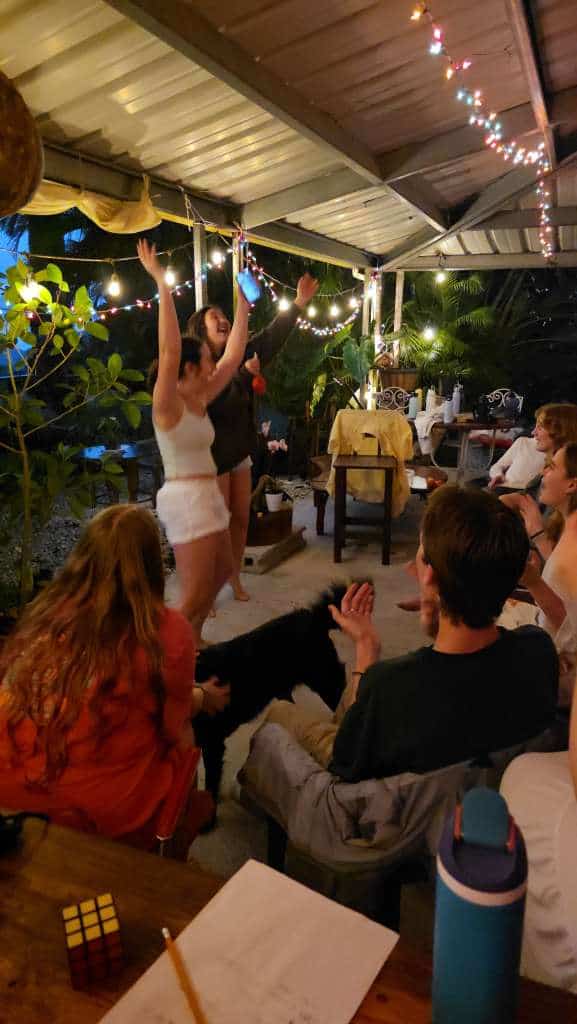
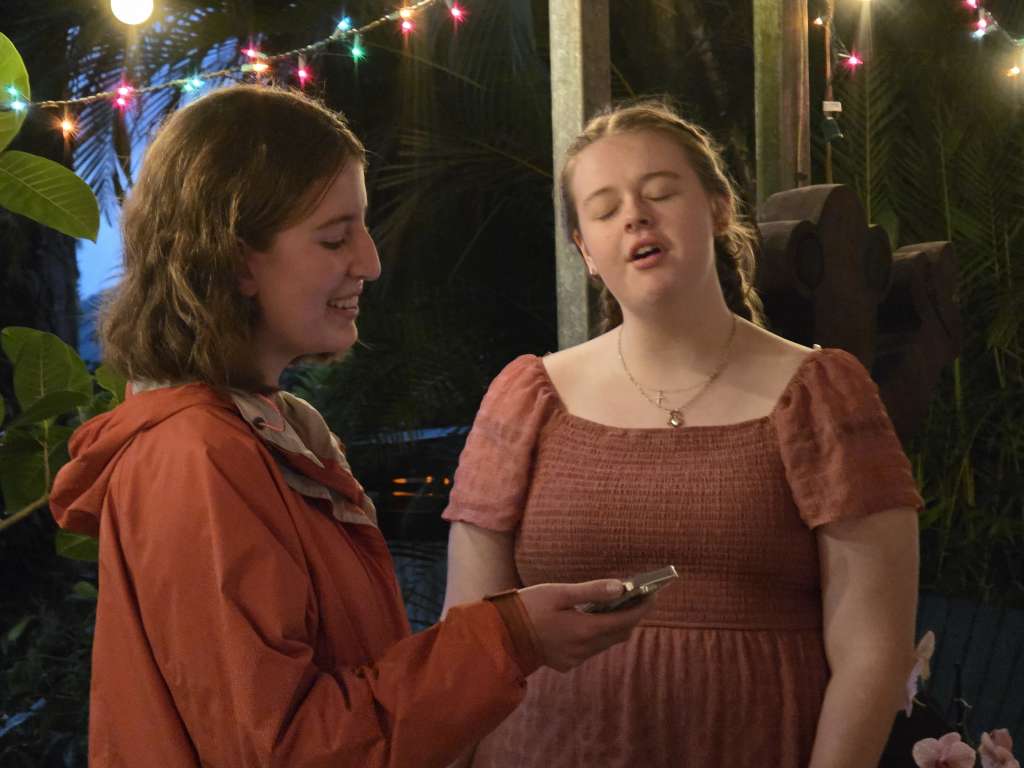
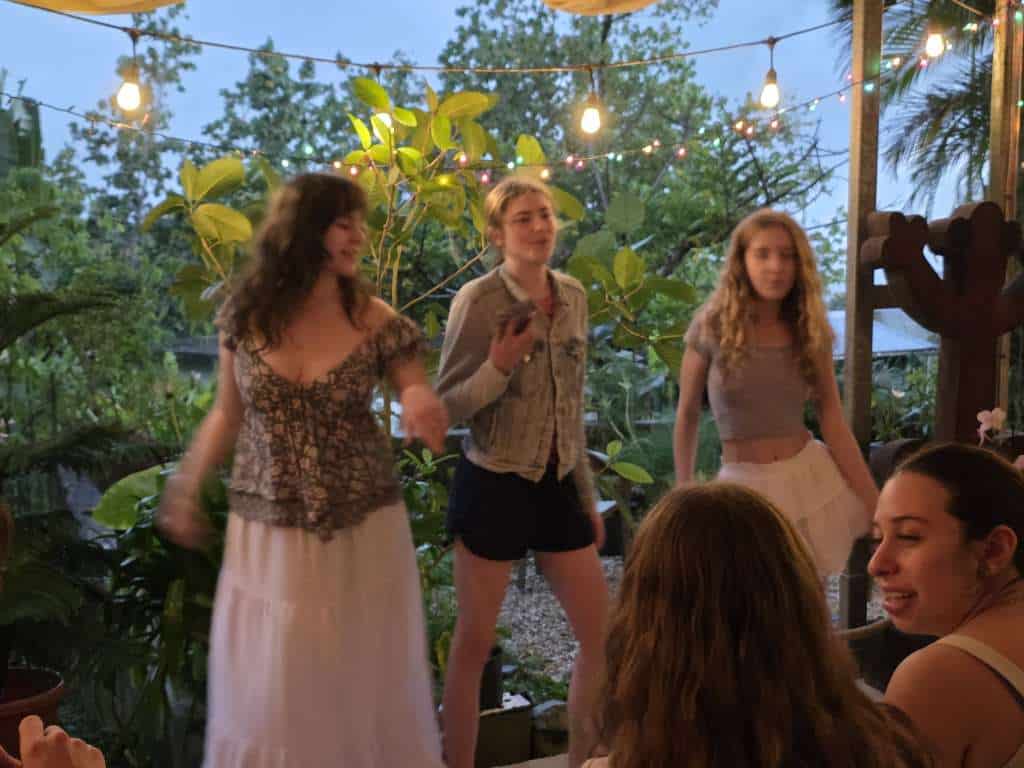
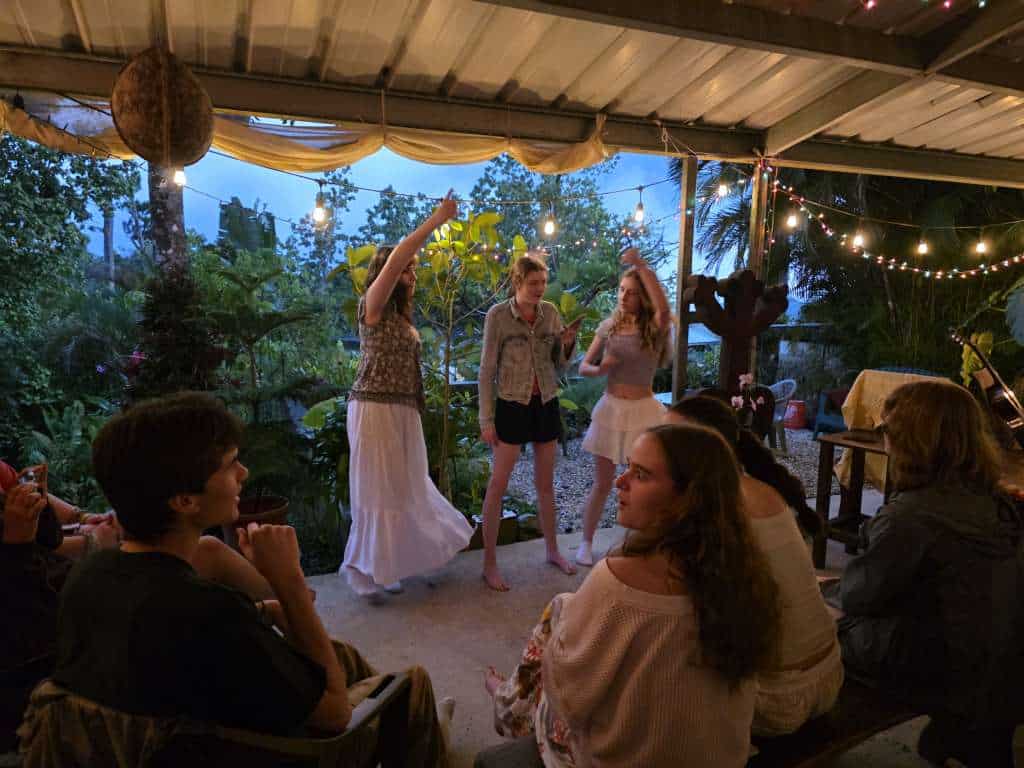
One of the unexpected highlights of the week was the talent show, improvised in an afternoon after a long morning working in the rain. What started casually quickly turned into a joyful, slightly chaotic celebration of creativity and courage. Students sang, played music, told stories, and performed skits, while others surprised everyone with humor and sheer nerve. Laughter echoed through the forest, barriers dissolved. In that moment, the rainforest was not just a place of labor and learning, but a shared home—alive with voices, confidence, and the kind of connection that only comes when people feel safe enough to be fully themselves.

For us, there is something especially meaningful about this visit. Abby’s return, now as an educator bringing her own students, reflects the long arc of experiential learning. What begins as a formative experience for one young volunteer can, years later, ripple outward to inspire dozens more.

We are grateful to Abby, to Dedham High School, and to every student who showed up ready to work, adapt, and engage fully with the forest—even in the rain.

We also extend our thanks to Cruz Rodriguez and Maritza from Vámonos, whose coordination and helped make this visit possible. Their care, logistics, and attention to detail ensured that the group could focus fully on learning, working, and experiencing the rainforest in a way that was both safe and deeply engaged.

Photos by 3t Vakil, and Abby Zuckerman, Feb 2026

Update from Abby: “Thrity the parents and students have not stopped raving about their experience at Las Casas and how formative and impactful it was for them. We are so lucky that you have built such a special place!”

Thank you, Abby. What makes Las Casas de la Selva special, comes from teamwork and the cumulative efforts of many people over more than forty years—staff, volunteers, students, scientists, cooks, crew leaders, and caretakers, past and present. It’s a living place shaped by shared work, persistence, and care across generations, and we’re grateful your students became part of that continuum, even if only for a short time.

How satisfying!

Comp Sci High, Bronx, NY, 11 Feb 2026

From code to canopy: Comp Sci High in the Field

Recently we had the pleasure of hosting a group of students from Comp Sci High, NY, a dynamic learning community rooted in the South Bronx that prepares young people with academic strength, computational fluency, professional skills, and real-world experience. Comp Sci High’s mission is to empower students to access college, careers, and meaningful opportunities through technology and community-based learning, building emotional, professional, technical, and civic capacities that will support success long after graduation.

What happens when students who are immersed in computational thinking and future-focused pathways step out of the classroom into a place like Las Casas de la Selva, in the rainforest? They bring curiosity, resilience, and a willingness to contribute in new, hands-on ways.

About a dozen students from diverse backgrounds, including places like Ghana, Senegal, Nigeria, and Bangladesh, joined us for a day of clearing work on our ethnobotanical trail. Together, they helped remove encroaching vegetation, making the trail more accessible for visitors and researchers alike. Their energy turned what could have been just a task into shared learning, exploring how forests grow, how trails evolve, and how collective effort shapes the land.

Guiding the group through technique, safety, and decisions in the field was Jon Warwick, whose grounded approach helped everyone engage confidently with tools and tasks. We were also joined by group organizer Bill Cotter of Shoulder 2 Shoulder and school staff Dennis Pooler and James Kale, whose support ensured the day flowed smoothly and meaningfully.

In the afternoon, 3t served a nourishing lunch that gave everyone a chance to rest and reflect on the morning’s work. Conversations ranged from the forest and the history of Las Casas de la Selva, to hurricane survival. We are grateful for this group’s thoughtful participation and engagement. It was a vivid example of how young people can extend the values they learn in school – teamwork, problem-solving, and perseverance – into new environments where those skills matter in tangible, ecological ways. We look forward to future collaborations that bridge classroom learning and real-world stewardship.

Photos by 3t Vakil, Jon Warwick, Bill Cotter, Feb 2026

Rocky Mountain School, Co. 8 Feb 2026

A Day of Service on the Ethnobotanical Trail

We were grateful to welcome a group from Rocky Mountain School to Las Casas de la Selva for a focused day of service work on our ethnobotanical trail. Days like this sit at the heart of what Las Casas represents: learning by doing, caring for place through direct action, and understanding forest systems from the ground up. The crew worked under the guidance of Jon Warwick, who led pruning and trail maintenance along sections of the ethnobotanical trail that see regular use by researchers, students, and visitors. Careful pruning is not just about access; it is about encouraging healthy plant structure, protecting sensitive understory species, and keeping the trail legible without overwhelming the forest’s own rhythms.

Students approached the work with focus and good humor, quickly finding their stride with hand tools and learning how each cut has consequences over time. Trail work in a rainforest is always dynamic. Growth is constant, and maintenance becomes an ongoing dialogue with the landscape rather than a one-time task.

By the end of the day, areas of the trail were clearer, safer, and better defined, but more importantly, the forest had been met with attentive care. These moments of shared labor leave a quiet imprint. They build relationships between people, between people and place, and between learning and responsibility. 3t provided a delicious lunch!

We thank Rocky Mountain School and staff Brittany Bergin-Foss and Sierra Aldrich, for bringing their energy and curiosity into the forest and for contributing to the ongoing stewardship of Las Casas de la Selva. Many thanks to Fernando of Carite 3.0 and to Bill Cotter of Shoulder 2 Shoulder for bringing the group to us.

February 2026

Globalworks Teen Team, July 2025

We were thrilled to host a Day Service group of 19 energetic teens and 4 dedicated Globalworks staff at Eye On The Rainforest! It’s a full-circle moment—Globalworks teens helped break ground on our Ethnobotanical Trail all the way back in 2003, and this visit brings that legacy back to life.

Who Was Here

  • Crew Leader Jon Warwick took charge with enthusiasm, guiding the teens through every step of their work on the trail.
  • GlobalWorks Leaders: Warm thanks to Lauren, Jorge, Sarah, and Anthony, whose presence and support uplifted the entire group.

What We Accomplished

Over several hours of steady effort, the crew strengthened sections of the trail, creating drainage ditches and pruning undergrowth away from the trail—the backbone that makes exploration safe and accessible. After working hard in the heat and humidity and with the challenge of razor grass, everyone refueled with a wholesome lunch back at the homestead. Seeing those teens come together to repair our trail was a powerful reminder of how service and nature intertwine.

The Globalworks Difference

Globalworks isn’t just a travel company—they’re a community builder. As described on their website, they make “intentionally crafted itineraries” designed to encourage resilience, leadership, confidence, self-reliance, and curiosity in teens. They’re committed to immersive community service.

See : globalworkstravel.com
Their model of blending service, reflection, cultural exchange, and adventure provides an enriching backdrop for experiences like ours—and it’s clear that this isn’t just travel, but travel with purpose.

Full Circle, Full Hearts

Hosting Globalworks again on the Ethnobotanical Trail feels deeply meaningful. From 2003 to today, these partnerships help not just our environment but also the growth of young people who return home more capable, connected, and confident. We’re proud to collaborate with them, and to know that these trails, built by teamwork and care, will continue to educate and inspire. (Teenagers grow up and return to volunteer again, now with their own teenagers!!!)

Thank you to Jon, Lauren, Jorge, Sarah, Anthony, and every one of the 19 teens—and of course, a big shout-out to 3T for keeping everyone fueled with a great lunch. Here’s to many more years of partnership, growth, and active service in the rainforest!

Photos by 3t Vakil, Jorge Flores, & Jon Warwick

Cathedral School for Boys, San Francisco, April 2025


Cathedral School for Boys: Working Through the Rain

From 17-19 April 2025, we hosted a group from Cathedral School for Boys in San Francisco, brought to us by Globalworks International. The school has a strong focus on academic and personal development, and Globalworks has been organizing service-learning trips for decades.

The group—23 students, 3 school staff, and Globalworks team leader Lauren Gette King—had steady rain during most of their stay, which limited some of the fieldwork we usually plan. Still, they got stuck into key tasks: clearing drainage channels, pruning along the roadside, clearing vines off the vetiver plantings, and spreading gravel on dips in the trail. Not easy work in wet conditions, but they stayed with it.

We’ve been working with Chris Corrigan for over ten years now, and it’s always good to have his teams onsite. It was also great to have Tyrone Moore visiting—Tyrone was a GlobalWorks leader during one of the very first programs with Las Casas de la Selva back in 2003, when we first established the ethnobotanical trail.

Cathedral school staff Staff: Chris Corrigan, Pat Alcasabas, Susan Lande, and guest Tyrone Moore.

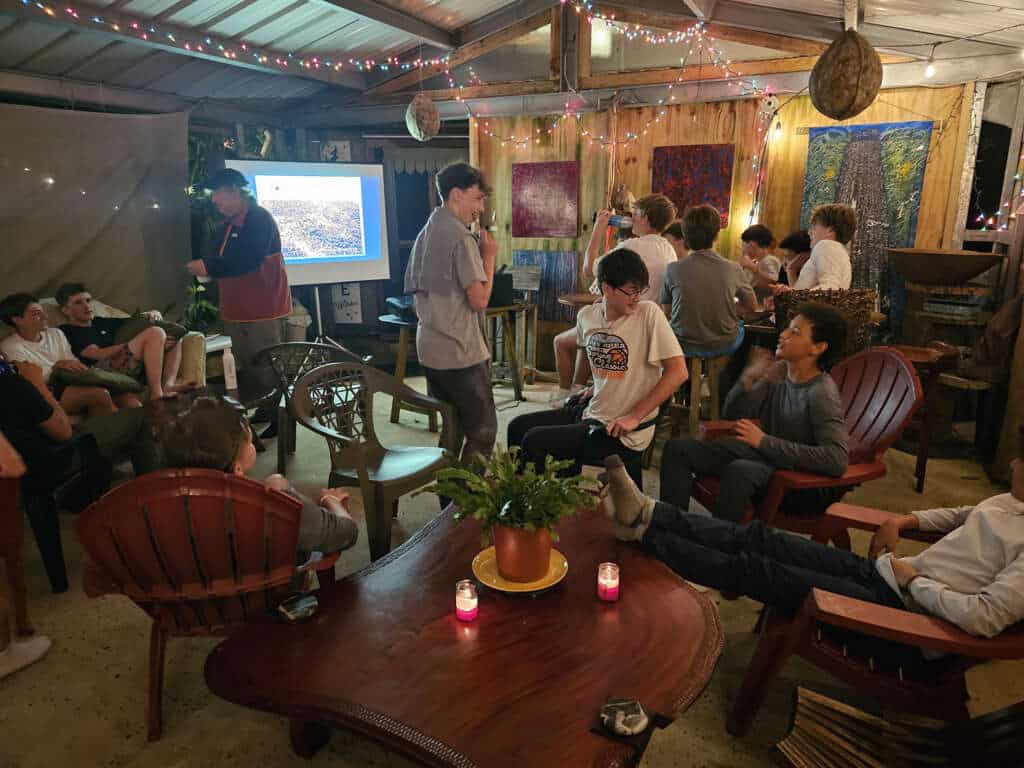
During the visit, 3t gave a presentation on the history and ongoing work at Las Casas de la Selva, covering everything from sustainable forestry practices to the development of the ethnobotanical trail. The talk gave students and staff a deeper understanding of the long-term goals of the project and how their work fits into a broader vision of conservation, development of a wood industry, and community engagement.

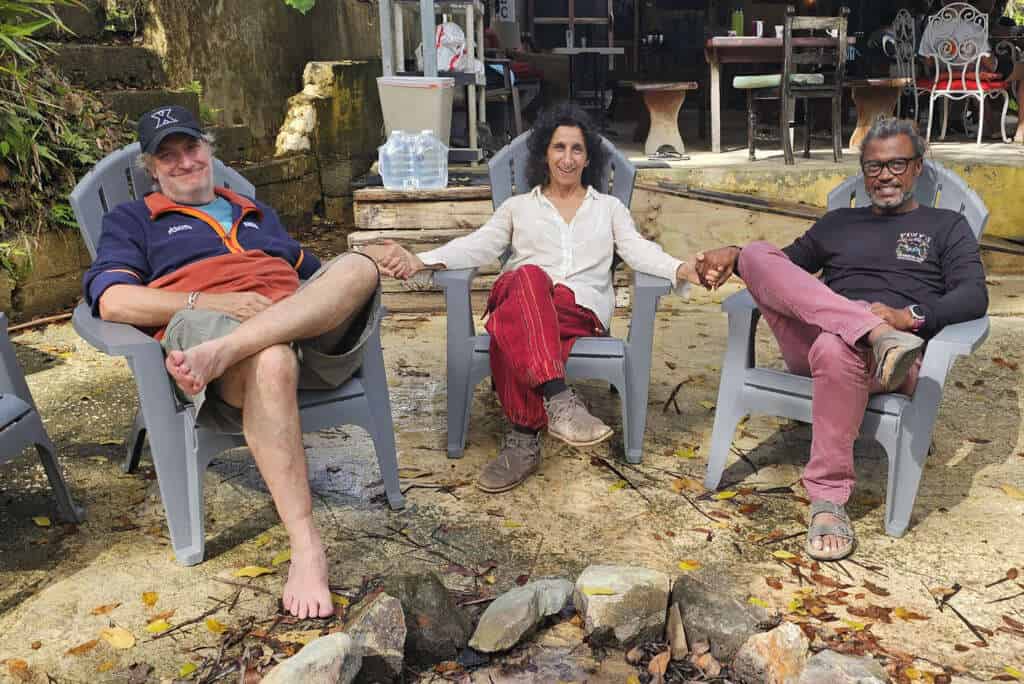
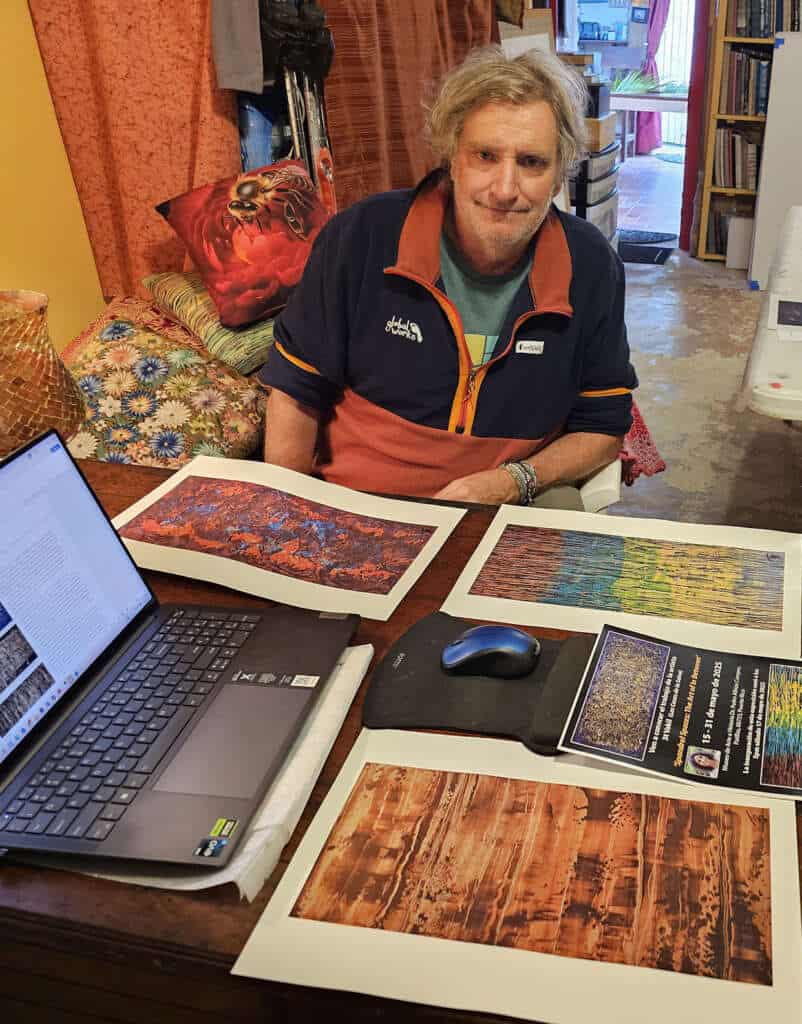
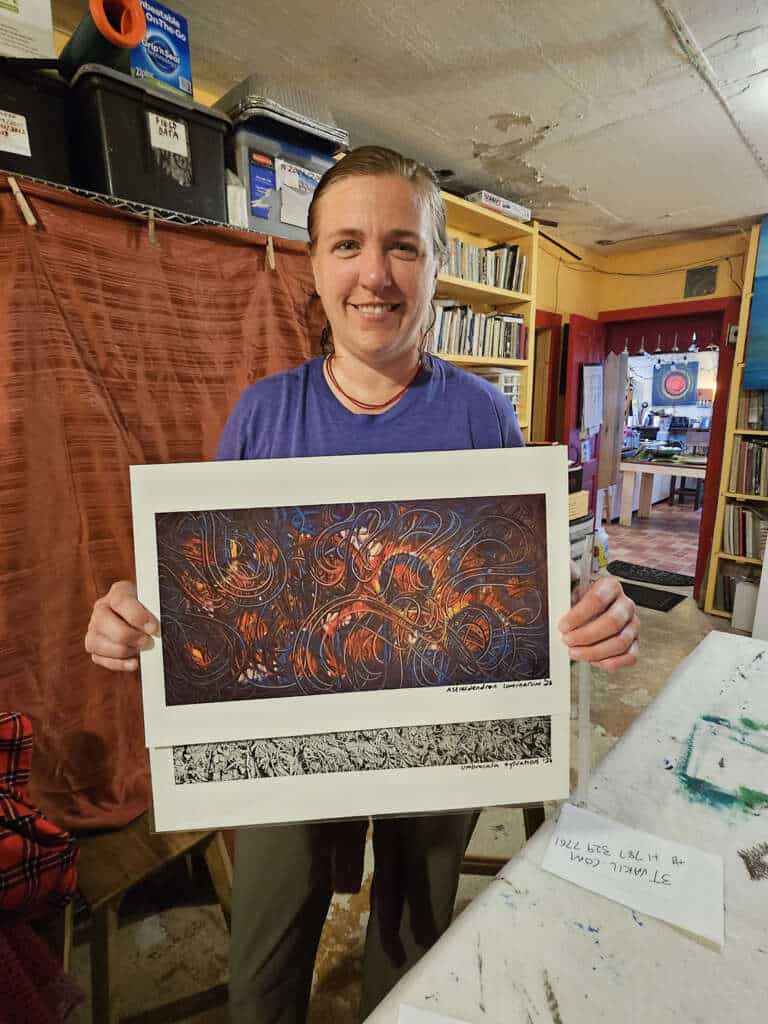
Both Tyrone (left) and Chris (right) are also strong supporters of 3t’s artwork, and during the visit, they, along with Susan, each bought several prints—much appreciated. See 3t’s artwork: www.3tvakil.com


Thanks to Monique Nieves for great cuisine throughout, and to Jon Warwick for steady help with crew work and logistics. Huge thanks to Globalworks Team leaders Lauren Gette-King and Claudia Koechell.
Appreciate everyone’s efforts! Thank you!

Charles H. Barrows Stem Academy, April 2025

Young Hands, Big Impact: Charles H. Barrows STEM Academy at Work on the Ethnobotanical Trail

On April 14–15, 2025, we had the pleasure of hosting a remarkable group of eighteen 13–14-year-old students from Charles H. Barrows STEM Academy in Connecticut, along with their staff. With boundless energy, curiosity, and an impressive sense of responsibility, these young changemakers dove into revitalizing a heavily overgrown section of our ethnobotanical trail—and the results speak for themselves!


Over two productive days, the students tackled a variety of essential restoration tasks. They cleared thick vegetation, pruned overgrown bamboo stems, dug a much-needed drainage channel, and raked the trail to improve both safety and appearance. The transformation was nothing short of inspiring—and a powerful reminder of what a motivated group can achieve in a short time.


We are incredibly grateful to the Barrows students for their enthusiasm and hard work. A heartfelt thank you also goes out to:

  • School staff Nick and Bay, for their support and encouragement throughout the trip
  • Vámonos Travel staff Bernardo and Wendy, for their outstanding group leadership
  • Monique Nieves, whose incredible chef work kept everyone energized and happy
  • Jon Warwick and Mercury, for lending their hands, tools, and expertise to help guide the crew and keep everything moving smoothly.


Thanks again to everyone involved—we hope to welcome you back soon!
See more on how to book a group trip to Puerto Rico with Vamonos Travel : https://www.vamonostours.com/destination/puerto-rico/

Shoulder to Shoulder March 2025

Sacred Heart Academy Students dig in at Las Casas de la Selva, 19-20 March 2025

As part of a meaningful service-learning journey organized by Shoulder to Shoulder, students from Sacred Heart Academy Bryn Mawr spent a night immersed in the rainforest at Las Casas de la Selva. Located in Pennsylvania, Sacred Heart Academy is an all-girls, K–12 independent school grounded in the mission of the Society of the Sacred Heart—educating to serve with faith, intellect, and compassion.

During their stay, the group jumped into action with a strong sense of purpose and enthusiasm. They worked alongside 3t and crew leader Mercury on a series of homestead tasks that support the daily rhythm and ecological care of the land. Their contributions included weeding the cacao plantation area, pruning around the homestead, and gardening efforts that keep our cultivated areas productive and healthy.

Whether pulling stubborn weeds or clearing out overgrowth, each student brought energy and intention to the work. These small yet vital tasks help sustain our long-term goals of conservation and land stewardship.

We extend heartfelt thanks to Shoulder to Shoulder team leader Bill Cotter for his guidance and leadership throughout the visit and to Fernando from Carite 3.0 for the kind introduction that made this connection possible.

As always, Monique Nieves delivered outstanding meals, providing the nourishment and warmth that rounds out every visit. After a full day in the field, gathering together for a hearty rainforest dinner is an experience in itself—one of good food, shared stories, and deepening connections.

We’re grateful to Shoulder to Shoulder and Sacred Heart Academy for including Las Casas de la Selva in their journey. These short visits leave a lasting impact, and we’re always honored to be part of a young person’s deeper understanding of the natural world—and their place within it.

Westtown School, PA, March 2025

Westtown School Students Lend a Hand in the Rainforest

We were thrilled to welcome students from Westtown School in West Chester, Pennsylvania, for a short but impactful stay at Las Casas de la Selva. As a Quaker, coeducational boarding and day school with a strong commitment to stewardship and community, Westtown’s values aligned beautifully with our mission in the Puerto Rican rainforest.

Over two days and nights, the students jumped right in—clearing bamboo from one of our overgrown trails, building steps along the ethnobotanical trail, and re-establishing drainage ditches on the main forest road to help with water flow and erosion control. These are essential tasks that help us keep the forest healthy and accessible, and their energy and teamwork made a real difference.

Working alongside 3t were crew leaders Mercury and Jon Warwick, who guided and supported the students through each task with care and enthusiasm. Whether using shovels, or moving stones, the crew made sure everyone felt involved and appreciated.

And of course, no rainforest workday is complete without a delicious return to the kitchen—where Monique Nieves had nourishing meals ready and waiting. Coming home from the field to a hearty lunch or dinner was a treat that lifted everyone’s spirits and kept the momentum going.

We’re grateful for Westtown’s visit, their hard work, and the connection forged between forest and school. These moments of hands-on learning and service remind us that true education happens everywhere—especially when hearts and hands come together for a greater purpose.

Thanks to staff:  Franco Yanielli, Fernando Gomes, & Mercedes Duran.
 Vamonos Tours were responsible for getting the team to us and away, and great thanks to team leader Veronica.

Fountain Valley High School March 2025

Fountain Valley Students Dig Deep in the Rainforest: 10 to 13 March 2025

From the snowy peaks of Colorado Springs to the lush green mountains of Puerto Rico, students from Fountain Valley School once again made the journey to Las Casas de la Selva this March, guided by the inspiring duo of math teacher Deb Prantl and Sue Tibbetts.

From the moment they stepped onto the land, the rainforest became their classroom. Under the mentorship of Thrity Vakil (3t), they took on real-world conservation challenges—restoring ecosystems, maintaining infrastructure, learning about composting and humanure, and contributing to the preservation of Puerto Rico’s precious endemic species.

This year’s group left a powerful mark. They worked on the rock stairway of our ethnobotanical trail, improved a key drainage system along the main hill path, pruned towering bamboo along the main drive, cleared dense vegetation near the entrance gate, and planted endangered native trees—actions that directly support biodiversity and forest resilience.

Throughout their time at Las Casas, the students worked alongside 3t and her dedicated team: Mercury, a visionary artist who brings creativity into the forest’s rhythms, and Jon Warwick, a steady hand and vital force behind the scenes who helps 3t take care of the nurseries. The collaboration and camaraderie between crew and students created an unforgettable exchange of knowledge and effort.

Of course, no adventure in the rainforest would be complete without the delicious cuisine prepared by Monique Nieves. Her meals, crafted with care and bursting with local flavor, nourished everyone at the table—fueling full days of trail work, planting, and reflection.

These days away from screens and routines weren’t just about physical work—they were about connection. Connection to place, to people, to the pulse of the forest. And in every shared meal, trail cleared, and seedling planted, the Fountain Valley students stepped further into what it means to be stewards of the Earth.

We’re grateful for their presence, their spirit, and their sweat. Here’s to the next generation of leaders, thinkers, and doers.

Sue Tibbets, Deb Prantl, staff of FVS, and Mercury, visiting artist and volunteer, and Monique, Chef.

Germantown Academy, PA, February 2025

Students from Germantown Academy help plant trees for the future

We were delighted to welcome a group of students from Germantown Academy for an immersive overnight stay, 13-14 February 2025, at Las Casas de la Selva. During their brief but impactful visit, these young stewards of the environment took part in a hands-on conservation activity—planting endangered tree species as part of our ongoing forest enrichment work.

Special thanks to 3t for leading the plant and field activities and offering guidance and insight into the significance of rainforest restoration. Deep gratitude also goes out to Jon Warwick and Mercury for their crew and kitchen support, ensuring everything ran smoothly on the ground. We also thank chef Monique Nieves for preparing deeply nourishing meals that fueled everyone for a meaningful day’s work.

Every tree planted is a step toward protecting Puerto Rico’s precious biodiversity. We thank Germantown Academy for being part of that journey.

Thanks to Jesyka Melendez Rosa for the introduction!

Teenagers roll up their sleeves! Summer 2024

Welcoming teens from all over the USA


Ellington School, Connecticut – April 7, 2024

On April 7th, we had the pleasure of hosting 23 enthusiastic teenagers and their dedicated staff from Ellington School, Connecticut, who arrived through Vamonos Travel. Led by 3t, this energetic group rolled up their sleeves and got to work on a variety of essential tasks. They meticulously weeded the Garcinia portoricensis endangered endemic trees in the nurseries, trimmed vetiver, and even established a small tree nursery. Fueled by Chef Monique’s delicious meals, these teens made a lasting contribution to the health and future of our forest, leaving behind a well-tended landscape and a budding nursery that will continue to grow for years to come.


Aspen School, Colorado – May 4, 2024

On May 4th, 15 spirited teenagers from Aspen School, Colorado, along with their staff, joined us for a day of hard work and camaraderie, thanks to Globalworks International. Under the guidance of crew leader Professor George Locascio, and nourished by Chef Monique’s meals, the group took on the challenging task of digging drainage ditches and maintaining trails. Their efforts helped to improve the resilience of our forest’s infrastructure, ensuring that our trails and paths can withstand the elements for seasons to come. Their dedication and teamwork made a significant impact on the landscape, leaving it more secure and better prepared for the future.

Hood River New School, Oregon – June 17-19, 2024

From June 17th to 19th, 23 passionate teenagers and staff from Hood River New School, Oregon, brought their enthusiasm and energy to our forest, with Globalworks International facilitating their visit. During their stay, they focused on planting a variety of important tree species, including Goetzea elegans, Cobana Negra, and Swietenia aubrevilleana. Led by 3t and sustained by Chef Monique’s nourishing meals, these teens left behind more than just newly planted trees—they contributed to the future biodiversity and ecological health of our forest. Their commitment to nurturing the land was inspiring, and their efforts will be felt for generations.
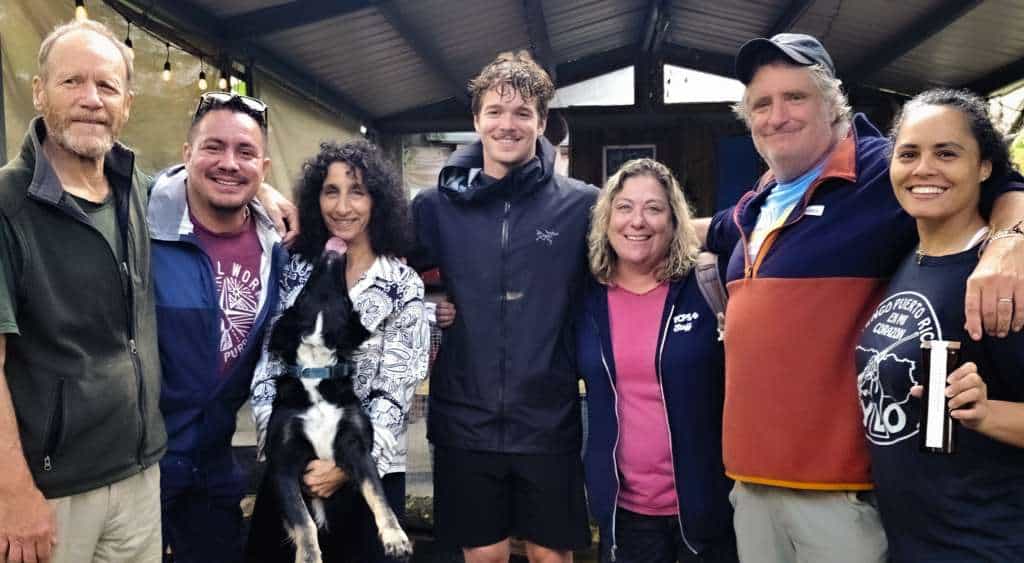
Thank you to Globalworks International and Vamonos Travel and their amazing crew leaders. These teams take the teenagers all over the island of Puerto Rico, to engage in meaninful projects. We salute them!

Many Hands! March 2024


In early March 2024, a group of twenty-nine students, aged 13 to 14, from the Principia School in Missouri, joined us for a few days. They actively participated in our projects under favorable dry weather conditions, allowing us to make significant progress. The Principia School is a private, coeducational institution focused on college preparatory education, offering innovative programs from early childhood through twelfth grade.

We want to express our heartfelt thanks for the wonderful time we had together and for all the help provided.

Special appreciation goes to John, Ben, Lauren, and Lyndsey from the Principia staff, who expertly and kindly supervised the students. Their fair and effective management made our collaboration smooth and productive. Additionally, we’re grateful to Vamonos staff members Cruz, Mayra, and Roberto for their enjoyable and energetic participation.

In just one afternoon and a day, the team accomplished numerous tasks:

What a great group!!

3t led the work crew, with assistance from Mercury.

Mercury also supported Monique Nieves in preparing meals, contributing to the delightful dining experiences.

Our sincere thanks to Monique Stauder for capturing and sharing the final images of our time together.

This collective effort and the spirit of cooperation made our time together not only productive but also memorable. Thank you to everyone involved! 5th-7th March 2024

Tree-planting! Feb 2024


In February 2024, we were fortunate to host a vibrant group of thirteen-year-olds from Cathedral Middle School for Boys in San Francisco. Under the dedicated guidance of Chris Corrigan, Maddie, and Steve, these young students embarked on an enlightening journey into the world of environmental stewardship.

Their invaluable contribution to planting mahogany saplings, cacao, coffee, and vetiver has made a significant positive impact on our environment.

They worked in the rain and saw first-hand the impact of Hurricane Fiona’s devasting dump of water in September 2022, which caused the landslides that we worked on. We planted Mahogany (Swietenia aubrevilleana) saplings, grown from our own seeds, in June 2022.

Among the many activities, one aspect that stood out was their engagement with our compost toilets! This experience was more than just a lesson in sustainability; it became a source of inspiration for these young minds. The students quickly adapted to this eco-friendly practice, understanding the importance of water conservation and waste reduction. Their enthusiasm and willingness to embrace such sustainable living practices were both impressive and heartwarming. The use of compost toilets served as a practical introduction to the principles of ecological responsibility and closed-loop systems.

It was inspiring to see the students not only accept but also appreciate the value of these sustainable practices. They learned firsthand how such small changes in daily habits can significantly impact our environment. Thanks to Thomas for his note.

Special thanks are due not only to the ever-supportive Chris Corrigan but also to the dedicated school staff—Chris, Steve, Maddie—and Globalworks Leader Rebe, who all played pivotal roles in facilitating this transformative experience. Their collective efforts have undoubtedly sown the seeds of environmental consciousness in the hearts of these young individuals.

We extend our deepest gratitude to everyone involved in making this experience a reality. The students of Cathedral Middle School for Boys have left our community richer, not just through their physical contributions to our reforestation efforts but also by reinforcing our hope for a more sustainable and conscious future.

The Cathedral School for Boys prioritizes diversity in ethnicity, race, and socioeconomic status, along with an experiential education focused on service. This ethos of diversity and experiential learning is integral to their curriculum and is bolstered by their tuition assistance program. It is this foundation that facilitated the recent educational trip to Las Casas. The excursion included students from various economic backgrounds, including those on reduced or subsidized tuition, reflecting the school community’s shared commitment to its values. This commitment enables students, particularly those from urban backgrounds, to experience and learn about conservation in the rainforest firsthand, thereby broadening their perspectives and potential life paths.

Huge gratitude to Monique Nieves whose culinary expertise provided us with delicious meals, fueling our days with energy and warmth. Additionally, a big thank you to the talented artist Mercury, whose volunteer efforts and all-around assistance have been invaluable to our cause.

Here’s to more visits, more learning, and more inspiration. Together, we are cultivating a greener, more sustainable world, one young heart at a time. 27-29 Feb 2024

Translate »