Beyond the Razor Grass — Part Two
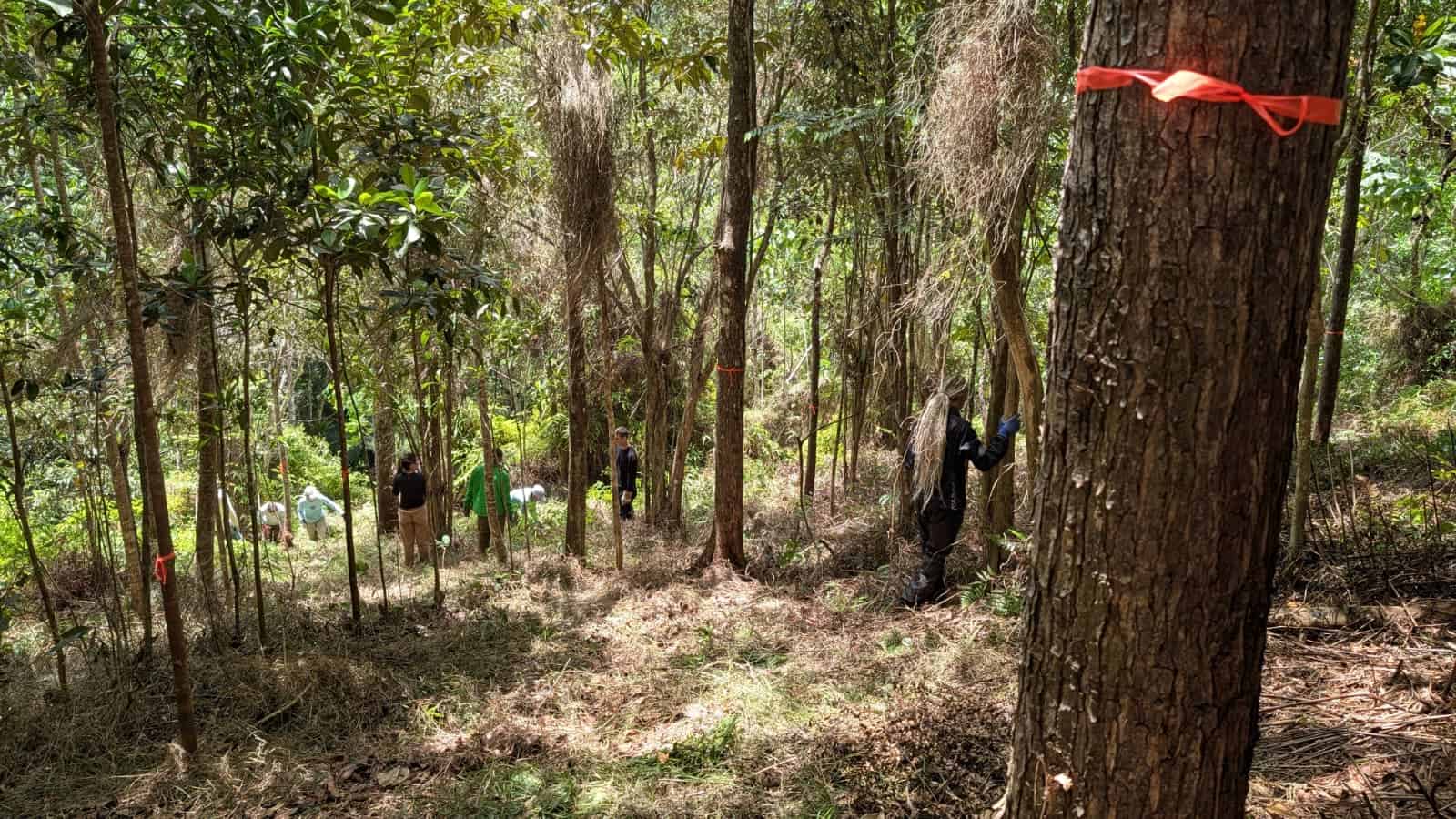
A forest revealed!
The first Global Works team had broken through the barrier. They reopened the way into a part of the forest that had been inaccessible since Hurricane Maria and helped us rediscover trees planted many years ago. But reaching the planted trees was only the beginning.
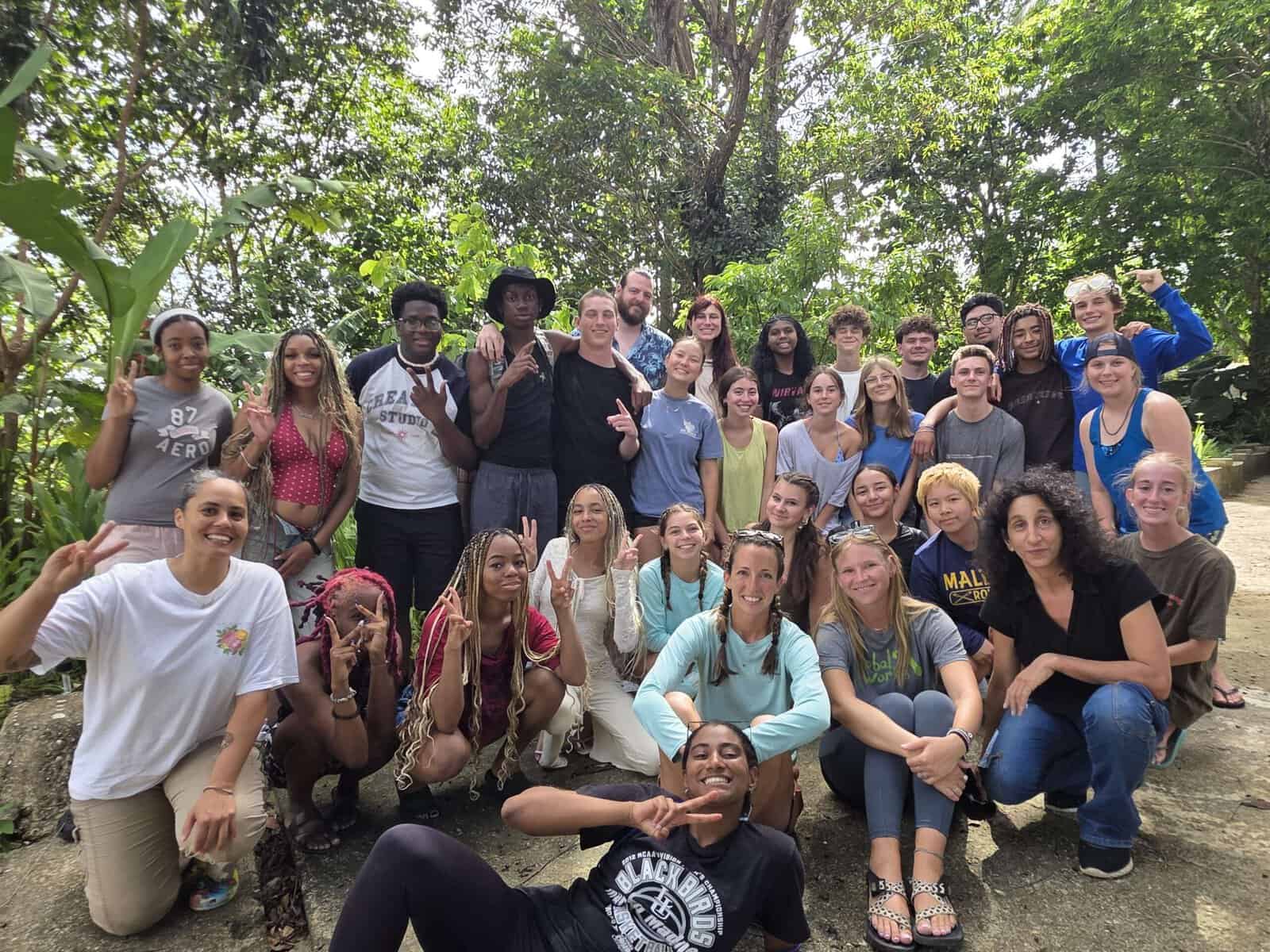
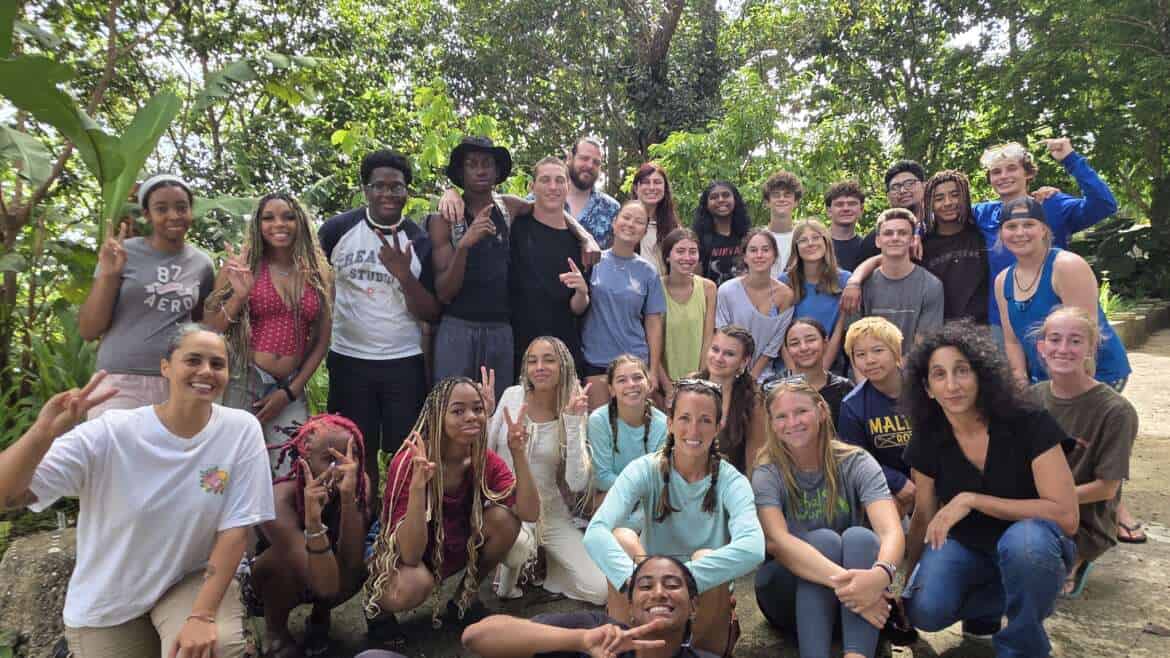
A second Global Works team—25 teenagers accompanied by staff members Lauren, Sam, and Darielys—arrived on 11th July ready to continue the work. Led in the forest by 3t Vakil and Jon Warwick, the group moved beyond the newly opened access route and deeper into the area where Swietenia x aubrevilleana (Mahogany), Manilkara bidentata (Ausubo), and Hibiscus elatas (Blue Mahoe) trees had been planted on land that was regaining secondary forest. Shade at an early age was imperative for the growth of these tropical hardwoods.
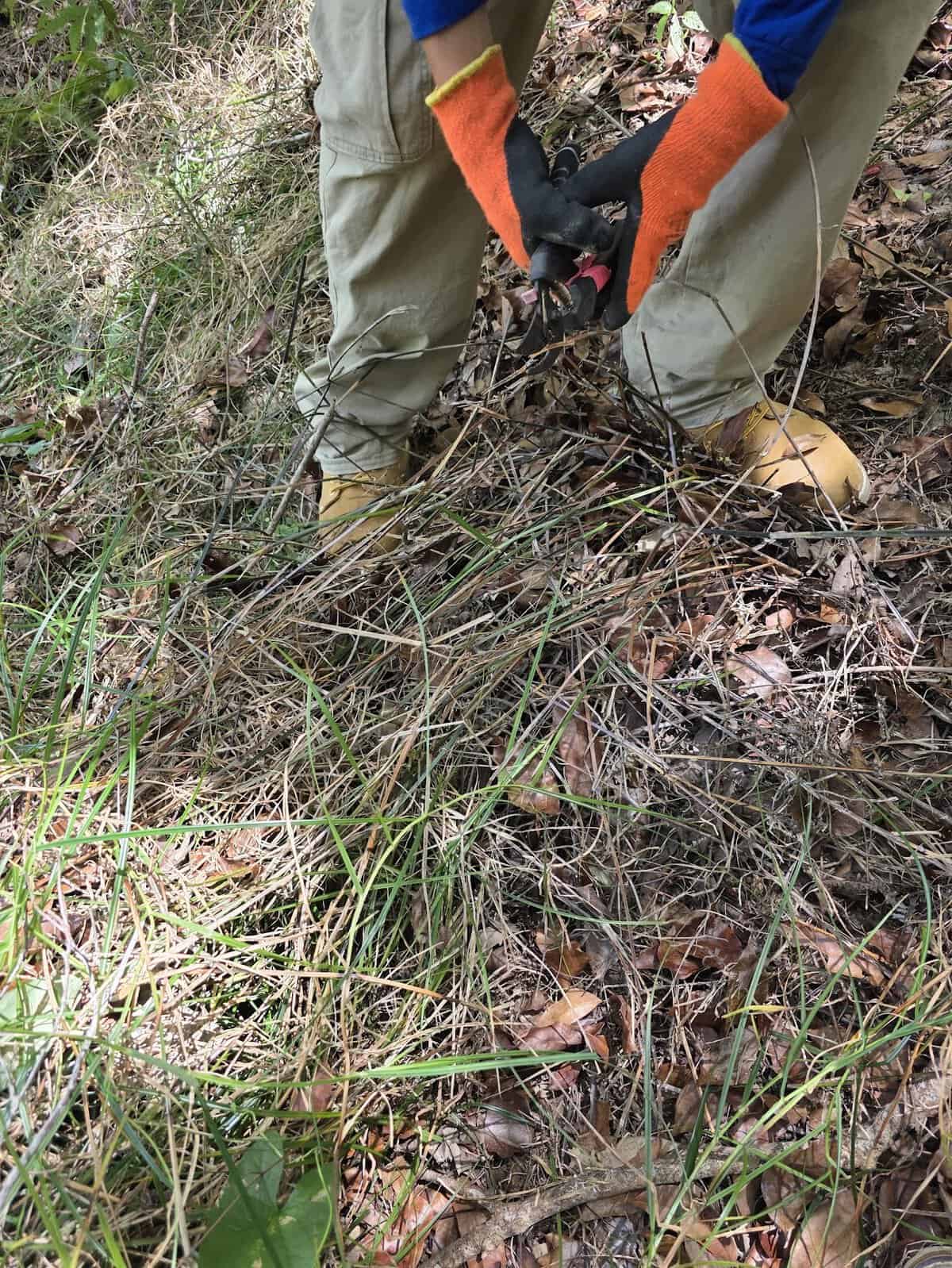
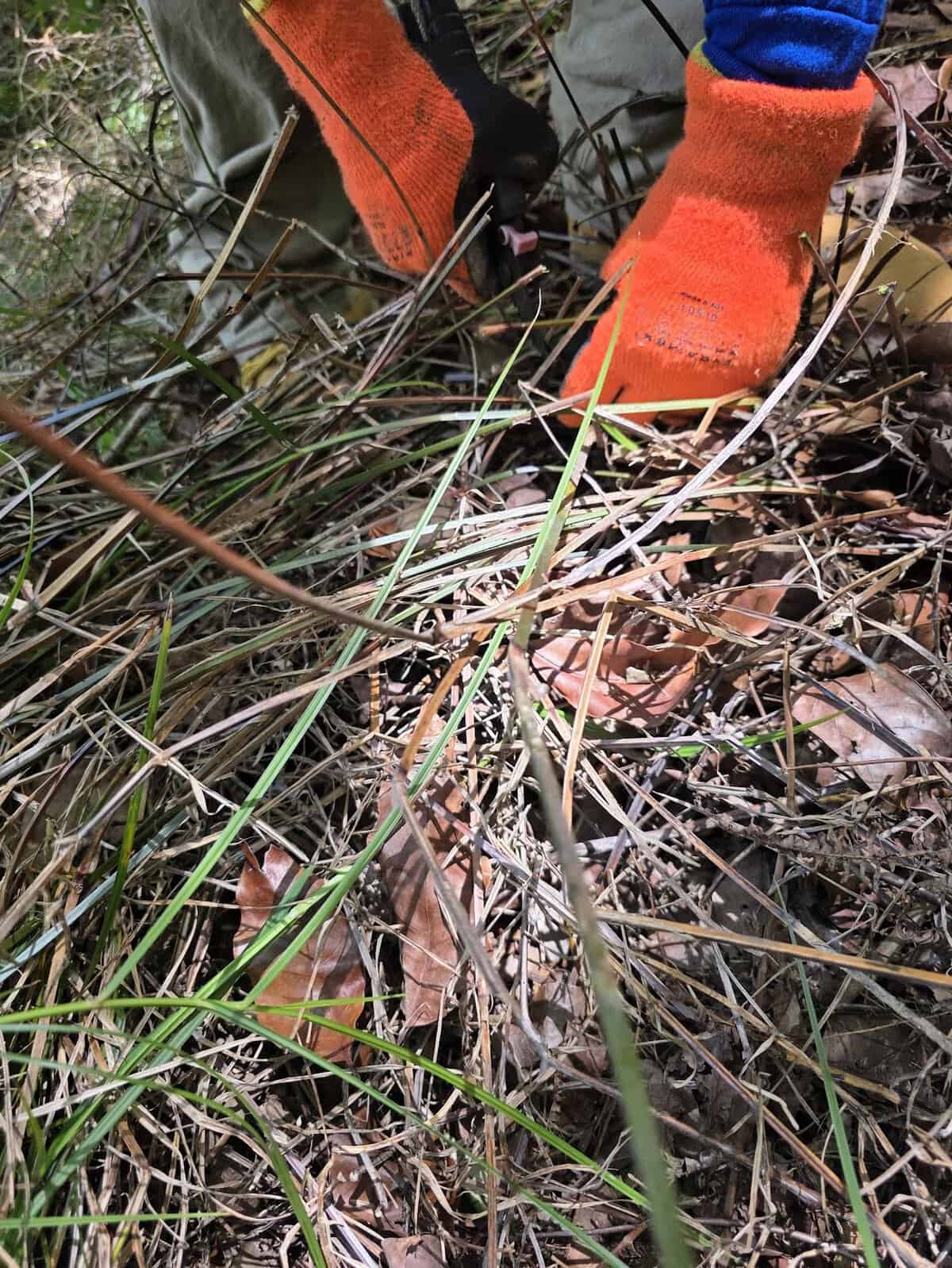
Scleria secans is a large, scrambling sedge native to tropical America. Unlike a true grass, it belongs to the sedge family, Cyperaceae. Its triangular stems and long leaves have razor-sharp, saw-like margins capable of cutting exposed skin—hence the fitting name “razor grass.”Scleria is a genus of approximately 200 flowering plant species, commonly known as nutrushes. They are found mainly throughout the tropics, although some species extend into temperate regions. The genus name comes from the Greek word for “hardness,” referring to the plants’ characteristically tough seeds.
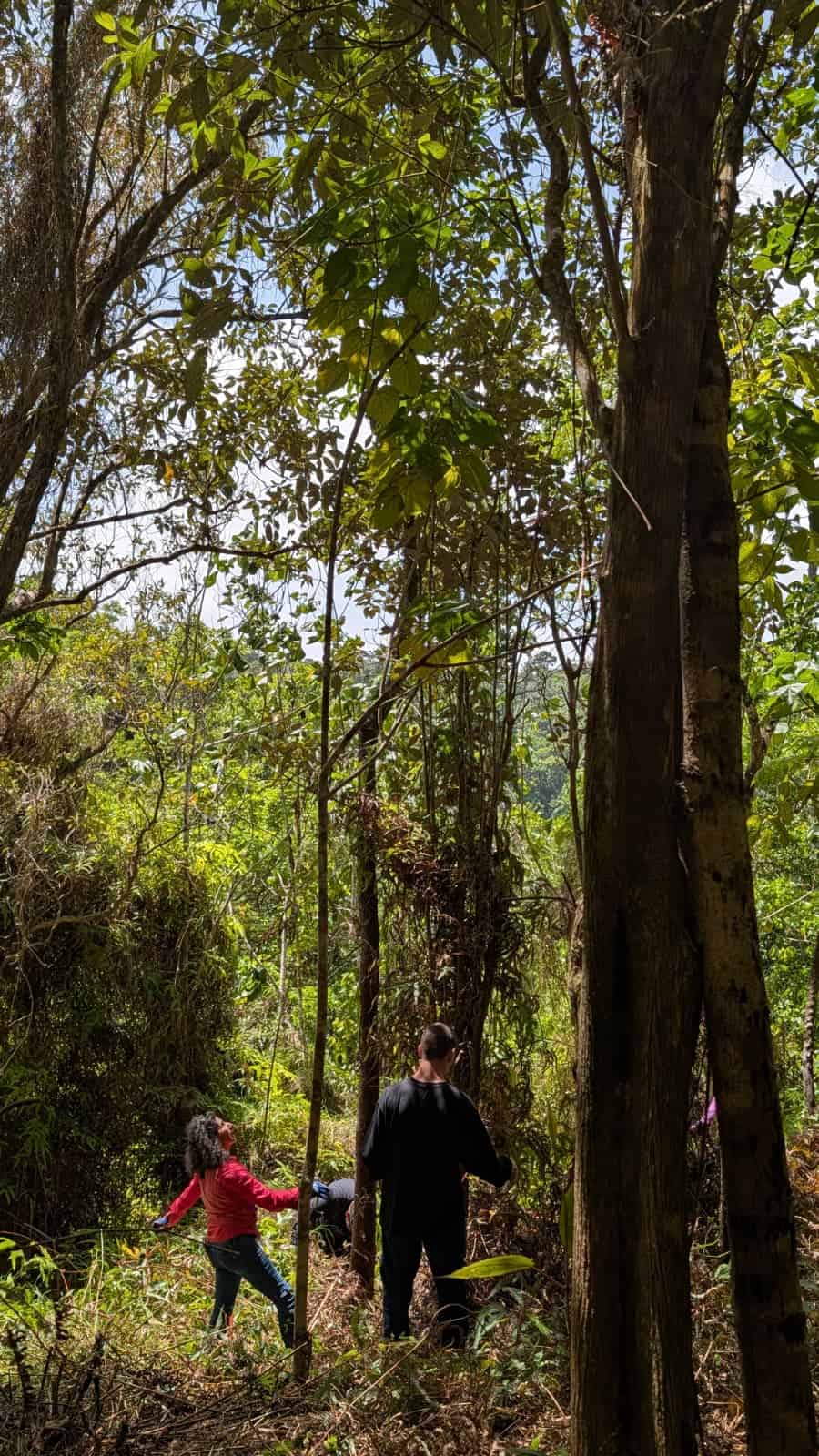
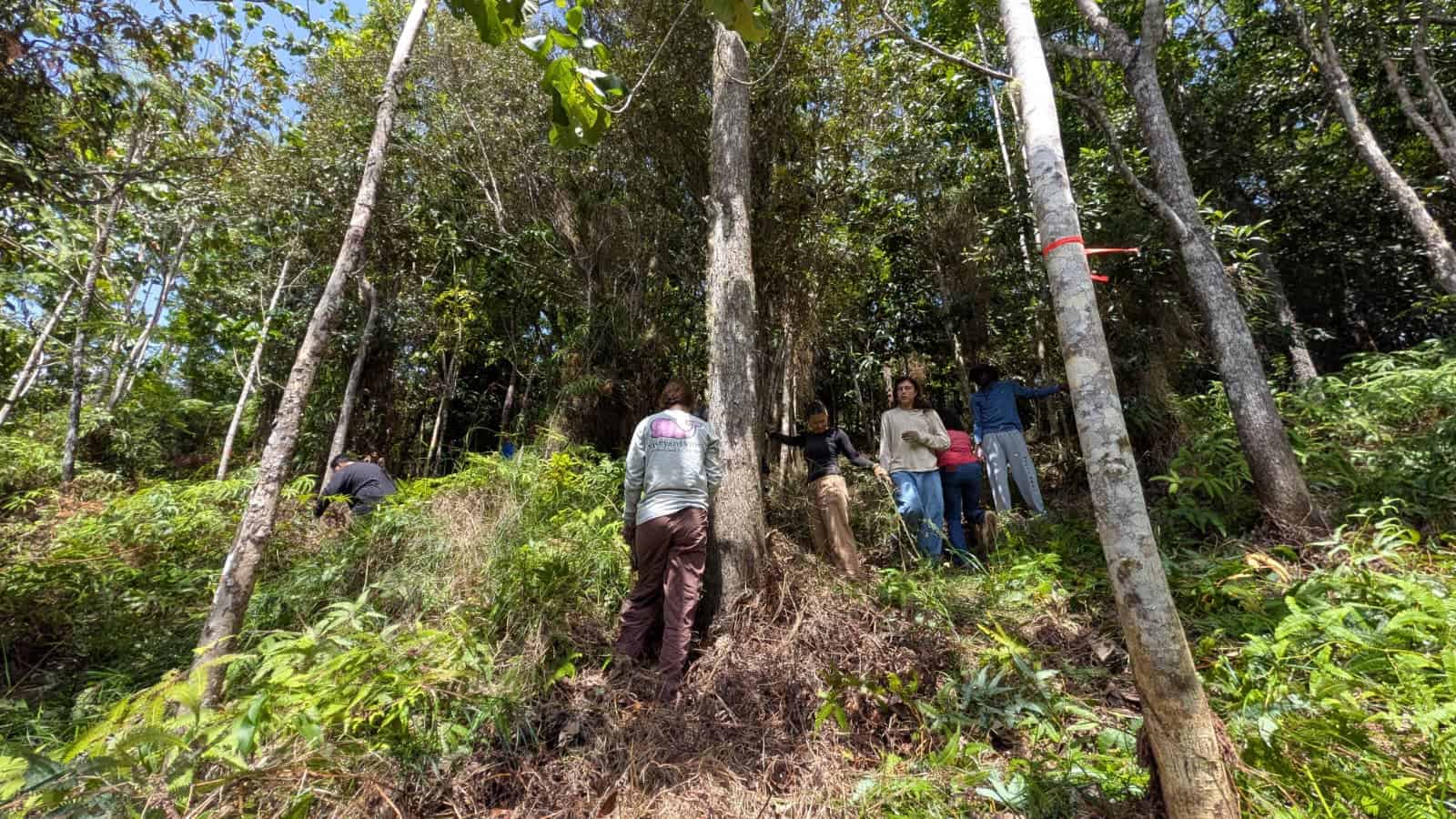
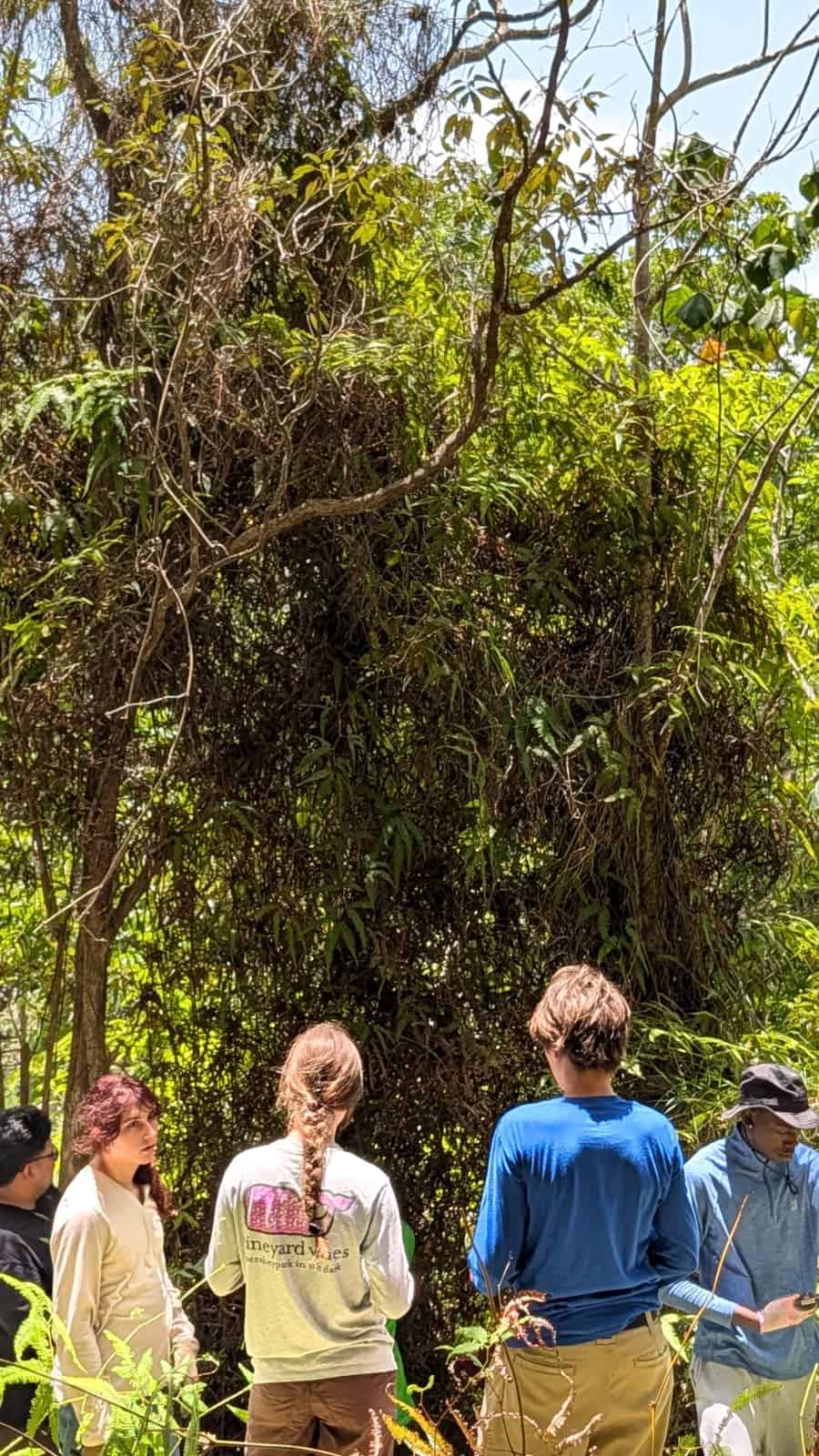
This time, we were no longer simply trying to find a way through. The goal was to begin clearing the razor grass from around the planted trees themselves, opening enough space to see the forest properly, assess the trees, and move safely through the area.The razor grass had occupied every available opening created by Hurricane Maria. Its long, sharp leaves tangled together with vines and other vigorous vegetation, concealing the ground and obscuring even substantial trees. Clearing it required patience and close teamwork. The teenagers worked steadily with gloves, loppers, and pruning shears, cutting carefully and passing the vegetation away from the trees.
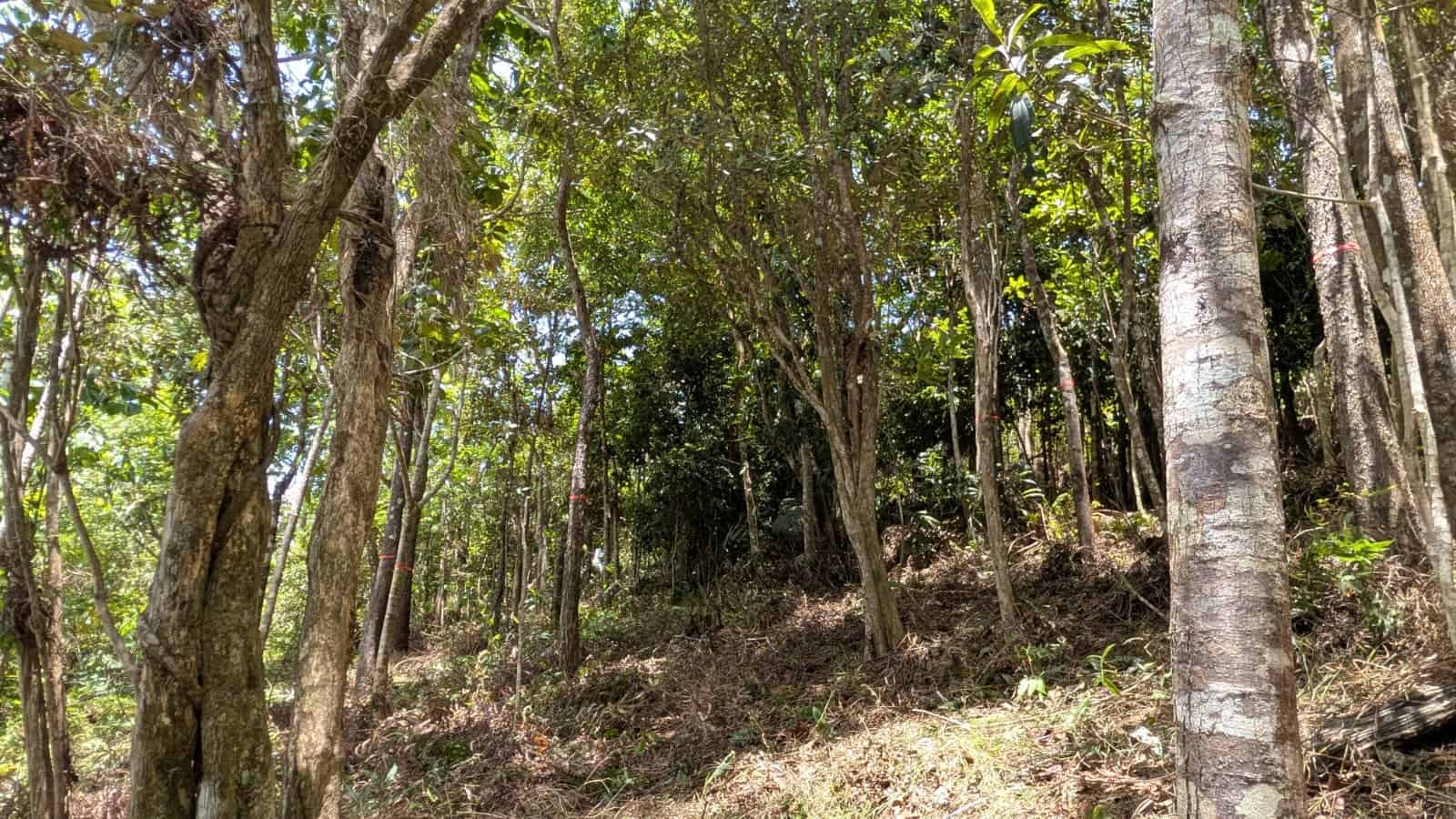
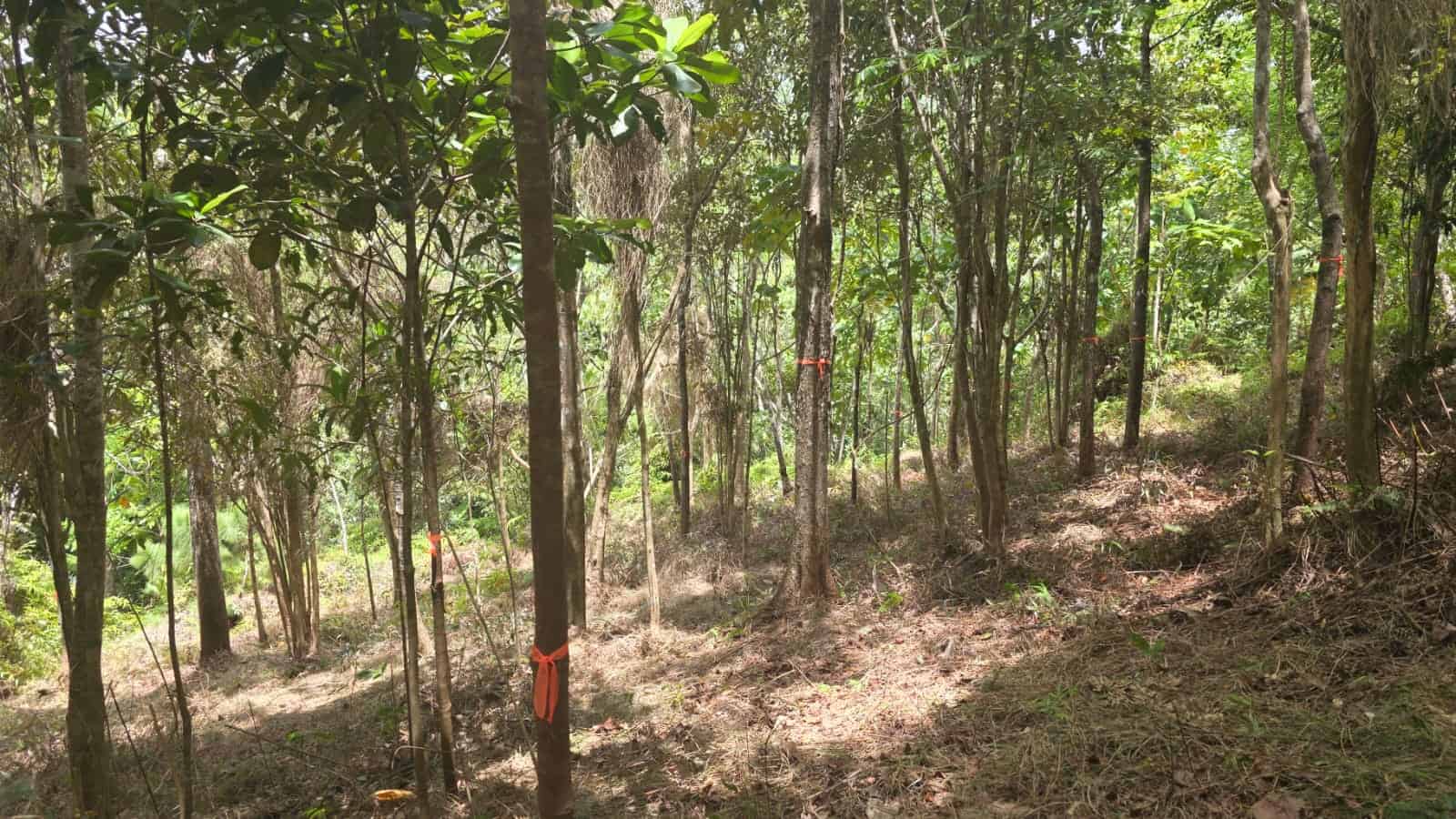
Little by little, the character of the place began to change. Individual tree trunks emerged from the tangled growth. Space opened between them. The steep contours of the hillside became visible again. We could finally look across an entire section of the planted forest rather than catching only brief glimpses through a wall of razor grass.
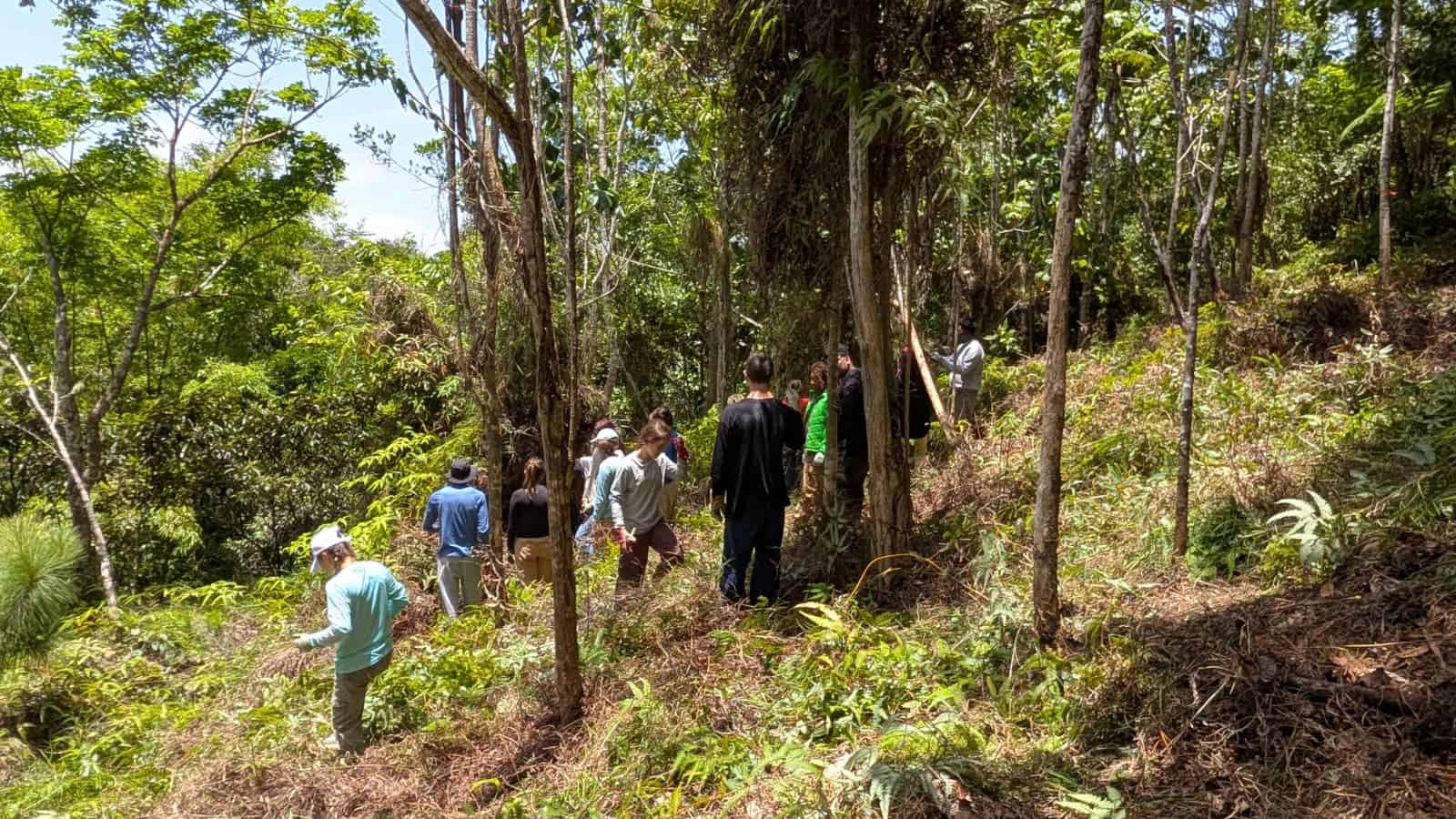
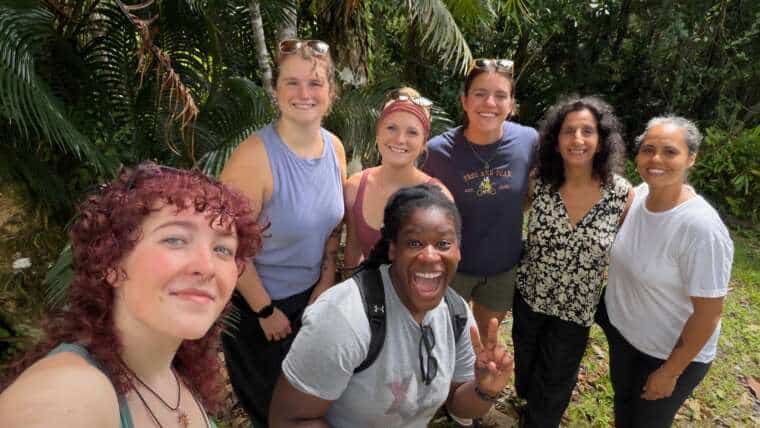
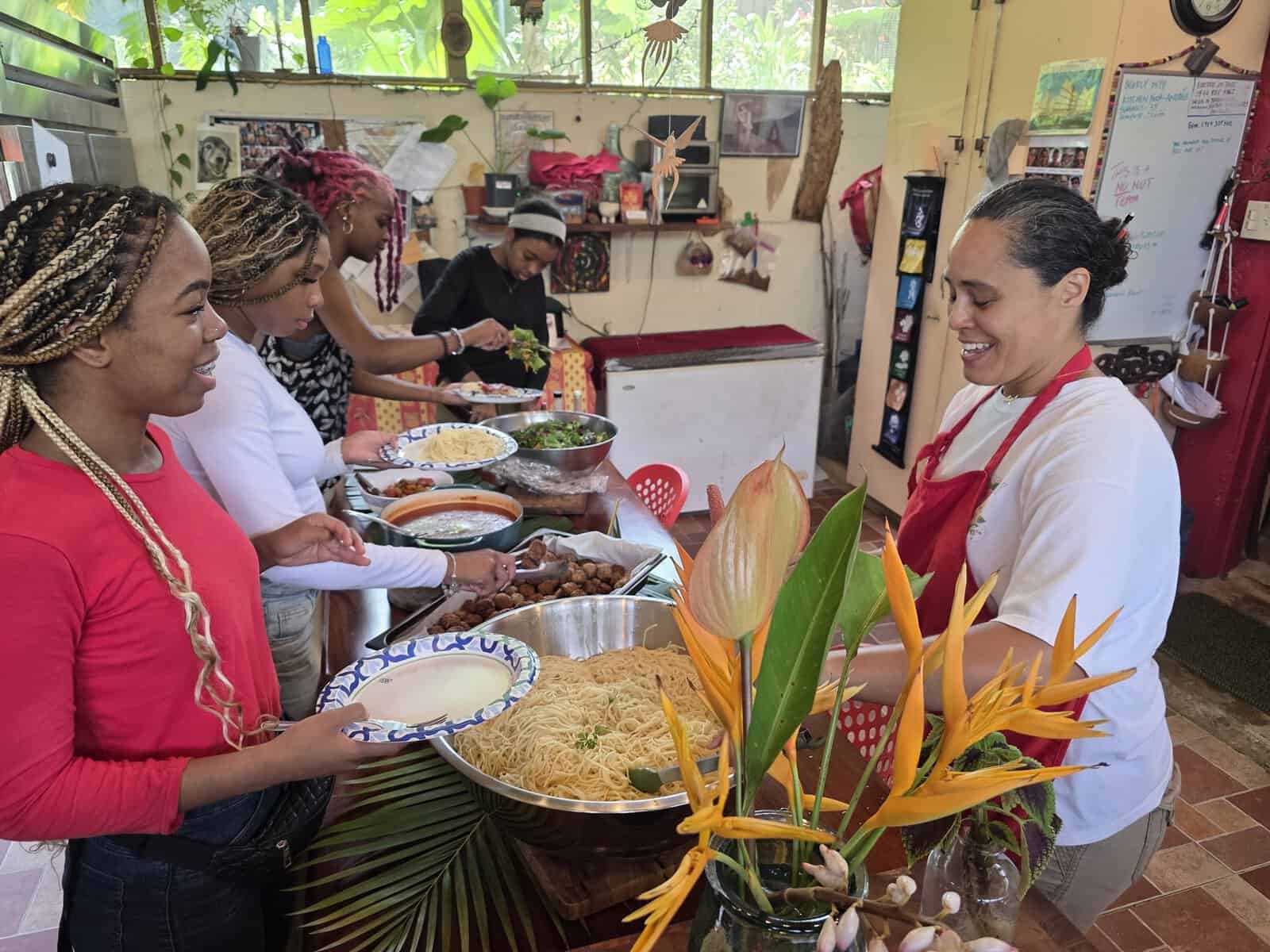
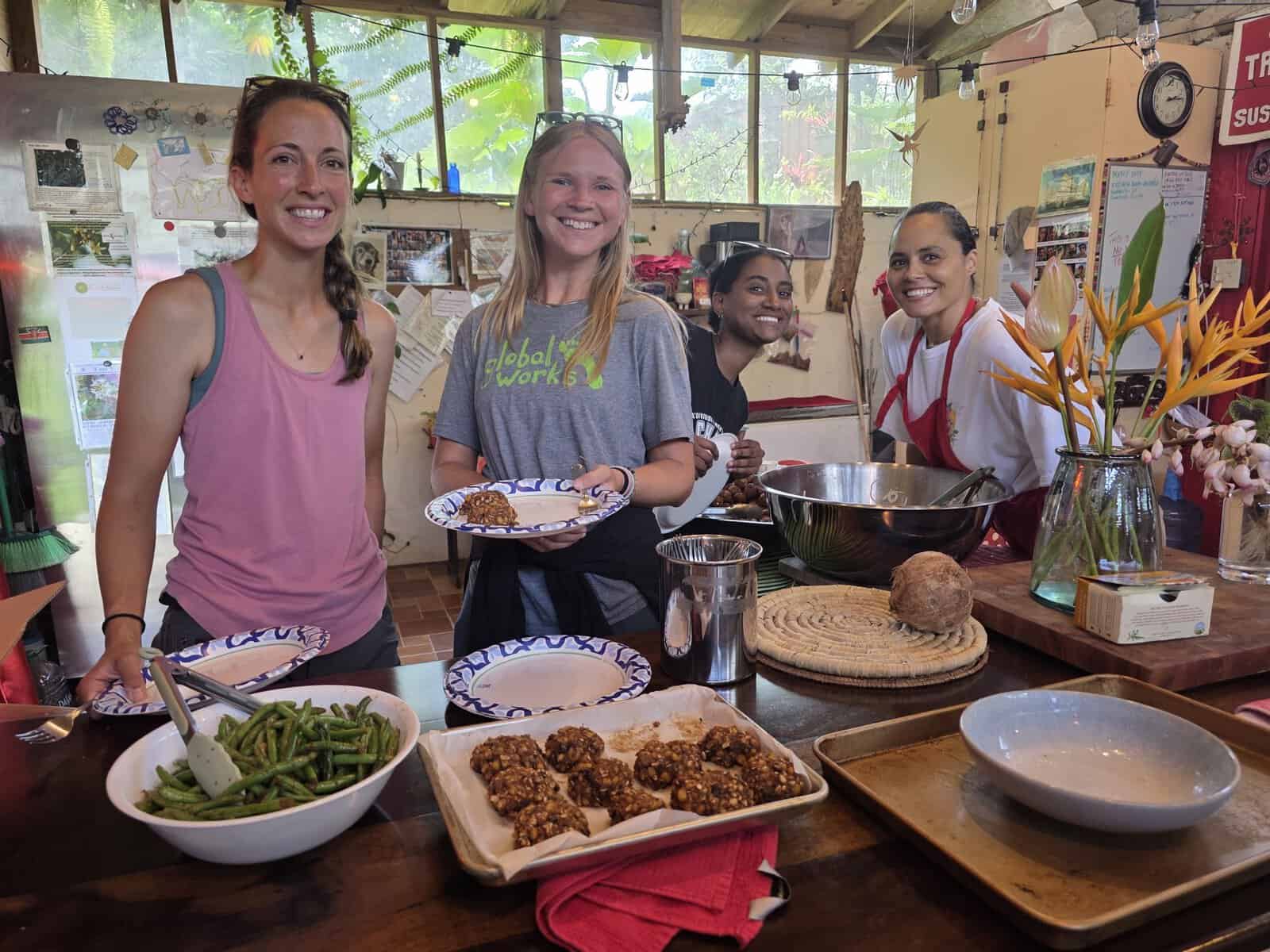
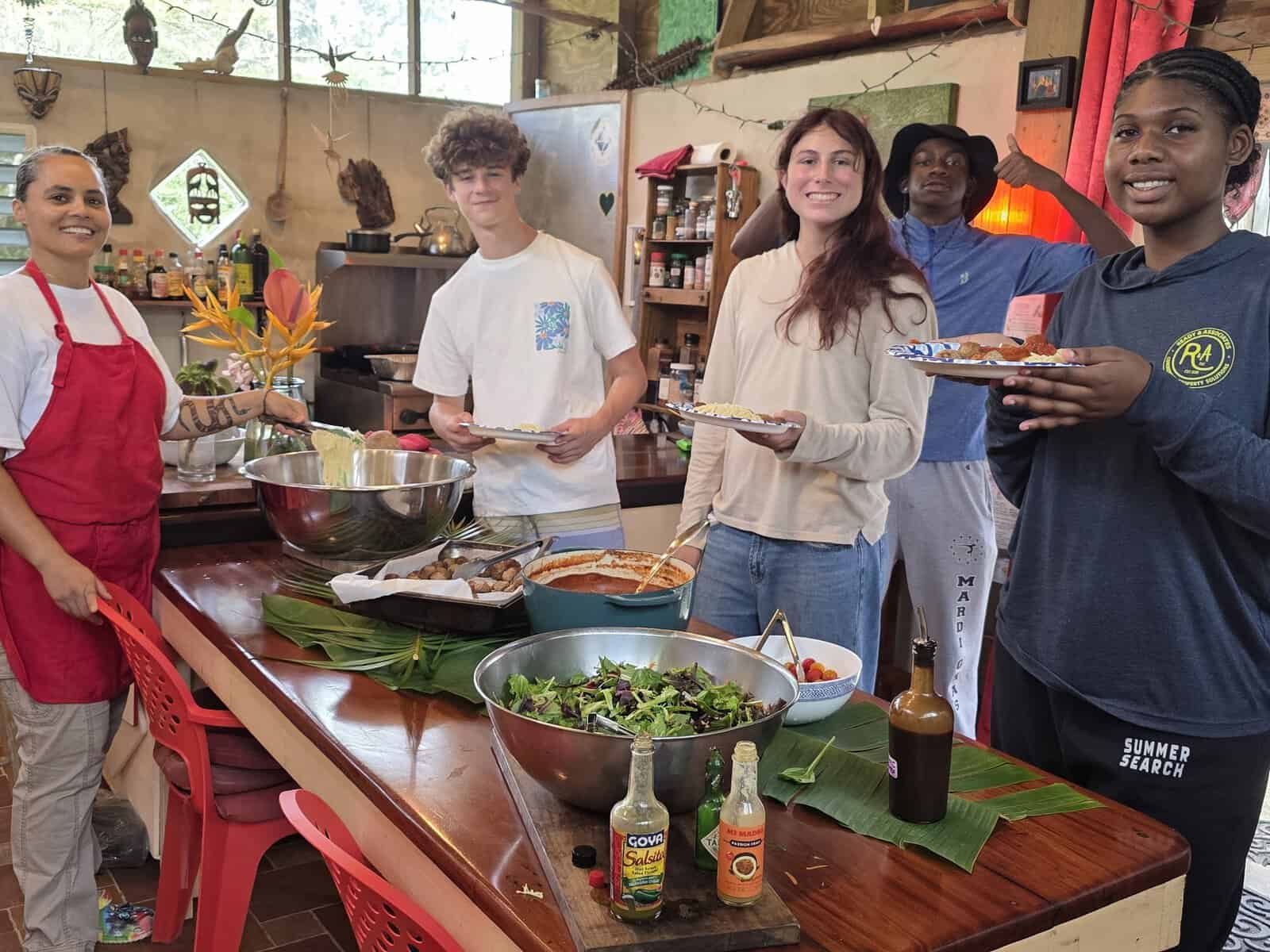
Our neighbor Mike Alvarez joined the team once again, as did local teenager Rio Collazo, who returned to lend her energy and enthusiasm to the day’s work. Monique Nieves was once again our chef, keeping the entire team well fed and restoring everyone’s energy after hours of demanding work in the forest. Her delicious food and generous care are always an essential part of these long volunteer days.
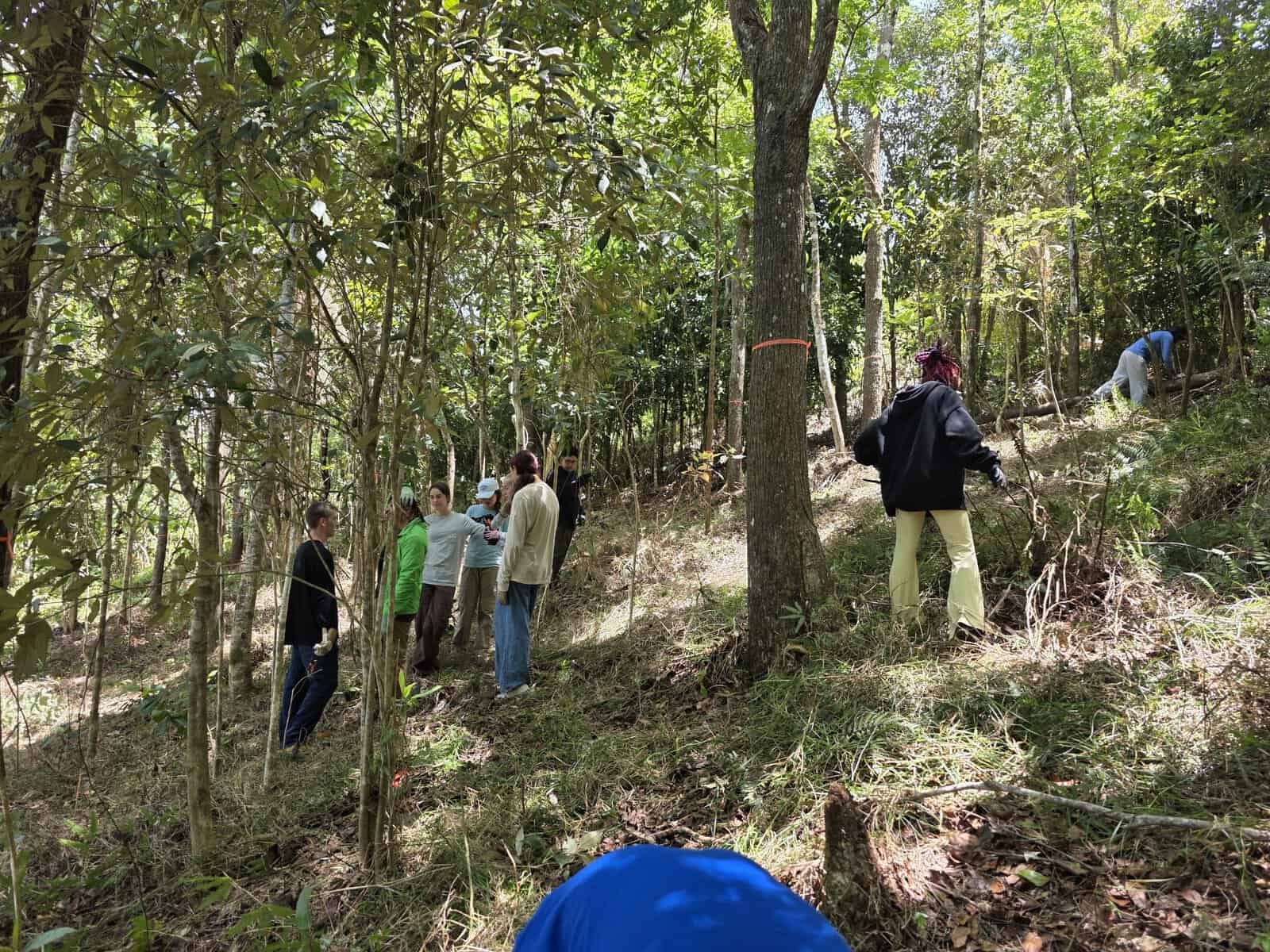
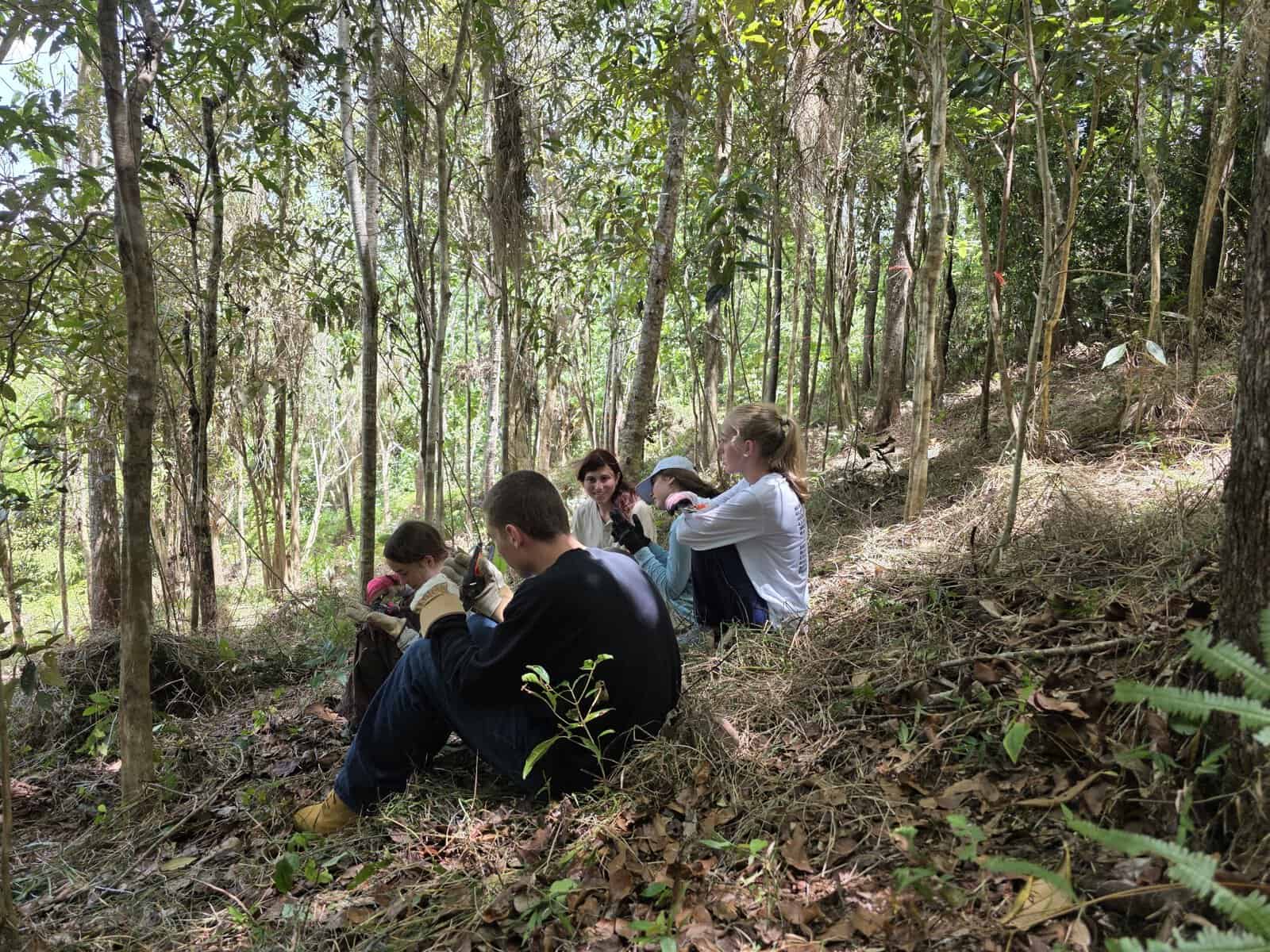
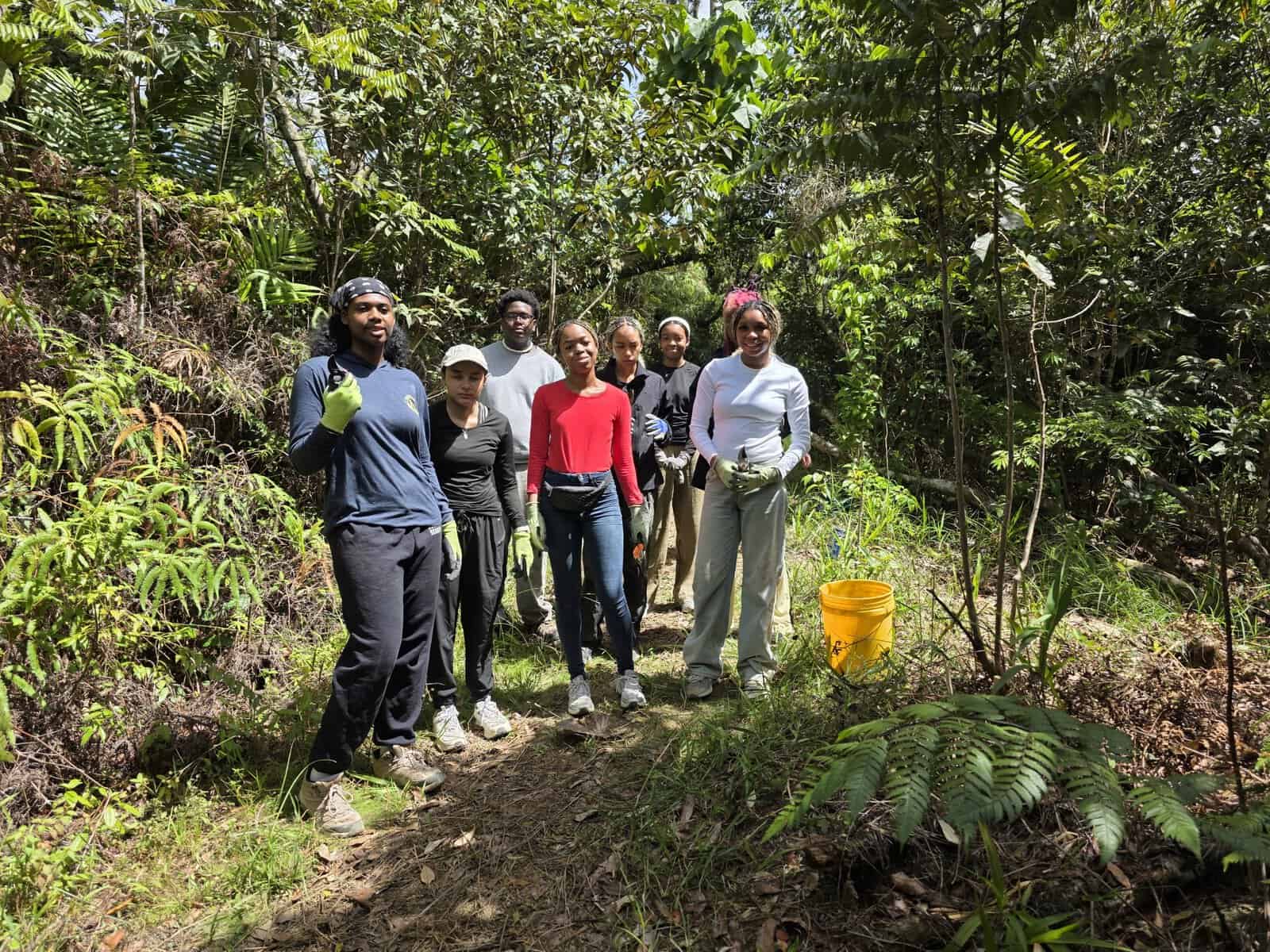
By the end of the day, a whole area was clear. For the first time in years, we could stand back and see the forest. Our planted trees now stood visibly among the naturally regenerating forest. Some had grown tall and straight; others had adapted to storms, competition, and changing light. Around them were ferns, mosses, fungi, young native trees, and the remains of fallen trunks slowly returning to the soil.The work did more than make the area look clearer.
Removing the dense grass and vines gave us access to inspect the planted trees, monitor their condition, and identify where future stewardship will be needed. It also reopened space for the forest canopy to continue closing over the site. As shade increases, the sun-loving razor grass should gradually lose some of its advantage.
There was something deeply satisfying about seeing this progression across two Global Works teams. The first group made the breakthrough and brought us back to the trees. The second carried the work forward, expanding the opening until a hidden plantation became a visible forest once again.The teenagers may have arrived seeing a hillside covered in difficult vegetation.
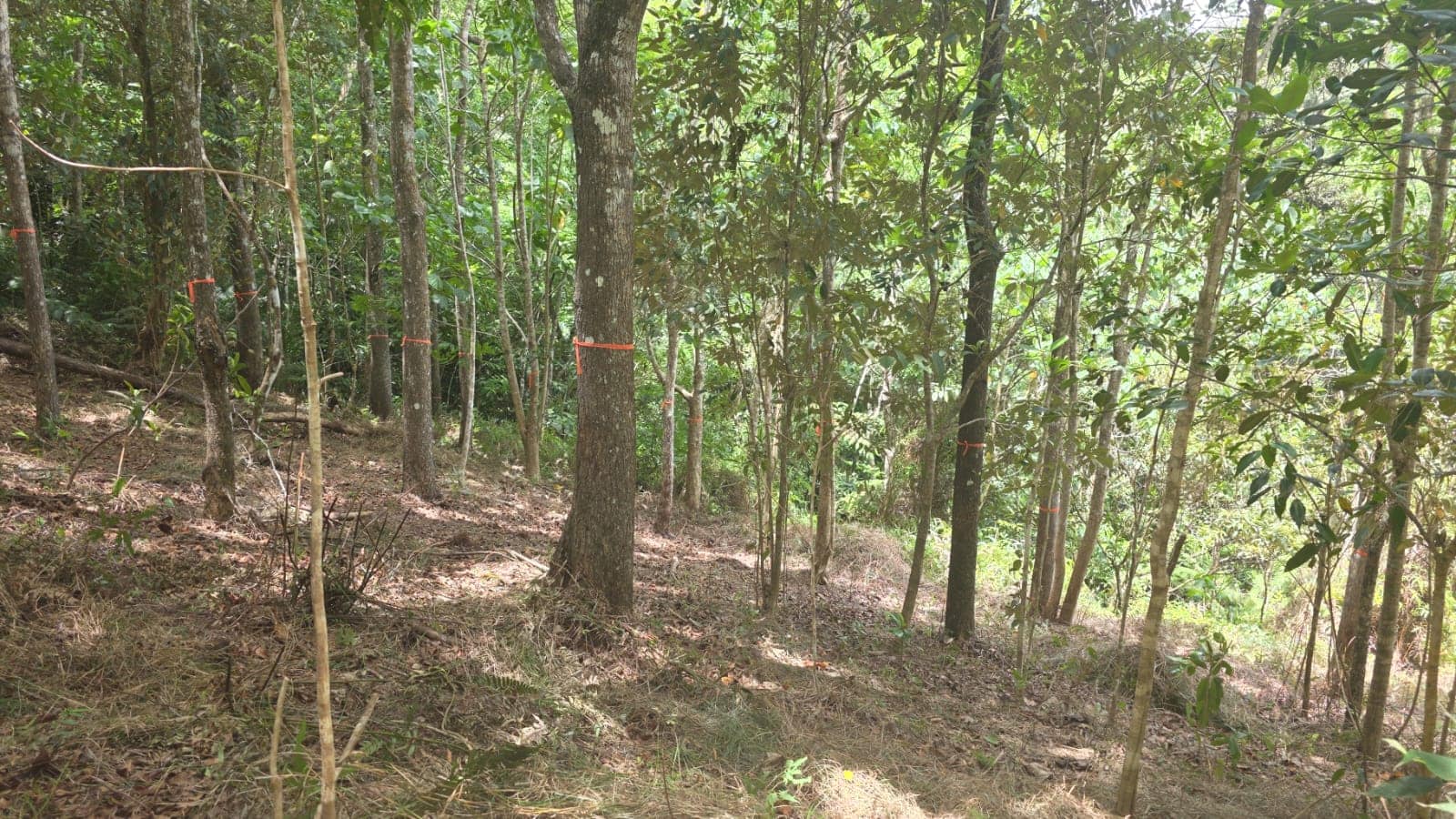
By the end of the day, they could see the result of their collective effort: a real and dramatic transformation.This is how long-term forest stewardship happens. One tree is planted. Years pass. Storms intervene. Trails disappear. Then many hands return—cutting, clearing, observing, and caring—and another chapter in the life of the forest begins.The razor grass had hidden this place for years. Now, at last, we can see the forest beyond it.
Photos by Mike Alvarez and 3t Vakil, 11 July 2026