Tag: Forestry

Beyond the Razor Grass — Part Two, 11th July 2026
Beyond the Razor Grass — Part Two

A forest revealed!

The first Global Works team had broken through the barrier. They reopened the way into a part of the forest that had been inaccessible since Hurricane Maria and helped us rediscover trees planted many years ago. But reaching the planted trees was only the beginning.

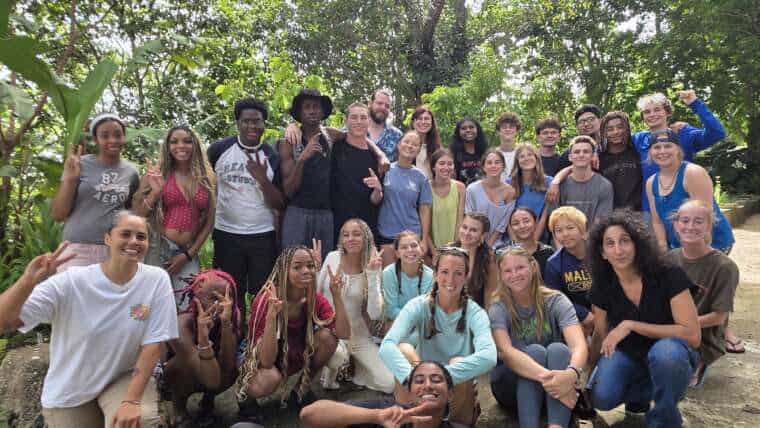
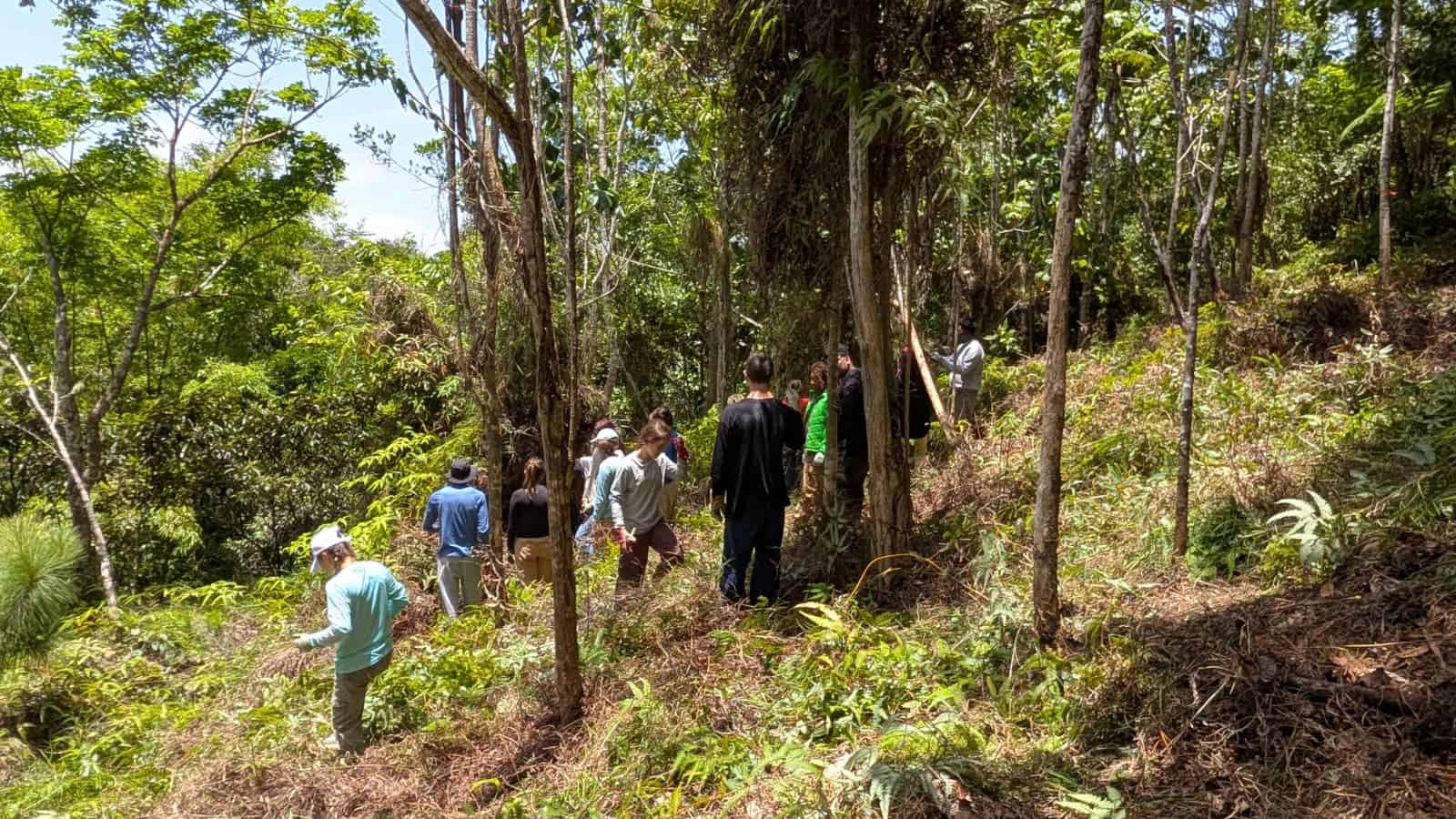
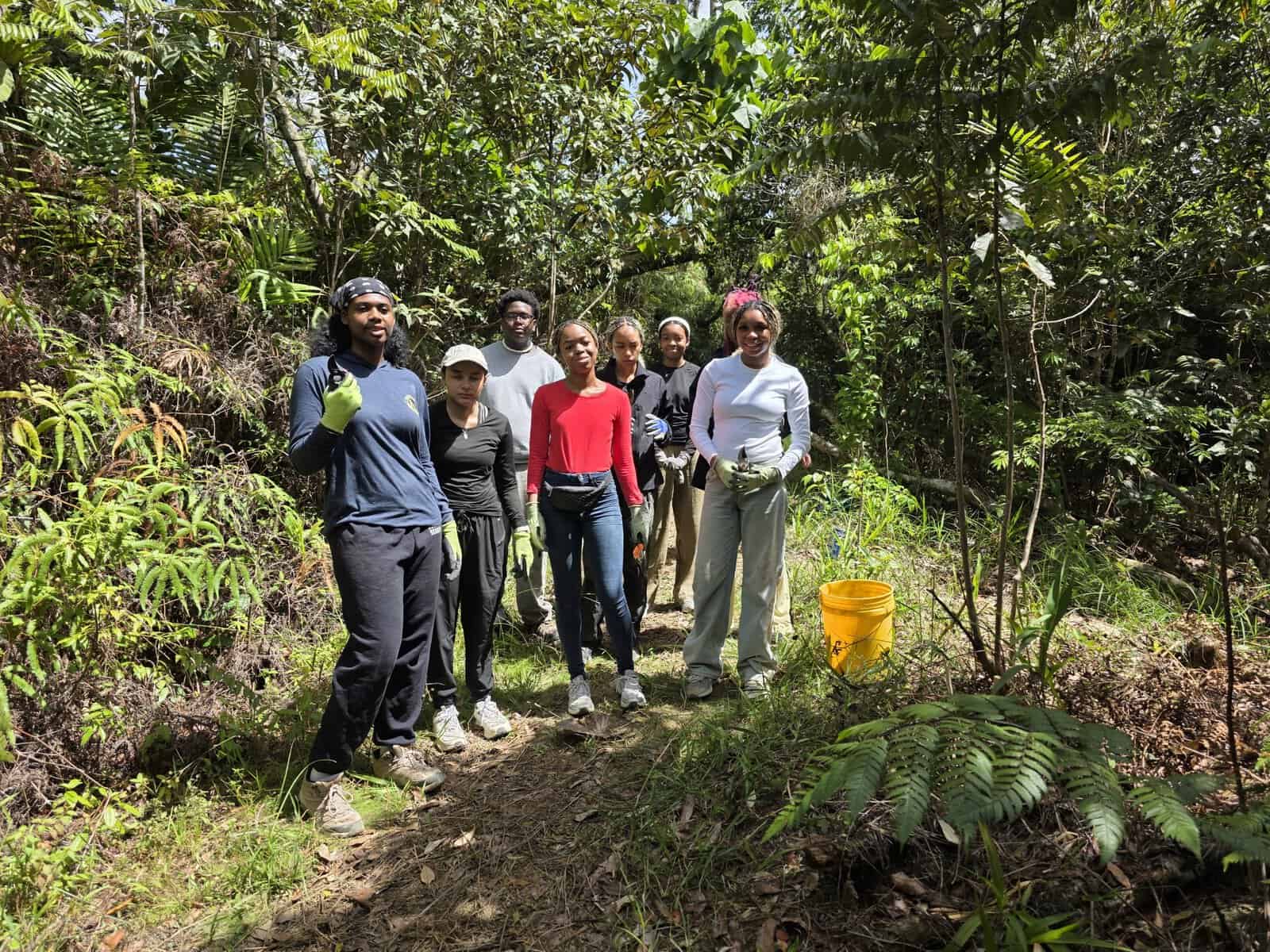
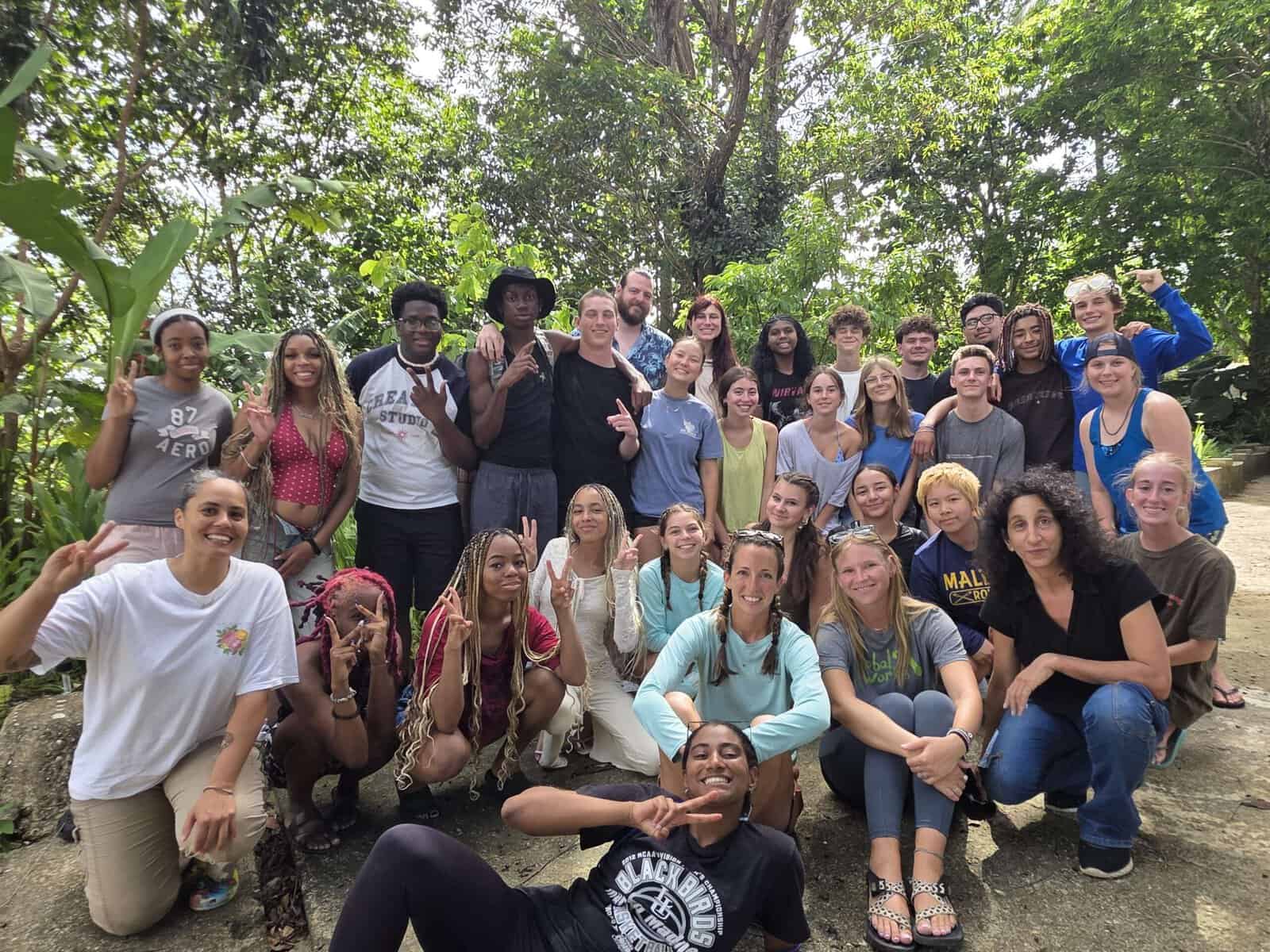
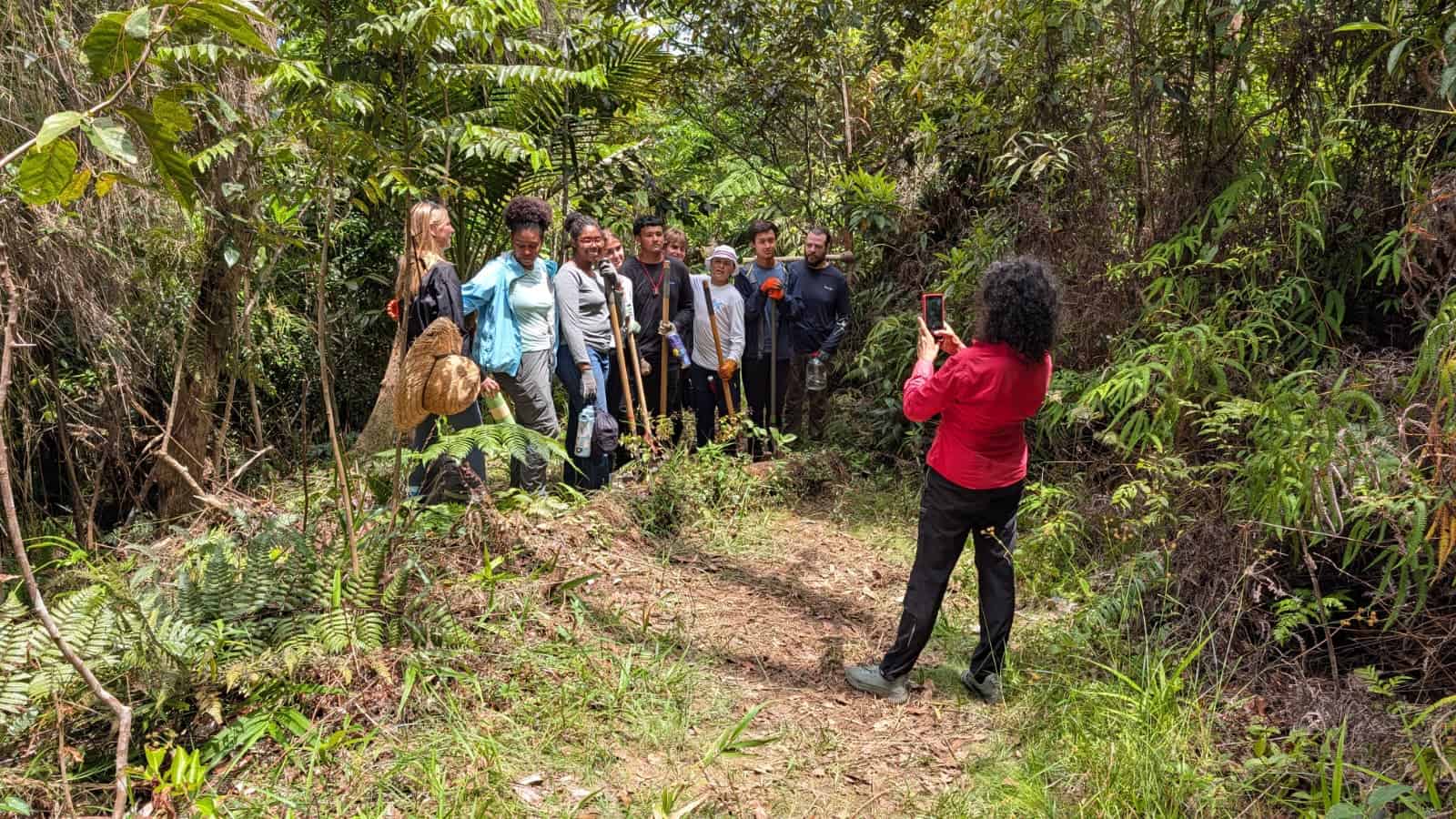
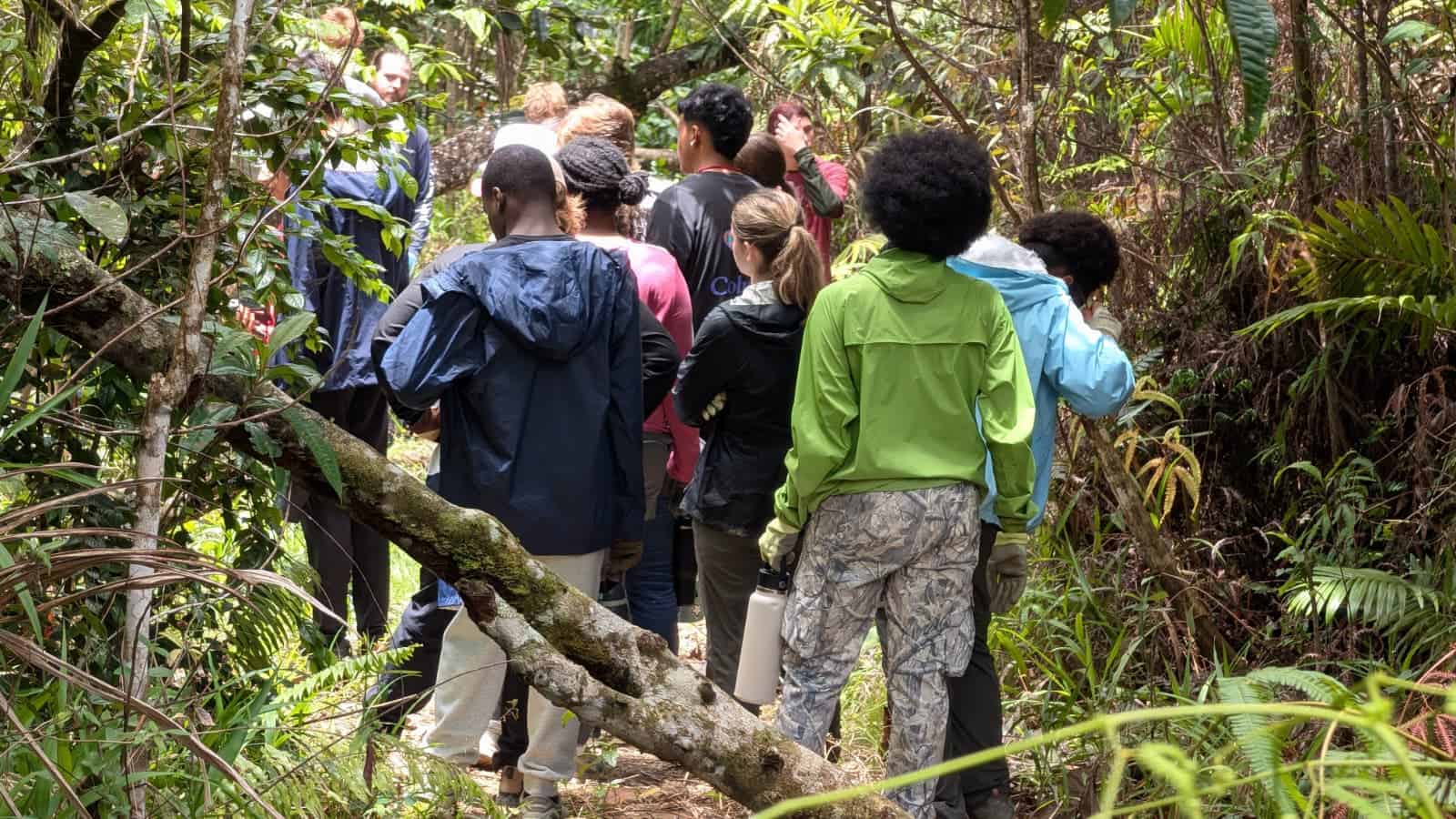
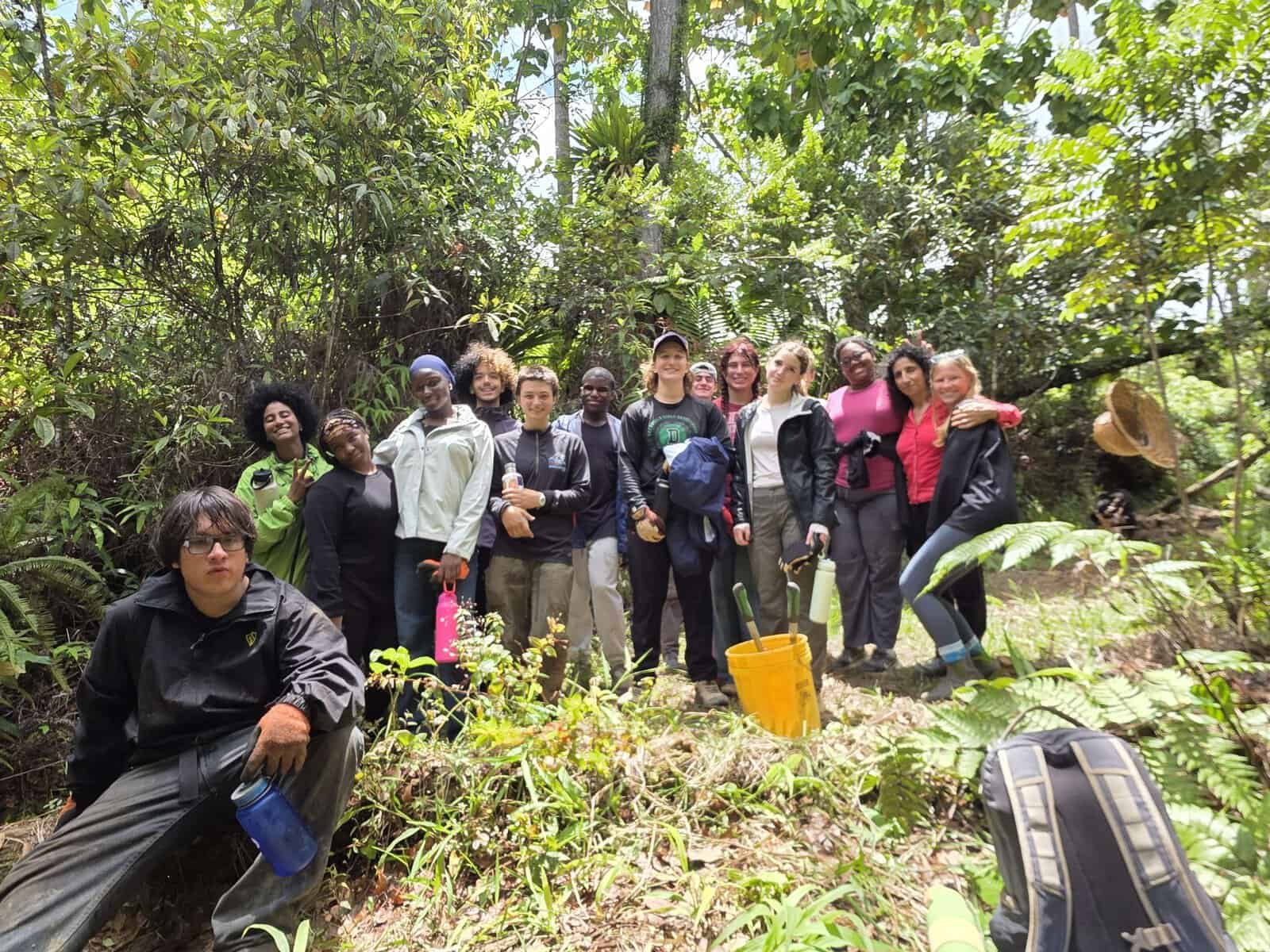
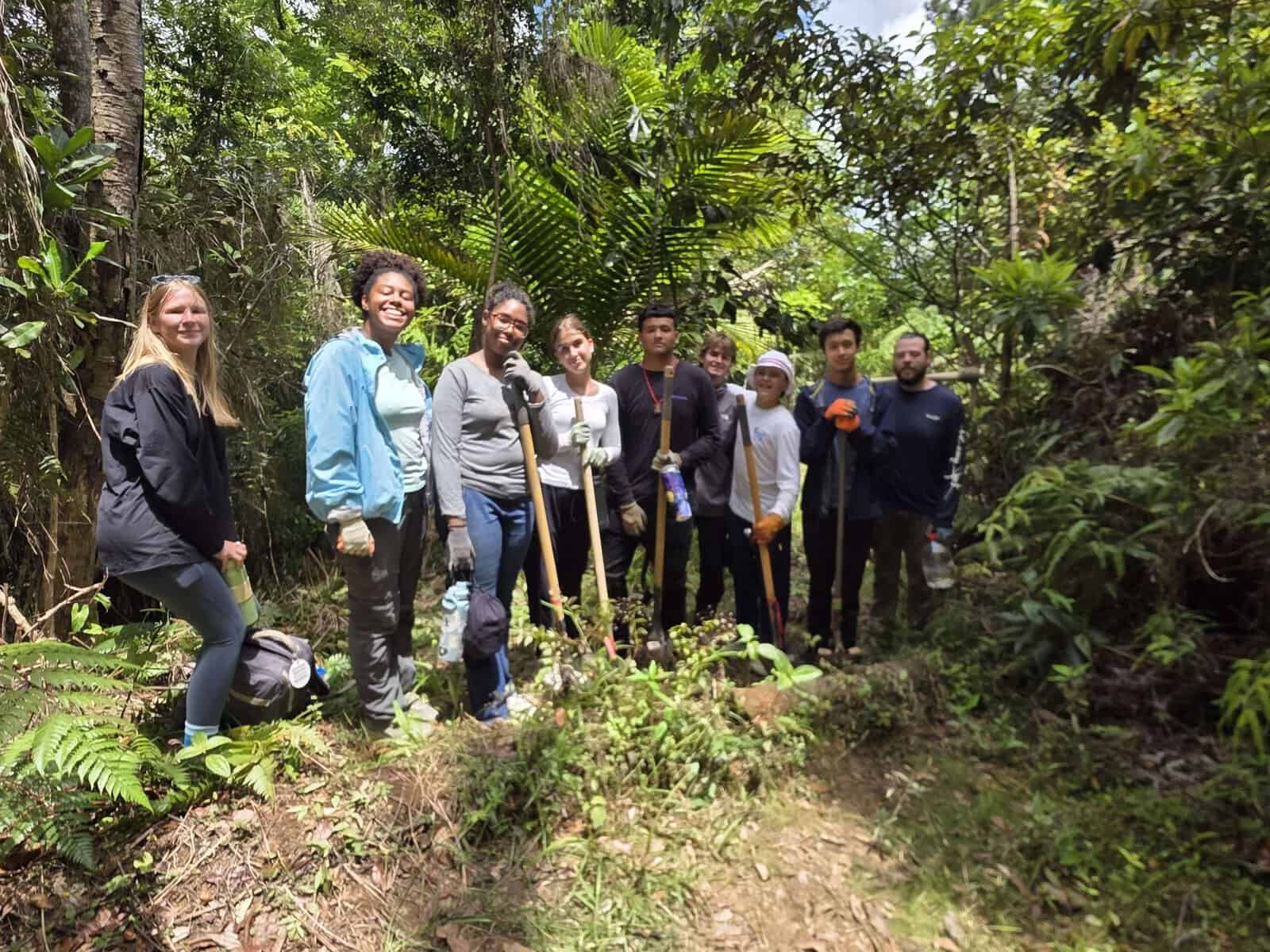
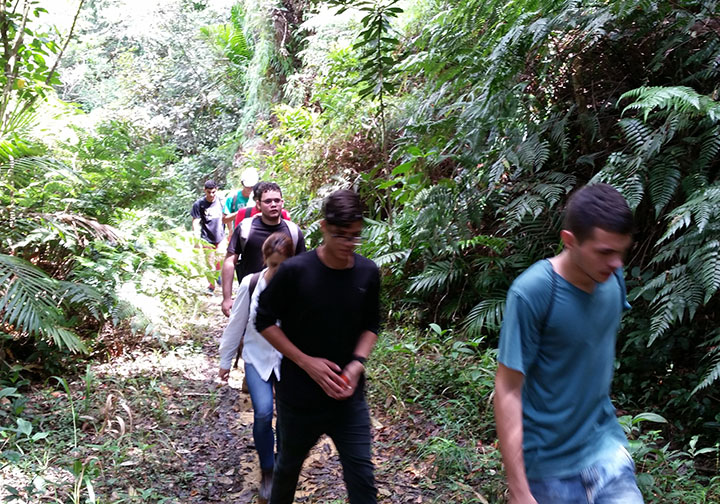
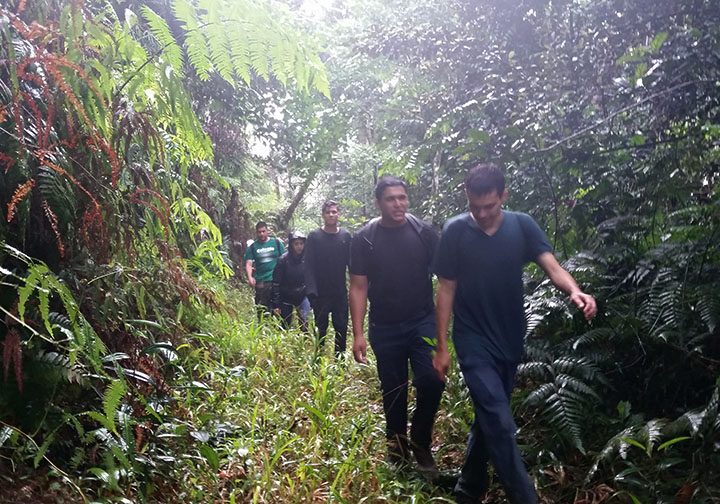
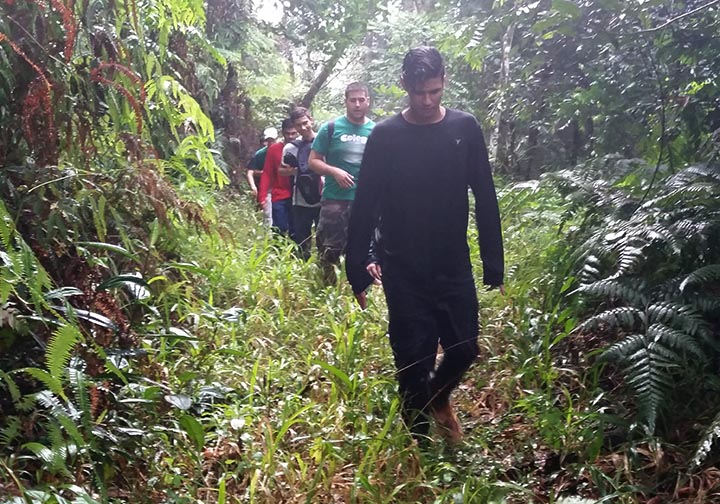
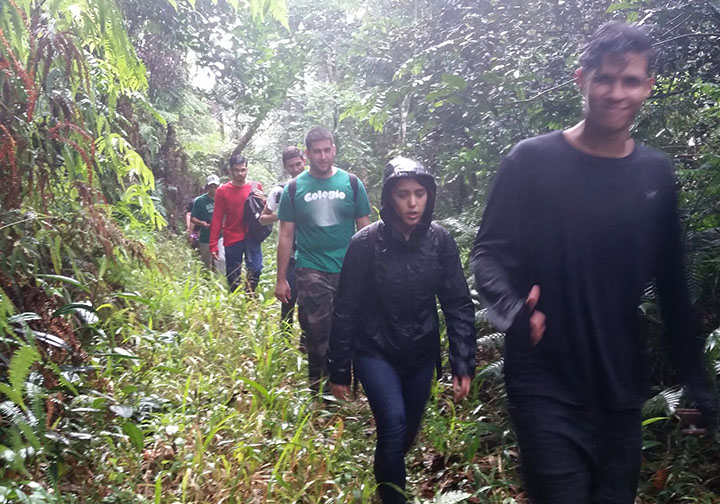
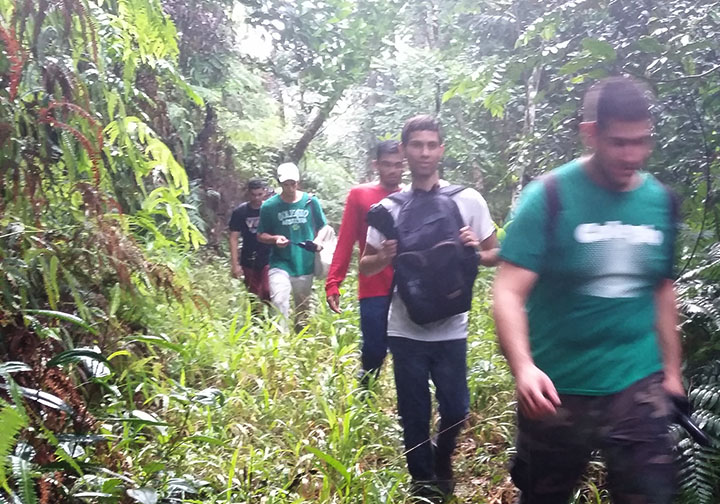
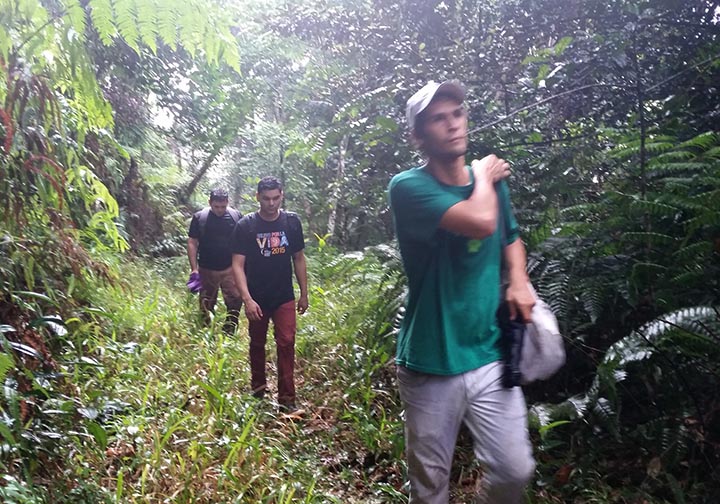
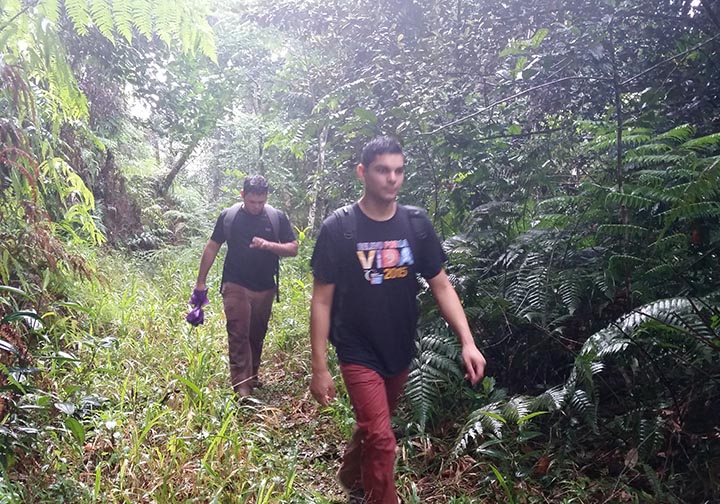
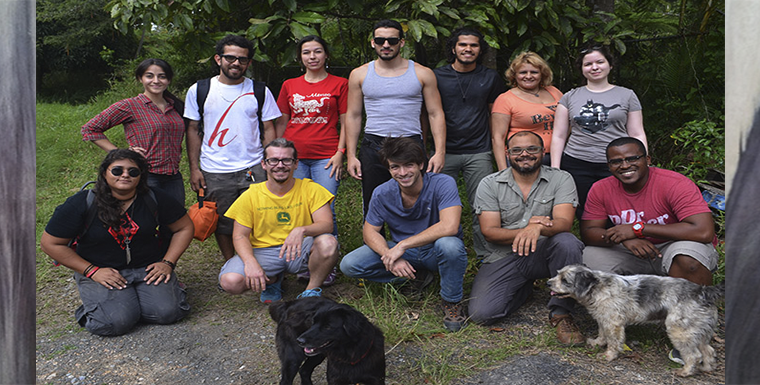
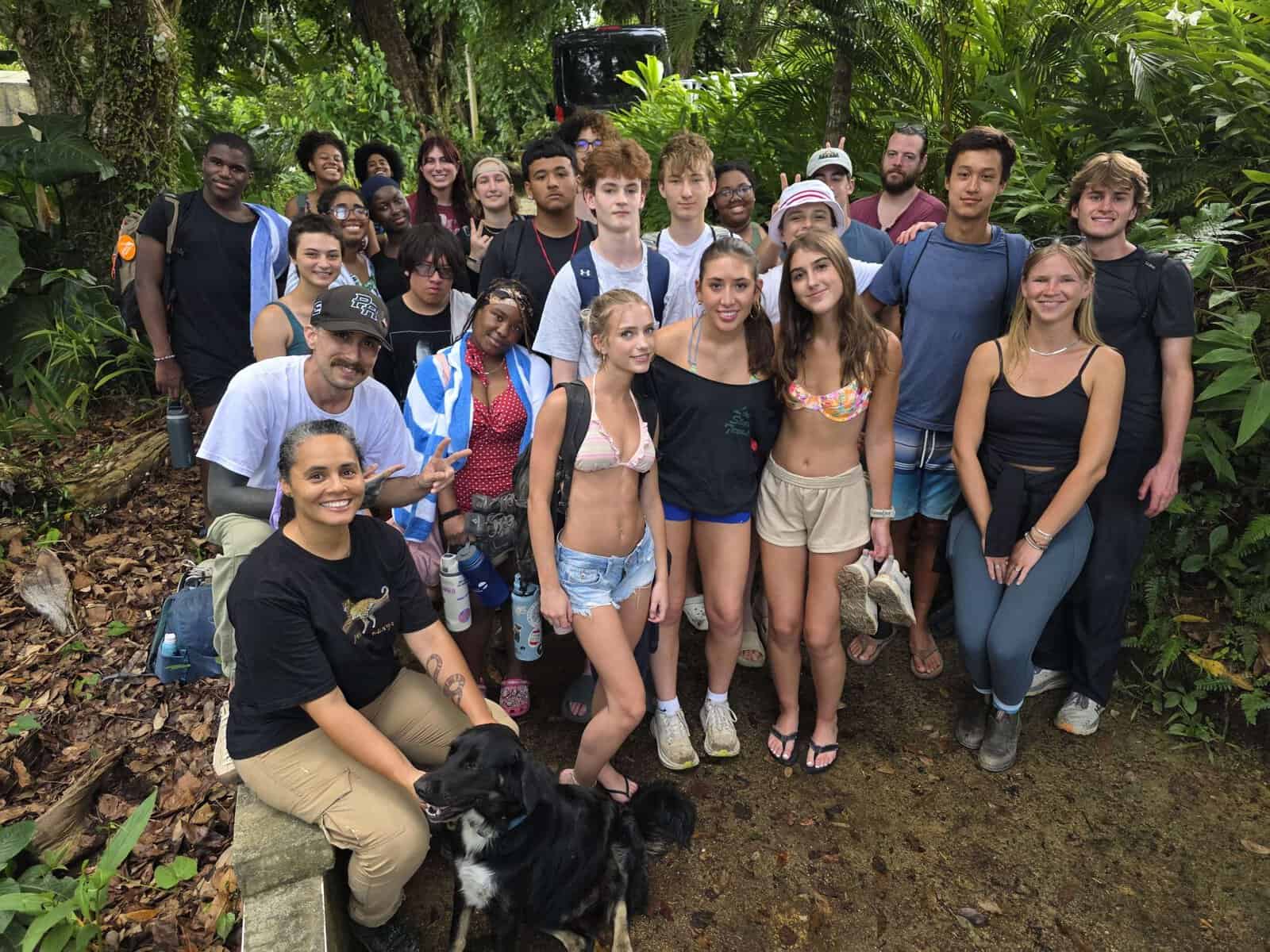
A second Global Works team—25 teenagers accompanied by staff members Lauren, Sam, and Darielys—arrived on 11th July ready to continue the work. Led in the forest by 3t Vakil and Jon Warwick, the group moved beyond the newly opened access route and deeper into the area where Swietenia x aubrevilleana (Mahogany), Manilkara bidentata (Ausubo), and Hibiscus elatas (Blue Mahoe) trees had been planted on land that was regaining secondary forest. Shade at an early age was imperative for the growth of these tropical hardwoods.

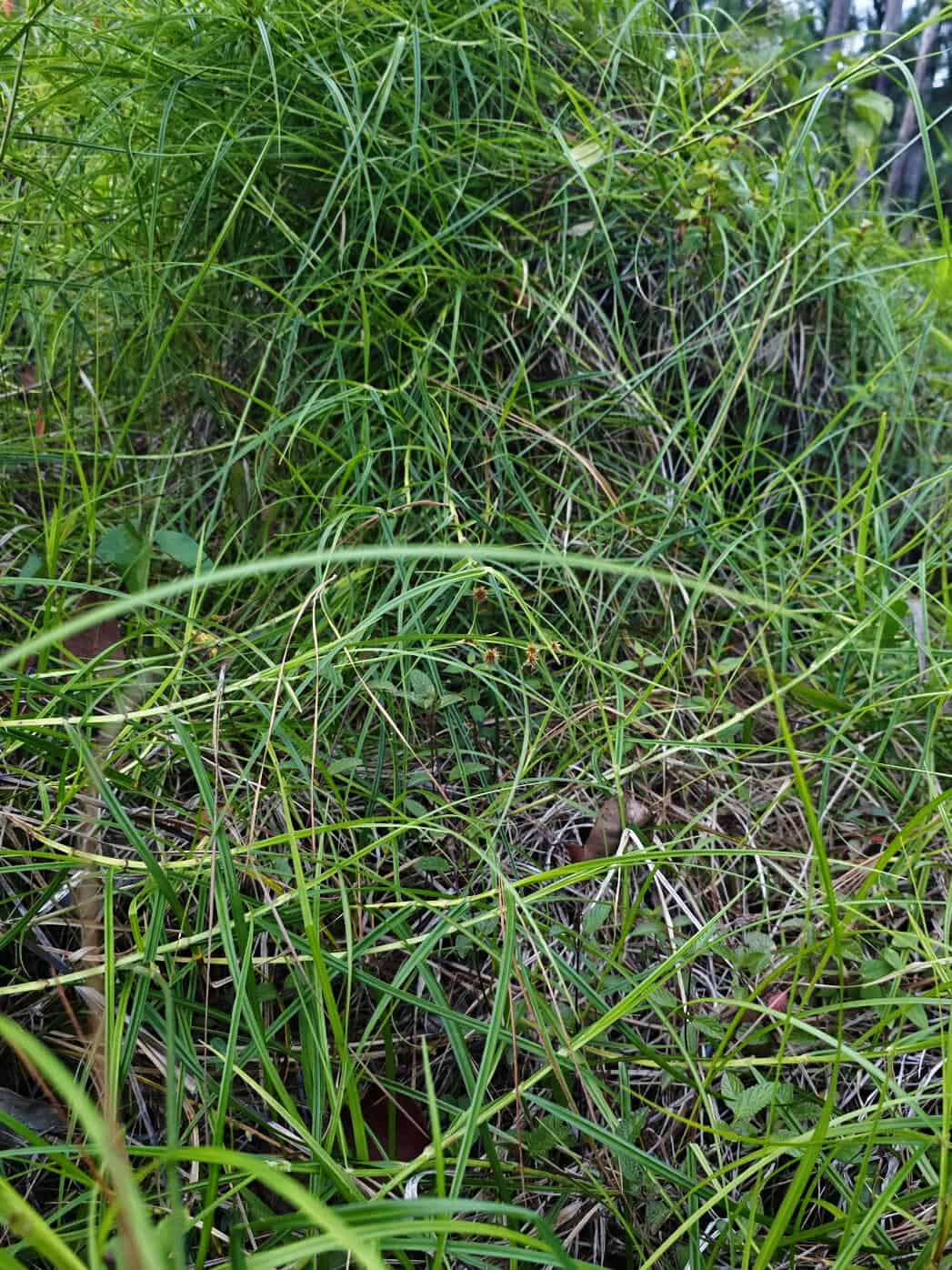
Scleria secans is a large, scrambling sedge native to tropical America. Unlike a true grass, it belongs to the sedge family, Cyperaceae. Its triangular stems and long leaves have razor-sharp, saw-like margins capable of cutting exposed skin—hence the fitting name “razor grass.”Scleria is a genus of approximately 200 flowering plant species, commonly known as nutrushes. They are found mainly throughout the tropics, although some species extend into temperate regions. The genus name comes from the Greek word for “hardness,” referring to the plants’ characteristically tough seeds.

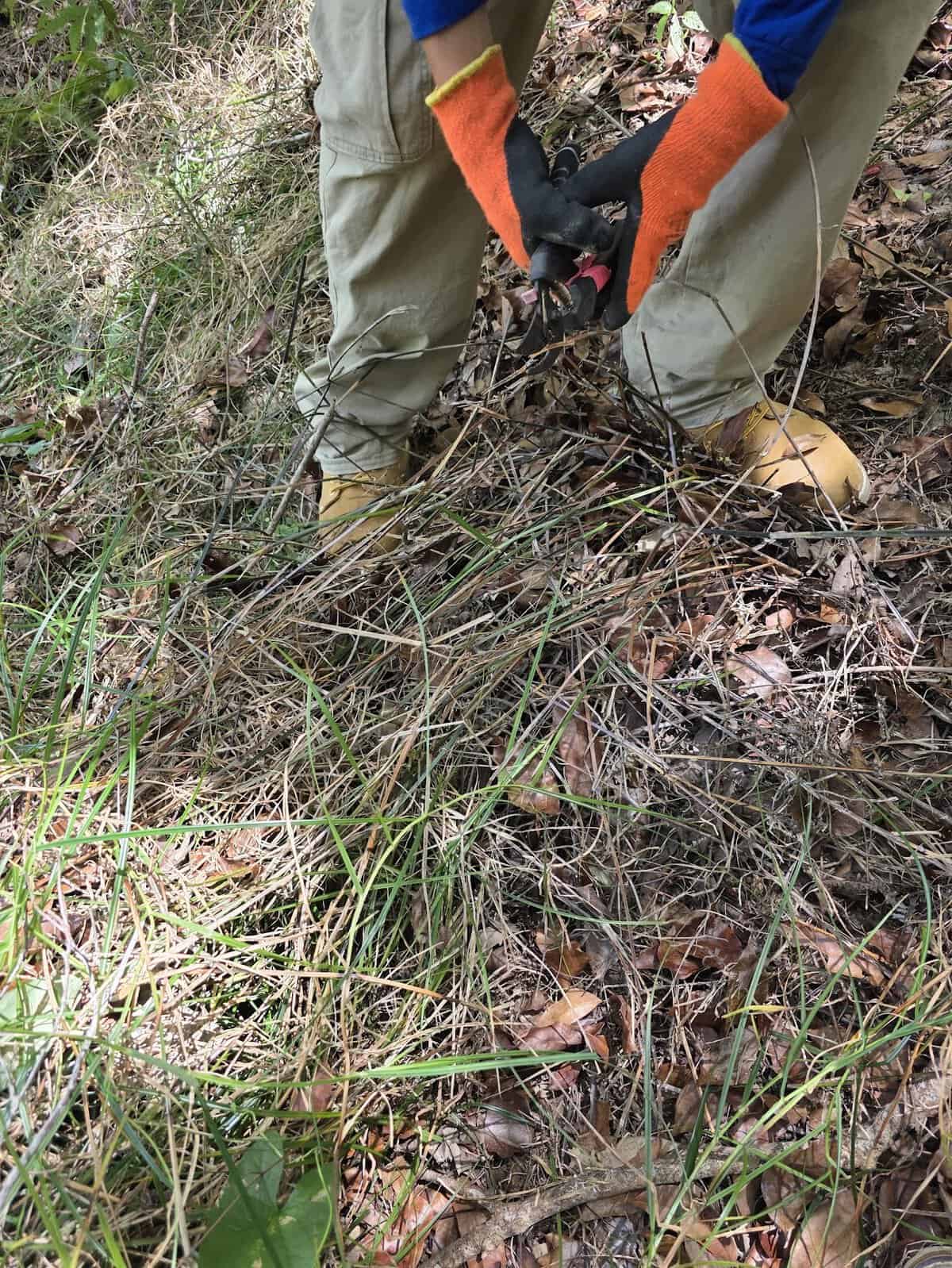
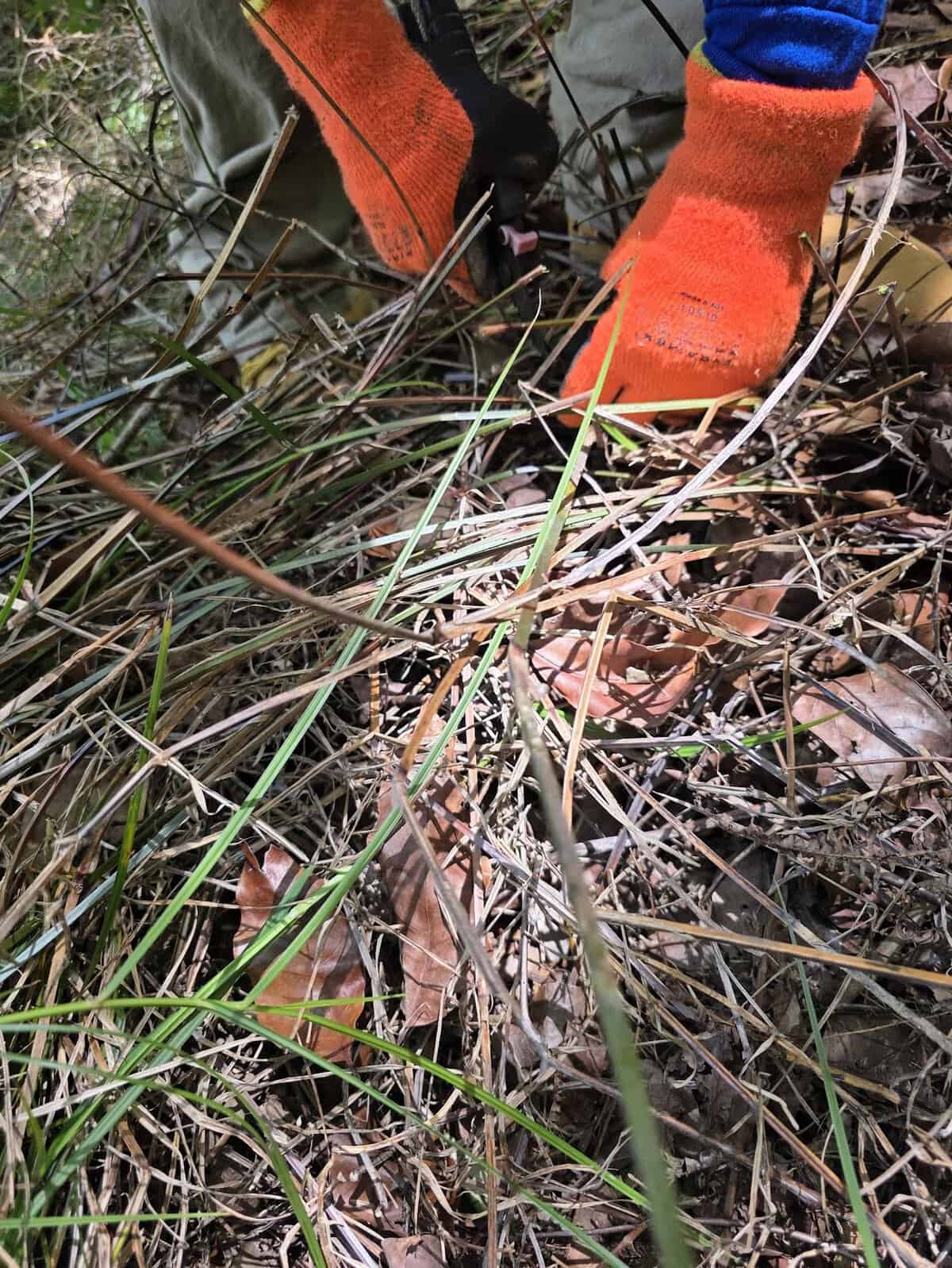
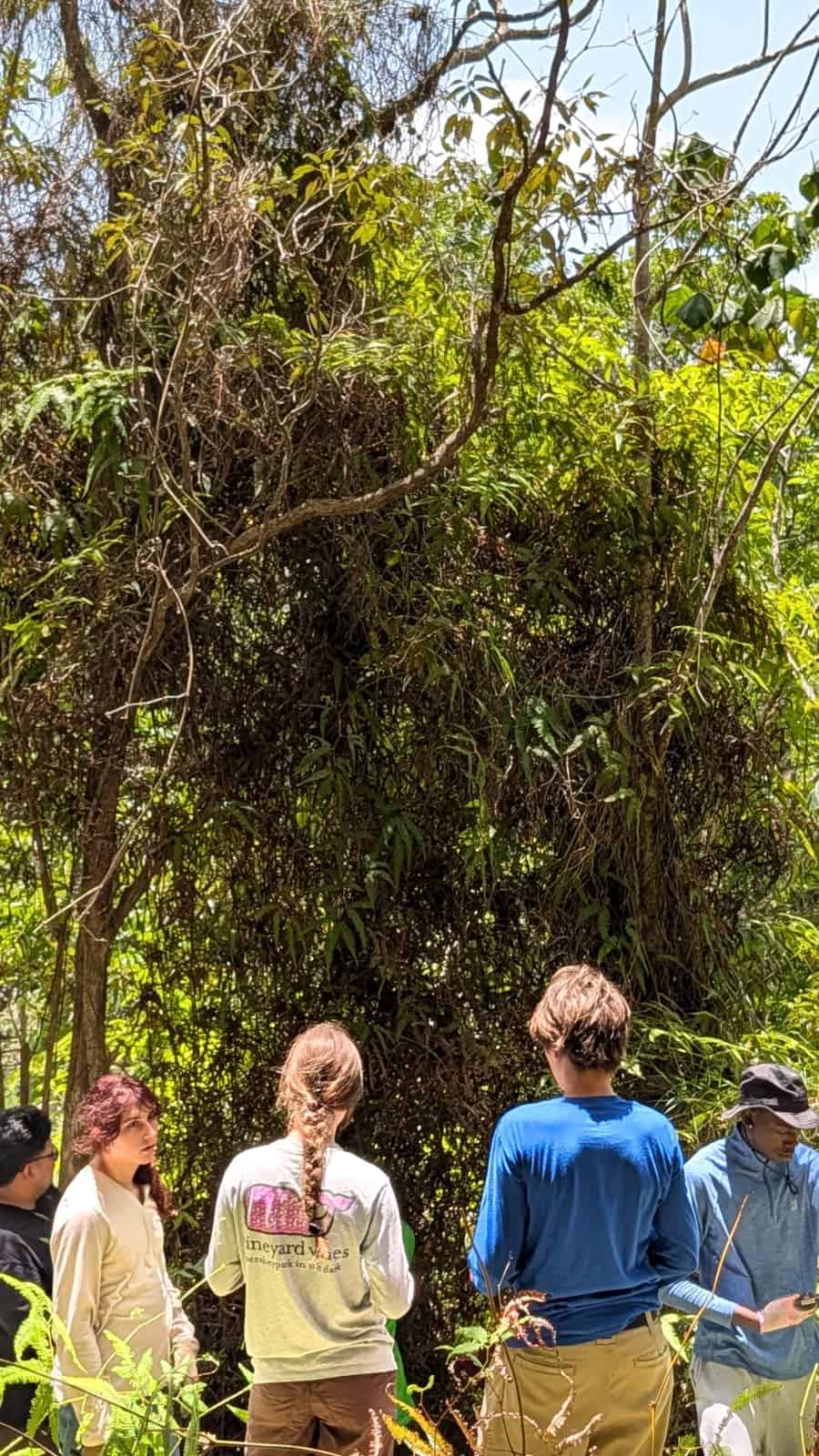
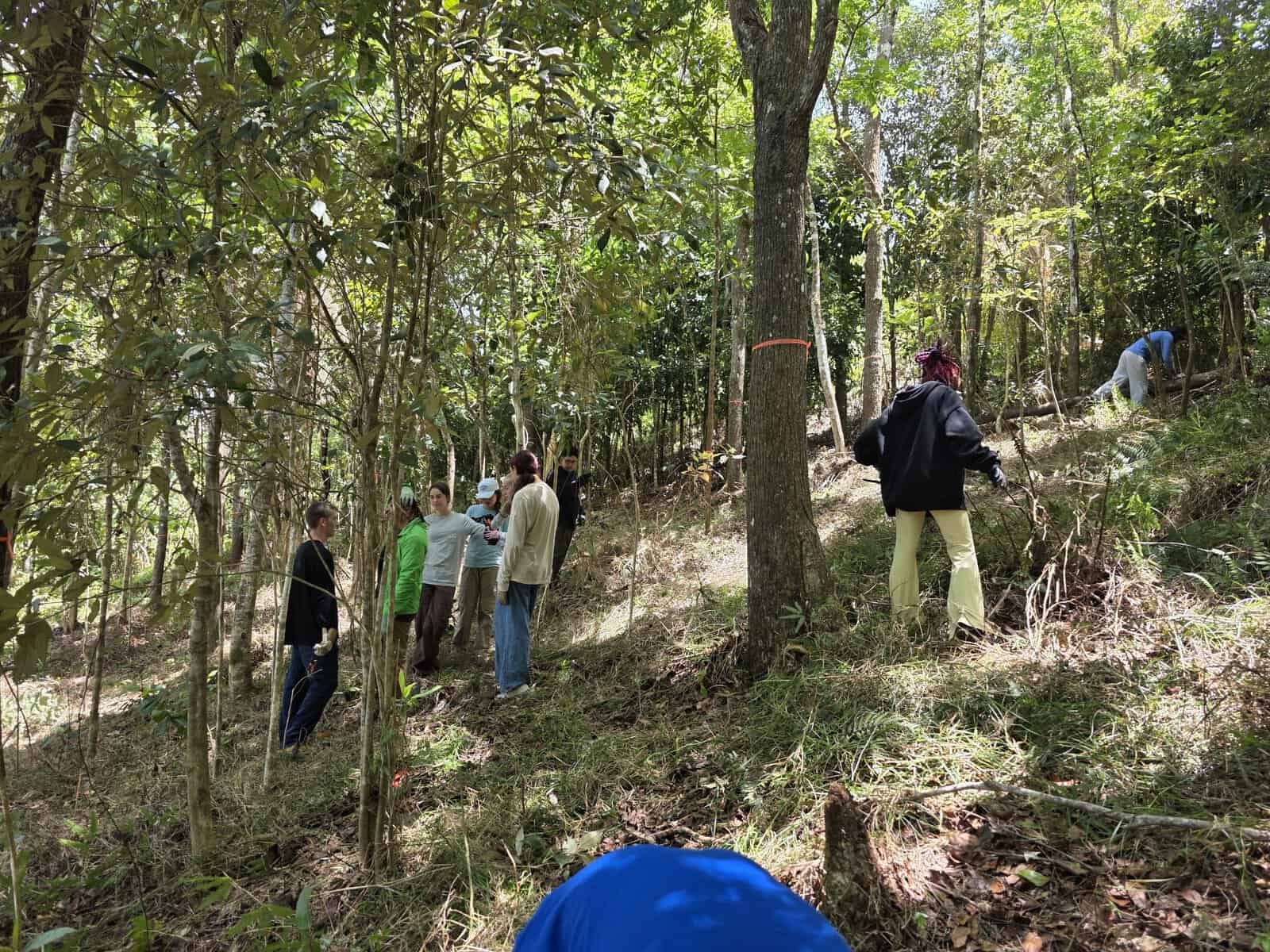
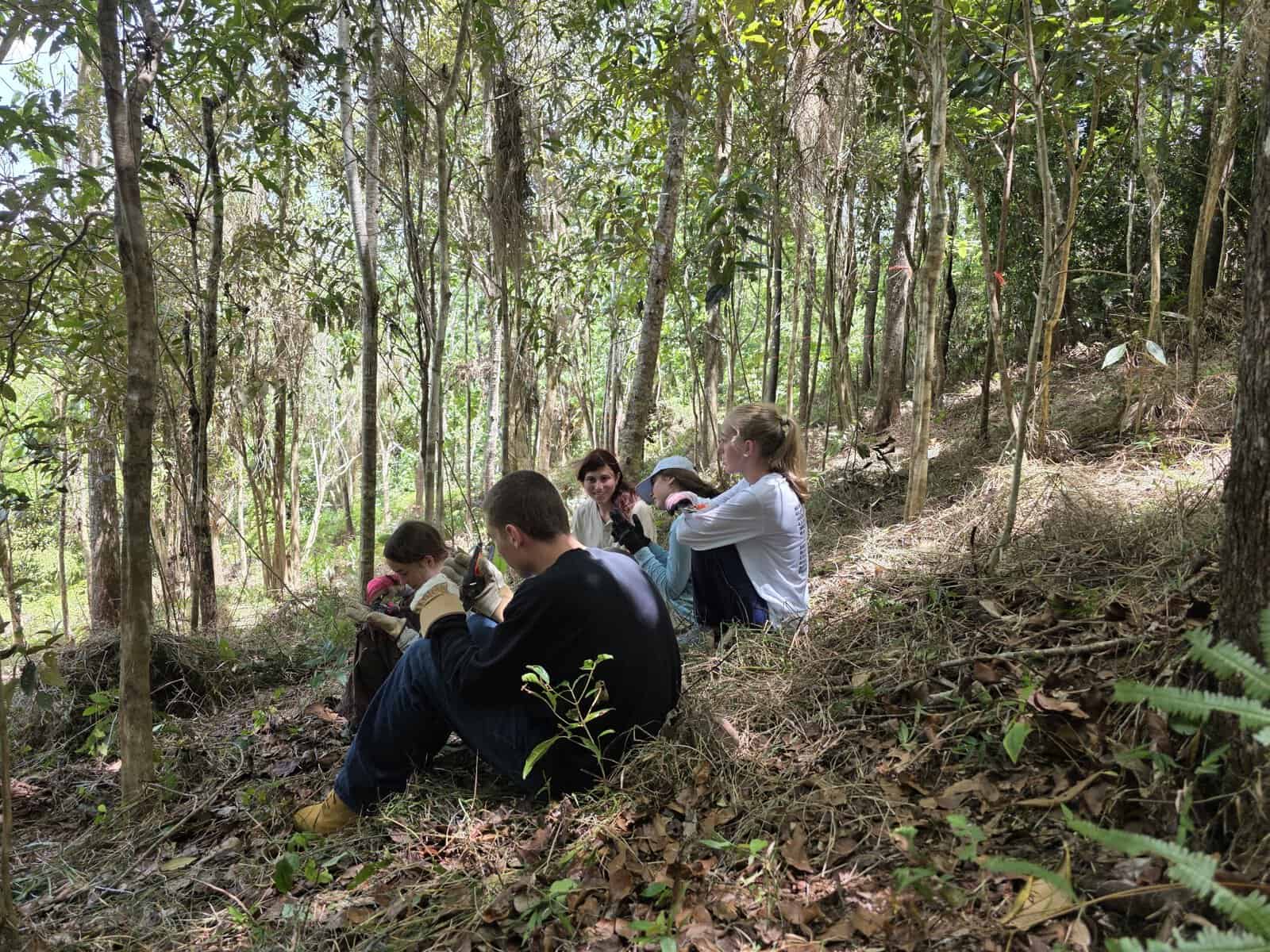
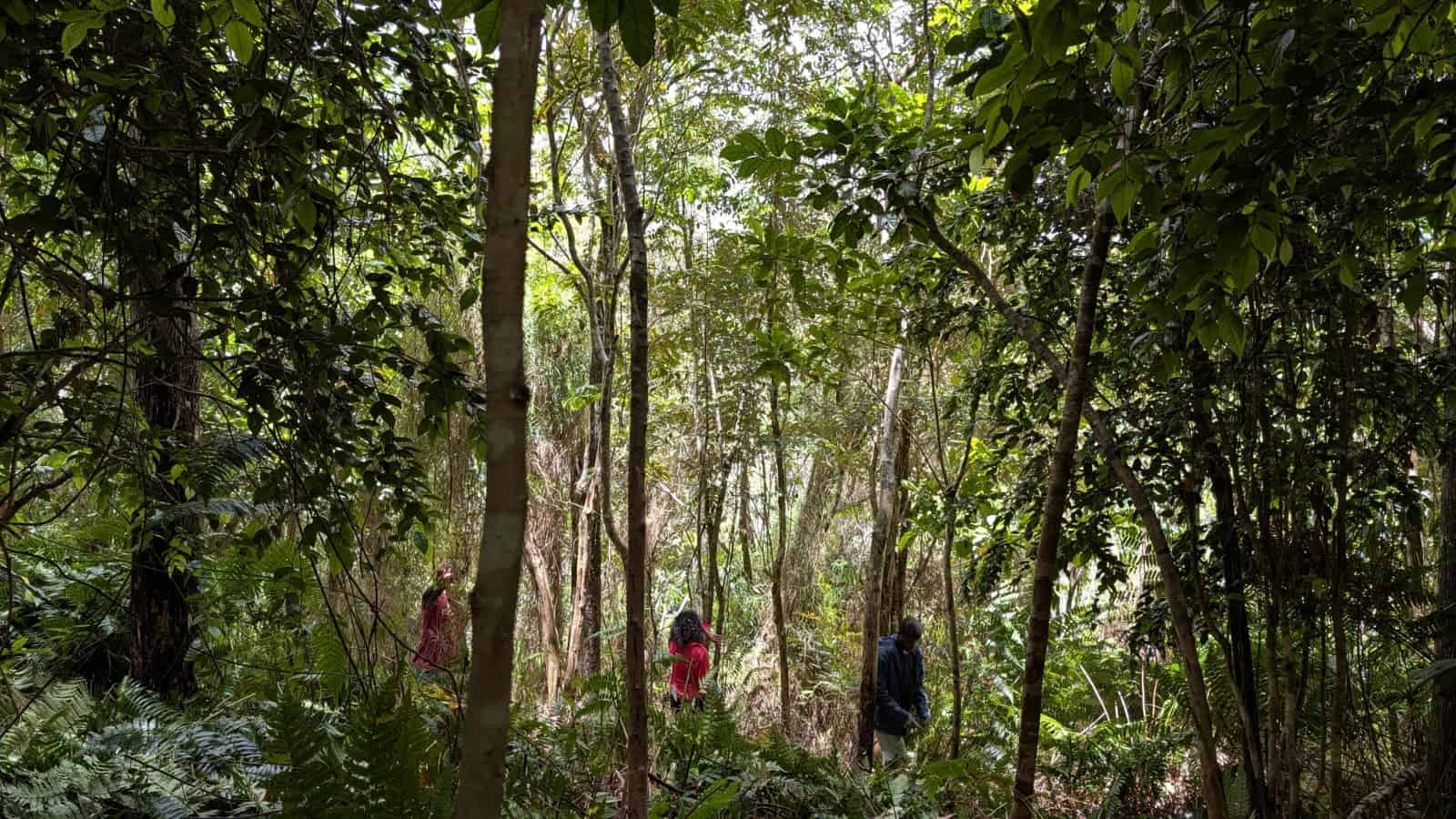
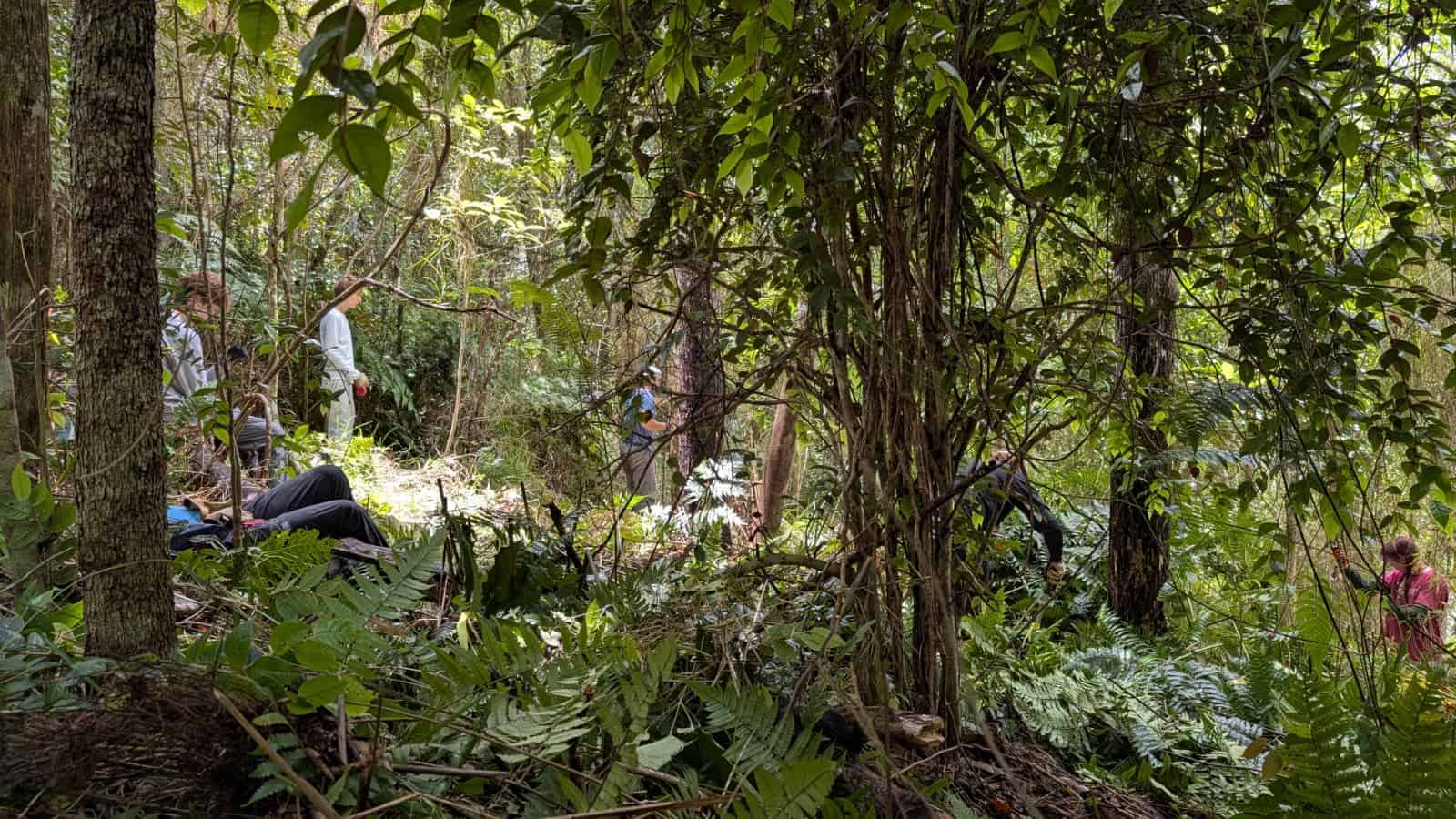
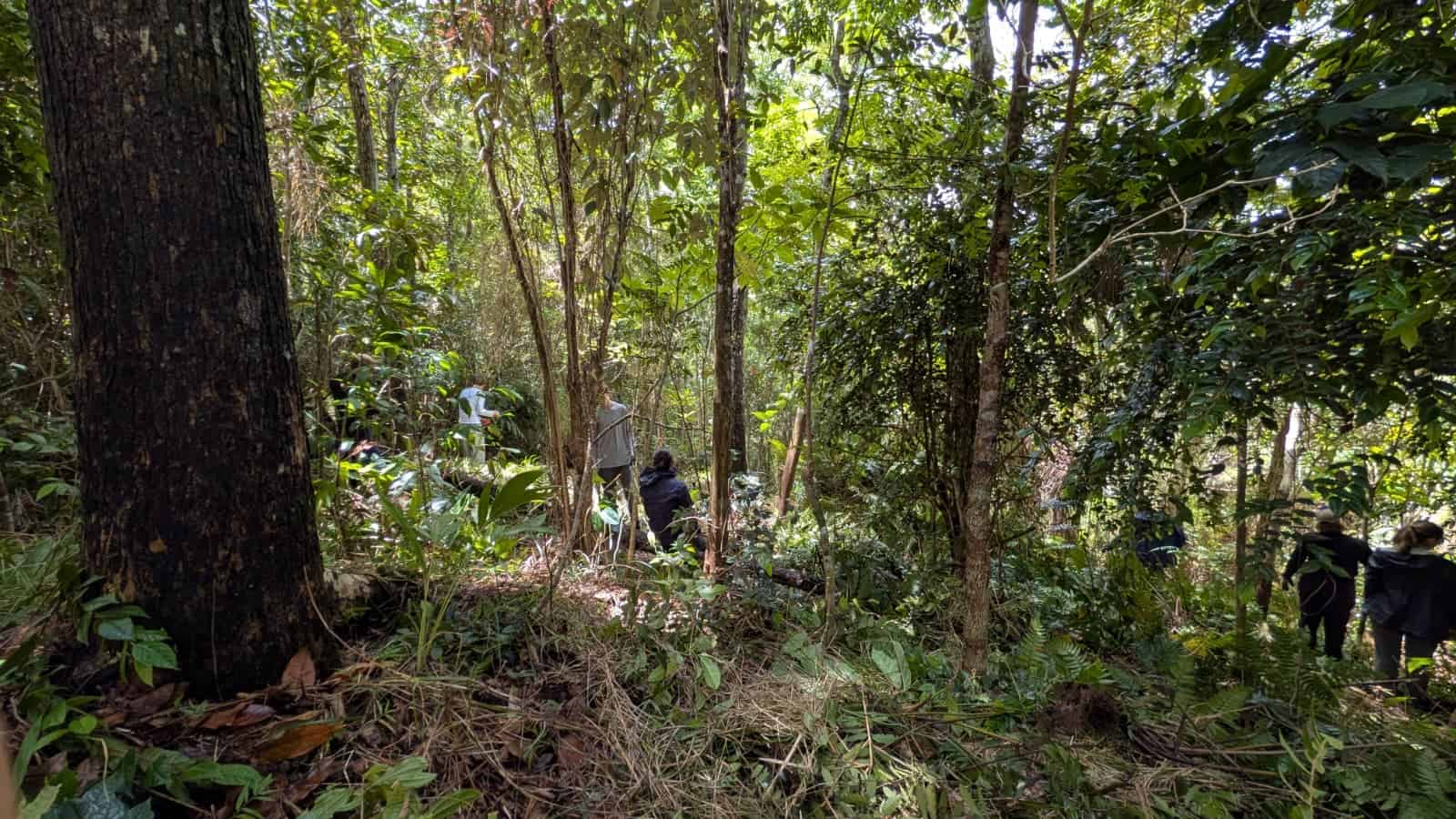
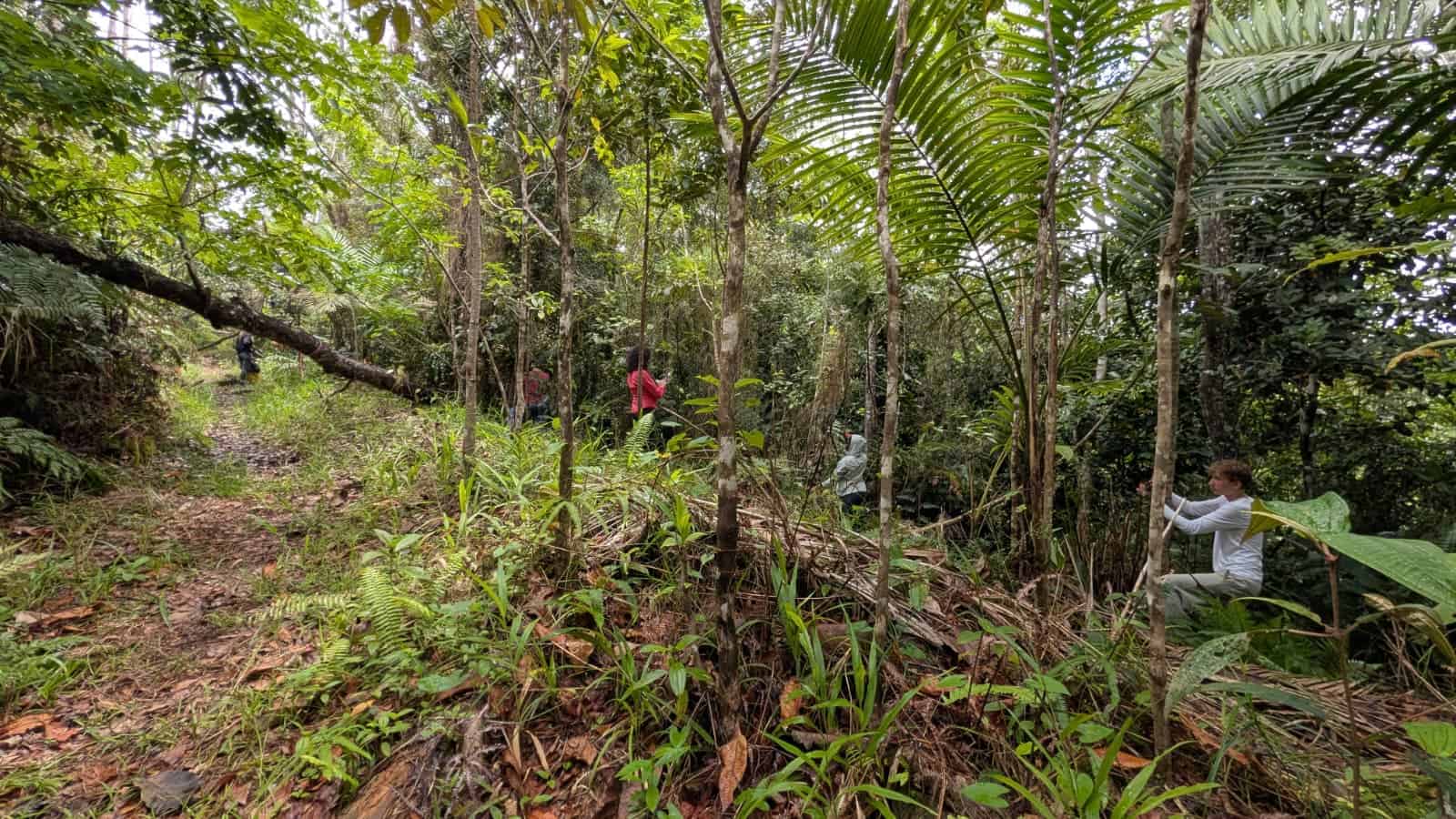
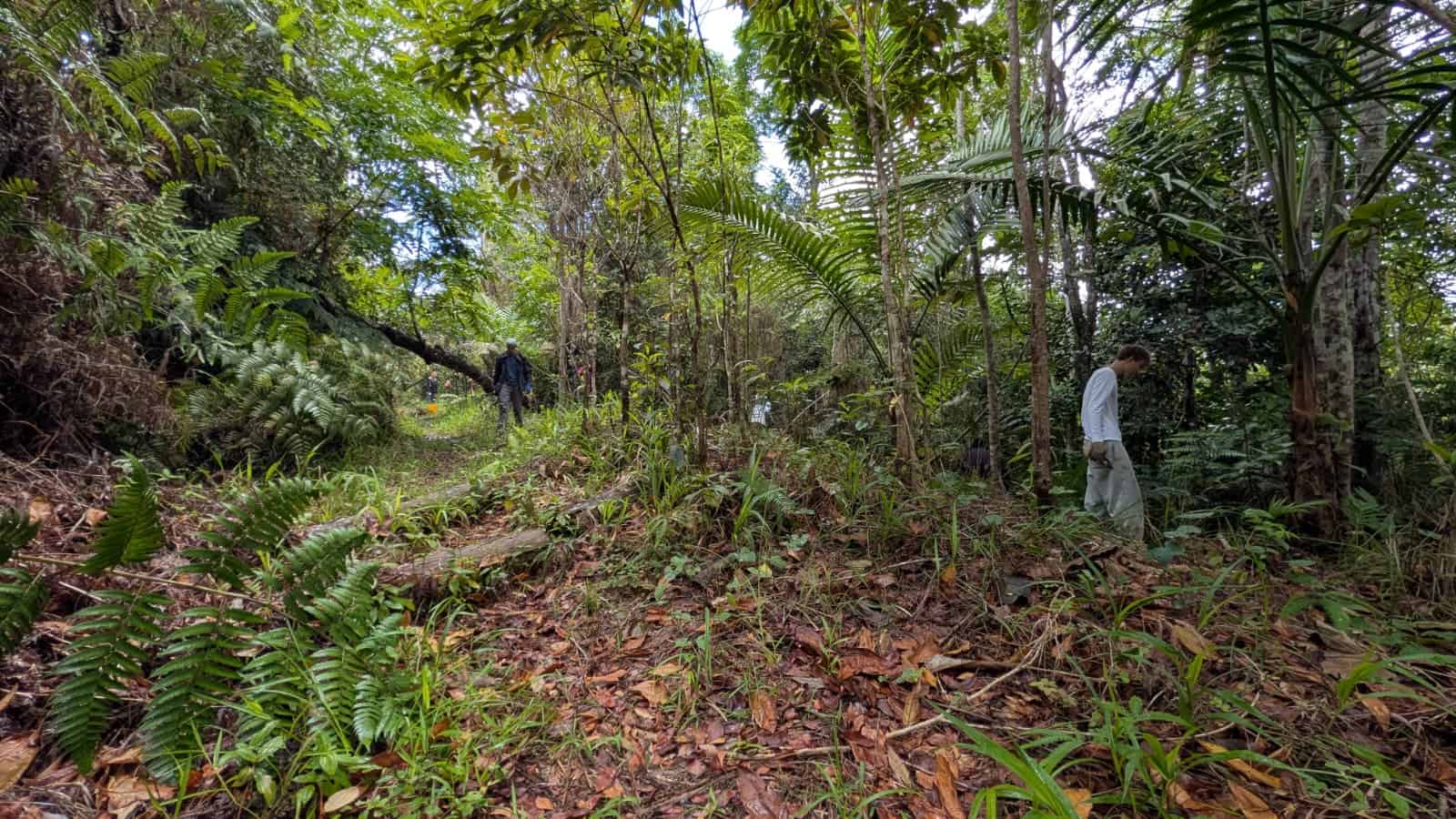
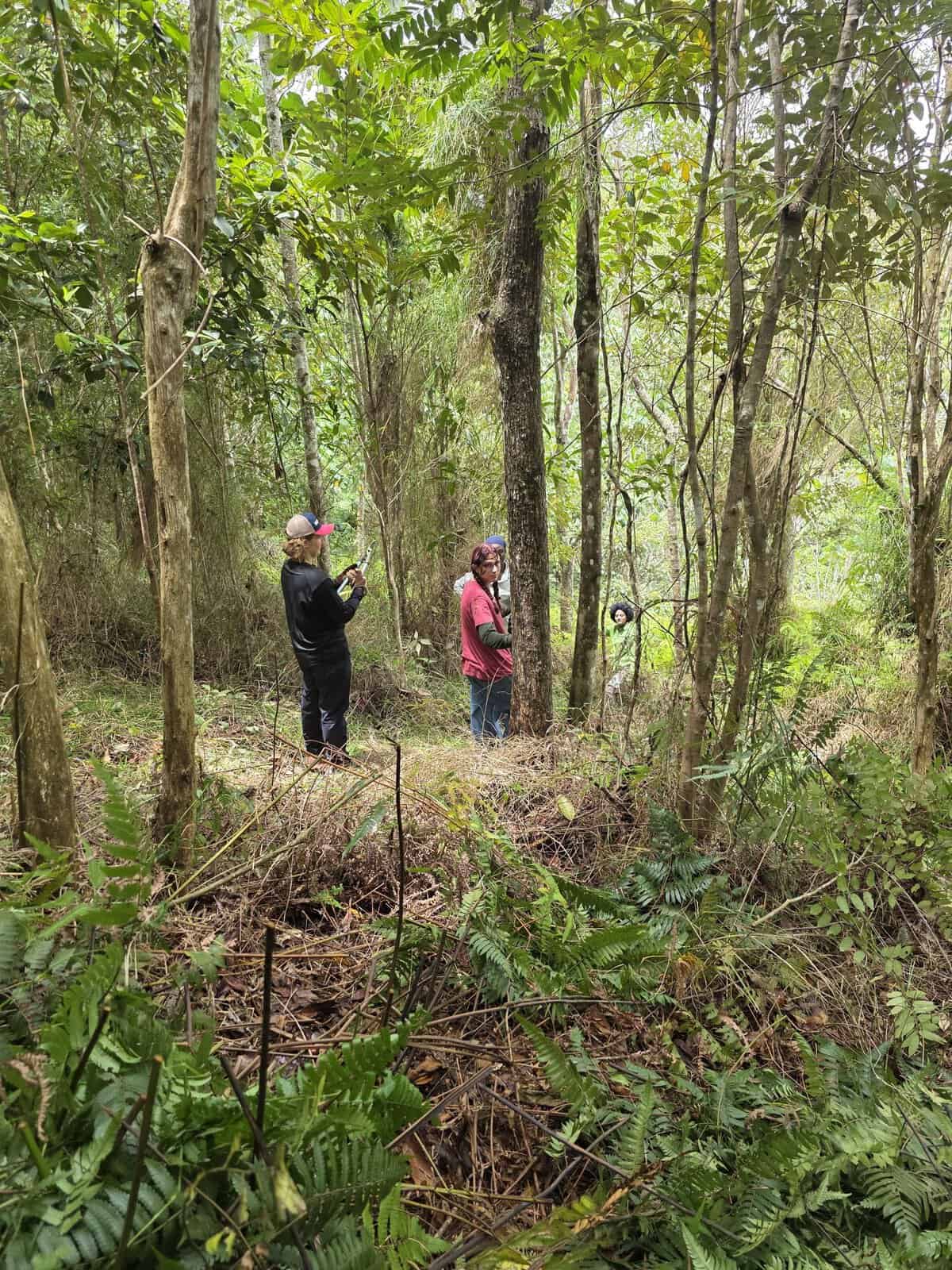
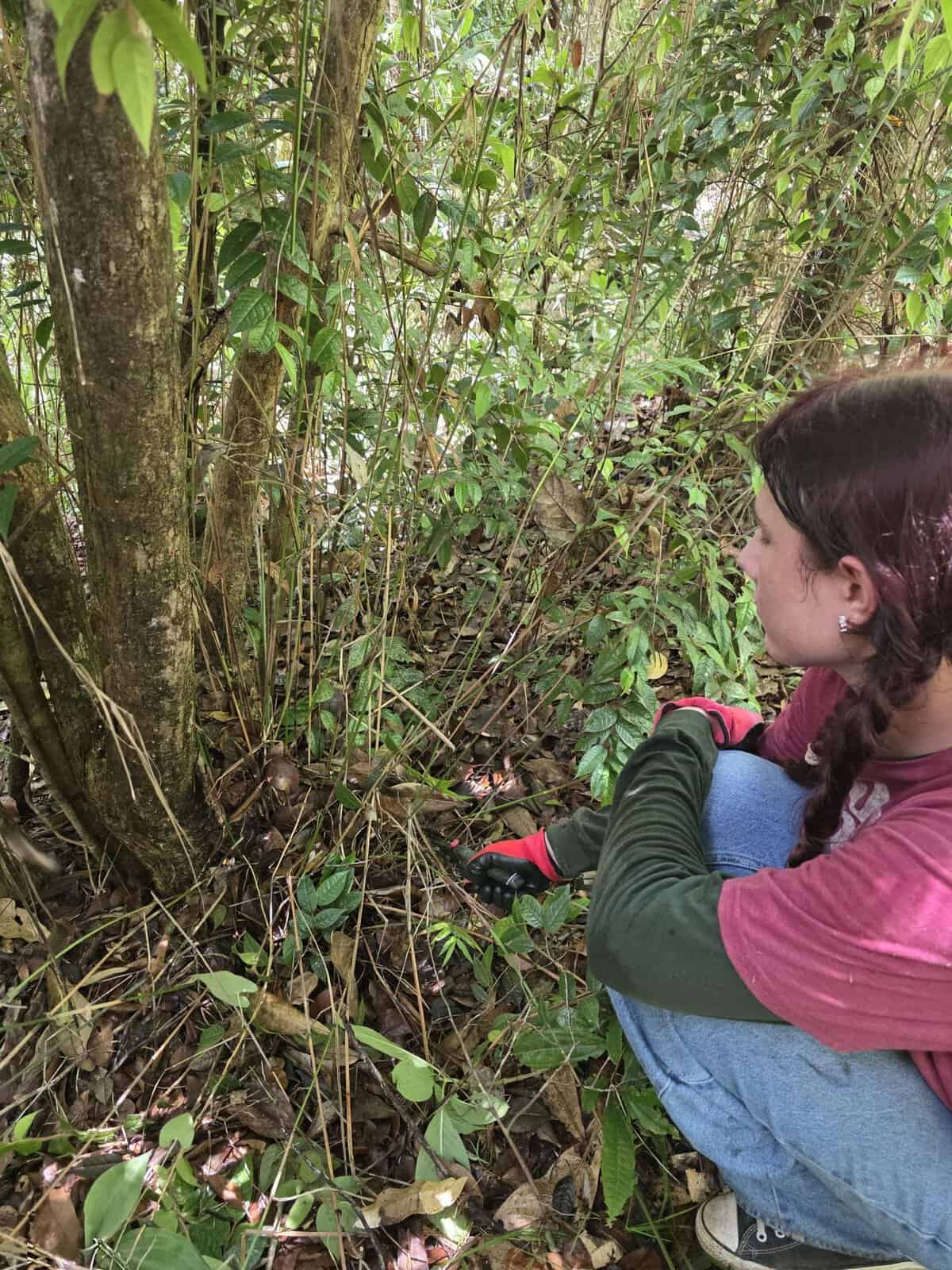
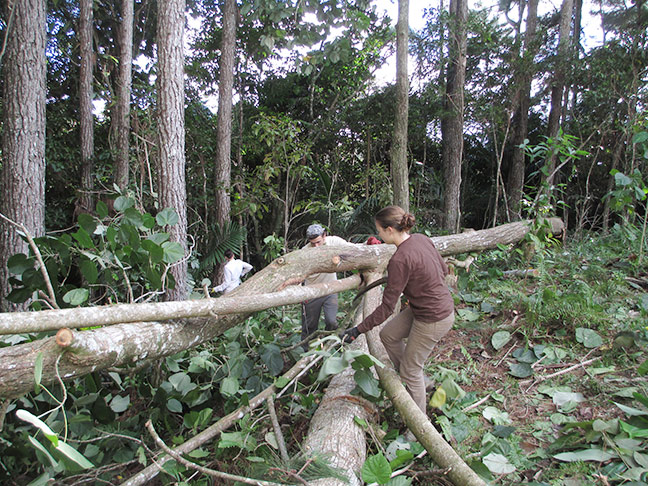
This time, we were no longer simply trying to find a way through. The goal was to begin clearing the razor grass from around the planted trees themselves, opening enough space to see the forest properly, assess the trees, and move safely through the area.The razor grass had occupied every available opening created by Hurricane Maria. Its long, sharp leaves tangled together with vines and other vigorous vegetation, concealing the ground and obscuring even substantial trees. Clearing it required patience and close teamwork. The teenagers worked steadily with gloves, loppers, and pruning shears, cutting carefully and passing the vegetation away from the trees.

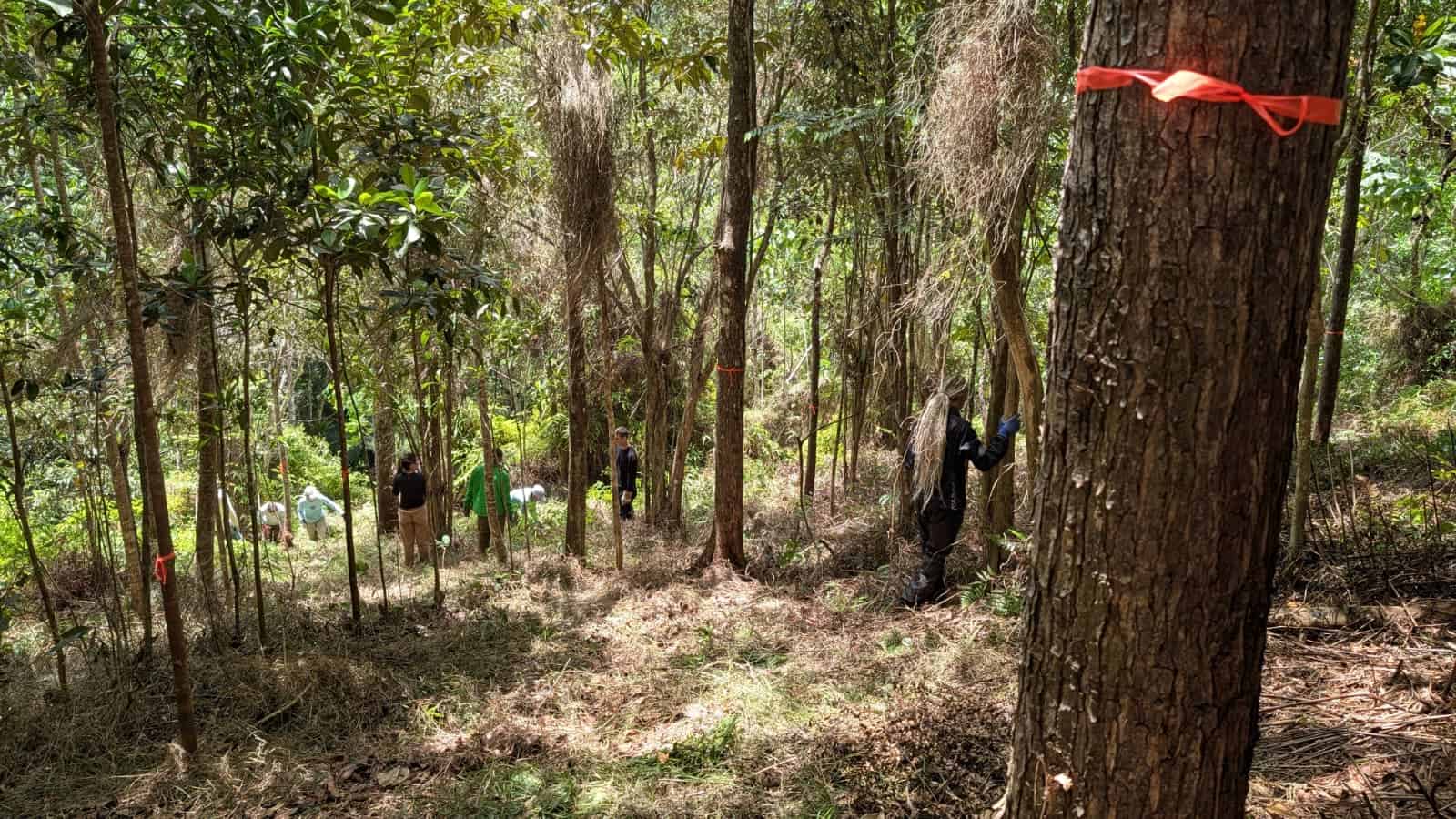
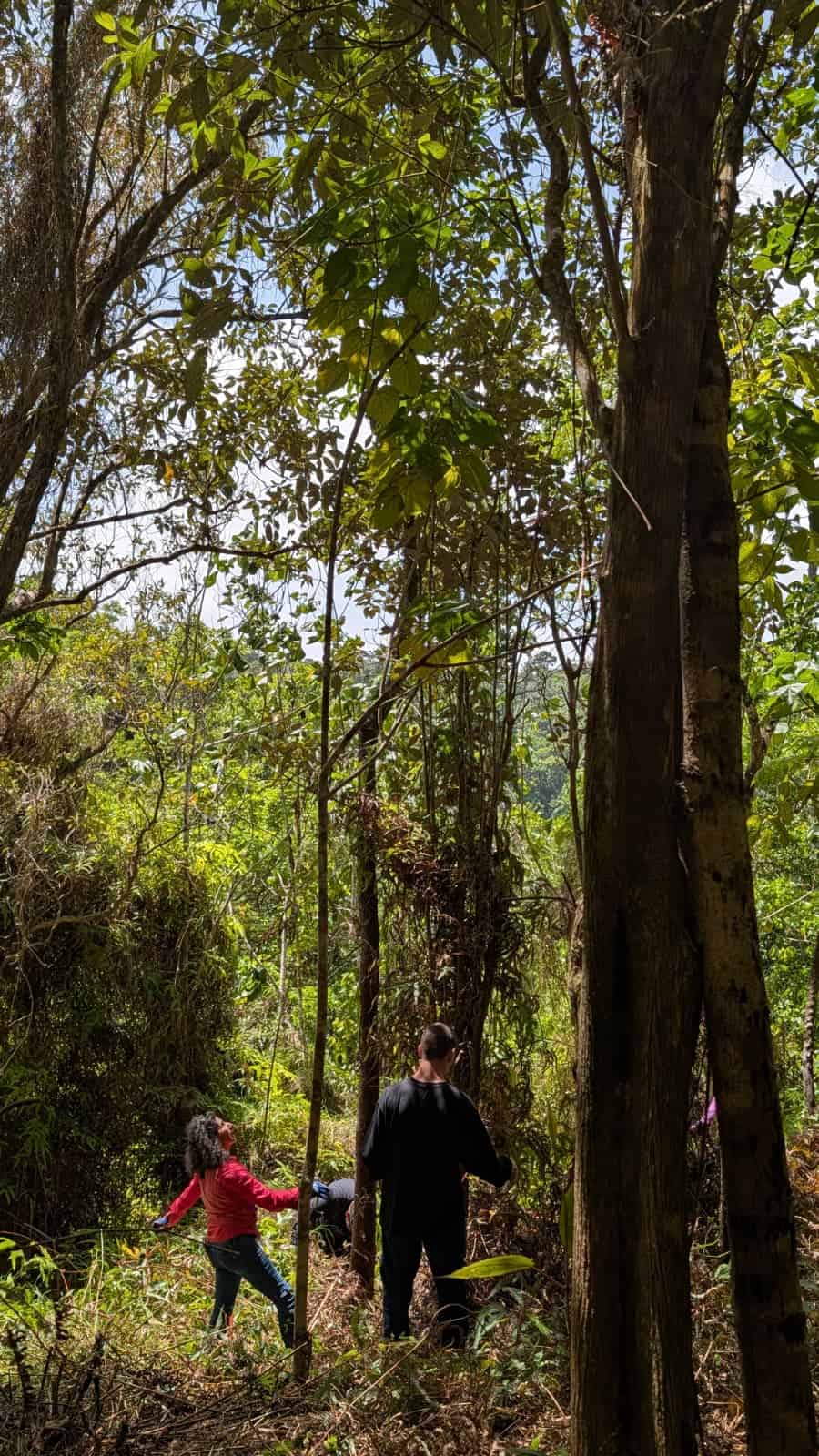
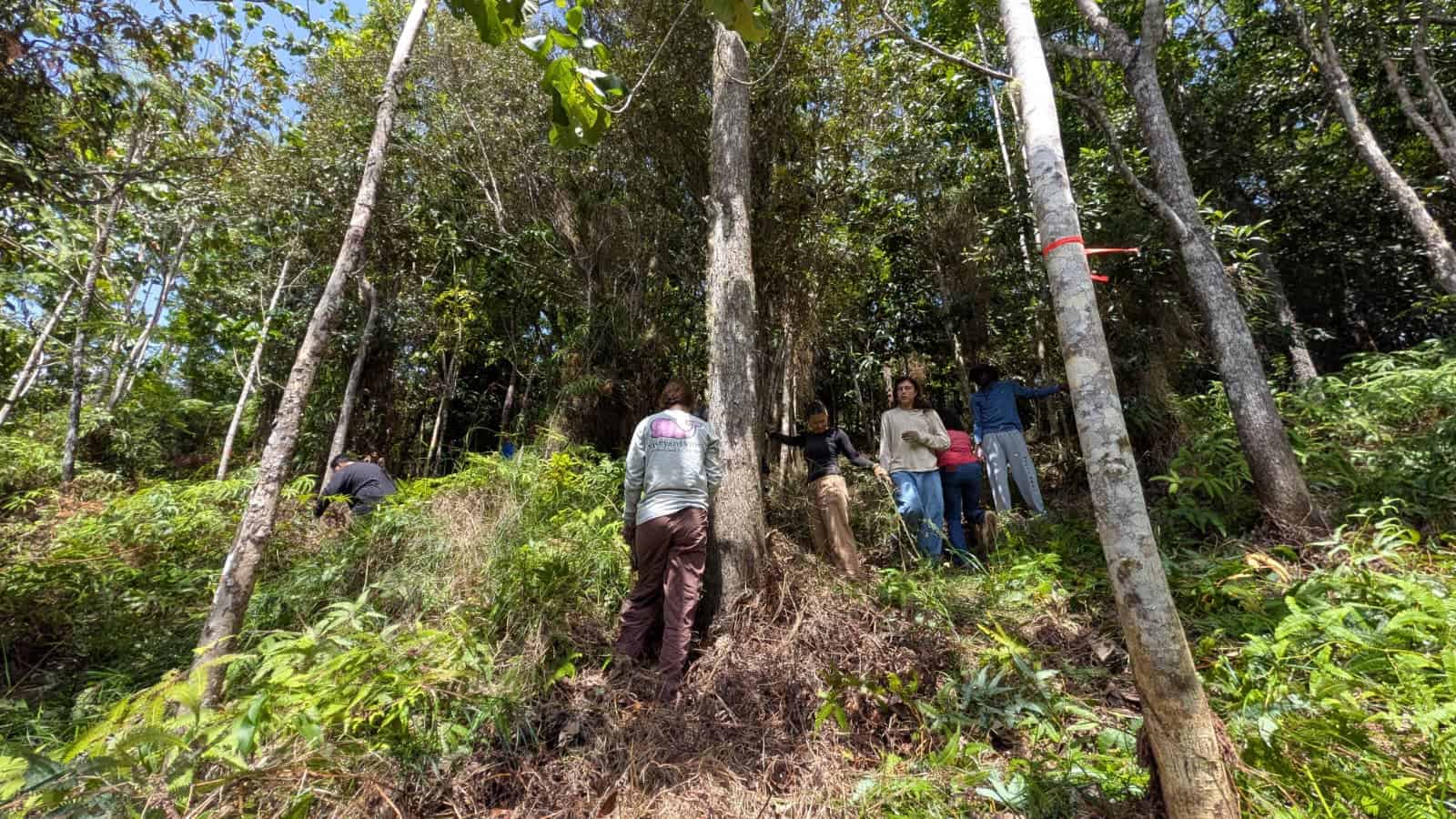
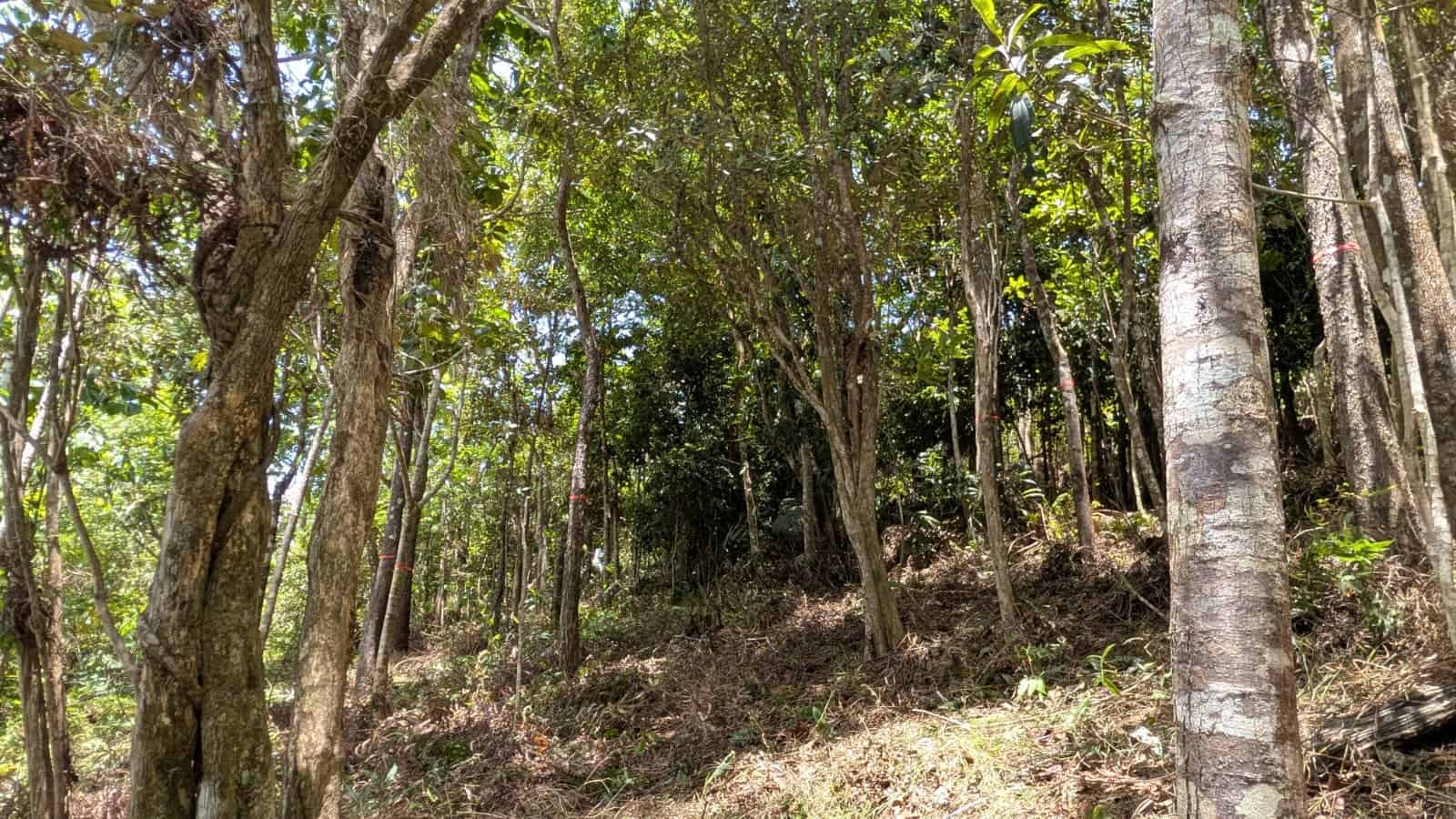
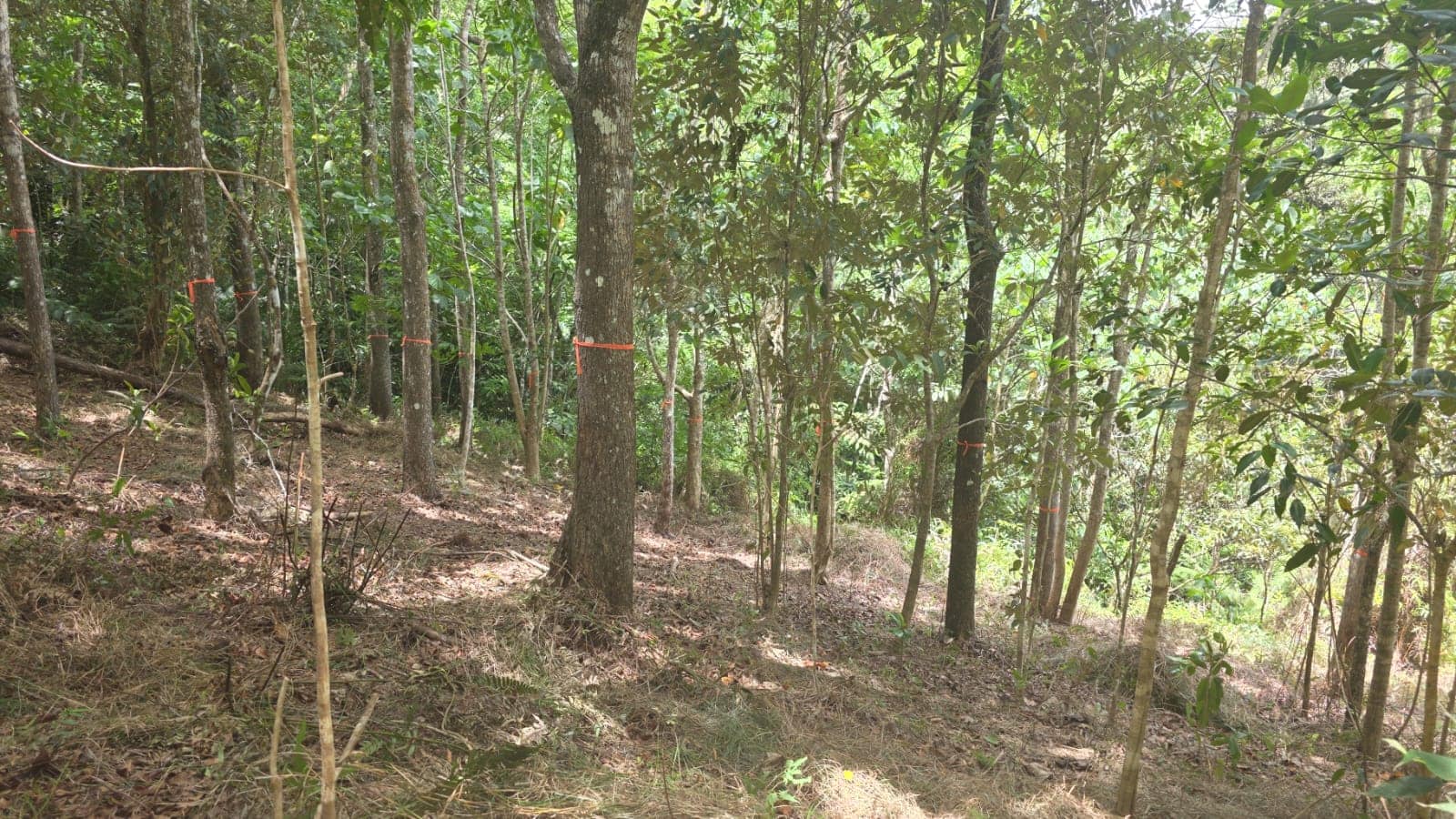
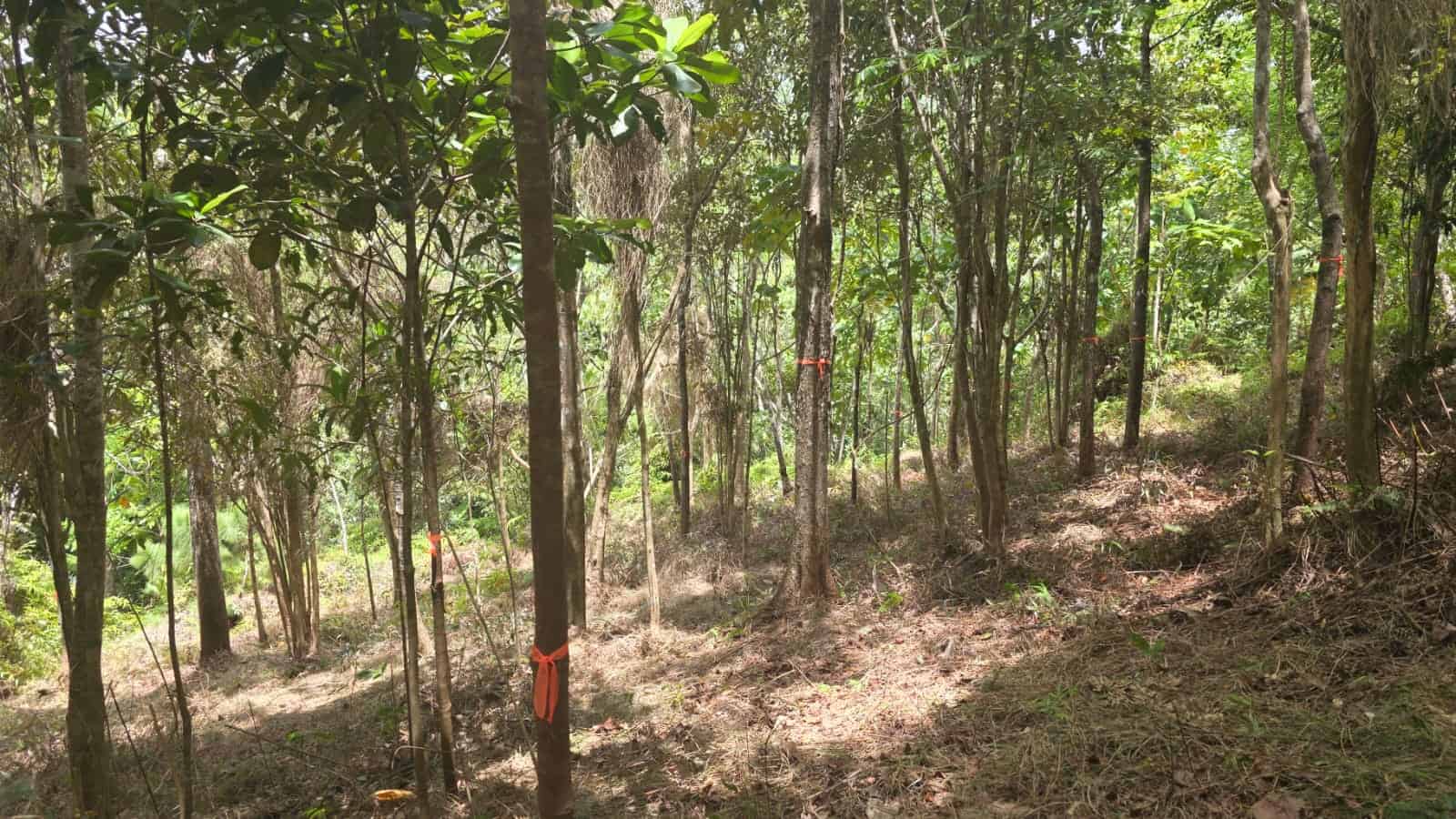
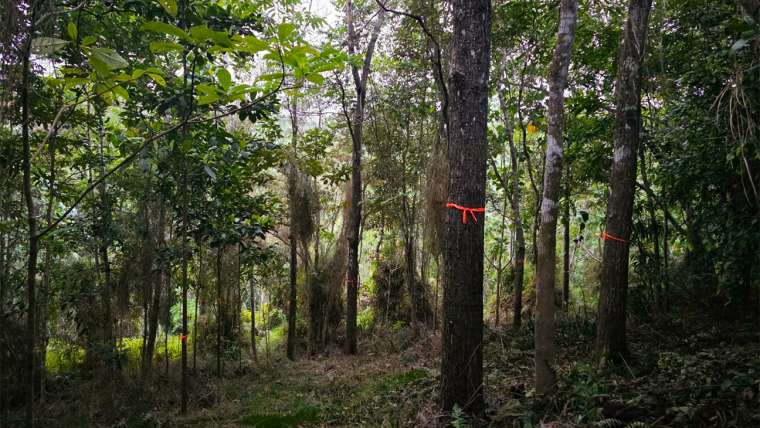
Little by little, the character of the place began to change. Individual tree trunks emerged from the tangled growth. Space opened between them. The steep contours of the hillside became visible again. We could finally look across an entire section of the planted forest rather than catching only brief glimpses through a wall of razor grass.

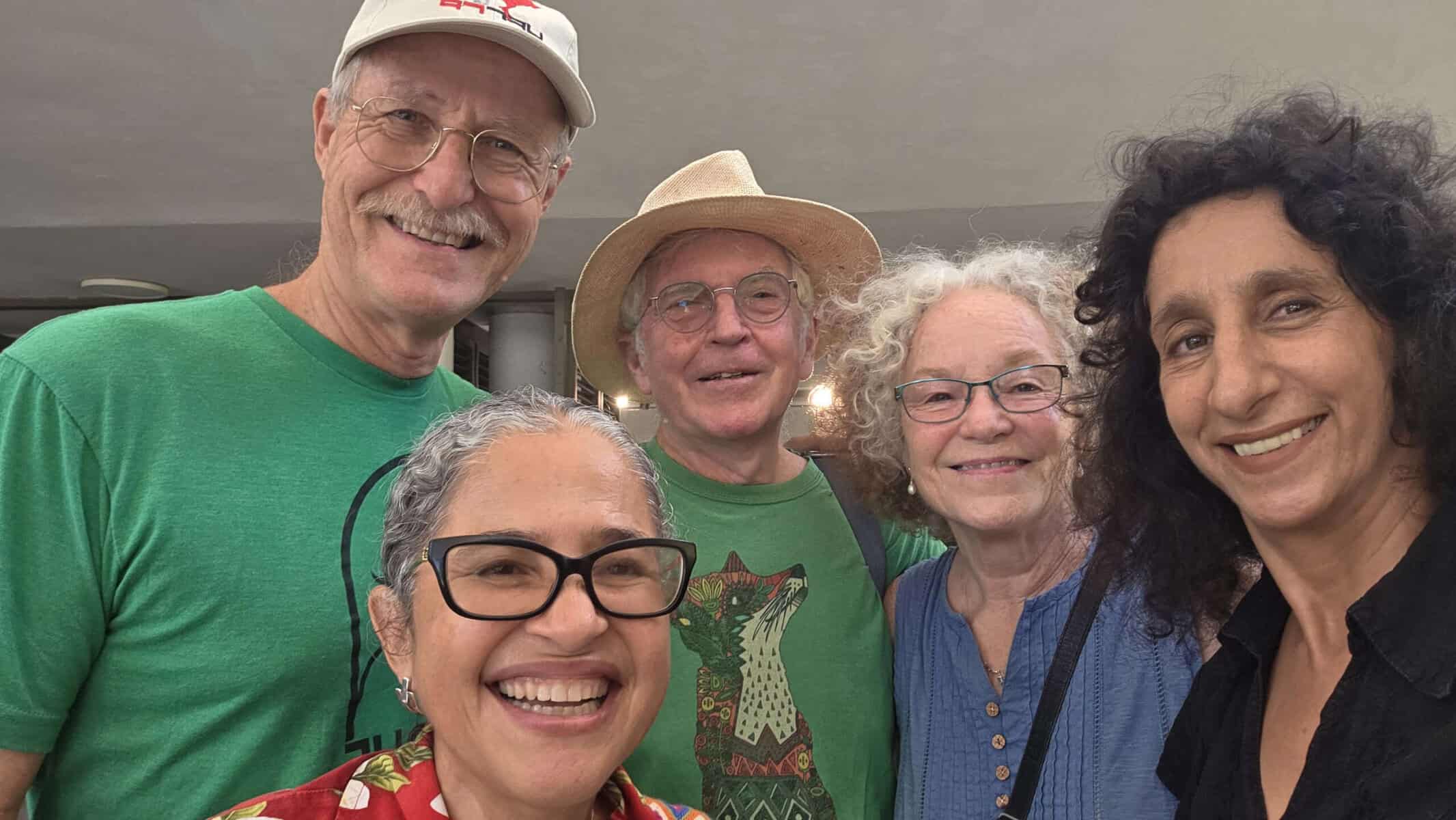
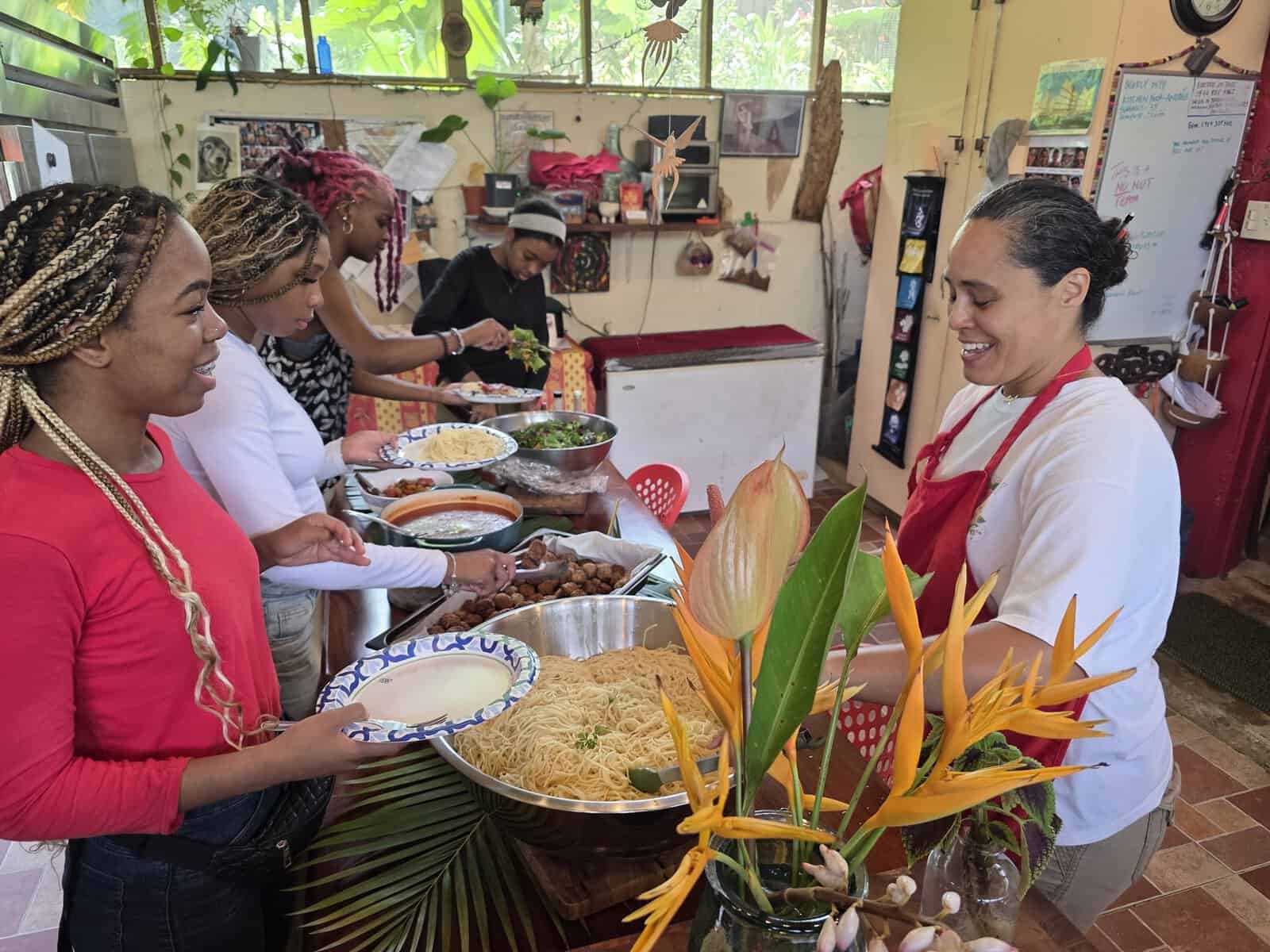
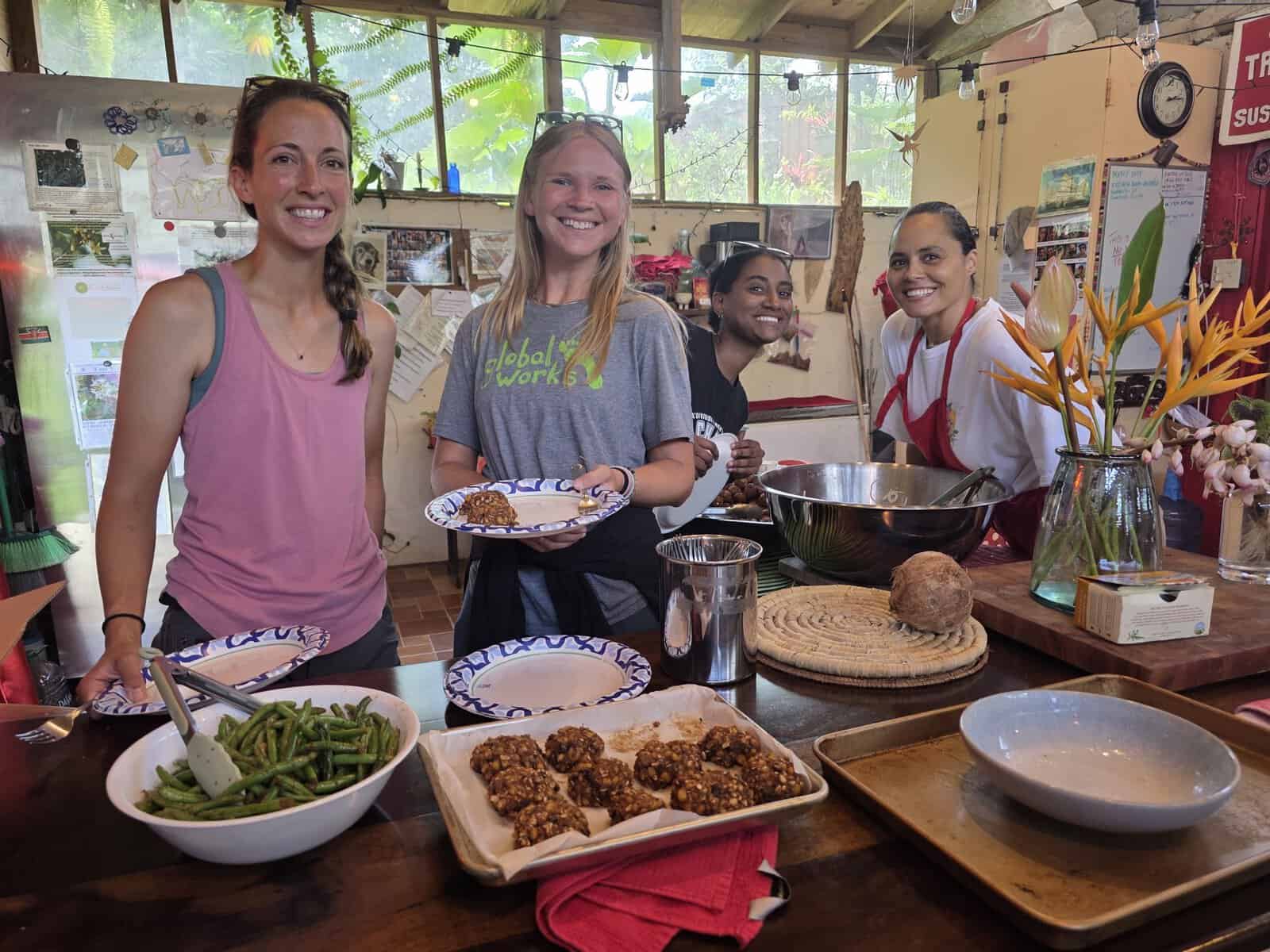
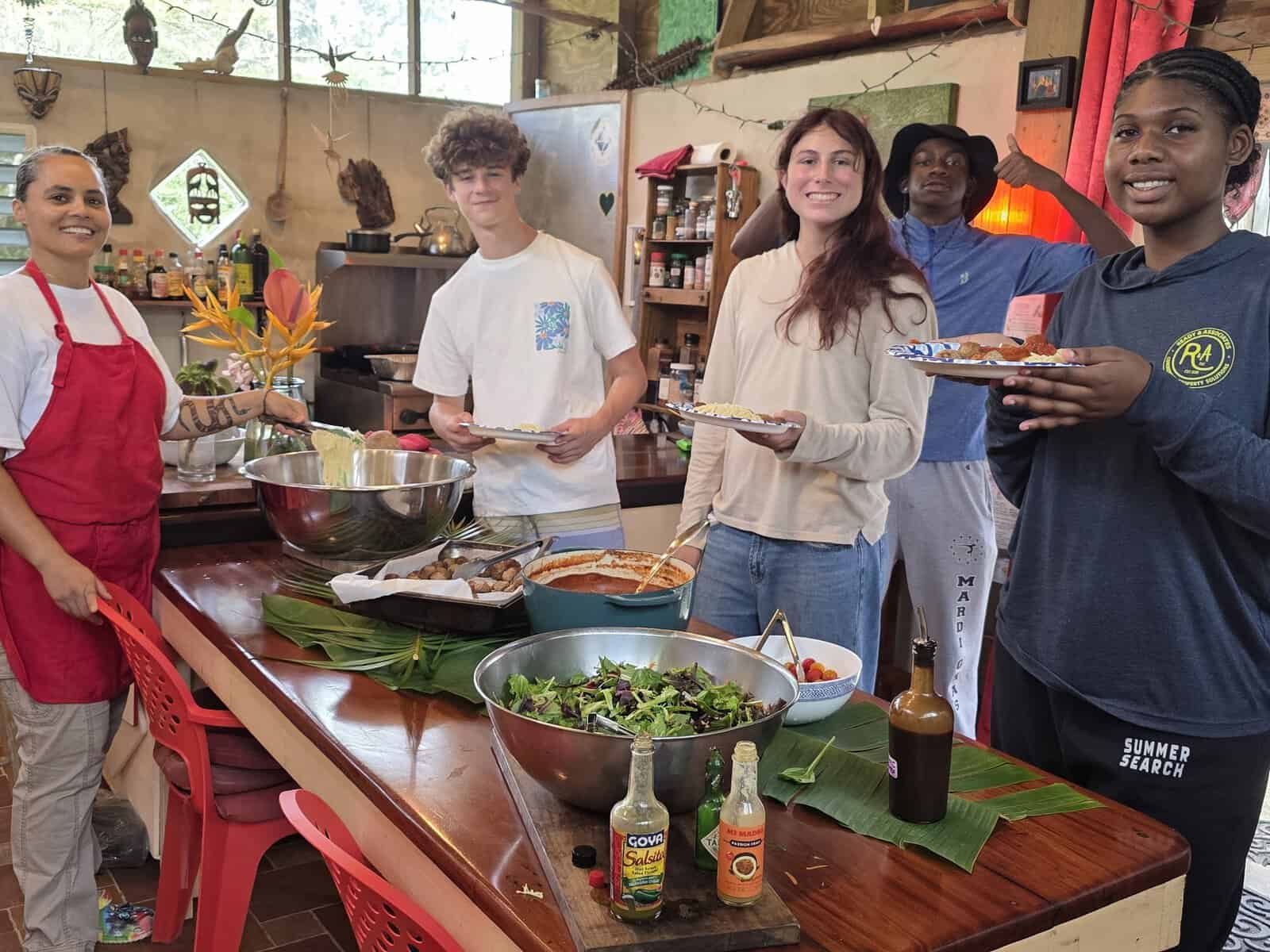
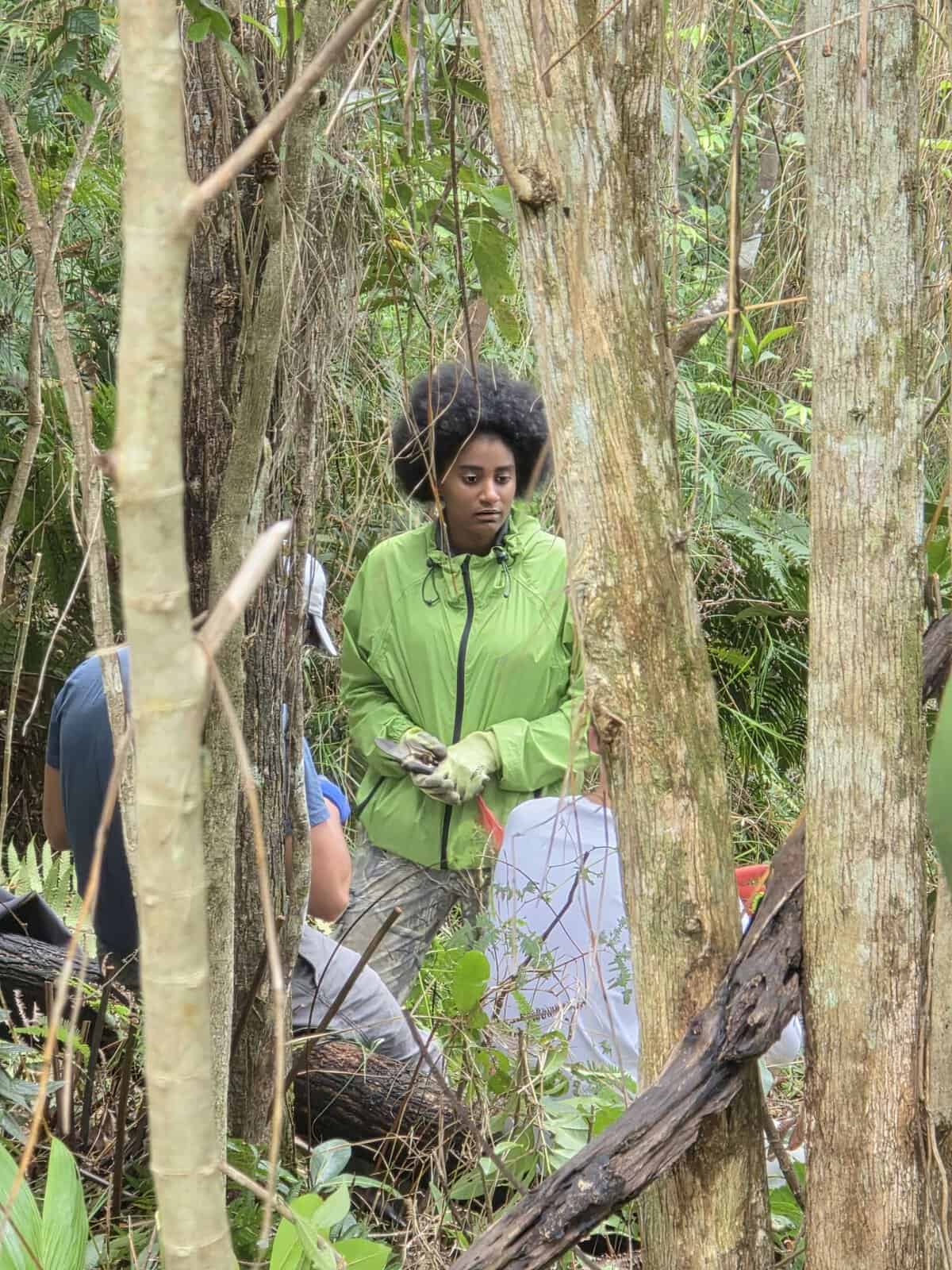
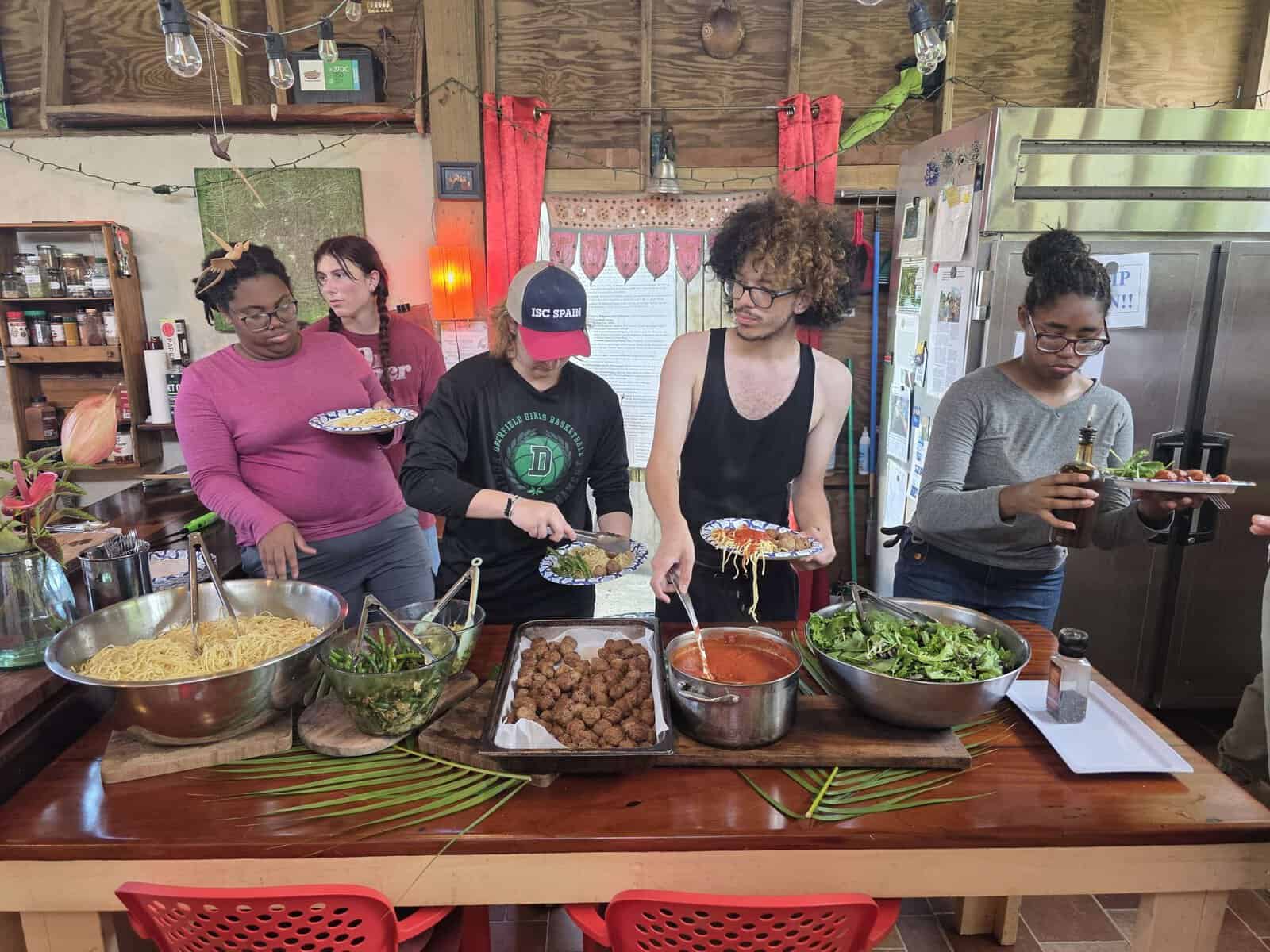
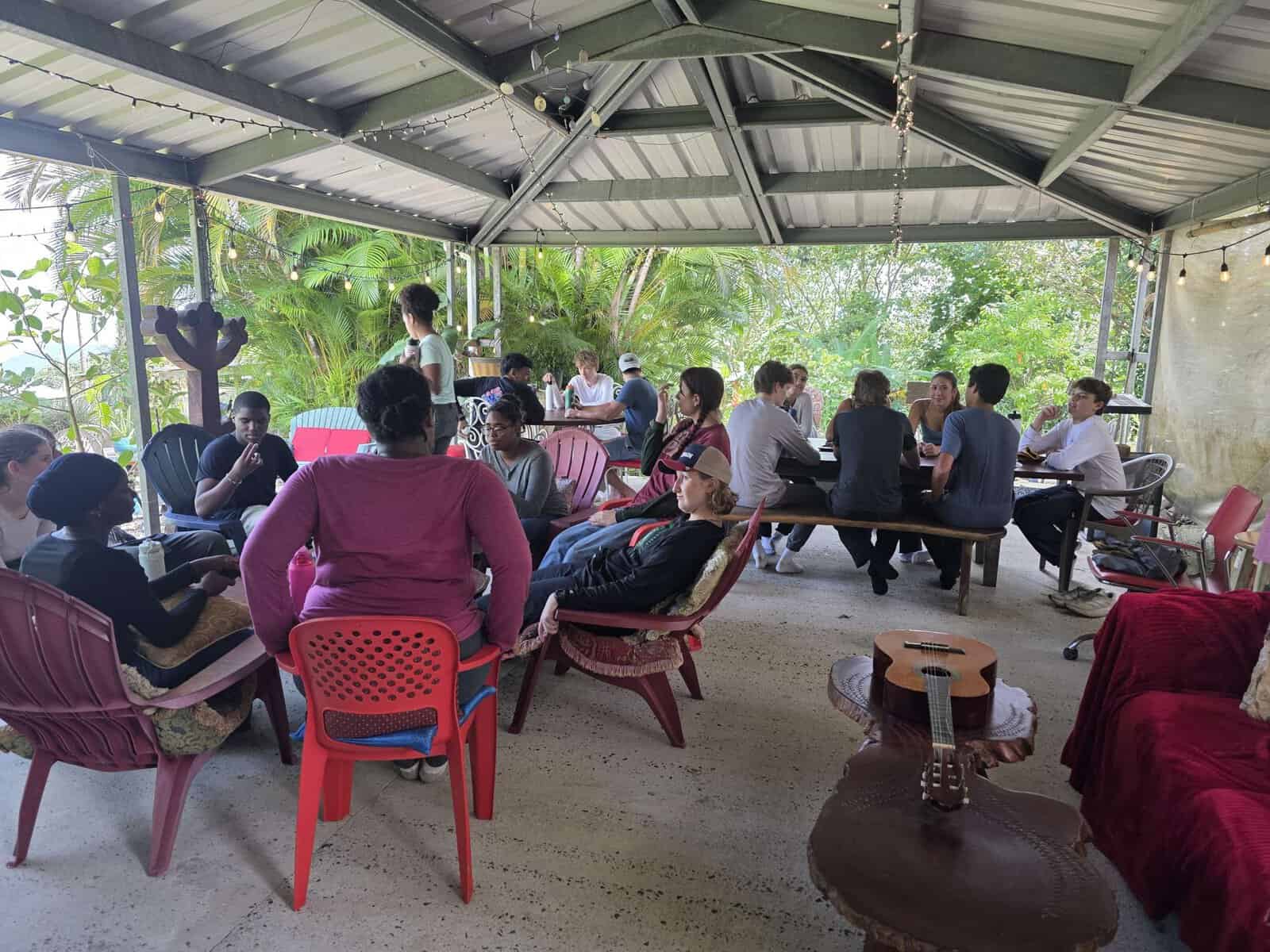
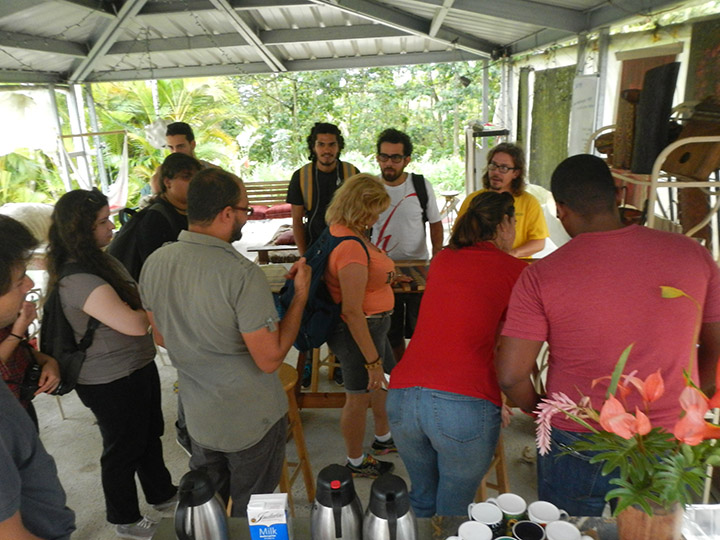
Our neighbor Mike Alvarez joined the team once again, as did local teenager Rio Collazo, who returned to lend her energy and enthusiasm to the day’s work. Monique Nieves was once again our chef, keeping the entire team well fed and restoring everyone’s energy after hours of demanding work in the forest. Her delicious food and generous care are always an essential part of these long volunteer days.

By the end of the day, a whole area was clear. For the first time in years, we could stand back and see the forest. Our planted trees now stood visibly among the naturally regenerating forest. Some had grown tall and straight; others had adapted to storms, competition, and changing light. Around them were ferns, mosses, fungi, young native trees, and the remains of fallen trunks slowly returning to the soil.The work did more than make the area look clearer.

Removing the dense grass and vines gave us access to inspect the planted trees, monitor their condition, and identify where future stewardship will be needed. It also reopened space for the forest canopy to continue closing over the site. As shade increases, the sun-loving razor grass should gradually lose some of its advantage.

There was something deeply satisfying about seeing this progression across two Global Works teams. The first group made the breakthrough and brought us back to the trees. The second carried the work forward, expanding the opening until a hidden plantation became a visible forest once again.The teenagers may have arrived seeing a hillside covered in difficult vegetation.

By the end of the day, they could see the result of their collective effort: a real and dramatic transformation.This is how long-term forest stewardship happens. One tree is planted. Years pass. Storms intervene. Trails disappear. Then many hands return—cutting, clearing, observing, and caring—and another chapter in the life of the forest begins.The razor grass had hidden this place for years. Now, at last, we can see the forest beyond it.

Photos by Mike Alvarez and 3t Vakil, 11 July 2026
Globalworks Teen Team: Beyond the razor grass! 29th June 2026
Beyond the Razor grass: a reunion in the rainforest

There are places in the forest that become almost mythical. You know they are there. You remember planting the trees, carrying saplings carefully on slopes, and imagining what the forest might look like years into the future. But then time, storms, and circumstance create barriers, and those places slip beyond reach.

One such place exists at Las Casas de la Selva. Following Hurricane Maria, the forest changed dramatically. Vast areas lost much of their canopy, and suddenly sunlight poured onto the forest floor. Nature, of course, does not leave empty spaces unoccupied for long. A profusion of sun-loving plants surged upward, among them one of our most formidable adversaries: razor grass.

Razor grass (Scleria secans), is aptly named. Its leaves are sharp enough to cut exposed skin, and it forms dense, tangled masses that can become nearly impenetrable. Along with other vigorous grasses and vines, it quickly reclaimed the disturbed areas of the forest. Trails vanished. Landmarks disappeared. Slopes we had once visited regularly became hidden behind walls of green.

One of these lost places was a hillside which had been planted with Ausubo, Mahogany and Blue Mahoe back in the late 80s and where, in my era, we had planted trees in the growing forest in 2000, 2001, 2007, 2008, and 2009. On those steep slopes, we had planted more mahoganies, more ausubos, and mahoe trees, believing that one day they would become part of the next generation of forest. And after Hurricane Maria in 2017, we simply could not get back in. Years passed.

The trees continued growing somewhere beyond the razor grass. We wondered about them often. Had they survived? Had they been overtaken by vines? Had landslides damaged the site? Were there still trees standing where we had once planted saplings no taller than us? This summer, we finally had the opportunity to find out.

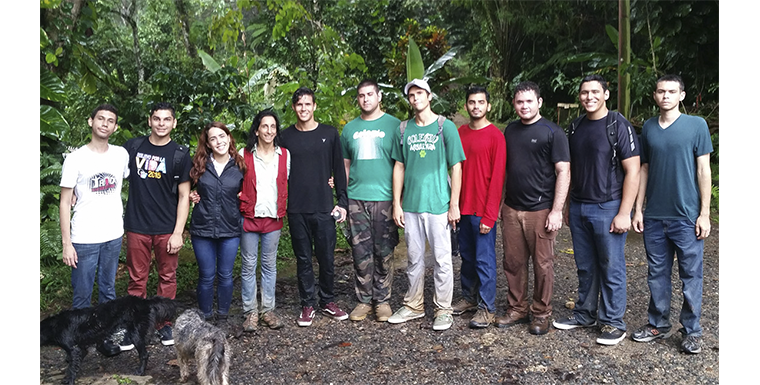
Twenty teenagers and three staff arrived at Las Casas as part of a Global Works group. From the beginning, the young people threw themselves wholeheartedly into the task. Armed with gloves, loppers, and pruning shears, as well as plenty of enthusiasm, they set about reopening the spaces between trees, access to the forgotten slope. Progress was slow. Every metre had to be earned.

Several groups before this team had also put in hard labor to enable us to get in further down slope. Razor grass resisted every advance, its long floating tendrils looking innocently like grass, dense growth grabbing at clothes like angry velcro. Yet the group remained cheerful, determined, and remarkably hard-working. Gradually, a path began to emerge. Then came one of those magical moments.

The forest opened, and suddenly, there they were. Trees. Not saplings. TREES! Mahoganies reaching skyward; Ausubos establishing themselves confidently on the slope; Blue Mahoe trees thriving in the recovering forest.

Some were far larger than any of us had imagined. They had not simply survived. They had grown. They had persisted through hurricanes, torrential rains, and years of neglect and isolation. For 3t, it was an especially emotional moment.

To stand among these planted trees was deeply moving. There was an almost childlike joy in rediscovering them.
"They made it!"

Sunlight filtered through recovering canopies. Mosses, fungi, and tall ferns carpeted fallen logs. Young trees occupied gaps left by the hurricane. Birds moved through the branches overhead. Everywhere there were signs of renewal and resilience. It was also a powerful reminder of one of the fundamental lessons of forestry and restoration work: trees operate on timescales far longer than our own immediate concerns.

When we planted these seedlings in 2000, 2001, 2007, 2008, and 2009, we were making a commitment to a future we could barely imagine. Hurricanes came and altered our plans. Trails disappeared. Life changed. Yet the trees kept growing.

Forestry teaches patience, and it rewards you with moments like this.

For the teenagers, the experience became much more than a day of clearing vegetation. They were not simply cutting a path. They were reconnecting us with a piece of our own history. They helped reveal nearly twenty years of forest growth and allowed us to witness the remarkable resilience of both planted trees and the ecosystems that surround them. The work was also a beautiful example of collaboration.

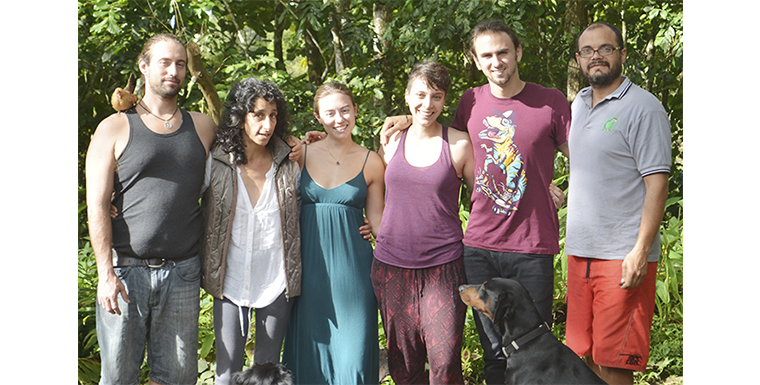
Monique Nieves kept everyone well fed with a delicious meal that restored energy after long hours in the field. 3t and Jon Warwick led the work crews with enthusiasm and determination, guiding the students through challenging terrain and sharing stories of the forest's history. Rio Collazo, age 15, volunteered with the group and helped in all areas. Mike Alvarez, a neighbor, recently back on the island after a lifetime away, joined the activity, to see what we get up to here in the mountains!

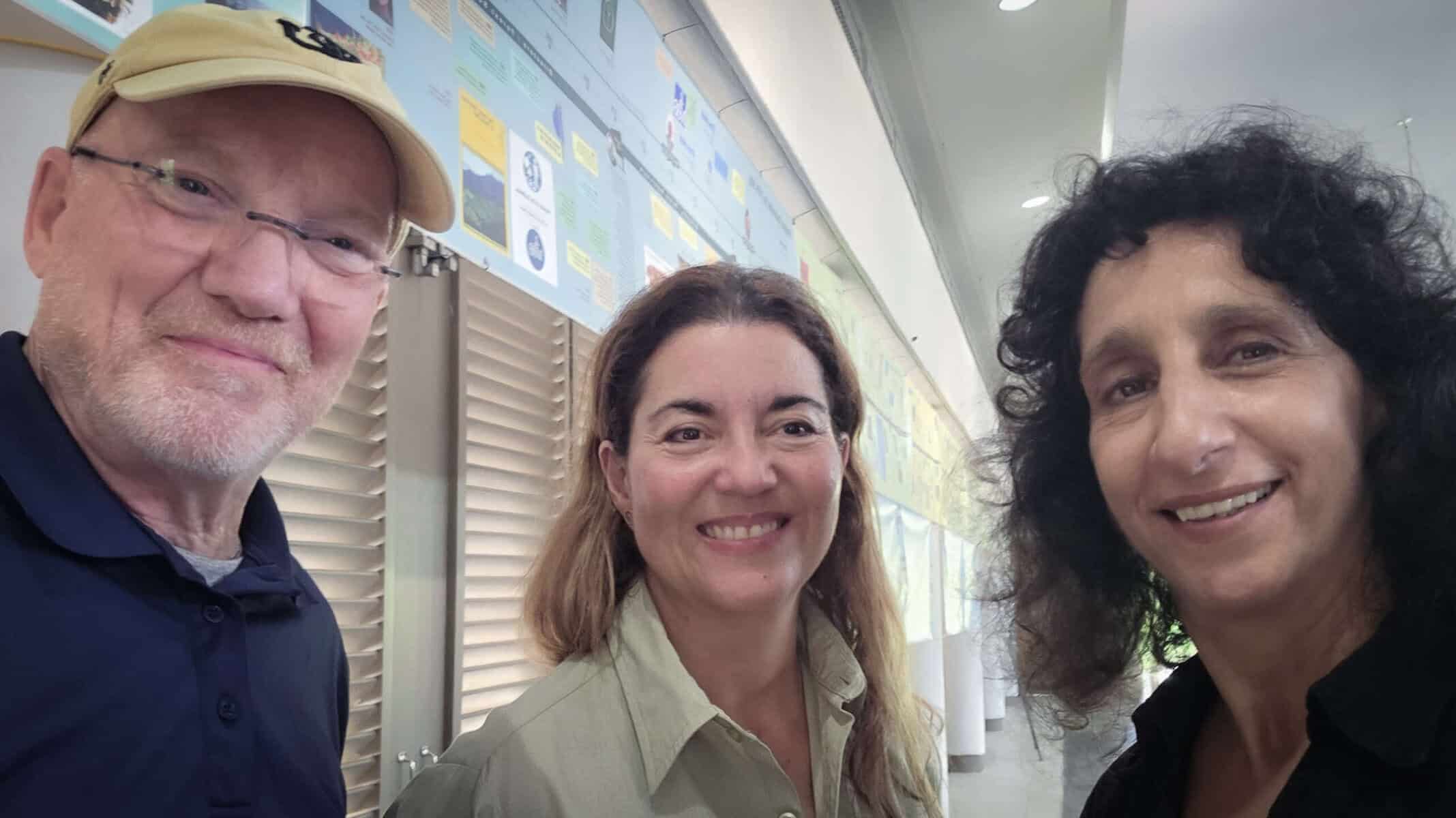
The Global Works staff, Lauren, Nahely, and Darielys, were wonderful partners, supporting the group and helping create an atmosphere of curiosity, teamwork, and adventure. By the end of the day, we had reopened access to a place we thought might remain hidden indefinitely. More importantly, we had rediscovered something precious.

Learn more about how to participate in a Teenage Globalworks adventure, see link below.

Conservation work often unfolds quietly. The victories are rarely dramatic. They come in seedlings taking root, forests slowly recovering, and young people choosing to spend their day cutting through razor grass so that others can reconnect with trees planted long ago.

Photos by Mike Alvarez & 3t Vakil, 29 June 2026
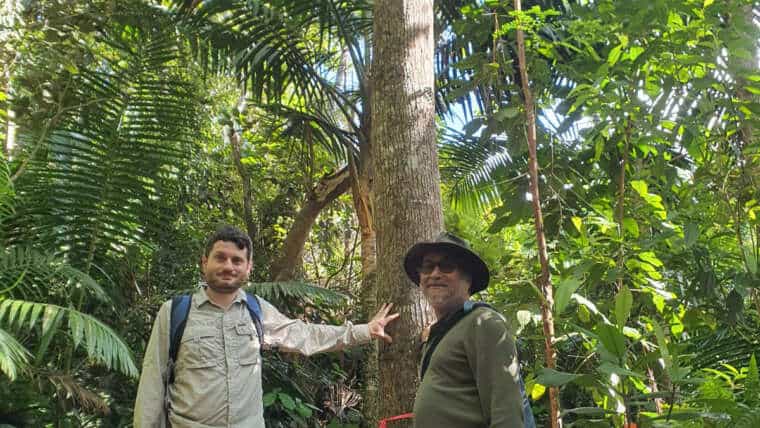
It was heartwarming to welcome back Darielys Dijol Mercedes.

In 2023, she first came to Las Casas de la Selva as a 17-year-old participant with a Global Works group, experiencing the rainforest and conservation work firsthand. 

Just three years later, she returned in a very different role, as a Global Works facilitator, helping lead and inspire a new generation of teenagers.

Watching young people grow into leaders who then guide others through these same experiences is one of the greatest rewards of educational and conservation work.

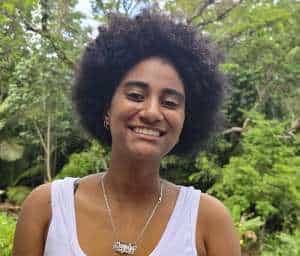
We were delighted to have local teenager Rio Collazo, age 15, join the Global Works group as a volunteer.

Rio has been eager to become involved at Las Casas de la Selva and embraced the opportunity with enthusiasm. She was helpful in every area, lending a hand wherever it was needed; sensitive to group dynamics whilst out in the field, and an invaluable member of the team.

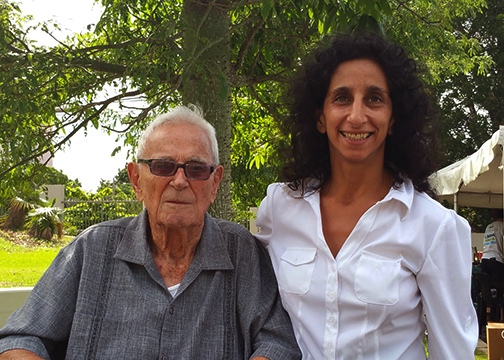
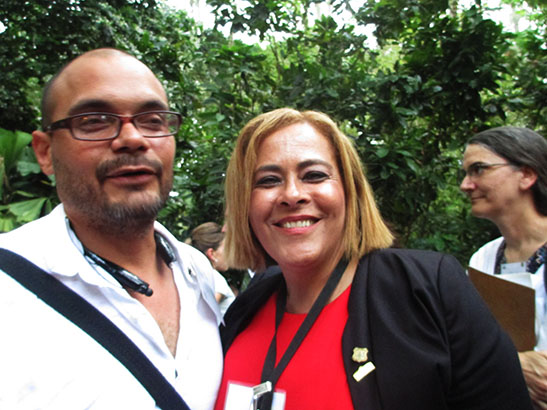
It was wonderful to see her positive energy, willingness to work with others, and genuine interest in the forest and its conservation. Photo of Rio with her father, Angel, a neighbor and very good friend of the project.

New Research Published, June 2025

Through the Storm: New Research Highlights Forest Vulnerability in Puerto Rico, June 2025

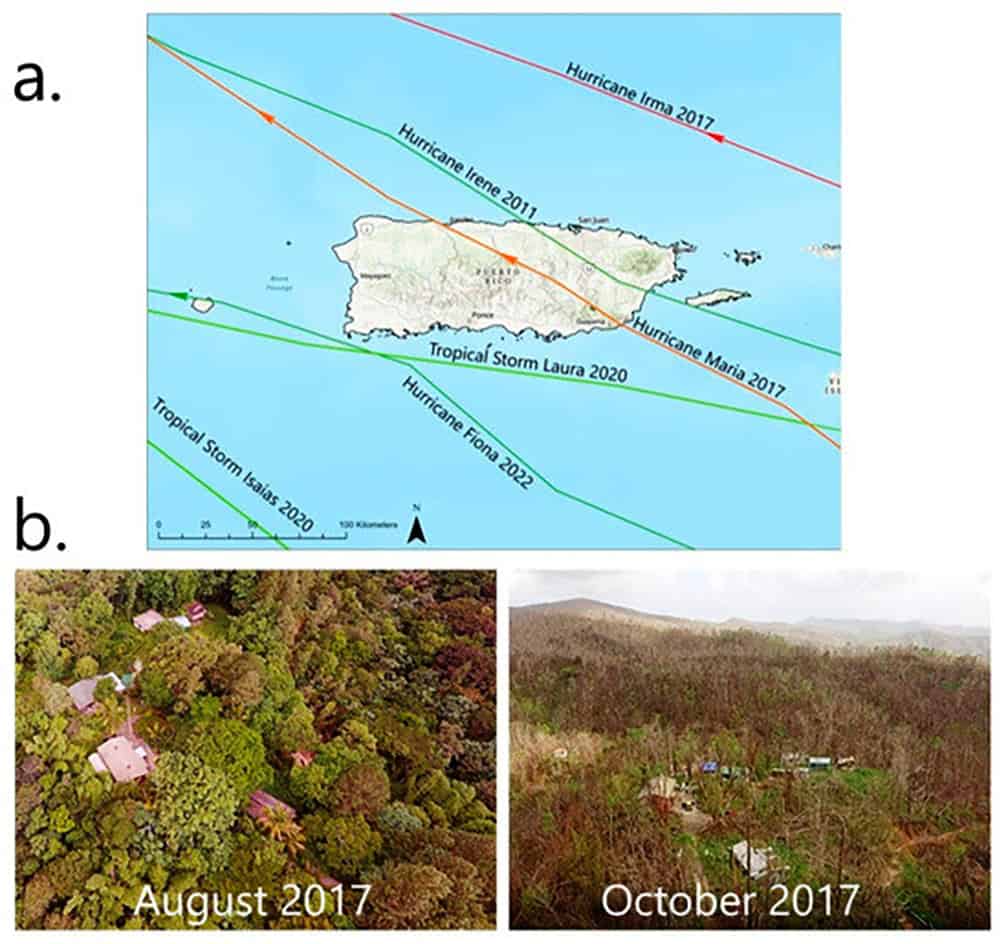
(a) Tracks for some of the more recent storms to impact the island of Puerto Rico; and (b) aerial photos showing Las Casas de la Selva before and after the storm. Photo credit: Thrity Vakil.

We’re proud to share the publication of a powerful new peer-reviewed article by Michael W. Caslin, co-authored with Madhusudan Katti, Stacy A. C. Nelson, and Thrity Vakil, in the MDPI journal Land (July 2024). The study—“Tabonuco and Plantation Forests at Higher Elevations Are More Vulnerable to Hurricane Damage and Slower to Recover in Southeastern Puerto Rico”—is a milestone not just in forest research, but in Michael’s personal journey as he nears completion of his PhD.

This is no armchair science. Michael has spent years on the ground at Las Casas de la Selva in Patillas, Puerto Rico, conducting fieldwork under challenging and often extreme conditions. From muddy mountain slopes to tangled understories, he painstakingly gathered data across 75 forest plots—returning again and again, rain or shine, to document how forests have responded to the brutal force of Hurricane Maria.

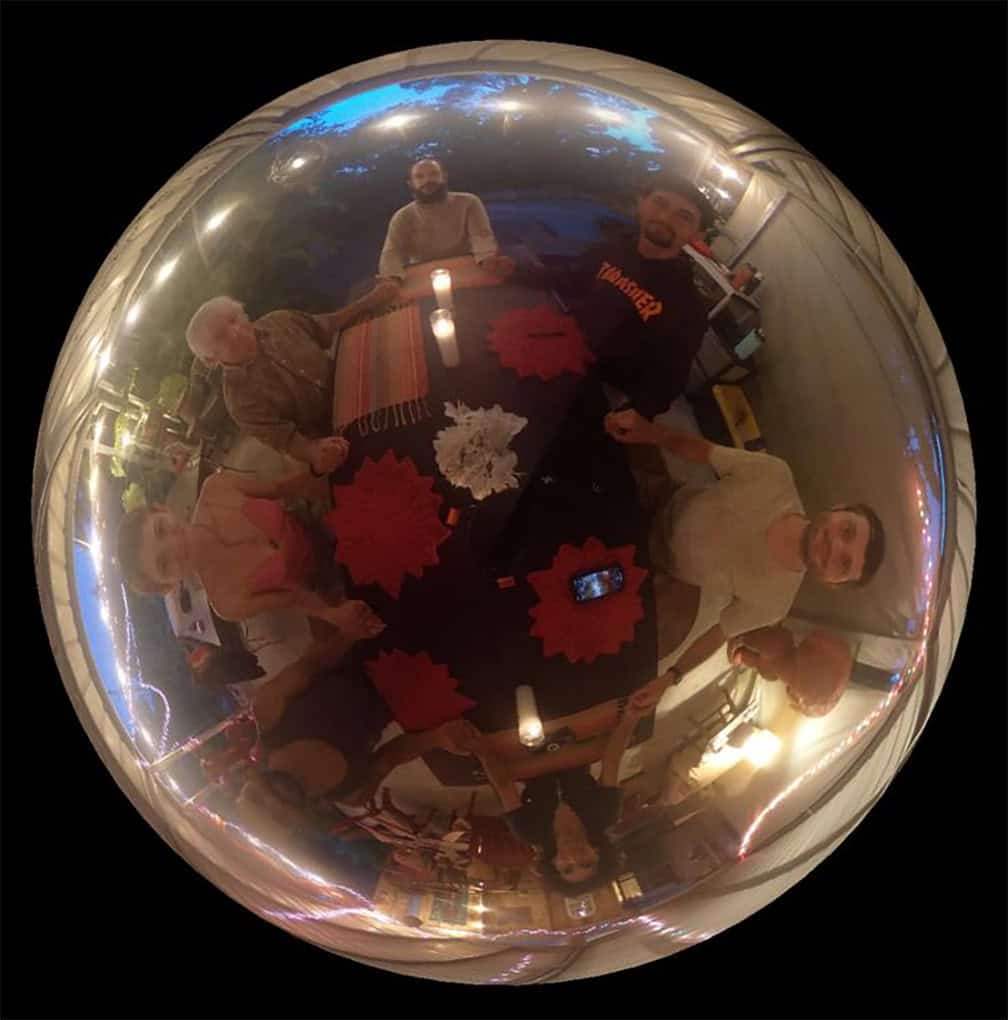
Using 360° photography, virtual reality analysis, and spatial modeling tools, Michael’s research paints a clear picture: higher-elevation forests, especially those dominated by native tabonuco trees or plantation species, are more vulnerable to hurricane damage and are slower to recover. These findings are essential for shaping future forest management and climate resilience strategies in Puerto Rico and beyond.

And best of all, the publication in the journal “Land” published by MDPI (Multidisciplinary Digital Publishing Institute), is open access, meaning anyone can read it, with no subscriptions or paywalls in the way.

🔗 Read the study here

MDPI (Multidisciplinary Digital Publishing Institute) It is a publisher of open access scientific journals, founded in 1996 and based in Basel, Switzerland.
Congratulations, Michael—for your unwavering commitment, your brilliant fieldwork, and this important scientific contribution. We’re honored to have supported your work at Las Casas de la Selva.

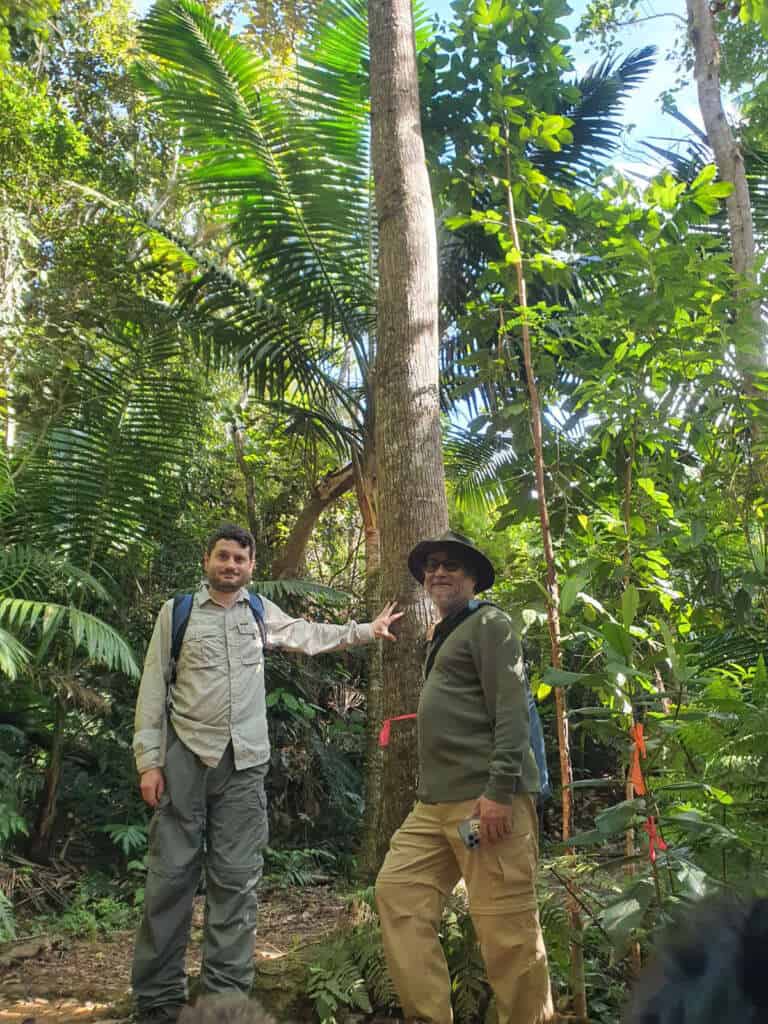
Michael Caslin and Prof Madhusudan Katti in the Las Casas forest, 2023
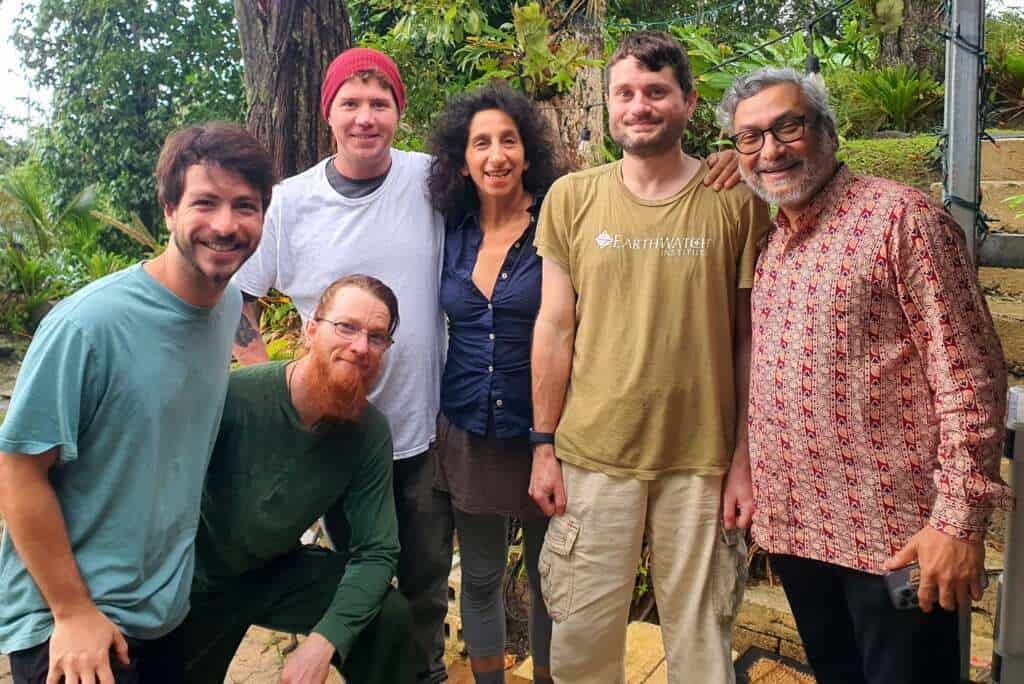
L-R: Alfredo Lopez, George Locascio, Larry Birdflask, Michael Caslin, and Prof Madhusudan Katti, 2023

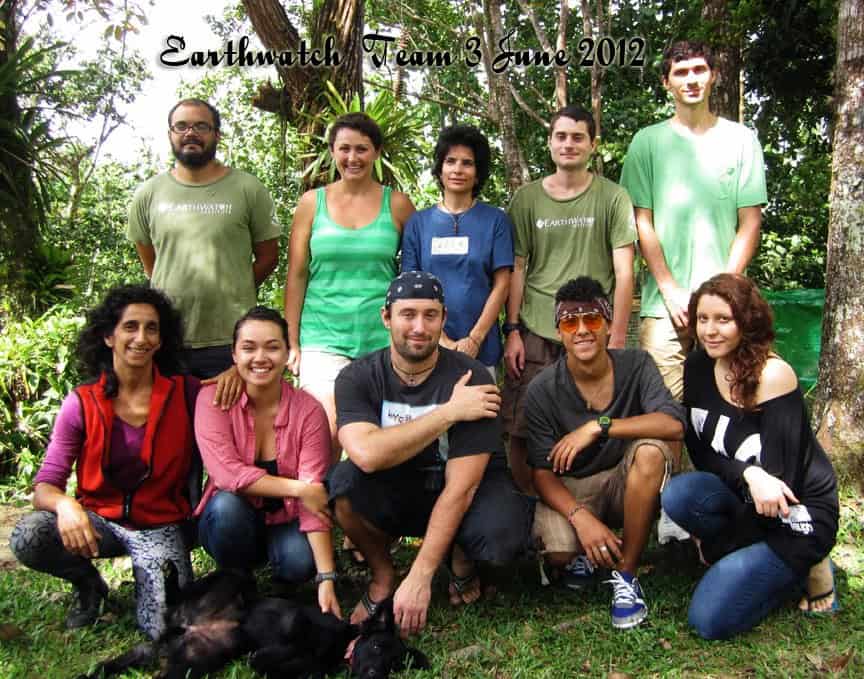
Michael Caslin first arrived at Las Casas de la Selva as a volunteer with the Earthwatch Institute’s citizen science program in 2012, returning again in 2014—two formative trips that sparked a deep and lasting passion for tropical forests. Immersed in the rhythms of the rainforest and the hands-on work of sustainable forestry, Michael quickly stood out for his curiosity, commitment, and keen observational skills. Those early experiences planted the seeds for what would grow into a decade-long journey of research, culminating in his doctoral work. What began as a volunteer project evolved into a personal mission: to understand how forests endure, adapt, and recover in the face of increasingly extreme climate events.

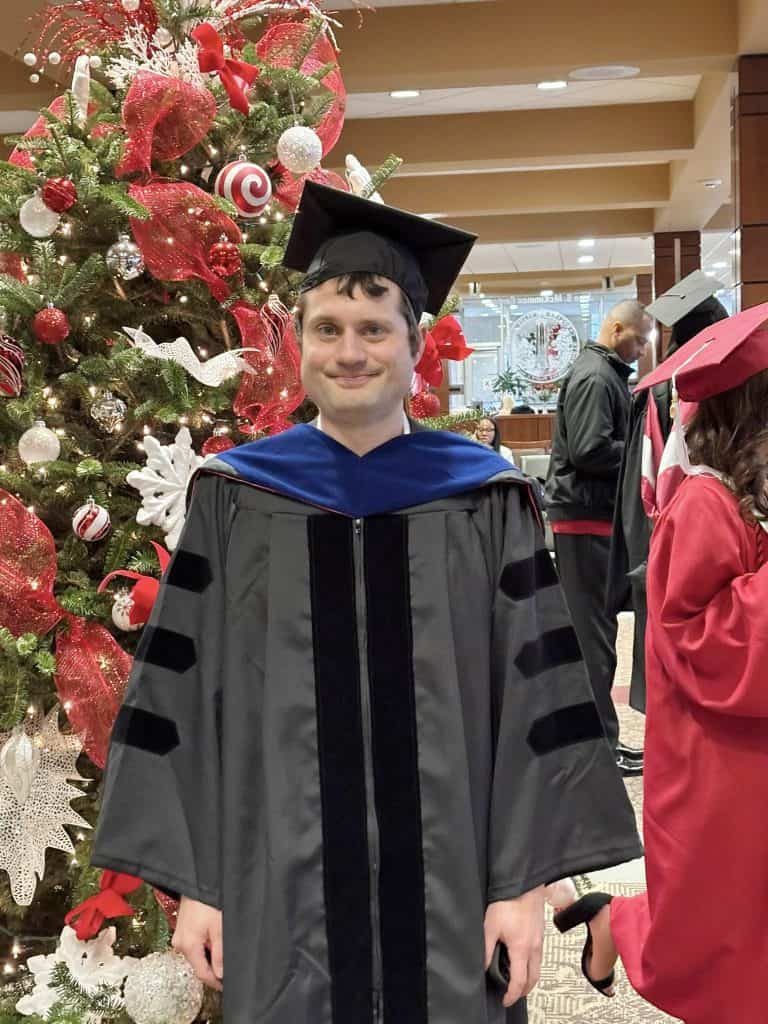
Update: 12 December 2025 – Michael graduated from NC State University with a PhD in Forestry and Environmental Resources. Bravo, Dr. Caslin!

Photo by Jennifer Catherine Caslin

Puerto Rico needs foresters, more than ever.

Estos son estudiantes de la Universidad de Puerto Rico, Recinto de Mayagüez, participando en el curso de Silvicultura AGRO4010 del Departamento de Ciencias Agro-ambientales. Pasamos el dia en plantaciones de Caoba y Majó bajo la lluvia torrencial e intensas discusiones que tuvimos en el campo. Gracias al Prof. Oscar J. Abelleira Martínez, por organizar este pasadia para los estudiantes quien estuvo presente aún cuando su esposa se encontraba en el hospital a punto de tener su bebe! Jennifer M. Rivera San Antonio, Asistente del Profesor y Estudiante graduada del Programa de Horticultura de UPRM dirigió el grupo.

La pasamos super bien con todos ustedes. These are students from the University of Puerto Rico at Mayagüez, participating in the Silviculture AGRO4010 course from the Department of Agro-environmental Sciences. The day was spent in the plantations of mahogany and mahoe, and through torrential rain, intense discussions kept us warm in the field. Thanks to Professor Oscar J. Abelleira Martínez, for organizing this field trip, to benefit his students, even as his wife was in hospital ready to deliver a baby! Oscar’s assistant Jennifer M. Rivera San Antonio, Graduate Student in the Horticulture Program at UPRM led the team. We had a great time with you all. Please keep forestry high in your choice of future studies. Puerto Rico needs foresters, more than ever.

Images by 3t Oct 2016
Translation by Magha Garcia

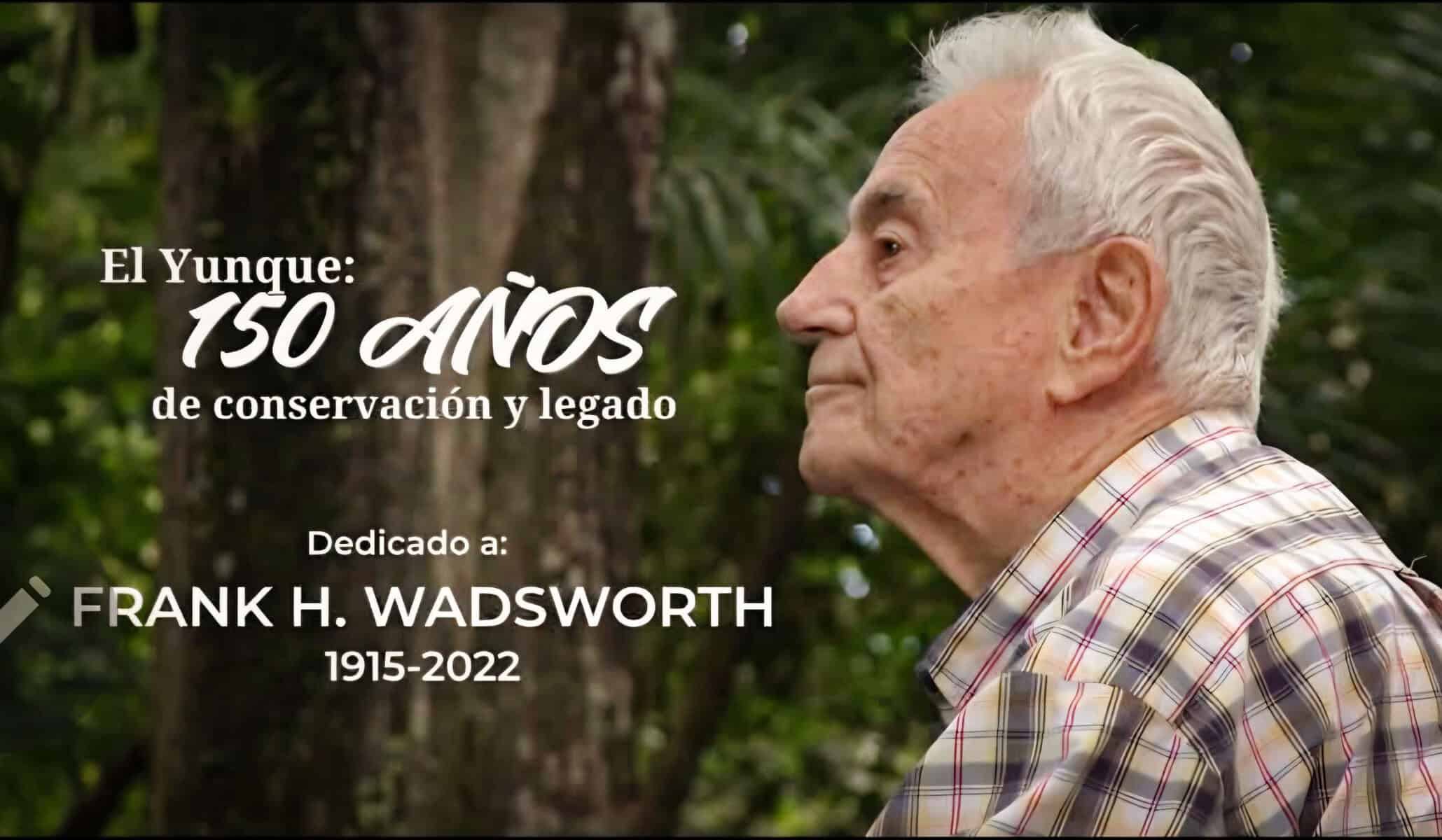
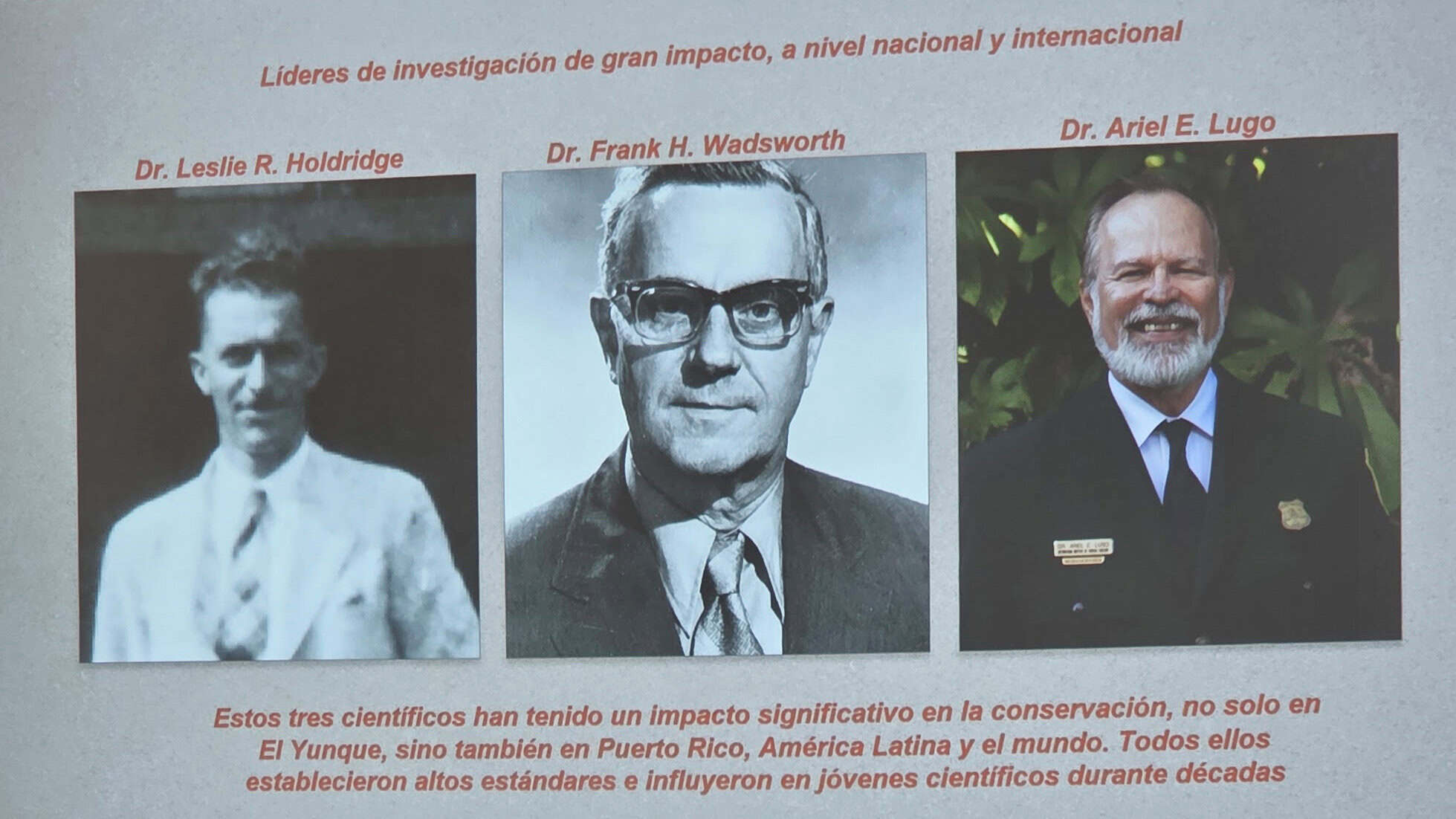
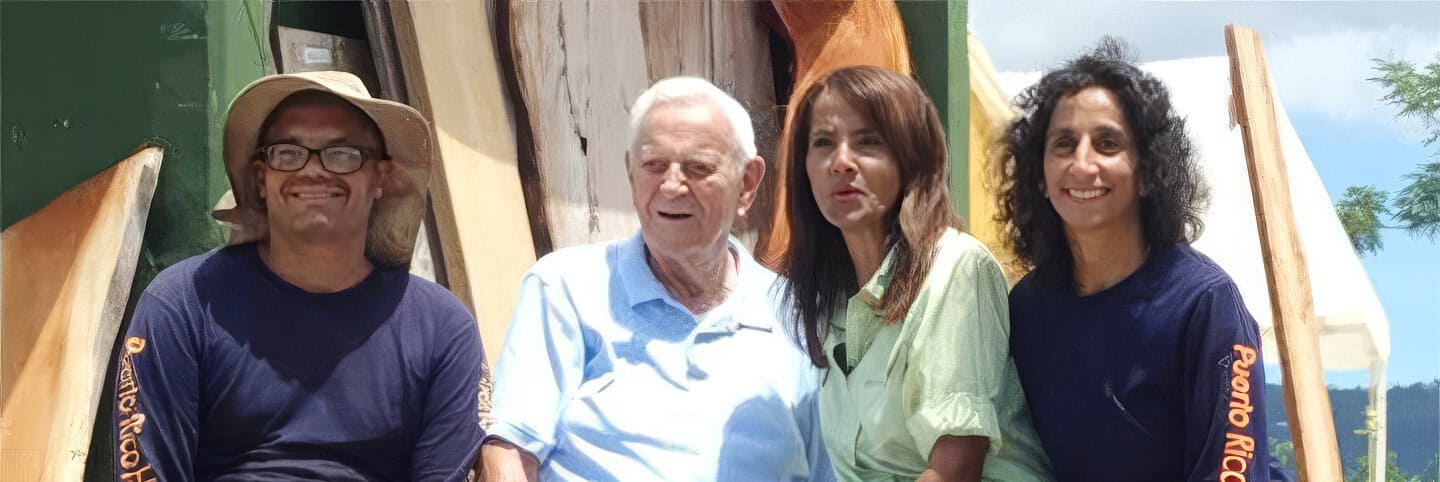
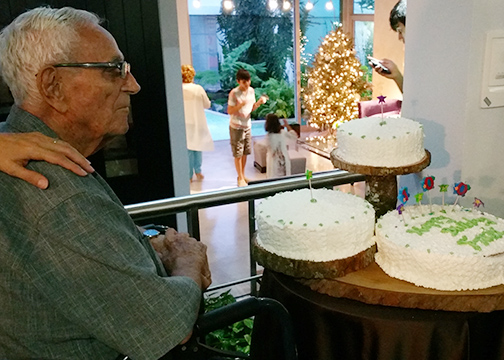
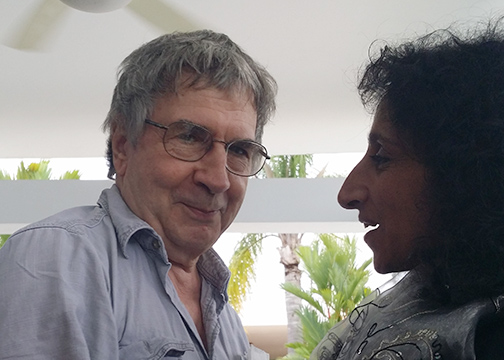
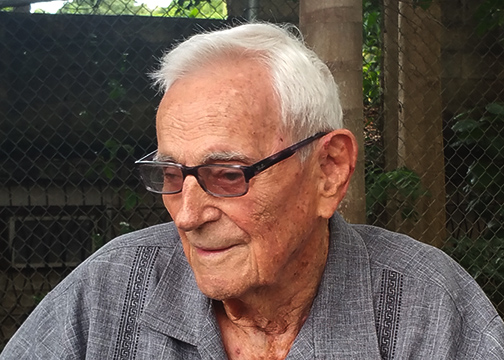
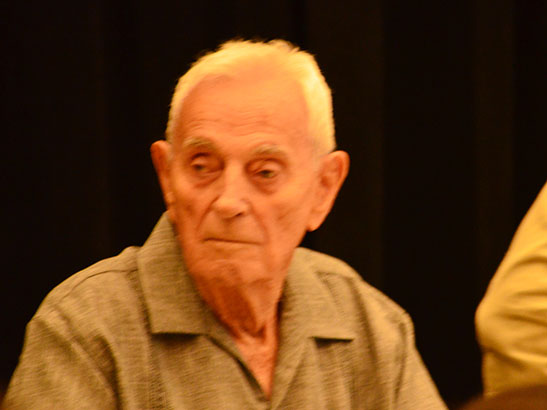
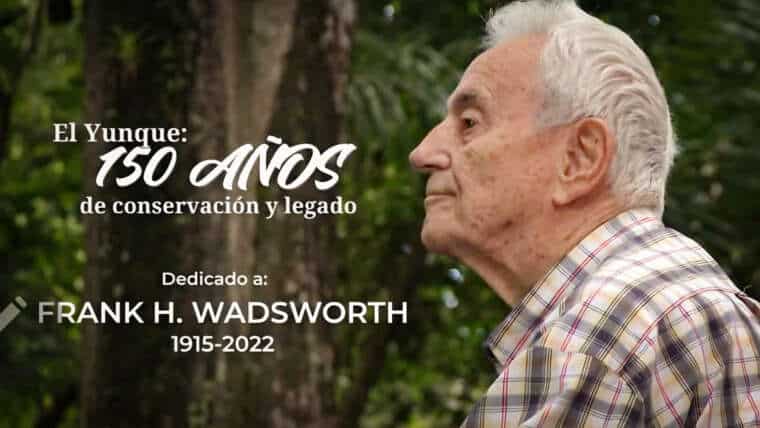
Frank H. Wadsworth 100 years old Dec 2015

Congratulations to our most favorite forester. Frank we salute you highly on this most auspicious day.
Happy 100th Birthday!

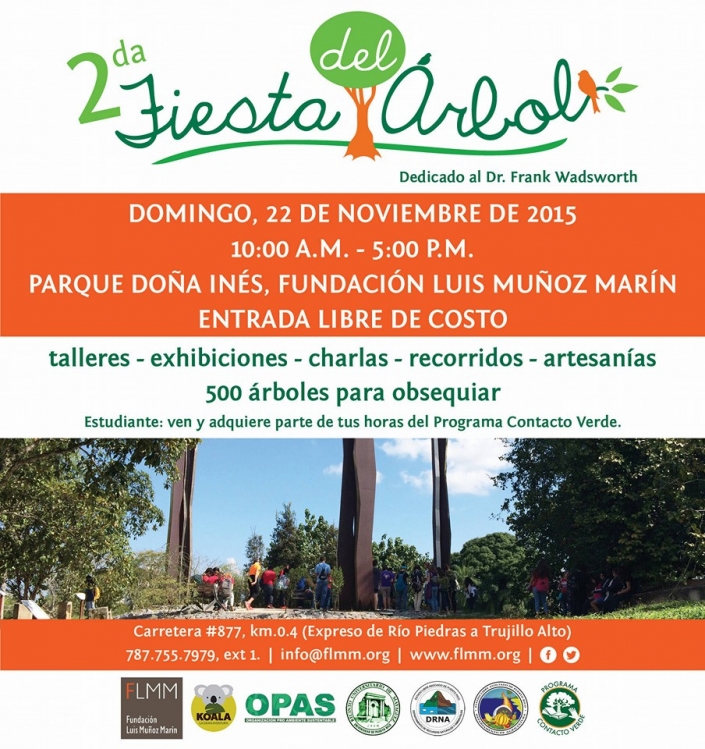
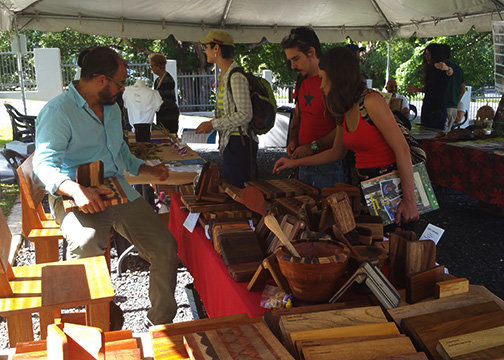
Fiesta del Arbol November 2015

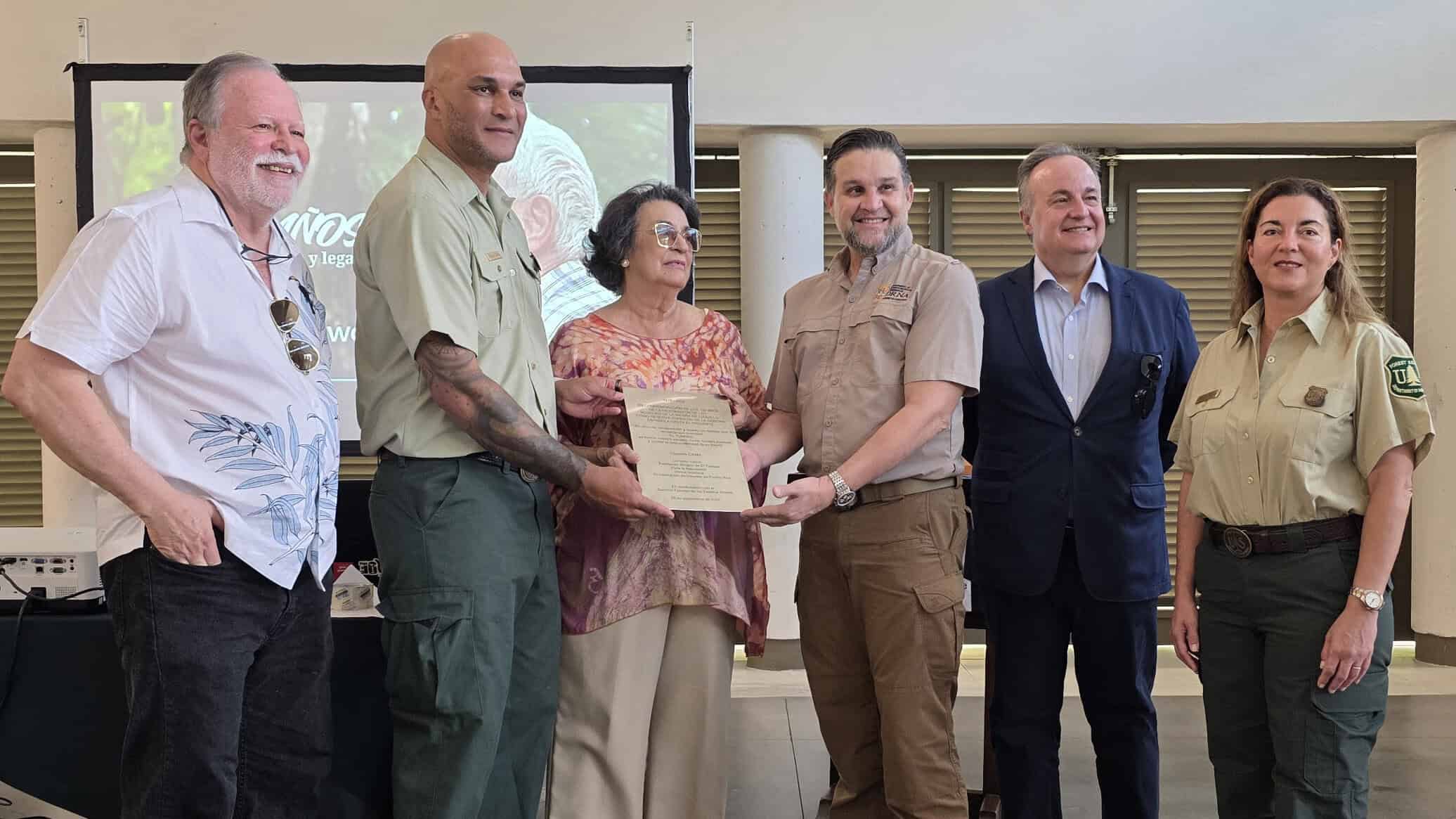
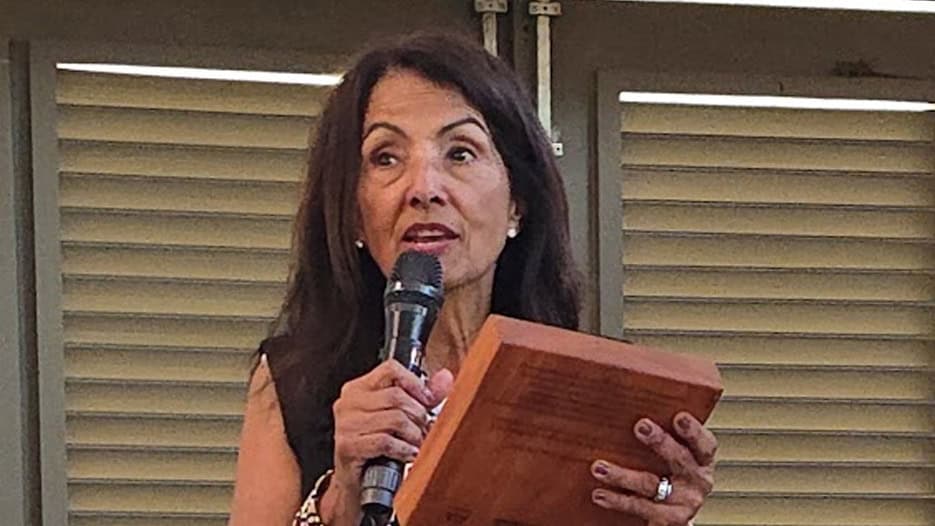
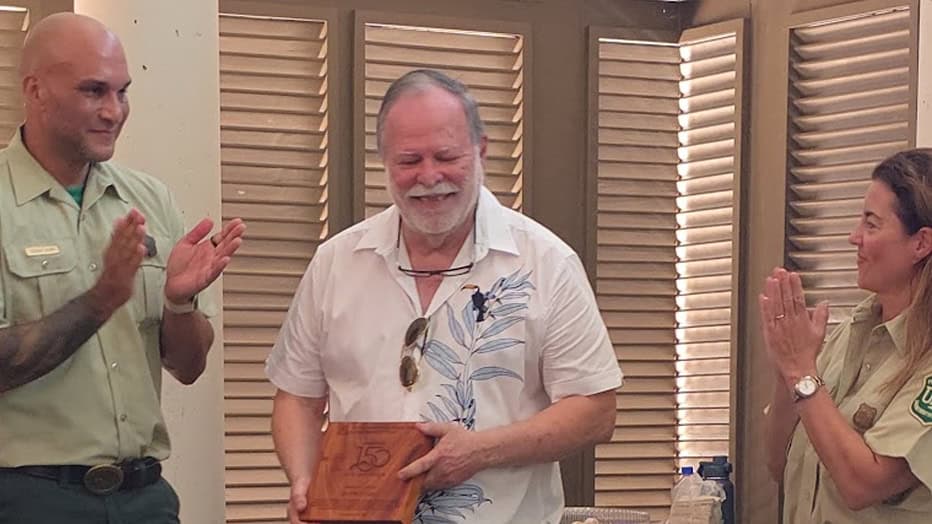
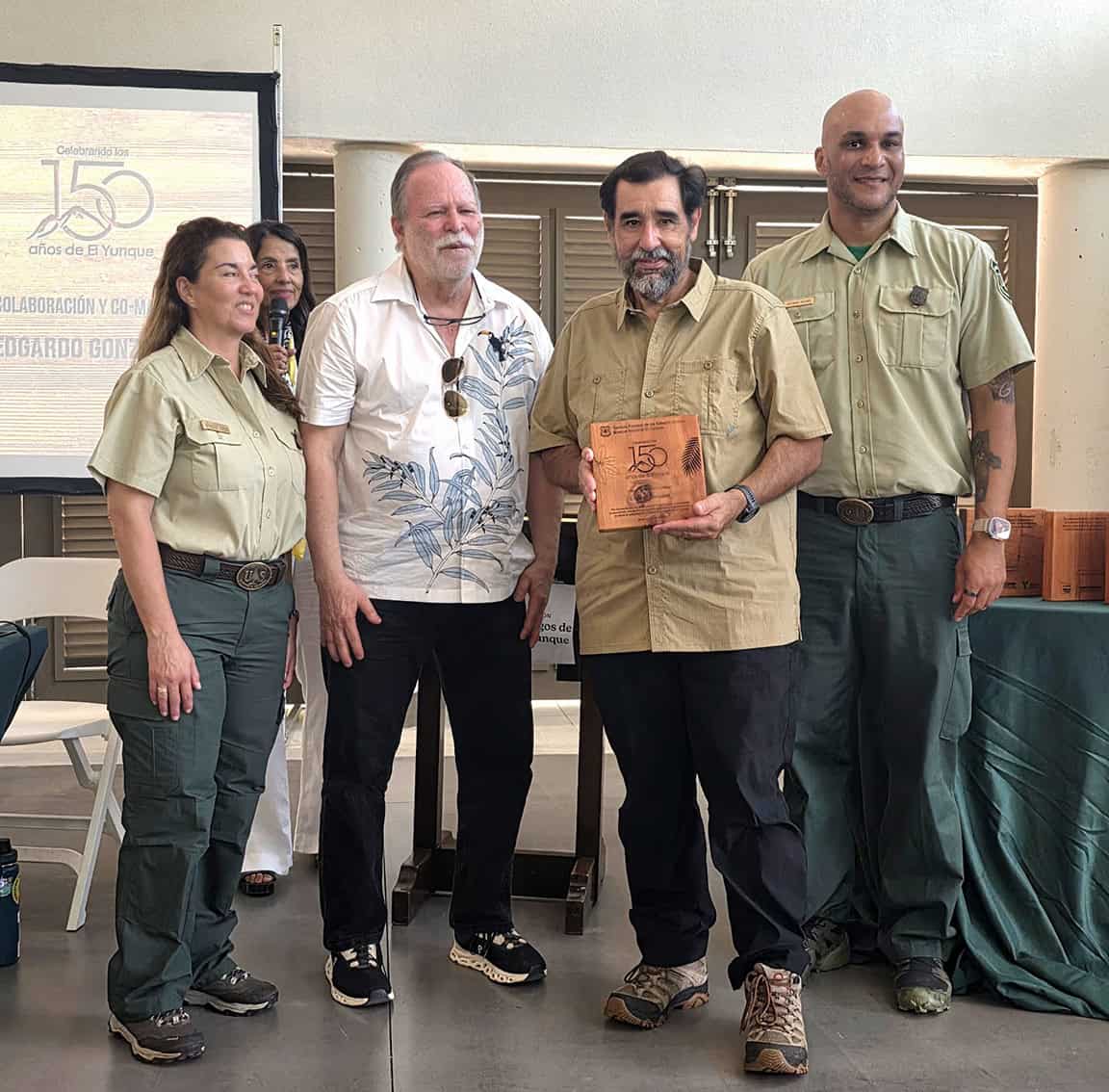
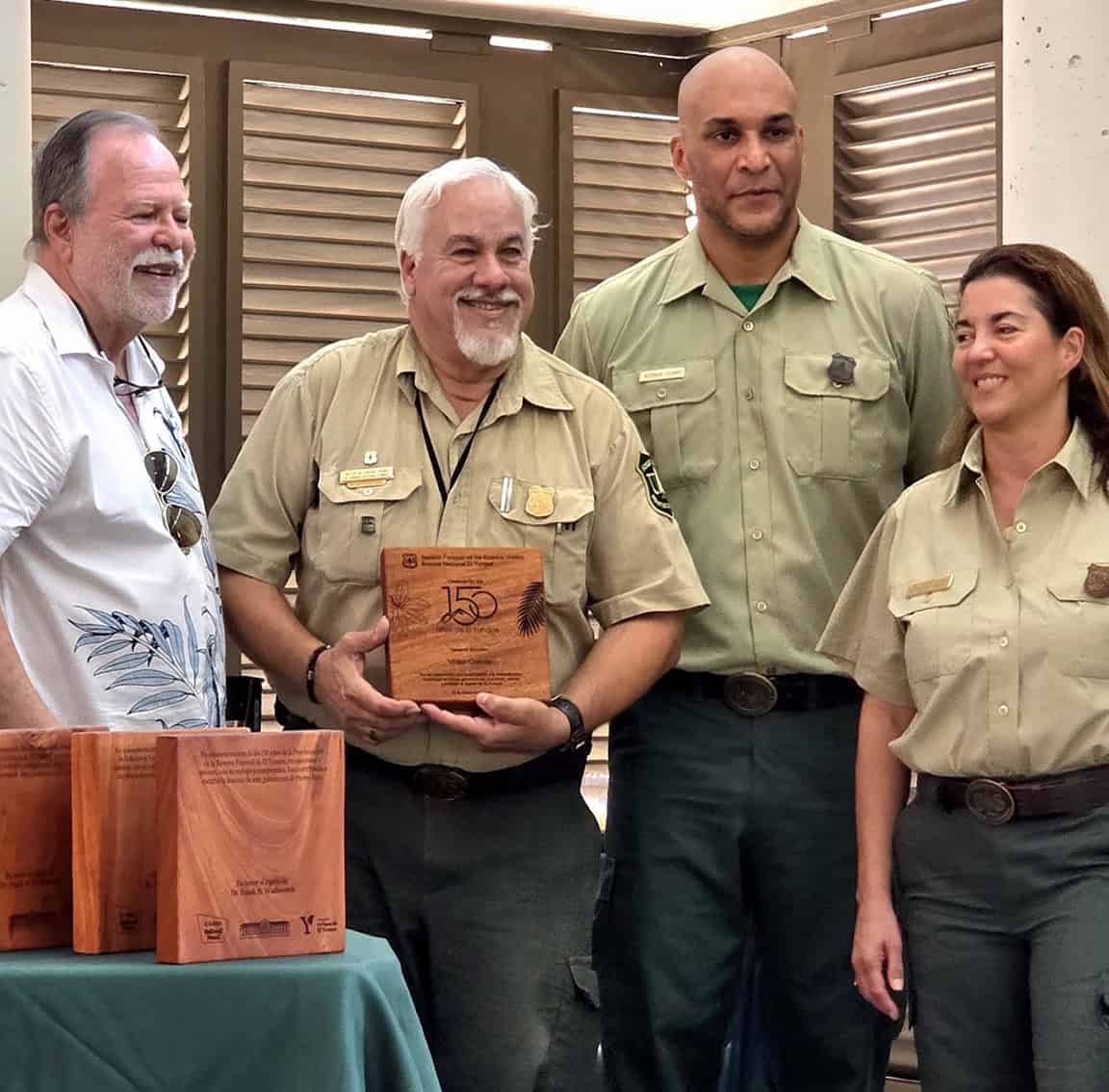
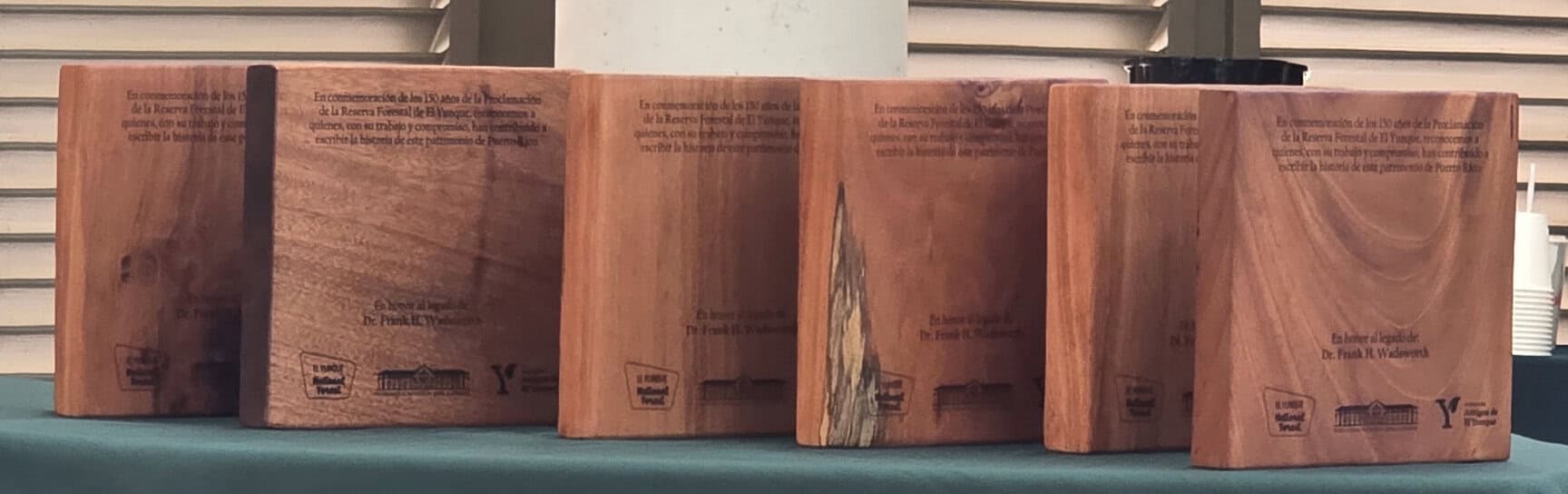
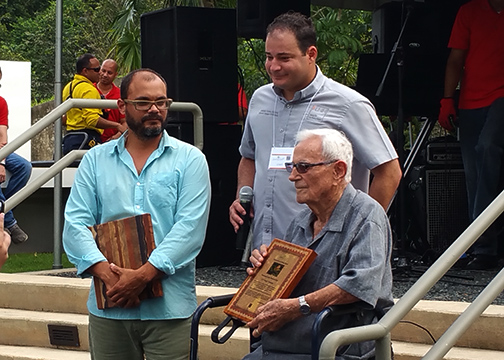
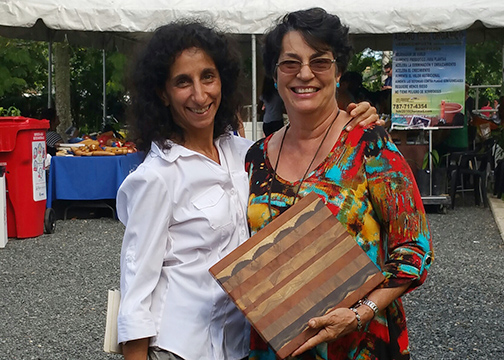
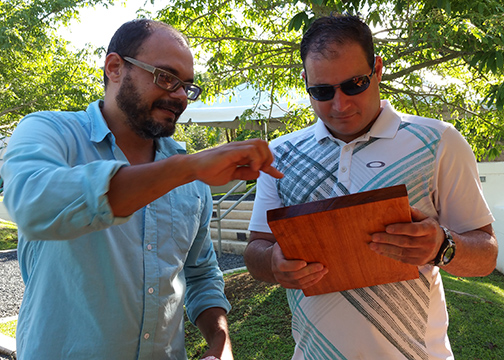
This event was dedicated to forester Dr. Frank Wadsworth, and Andrés presented a plaque to celebrate his 100th birthday.

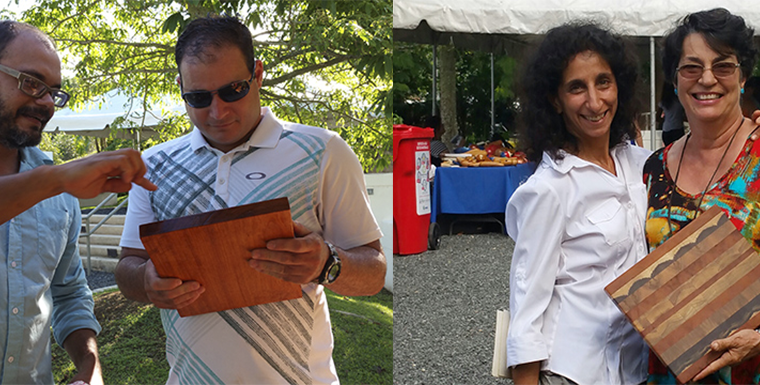
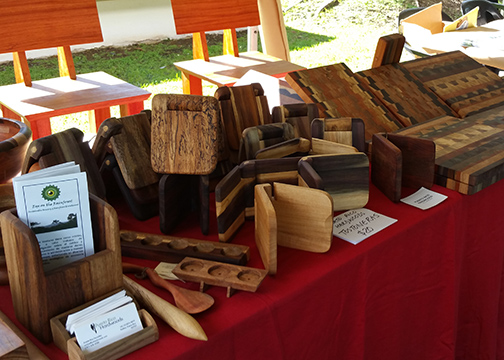
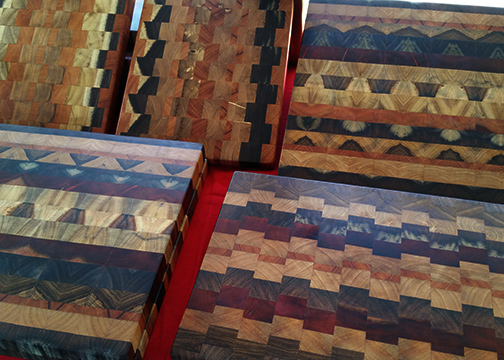
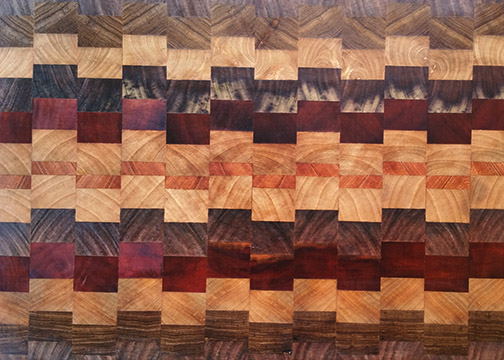
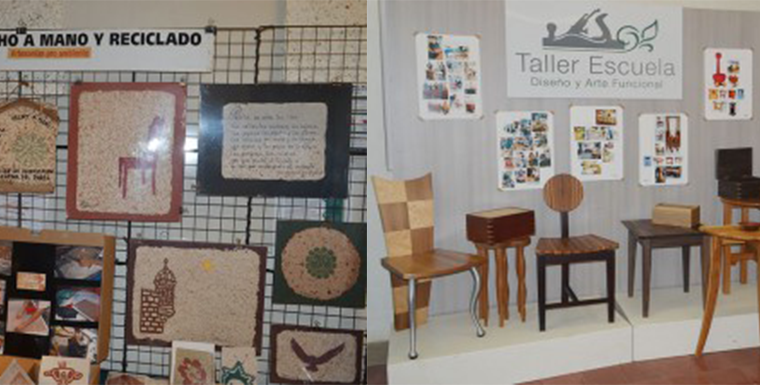
We had a table to show off some of our latest products, cheese boards, chopping boards, tostoneras, and samples of Puertorican hardwoods.

Students from University of PR – Department of Fine Art

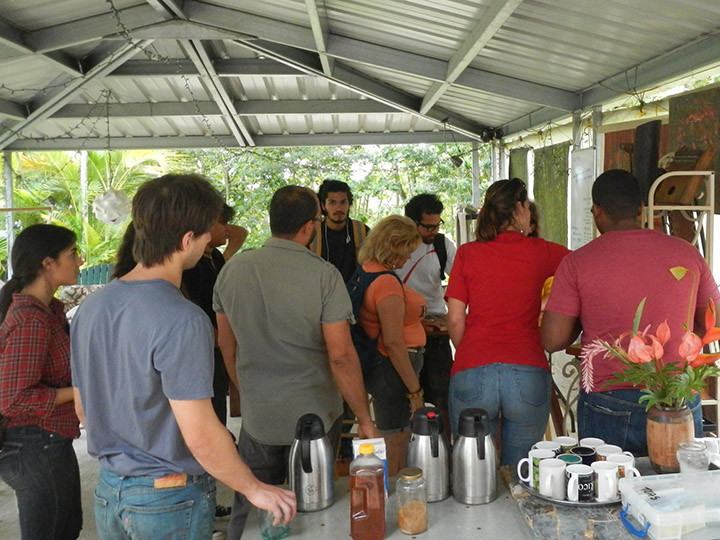
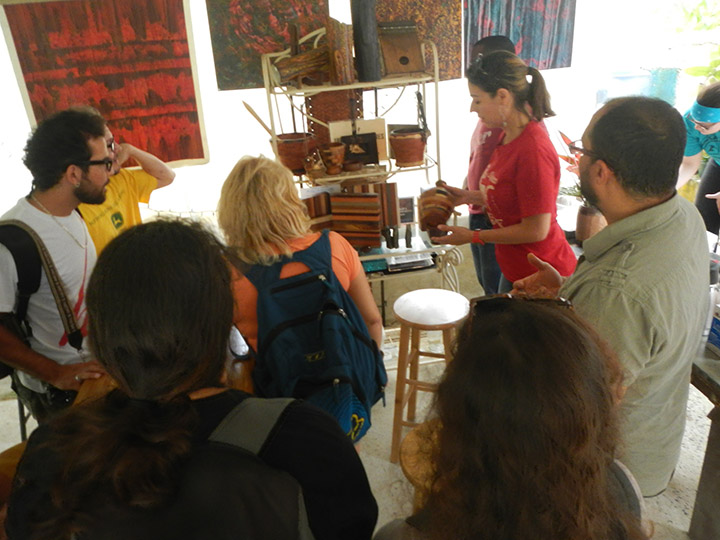
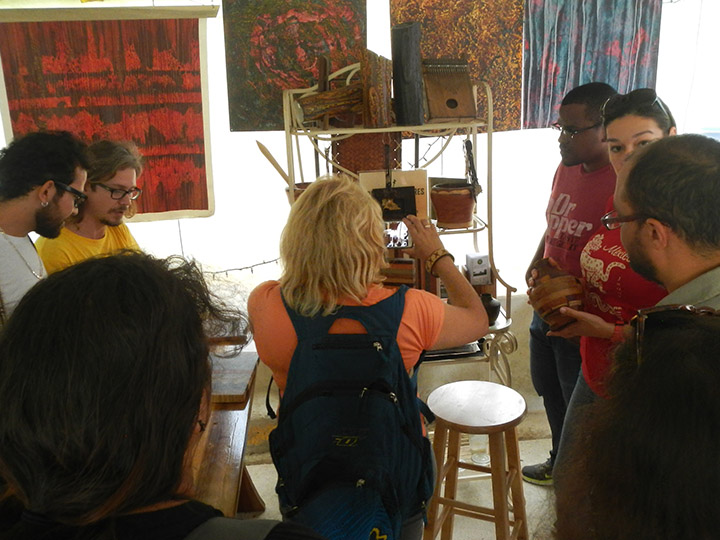
In April this ebullient group of students from the Department of Fine Arts, University of Puerto Rico, arrived on a day trip to find out more about the forest plantations at Las Casas de la Selva, and to see the timber operation; the sawmill, drying shed, and workshop. Everyone was wowed by our wood collection, that we inherited from Jose Mari Mutt, and have been adding to. Eyes opened wide at the beauty of these different and relatively unknown hardwoods that Puerto Rico has. Many discussions ensued about sustainable use of forest resources, especially wood, and later all left smiling, having bought some of our wood to create their latest projects. We look forward to seeing the results soon.

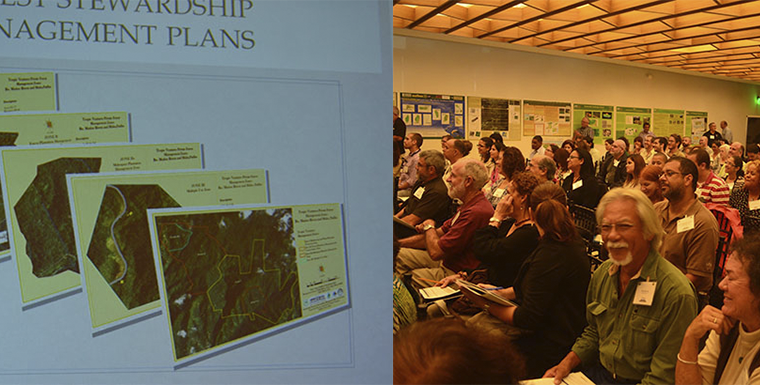
Symposium and Exhibition of Forest Products at IITF, 6th December 2014

SEE MORE IMAGES HERE:
https://plus.google.com/photos/114745085458651133282/albums/6089798854434161681?authkey=CLytzaWvsMmIfg

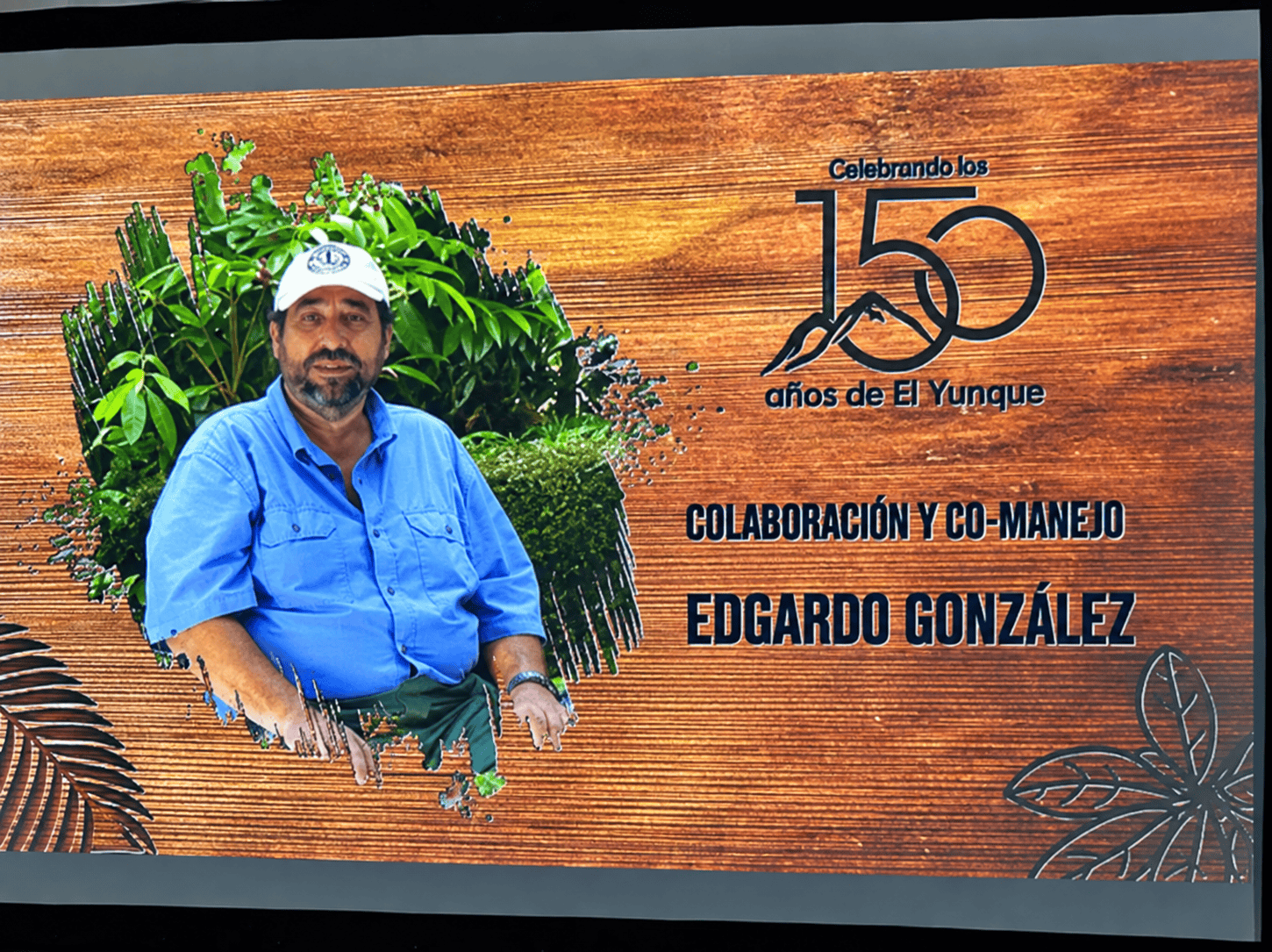
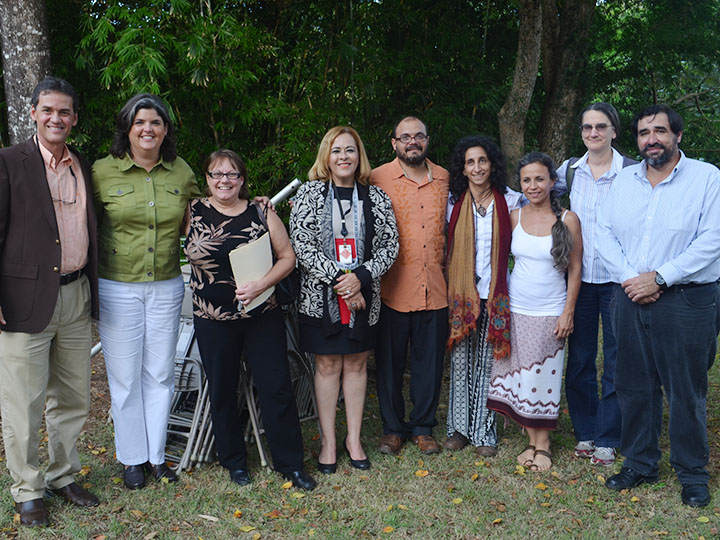
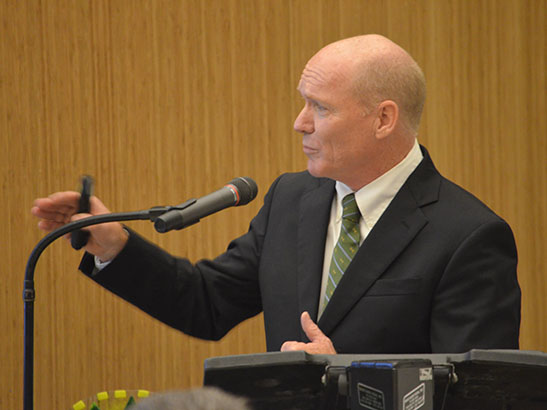
L-R: Luis Soto, (Land Authority Director) Carmen Guerrero, (Secretary of DNR), Connie Carpenter, Magaly Figueroa, (USDA State & Private Forestry), Andrés Rúa, 3t Vakil, (Tropic Ventures and Nuestra Madera), Magha Garcia, (Director Pachamama Organic Farm), Sheila Ward, (Mahogany for the Future), Edgardo Gonzalez (Landscape Conservation Center).

75 years of Forestry!

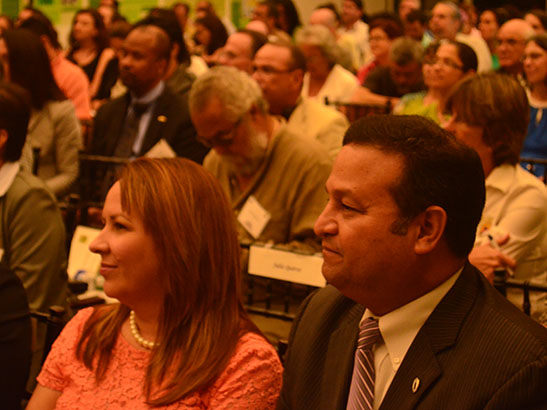
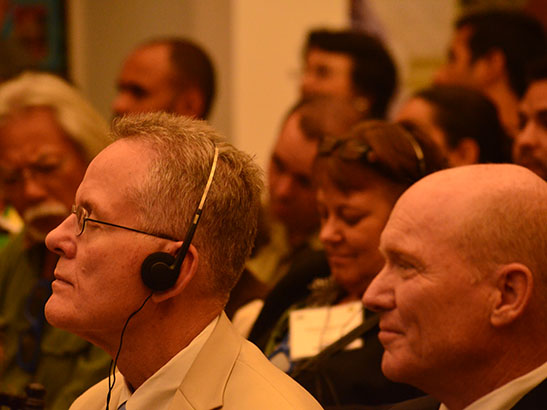
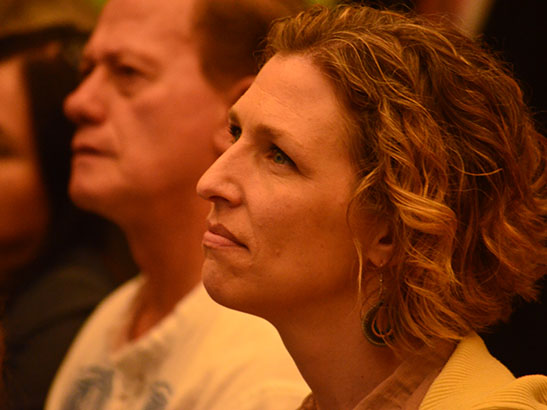
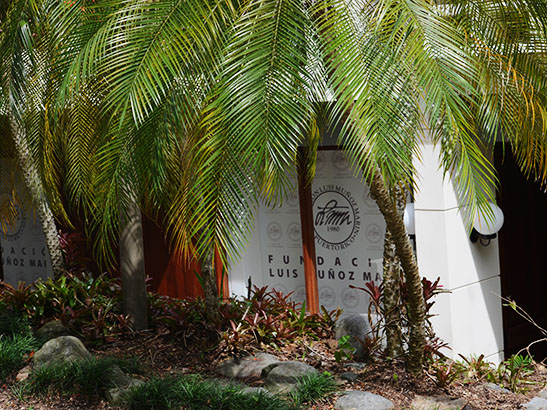
International Institute of Tropical Forestry celebrated its 75th year anniversary and a wonderful event at the Fundacion Luis Munoz Marin (FLMM) gave everyone a chance to meet up and connect over the whole days symposium, followed by a wonderful and lively reception in the evening. 21st May 2014
See more great images of this event here. Pix by 3t and Andrés

Tropic Ventures was honored to be mentioned in the recently published 2102 IITF Accomplishments. See PDF here.

Gracious thanks to FLMM, and IITF.

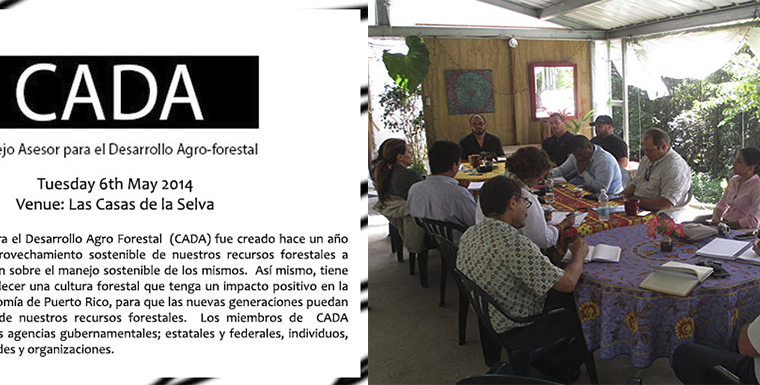
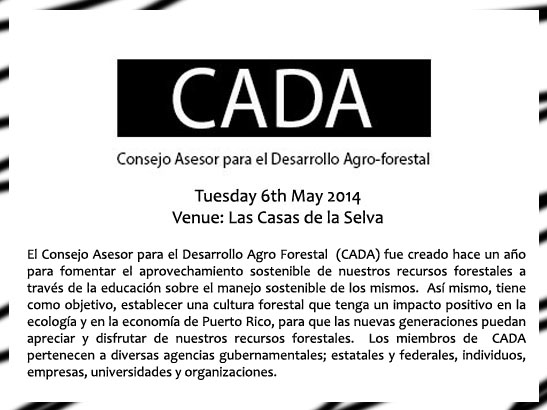
Consejo Asesor para el Desarrollo Agro-forestal, May 6th, 2014

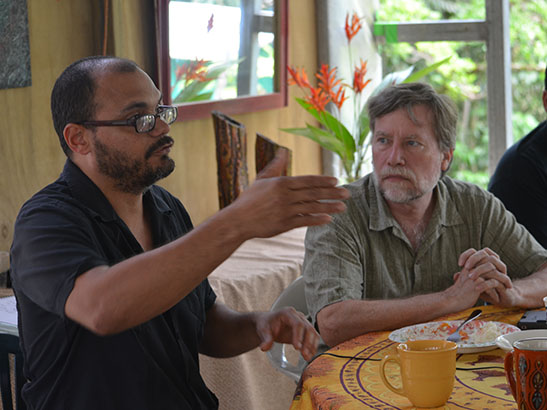
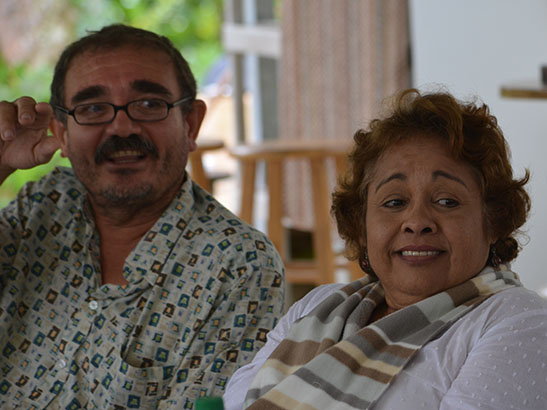
Another historic meeting for CADA, this time at Las Casas de la Selva, sustainable forestry project in the steep mountains of Patillas.

CADA, comprises of individuals brought together by a strong commitment to stimulate and create the sustainable management of all forest resources on the island of Puerto Rico. Founded in 2013 by Andrés and 3t.

SEE MORE IMAGES FROM THIS MEETING HERE:

Participants NameAgency or group
Andrés Rúa GonzálezTropic Ventures Sustainable Forestry
Thrity VakilTropic Ventures Sustainable Forestry
Magaly Figueroa (Vía teléfono)USDA US Forest Service
Arnaldo AstacioDepartamento de Agricultura de Puerto Rico
Alexis Laurent Dragoni CebolleroConsultor Fundación Aireko
Christina CabreraDepartamento de Recursos Naturales y Ambientales de PR
Enrique SantiagoDepartamento de Recursos Naturales y Ambientales de PR
Jess ZimmermanUPR Rio Piedras
Franklin RománServicio de Extensión Agrícola
Jimena ForeroUPR Rio Piedras
Rosamaría QuilesDepartamento de Recursos Naturales y Ambientales de PR
Tomas TorresFundación Aireko
Orlando GómezPaddle Sur
Francisco AliceaMunicipio de Arroyo
Elizabeth RodriguezVoluntaria
Milagros Solís OcasioPridco
Hector RodriguezPridco
Evelyn MeloPridco
Omar GarciaPaddle Sur
Enrique C. Colon BurgosAutoridad de Energía Eléctrica

SEE MORE IMAGES FROM THIS CADA MEETING AT LAS CASAS DE LA SELVA, 6TH MAY 2014

See images from the CADA meeting at Cyber Café, Caguas, 4th March 2014
See images from the CADA meeting at the International Institute of Tropical Forestry, 30th August 2013.
See images from the meeting of The Forest Products Assessment group, at Cayey University, the day the group formally became CADA, 6th May 2013
See images from the meeting of The Forest Products Assessment group at International Institute of Tropical Forestry, March 18th 2013.
See images from the FPA Field meeting at Las Casas de a Selva, 8th August, 2012
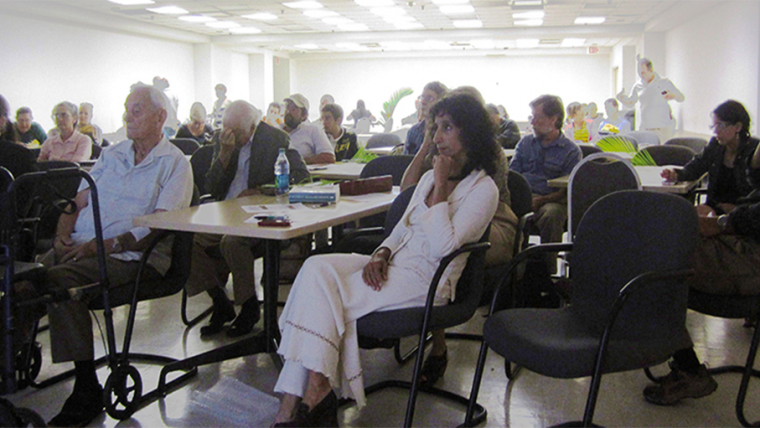
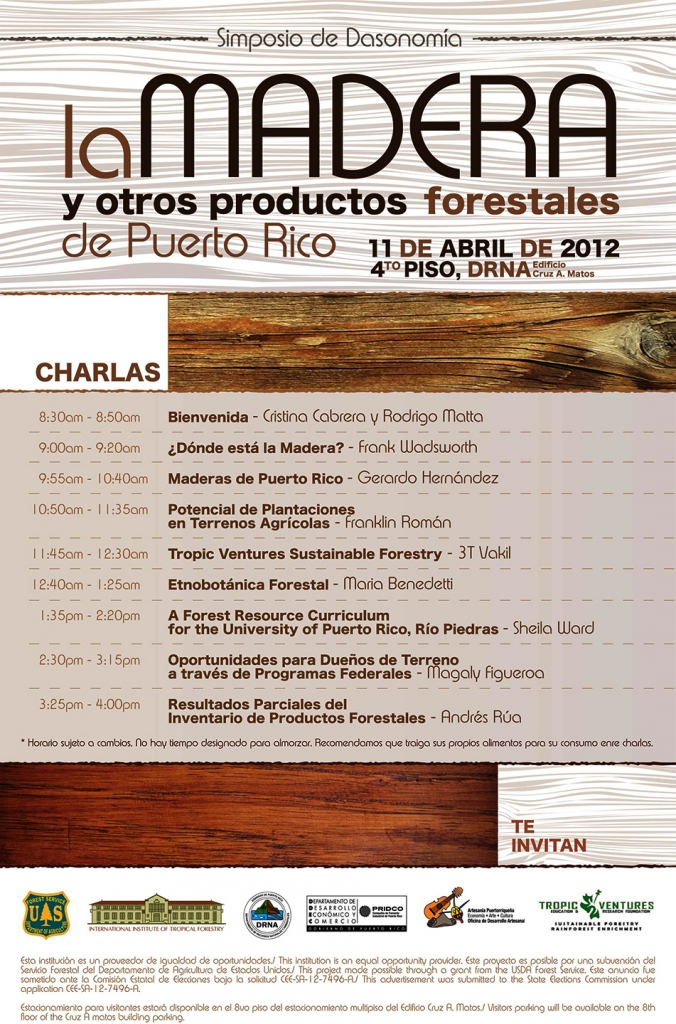
See images from the FPA Symposium at the Department of Natural Resources, Rio Piedras, 11th April, 2012

Ready, willing, and able.

Erin Dahl, (who first came here two years ago with a team from University of Miami), Christopher Sanchez, and Danielle Ungermann all participated in the January harvest of mahoe trees from around the homestead. Andres, chainsawyer, and 3t, felling buddy, were happy to have the help of these three ready, willing, and able apprentices, and together, everyone trained and learned something in the essential art of directional felling, using cuts, wedges, ropes, and a come-along (a small portable winch usually consisting of a cable attached to a hand-operated ratchet).Gentle gasps of astonishment were heard as 65 feet tall trees fell, and fortunately, they all fell exactly where Andres designated. The team have been busy clearing the slash (the small twigs and branches), and depositing it back into the forest for nutrients and erosion control. Thank you Erin, Chris, and Danielle, we have really appreciated your stay with us.

Translate »