Beyond the Razor grass: a reunion in the rainforest![]()
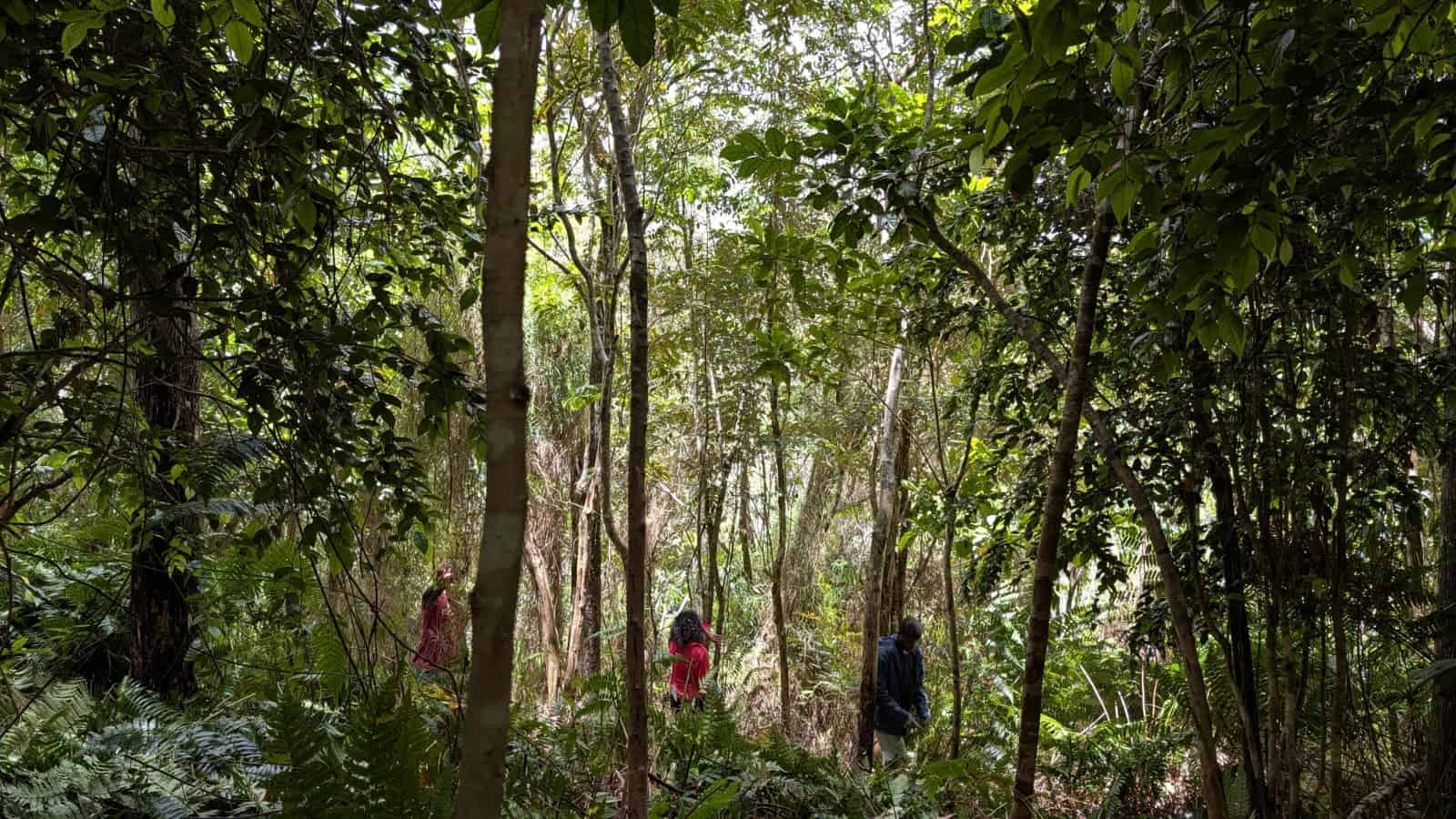
There are places in the forest that become almost mythical. You know they are there. You remember planting the trees, carrying saplings carefully on slopes, and imagining what the forest might look like years into the future. But then time, storms, and circumstance create barriers, and those places slip beyond reach.
One such place exists at Las Casas de la Selva. Following Hurricane Maria, the forest changed dramatically. Vast areas lost much of their canopy, and suddenly sunlight poured onto the forest floor. Nature, of course, does not leave empty spaces unoccupied for long. A profusion of sun-loving plants surged upward, among them one of our most formidable adversaries: razor grass.
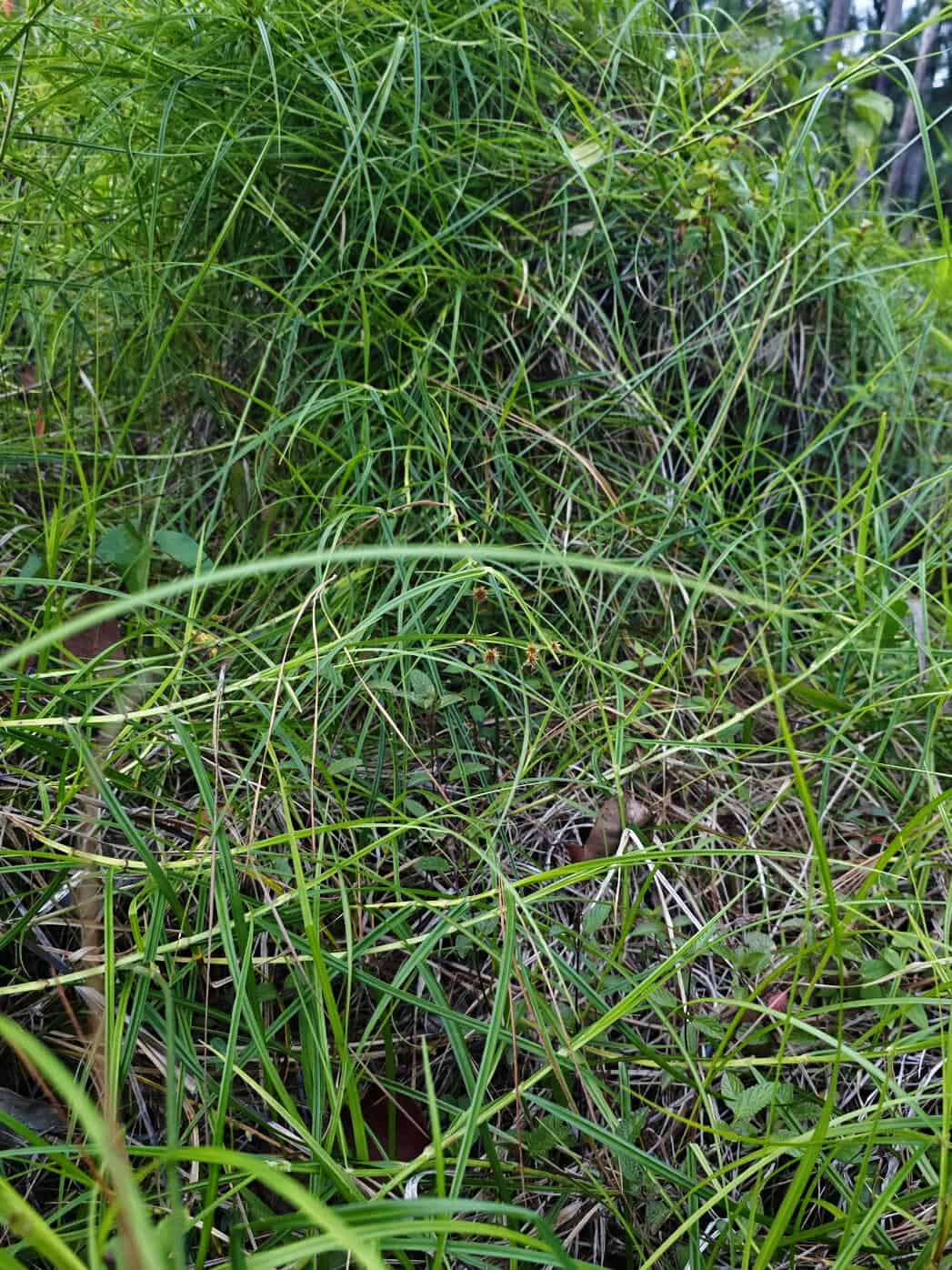
Razor grass (Scleria secans), is aptly named. Its leaves are sharp enough to cut exposed skin, and it forms dense, tangled masses that can become nearly impenetrable. Along with other vigorous grasses and vines, it quickly reclaimed the disturbed areas of the forest. Trails vanished. Landmarks disappeared. Slopes we had once visited regularly became hidden behind walls of green.
One of these lost places was a hillside which had been planted with Ausubo, Mahogany and Blue Mahoe back in the late 80s and where, in my era, we had planted trees in the growing forest in 2000, 2001, 2007, 2008, and 2009. On those steep slopes, we had planted more mahoganies, more ausubos, and mahoe trees, believing that one day they would become part of the next generation of forest. And after Hurricane Maria in 2017, we simply could not get back in. Years passed.
The trees continued growing somewhere beyond the razor grass. We wondered about them often. Had they survived? Had they been overtaken by vines? Had landslides damaged the site? Were there still trees standing where we had once planted saplings no taller than us? This summer, we finally had the opportunity to find out.
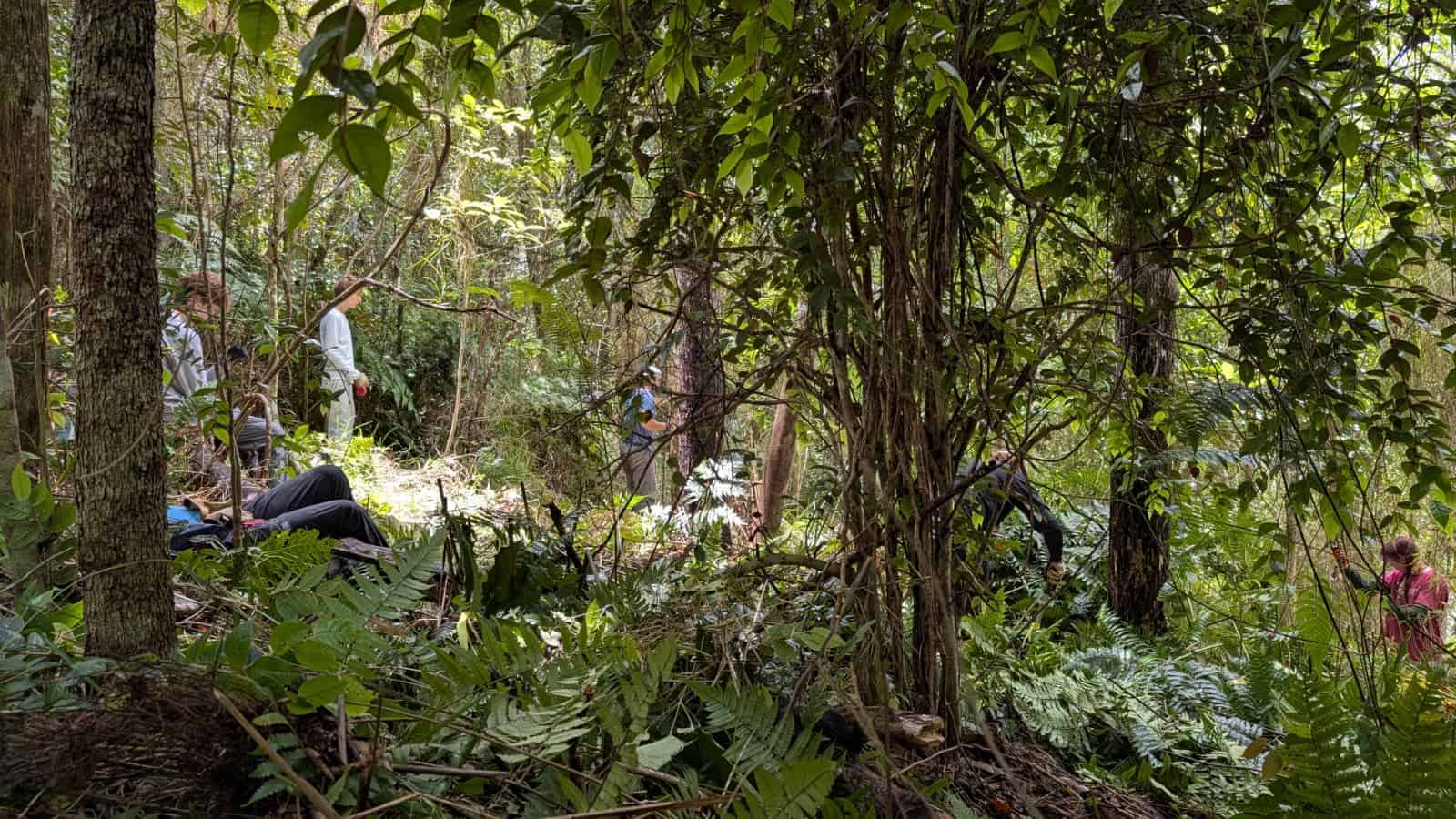
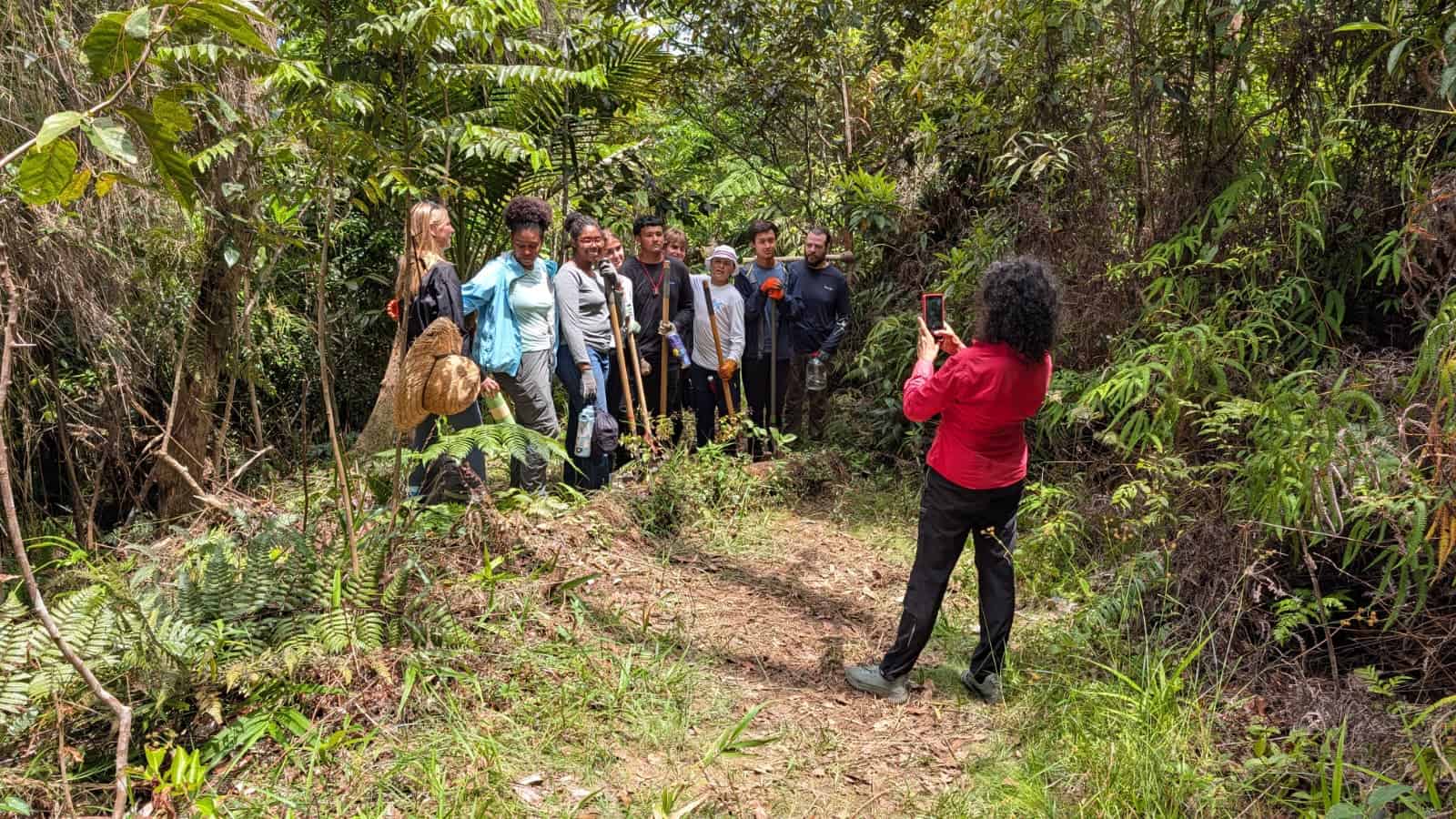
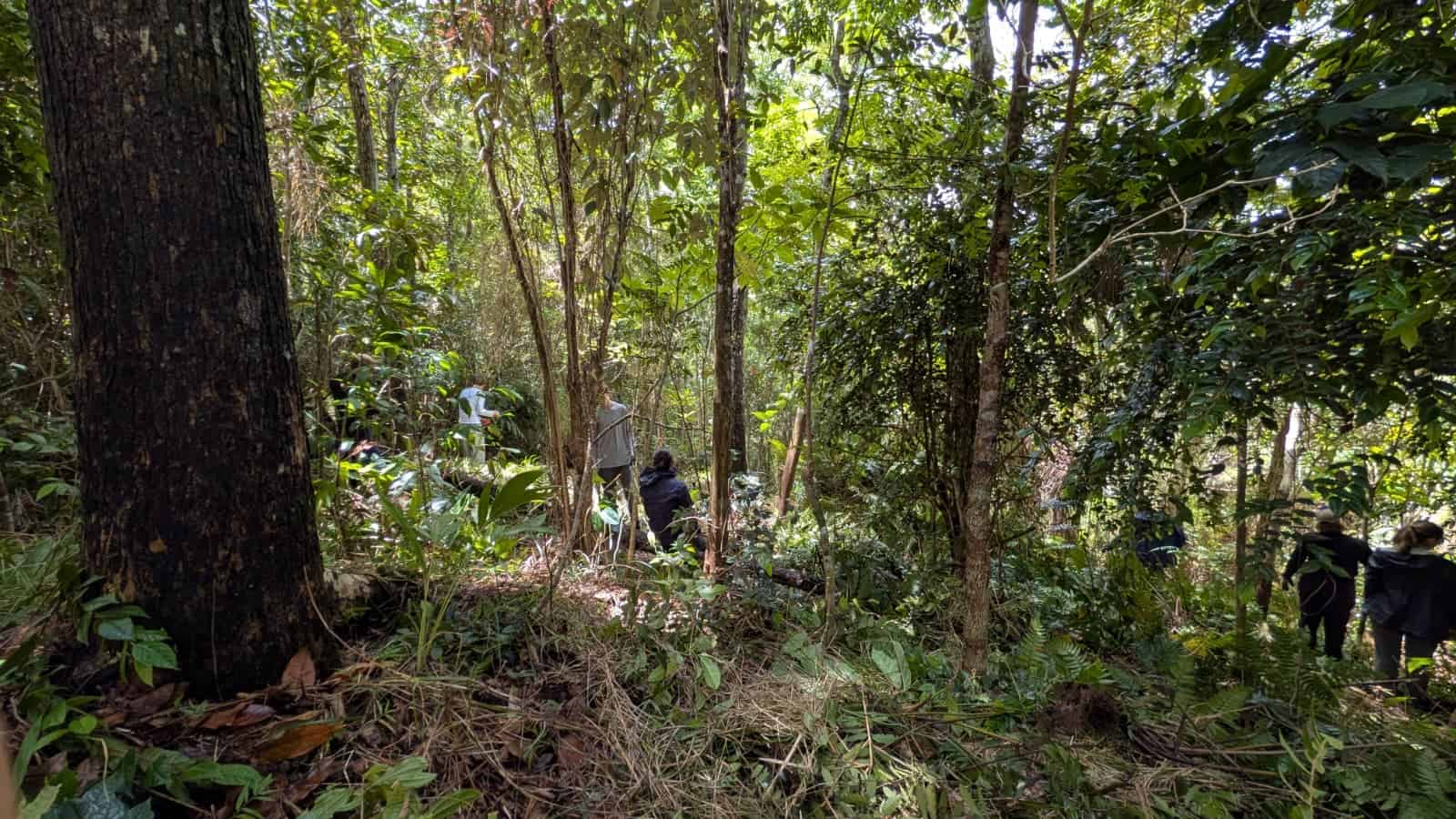
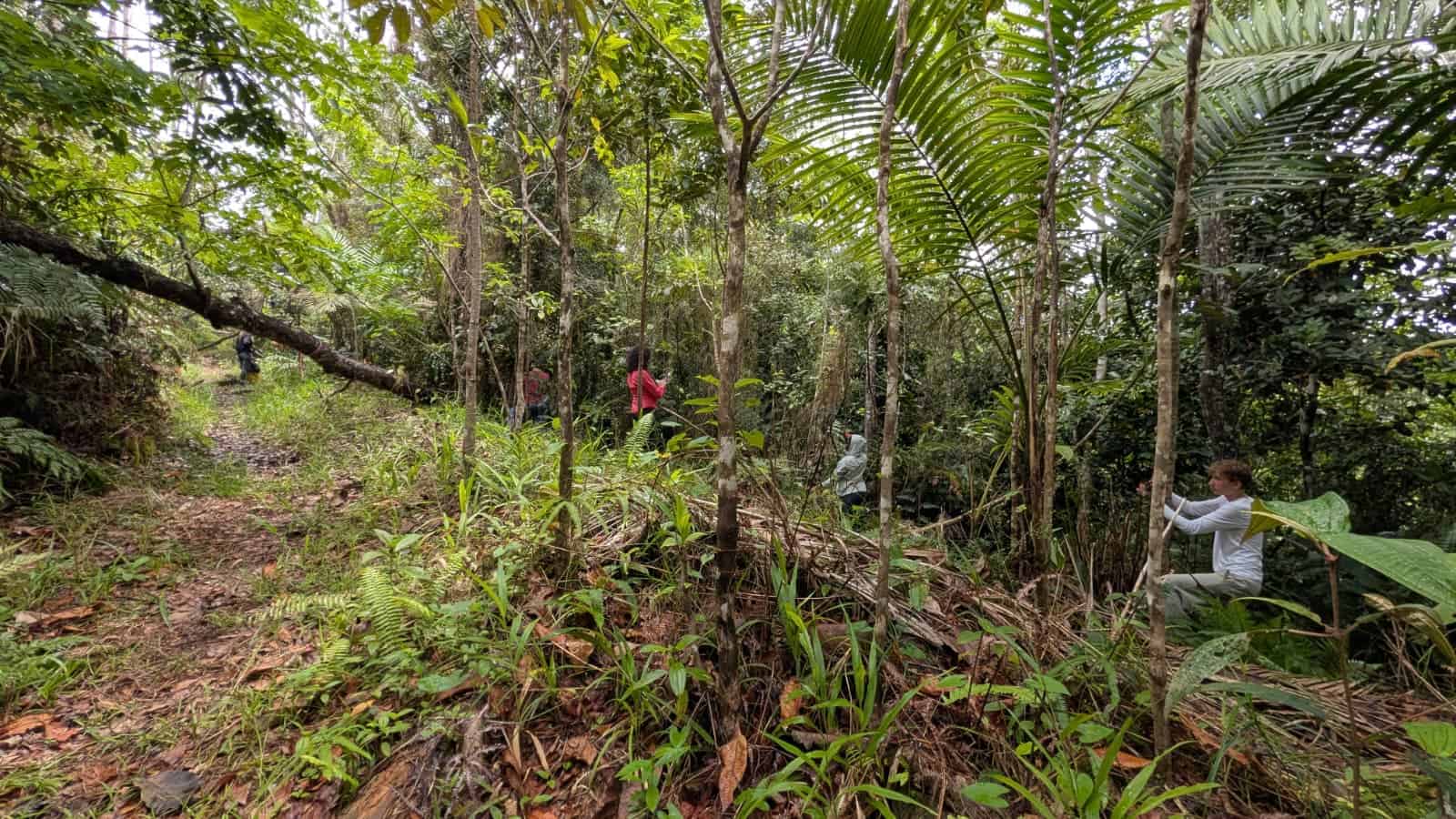
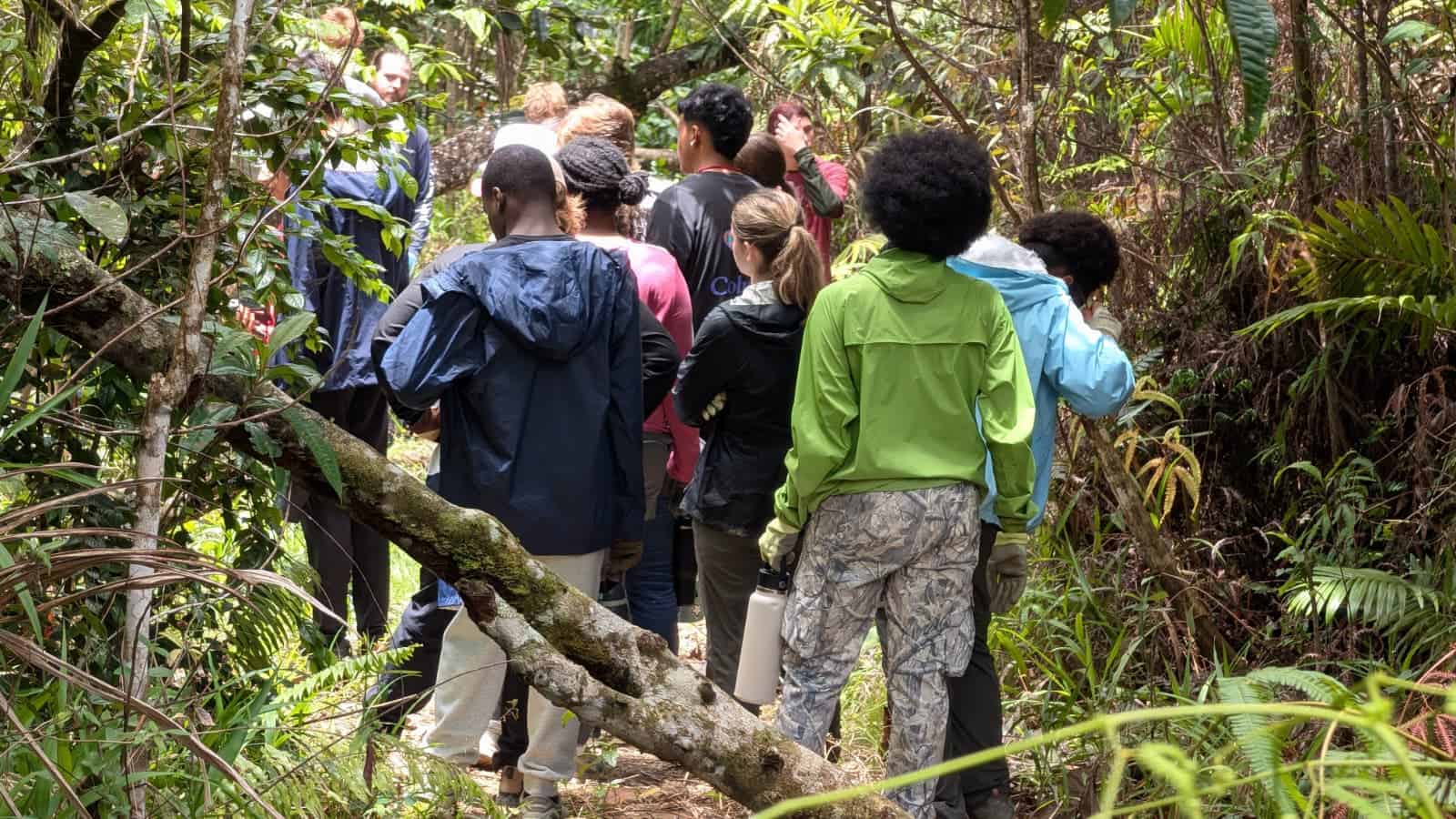
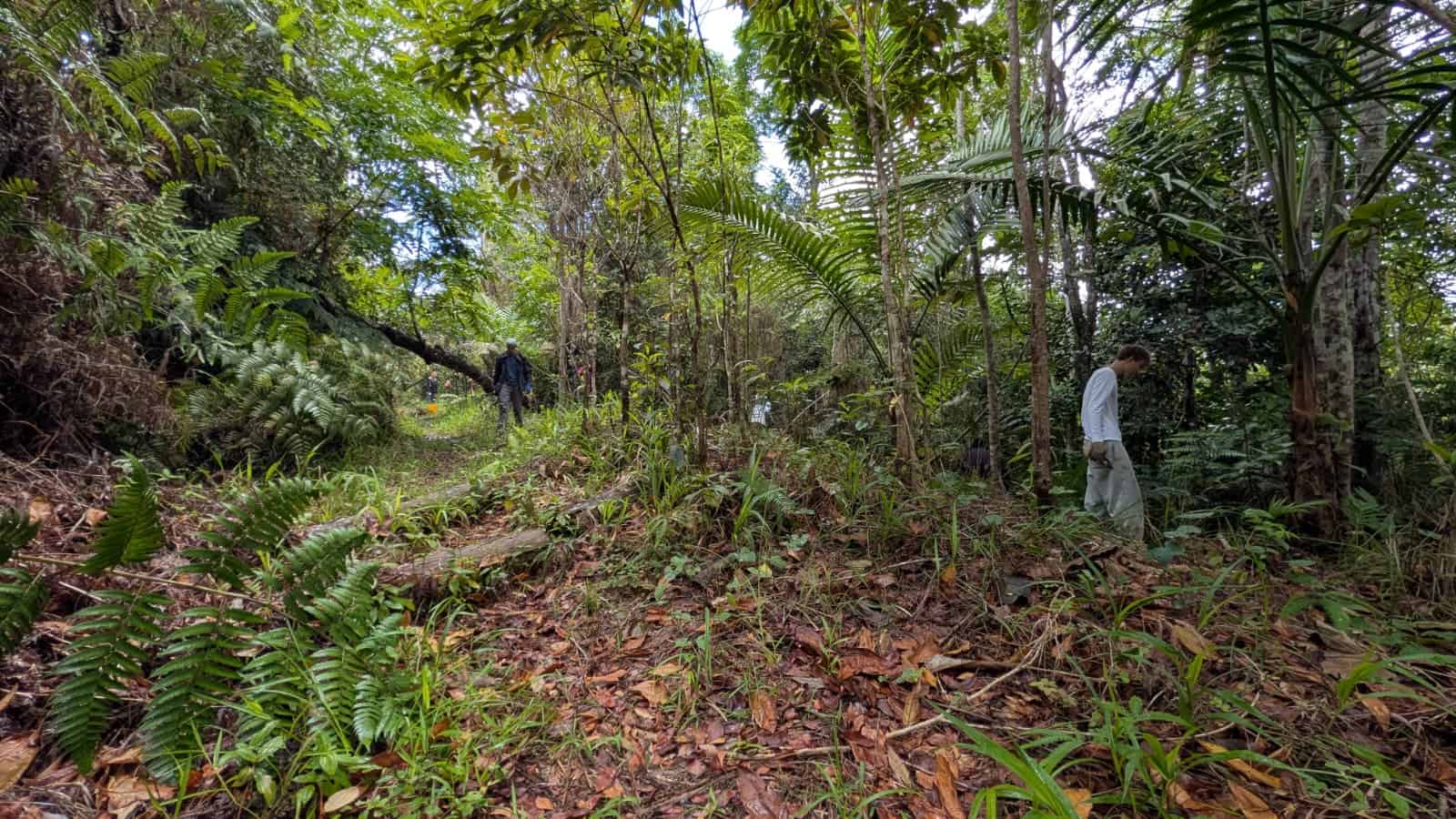
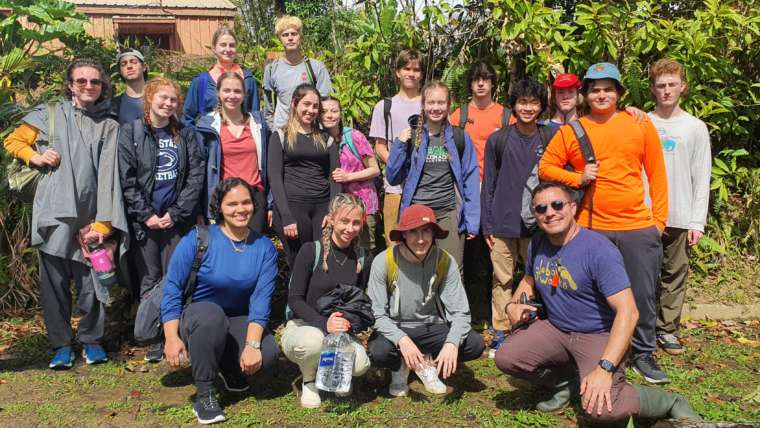
Twenty teenagers and three staff arrived at Las Casas as part of a Global Works group. From the beginning, the young people threw themselves wholeheartedly into the task. Armed with gloves, loppers, and pruning shears, as well as plenty of enthusiasm, they set about reopening the spaces between trees, access to the forgotten slope. Progress was slow. Every metre had to be earned.
Several groups before this team had also put in hard labor to enable us to get in further down slope. Razor grass resisted every advance, its long floating tendrils looking innocently like grass, dense growth grabbing at clothes like angry velcro. Yet the group remained cheerful, determined, and remarkably hard-working. Gradually, a path began to emerge. Then came one of those magical moments.
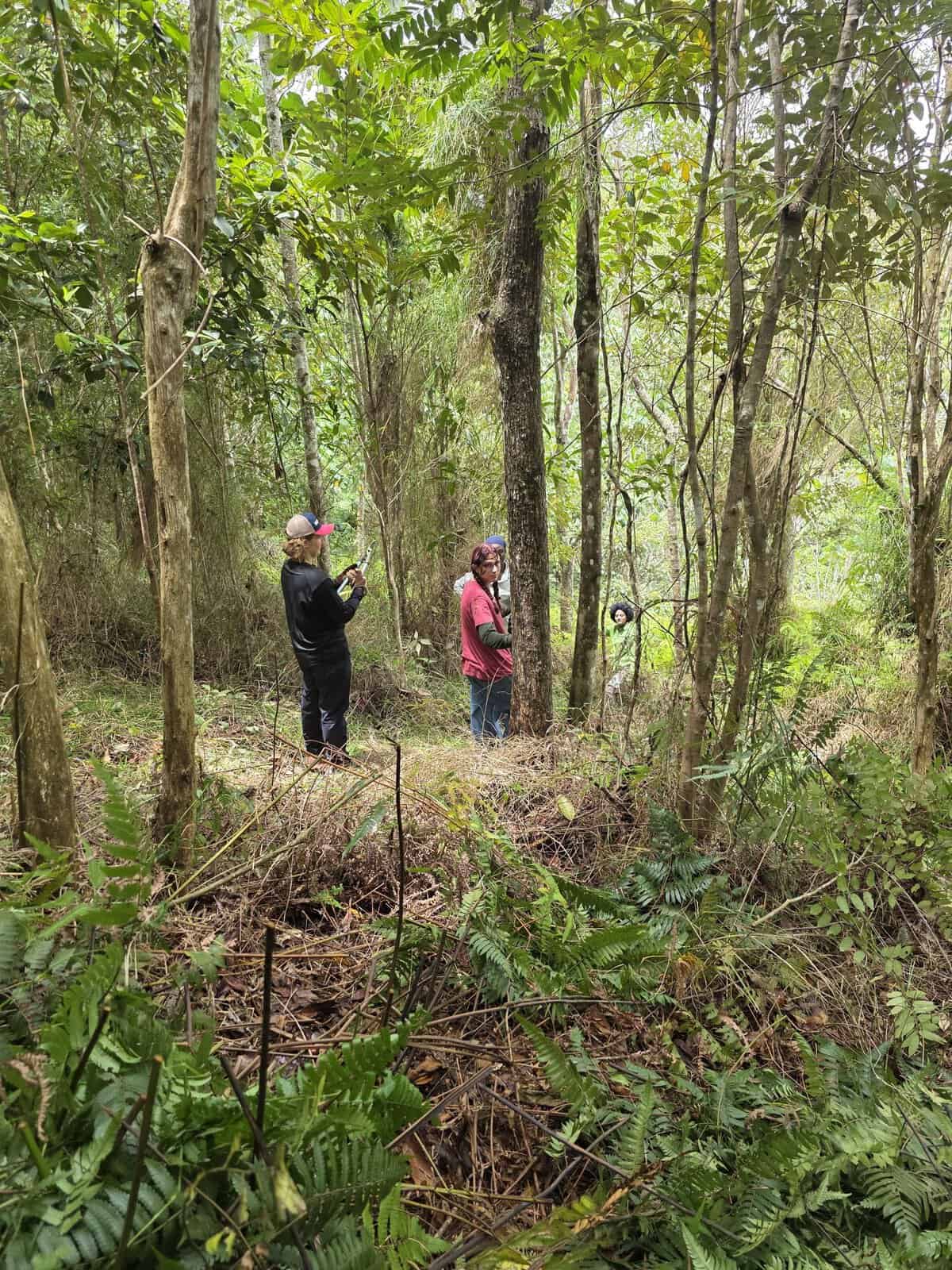
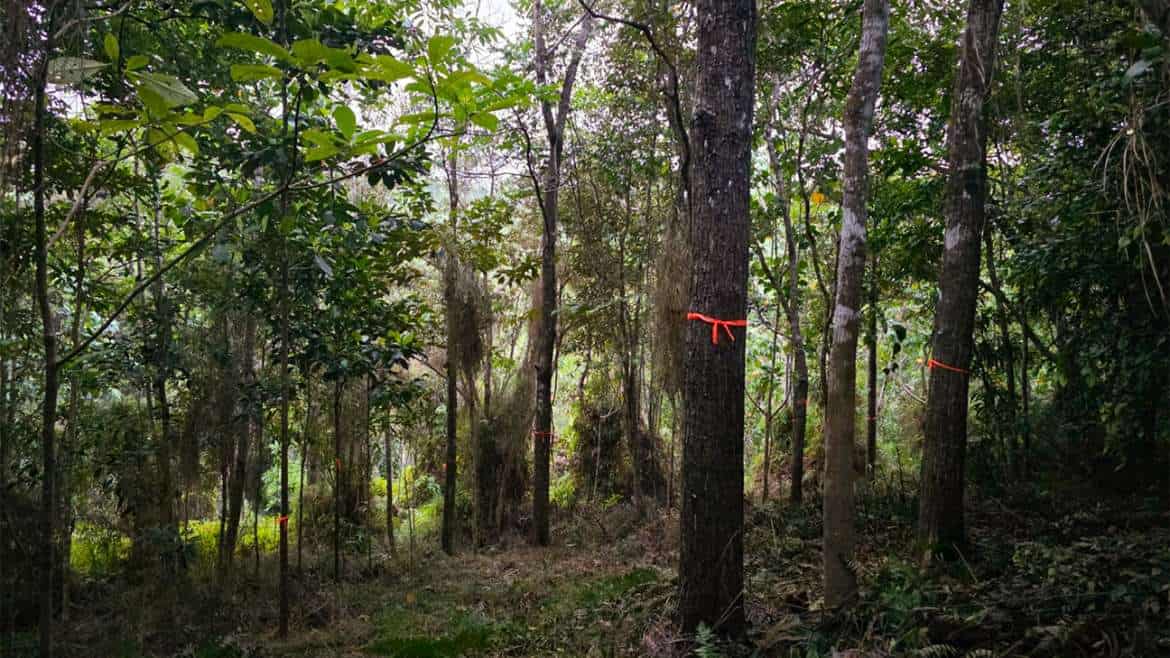
The forest opened, and suddenly, there they were. Trees. Not saplings. TREES! Mahoganies reaching skyward; Ausubos establishing themselves confidently on the slope; Blue Mahoe trees thriving in the recovering forest.
Some were far larger than any of us had imagined. They had not simply survived. They had grown. They had persisted through hurricanes, torrential rains, and years of neglect and isolation. For 3t, it was an especially emotional moment.
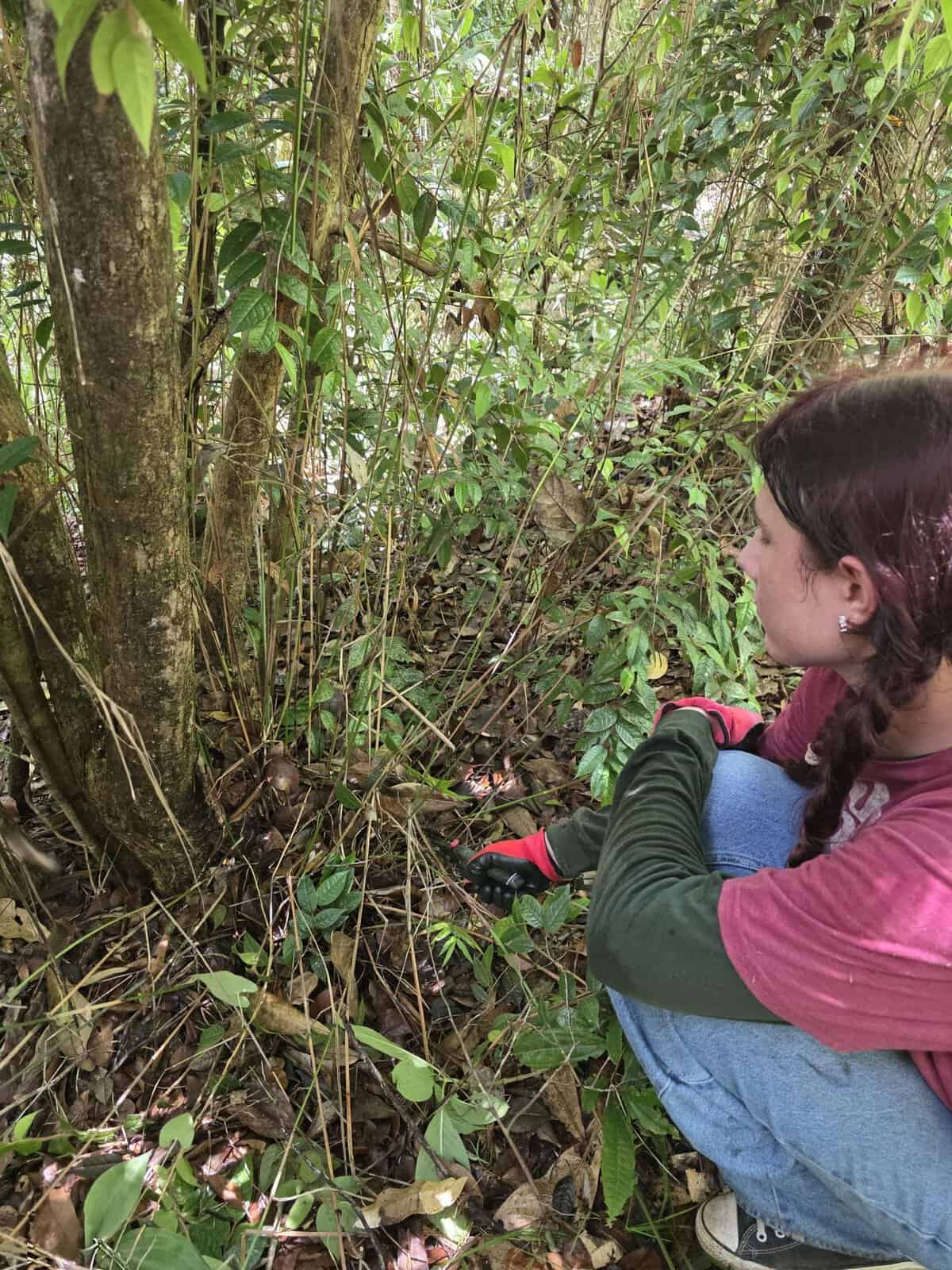
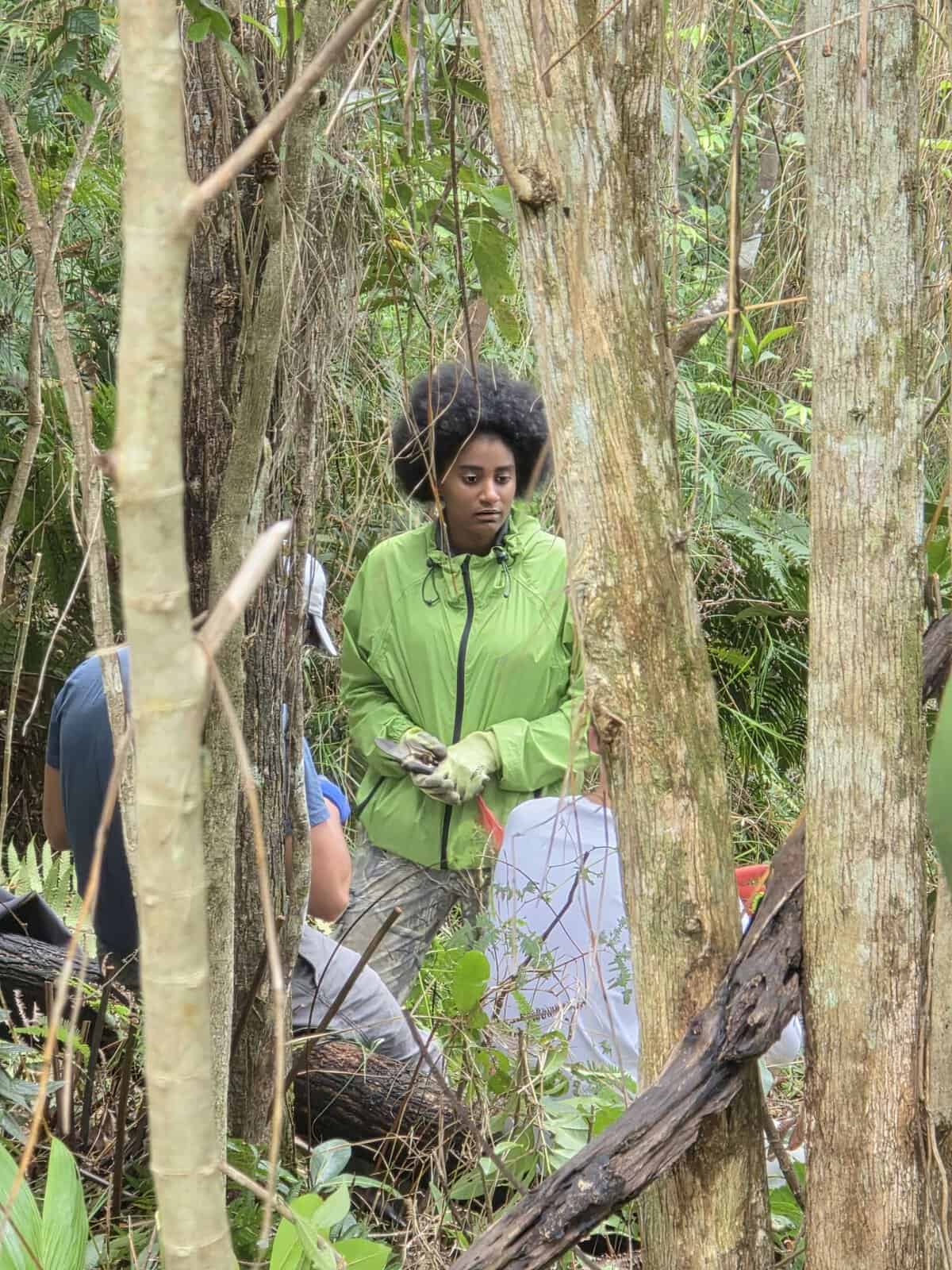
To stand among these planted trees was deeply moving. There was an almost childlike joy in rediscovering them.
"They made it!"
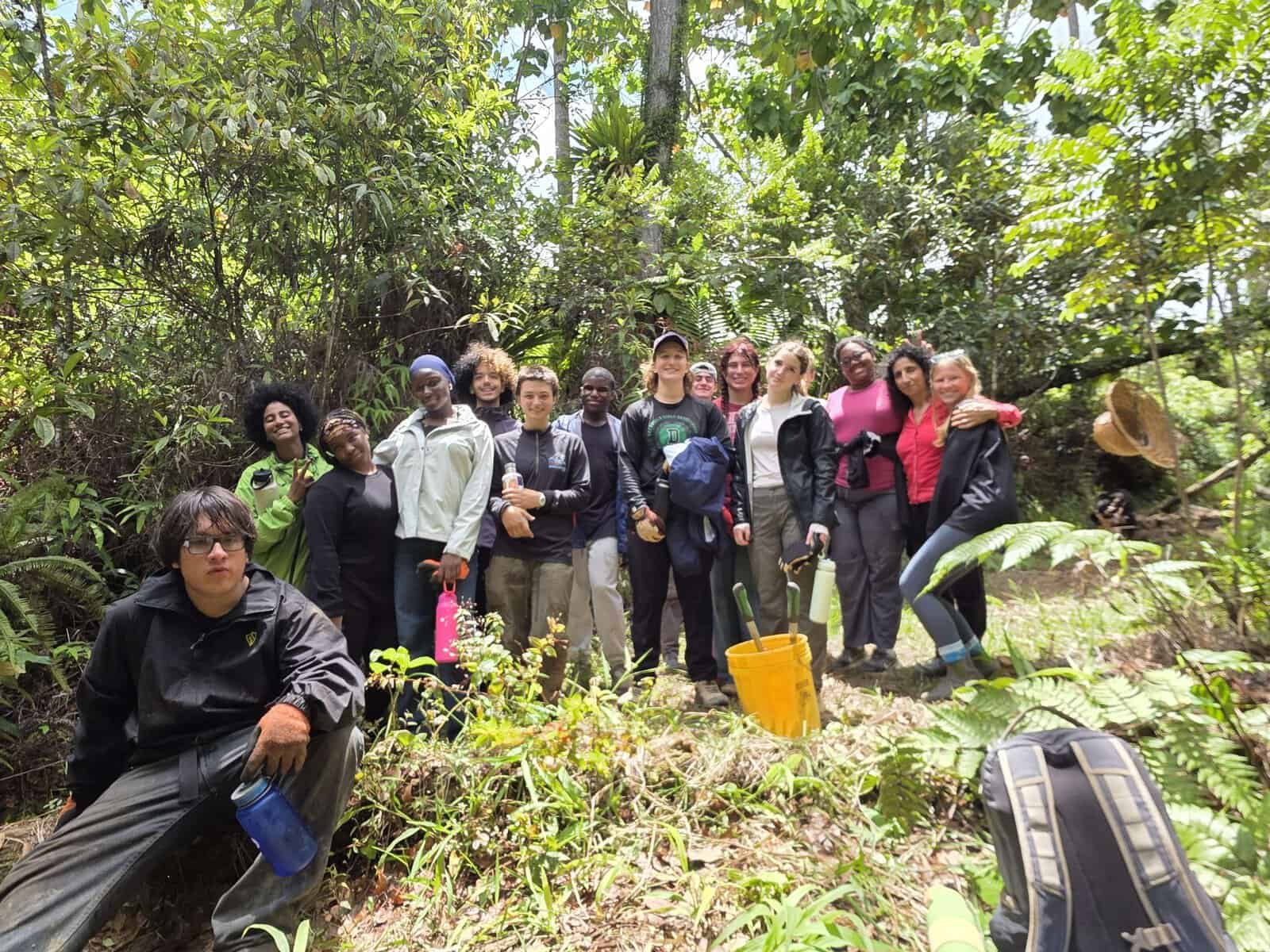
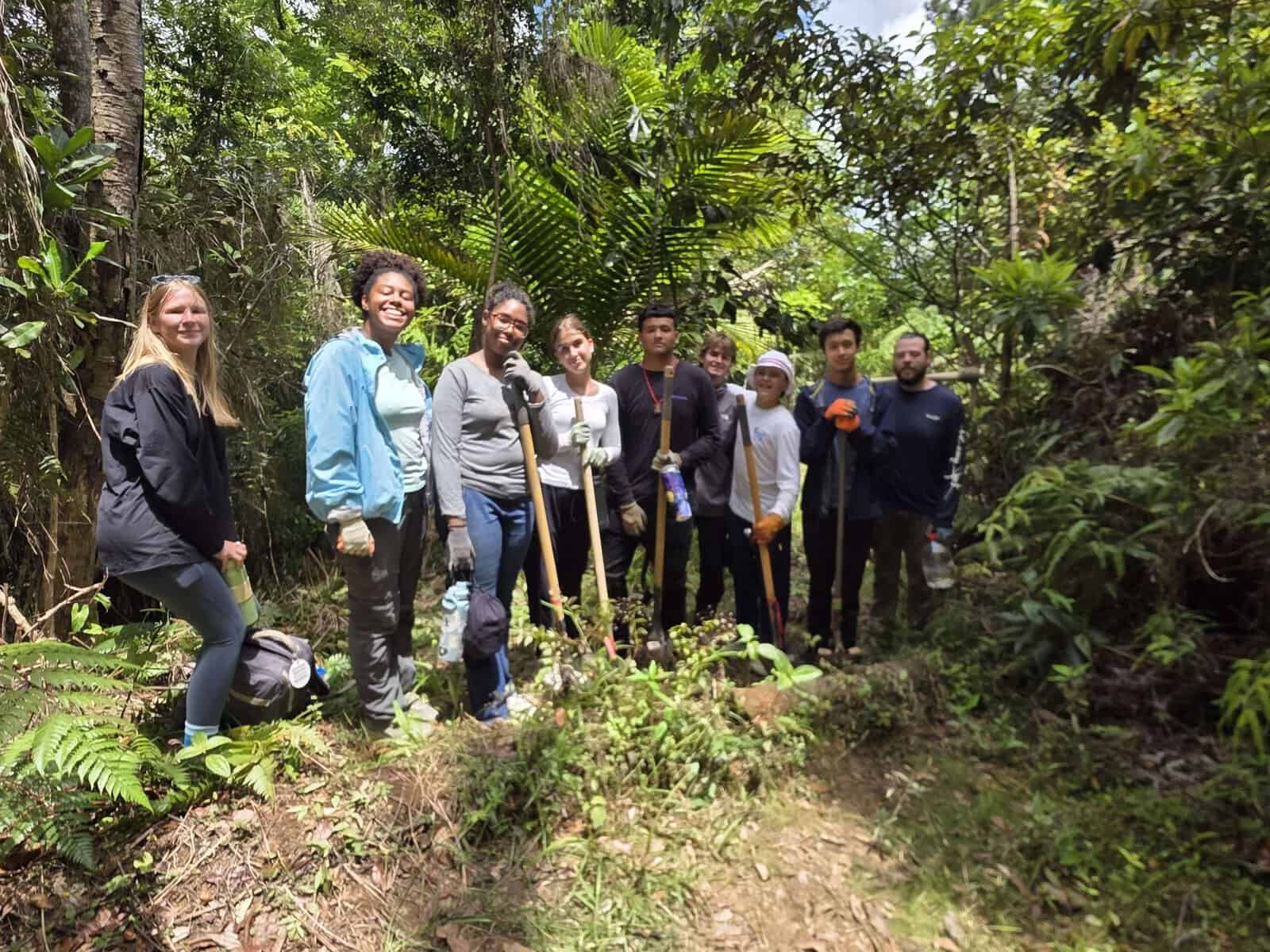
Sunlight filtered through recovering canopies. Mosses, fungi, and tall ferns carpeted fallen logs. Young trees occupied gaps left by the hurricane. Birds moved through the branches overhead. Everywhere there were signs of renewal and resilience. It was also a powerful reminder of one of the fundamental lessons of forestry and restoration work: trees operate on timescales far longer than our own immediate concerns.
When we planted these seedlings in 2000, 2001, 2007, 2008, and 2009, we were making a commitment to a future we could barely imagine. Hurricanes came and altered our plans. Trails disappeared. Life changed. Yet the trees kept growing.
Forestry teaches patience, and it rewards you with moments like this.
For the teenagers, the experience became much more than a day of clearing vegetation. They were not simply cutting a path. They were reconnecting us with a piece of our own history. They helped reveal nearly twenty years of forest growth and allowed us to witness the remarkable resilience of both planted trees and the ecosystems that surround them. The work was also a beautiful example of collaboration.
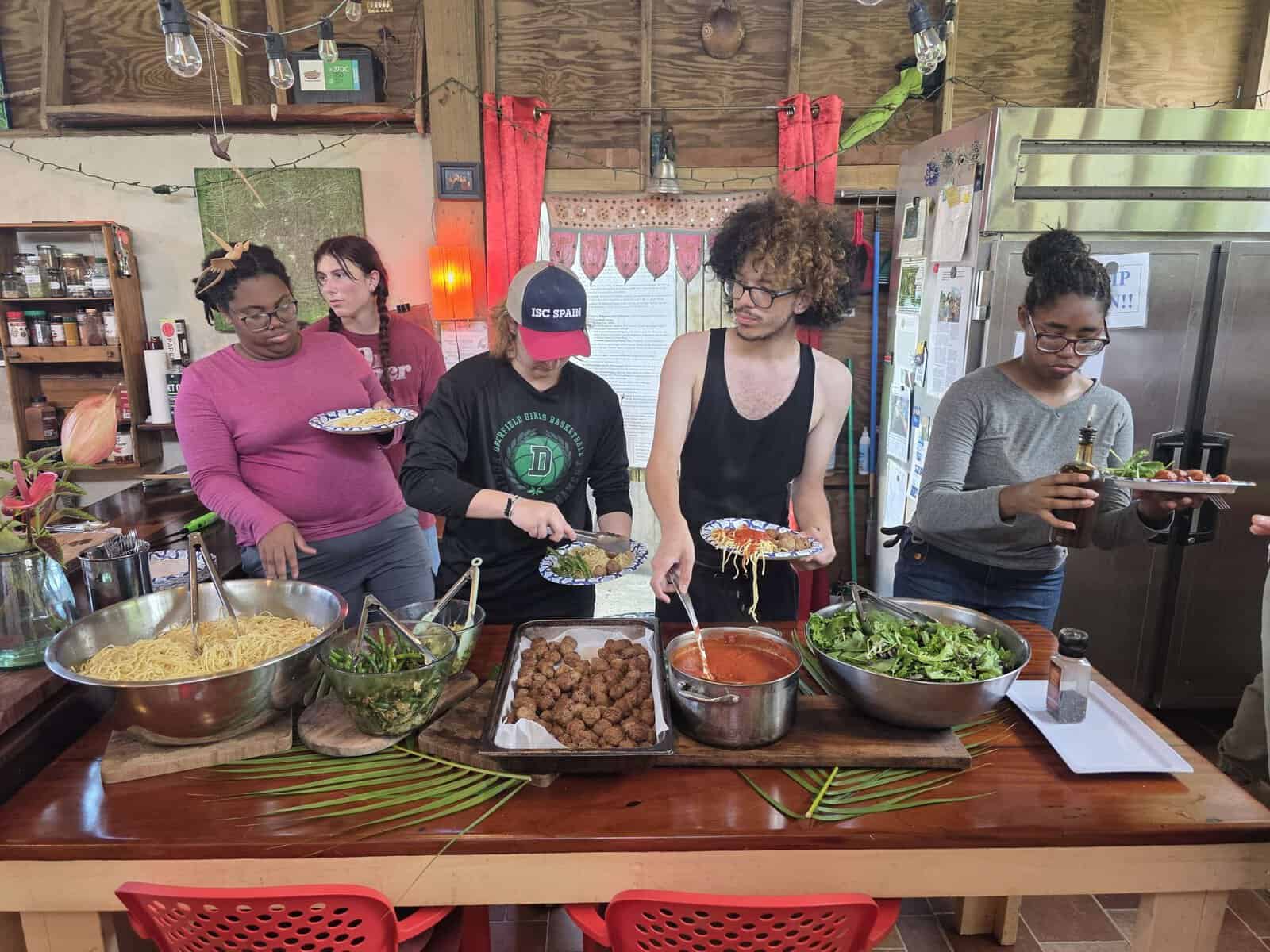
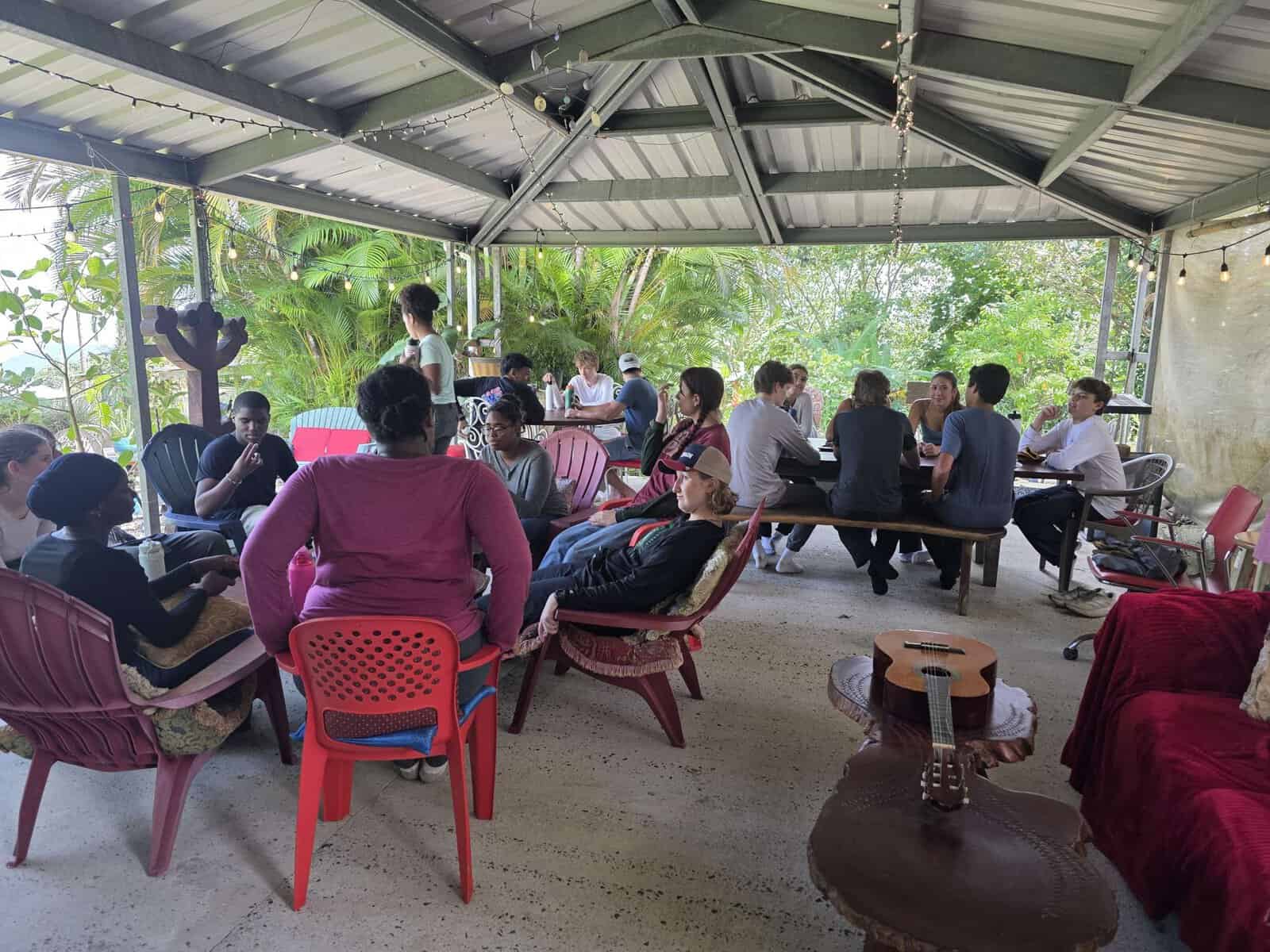
Monique Nieves kept everyone well fed with a delicious meal that restored energy after long hours in the field. 3t and Jon Warwick led the work crews with enthusiasm and determination, guiding the students through challenging terrain and sharing stories of the forest's history. Rio Collazo, age 15, volunteered with the group and helped in all areas. Mike Alvarez, a neighbor, recently back on the island after a lifetime away, joined the activity, to see what we get up to here in the mountains!
The Global Works staff, Lauren, Nahely, and Darielys, were wonderful partners, supporting the group and helping create an atmosphere of curiosity, teamwork, and adventure. By the end of the day, we had reopened access to a place we thought might remain hidden indefinitely. More importantly, we had rediscovered something precious.
Learn more about how to participate in a Teenage Globalworks adventure, see link below.
Conservation work often unfolds quietly. The victories are rarely dramatic. They come in seedlings taking root, forests slowly recovering, and young people choosing to spend their day cutting through razor grass so that others can reconnect with trees planted long ago.
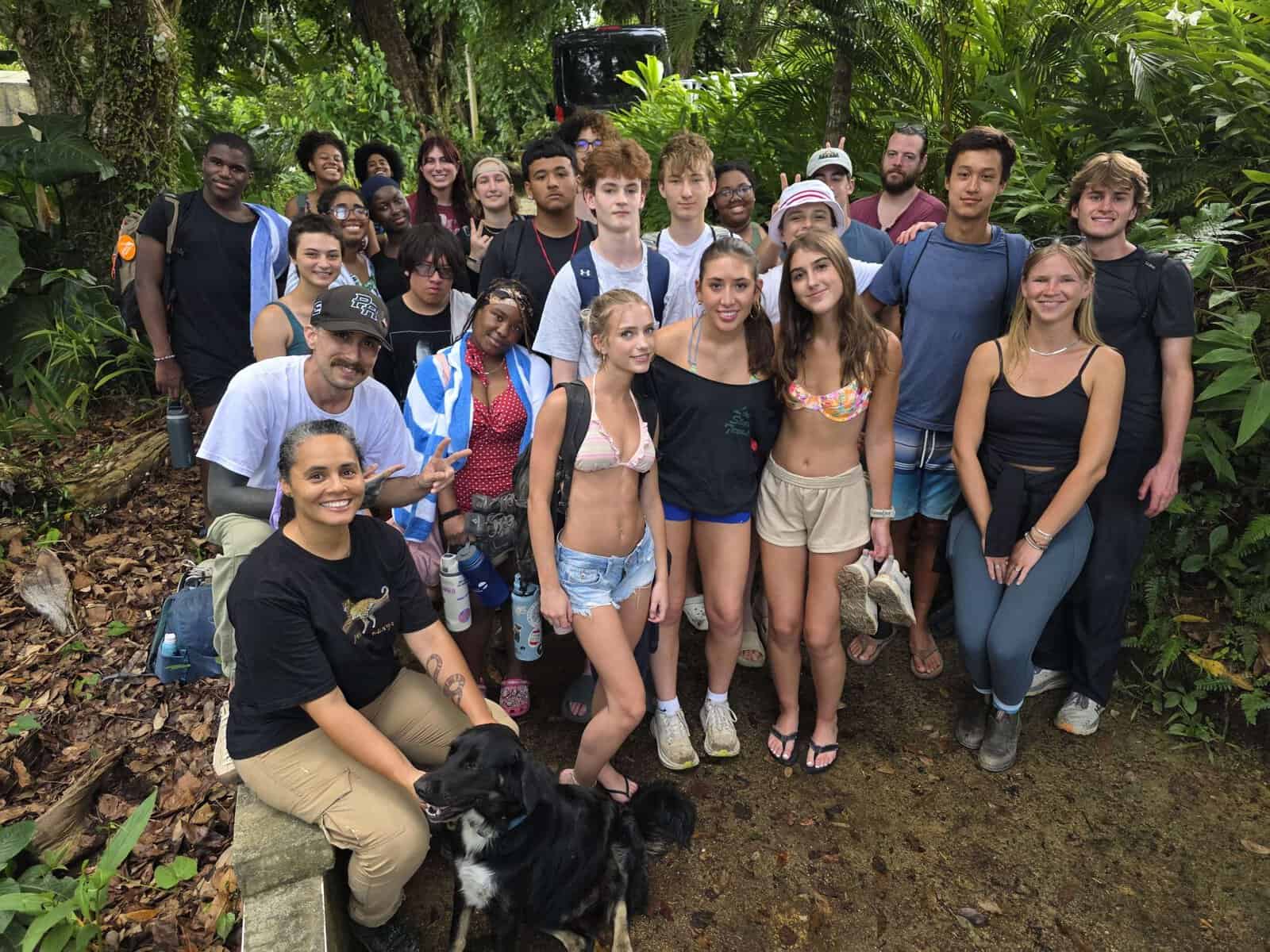
Photos by Mike Alvarez & 3t Vakil, 29 June 2026
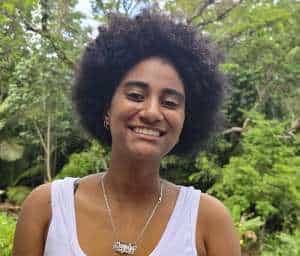
It was heartwarming to welcome back Darielys Dijol Mercedes.
In 2023, she first came to Las Casas de la Selva as a 17-year-old participant with a Global Works group, experiencing the rainforest and conservation work firsthand.
Just three years later, she returned in a very different role, as a Global Works facilitator, helping lead and inspire a new generation of teenagers.
Watching young people grow into leaders who then guide others through these same experiences is one of the greatest rewards of educational and conservation work.
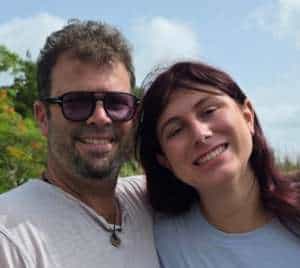
We were delighted to have local teenager Rio Collazo, age 15, join the Global Works group as a volunteer.
Rio has been eager to become involved at Las Casas de la Selva and embraced the opportunity with enthusiasm. She was helpful in every area, lending a hand wherever it was needed; sensitive to group dynamics whilst out in the field, and an invaluable member of the team.
It was wonderful to see her positive energy, willingness to work with others, and genuine interest in the forest and its conservation. Photo of Rio with her father, Angel, a neighbor and very good friend of the project.