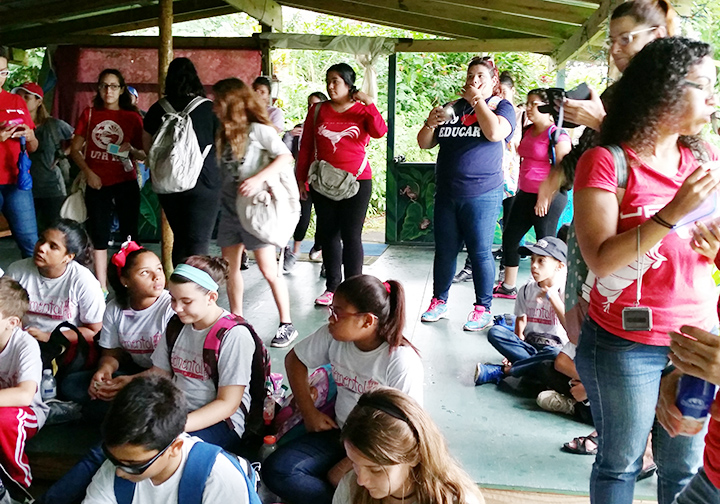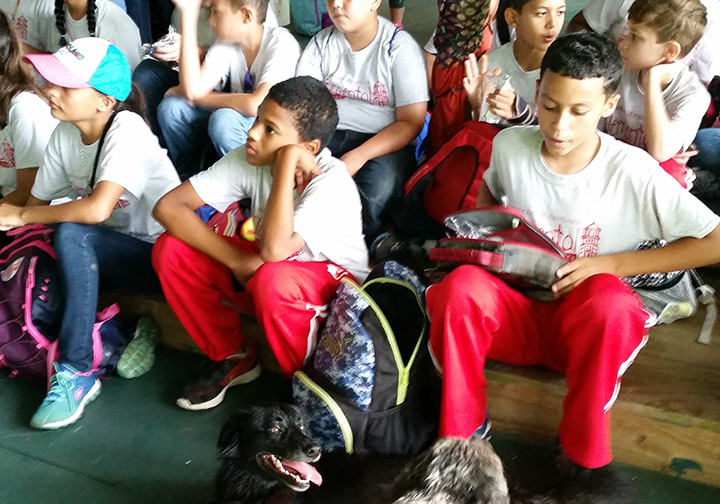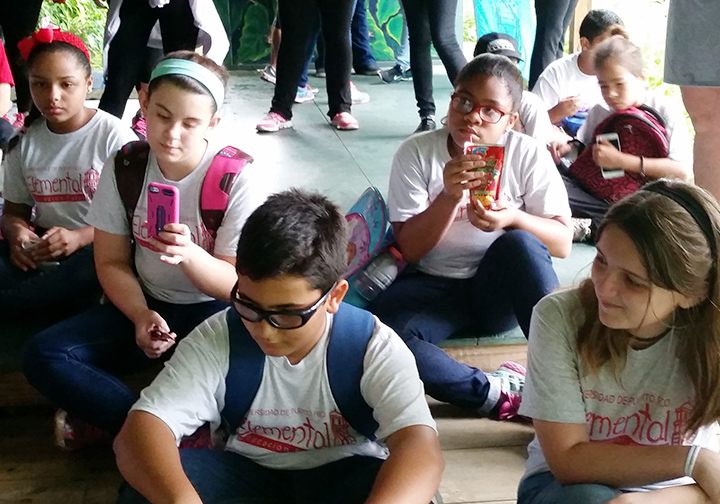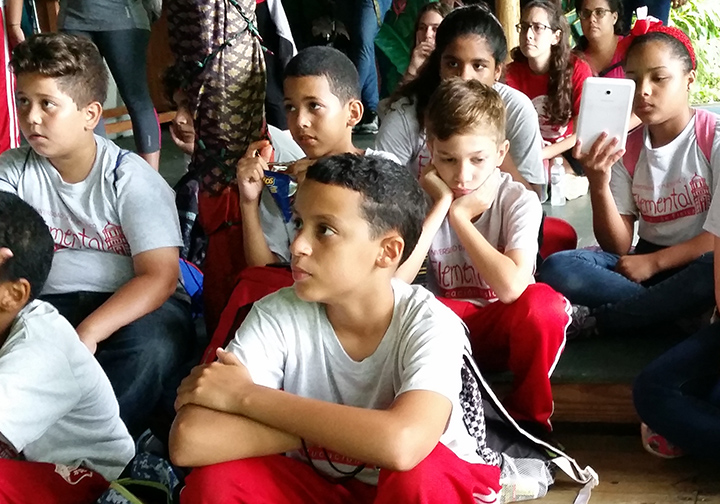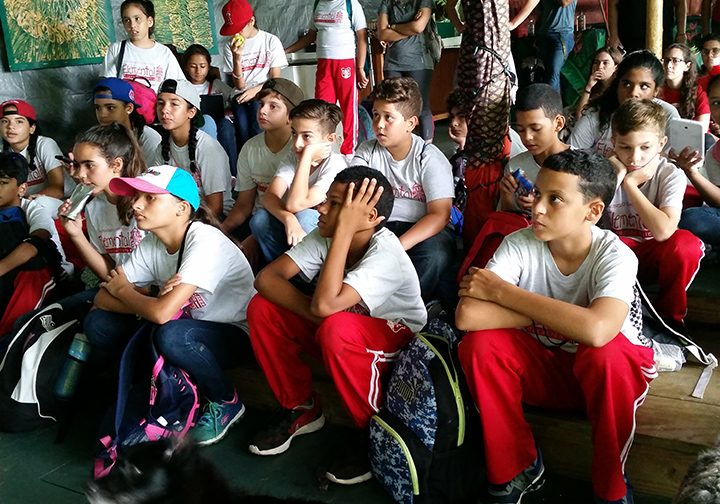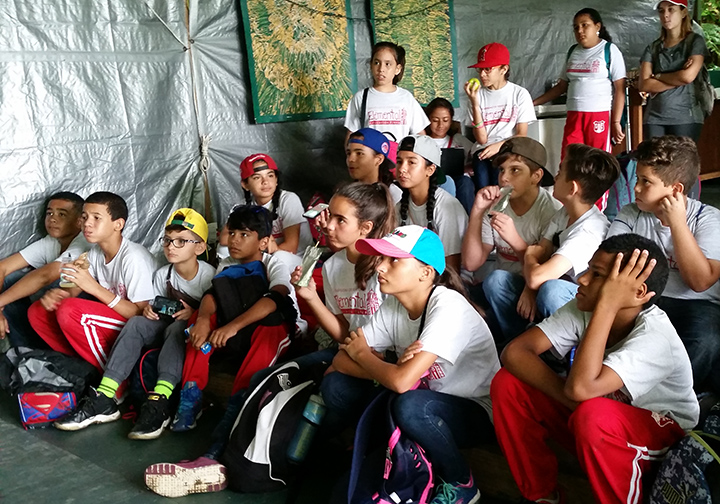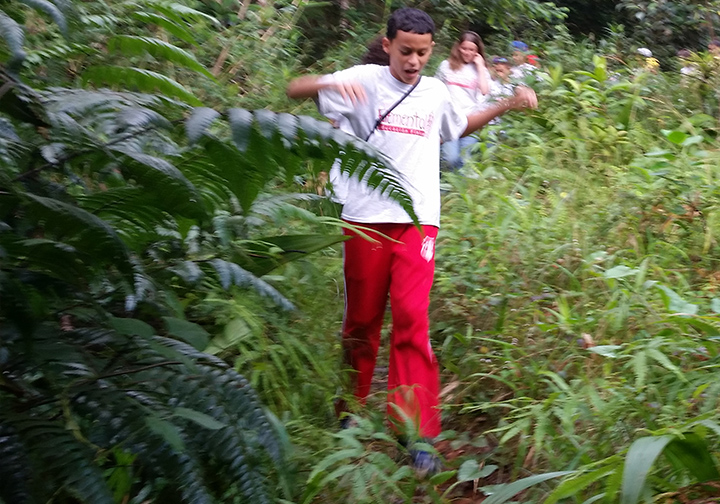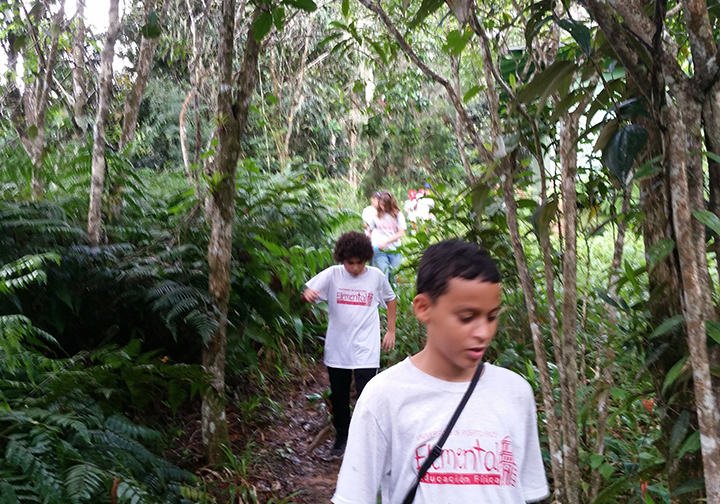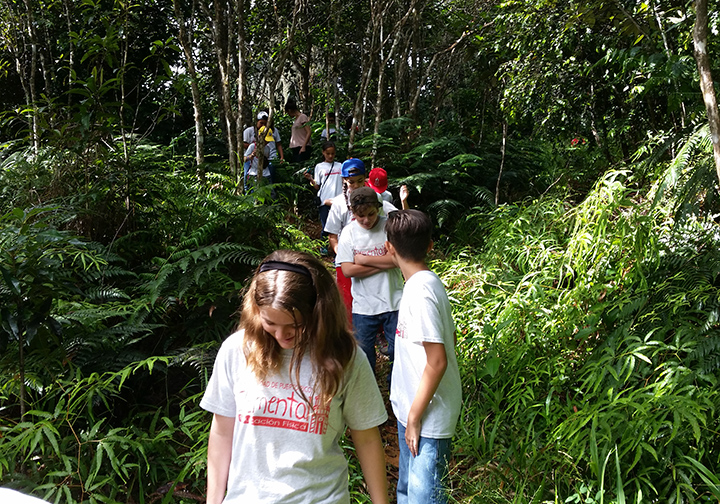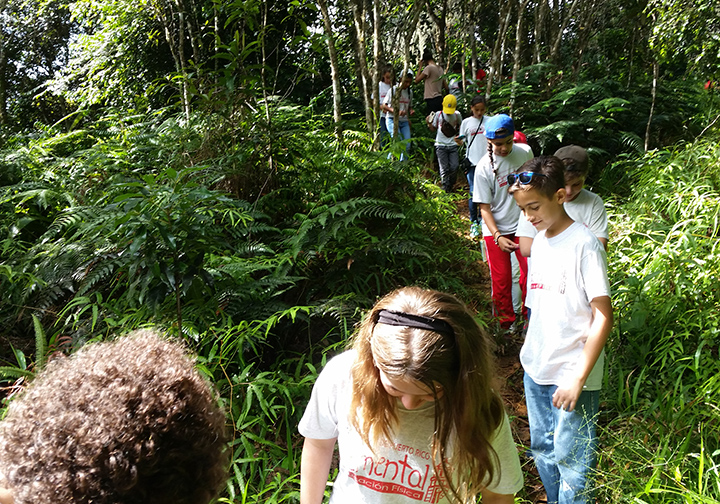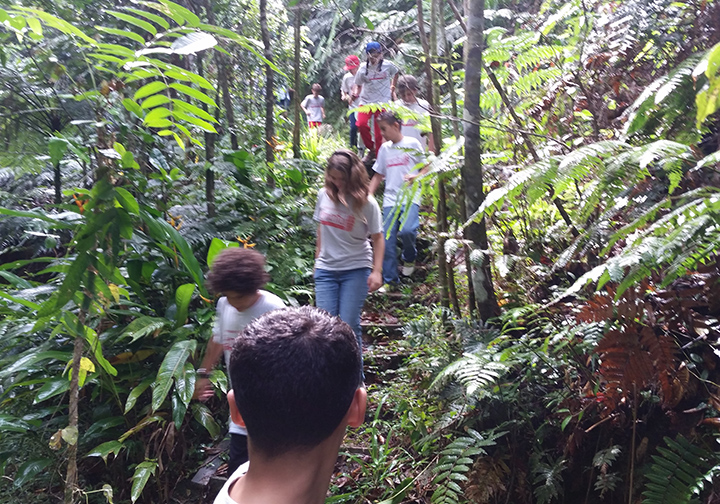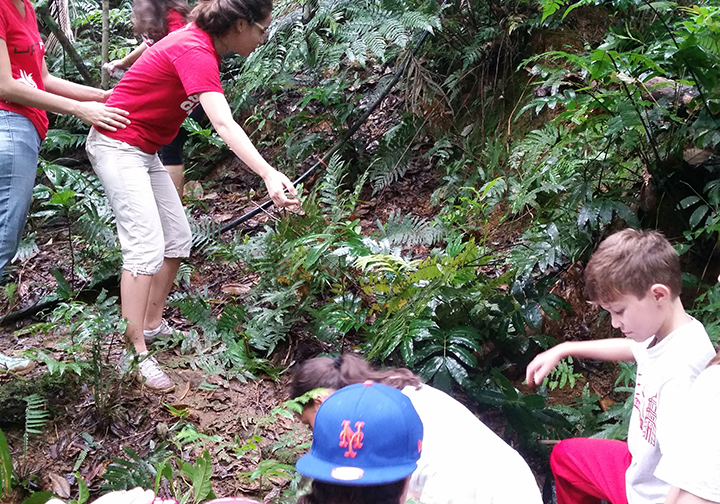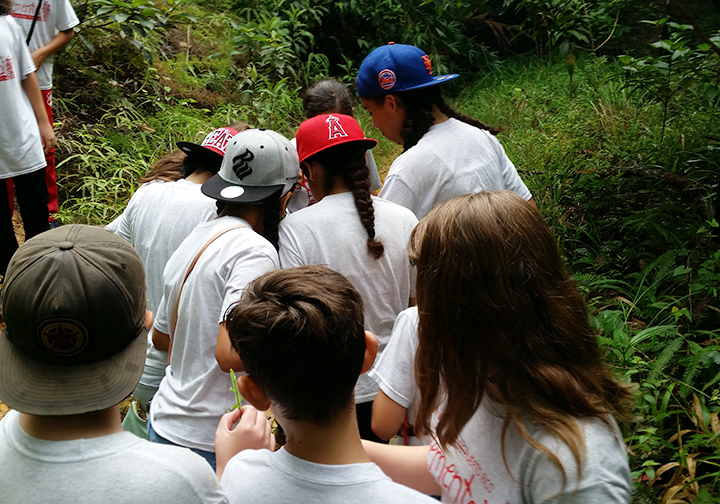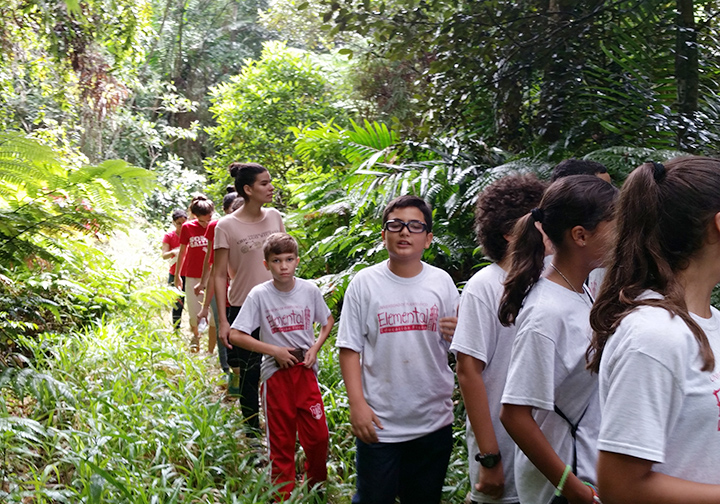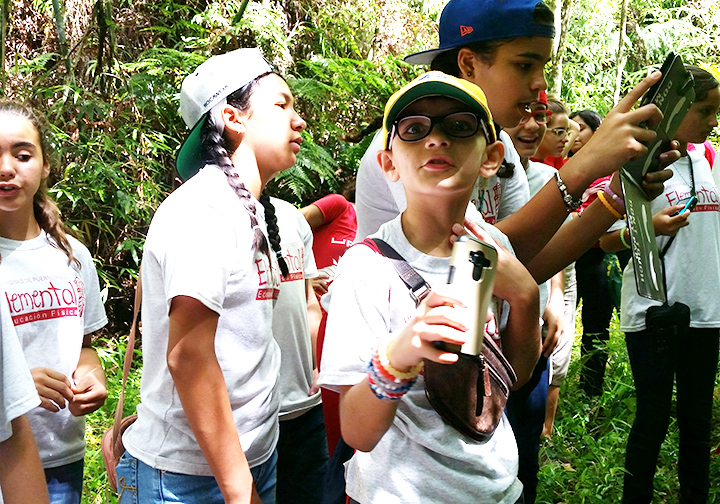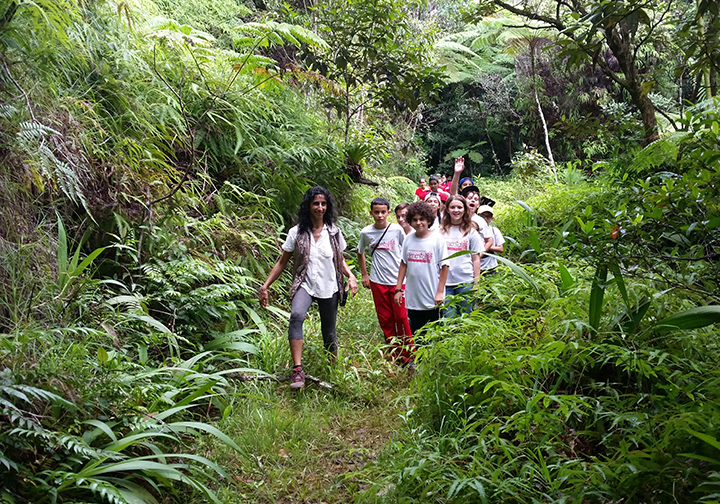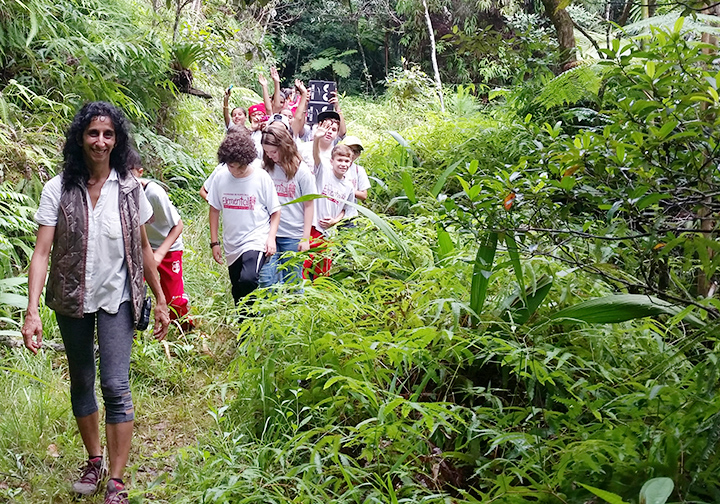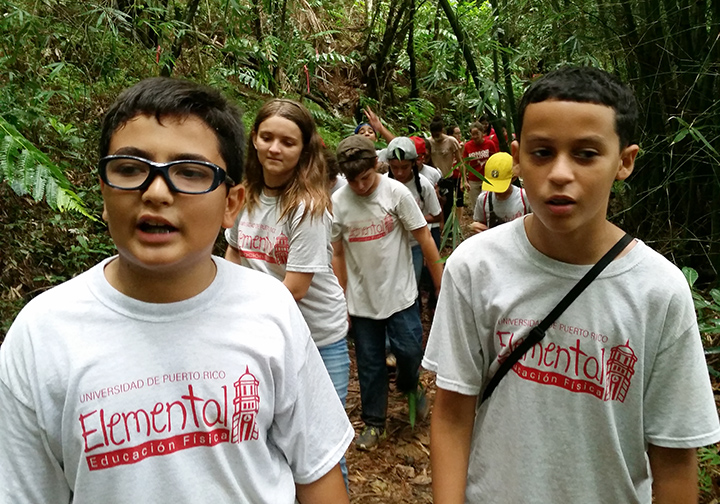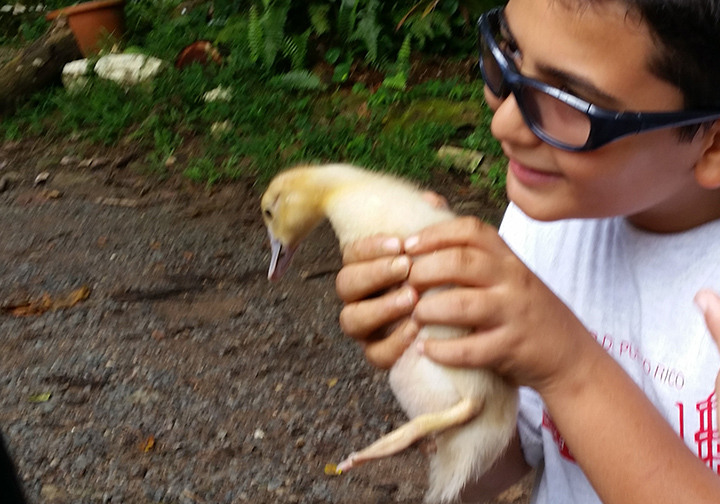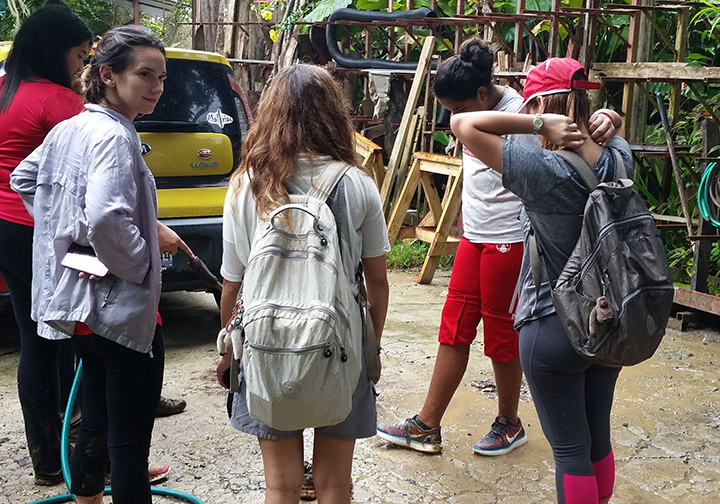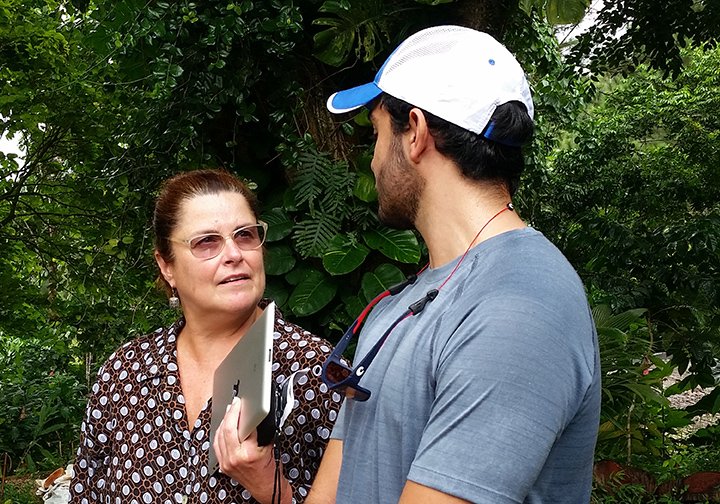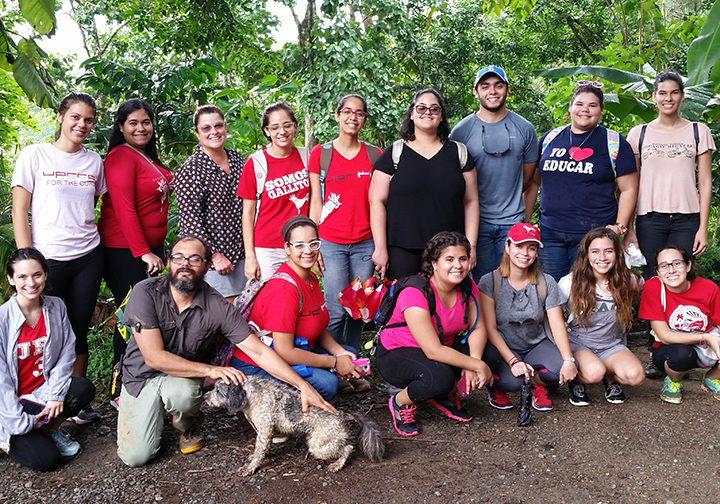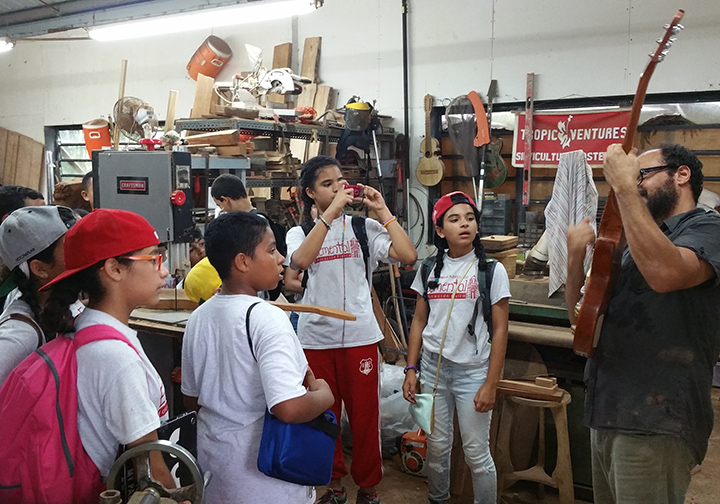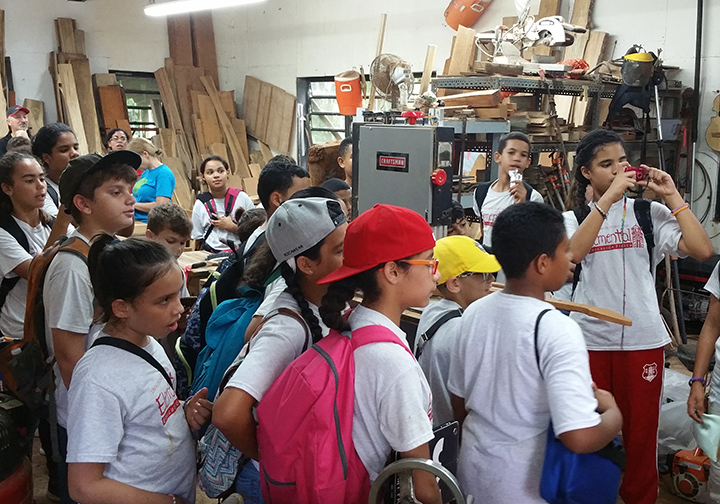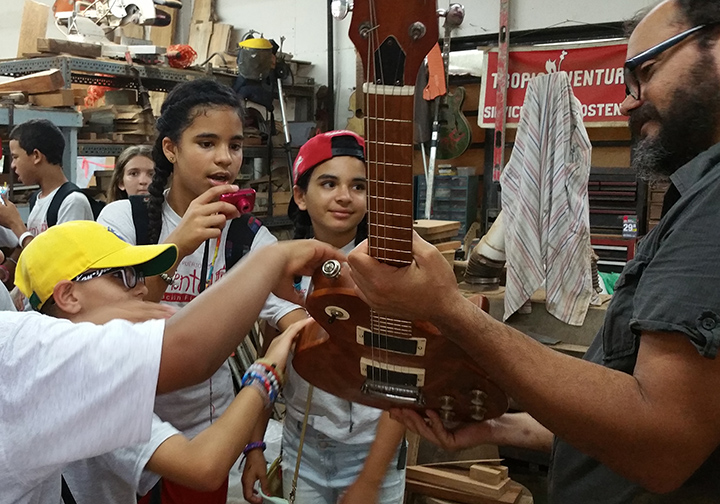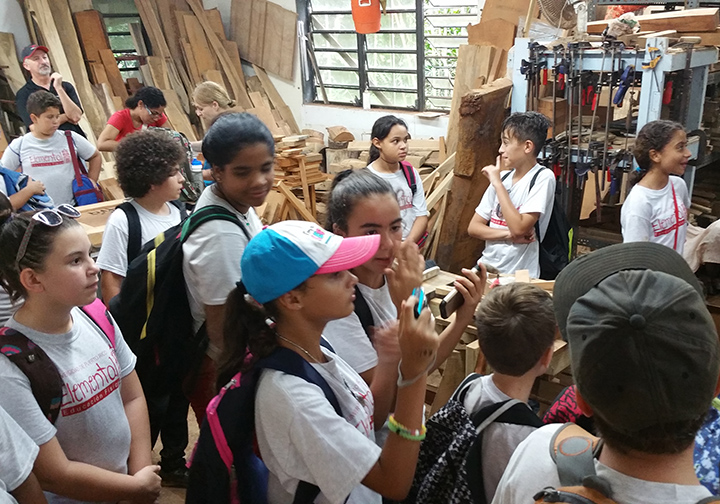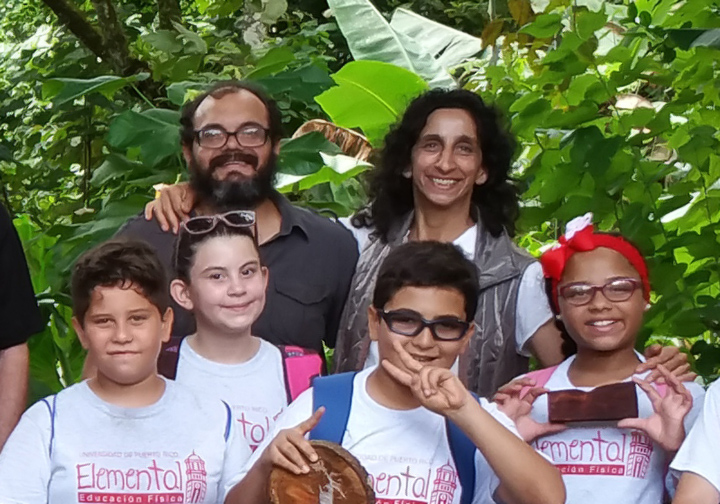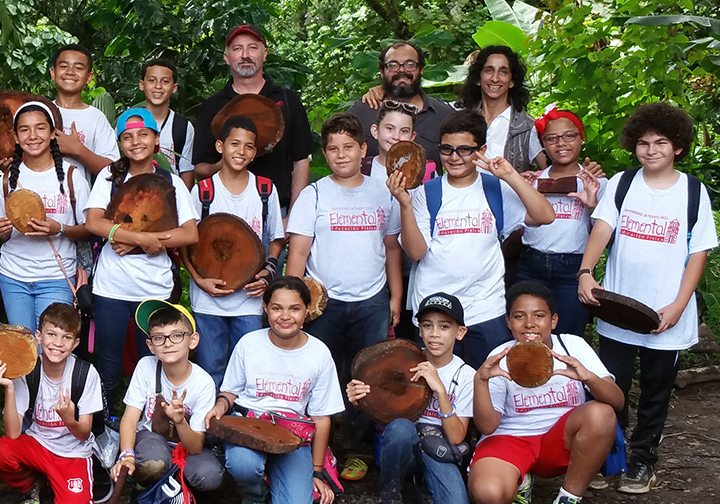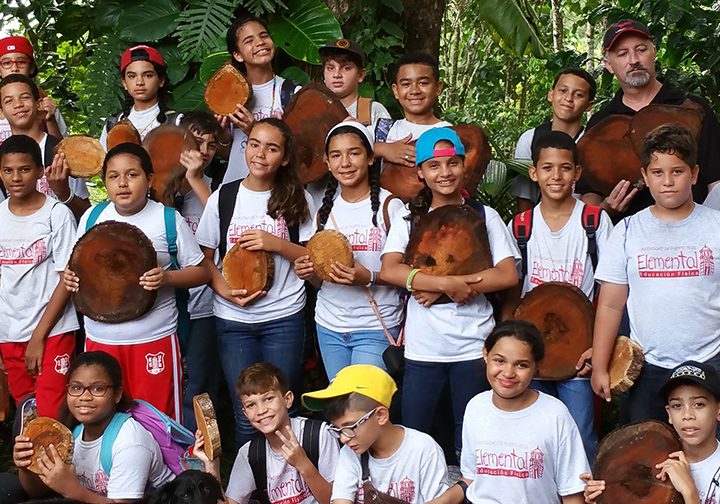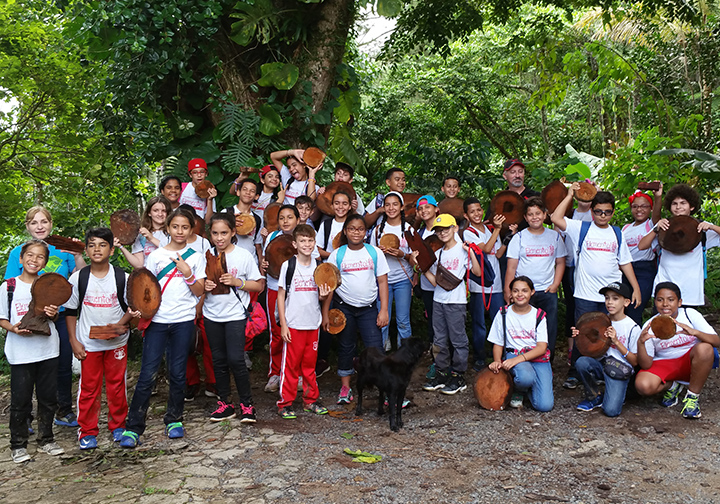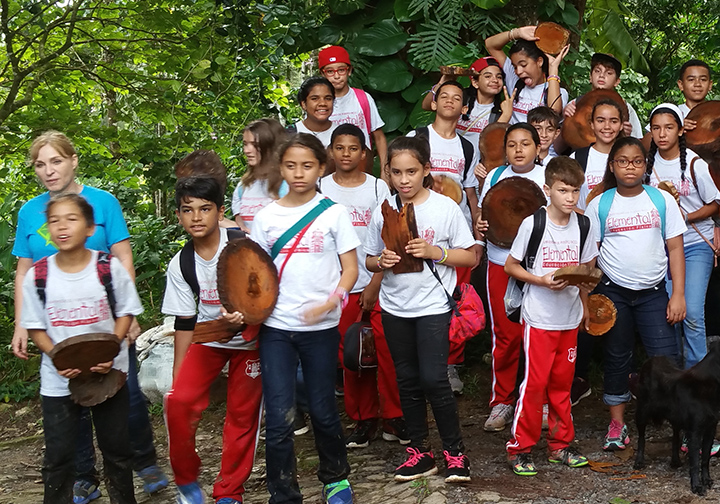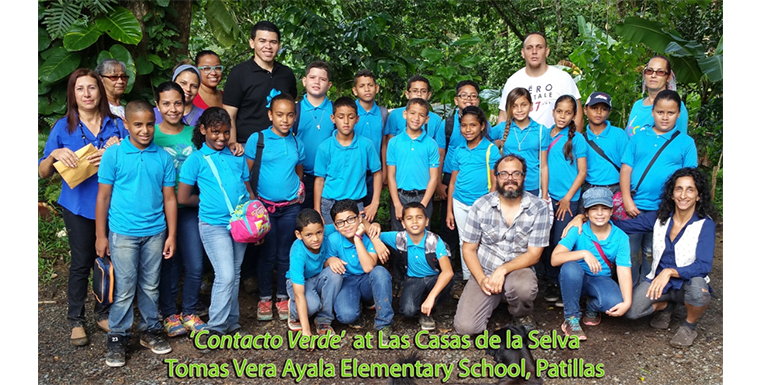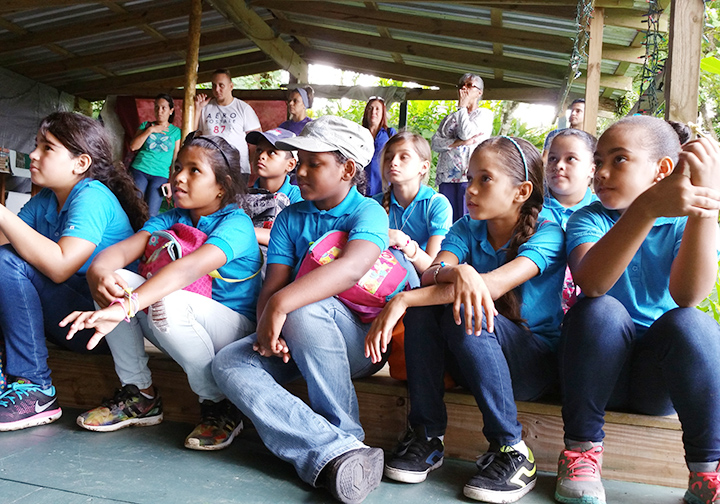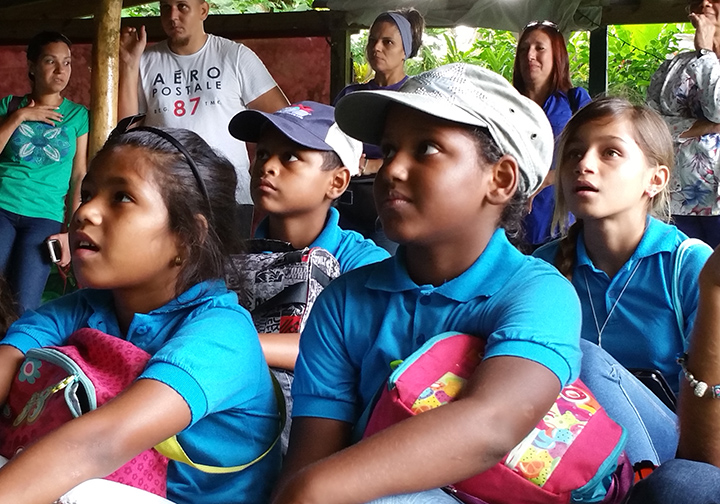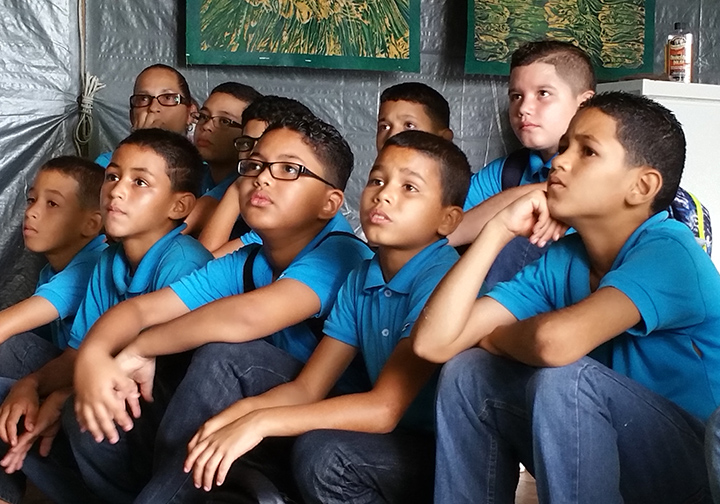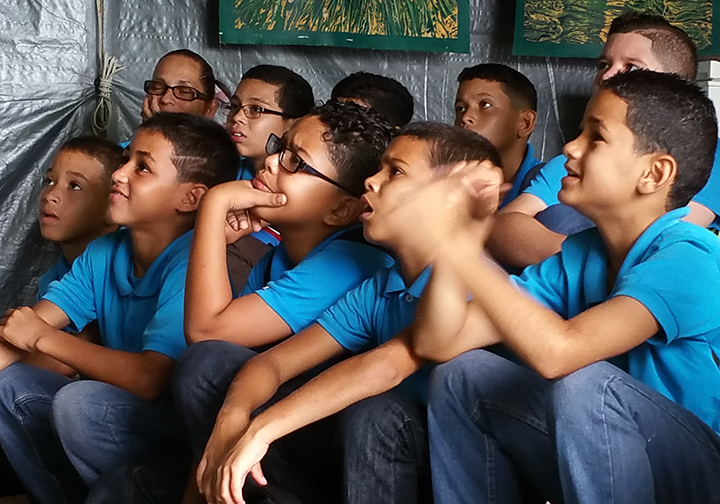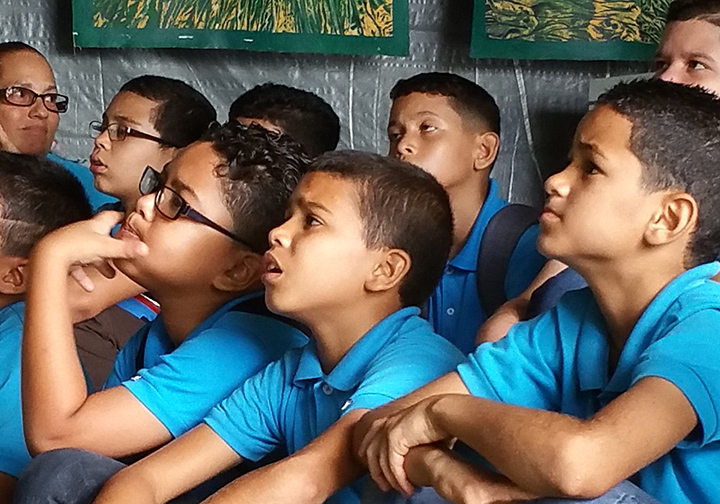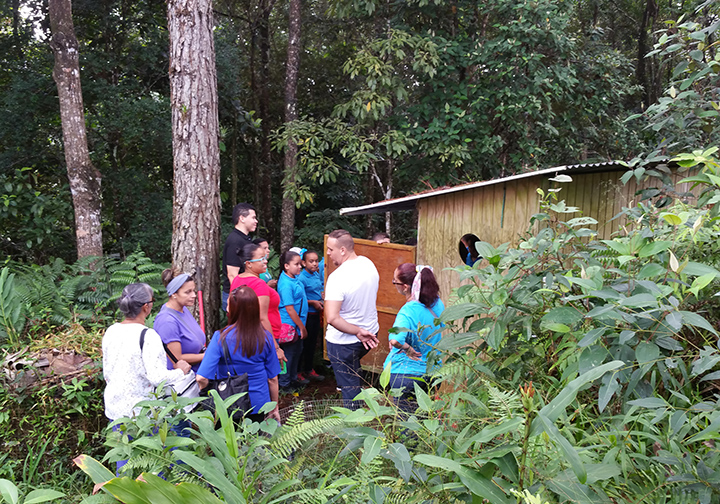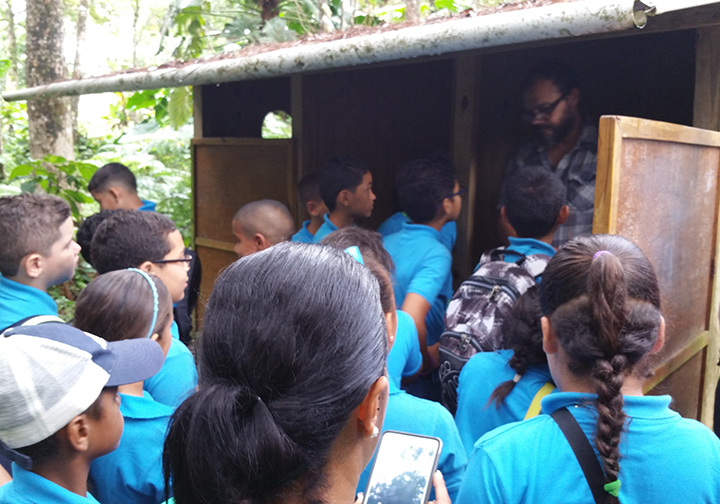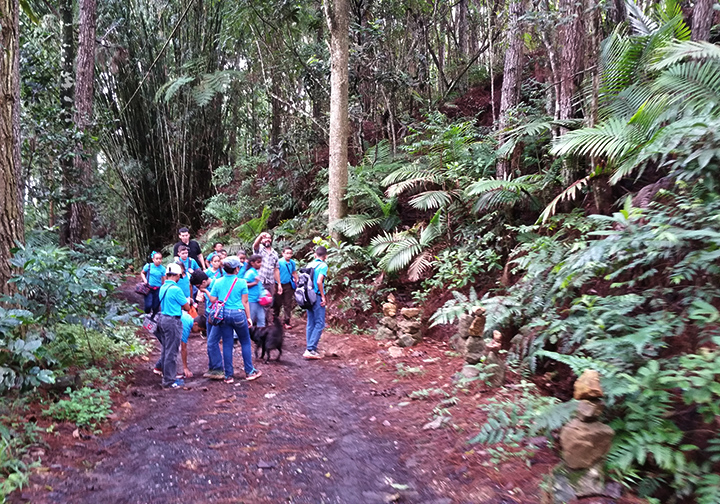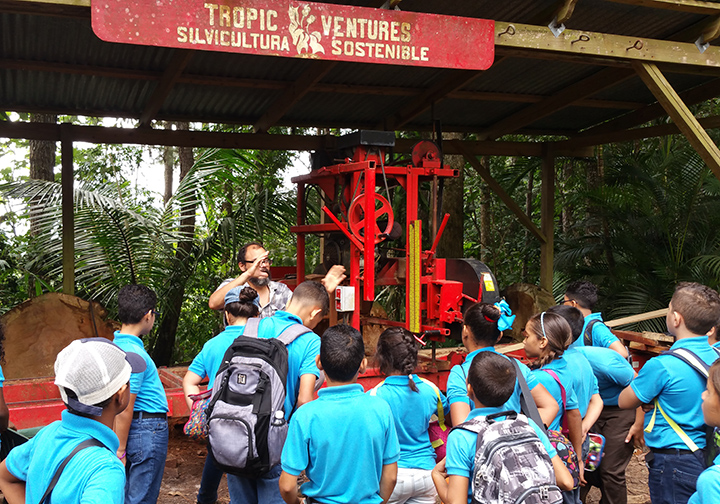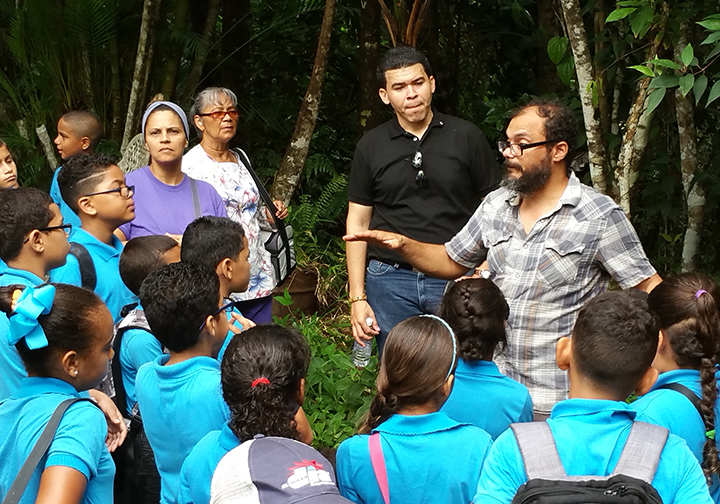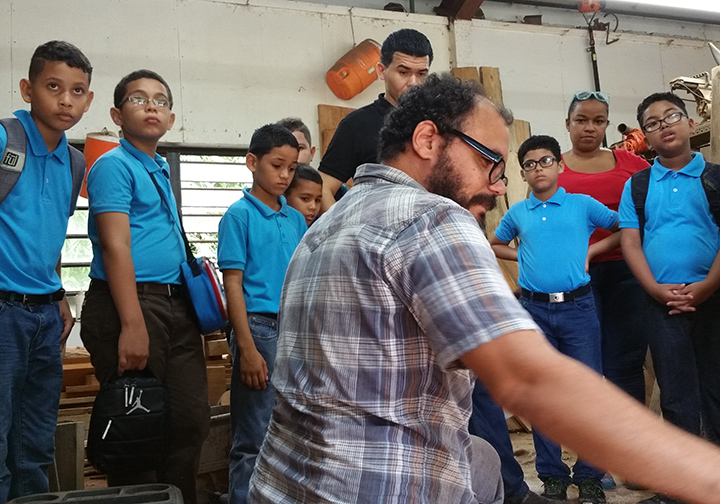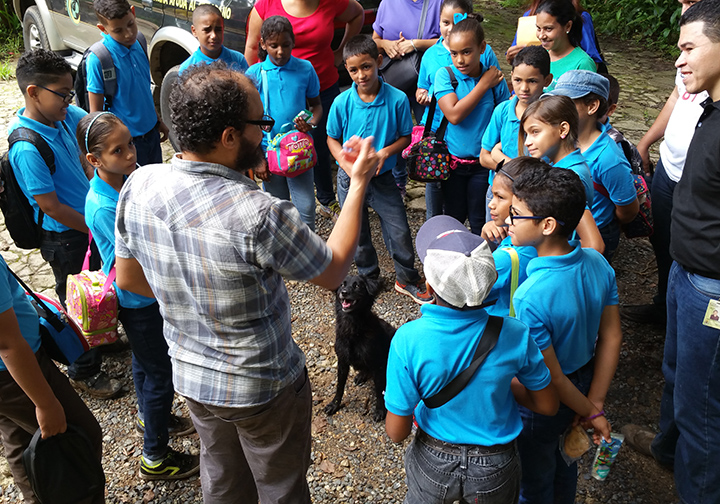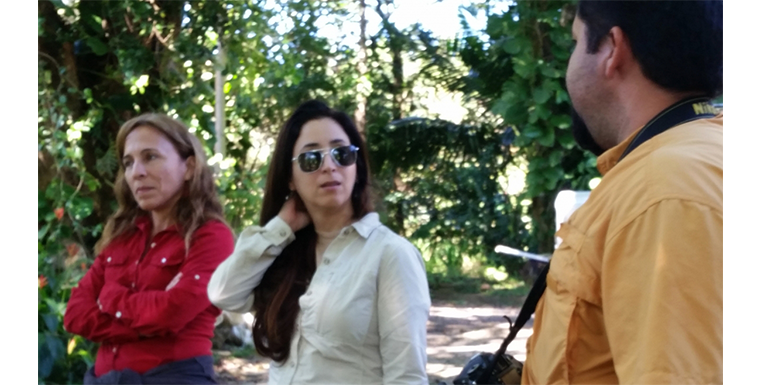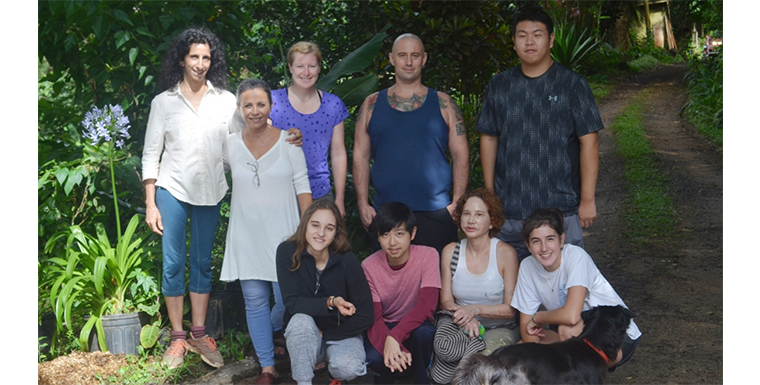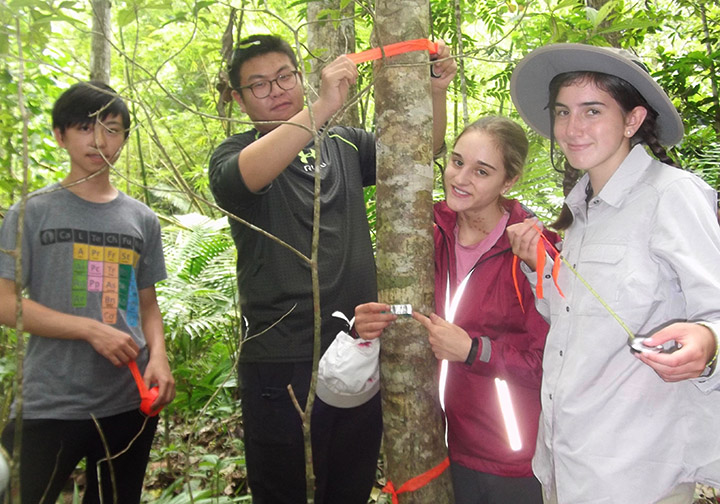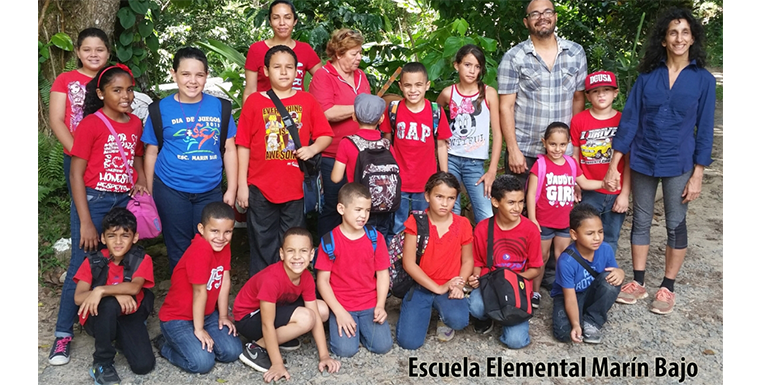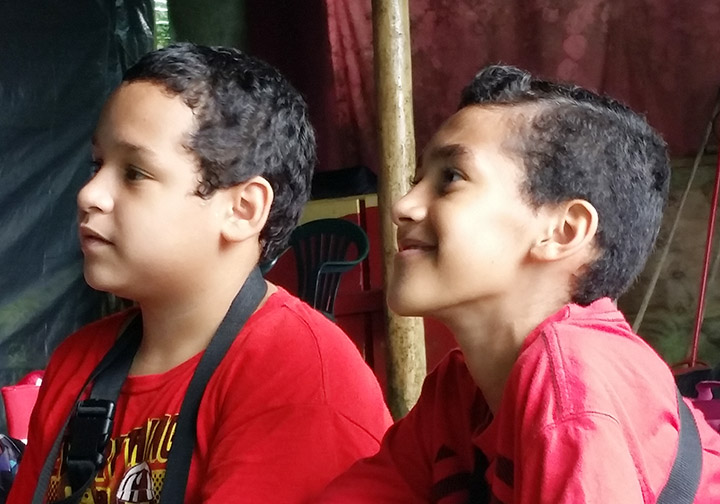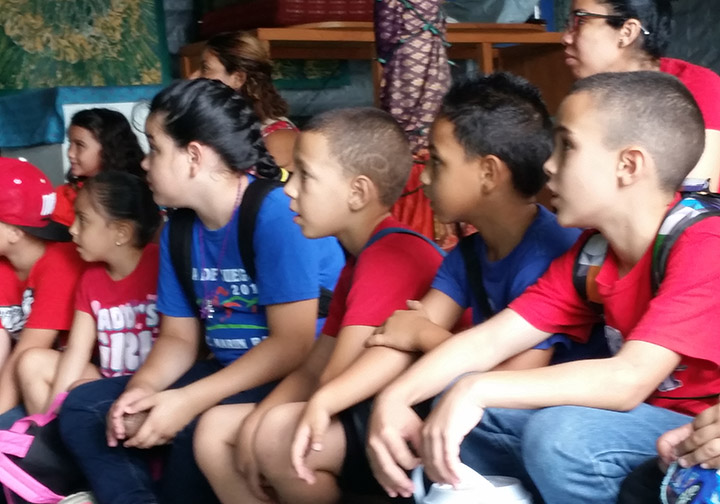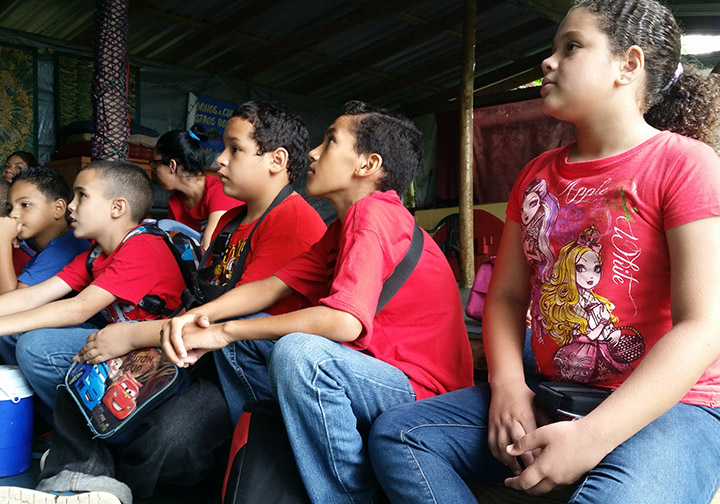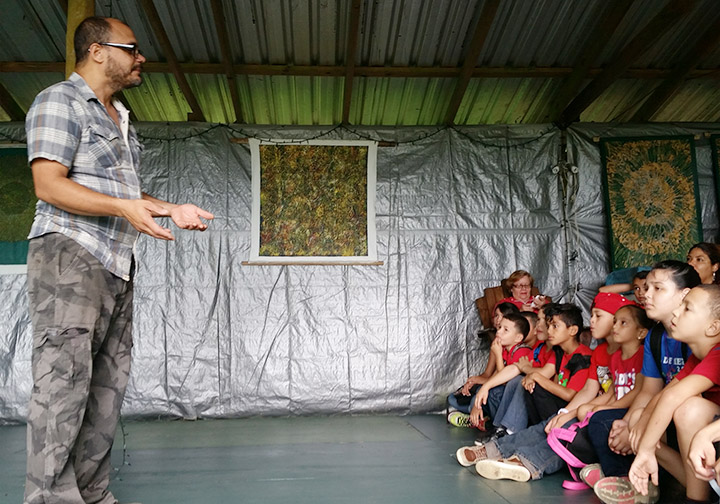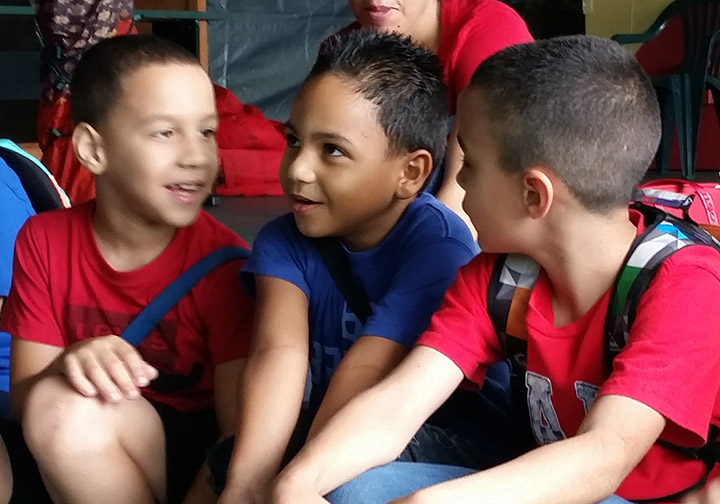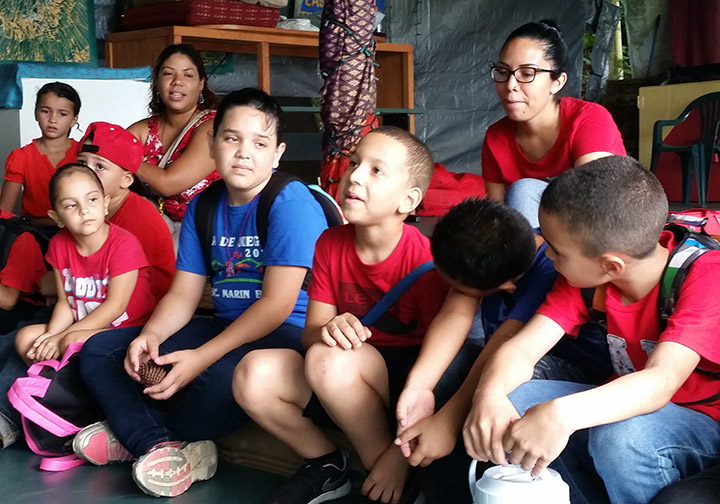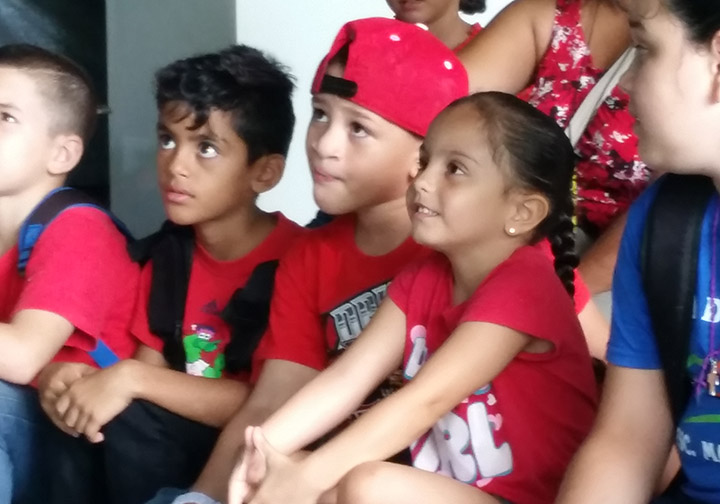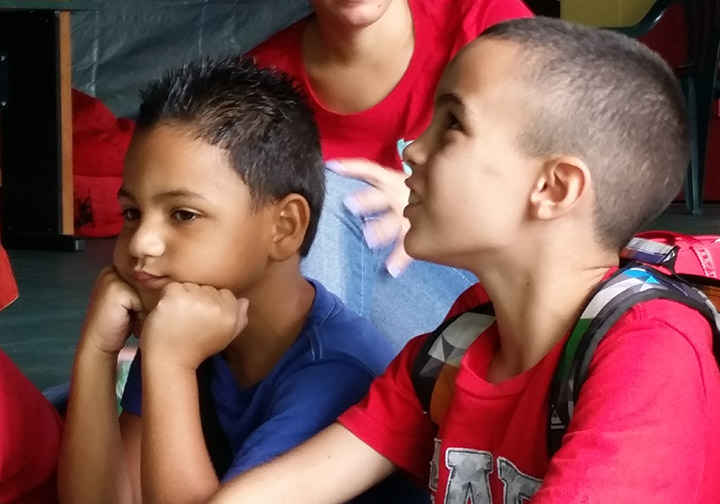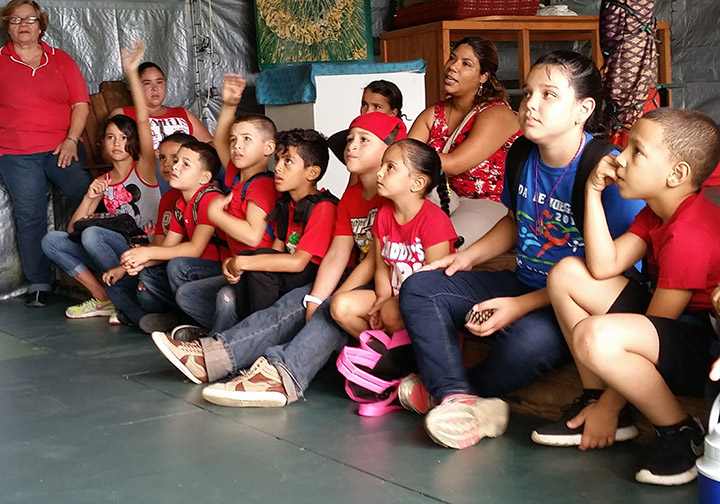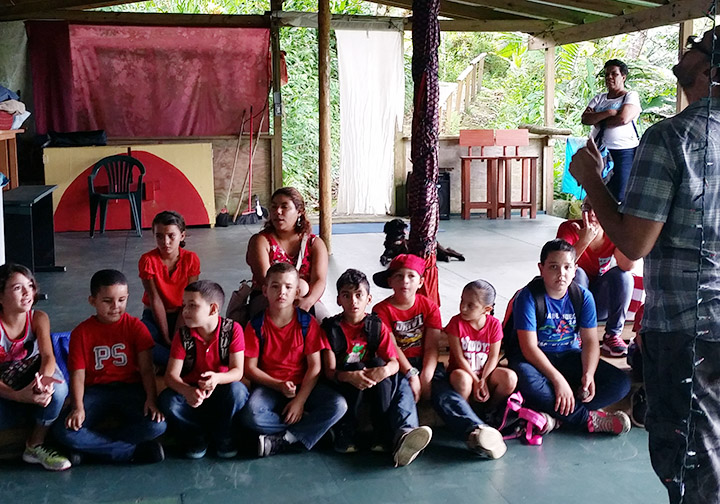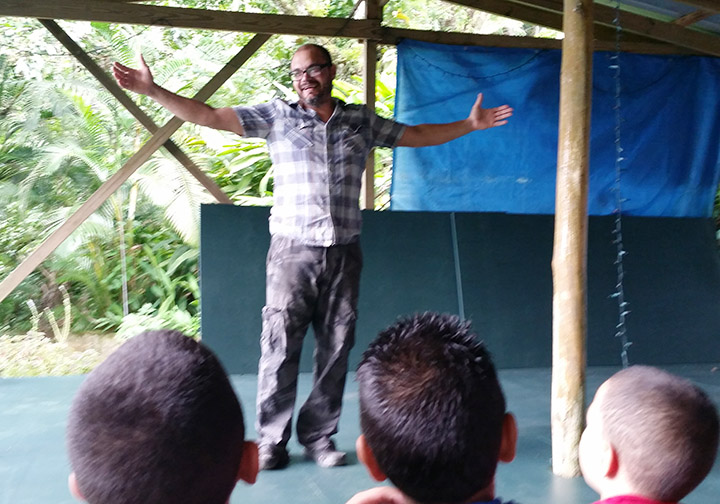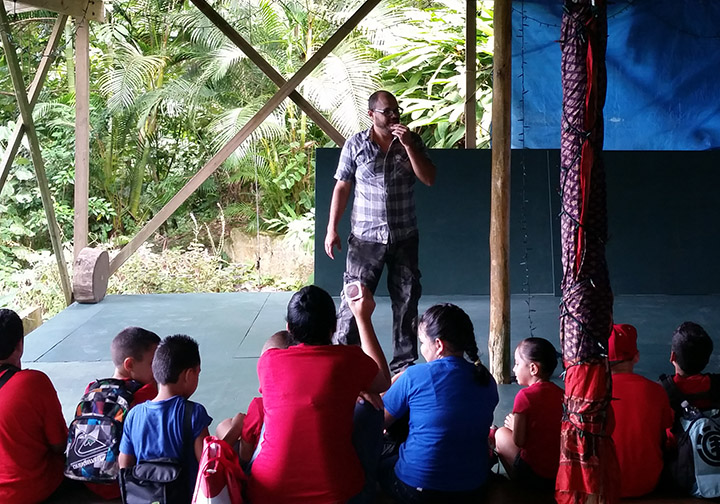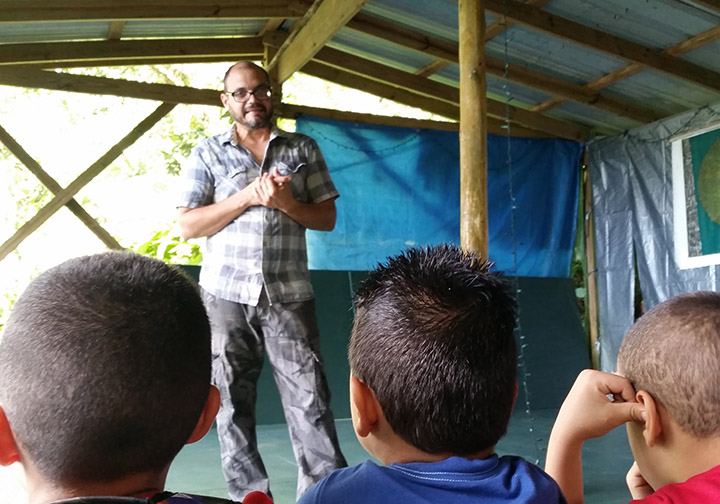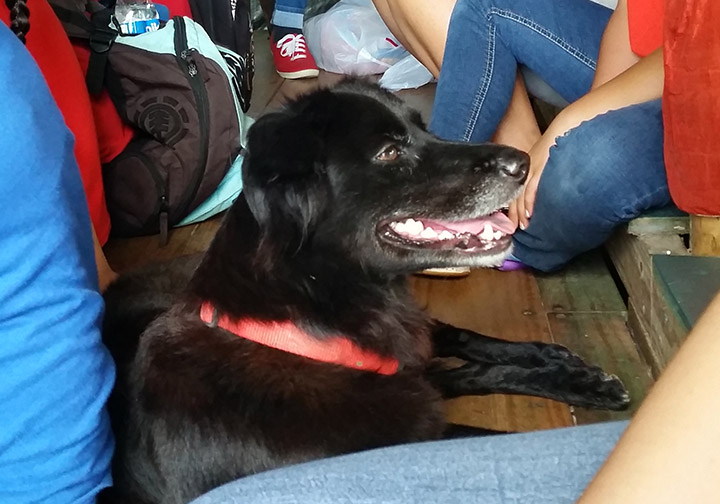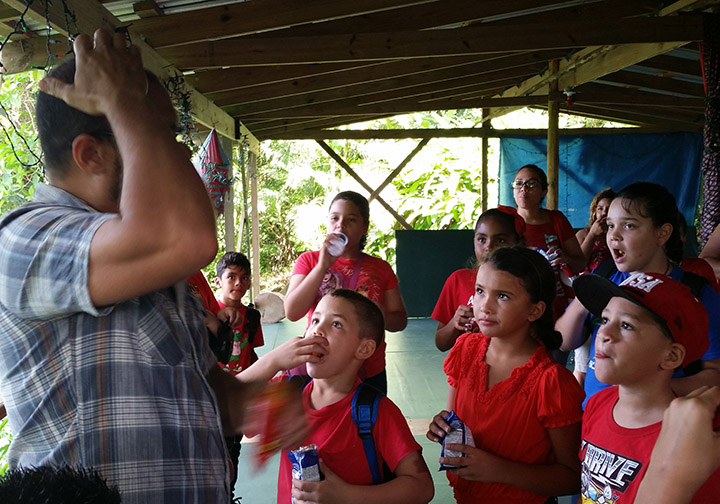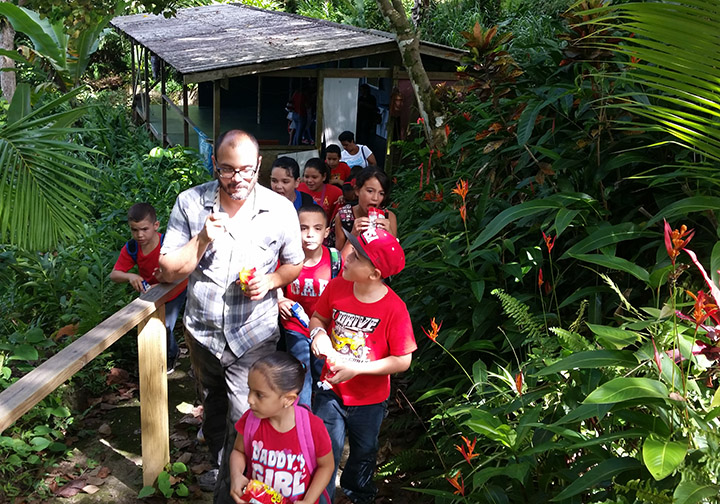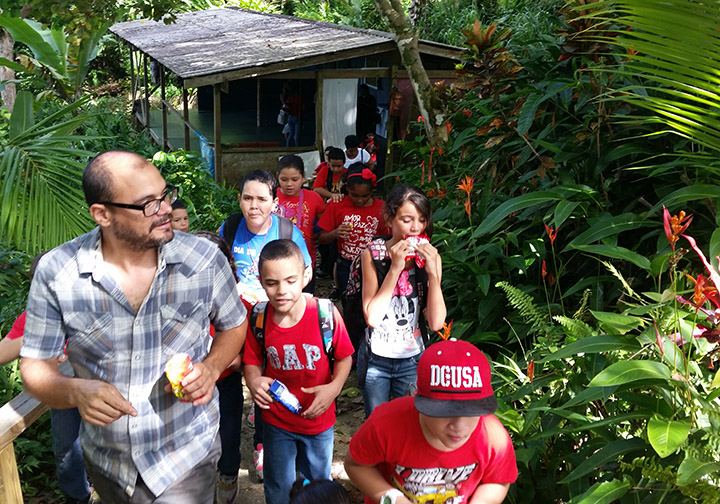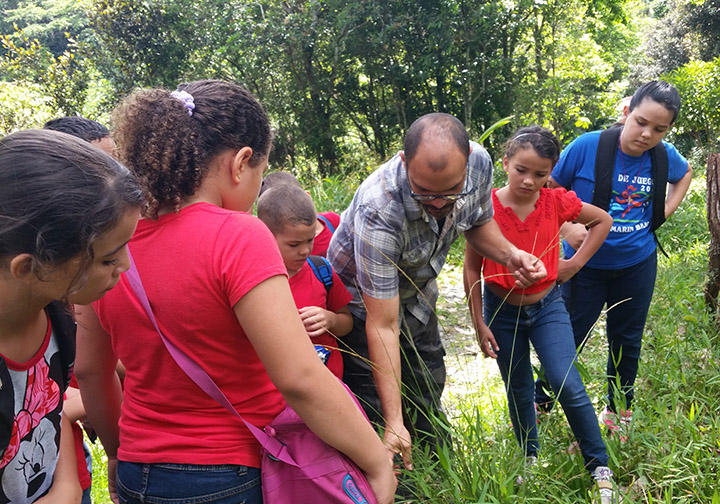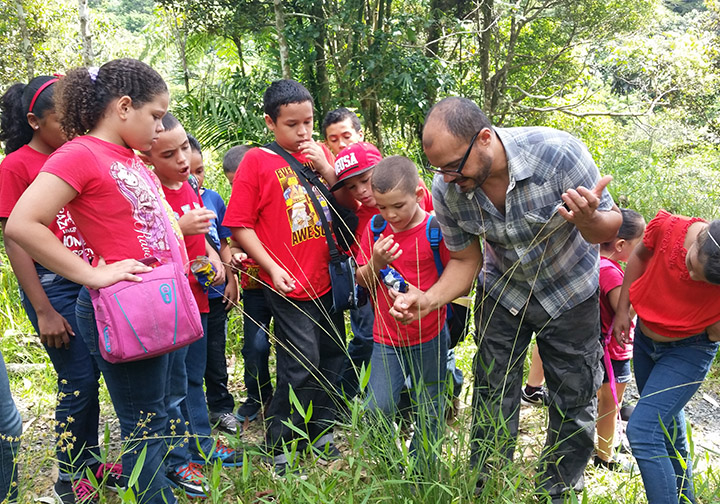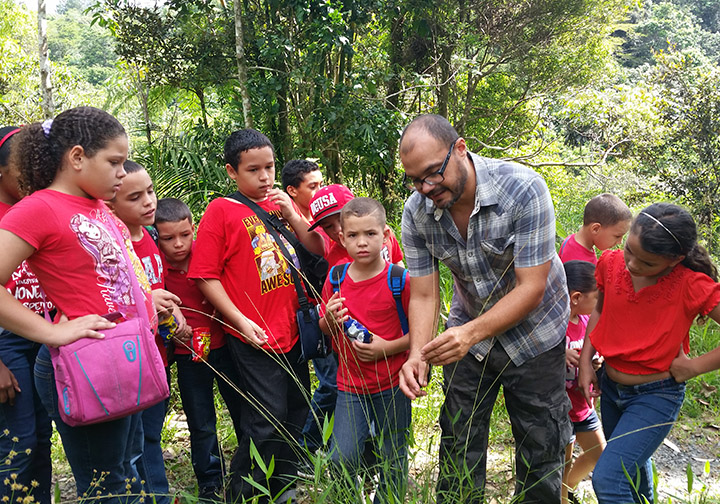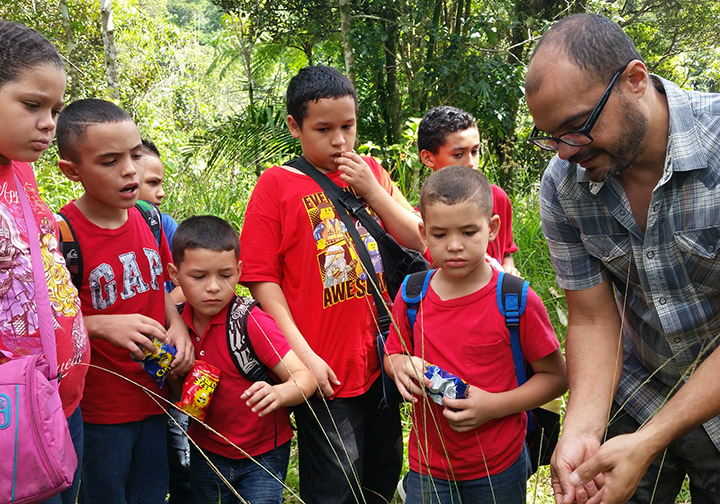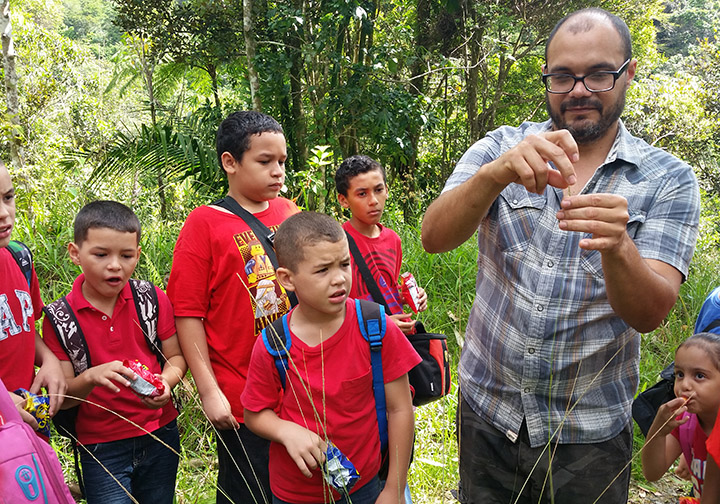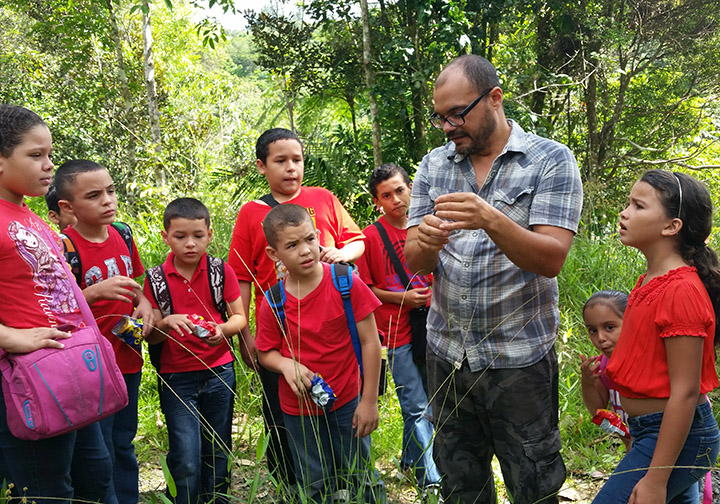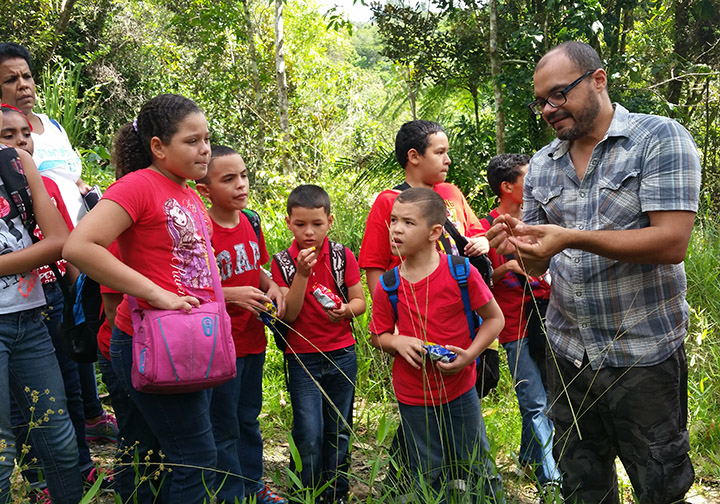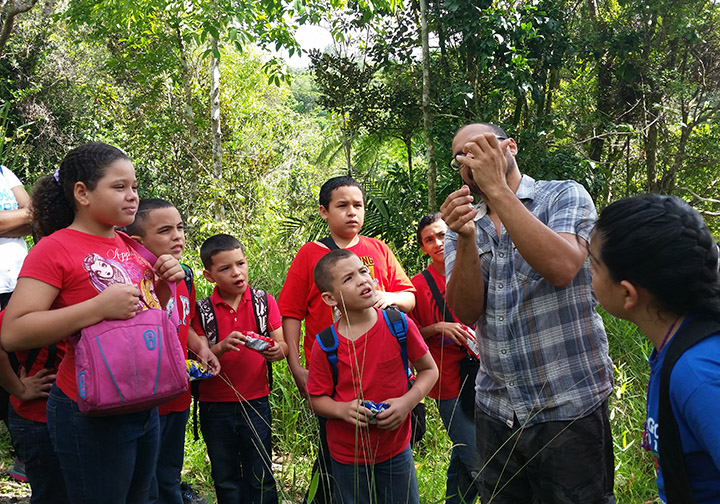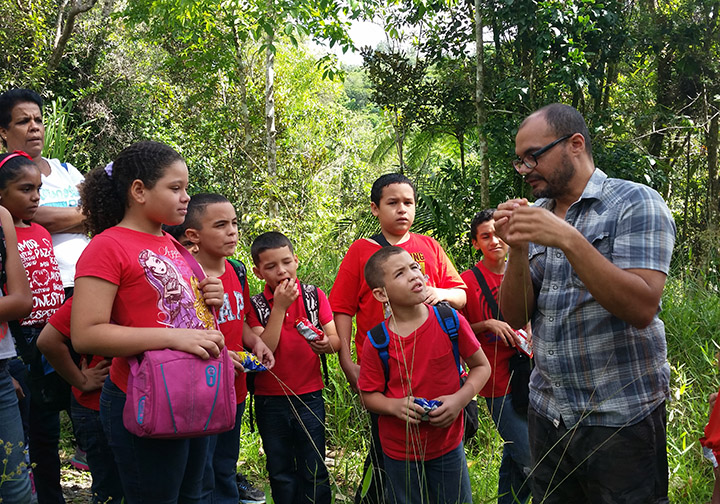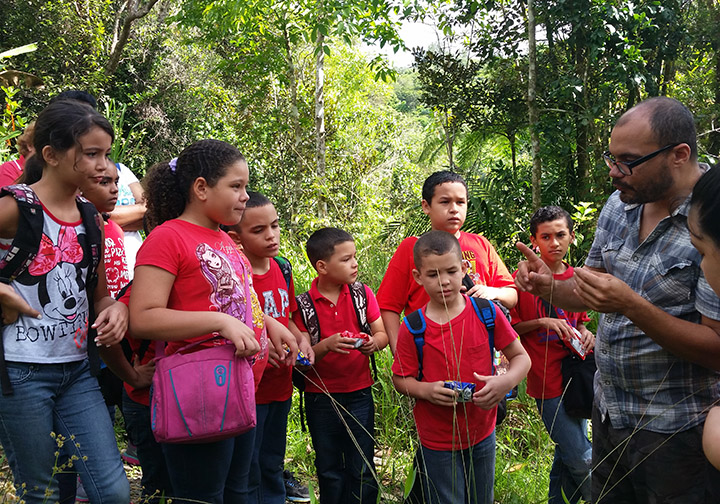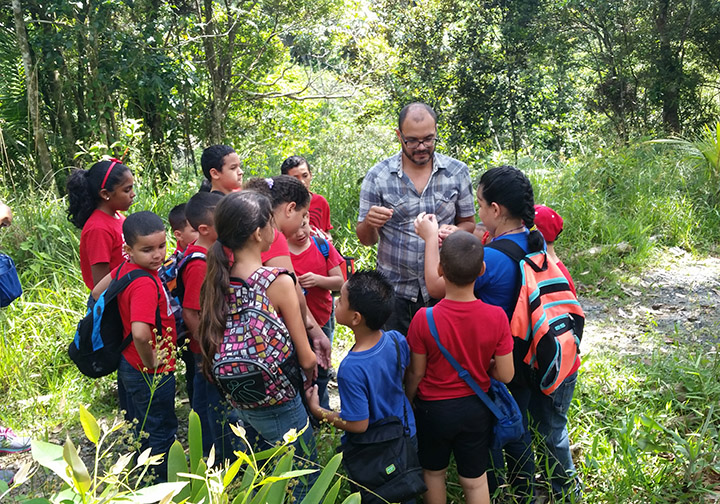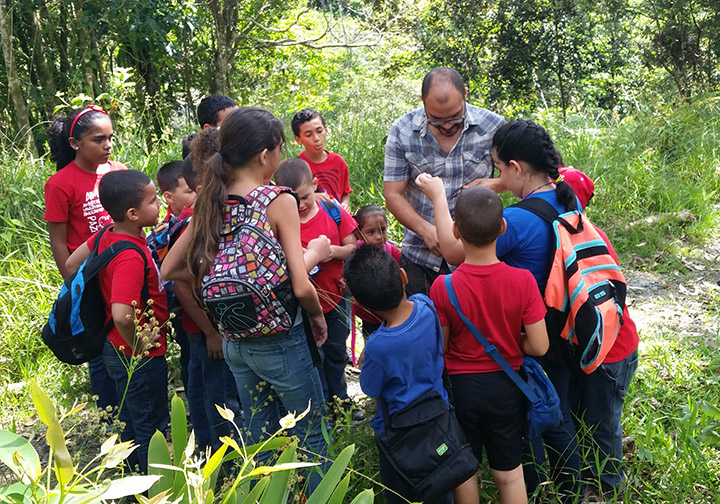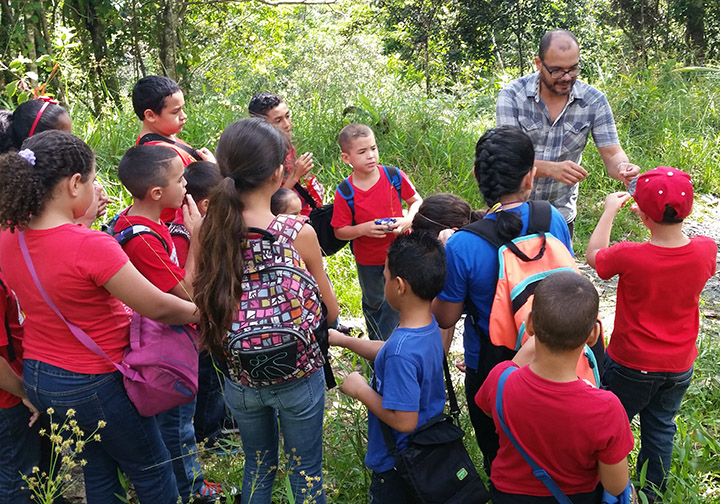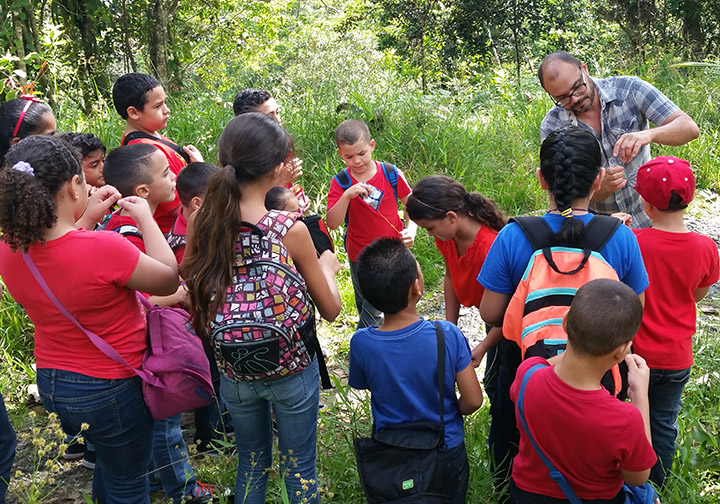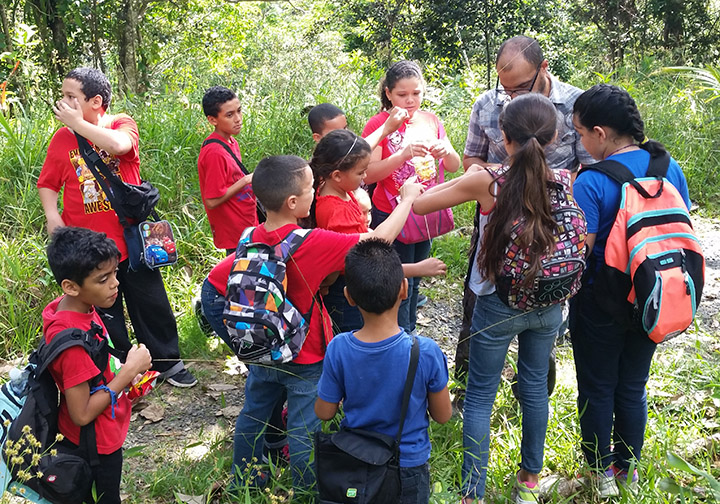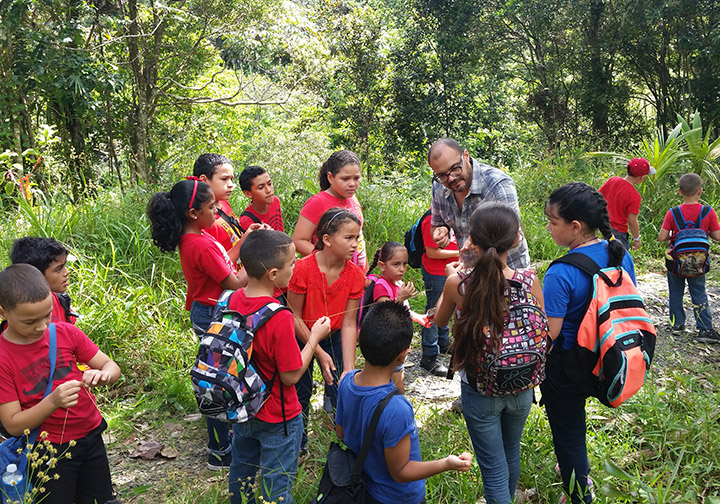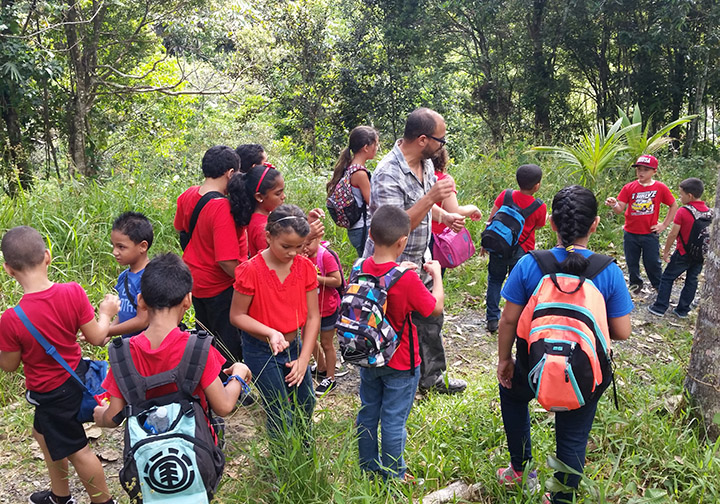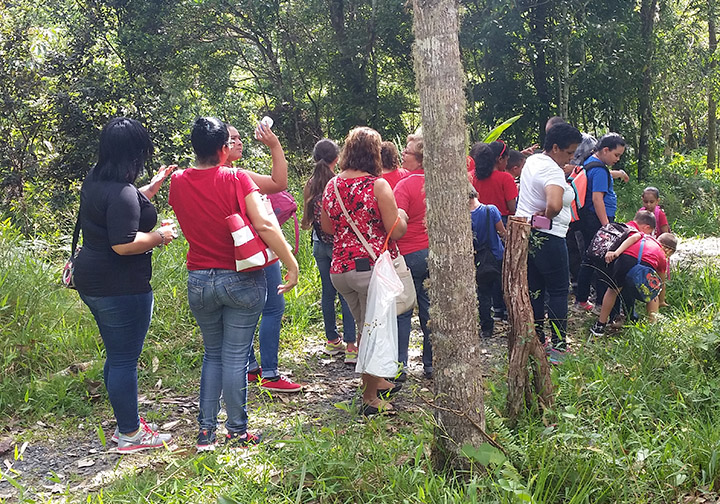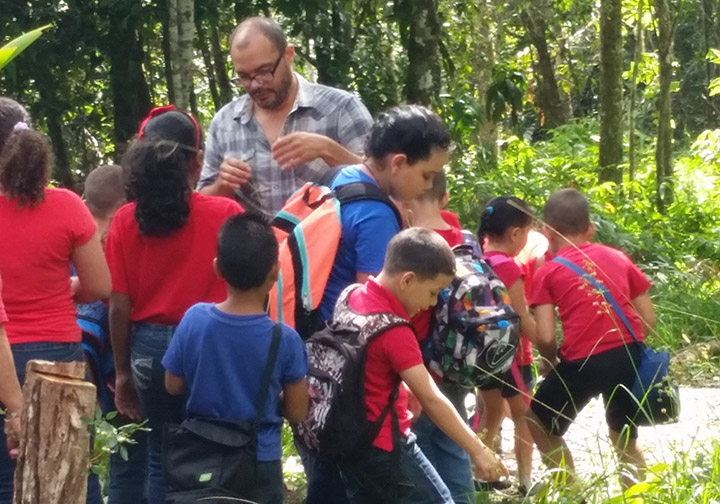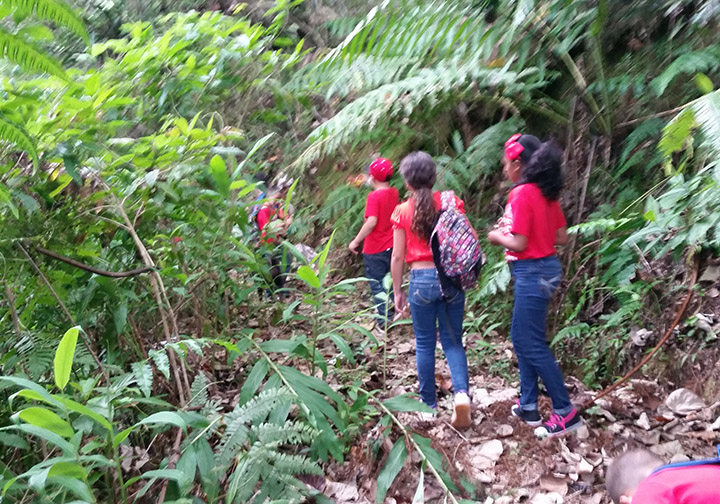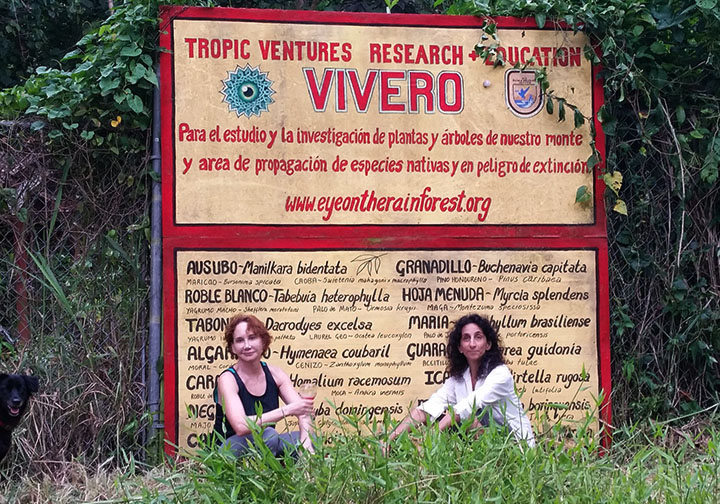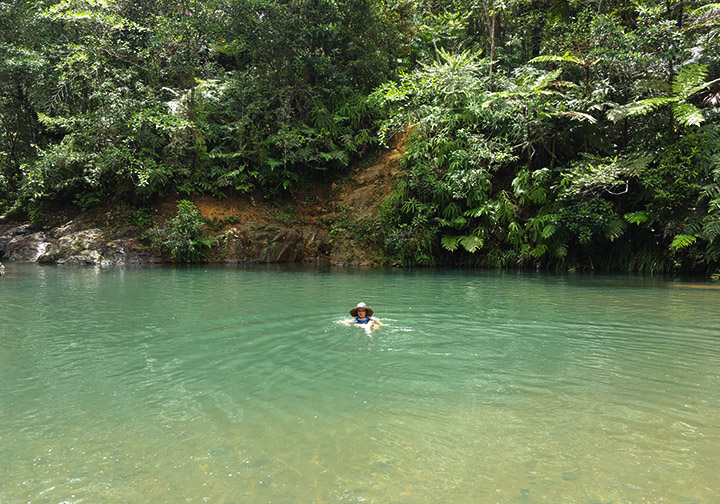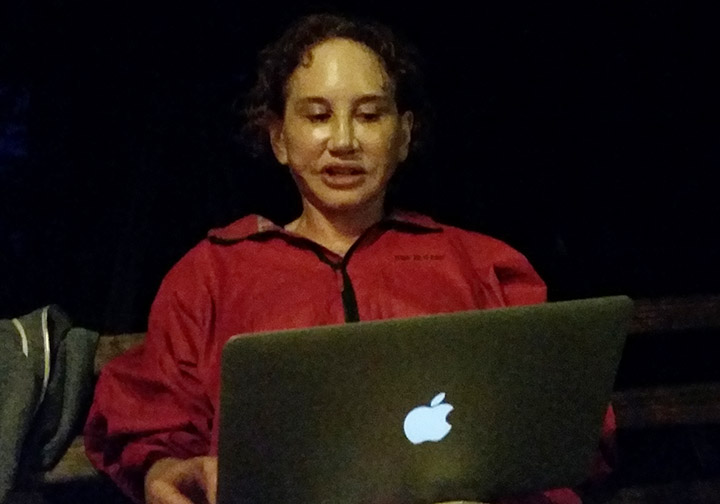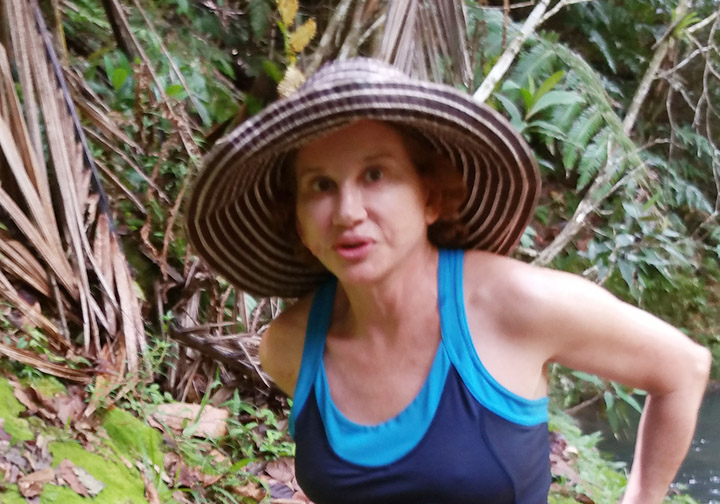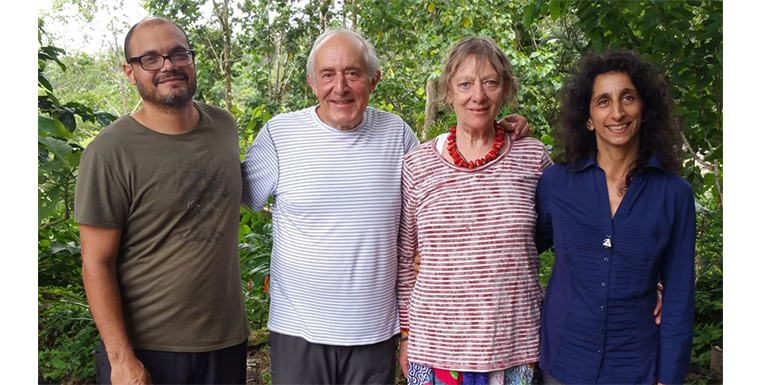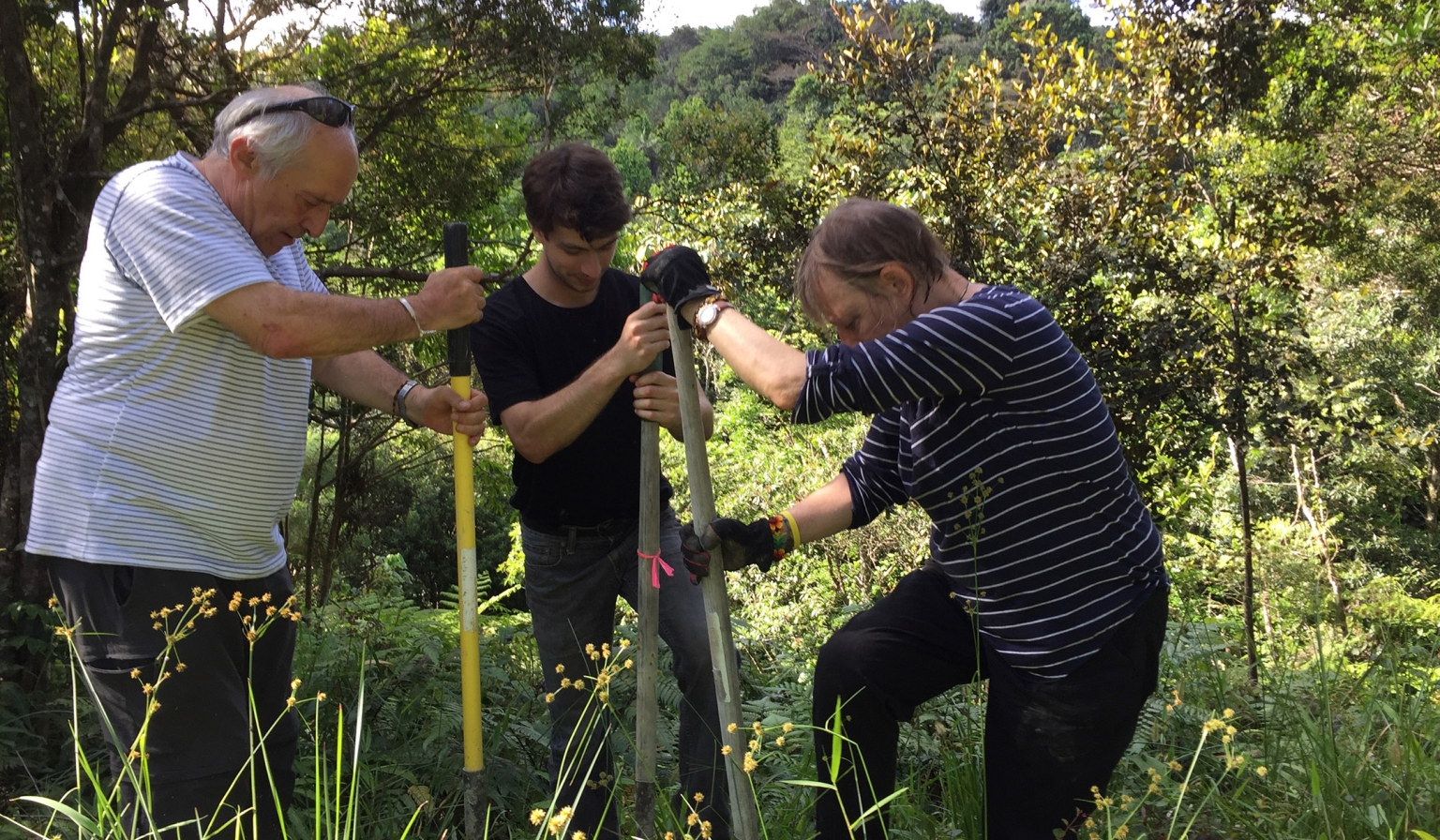
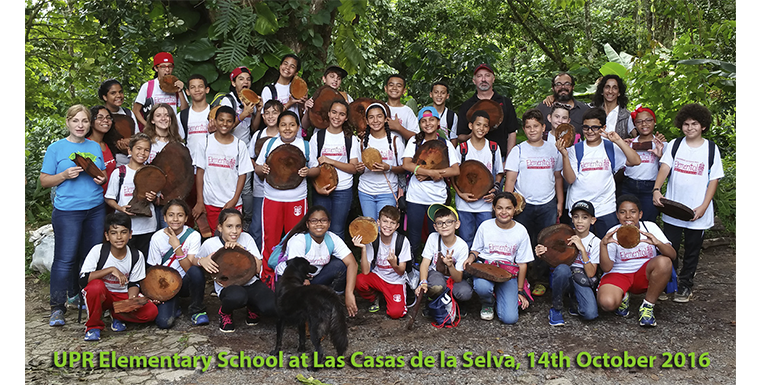
We were delighted to receive 4th and 5th Graders (10-12 years) from Tomas Vera Ayala Elementary School in Patillas who came for a few hours to get a hit of the wonderful forest of Las Casas de la Selva!
As part of the new educational initiative in Puerto Rico ‘Programa Contacto Verde, these students had a great time with Andrés in the forest, and around the Las Casas de la Selva Homestead. Thanks to Reinaldo Rivera Ortiz, Director of Citizen Help of Patillas, and the staff of the school for their enthusiastic collaboration.
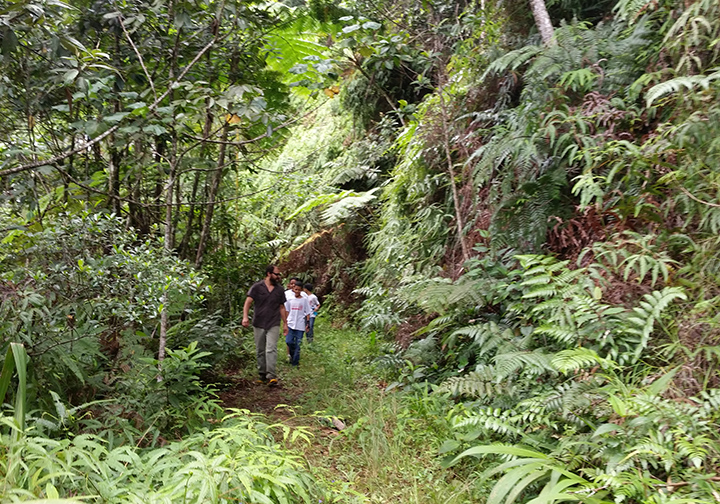
Contacto Verde is a program created by the Department of Education and the Department of Natural Resources to facilitate the participation of students at all levels to visit and engage with places of ecological value in Puerto Rico; to encourage experiences with nature, as a complement to environmental education and as a tool to promote the strengthening of cognitive skills and student learning.
La Ley Núm. 36 de 23 de marzo de 2015 crea el programa de gestión ambiental Contacto Verde, adscrito al Departamento de Educación de Puerto Rico y a ser desarrollado en coordinación con el Departamento de Recursos Naturales y Ambientales. Esta ley también ordena crear un comité de coordinación y establecer sus funciones, facultades y deberes con el propósito de garantizar la participación de los estudiantes de todos los niveles del sistema educativo en talleres y actividades de visitas a lugares de valor ecológico en Puerto Rico, para fomentar las experiencias de contacto con la naturaleza como complemento para las gestiones de educación ambiental y como herramienta para propender al fortalecimiento de las destrezas cognoscitivas y de aprendizaje del estudiantado. El programa también busca fomentar la participación familiar en actividades ambientales, desarrollar la sensibilidad ambiental y el desarrollo integral de nuestros niños y jóvenes.
Images by 3t Vakil, and Group Pic by William Davidowski. 12th October 2016 Logo by DRNATAGS: EDUCATION,KIDS
“What is Mahogany Hardwood? Creating Clarity from Confusion” Thrity (3t) Vakil
There has been a decline in the amount of genuine mahogany in the world over the last century, due to over-harvesting. Many red-colored woods have taken the place of mahogany by default, and the reasons why mahogany became the wood that the world fell in love with, have been lost in the saw-dust.
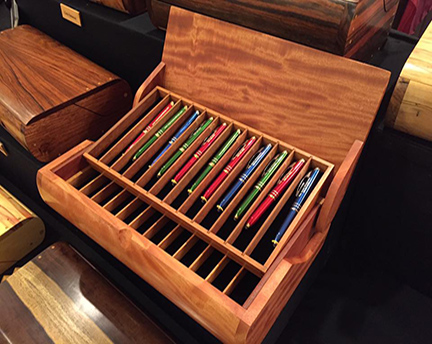
Hand-made boxes in Hybrid Mahogany, Swietenia x aubrevilleana, from Puerto Rico, By Ray Jones
When we speak of Mahogany hardwood we generally mean the hardwood that wowed the western world in the 1800s, became a significant indicator of status, and continued to be a best-selling wood for interiors, exteriors, furniture, and boats right up into the 20 century, when it became understood that over-harvesting was leading to the possible extinction of this species, of the genus Swietenia. As a forester, Mahogany lover, and artist, I recently enquired with Home Depot to ask them what species of tree they were calling Mahogany, as the pictures on their website did not convince me. It took four attempts over a few days before I received a response.
This was their response: “The species is Mahogany eucalyptus, New South Wales Eucalyptus”.
The wood that Home Depot are selling online as Mahogany is not, in fact, Mahogany. It is Eucalyptus, from the Myrtaceae family, of which one species, Eucalyptus robusta, is known commonly as Swamp mahogany, and another, Eucalyptus resinifera, is commonly known as Red Mahogany. Neither are authentic mahogany, as are none of the Eucalypts.
I am also an apprentice botanist, and their response made me a little mad given that I had specifically asked for the botanical name- the genus and species. Common names are just flat-out misleading.
The only hardwoods that can truly be called Mahogany are from the Meliaceae family, Swietenia mahagoni (commonly known as Dominican, Cuban, West Indian, or small-leaf mahogany), Swietenia macrophylla (commonly known as Honduran or large-leaf mahogany), and Swietenia humilis, (commonly known as Pacific Coast Mahogany). All species of Swietenia are CITES-listed.
As of the last century, a naturally occurring hybrid, a cross between the small-leaf and the big-leaf mahoganies has made it’s way onto the mahogany stage, it’s name is Swietenia x aubrevilleana, and is a true and genuine mahogany. This tree was planted extensively in Puerto Rico.
Using a common name and calling a wood ‘Mahogany’ can be misleading as we can see from the Home Depot example. How many woodworkers have bought this wood, thinking that they were getting the genuine thing? The over-harvesting of mahogany led to lesser-known woods, with reddish colors, being sold knowingly or unknowingly to woodworkers as Mahogany, whom, if they had never used the genuine article, remained in the dark.
Over the last few decades, a species known as ‘African Mahogany’ has been available on the wood market. This is Khaya ivorensis,which is in the same family as the genuine mahoganies, but it is NOT mahogany, except by common name. Also in the Meliaceae family, are Entandrophragma cylindricum, commonly known as Sapeli, and Entandrophragma utile, commonly known as Sipo, two other African tree species that became mahogany substitutes as the genuine wood became scarcer to find, and became listed as endangered. Another in the same family is Toona calantas,commonly known as ‘Phillipine Mahogany’, but it is not genuine mahogany either.
There are many examples of wood being sold under the trade name ‘mahogany’.
Other Mahogany substitutes:
‘Philippine mahogany’, sold in North America is NOT a mahogany at all, but could be any species from the genus Shorea, in the family Dipterocarpaceae. Similarly with ‘Borneo Mahogany’, trade name Meranti, which is in the family Calophyllaceae.
‘Santos Mahogany’ or Myroxylon balsamum, a deep red and oily wood, from Central and South America, in the Fabaceae family, not the mahogany family.
The mahogany used by the Chippendale furniture company in the 1800s was Swietenia. Only the genus Swietenia comprises the four authentic mahoganies that are known by wood connoisseurs for workability, stability, durability, pest resistance, and above all an unmistakable beauty. Anything else is another type of hardwood.
Sustainable harvests of plantation Swietenia macrophylla are currently coming out of Fiji, and Puerto Rico is currently a go-to place for Swietenia mahagoni, Swietenia macrophylla and the stunning hybrid, Swietenia x aubrevilleana, which was planted for timber by the International Institute of Tropical Forestry, and private land-owners, in the last century.
Puerto Rico Hardwoods is a new company born from the Tropic Ventures Sustainable Forestry Project in Patillas, Puerto Rico, established in 1983, that sells genuine mahogany and the hybrid. Please enquire.
All permits are in place from The Department of Natural Resources in Puerto Rico, along with a successful history with the Forest Service, and International Institute of Tropical Forestry, based in PR, a US territory. www.prhardwoods.com
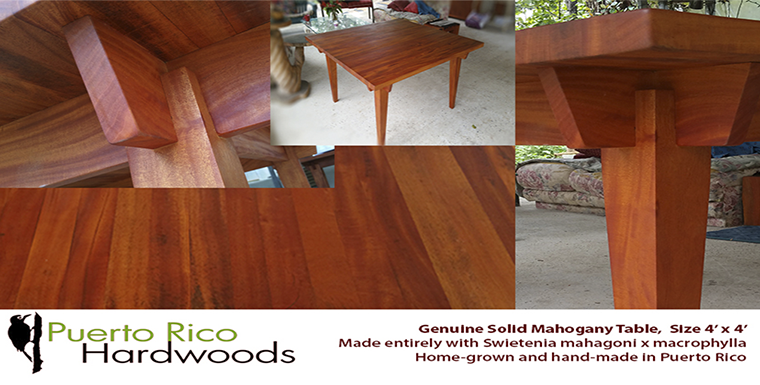
Book-matched Tabletop in Hybrid Mahogany, Swietenia x aubrevilleana, from Puerto Rico. By Tom Kerr
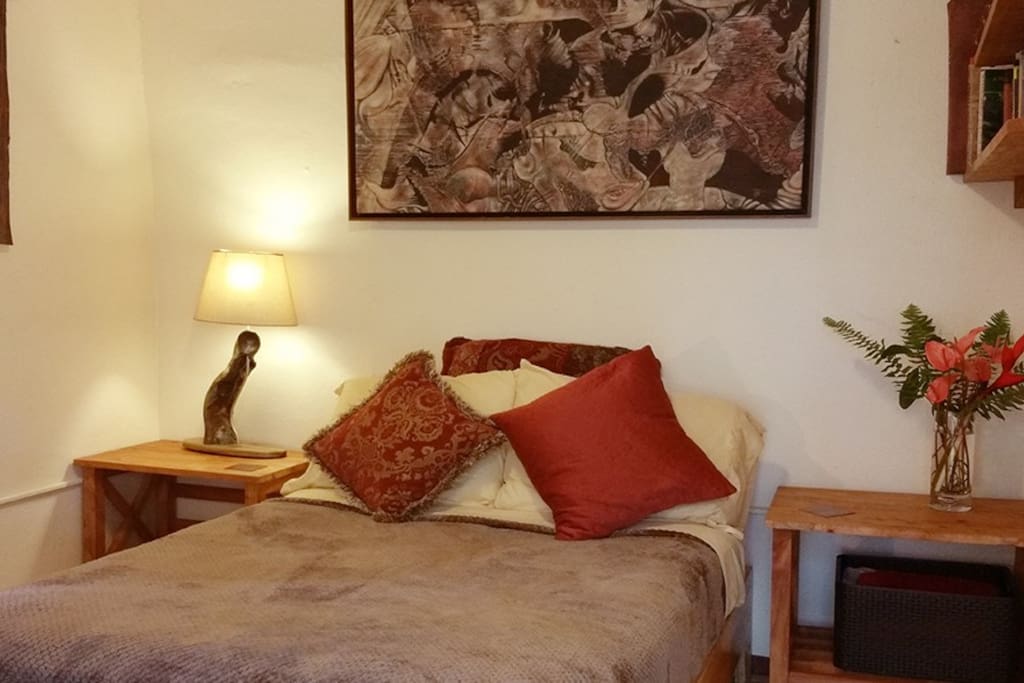
One very comfortable double bed, hot-water shower, toilet, and beautiful lush, wild forest outside the door. Located within a sustainable forestry project in the little-visited southern mountains …
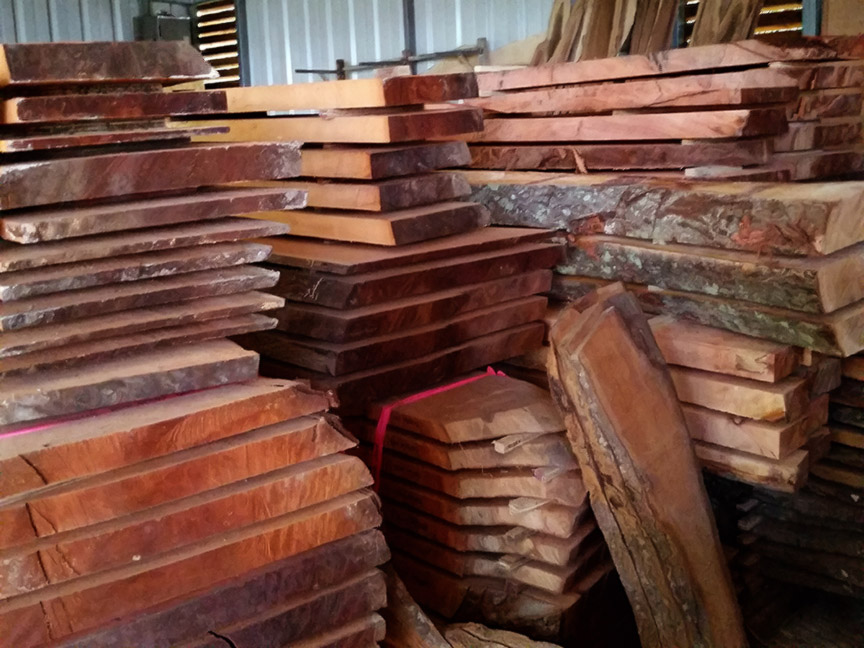
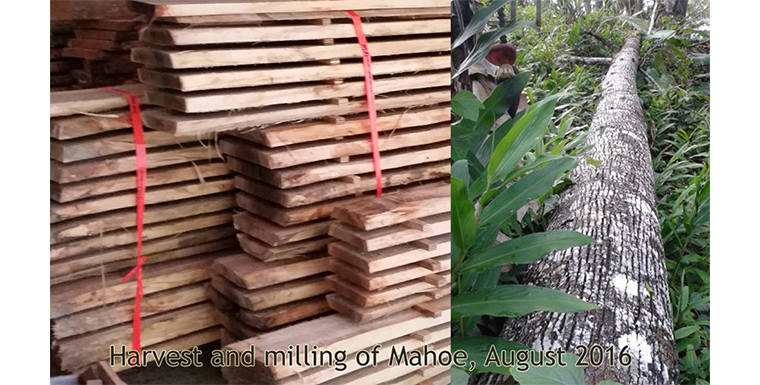
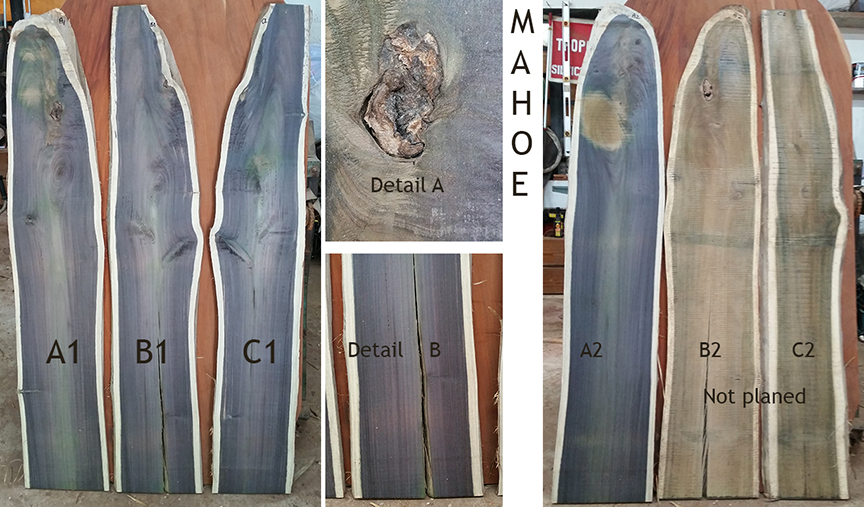
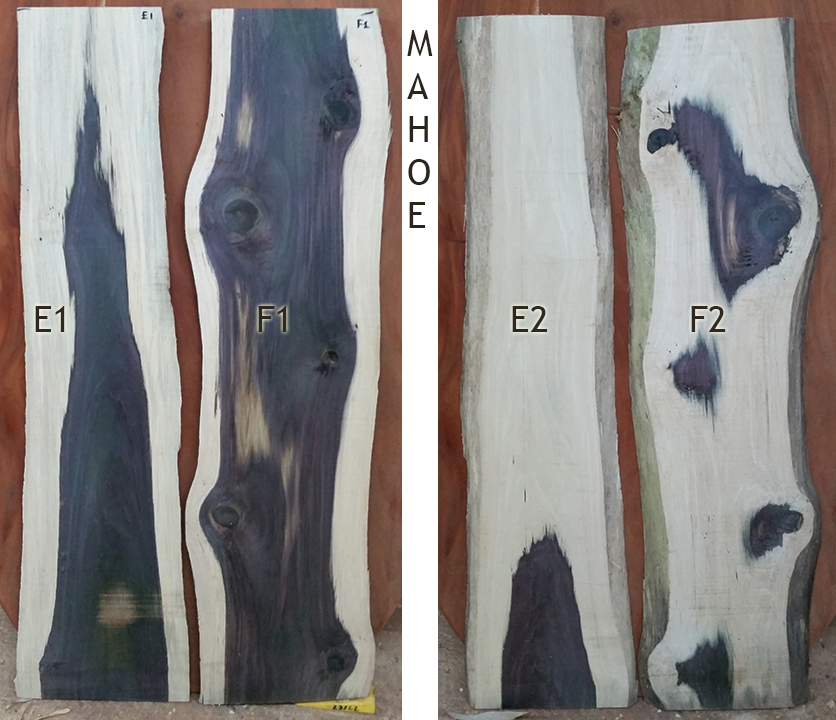
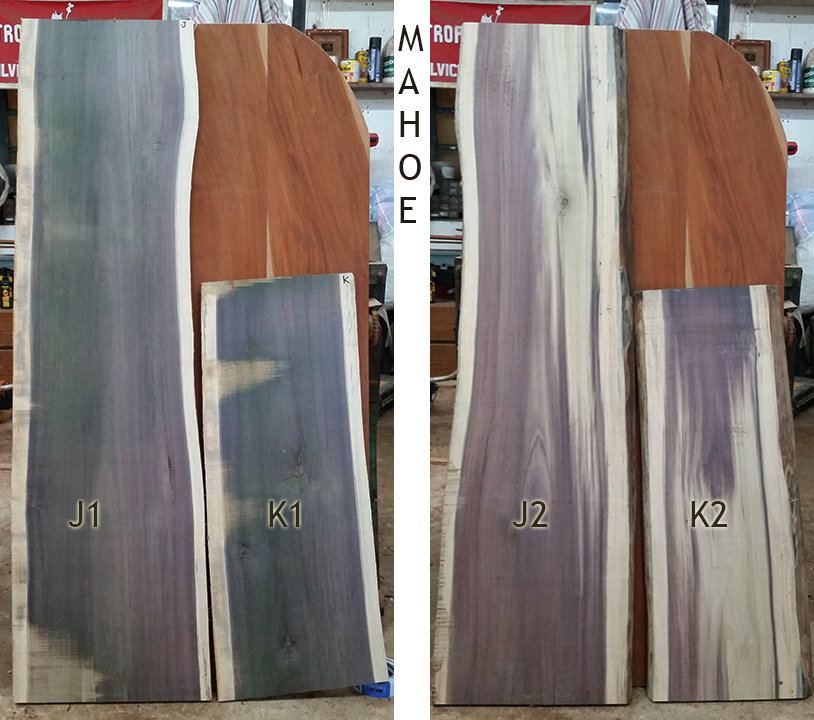
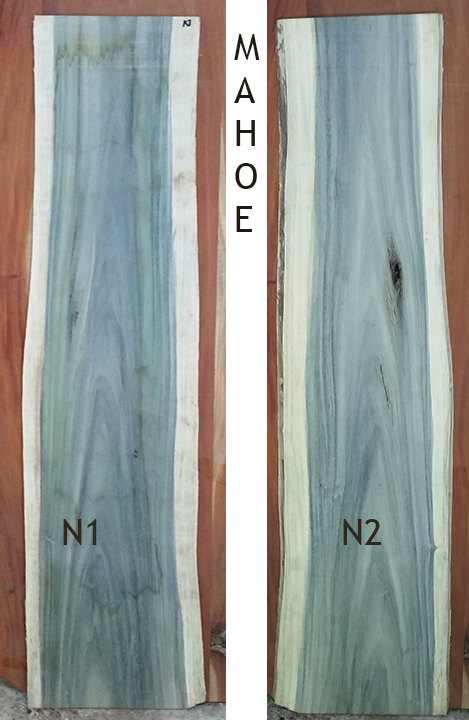
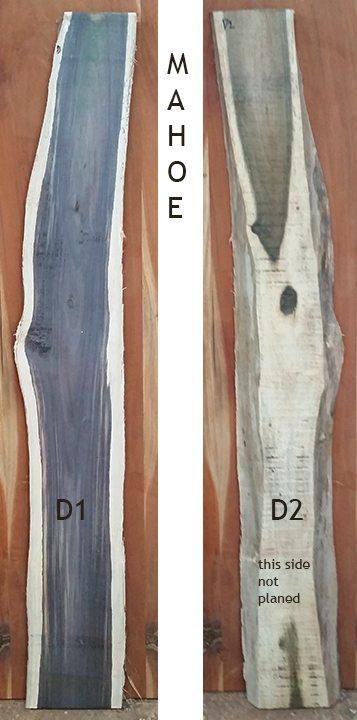
We are currently harvesting for next years stock. First come first served on these Mahoe slabs below. Scroll down.
NB: All images show both sides of a slab: Example: A1 and A2 are both sides of one slab.
August 2016 Mahoe Measurements in inches
Name
L
W
T
Board Feet
Price@20pbft
Notes
A
54
8
1
3
60
SOLD
B
54
8
1
3
60
SOLD
C
54
8
1
3
60
SOLD
D
54
5
1
1.87
37.40
SOLD
E
45
7
0.75
1.64
32.80
SOLD
F
45
9
1
2.81
56.20
SOLD
G
58.5
7
1.75
4.97
99.40
SOLD
H
61
6
1.75
4.44
88.80
SOLD
I
69.5
8
0.75
2.5
150.20
SOLD
J
60
14
1.5
8.75
175.00
SOLD
K
36.5
12
1.25
3.80
76.00
SOLD
L
60
10
0.75
3.12
62.40
SOLD
M
36.5
8
0.75
1.52
30.40
NOT AVAILABLE
N
49
9
0.5
1.53
30.60
SOLD
Q
46
4.75
3
4.55
91.00
quartersawn SOLD
All dimensions are in inches and all slabs are slightly larger than stated. All pieces have been planed on both sides unless stated. Shipping is not included. We accept secure payments through Paypal. Please include in your email to 3t@eyeontherainforest. org 1) Your shipping address. 2) Your shipping preference for a quote: Priority (8-12 days) or Standard Mail (14-18 days) .
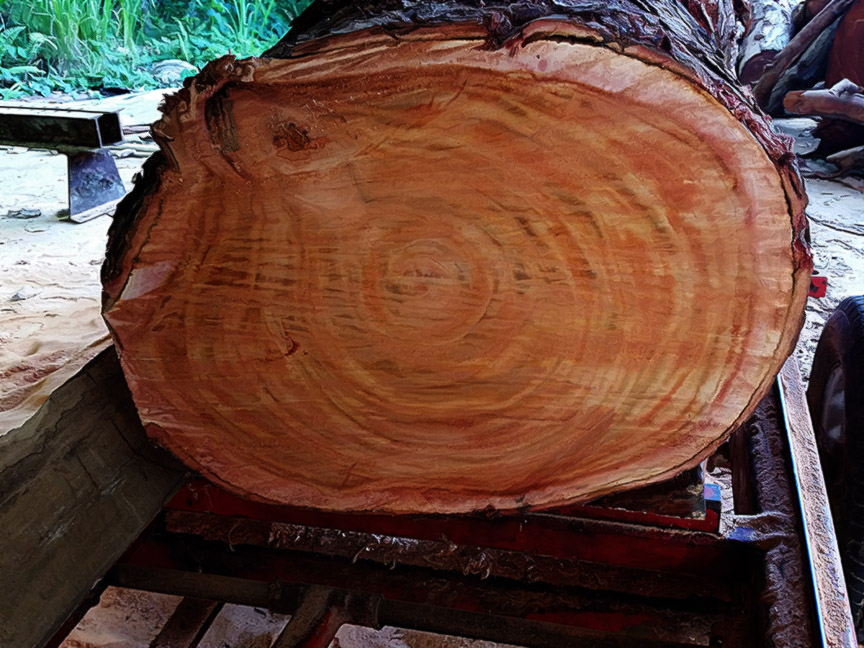
Mahoe is the timber tree currently being harvested from 26 – 30yr old plantations at Las Casas de la Selva. Mahoe or Hibiscus elatus, (also known as “Blue Mahoe” for the characteristic coloration of its wood after milling), is a tree native to Jamaica and Cuba. A volunteer species, characteristic of open disturbed habitats and also found, due to its shade tolerance, as an understory tree in secondary forests, mahoe grows to 25 m tall and upwards of 100 cm DBH (KIMBER, 1970). It was recognized as a potentially important species for plantation and forest enrichment after a survey by Jamaican foresters (LONG, 1963 cited in KIMBER, 1970). It is an excellent wood with a rich variety of colors and attractive grain, but surprisingly, very little mahoe is currently being produced anywhere else. The first plantings in Puerto Rico were in the 1940s and it has been also been introduced to other Caribbean islands and Hawaii for evaluation. It has become naturalized in Mexico, Peru, Brazil, southern Florida and the West Indies (CHUDNOFF, 1982 cited in WEAVER, FRANCIS, n.d.)
BUY OUR MAHOE WOOD
Mahoe lumber (wood from the mill that requires no further processing) is $20.00 per board foot. Mahoe turning and carving blanks are $26.00 per board foot. Wood for sale may include some sapwood, and all ends are anchor-sealed. Mahoe can vary greatly in color from tree to tree, the blue tone does not tend to endure for many years. The wood transforms over time to shades of browns, purples, greys, and bluey-greens.
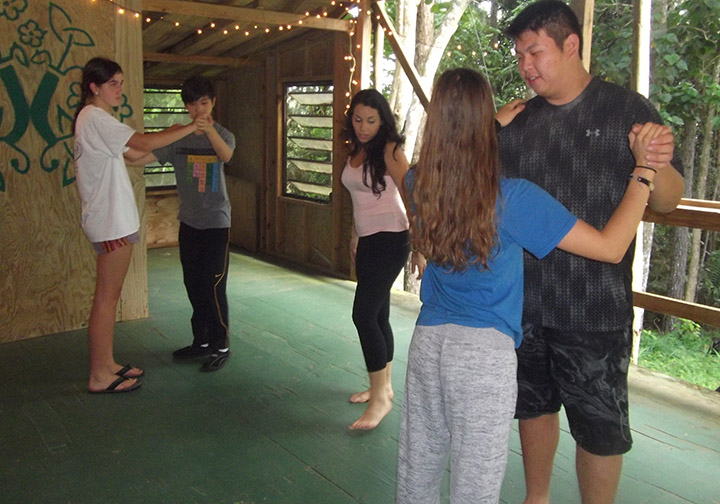
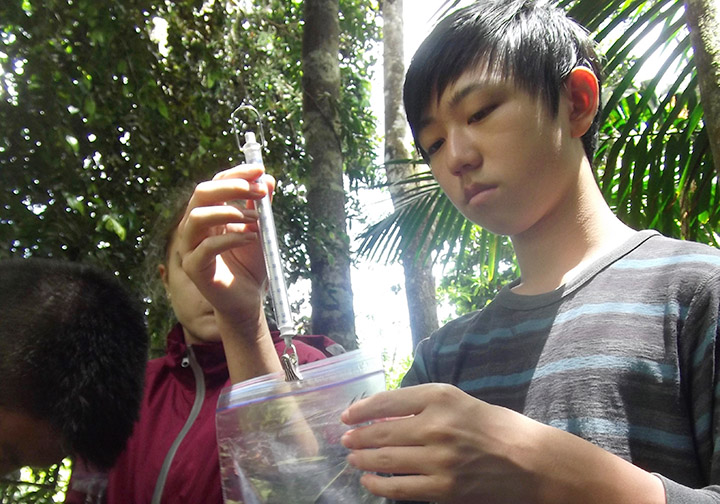
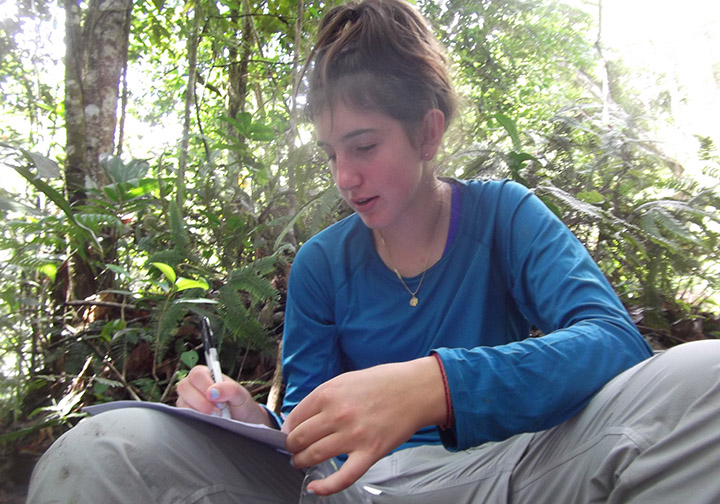
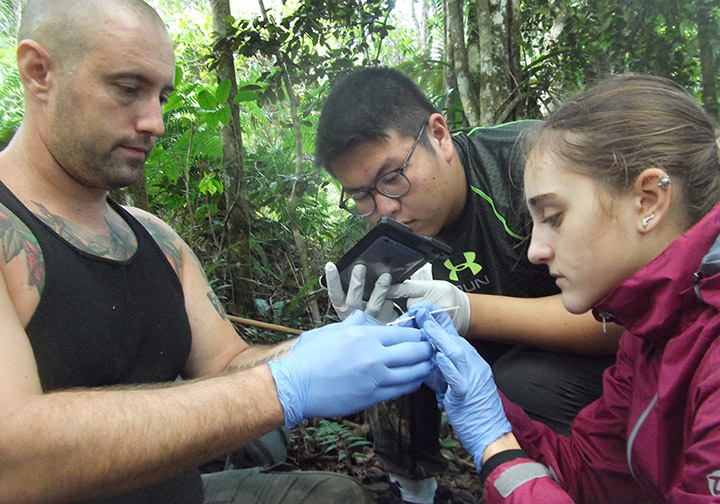
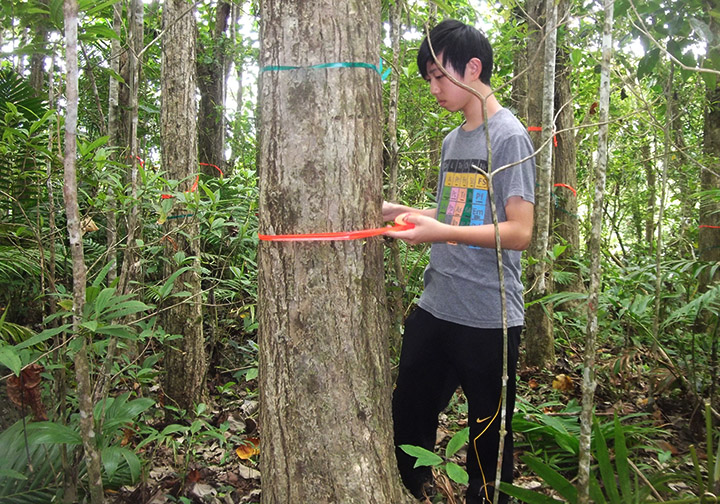
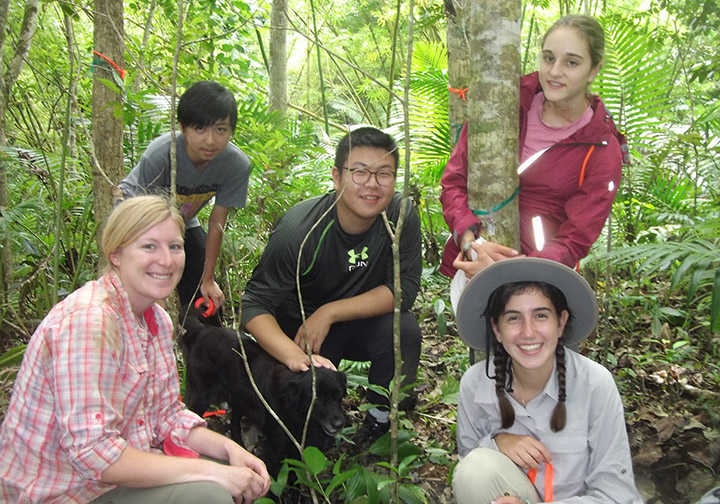
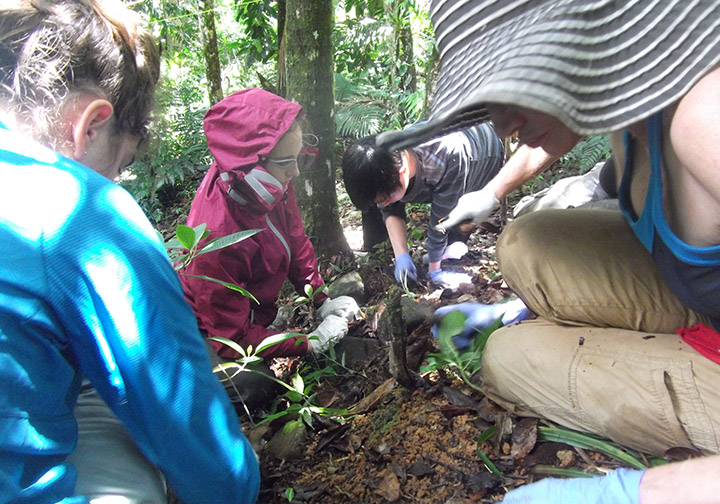
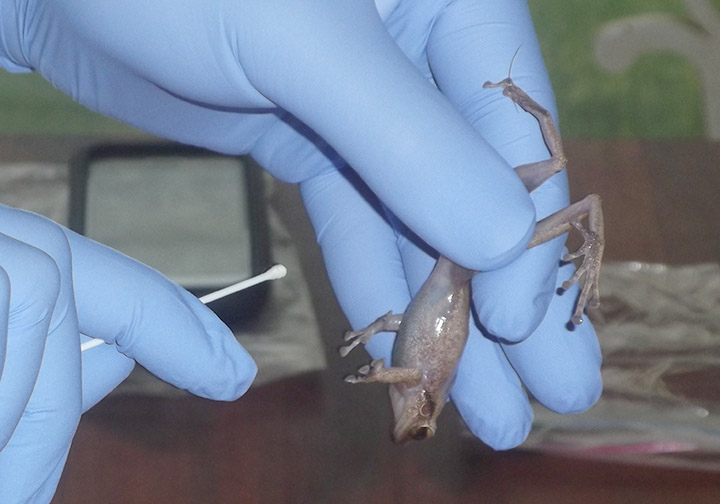
June was a very wet month, and we hosted an intrepid Earthwatch Teen team, that went way beyond comfort zones during their ten day stay. This Earthwatch Teen Team braved sometimes torrential rains to assist Principal Investigator Norman Greenhawk collecting Chytrid samples along the Ethnobotanical Nature Trail. The teens learnt teamwork rapidly and became skilled at how to set up collection plots, becoming familiar with the use of the compass, measuring tape, and twine. After letting the plots rest for two days, the team returned and conducted leaf-litter surveys, searching the fallen leaves and detritus of the forest floor for frogs and Sphaerodactylus geckos. All captured animals were weighed and measured, and all amphibians were swabbed to test for the presence of Batrachochytrium dendrobatidis (Bd), a fungus that can cause the amphibian disease Chytridiomycosis. This collection event is a part of Norman’s ongoing monitoring of Bd at Las Casas de la Selva. See more about the Chytrid fungus: https://www.amphibiaweb.org/chytrid/chytridiomycosis.html This team also measured and re-tagged 110 mahoe trees, (Hibiscus elatus), which are part of long-term study plots at Las Casas de la Selva, with Principal Investigator 3t Vakil.
Images by 3t and Chelsea Kyffin, who was the teen team facilitator.
Yara Solis giving a salsa Dance Class to the teens.
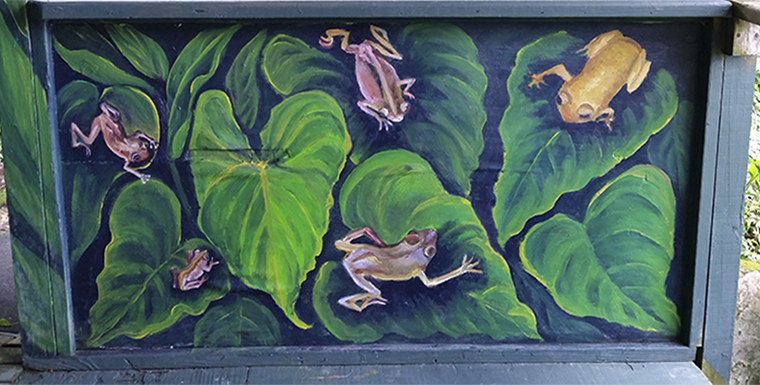
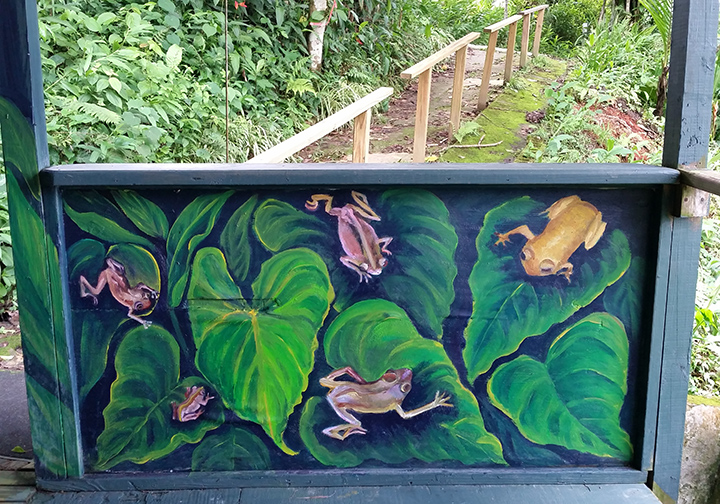
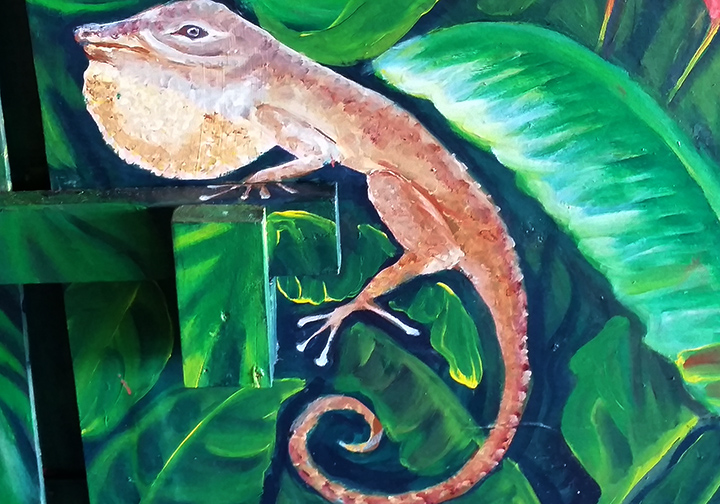
Writer, biologist and artist, Evie King came to volunteer and worked on many diverse projects around the homestead, painted some cheerful frogs and lizards onto the bare walls of el teatro, and also helped out with managing a teen Earthwatch team. Evie first came here in 2005 to partake in some of our earlier Earthwatch research expeditions. Thank you Evie, we really appreciated having you here! And thanks for all the chocolate! (more about Evie below)
E.E. King is a performer, writer, biologist and painter. Ray Bradbury calls her stories “marvelously inventive, wildly funny and deeply thought provoking. I cannot recommend them highly enough.” Her books are;” Dirk Quigby’s Guide to the Afterlife,” “Real Conversations with Imaginary Friends,” “The Adventures of Emily Finfeather – The Feathernail and Other Gifts” and “Another Happy Ending.” She has won numerous awards and been published widely. She is the recipient of two International Tides painting fellowships, and two international biology Earthwatch grants. She was an adviser for the J. Paul Getty’s and the Science Center’s, Arts &; Science program. She was the Science and Arts coordinator in Bosnia with Global Children’s Organization (a summer camp for war orphans and refugees) in 2000. She was the founding Arts & Sciences Director for Esperanza Community Housing Corporation . She has worked with children in Bosnia, crocodiles in Mexico, frogs in Puerto Rico, egrets in Bali, mushrooms in Montana, archaeologists in Spain and planted butterfly gardens in South Central Los Angeles. https://www.elizabetheveking.com/
Both Claudia and Irving have been long-term associates of the Institute of Ecotechnics, and we were delighted to have them come and volunteer at Las Casas de la Selva. Irving traveled with Johnny from London and stayed for over May into June month, whilst Claudia came in for two weeks at the beginning of June. We loved every moment of their stay, and appreciated their help, with overall management of groups, the timber business, and nursery work.
About Claudia Bolton: Founder member of Beryl and the Perils (that 3t saw back in the 1980s whilst at College studying theater design with Malcolm Griffiths at Trent, Nottingham)– Fast Furious Feminist Fun in the 70’s/80’s. Warped seriously first time around, ICA/ Edinburgh at the Regency Cinema. 79-80 with Ken Campbell; Warped again second generation with Ken and Daisy Eris Campbell. Actor/Managed that beast for 2 years at the Drome 1999-2001.
In between Warps: among many other things, in lieu of a theatre PHD, she played Winnie in Sam Beckett’s Happy Days and toured herself around the world. – “As Winnie you can pick up a Willie `anywhere, after all he only has 5 lines!” – She performed it in Nepal, On the beach in Bali, In The Outback, at BIosphere 2 in Arizona, NYC and finally at a proper Beckett Festival in Holland with the Incredible Orlando, blind Jack Birkett, playing Willie. Through the 90’s Claudia put on original productions everywhere, especially guest directing at the painter Symon’s, Space Island LIght Industrial Theatre in Bali – an exquisite open air ampitheatre designed by Buckminster Fuller. In 1999/2001 Claudia created the role of the `Serpent in Peter Greenaway’s prop Opera. ‘100 Objects to Represent the World,’ another far more glamorous World Tour! From Salzburg to Rio, Naples to Mexico City and on, though sadly never London.
Post Warp 2, what to do? Small shows! Table Top Theatre – dramatic story telling of classic tales in short form. Greek Tragedy, Hamlet. still very available for hire! Also creating original dramas for kids (home schooling). Directed Robert Anton Wilson’s, Wilhelm Reich In Hell, in the 80’s at the October Gallery London which was a gas, as it was to meet him and get personal permission. Also “Deconstruction of Countdown” – based on William Burrough’s Naked Lunch for Studio 7 at October Gallery, 2013. Claudia is really thrilled that the Cosmic Trigger Play is manifesting NOW in a wonderful lineage of evolutionary Theatre.
About Irving Rappaport: Irving Rappaport is an award winning film and theatre producer whose West End shows include ‘The Seven Year Itch’ starring Darryl Hannah, ‘Jeffrey Bernard is Unwell’ starring Peter O’Toole, ’Jesus My Boy’ starring Tom Conti and the musical ‘Hit Me! The Life and Rhymes of Ian Dury’. He is a member of London’s Southbank choir which performs at the Royal Festival and Queen Elizabeth Halls and recently assisted artist Gerry Judah in the creation of two six metre sculptures commissioned by St Paul’s cathedral to commemorate the centenary of the First World War. He is extremely proud to have supported the Showstoppers since their first performance in 2008.
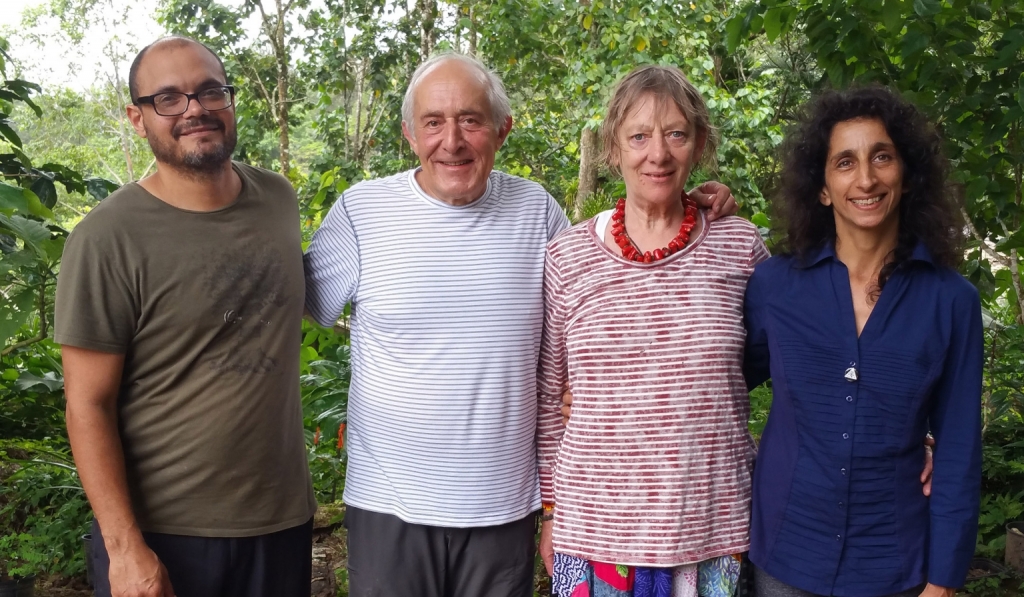
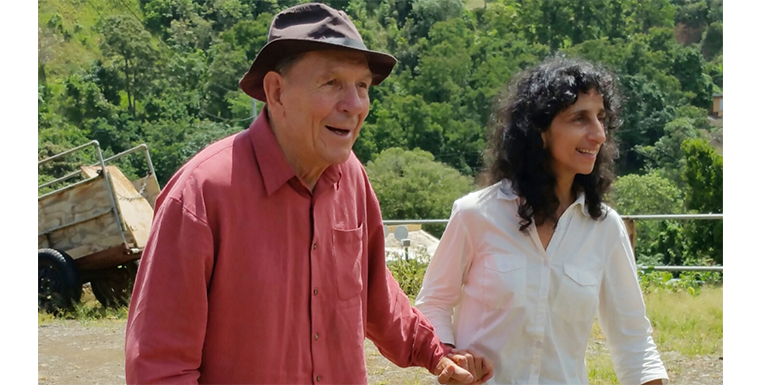
Johnny came to visit for the month of May. Here is a link to more images of his time here. Pic credits: 3t Vakil, Irving Rappaport, Andres Rua.
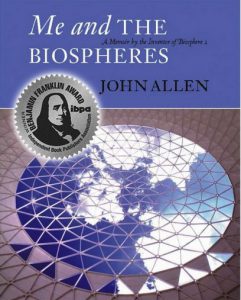
John Polk Allen is a systems ecologist and engineer, metallurgist, adventurer and writer. He is best known as the inventor and Director of Research of Biosphere 2, the world’s largest laboratory of global ecology, and was the founder of Synergia Ranch. Allen is a proponent of the science of biospherics. Allen has also conceived and co-founded nine other projects around the world, pioneering in sustainable co-evolutionary development. He studied anthropology and history at Northwestern, Stanford, and Oklahoma Universities, and served in the U.S. Army’s Engineering Corps as a machinist. He graduated from Colorado School of Mines and received an MBA with High Distinction from the Harvard Business School.
In the early 1960s, Allen headed a special metals team at Allegheny-Ludlum Steel Corporation which developed over thirty alloys to product status. Allen worked on regional development projects with David Lillienthal’s Development Resources Corporation in the U.S., Iran, and Côte d’Ivoire where he became an expert in complex regional development. In the mid-1960s Allen and a group of associates attempted a solder flux company that failed. He has led expeditions studying ecology, particularly the ecology of early civilizations: Nigeria, Iraq, Iran, Afghanistan, Uzbekistan, Tibet, Turkey, India, and the Altiplano.
Allen began the first manned Biosphere Test Module experiment in September 1988, residing in the almost fully recyclable closed ecological system environment for three days and setting a world record at that time, proving that closed ecological systems would work with humans inside. As the vice-president of Biospheric Development for the project, as well as Executive Chairman, Allen was responsible for the science and engineering that created the materially closed life system, as well as the development of spin-off technologies.
Allen currently serves as Chairman of Global Ecotechnics, an international project development and management company with a Biospheric Design Division engaged in designing and preparing to build the second generation of advanced materially closed biospheric systems and ecologically enriched biomic systems; in the EcoFrontiers Division he owns and operates innovative sustainable ecological projects of which he was the co-founder and chief designer in France, Australia (5000 acre savannah regeneration project), Puerto Rico (1000 acre sustainable rainforest project) and England.
He is Fellow of the Royal Geographical Society, the Linnean Society, and the Explorers Club.
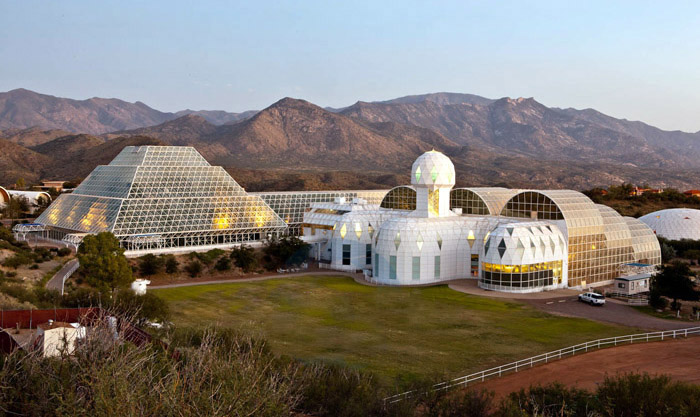
Johnny’s invention, Biosphere 2, the world’s largest laboratory of global ecology. Biosphere 2 set a number of world records in closed life system work including degree of sealing tightness, 100% waste recycle and water recycle, and duration of human residence within a closed system (eight people for two years, early 90s).
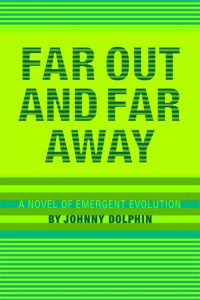
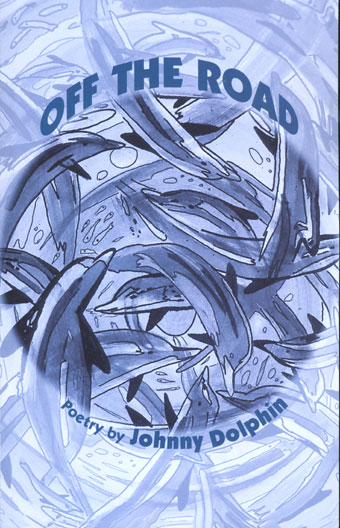
Under the pen name Johnny Dolphin, Allen has chronicled his personal history alongside the social history of his many destinations in novels, poetry, short stories, and plays. https://www.synergeticpress.com/authors/john-allen/
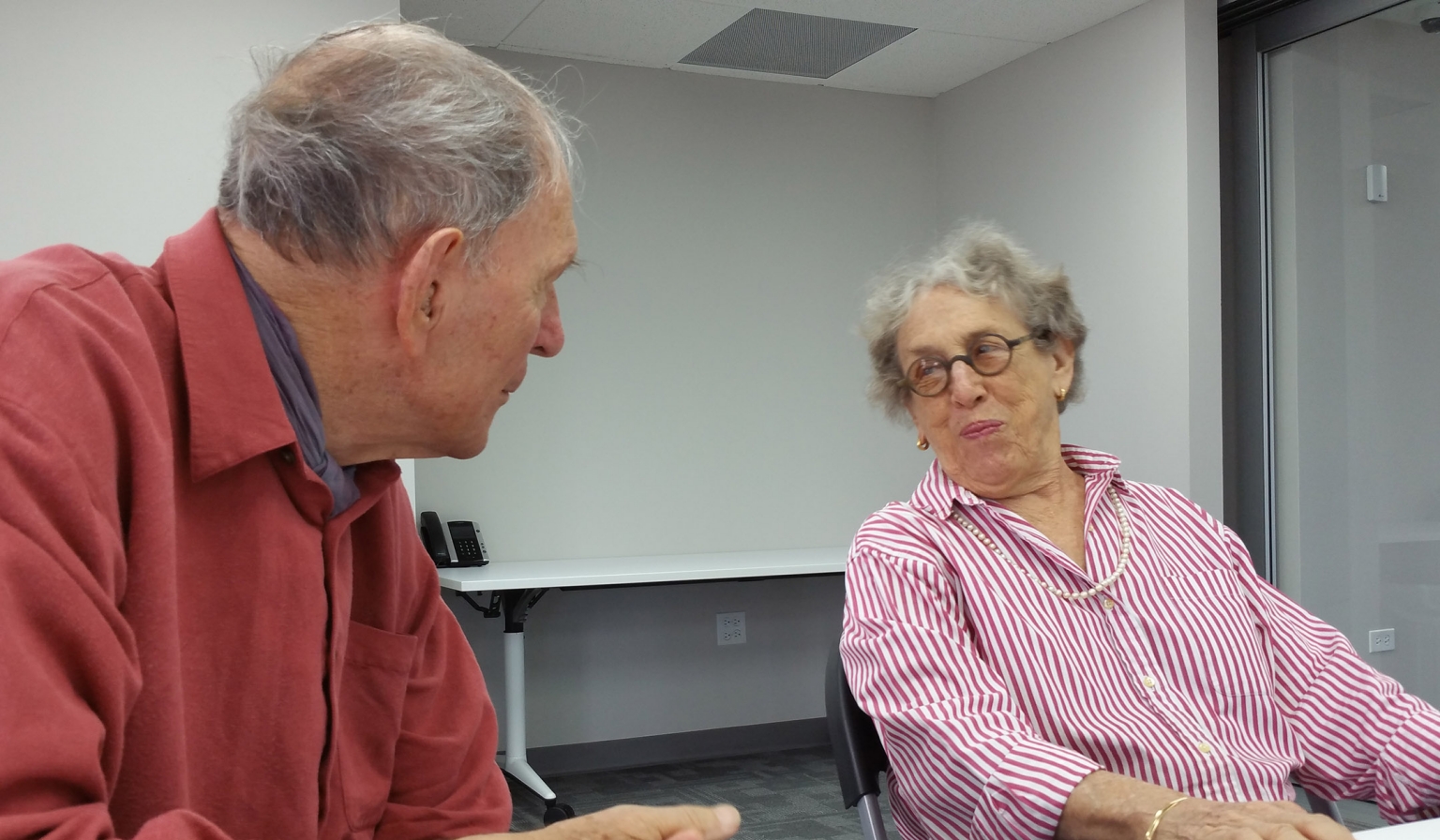
Johnny with Lucilla at her office in Old San Juan.
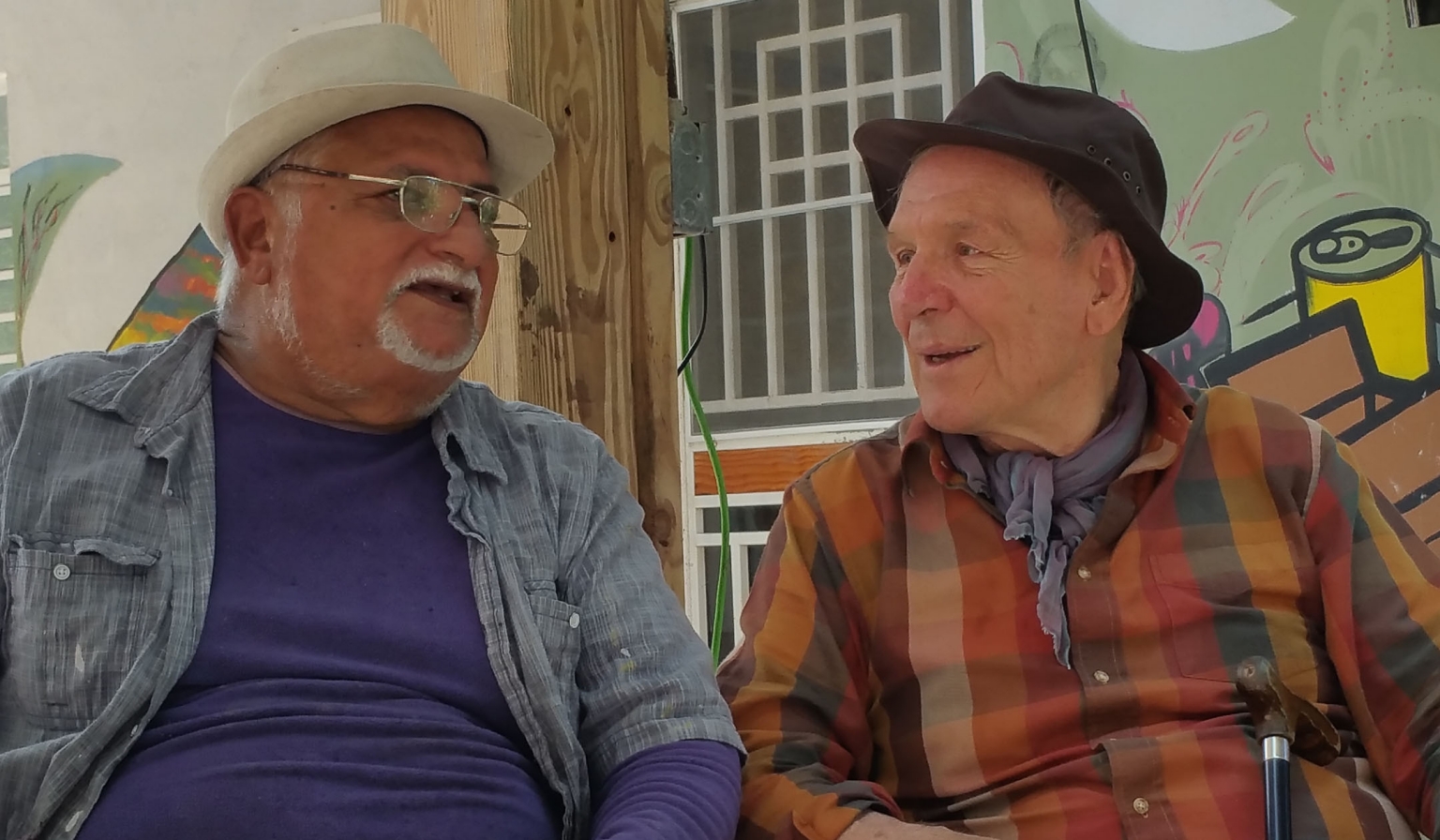
Johnny with Santtos at his home in Guavate (affectionately known in PR as “Pica Piedras de Guavate“, Flintstone). Santtos is an activist, a multi-talented artist, and is a master stone-mason, and master gardener.
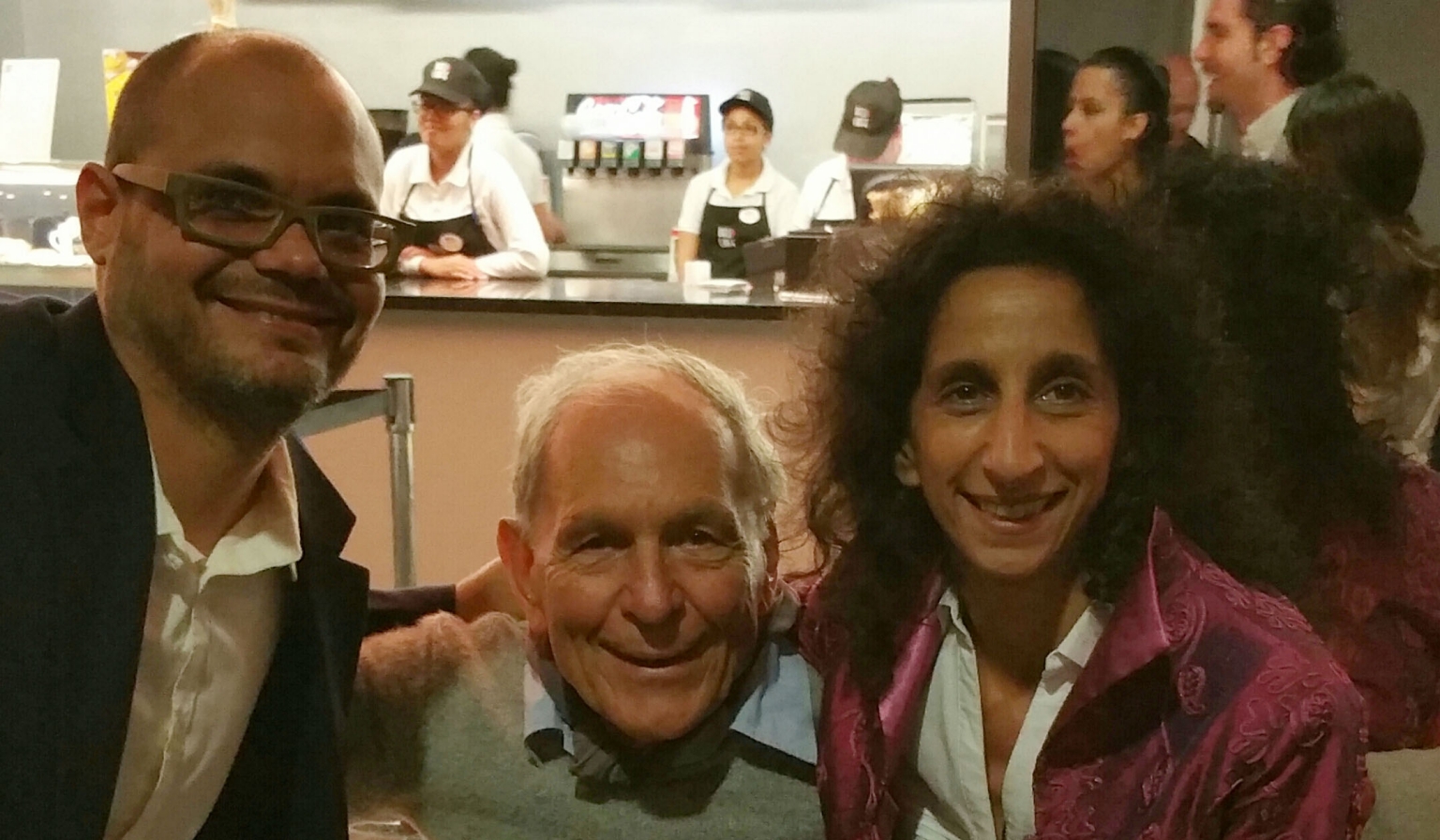
Johnny & Irving Rappaport, (award winning film and theatre producer in the UK). Marie Harding, also a founder of this project, and President of Tropic Ventures, came to visit for a week.
Andrés and 3t with Johnny at the Grupo Guayacan Award Ceremony, in Hato Rey.
Lucilla Fuller Marvel, AICP, PPL, and Buckminster Fuller Institute Board Secretary, has more than 30 years of experience in urban and social planning, housing and community development in Puerto Rico. Since establishing Taller de Planificacia’s Social (Social Planning Workshop), a consulting firm, in 1973, she has worked with community organizations, private entities, and city and state governments in the preparation of needs analysis, social sector studies, housing plans, and strategic plans. Ms. Marvel co-founded the non- profit Puerto Rico Housing Network in 1996. She is also a member of the Board for the Center for the New Economy, a recently created independent think tank in Puerto Rico and the Chana and Samuel Levis Foundation.
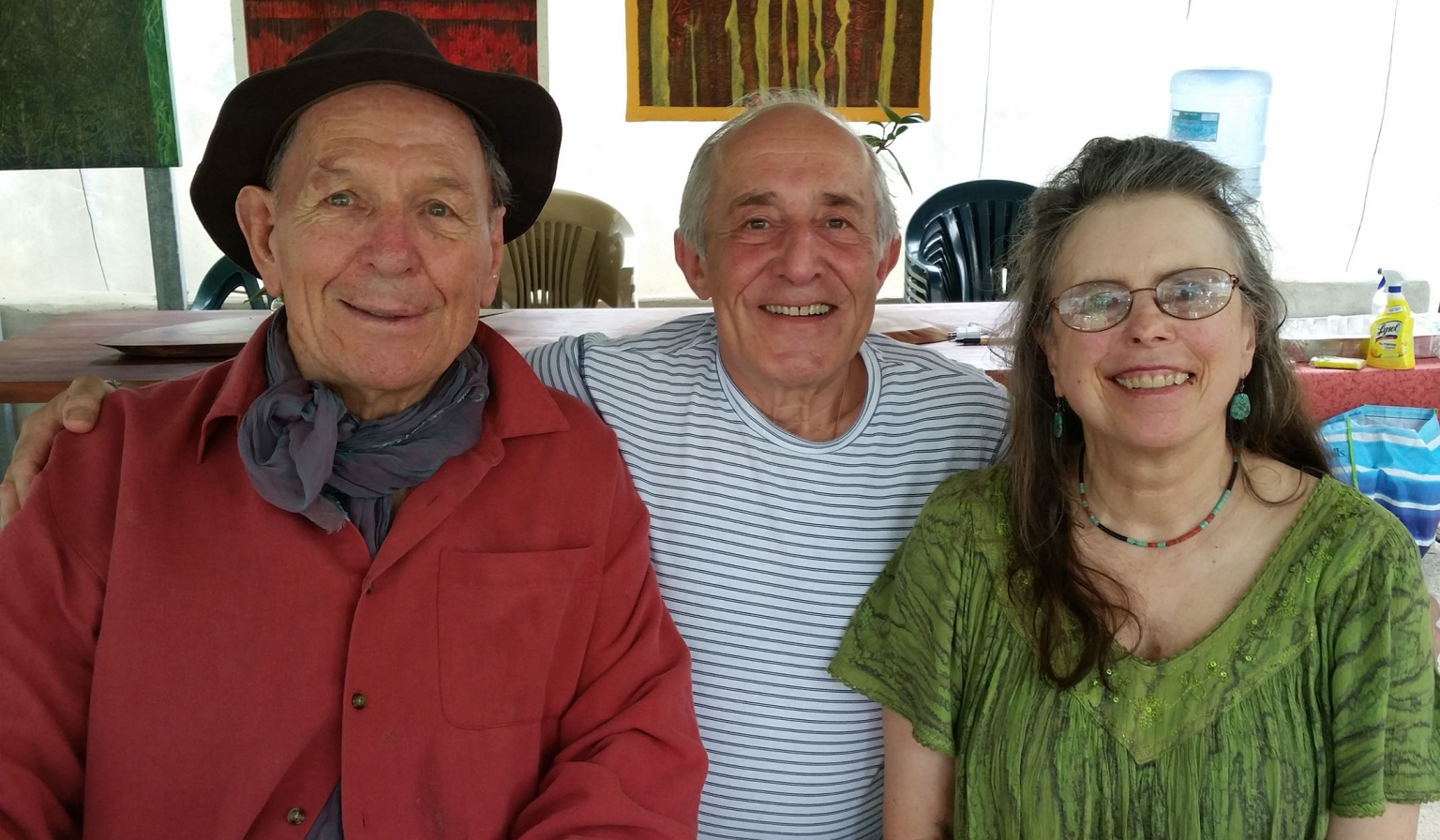
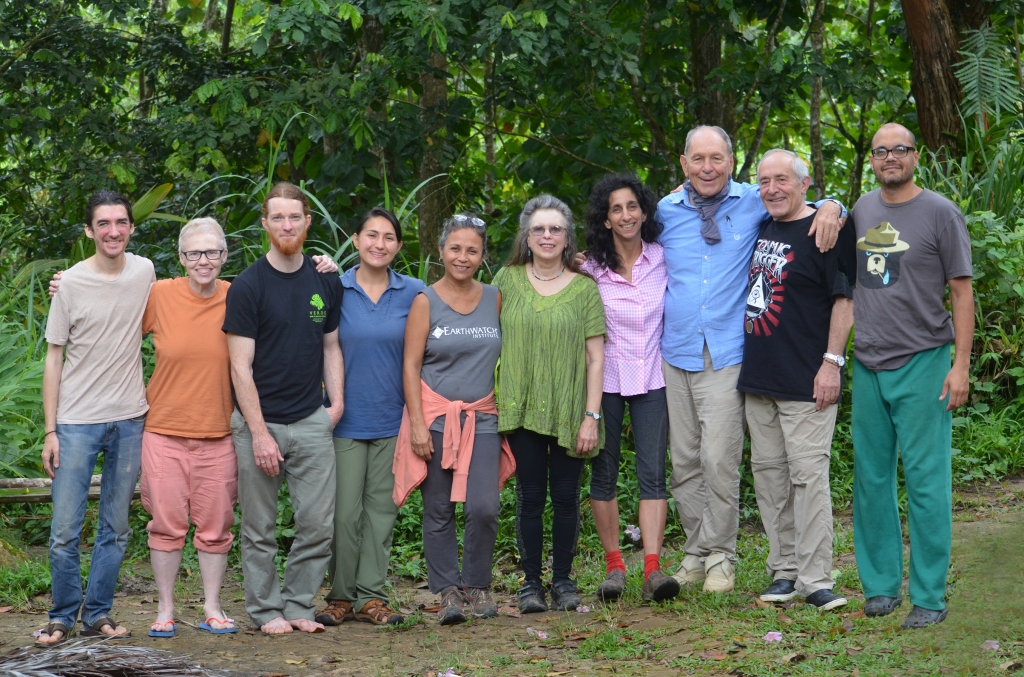
L-R: Corey, Denise, George, Miho, Magha, Flash, 3t, Johnny, Irving and Andres. May 2016
This May another 60 students from San Francisco Day school came to Puerto Rico along with their staff, and on a Globalworks organized trip, they stayed all over the island, spending valuable time at Las Casas de la Selva, (20 at a time) during some torrential rainy weather, helping us with the mixing and pouring of a a new cement floor. Thanks to Globalworks staff, Ari W, Luis Bertolo, and PR Globalworks Director, Scott Page. The work was led by Andrés Rúa, and Norman Greenhawk. Thanks to Ricardo Valles, Alex Figueroa and Joel Bernier, for help with all the work. Yara Solis gave three full-on Salsa Dance classes, and Magha Garcia provided some of the finest Puerto Rican food on the island! Thanks to 3t Vakil and Irving Rappaport for images.
Thank you everyone, for all the great energy, even through some of the worst weather we have had this year!