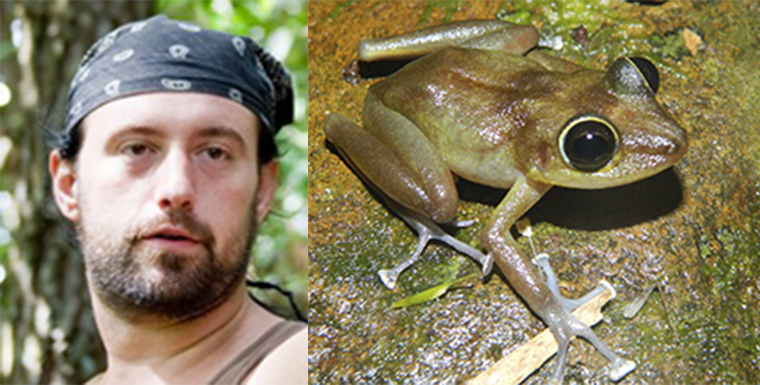
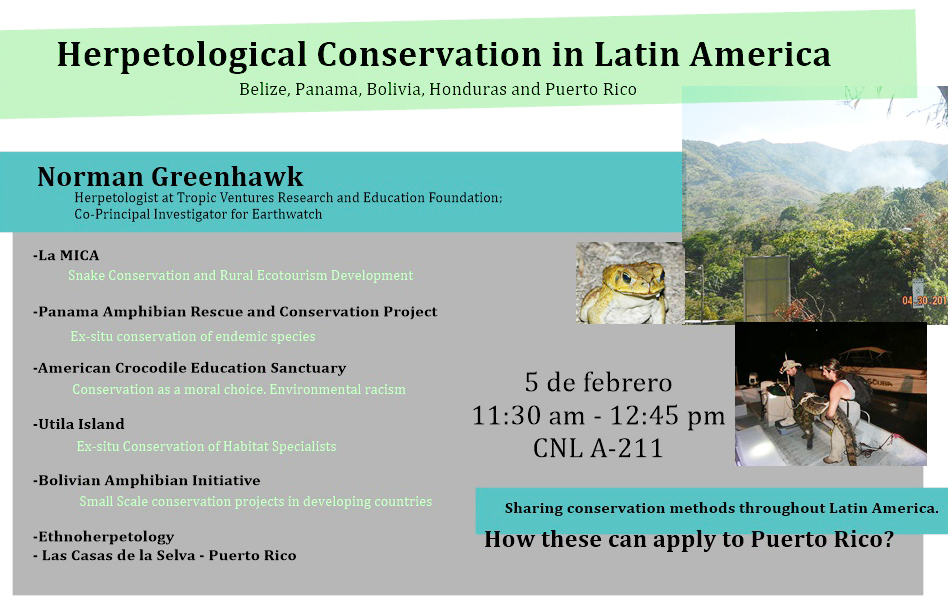
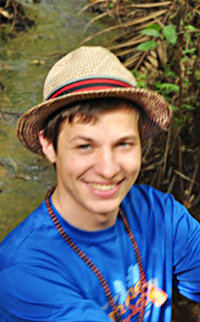
Norman has been invited to give a presentation of his work at The University of Puerto Rico in February 2014.
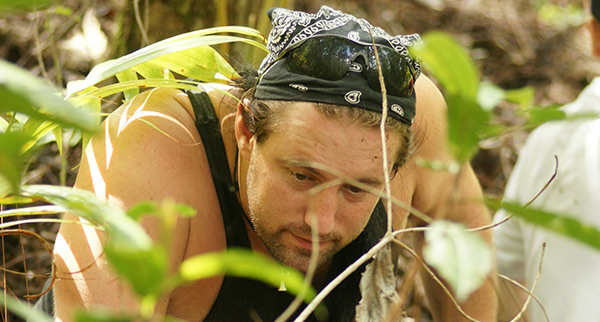
NormanGreenhawk was away from Las Casas de la Selva for the majority of 2013, from April through Mid-November, on travel and training on the Earthwatch Neville Shulman Award for Emerging Environmental Leaders. Norman won the award based on his proposal to study not only various species of reptiles and amphibians, but also to conduct ethno-herpetological interviews with local people through Central and South America to record attitudes, uses (medicinal, ritual, economic, etc), and beliefs about frogs, snakes, lizards, and crocodiles.
Norman’s travels took him to Panama, where he studied with the brilliant Dr. Julie Ray of La MICA and with the Smithsonian’s Panama Amphibian Rescue and Conservation project. Norman learned to catch and relocate endangered crocodiles with the American Crocodile Education Sanctuary in Belize. In Honduras, Norman learned the finer points of monitoring the endemic Utila Island Iguana, a species of lizard that is adapted to inhabit only the mangrove swamps of Utila Island. Norman ended his trip with a month in Bolivia, studying critically endangered frogs and interviewing the indigenous people who ran the “Mercado de las Brujas”.
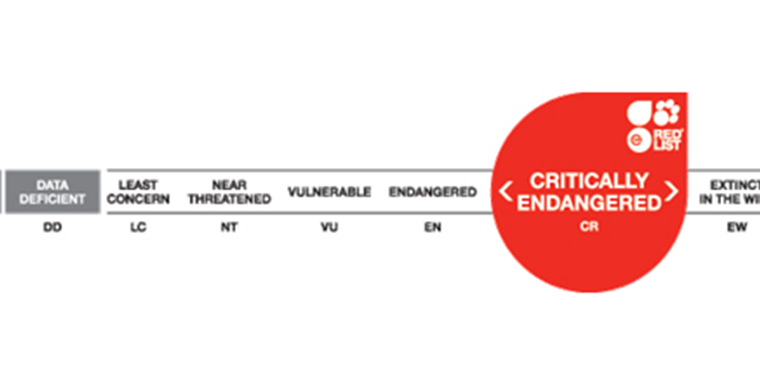
Upon his return to Las Casas, Norman led an expedition into Icaco Valley with Jan Zegarra of the US FWS, and Maria Cristina of Universidad Metropolitana. The purpose of the trip was to monitor the population of Eleutherodactylus cooki, the “Coqui Guajon” that Norman discovered in December 2012, but there was a pleasant surprise. This expedition confirmed the presence of Eleutherodactylus richmondi, the “Coqui Caoba”, an IUCN critically-endangerd frog. According to Jan, whose Master’s thesis was on E. richmondi, there is only one other area in all of Puerto Rico where E. cooki and E. richmondi share habitat; Jan said this makes Icaco is a very special and unique location.
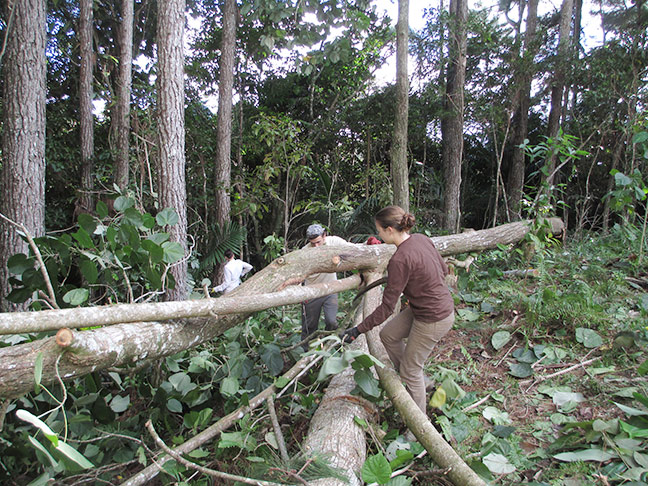
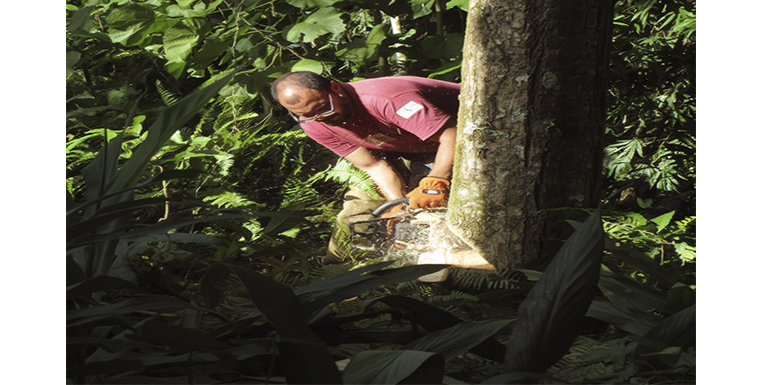
Erin Dahl, (who first came here two years ago with a team from University of Miami), Christopher Sanchez, and Danielle Ungermann all participated in the January harvest of mahoe trees from around the homestead. Andres, chainsawyer, and 3t, felling buddy, were happy to have the help of these three ready, willing, and able apprentices, and together, everyone trained and learned something in the essential art of directional felling, using cuts, wedges, ropes, and a come-along (a small portable winch usually consisting of a cable attached to a hand-operated ratchet).Gentle gasps of astonishment were heard as 65 feet tall trees fell, and fortunately, they all fell exactly where Andres designated. The team have been busy clearing the slash (the small twigs and branches), and depositing it back into the forest for nutrients and erosion control. Thank you Erin, Chris, and Danielle, we have really appreciated your stay with us.
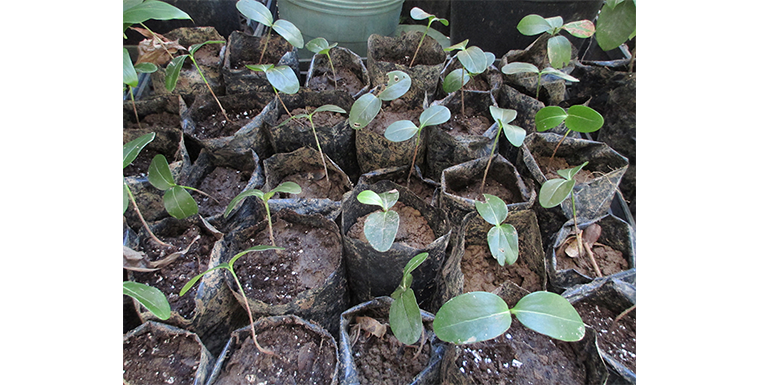
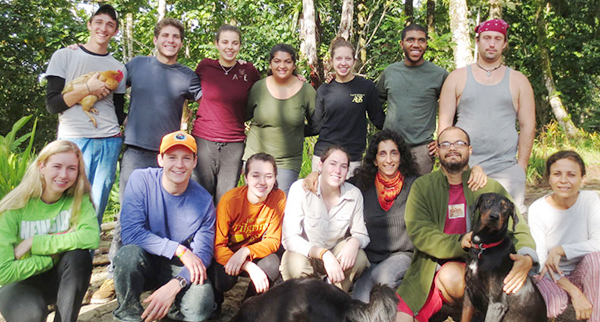
Collecting Ausubo seedlings sounds like an easy task, but carrying full tree bags up and down forest slopes back to the homestead is demanding physical labor. Our current Earthwatch Team assisted with this task on New Years Eve, and in one morning we collected 110 Ausubo (Manilkara bidentata) seedlings.
Ausubo (Manilkara bidentata), also known a balata, is a large evergreen forest tree that was probably the most important timber tree of Puerto Rico. It grows best in Puerto Rico on alluvial plain where it may reach the age of 400 years. Ausubo is extremely tolerant of shade. The strong and attractive wood makes it highly valued commercially an it is widely used in the tropics for many woo products. The tree is often tapped for its milky latex the source of balata gum. Although growth is slow, ausubo is planted for shade and timber.
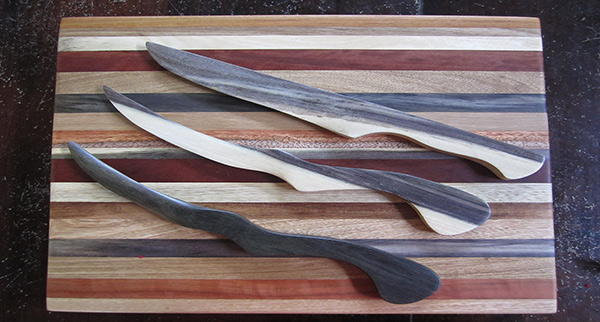
Ausubo is one of the strongest and most attractive commercial woods in Puerto Rico. It is widely used in the tropics for railway sleepers, bridging, heavy construction, furniture, turnery, flooring, violin bows, and billiard cues. Its strength, high wear resistance, and durability qualify the timber for use in textile and pulpmill equipment. Its excellent steam-bending properties make it suitable for boat frames and other bent work.
The heartwood is light red when cut and turns to dark reddish brown when dry. The sapwood is whitish to pale brown. The wood is very hard, strong, fine textured, and heavy, with a specific gravity of 0.85. The wood rates excellent for boring, fair for planing, and poor for turning. It is difficult to air season and shows severe checking and warp if dried too fast. The wood finishes very well and resembles mahogany.
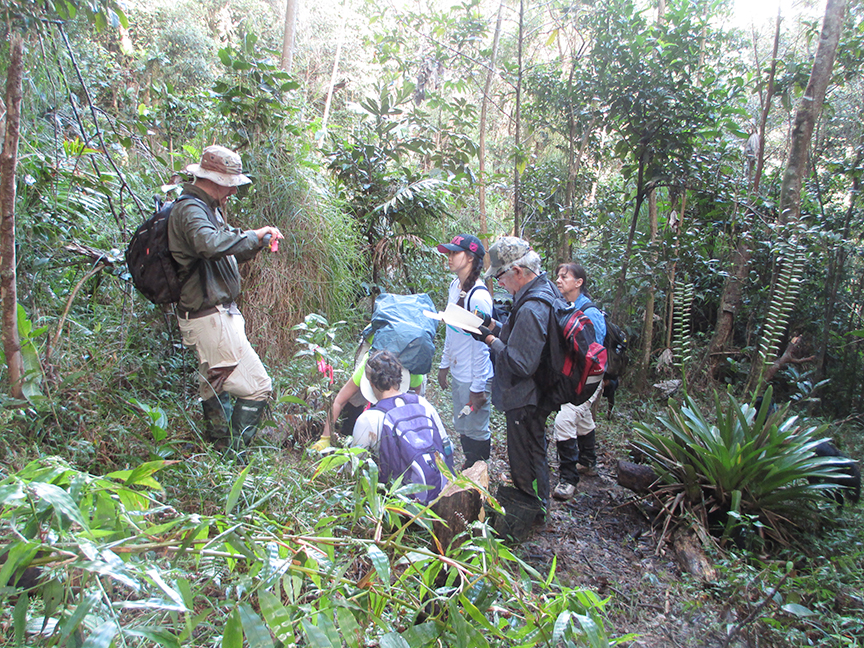
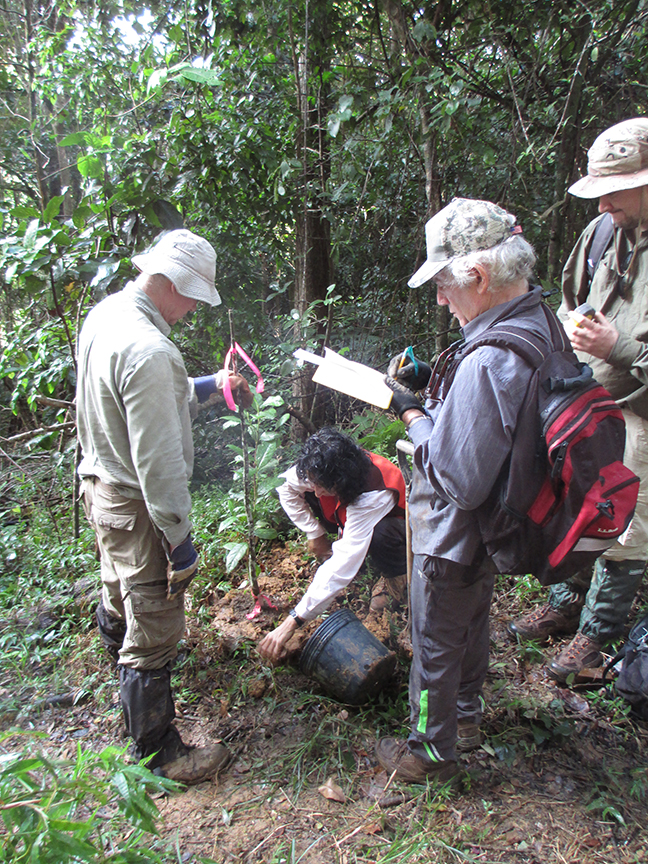
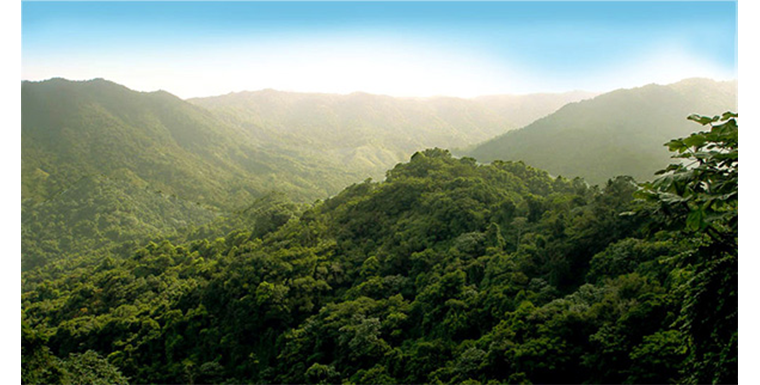
Planting endangered endemicsWe have an enthusiastic team of Earthwatchers here till the 6th January 2014. Continuing our collaborative project with Fish & Wildlife, we planted critically endangered endemic tree saplings, Styrax portoricensis and Cornutia obovata. To date 116 Styrax and 21 Cornutia have been planted in our spectacular secondary forest here in the Mira Flores mountain, better known as Las Casas de la Selva.
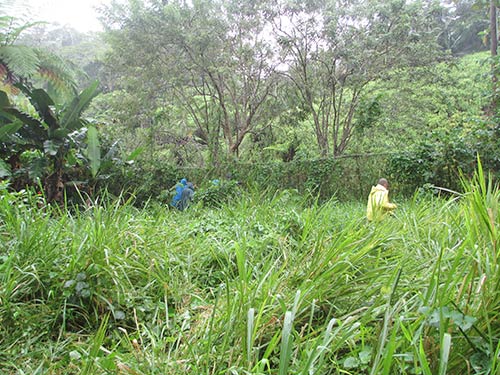
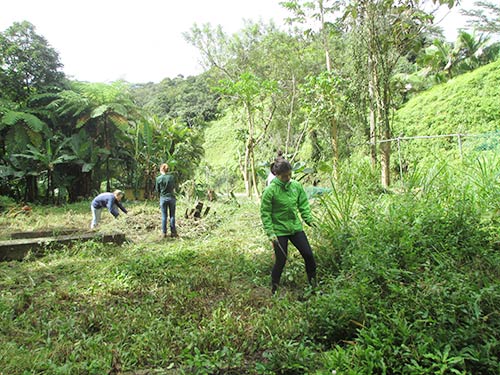
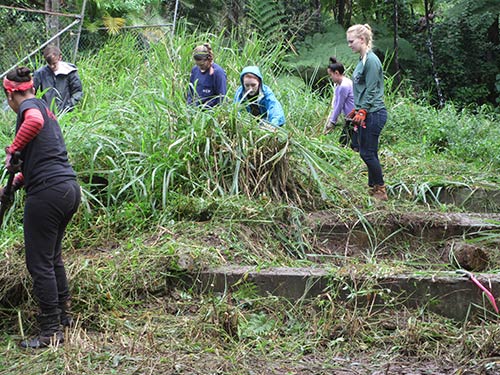
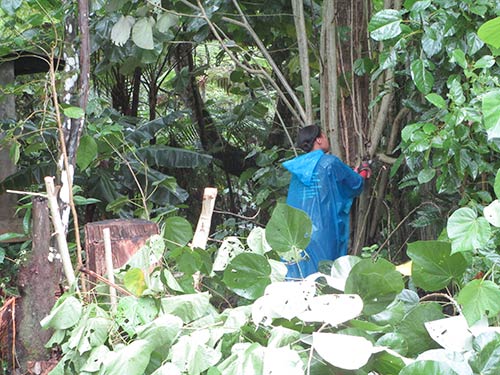
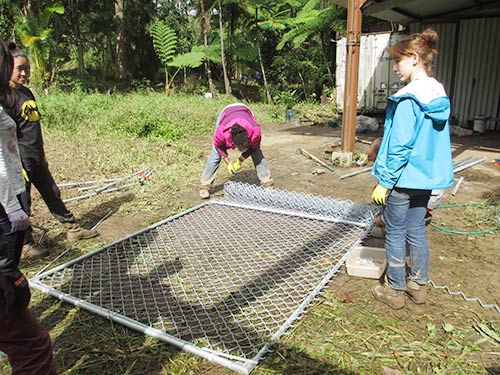
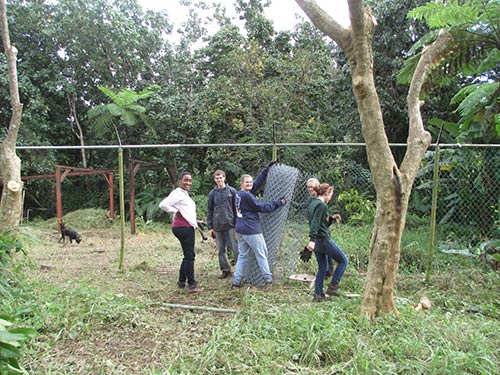
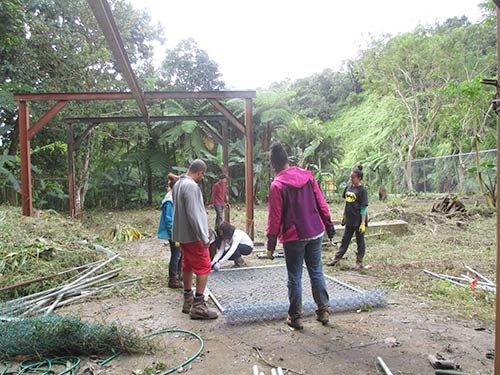
These students worked with Andrés and 3t on the reparation of a broken fence and gate and also completely pruned back an overgrown area that will house the new tree nursery. The weather was rainy for most of the time, so kudos to the team for staying on task and getting the work done. Norman Greenhawk and Magha Garcia Medina provided delicious food for the group, and they also got a night hike led by Norman. Thanks everyone for a week of super work. Now a few days of a Christmas break before we get ready for our next Earthwatch team arriving on the 28th December.
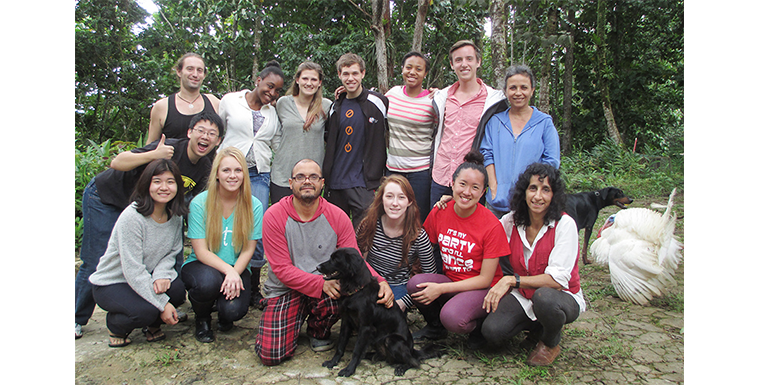
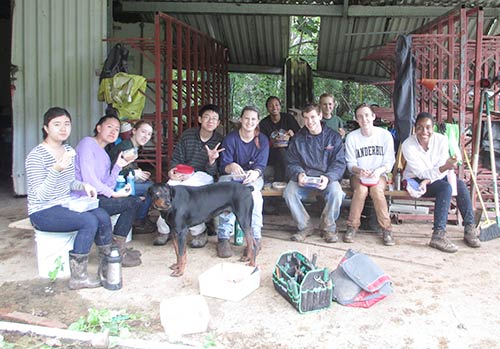
Thank You Vanderbilt Winter Breakers! We appreciate your time and effort in helping us with our goals.
Why volunteer at Las Casas de la Selva? See this 3 minute video by Ben Zenner.
This 3 min video was produced by Ben Zenner, a volunteer of Las Casas de la Selva in April of 2013. Ben is a videographer and graphic designer, and is in the process of developing a non profit design firm to help organizations with their online media presence and funding efforts, and to connect students and individuals with potential volunteer opportunities. For more information about Ben and his project called Volunteer Dream, check out his website: www.benzenner.com/
Welcome to our new website! This year, we are celebrating the 30th Anniversary of Las Casas de la Selva, and hope that near and far, folks will be in touch and revisit to celebrate with us. We are planning a BIG Party, so stay in touch! Get comfy, get a cup of tea or coffee and settle in to catch up with the latest news at Las Casas de la Selva!…
To make it even easier to stay in touch there is a comments section down below.
MOST OF THE PICTURES YOU WILL SEE IN THE NEWSLETTER ARE OF PEOPLE. PEOPLE STANDING AROUND TOGETHER AND MOSTLY SMILING.TO FIND OUT WHAT GOES ON BETWEEN STANDINGS AROUND AND SMILING, YOU SHOULD COME, VOLUNTEER AND EXPERIENCE WHATEVER IT IS! GROUPS AT LAS CASAS DE LA SELVA
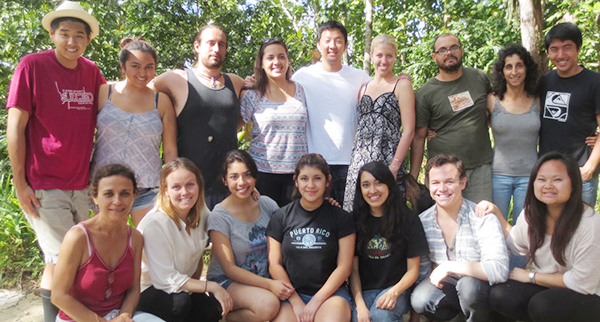
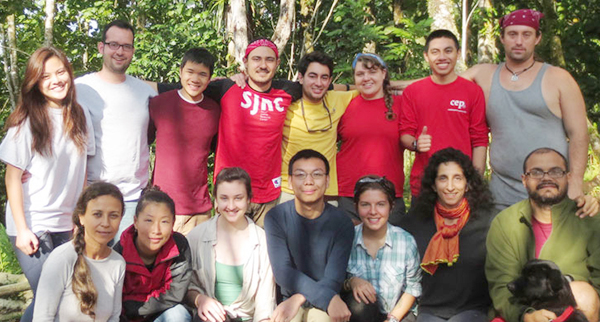
Always a busy time at Las Casas de la Selva, this February and March 2013, we received five Alternative Spring Break groups from all over the USA. Each group stayed between 7-10 days and we were rewarded with the presence of many wonderful university students all looking to provide service as well as have a life-changing experience. Most groups experienced the heavy rains of this region, but none-the-less, hard labor was the order of the day with never a dull moment. Thank you all for helping us to continue to upgrade this project.
Pepperdine University, Malibu, California, helped on trail-work with Norman, and tree handling with 3t.
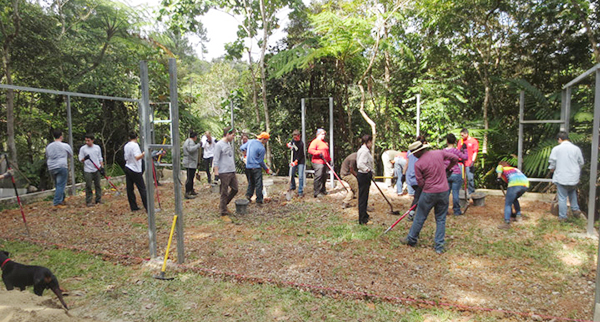
Vanderbilt University, Nashville, Tennessee, helped build a concrete floor for the new drying shed, with Andrés and worked on main homestead trail with Norman.
Northeastern, Boston, Massachusetts, also helped build a concrete floor for the new drying shed with Andrés, and worked on main homestead trail with Norman.
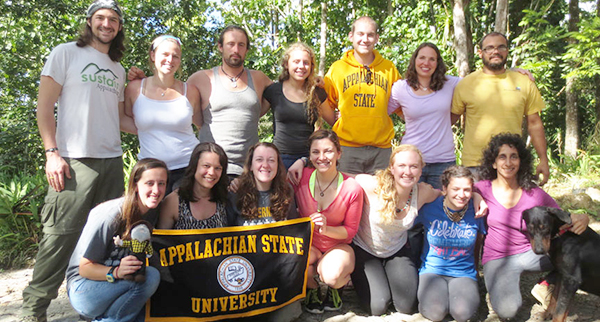
Appalachian State University, Boone, North Carolina, worked on building a walk-bridge in a day, and main house wall plastering with Andrés.
For 23 years Globalworks has been providing exceptional Community Service, Cultural Exchange, Adventure Travel, and Language Immersion programs for teenagers all over the world. One of their stops whilst on a Puerto Rico adventure is to stay at Las Casas de la Selva for a few days, immerse themselves in an alternative lifestyle, carry out intensive hard labor, whilst bonding with each other and getting to know the crew at Las Casas. This year the team worked on making a cement path to the bunkhouses, which will be really appreciated by everyone in the rainy season! Thank you to Meghan Sullivan and Jesse Woodworth for their superb facilitation of this great bunch of teens.
FALL IN LOVE WITH THE FOREST!
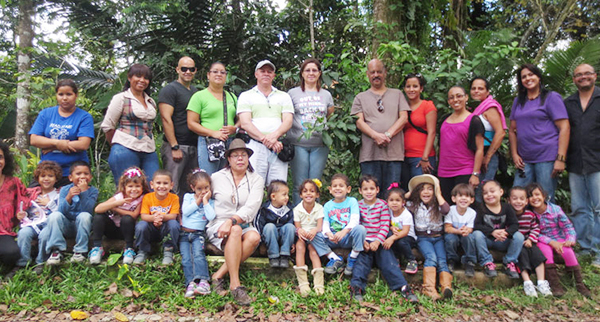
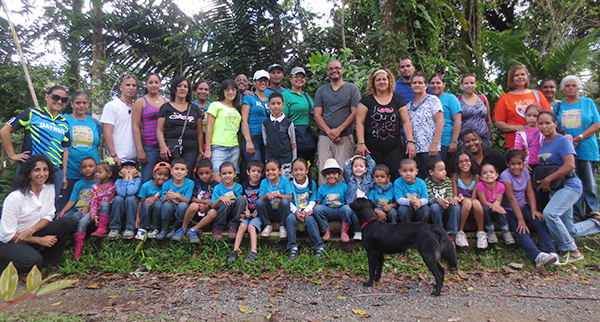
Headstart groups from Cacao Alto and Esmeralda Ambar, Patillas joined us for our trips designed for 4-8 year olds. After a fun digital presentation in El Teatro, and a show-and-tell of some frogs and lizards caught and released around the homestead, we take to the forest, and tell stories of the land, stories about trees and forests, tree-planting and cutting, and a detailed look at all kinds of flora and fauna. Then arriving back at the homestead we peek into the woodshop where we show our wood stock and some products. A packed lunch eaten outside, if no rain, finishes up the morning; a morning of fun, and, we hope, the start of a lifelong love of the green!
Headstart Ciudad Esmeralda Ambar, Patillas.
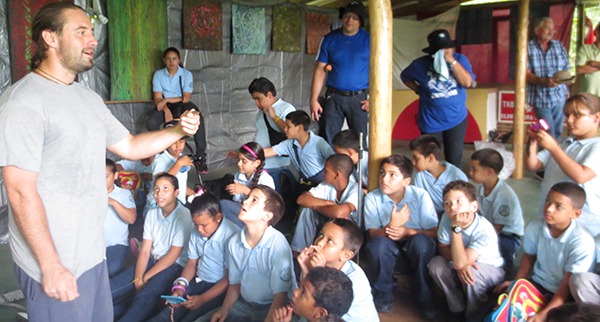
Norman talks about the lizards and frogs of the area with the children.
Headstart children plant an endangered endemic, Styrax portoricensis sapling with 3t. See more about this project.
Headstart Cacao Alto, Patillas.
THE FOREST PRODUCTS ASSESSMENT PROJECT
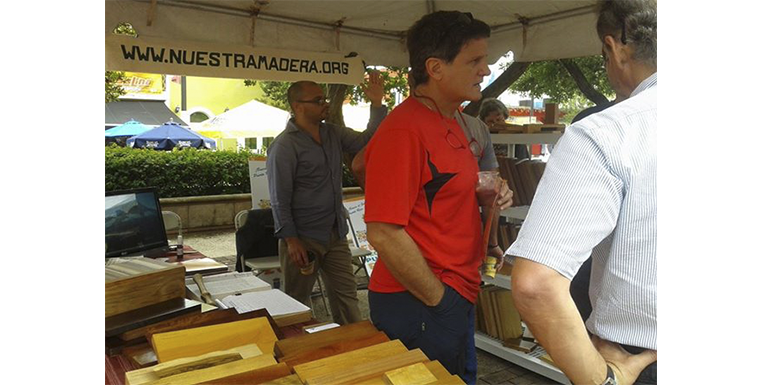
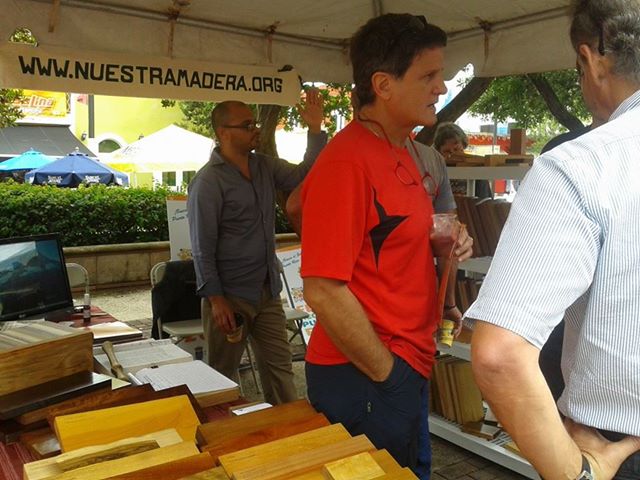
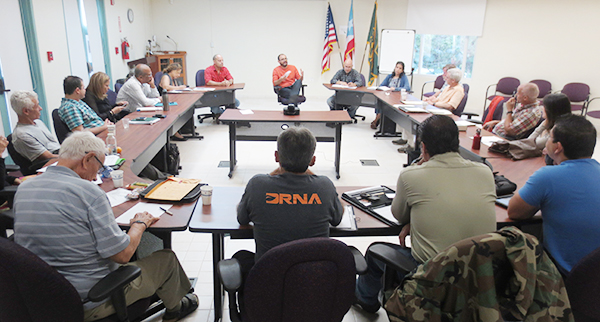
This project initiated by Tropic Ventures Research & Education Foundation, led by Andrés Rua, and the Departamento de Recursos Naturales y Ambientales (DRNA), has made great progress with several key events in 2012 to highlight the current situation of forest product use and potential in Puerto Rico. 18th April 2013, saw a well-attended conference at the International Institute of Tropical Forestry attended by key players in the DRNA , the USDA, University of PR, and IITF. The group formally became CADA (Consejo Asesor para el Desarrollo Agro-Forestal) at the meeting at Cayey University on 6th May 2013. See more about this project at www.nuestramadera.org
Back row: Andrés Rua (TVREF), Enrique Santiago Irrizary (DRNA), Augusto Carvajal (UPR Cayey), Mark Schofield (former editor of Fine Woodworking Magazine), Gerardo Hernandez (Management Official for Toro Negro State Forest), Franklin Roman (UPR Agriculture Extension Officer and Agronomist), 3t Vakil (TVREF) Front: Jimena Forero Montanez (UPR Phd student), Christina Cabrera (Special Assistant to the Secretary, DRNA), Rosamaria Quiles (DRNA)
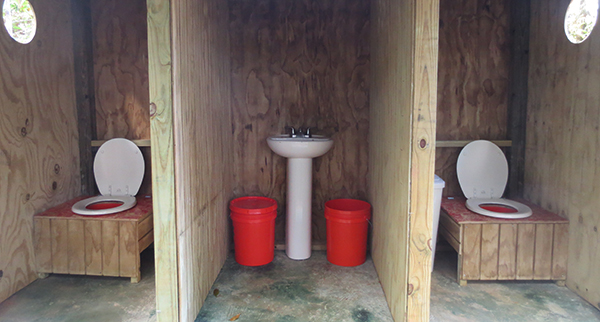
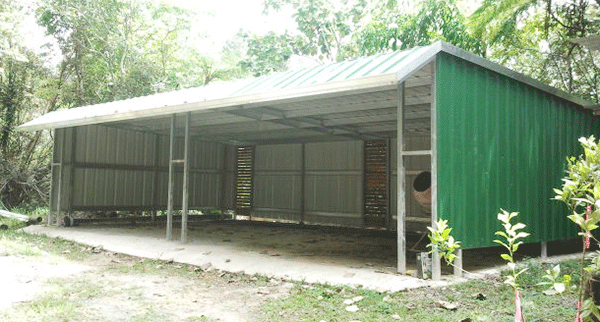
Designed and built by 3t and Andrés in February 2013, just in time to catch all the resources of the groups mentioned above.
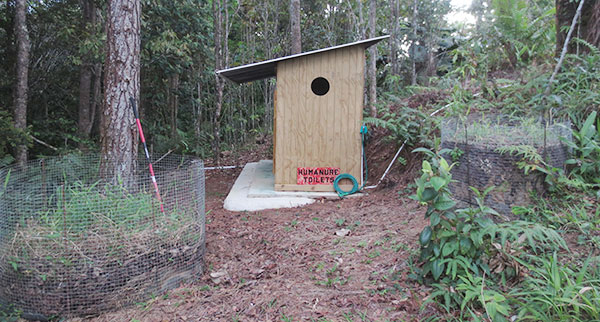
“The world is divided into two categories of people: those who defecate in drinking water and those who don’t. We in the western world are in the former class. We defecate in water, usually purified drinking water. After polluting the water with our body’s excrements, we flush the once pure but now polluted water “away,” meaning we probably don’t know where it goes, nor do we care. This ritual of defecating in water may be useful for maintaining a good standing within western culture. If you don’t deposit your feces into a bowl of drinking water on a regular basis, you may be considered a miscreant of sorts, perhaps uncivilized or dirty or poverty stricken. You may be seen as a non-conformist or a radical. Some would argue that a simple system of humanure composting can also be the most advanced system known to humanity. It may be considered the most advanced because it works very well while consuming little, if any, non-renewable resources, producing no pollution, and actually creating a resource vital to life”. SOIL.
Thank you everyone who made the effort to overcome fecaphobic tendencies, to see that this is a really wise and sustainable way to collect and use all our resources, especially in the rainforest where we need soil for food production. 3t has been very successfully composting humanure for nearly nine years. Thanks to Reka Komaromi and Klaus Eiberle and great salutes for inspiration to Mark Nelson, and Joseph Jenkins for the quote above. (See his book)
NEW WOOD-DRYING SHED
Transformations going on everywhere you look!
NORMAN ON SABBATICAL
Norman Greenhawk was honored by Earthwatch with a Neville Schulman Award. The award is given for the training of emerging environmental leaders. For the award, Norman submitted a proposal: “Herpetological Conservation in the Neo-Tropics: An Interdisciplinary Approach”, and he is currently two and a half months into his seven month sabbatical. He has spent a month at La MICA Biological Field Station in El Cope, Panama. He has worked with Dr. Julie Ray, a specialist of Panamanian snakes and has also interviewed citizens of the rural barrio of Barrigon about their attitudes and beliefs about snakes. His time in Panama will end with a stint at the Panamanian Amphibian Rescue and Conservation Project (PARC), which partners with the Smithsonian Tropical Research Institute. PARC is a captive breeding program dedicated to preserving genetically diverse populations of Atelopus frogs, a genus of frogs that are highly susceptible to the Chytrid fungus, a disease currently wiping out populations of amphibians all over the world. While working at PARC, he is continuing his interviews of local and indigenous peoples, focusing on beliefs about reptiles and amphibians in general, as well as perceptions about conservation organizations. We wish the best for Norman on his intrepid explorations! More…
PEOPLE AT LAS CASAS DE LA SELVA, FEBRUARY – JUNE 2013
Above left: Marta Edgar started a Bird Survey with Earthwatch volunteers this June. Alyssa Solis, who first landed at Las Casas on an Earthwatch teen expedition in 2008, has been back several times since and was an invaluable help on the Bird study, as well as helping 3t with Las Casas logistics and team management of the two Earthwatch groups in June 2013. Thank you Ladies!
PRESS AND MEDIA
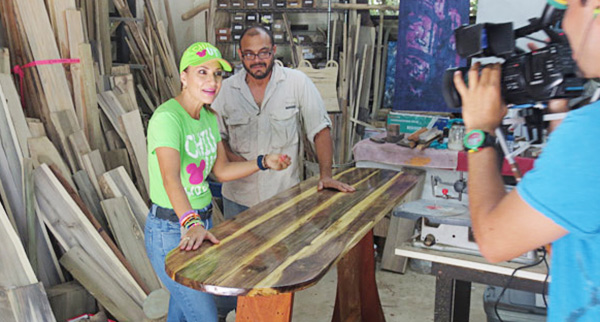
May 2013: Alex Croatto, with Channel 6, came to spend a day talking about sustainable forestry, and the work and history of Las Casas de la Selva.
March 2013: Jaylene Cintron and the “Desde Mi Pueblo” crew were making a series on Patillas, and spent a day in the trees and the woodshop, talking about all that we get up to at Las Casas de la Selva!
EARTHWATCH TEAM 1 JUNE 8-16TH 2013
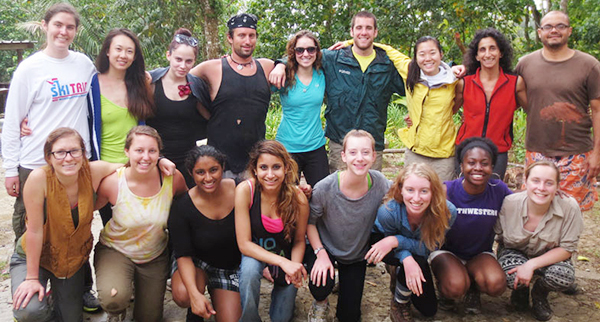
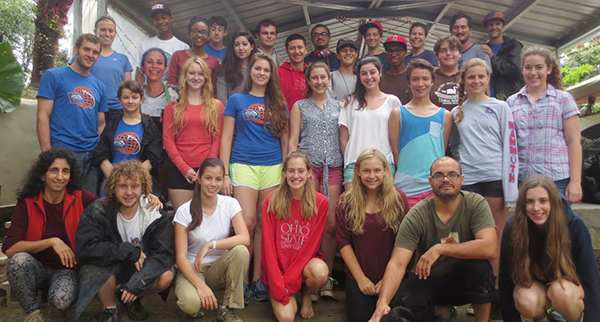
This wonderful all-ladies team above started our Earthwatch season in June 2013, and we really appreciated their enthusiasm especially in such a rainy time, and with early pre-sunrise starts. We are happy to announce the launch of a bird survey at Las Casas de la Selva with ornithologist, Marta Edgar. The ladies also partook in the planting and monitoring of critically endangered endemic trees with 3t. Below, our most exceptional teen team of Earthwatch volunteers, who completed several days out in the forest in very wet conditions and not a complaint! We really appreciated the work carried out on bird and tree studies and also the fun back at the homestead. Special thanks to Jackie Pomposelli and Amy Reggio, Earthwatch facilitators who did a superb job of holding it all together!
THANKS FOR SHARING IN OUR NEWS AND THE NEW WEBSITE. THANKS FOR BEING PART OF THE NEWS!
BIG TREE HUGS TO ALL OUR FRIENDS AROUND THE PLANET. LEAVE A COMMENT, SHARE, COME VISIT!
Magaly Figueroa has been a key ally of ours for the last decade in the Puerto Rico Department of Natural Resources and the USDA. We are very honored for her to mention us in an interview on ‘Faces of The Forest Service’, on the US Forest website. This is the first time Tropic Ventures and our portal to the wood world Nuestra Madera has had a public mention. Thanks Magaly!