La Sangre Se Llama: Mercury’s Residency at Las Casas de la Selva, March/April 2026
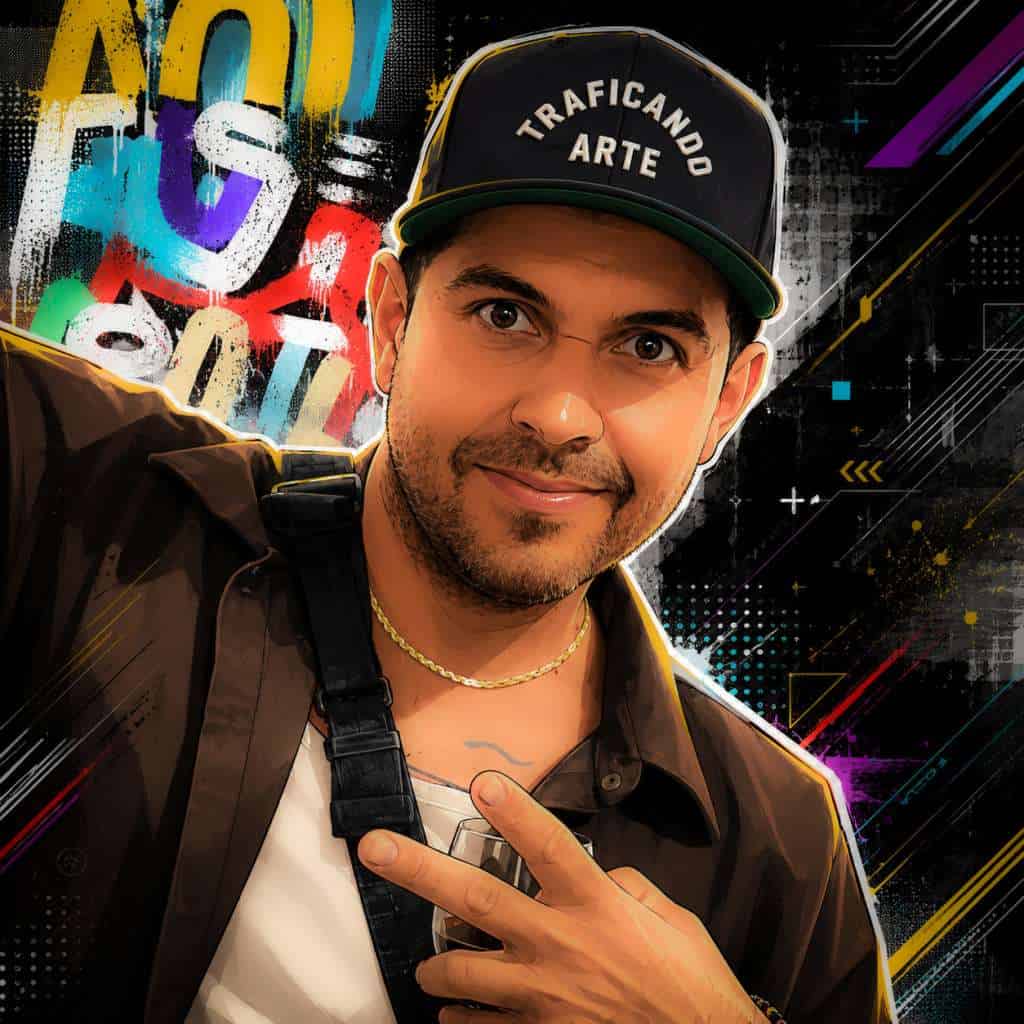
Mercury spent March and April 2026 in residence at Las Casas de la Selva, Patillas, Puerto Rico, living and working within the rainforest landscape of southeastern Puerto Rico. A second-generation Boricua artist and activist based in Hartford, Connecticut, Mercury works across disciplines with a focus on site-specific installation, using available materials and responding directly to place, memory, language, and the conditions of the present moment. Their practice is deeply connected to questions of Bori identity, diaspora, and belonging. Alongside their artistic work, Mercury is actively engaged in housing justice and community-based responses to gentrification, bringing together activism and creative practice in ways that feel immediate and lived rather than theoretical.
For the past four years, Mercury has spent winters at Las Casas de la Selva, gradually building a relationship with the land through conservation work, forestry activities, and art-making shaped by the surrounding environment. Their time here reflects an ongoing process of reconnection to Puerto Rico as part of the diaspora experience, a relationship that is neither fixed nor simple, but constantly unfolding.
Mercury wrote:
“My mom used to always say, “la sangre se llama” – I believe that. Boricuas navigate identity in a way that not many can understand. There isn’t a single quality we can hold up and say, “Here! This is what makes me Puerto Rican.” We straddle all the demographics. Hell, even the land itself is having an identity crisis between sovereignty and statehood. Like electrons that exist in multiple places at once, my people embody contradiction.
Yet the blood still calls. There’s a whisper in our DNA that stubbornly reminds us where home is. I like to imagine there’s a homing beacon buried deep under the Atlantic in what is called the “Puerto Rico Trench” and the coqui’s are like bluetooth speakers for that message. As a child of the Diaspora I am at the cutting edge of identity. What I am feels like a moving target… and I’m ok with that now. What they say on the island, “lo inventa” ?
“The fact that I
am writing to you
in English
already falsifies what I
wanted to tell you.
My subject:
how to explain to you that I
don’t belong to English
though I belong nowhere else”
― Gustavo Perez Firmat, Bilingual Blues: Poems, 1981-1994”
Those reflections resonate strongly within Las Casas itself, a place that has always existed between categories. Forest and laboratory. Homestead and research site. Art space and working forestry project. Puerto Rico itself often occupies this same in-between terrain, and Mercury’s work moves fluidly through those tensions rather than attempting to resolve them.
At a time when the world feels increasingly fractured, we are reminded why places like Las Casas de la Selva matter, and we are very glad to welcome Mercury into residence with us.
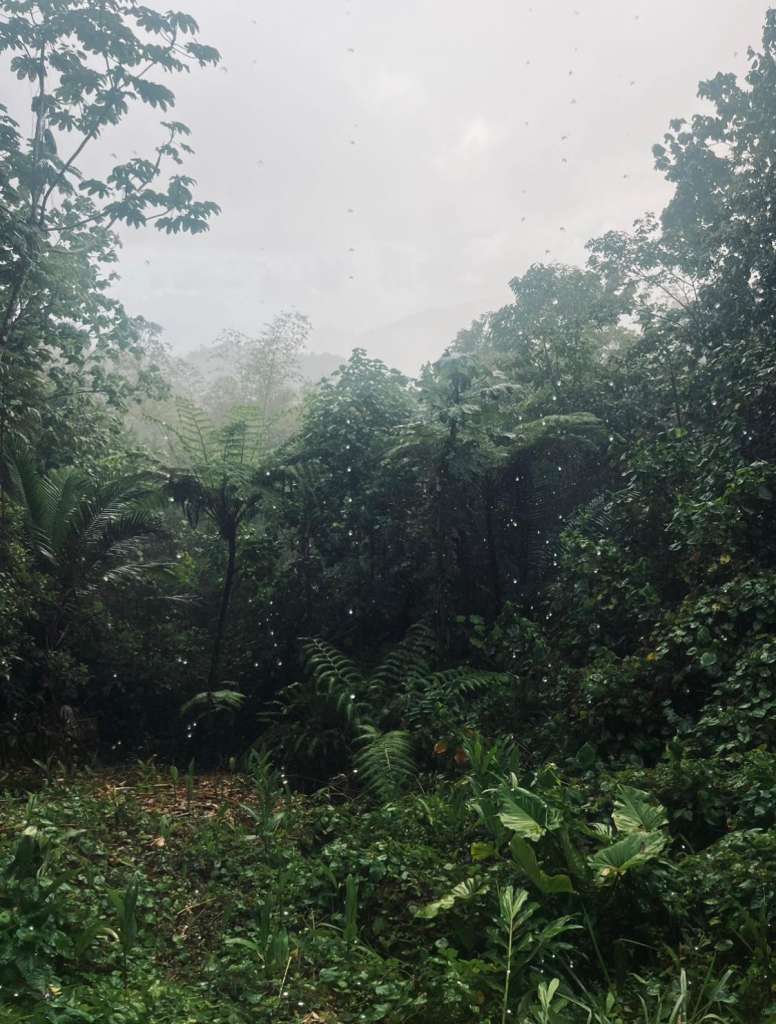
Residency here is not about retreat in the conventional sense. It is about immersion. Living inside a forest that is constantly in motion. Growth, decay, regeneration, pressure, release. The rainforest does not offer stillness so much as it offers continuity, and in that continuity there is space to think, to feel, and to respond. In moments of global unrest, the role of the artist becomes sharper. Not to explain the world, but to witness it, to translate it, and sometimes to sit with what cannot be resolved.
Having Mercury here brought another layer of observation into the work of Las Casas, where science, forestry, conservation, and lived experience are already in dialogue. Their presence mattered not as an addition, but as part of an ongoing process. The forest holds many forms of intelligence. Artistic practice is one of them.
Throughout the residency, Mercury created works that communicated through material, placement, gesture, and atmosphere. Using found objects, reclaimed materials, text, and interventions within the environment itself, the pieces carried the same qualities present in their writing: movement between worlds, layered identities, uncertainty, humor, tension, and an ongoing search for orientation. The works did not attempt to dominate the landscape. Instead, they entered into conversation with it.
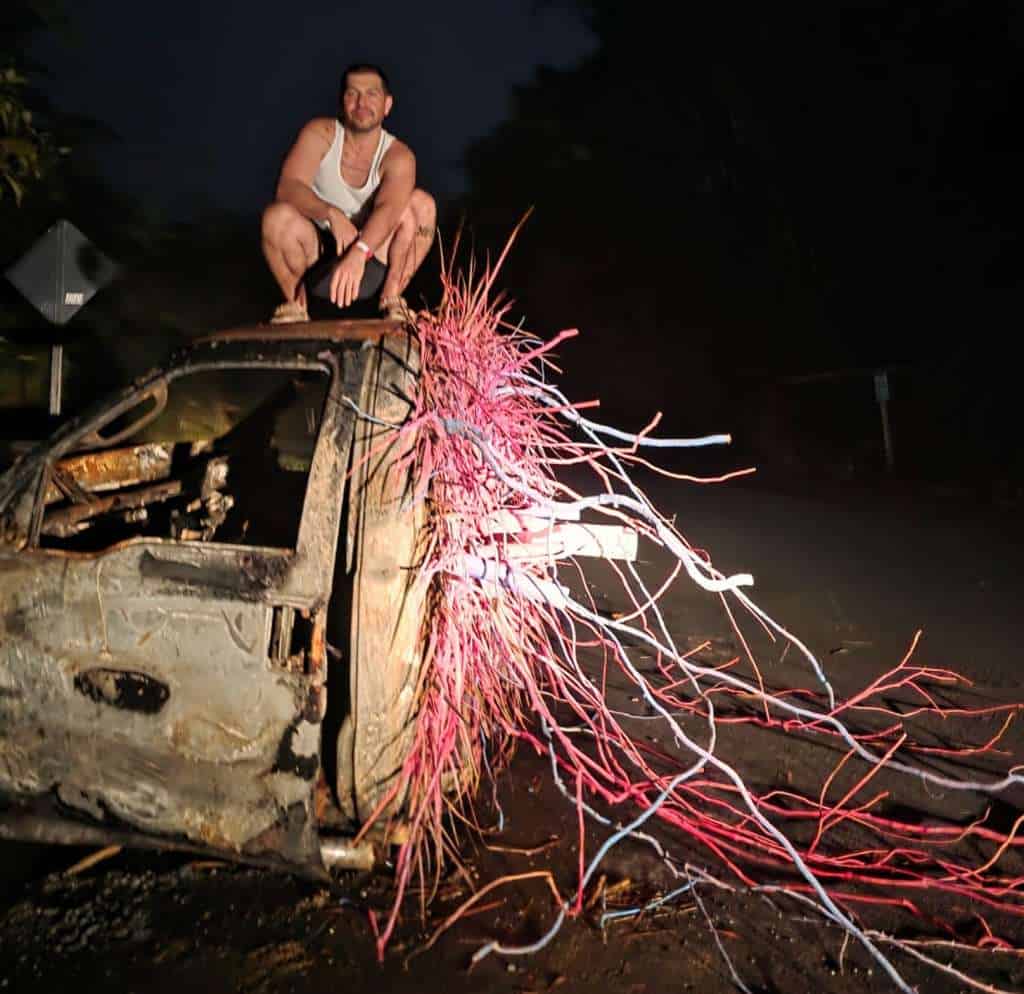
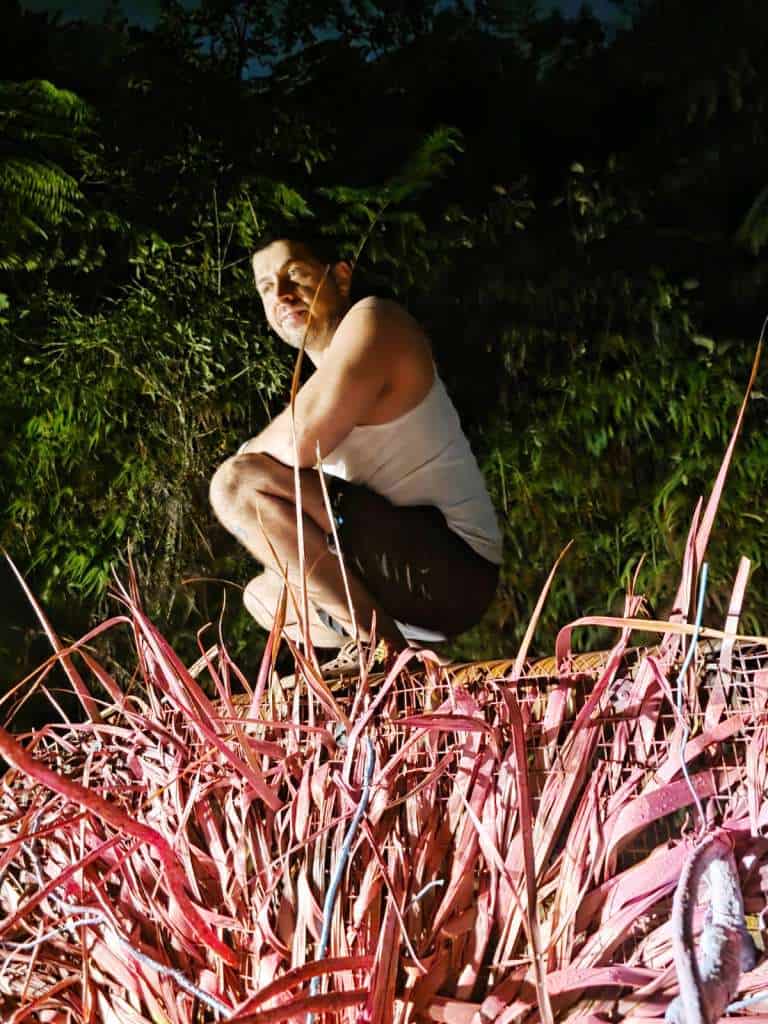
Some pieces felt provisional, almost like signals or transmissions left briefly within the forest. Others carried the feeling of maps without fixed destinations, reflecting Mercury’s continuing exploration of diaspora identity and the unstable, shifting experience of belonging. Across the work there remained a sensitivity to communication itself: how people call to one another across distance, language, memory, geography, and history.
Mercury’s installations during the residency moved through the landscape like signals, mutations, or living interruptions within the rainforest itself. The works carried the same tension present in their writing: between diaspora and homeland, decay and emergence, ruin and adaptation. Found industrial materials, abandoned objects, vegetation, color, and gesture became part of an evolving language that felt both playful and deeply charged.
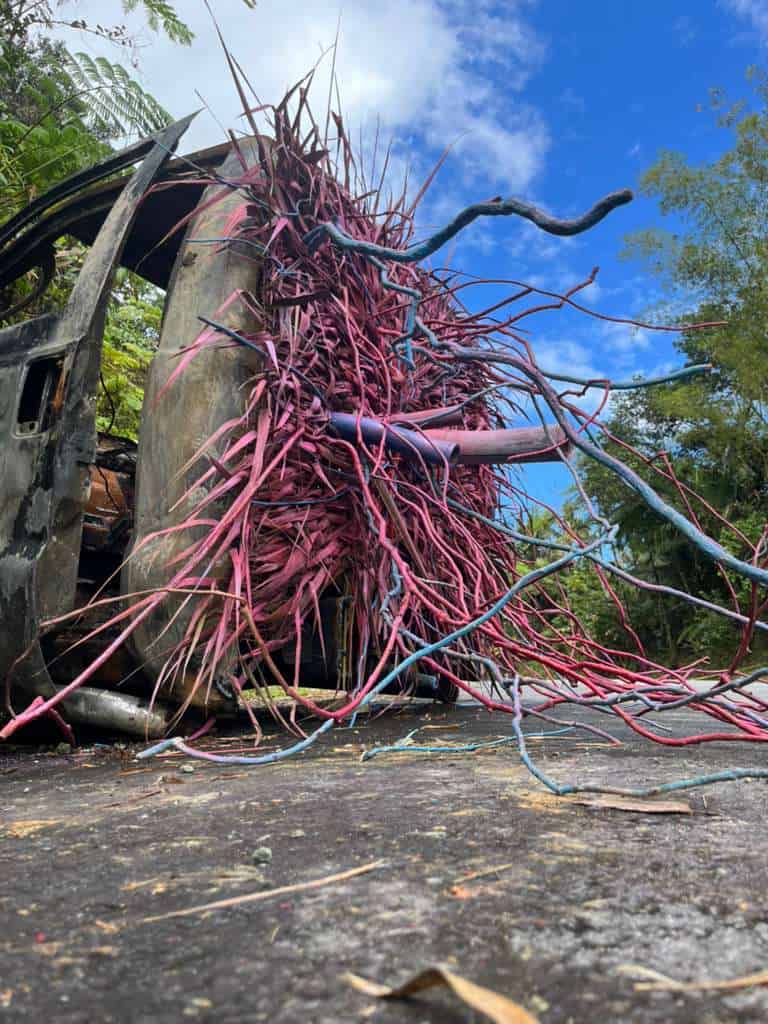
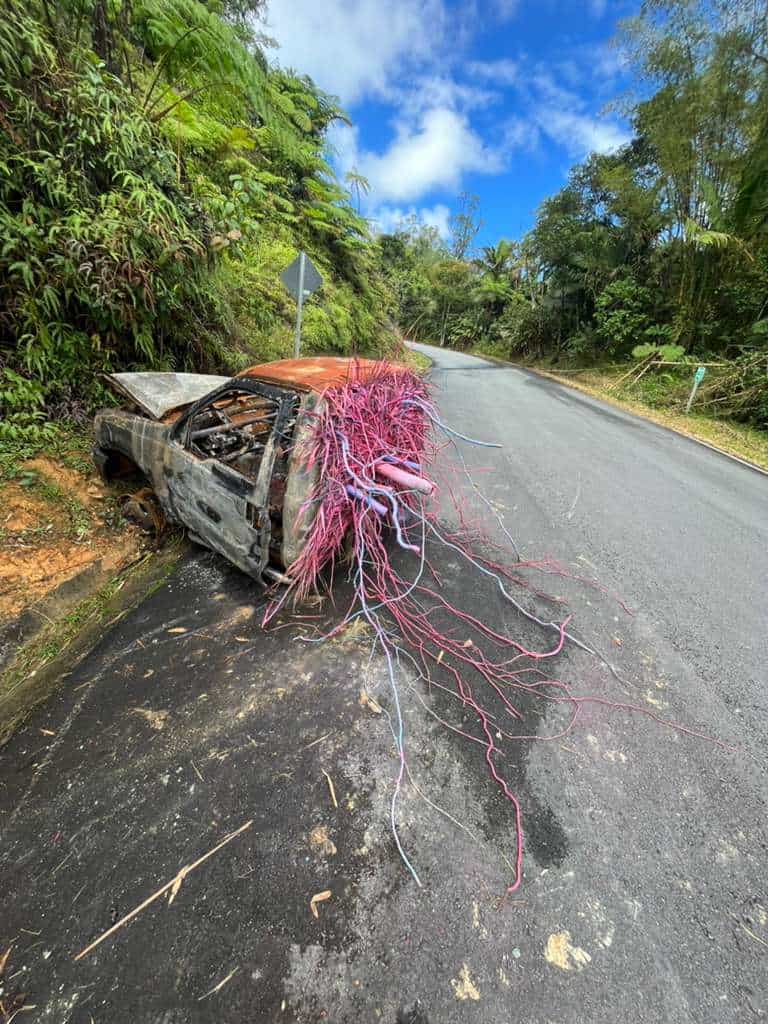
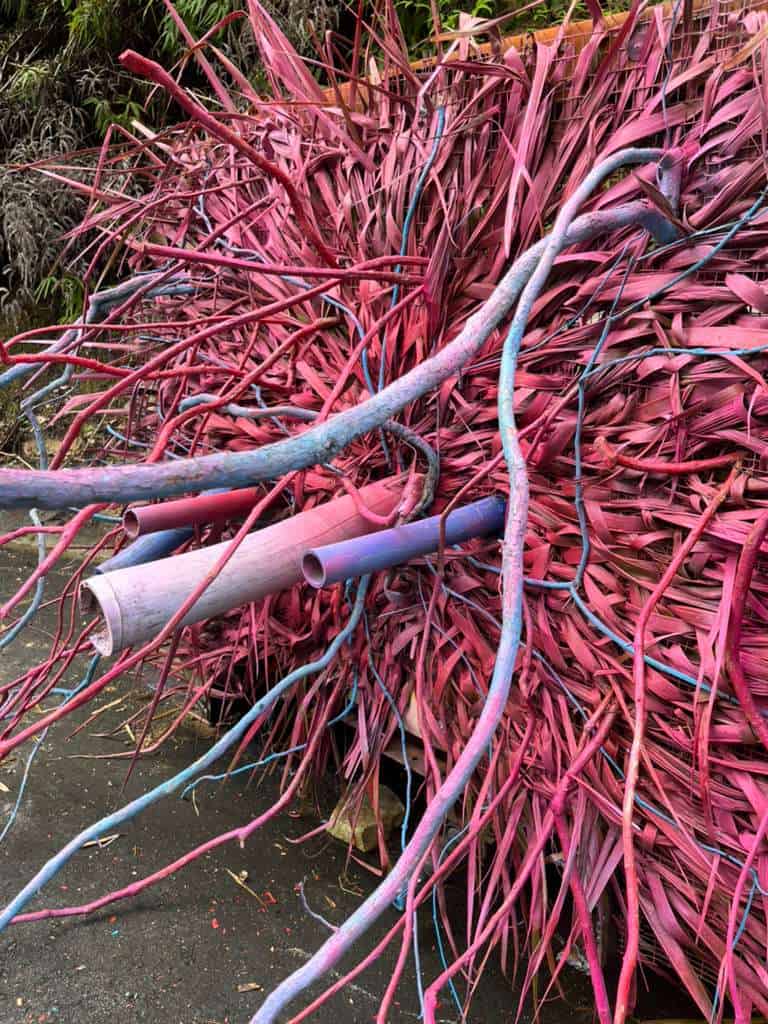
One of the most striking interventions transformed the burned shell of an abandoned vehicle into what appeared almost like an organism erupting outward into the roadside environment. Long tendrils and root-like forms exploded from the vehicle in electric reds, pinks, violets, and blues, blurring distinctions between machine, plant, nervous system, and coral reef. The piece felt simultaneously wounded and alive, as if the forest itself had begun reclaiming industrial debris through a strange new biology. Mercury’s work often communicates this sense of unstable identity, where categories collapse and hybrid forms emerge from contradiction.
Beside the winding mountain roads leading to Las Casas de la Selva, the sculpture altered the experience of the landscape itself. It interrupted expectation. Drivers and walkers encountered something that felt part science fiction, part rainforest growth, part psychic eruption. In many ways, the work echoed Mercury’s own reflections on Boricua identity existing across multiple realities at once, “like electrons that exist in multiple places at once.”
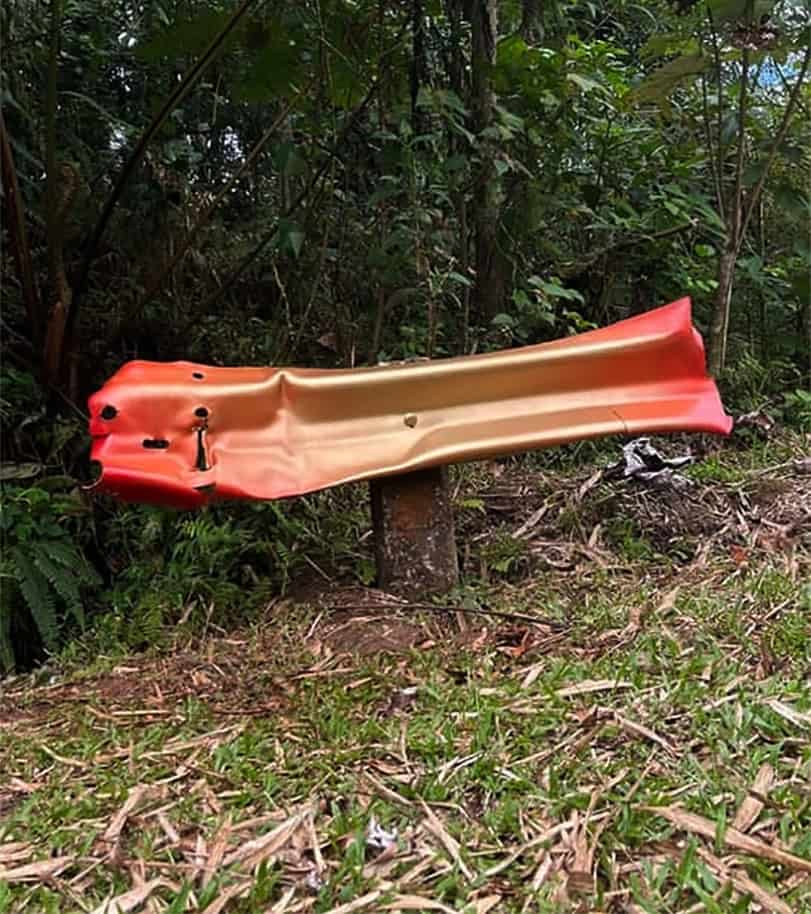
Another intervention used a discarded section of roadside guardrail, isolated against the dense vegetation. The object became strangely vulnerable once removed from its original function. Painted in warm gradients that shifted between industrial warning colors and tropical sunset tones, the piece quietly transformed infrastructure into something almost bodily. Mercury’s installations repeatedly ask how human systems sit inside the forest and how those systems change once nature begins absorbing them back into its own rhythms.
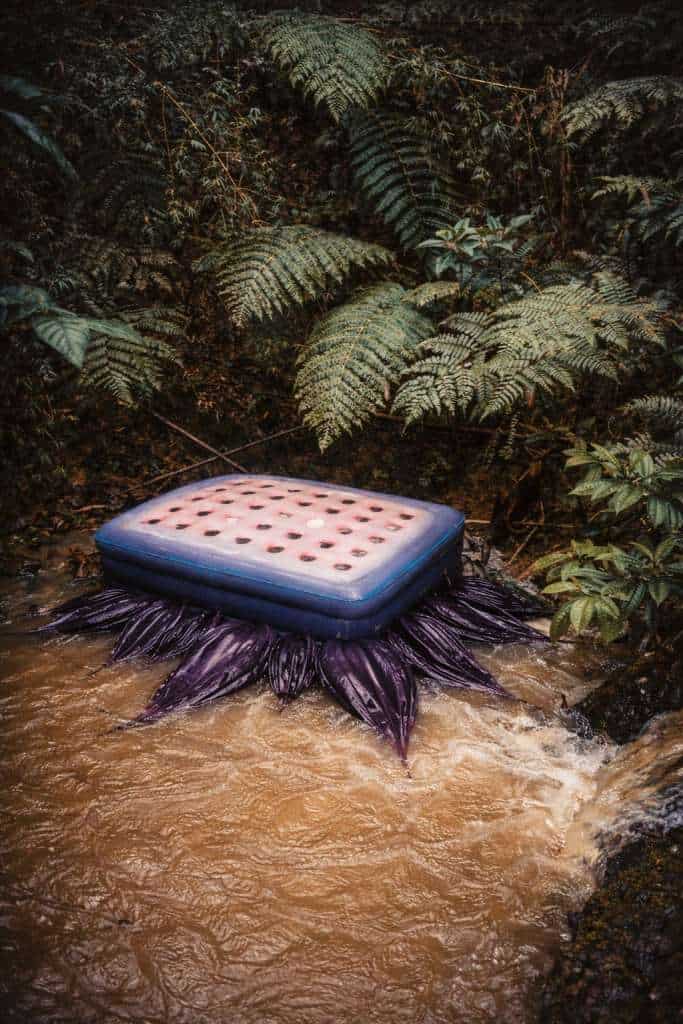
A further work placed a mattress-like form within a rushing stream, surrounded by dark purple organic structures that resembled petals, sea life, or protective membranes. The image carried a dreamlike ambiguity. Shelter floating inside instability. Domesticity displaced into rainforest water systems. Rest made impossible yet still attempted. Mercury’s work communicates through this kind of unresolved symbolism, allowing emotional and ecological readings to exist simultaneously.
Across all of the installations there is an ongoing sensitivity to communication itself. Tendrils become antennae. Roots resemble wiring. Streams feel like information systems. Objects seem to transmit signals rather than fixed meanings. The works never fully settle into certainty, and that openness is part of their power.
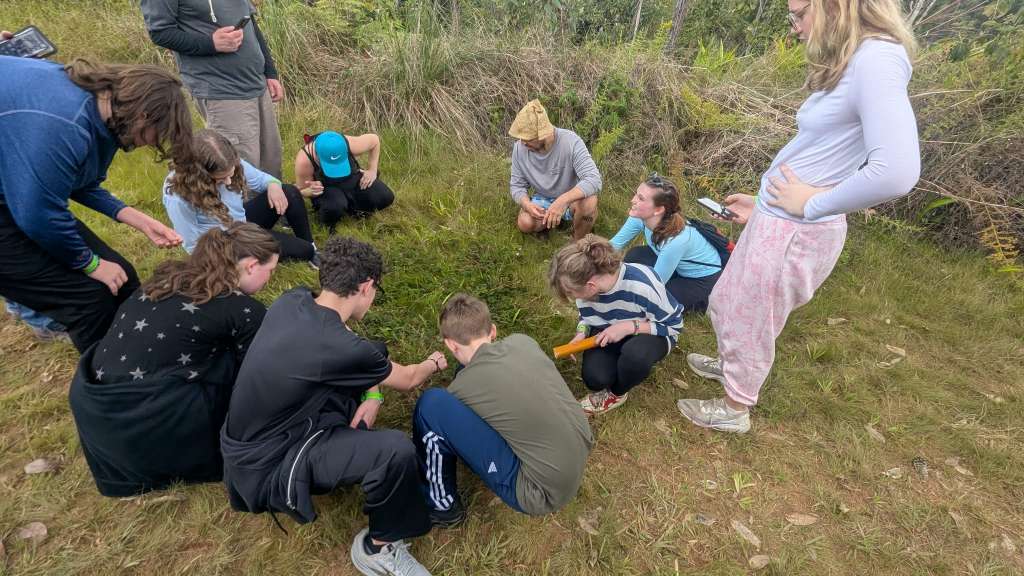
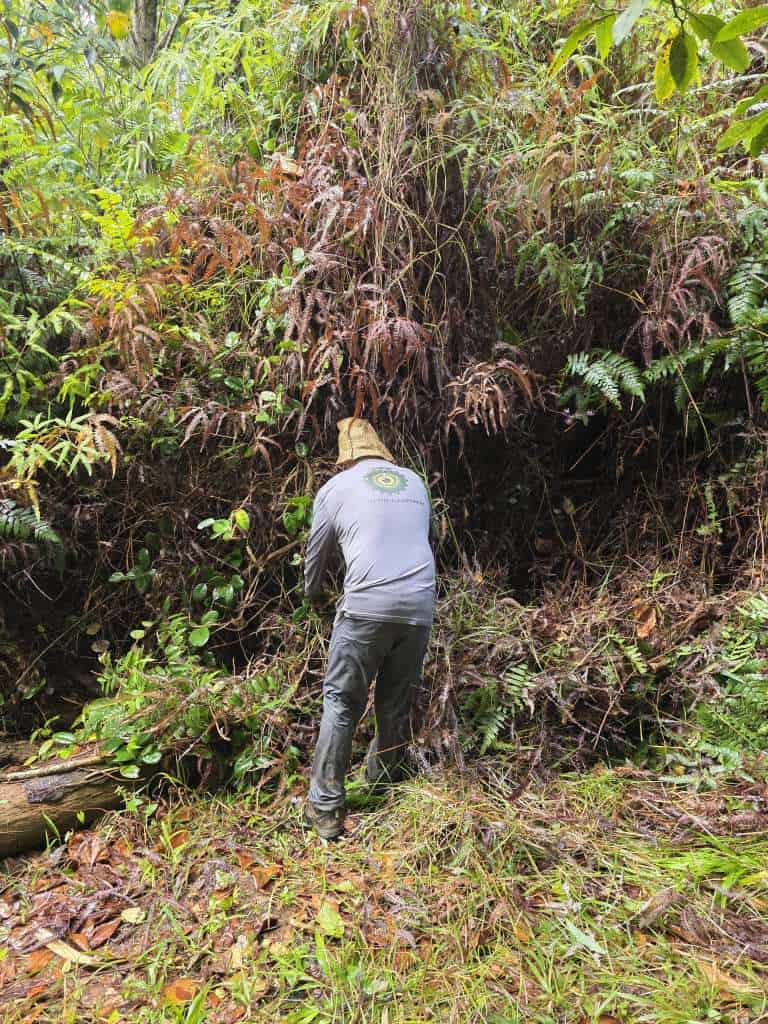
At Las Casas, Mercury was not only an artist in residence but also an active and valued member of the working community. Alongside developing installations and ideas, they became an ace volunteer, contributing directly to ongoing forestry work, conservation projects, maintenance, and daily crew activities. Mercury also worked closely with visiting teen groups, helping guide young people through the realities of living and working within the rainforest environment. Their presence moved easily between art-making, physical labor, conversation, mentorship, and shared communal work, reflecting the spirit of Las Casas itself, where creative practice and practical work are inseparable.
What emerged during the residency was not simply a body of artworks, but a deeper integration into the ongoing life of the forest project. Mercury’s installations did not stand apart from Las Casas. They grew out of it, responding to its roads, streams, debris, histories, labor, contradictions, and living systems. In that sense, the work became another way of listening to the forest and translating what it means to belong, partially, provisionally, and honestly, to a place.
Mercury is now developing a broader vision for a reciprocal residency exchange connecting diasporic artists from cities across the United States with Caribbean-based creatives. It is an idea rooted not simply in travel, but in exchange, relationship, and mutual recognition. Their work continues to move between place, identity, and possibility, extending even toward imagined futures and outer space, while remaining grounded in the realities of land, culture, and community.
We look forward to seeing what emerges next from Mercury’s evolving practice and from the continuing dialogue between art, forest, and identity at Las Casas de la Selva.
You can follow Mercury’s work at:
@mercury___________________ yrucrem.com
Photos by 3t Vakil and Mercury, 2026