From sapling to seed: a conservation milestone for Cornutia obovata, critically endangered Puerto Rican endemic.

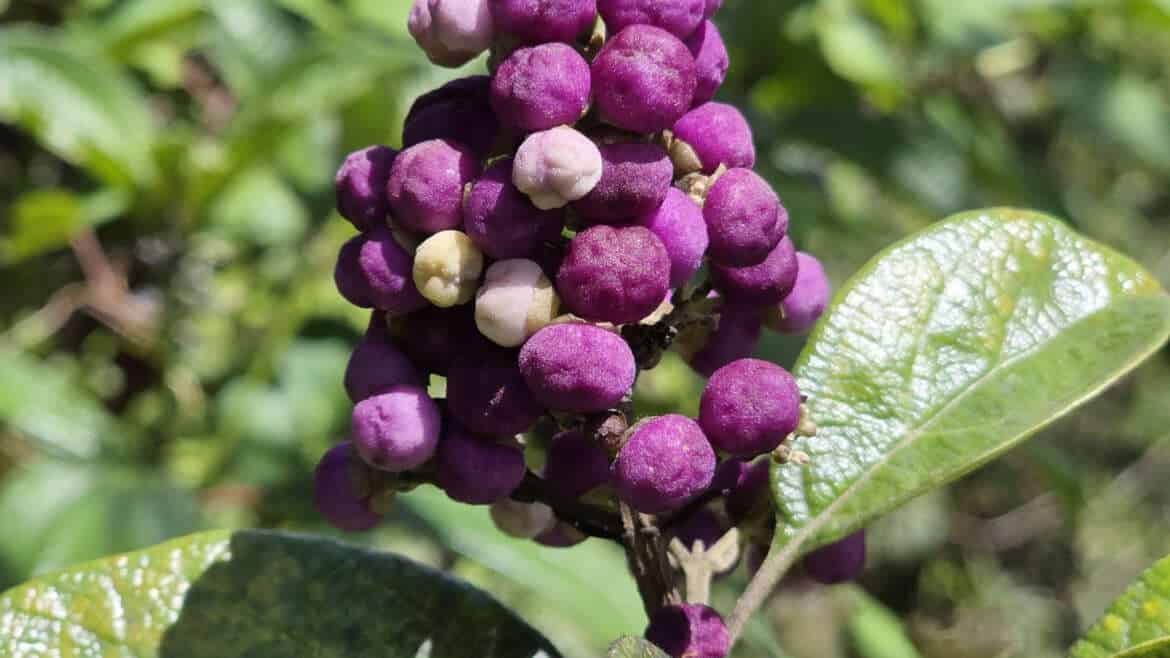
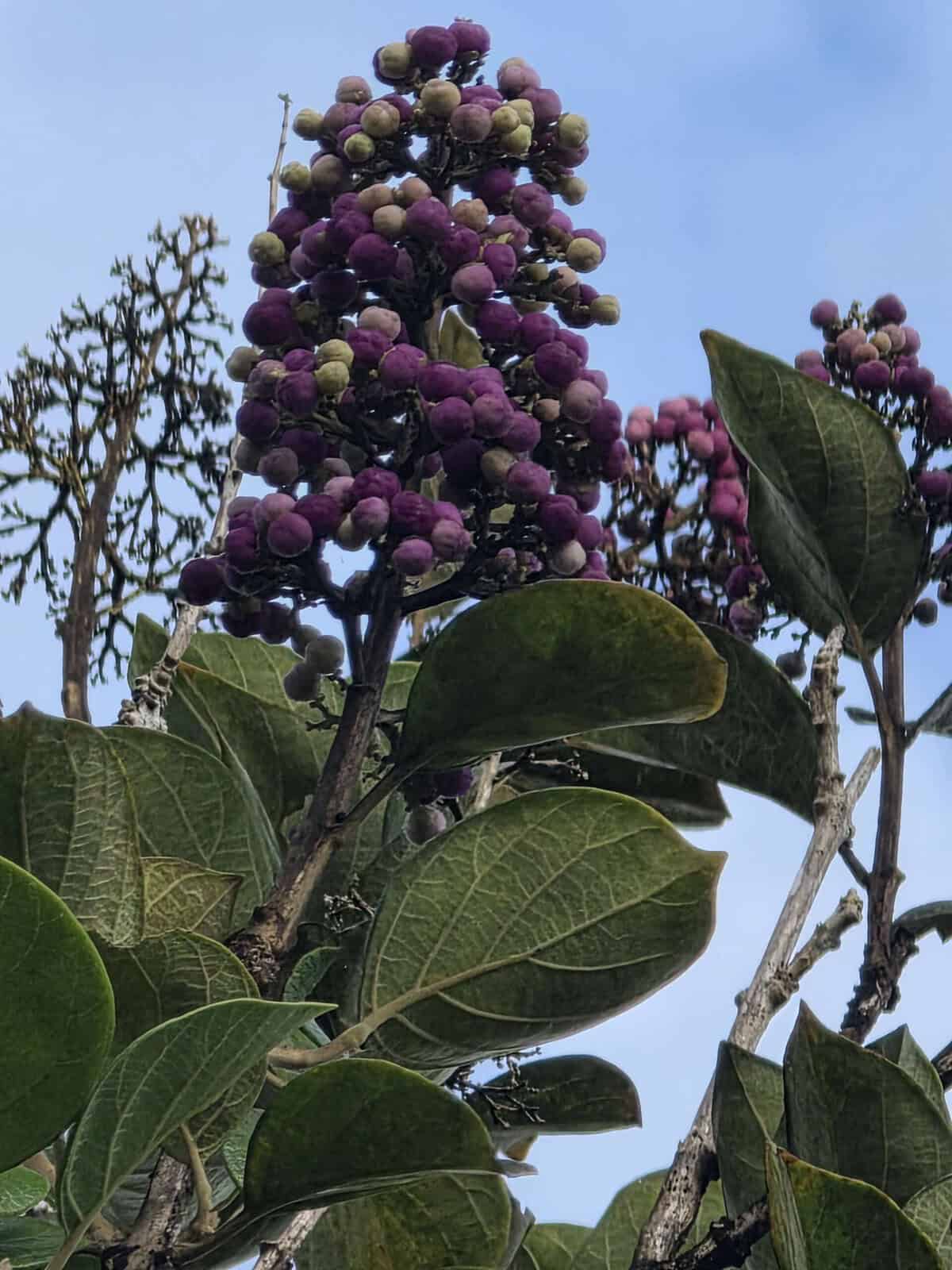
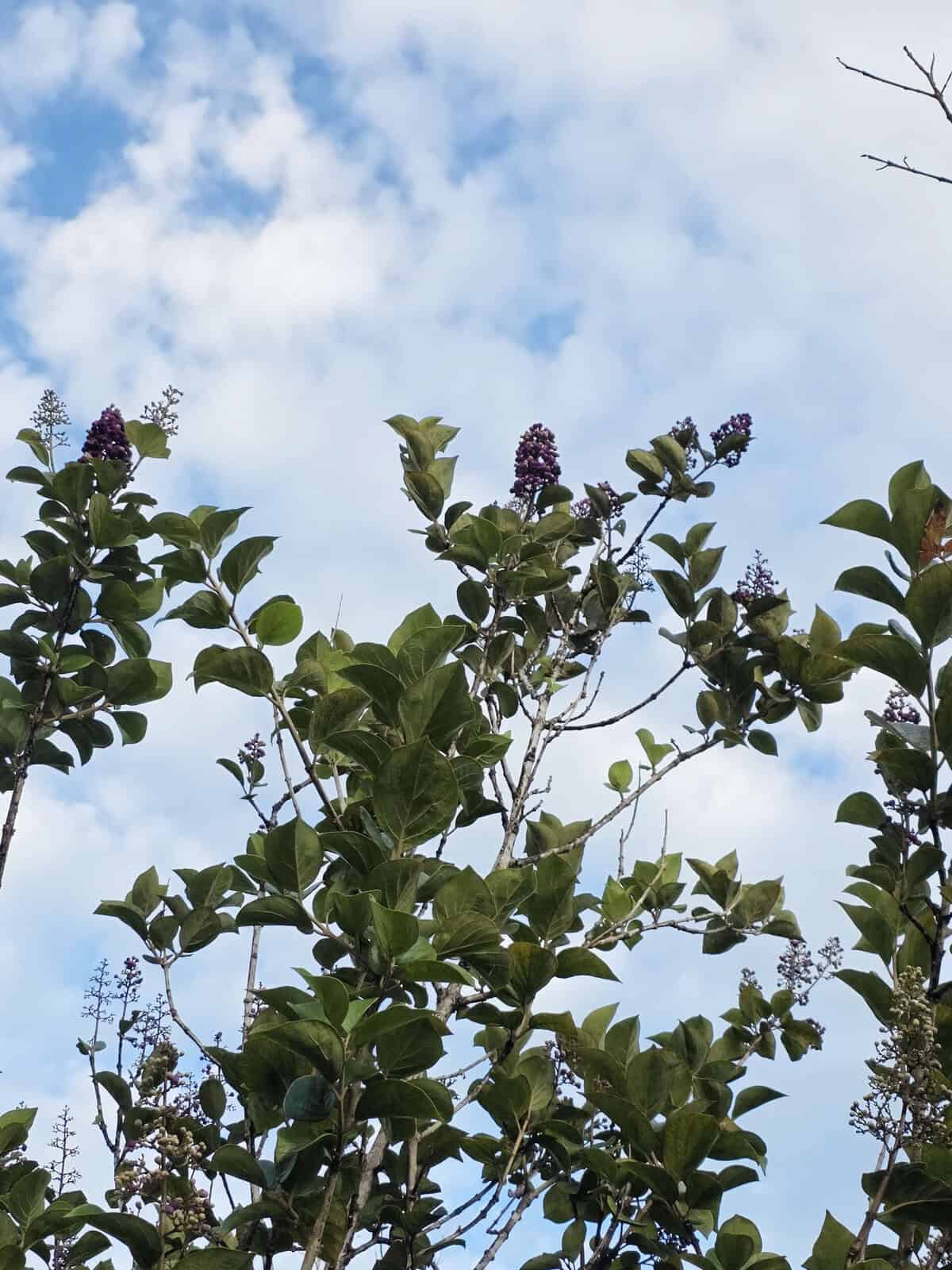
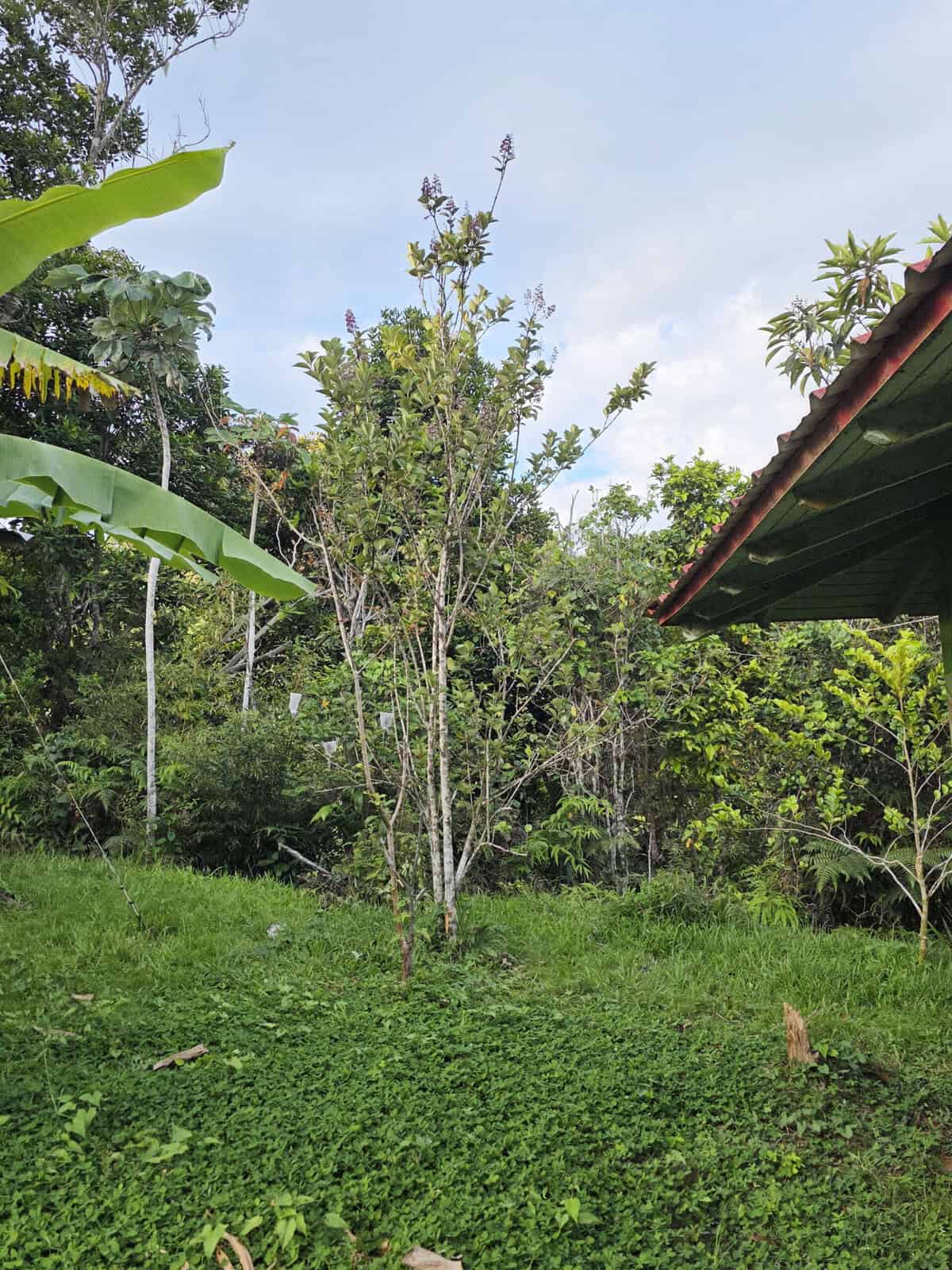
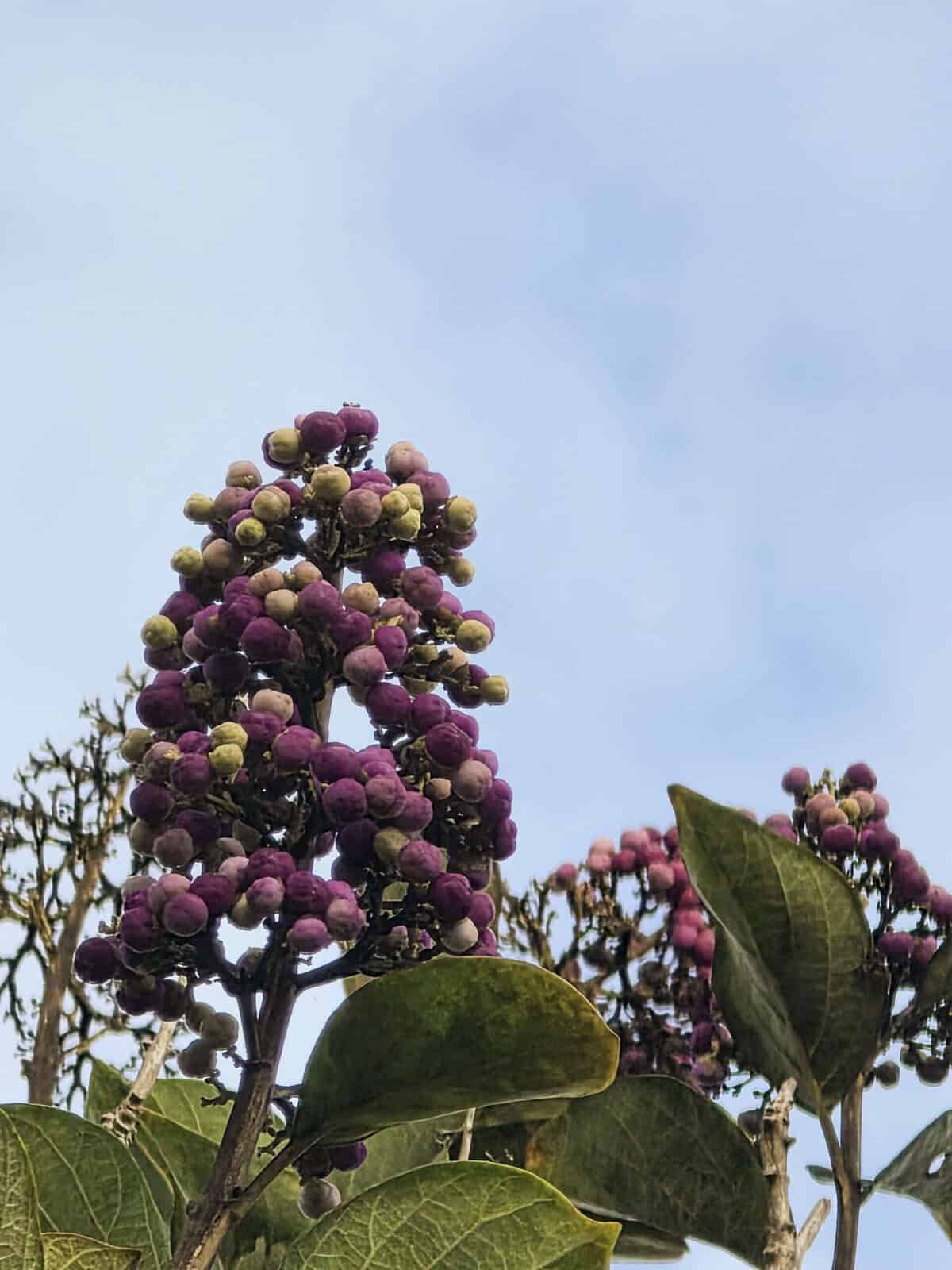
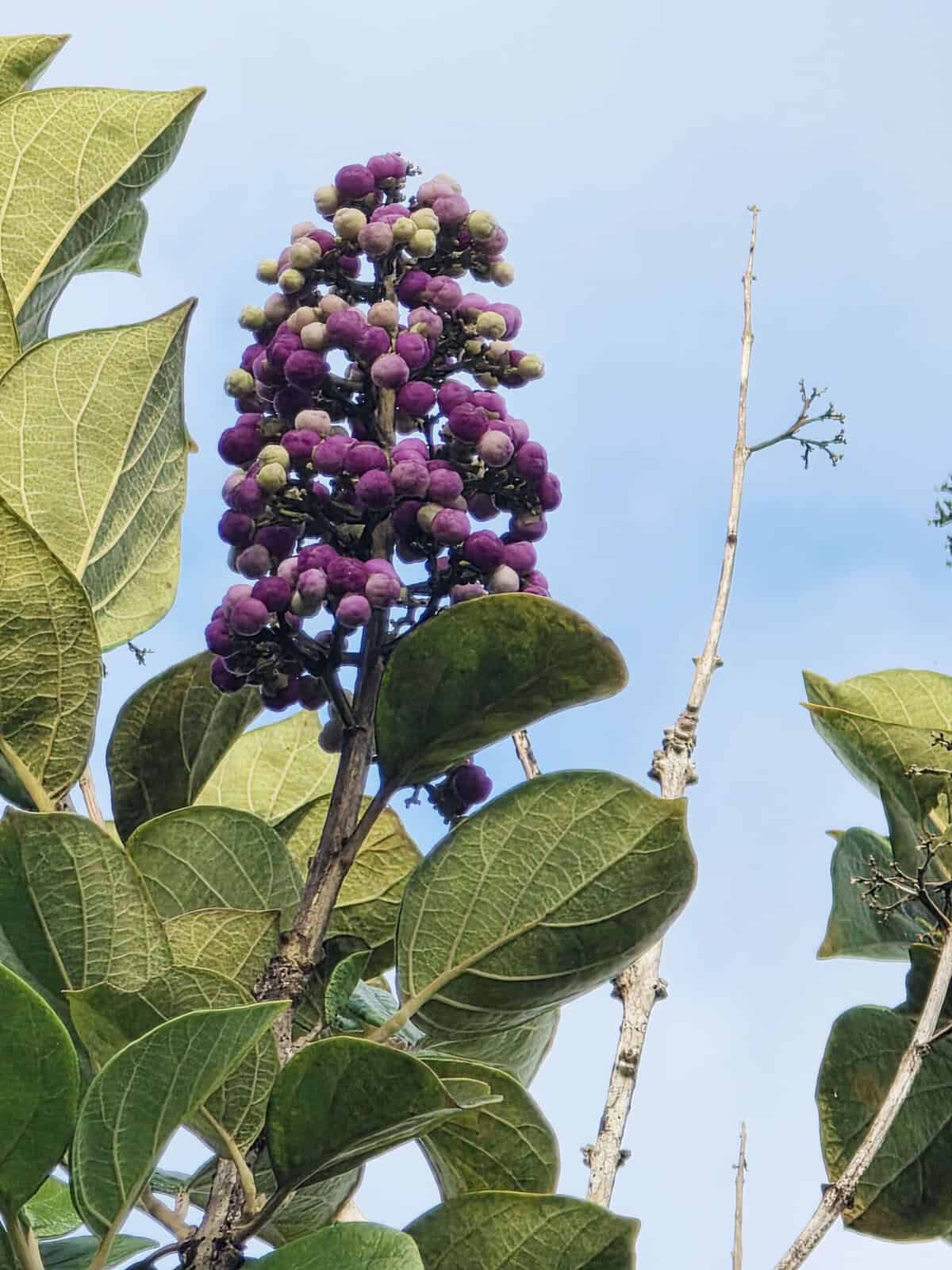
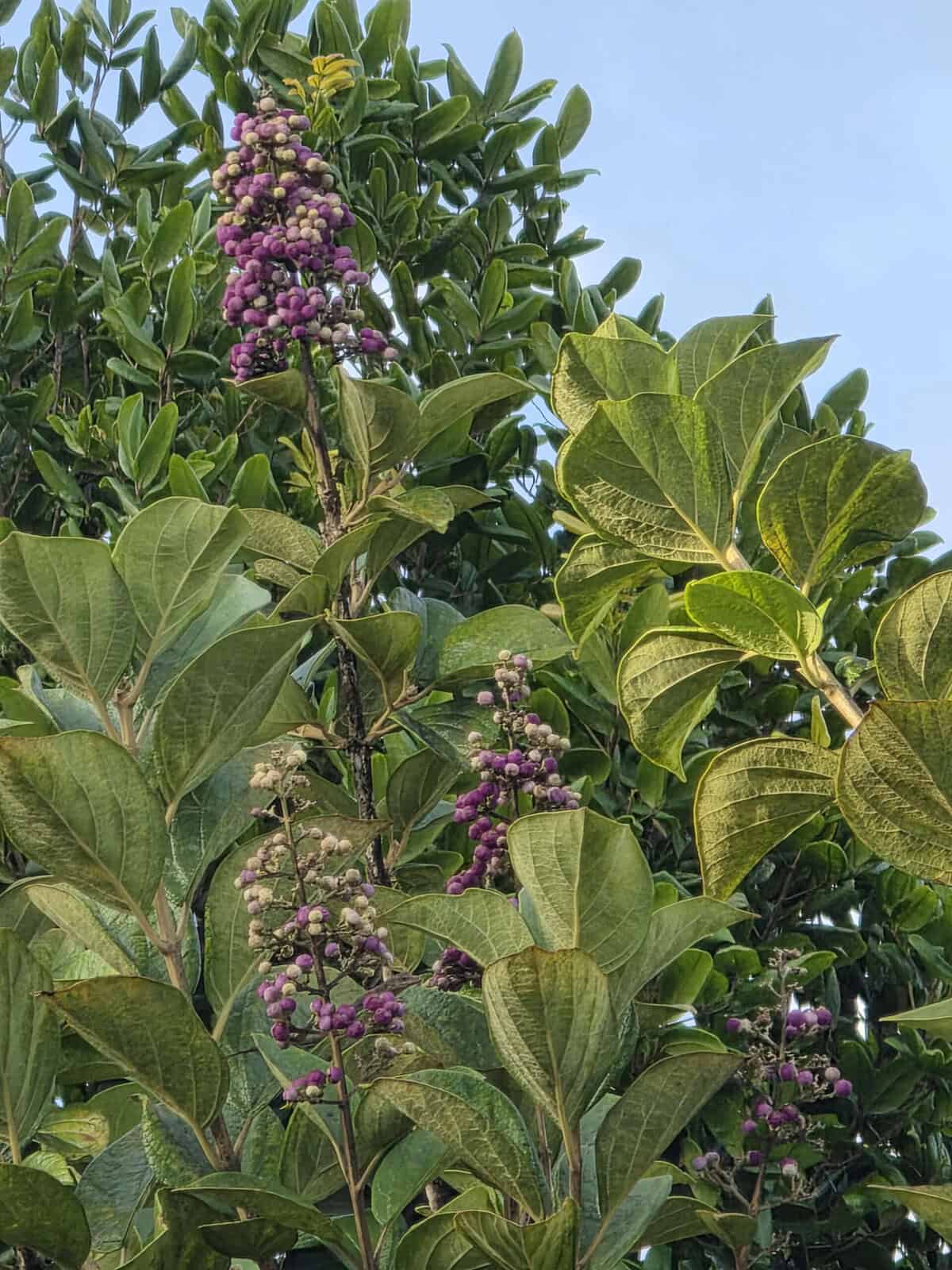
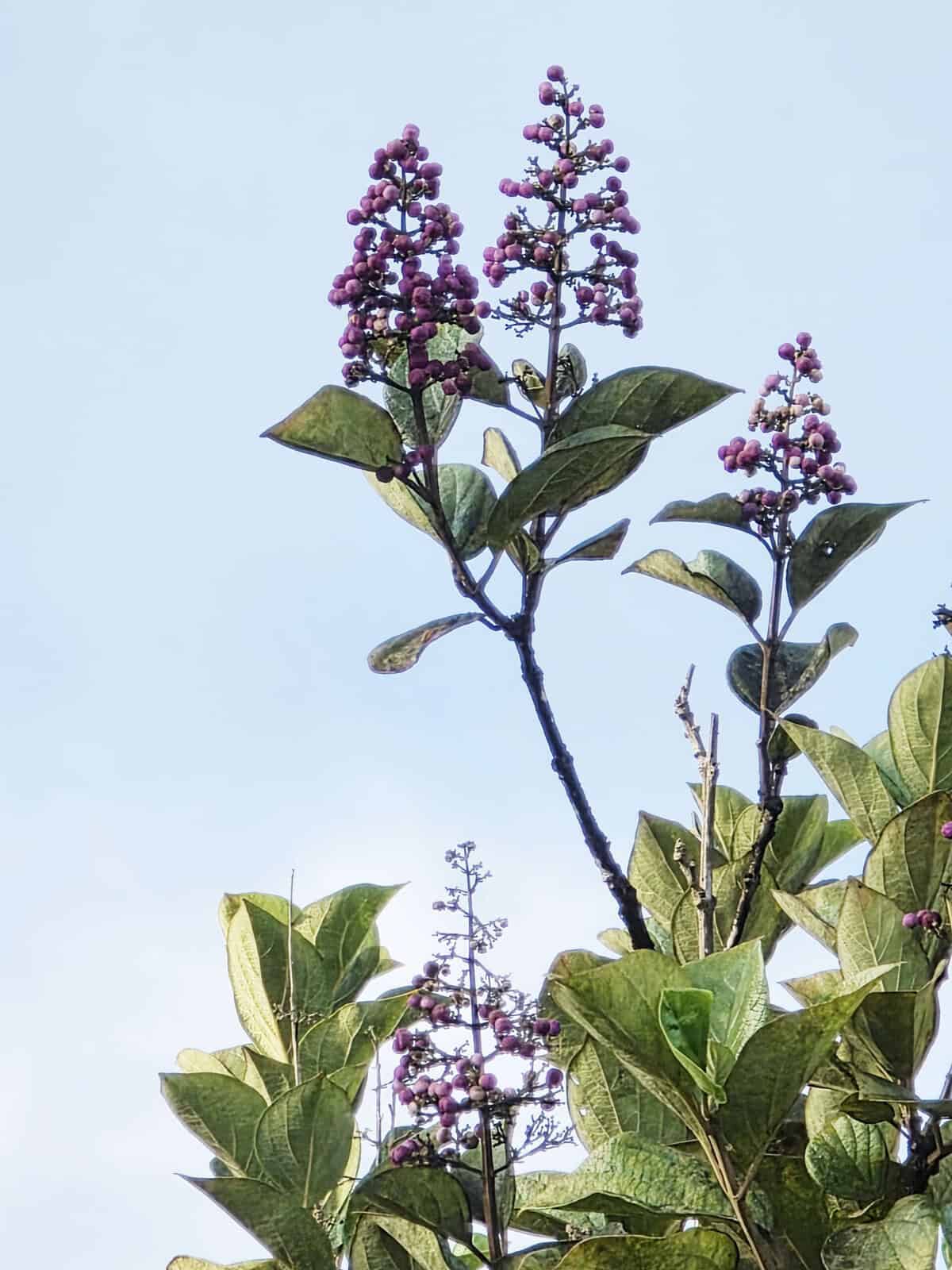
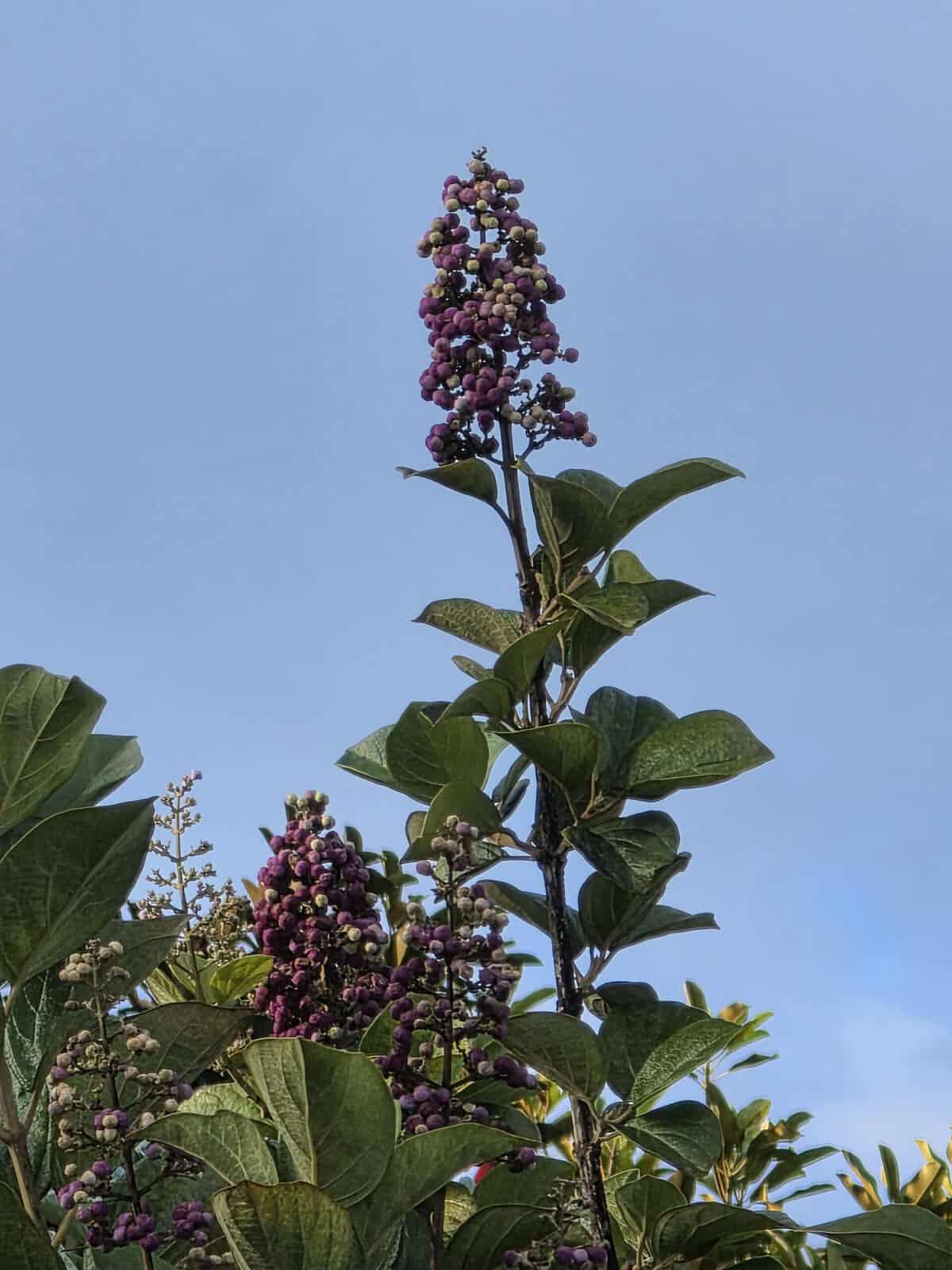
Thirteen years after planting, a Cornutia obovata at Las Casas de la Selva is producing its first substantial crop of fruit. Approximately 20 feet tall and growing near the homestead, the tree is now bearing an abundance of small purple fruits. Collection has begun to support further propagation trials. This is a joyful milestone in a long-term conservation effort, and an opportunity to learn more about a species that has proved challenging to propagate in our nursery.
A cooperative conservation effort
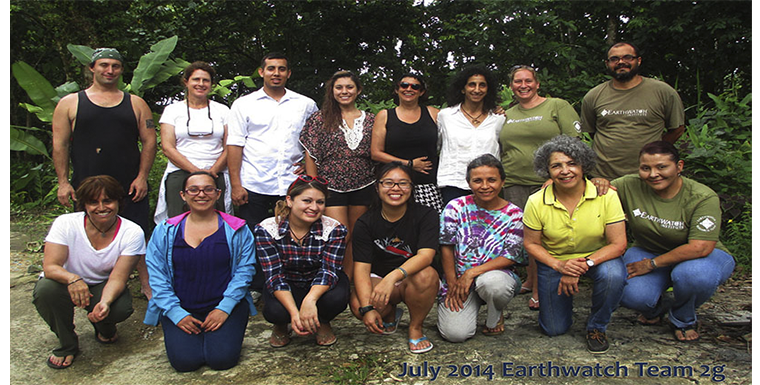
The tree was planted during a 2013–2015 cooperative project involving Tropic Ventures Research & Education Foundation, the U.S. Fish and Wildlife Service’s Partners for Fish and Wildlife Program, and the Earthwatch Institute. The project was developed to support the recovery of Puerto Rico’s endangered endemic flora and fauna through tree planting, habitat enhancement, nursery development, and long-term monitoring.
Las Casas de la Selva’s 930-acre property adjoins Carite State Forest and lies within the upper Río Grande de Patillas watershed, providing an important setting for sustained habitat conservation. As part of this collaboration, the U.S. Fish and Wildlife Service provided approximately 120 Cornutia obovata saplings for planting at Las Casas de la Selva.
The homestead tree featured here is one of those individuals.Its abundant fruiting this year marks a transition from caring for a planted sapling to collecting locally produced seed for a potential new generation.
Years of propagation attempts
Our experience also demonstrates that fruit production does not necessarily translate into successful seedling establishment.
Over approximately ten years, project director Thrity “3t” Vakil has successfully propagated Cornutia obovata from cuttings, while seed propagation has proved considerably more challenging.
Trials involving hundreds of seeds have included sowing fresh and dried seeds, sowing with the fruit intact, and soaking or drying material for periods ranging from 24 hours to two weeks. Across these attempts, only three seedlings have successfully established! Emergence was observed after approximately two to three months, and possibly longer. These observations come from practical nursery work rather than a controlled germination experiment. As containers were relocated during routine nursery operations, treatment identities could not always be reliably maintained through the extended period before emergence. Consequently, we cannot determine which preparation method produced the successful seedlings or calculate treatment-specific germination rates.
Hurricanes, severe weather, and limitations in staff and nursery infrastructure have added to the difficulty of maintaining consistent conditions and uninterrupted records. These results do not establish the causes of the species’ conservation status. They do, however, identify propagation as a significant practical challenge in our work and highlight the value of carefully documented trials.
An opportunity for collaborative learning
The current fruit crop offers an opportunity to build on this experience. Clearly labelled seed batches, recorded preparation methods, consistent observations, and sufficient monitoring time could help distinguish successful approaches and improve future propagation efforts.
We welcome contact from nursery practitioners, researchers, conservation organizations, and experienced growers interested in participating. We would particularly value collaborators able to document their methods and share observations on emergence and seedling survival.
Fruit is currently available, October 2026, and interested participants should contact 3t at Las Casas de la Selva promptly to coordinate collection and discuss propagation efforts.
Donations supporting nursery infrastructure and ongoing conservation work are deeply appreciated. When a grant ends, the care of the plants continues. Watering, monitoring growth, managing pests, protecting seedlings, and maintaining nursery facilities require infrastructure, supplies, and sustained human attention. Much of this follow-up work at Las Casas de la Selva is carried out without any dedicated funding, through unpaid time and effort. Your donation helps sustain the years of care needed to turn a funded planting project into a lasting conservation achievement.
For everyone involved in the original planting, this abundant fruiting is cause for celebration. Thirteen years of growth have brought us to a new stage: an opportunity to extend the original partnership’s work through fresh seed, shared knowledge, and, we hope, many more Cornutia obovata trees.
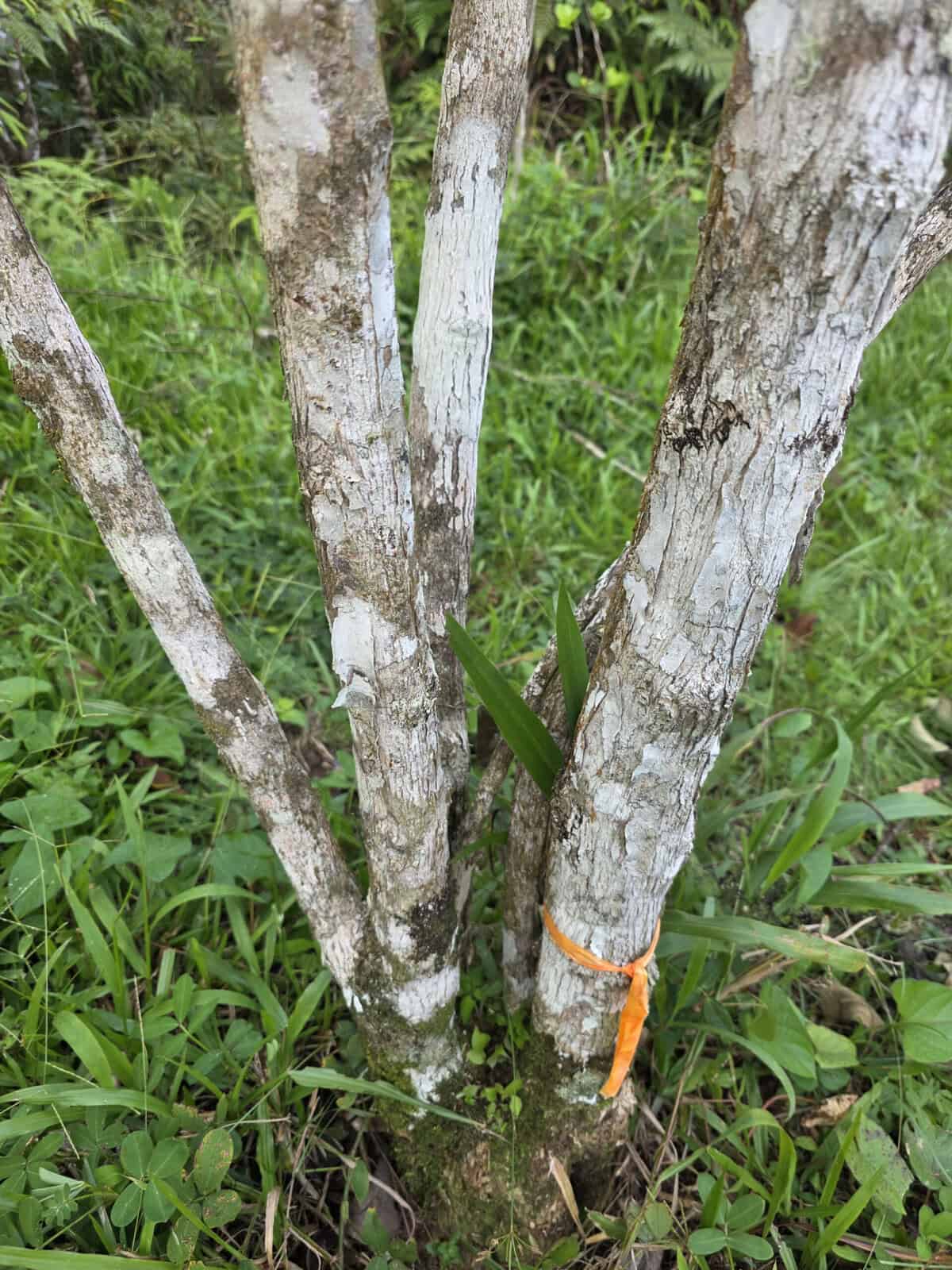
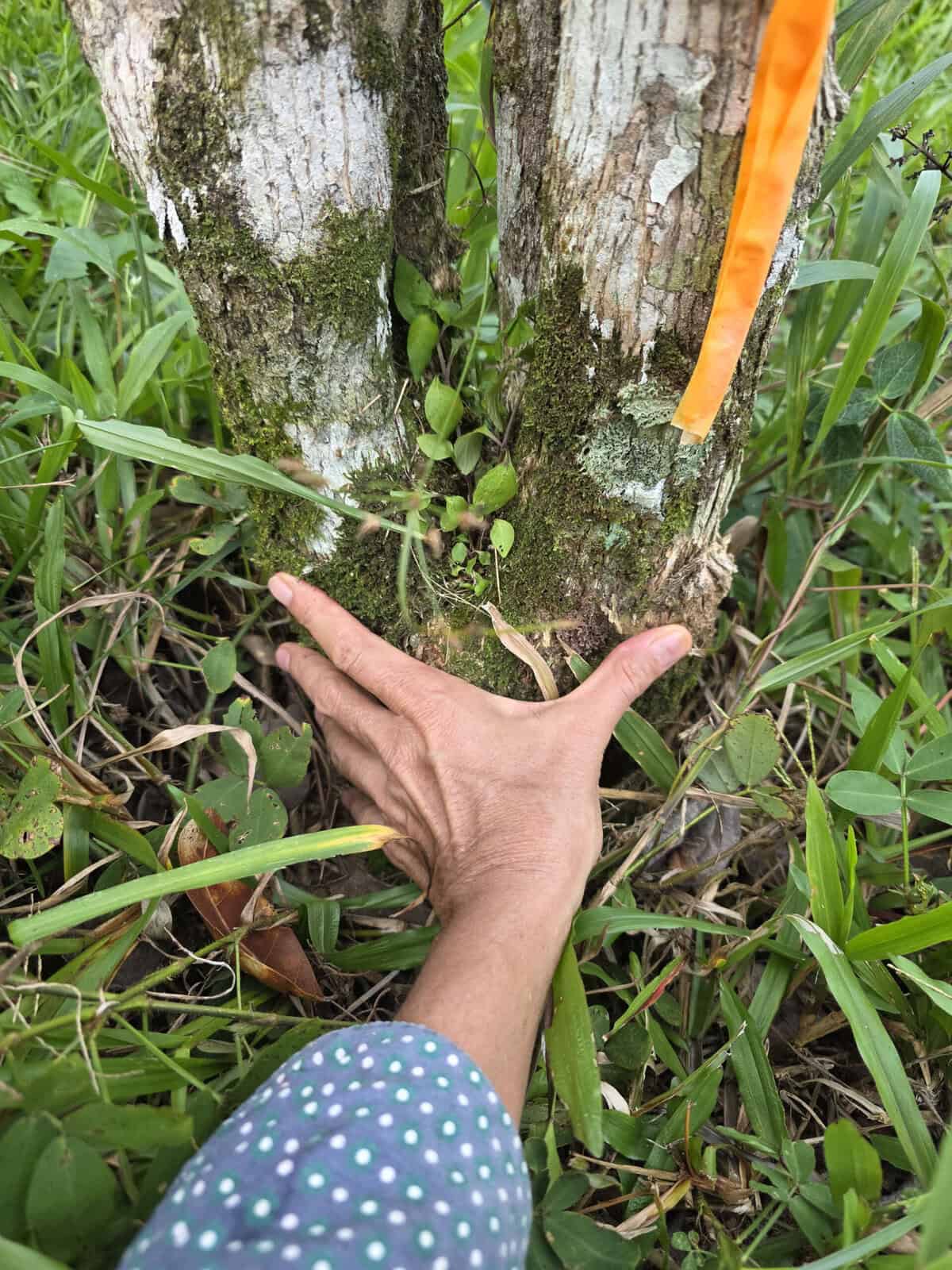
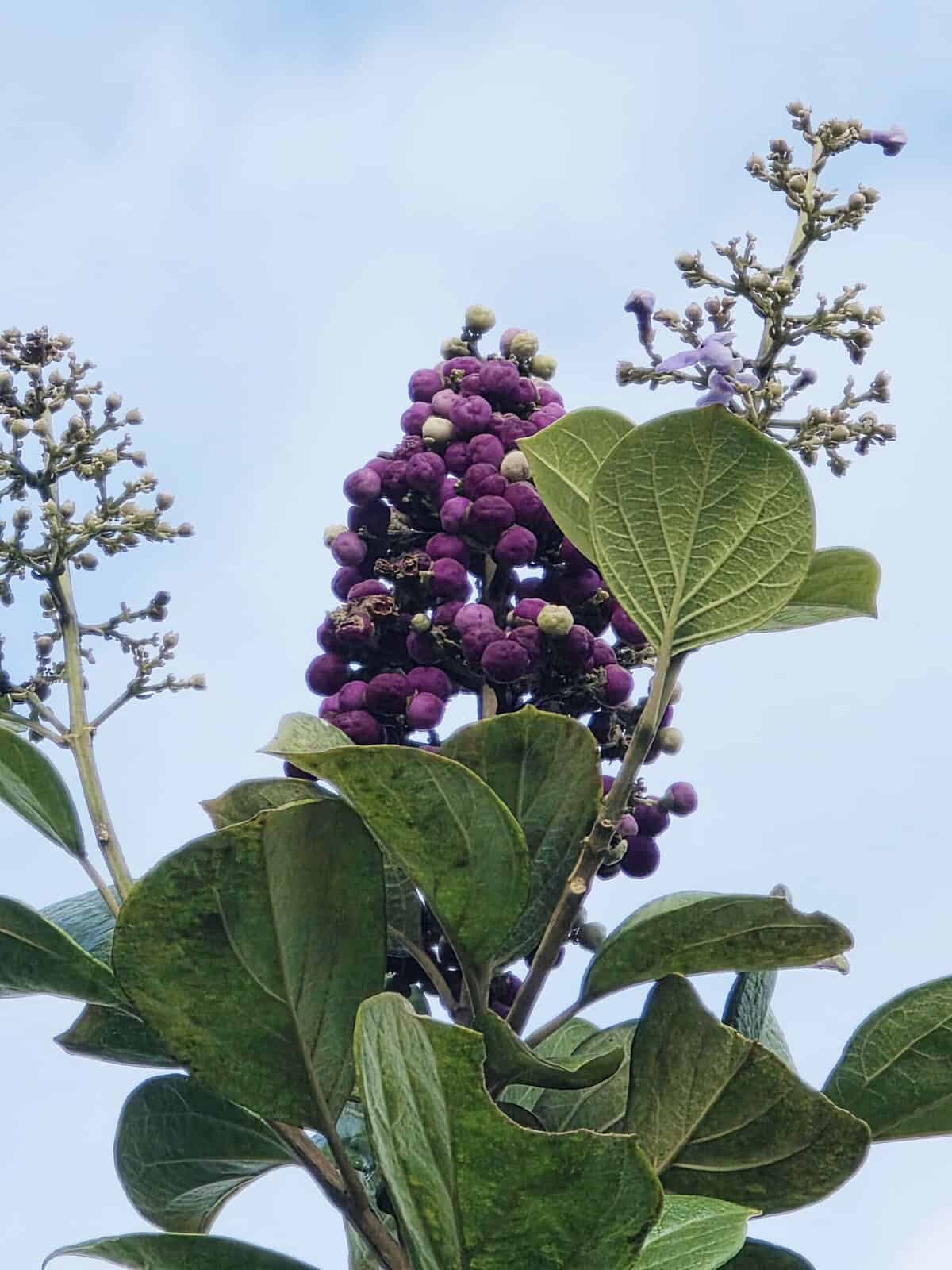
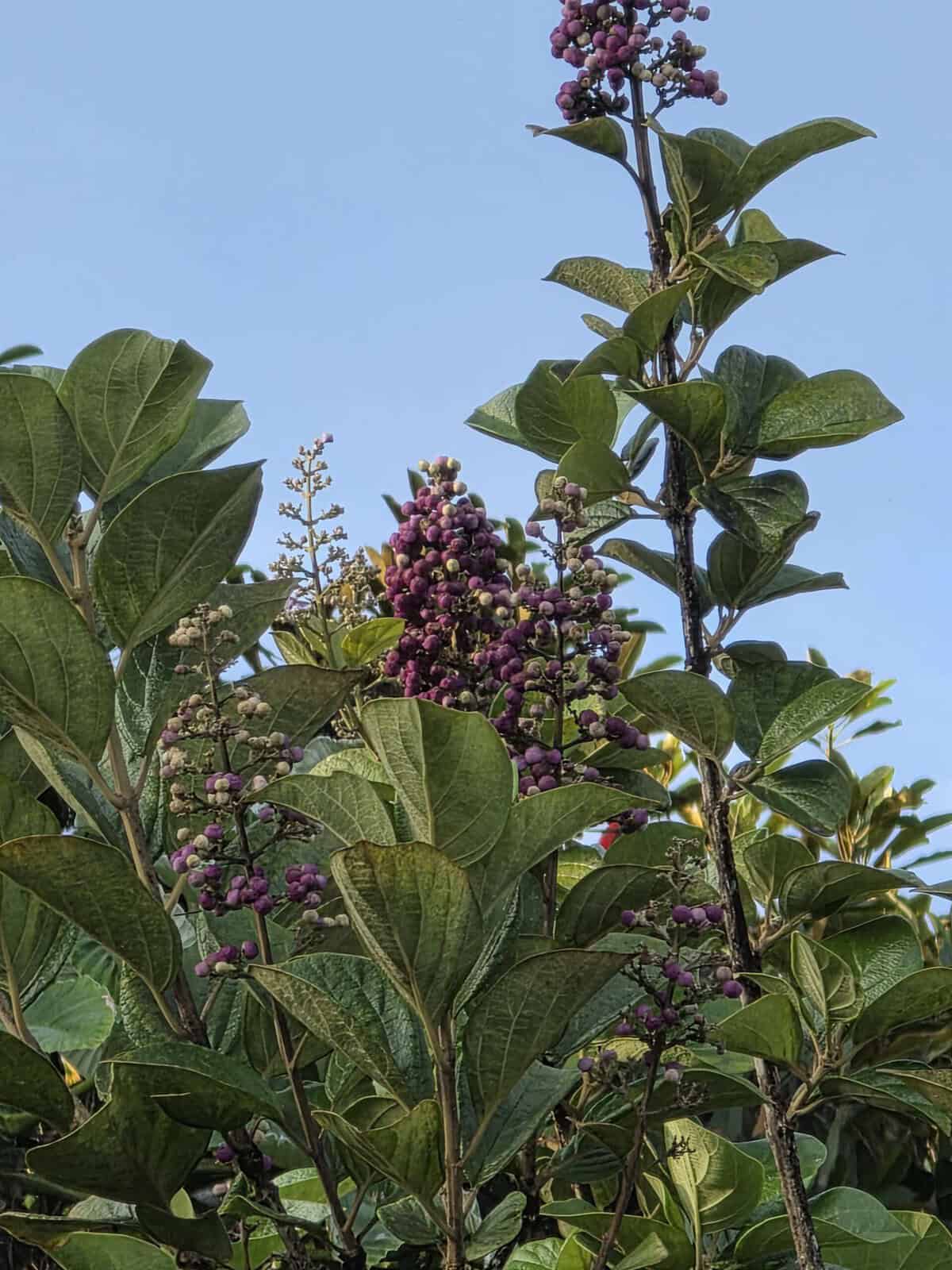
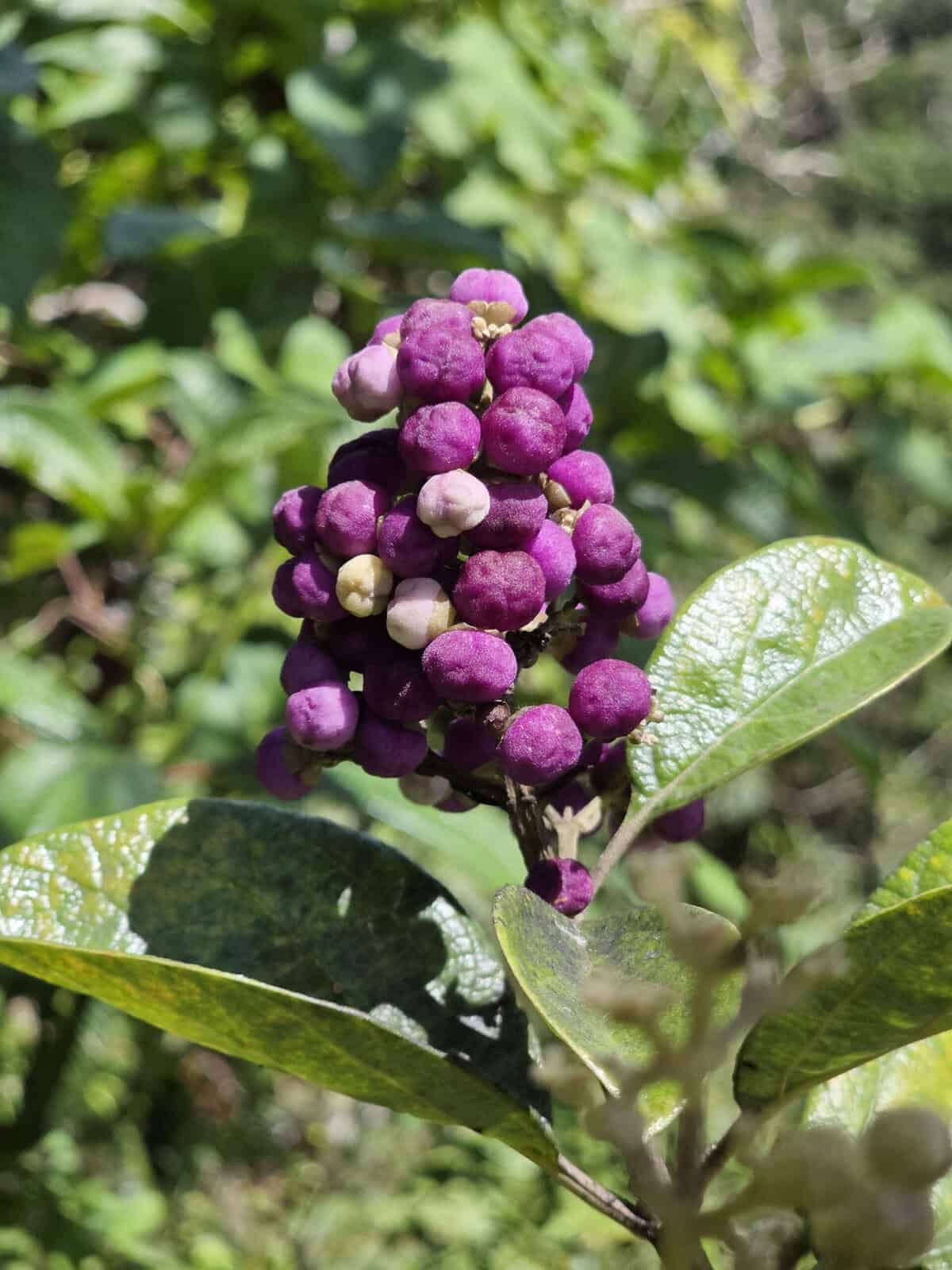
Cornutia obovata, commonly known as capá jigüerilla, nigua, or palo de nigua, is a rare evergreen tree endemic to Puerto Rico. It belongs to the mint family, Lamiaceae, although it was formerly classified in the verbena family, Verbenaceae.
The species can reach approximately 10 metres (33 feet) in height. Its oval leaves grow in opposite pairs and have hairy undersides, while its tubular purple flowers appear in clusters. It occurs in mountain forests, including areas with limestone and serpentine soils.
When Cornutia obovata was federally listed as endangered in 1988, only seven wild individuals were known. By 1998, eight plants had been documented across a few mountain locations. These historical counts illustrate its longstanding rarity; they are not a current population estimate.
Its small, scattered populations make it vulnerable to habitat loss, severe disturbances, and the loss of individual trees. Protecting its forest habitat, maintaining cultivated plants, and improving propagation methods are important contributions to its conservation.
All photos by 3t Vakil, October 2026
Ms. Thrity ‘3t’ Vakil, FLS, President,
Tropic Ventures Research & Education Foundation
Sustainable Forestry & Rainforest Enrichment Project,
Las Casas de la Selva, | HC 63 Box 3879, Patillas, | Puerto Rico, 00723
3t@eyeontherainforest.org
+1 787 329 7761 Whatsapp
www.eyeontherainforest.org