Beneath the Trees: Kurt Miller and Ari Puentes Investigate Puerto Rico’s Hidden Fungal Communities
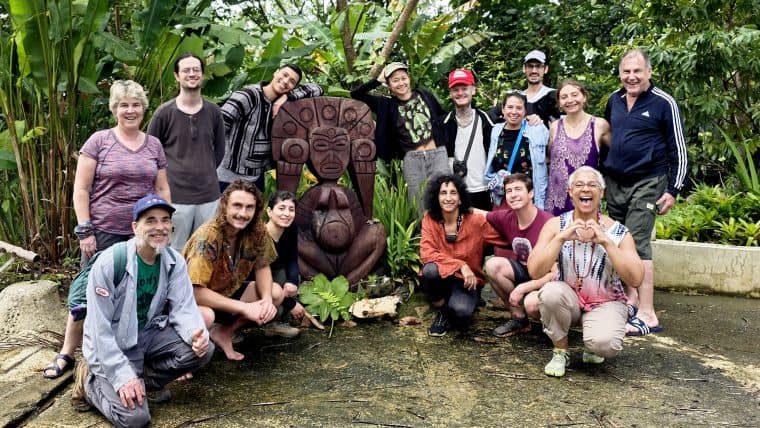
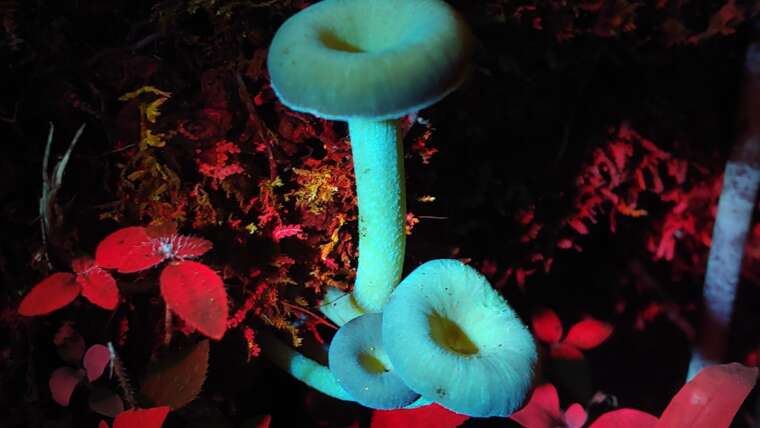
Kurt Miller has been a valued member of our Eye on the Rainforest botanical team since 2021. Over the years, we have participated in numerous botanical expeditions together, exploring forests and plant communities across Puerto Rico. While much of our work has focused on the island’s flora, Kurt continually draws our attention to the equally diverse and essential fungal life woven through these ecosystems. Kurt has also led two mycological workshops at Las Casas de la Selva. The first was an immersive weekend devoted to fungi, with daytime forest forays to search for and identify mushrooms, followed by a night hike to experience the extraordinary phenomenon of bioluminescent fungi glowing in the darkness of the rainforest. In 2025, he returned to lead another workshop in collaboration with the Catskill Fungi group.
For nearly a decade, Kurt has been documenting the fungi of Puerto Rico, concentrating on species that produce mushroom fruiting bodies large enough to be seen without a microscope. It is estimated that fungi may outnumber plants by approximately five to one. Many produce large, colorful mushrooms, some of which may be edible, medicinal, or psychoactive. Yet, as Kurt emphasizes, all fungi are “magical” in an ecological sense because they play indispensable roles in decomposition, nutrient recycling, and the continuing regeneration of forest ecosystems.
Kurt is now compiling his extensive photographs, field observations, and species accounts for what will become the first field guide dedicated to the fungi of Puerto Rico—an important contribution to understanding an extraordinary kingdom of life that remains greatly underdocumented on the island.
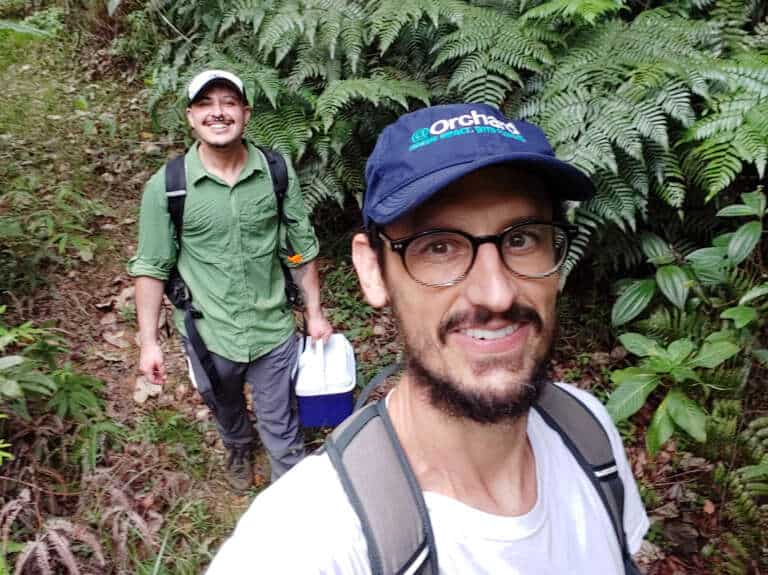
Ari Puentes (in the green shirt), is a PhD student at the University of Tennessee, Knoxville, and has been studying fungi for approximately five years. Ari’s research focuses primarily on mushroom-forming fungi that live in symbiotic relationships with trees. These are known as mycorrhizal fungi.Alongside academic research, Ari is actively involved in community mycology. Ari has worked with local mushroom clubs, led fungal forays and workshops, and organized outreach events intended to engage people of all ages with fungi. That combination of rigorous science and public education is especially important: fungi are fundamental to the functioning of forests, yet they are still among the least understood and most frequently overlooked organisms within them.
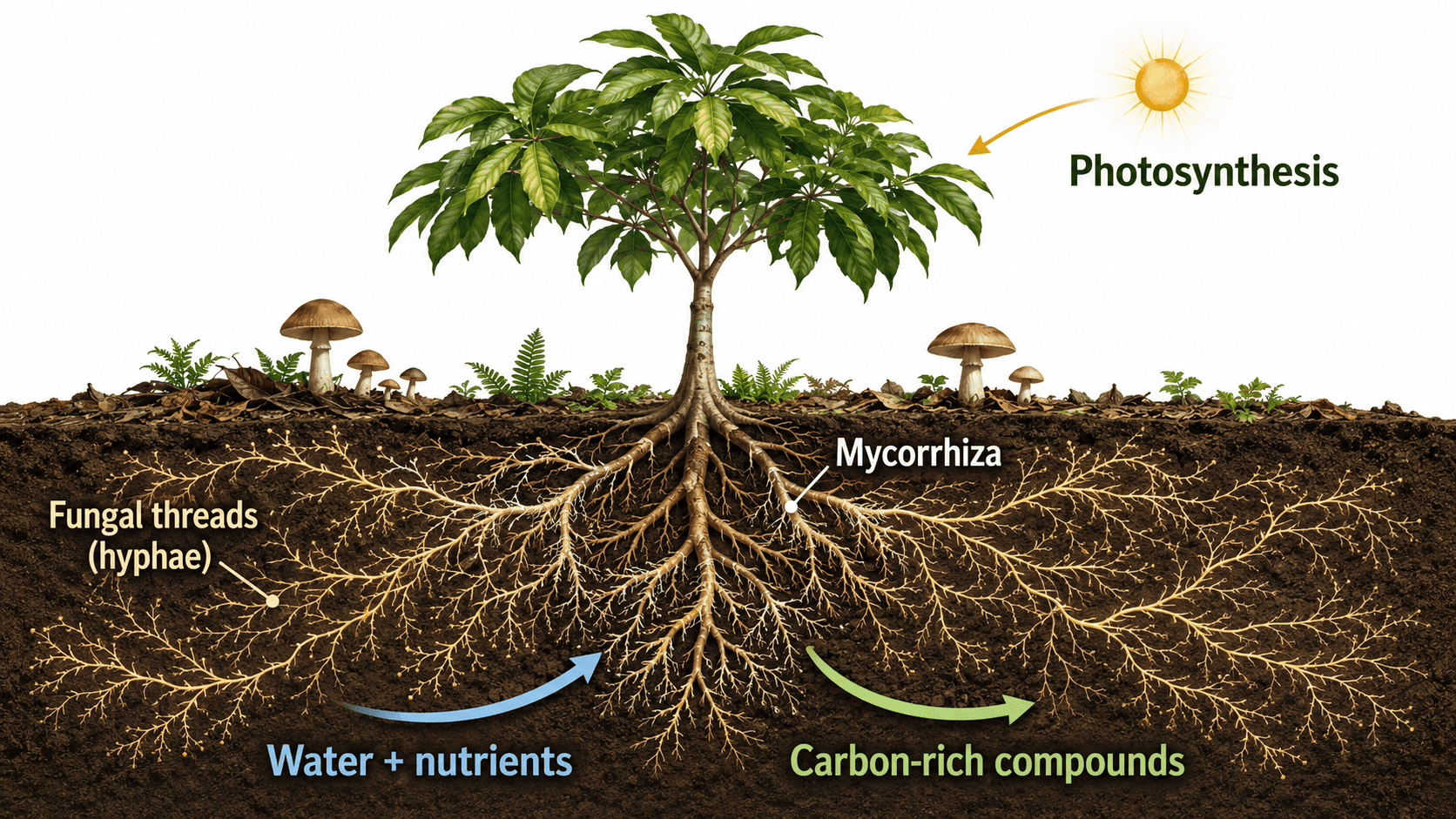
What Are Mycorrhizal Fungi?
The word mycorrhiza refers to a close association between a fungus and the roots of a plant. In these relationships, fungal threads extend outward through the soil, greatly increasing the area through which a tree can obtain water and nutrients. In return, the tree supplies the fungus with carbon-rich compounds produced through photosynthesis.These partnerships can influence tree growth, nutrient cycling, forest regeneration, and a plant’s ability to tolerate environmental stress. Mycorrhizal fungi therefore do far more than produce an occasional mushroom. They form part of the living infrastructure of the forest.
Much of the fungal organism exists below ground as a network of microscopic filaments called hyphae. Collectively, these filaments form the mycelium. The mushroom is only a temporary reproductive structure—rather like a fruit appearing briefly from a much larger organism concealed within the soil, roots, leaf litter, or decaying wood.This is why studying mushrooms alone cannot reveal the forest’s complete fungal community.
Investigating the Fungi Associated with Coccoloba
Ari’s visit to Las Casas de la Selva formed part of the first field season for a PhD research project documenting and describing tree-symbiotic fungal communities associated with native trees in the genus Coccoloba.The genus includes trees and shrubs belonging to the buckwheat family, Polygonaceae. At Las Casas, Kurt and Ari collected soil samples from around two species: Coccoloba swartzii and Coccoloba pubescens. The samples will be analyzed for fungal DNA at the University of Tennessee, Knoxville. By identifying traces of DNA within the soil, Ari can determine which fungi are present around the roots of the trees—even when those fungi are not producing visible mushrooms.This distinction is crucial. A fungal species may be abundant beneath the ground but produce mushrooms only briefly, irregularly, or under very particular environmental conditions. Some fungi may rarely produce visible fruiting bodies at all. A survey based entirely on aboveground mushrooms would therefore capture only part of the community.Soil DNA allows researchers to look beyond what happens to be visible on the day of a field survey and begin assembling a far more complete picture of the underground ecosystem.
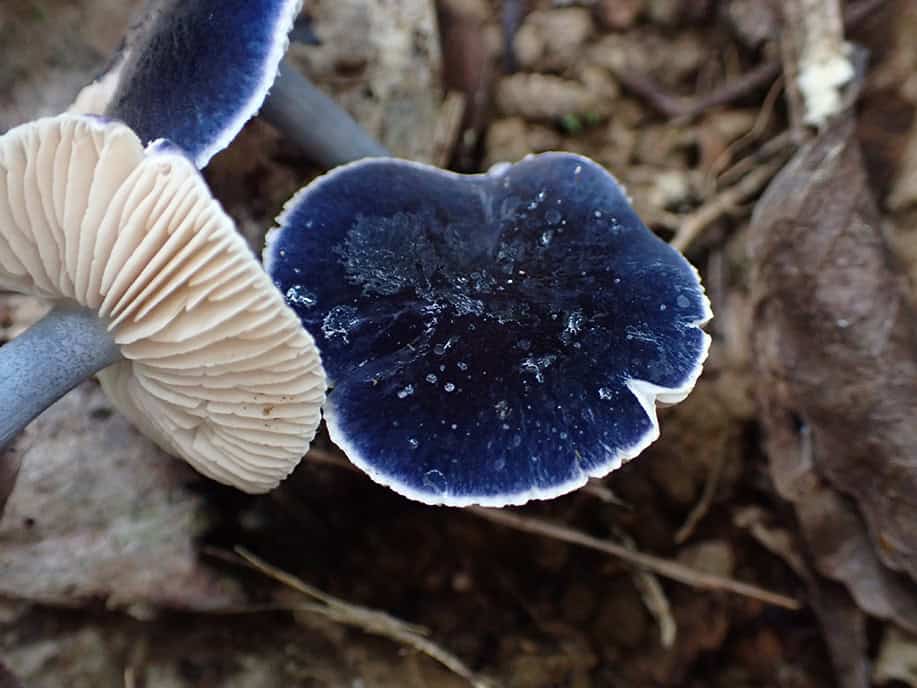
Entoloma caeruleocapitatum is a basidiomycete fungus belonging to the family Entolomataceae. Described by mycologist R. W. G. Dennis in 1970, it is a Neotropical species originally documented in the Caribbean and Brazil. It is distinguished by its characteristic blue or violet cap, often with purple tones, and gills that turn pink as they mature.
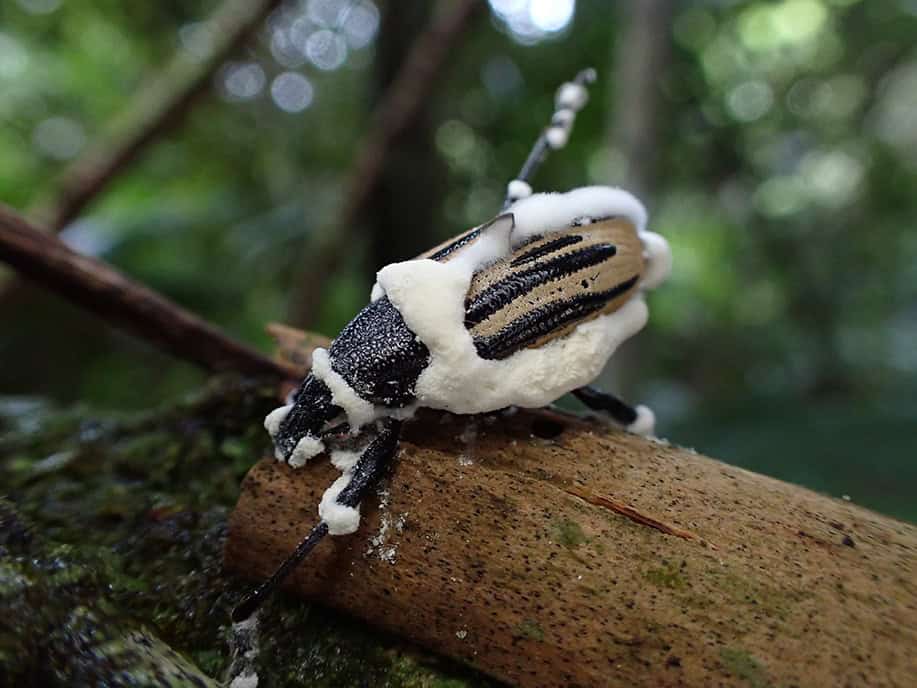
Beauveria bassiana is a beneficial fungus used for biological pest control. Its spores attach to a weevil, penetrate its outer shell, and multiply inside until the insect dies. The fungus then emerges as a white, powdery growth, releasing new spores that can infect other weevils.
Comparing Forests Across Puerto Rico The Las Casas samples form one part of a much broader island-wide investigation. Kurt and Ari also collected samples from almost all of Puerto Rico’s state forests, as well as from El Yunque National Forest.This will allow Ari to compare the fungal communities found at Las Casas with those associated with different forest types and environmental conditions across the island.
Puerto Rico contains a remarkable variety of habitats compressed into a relatively small geographical area—from wet montane forests to coastal and dry forest ecosystems. Differences in rainfall, elevation, temperature, soils, tree communities, and land-use history may all influence which fungi are present and how they associate with particular trees.In total, the researchers collected samples from 11 species of Coccoloba. This creates an opportunity to compare fungal communities not only among locations, but also among different host-tree species.
Do particular Coccoloba species form associations with particular fungi? Do closely related trees share similar fungal communities? Or are the communities shaped more strongly by the surrounding soil and environmental conditions? These are some of the questions that the collected material may help to answer.Remarkably, the symbiotic fungal communities associated with most of these Coccoloba species have never previously been investigated.
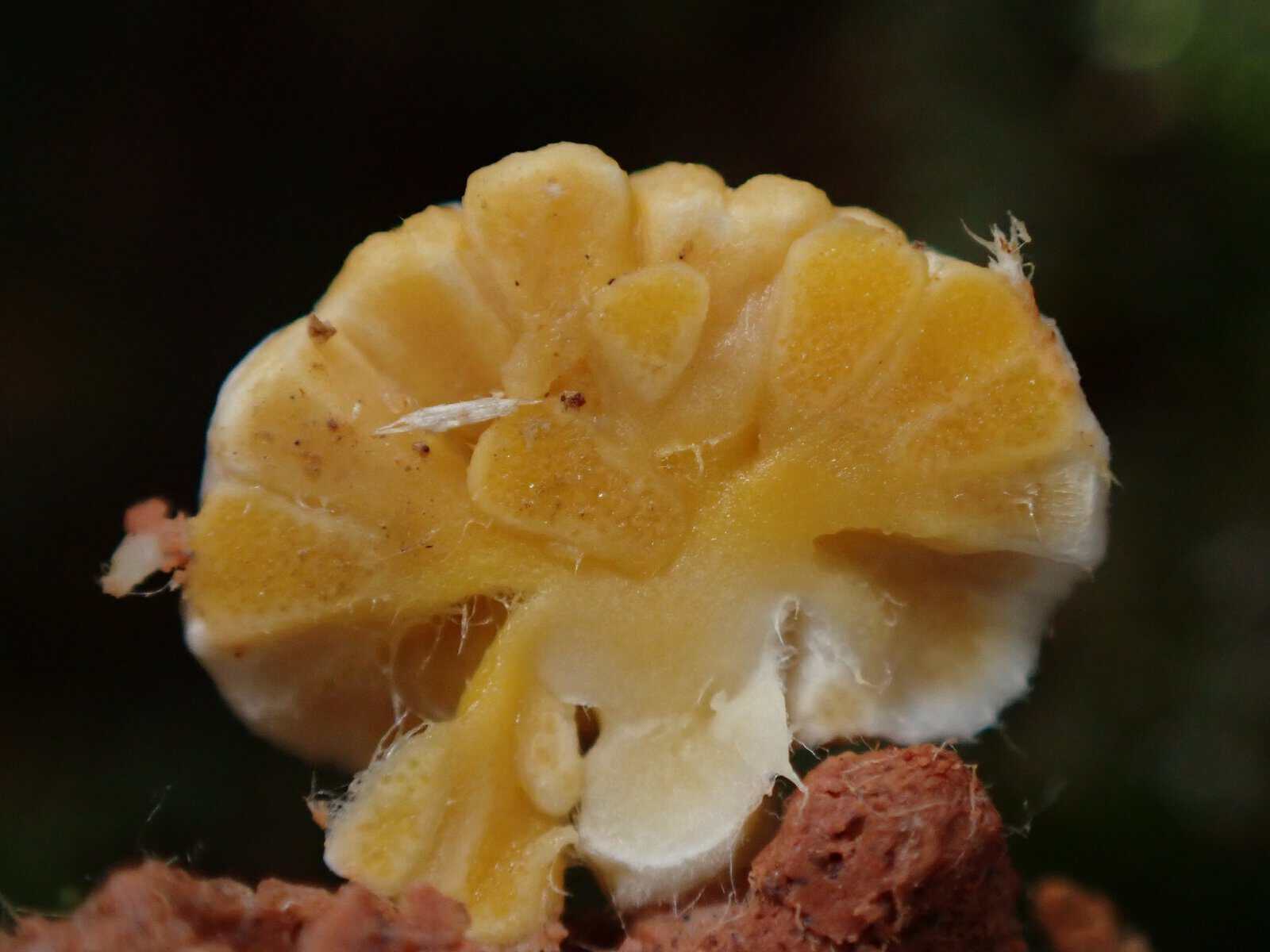
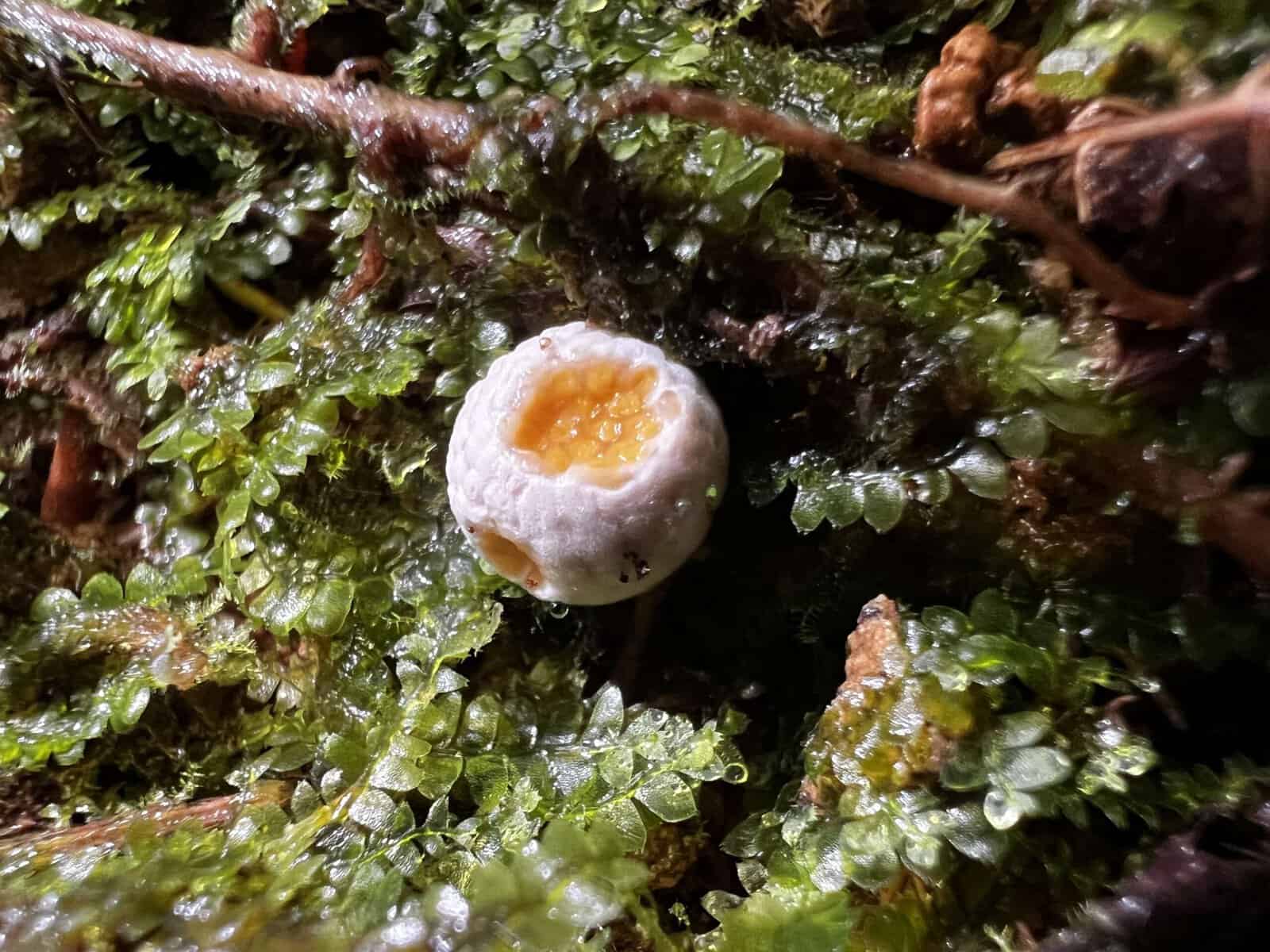
Glomus segmentatum a rarely documented species
The Soil Tells Its Own Story
Fungal DNA is only one component of the research. Ari also measured several physical and chemical properties of the soil, including: pH, Moisture, Phosphate concentrations, Nitrate concentrations, and Ammonium concentrations.
These measurements will be examined alongside the DNA data to determine how soil conditions may shape the composition of symbiotic fungal communities.Soil pH can affect nutrient availability and determine which organisms are able to thrive. Moisture strongly influences fungal activity and growth, while phosphate and different forms of nitrogen are fundamental to plant nutrition and forest productivity.
By combining fungal DNA records with information about the soil, Ari will be able to investigate why certain fungi occur in particular locations or in association with particular trees. The research moves beyond simply compiling a list of species and begins to examine the ecological relationships connecting fungi, trees, soil chemistry, moisture, and habitat.
A Collaboration Across Scales
What I find especially exciting about Kurt and Ari’s collaboration is the way their approaches complement one another. Kurt’s long-term documentation of Puerto Rico’s visible fungi provides an invaluable record of the mushrooms appearing across the island. His photography, field observations, and work toward a Puerto Rican field guide will help people recognize and appreciate organisms that have received far less attention than the island’s plants and animals.
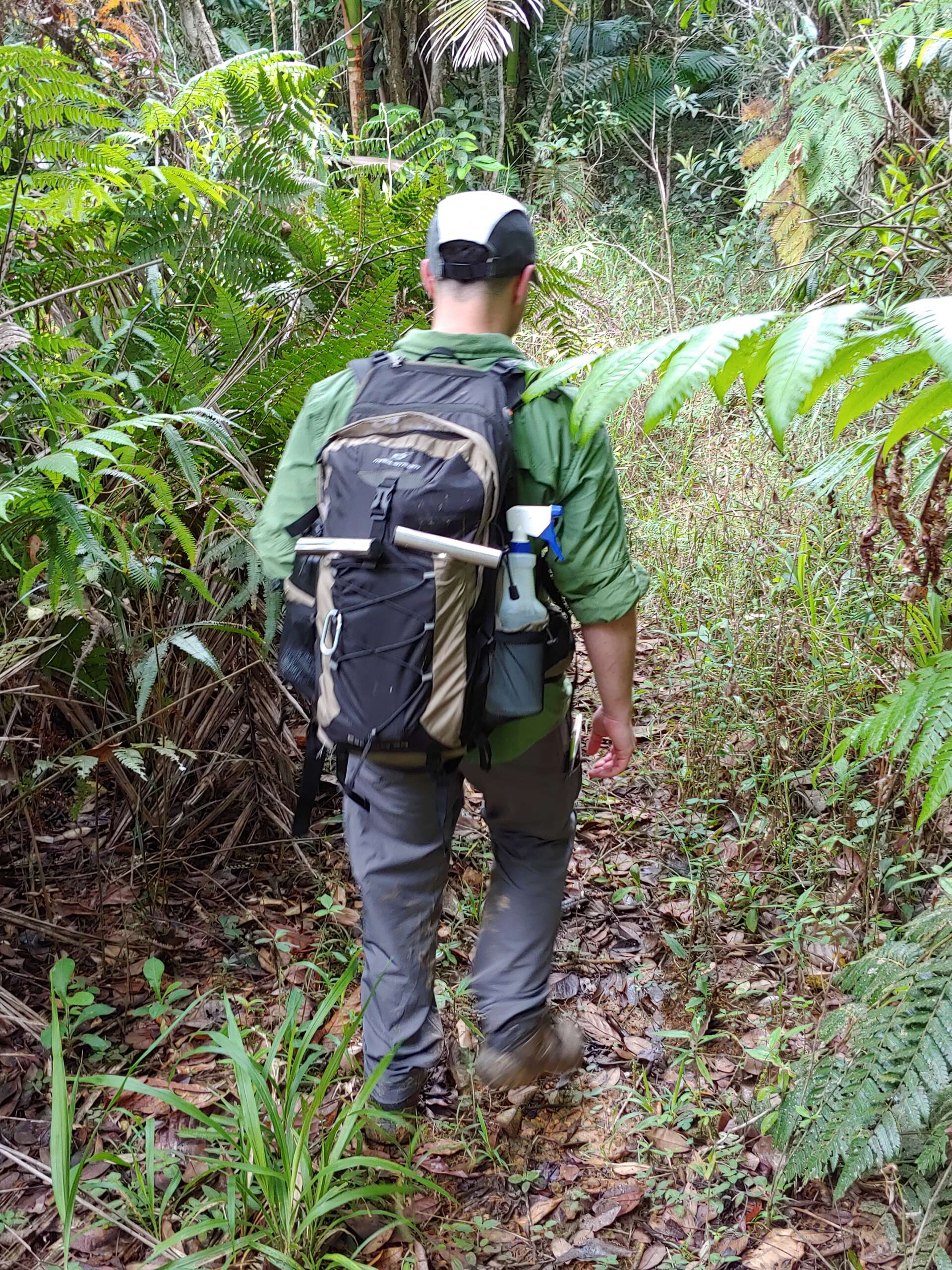
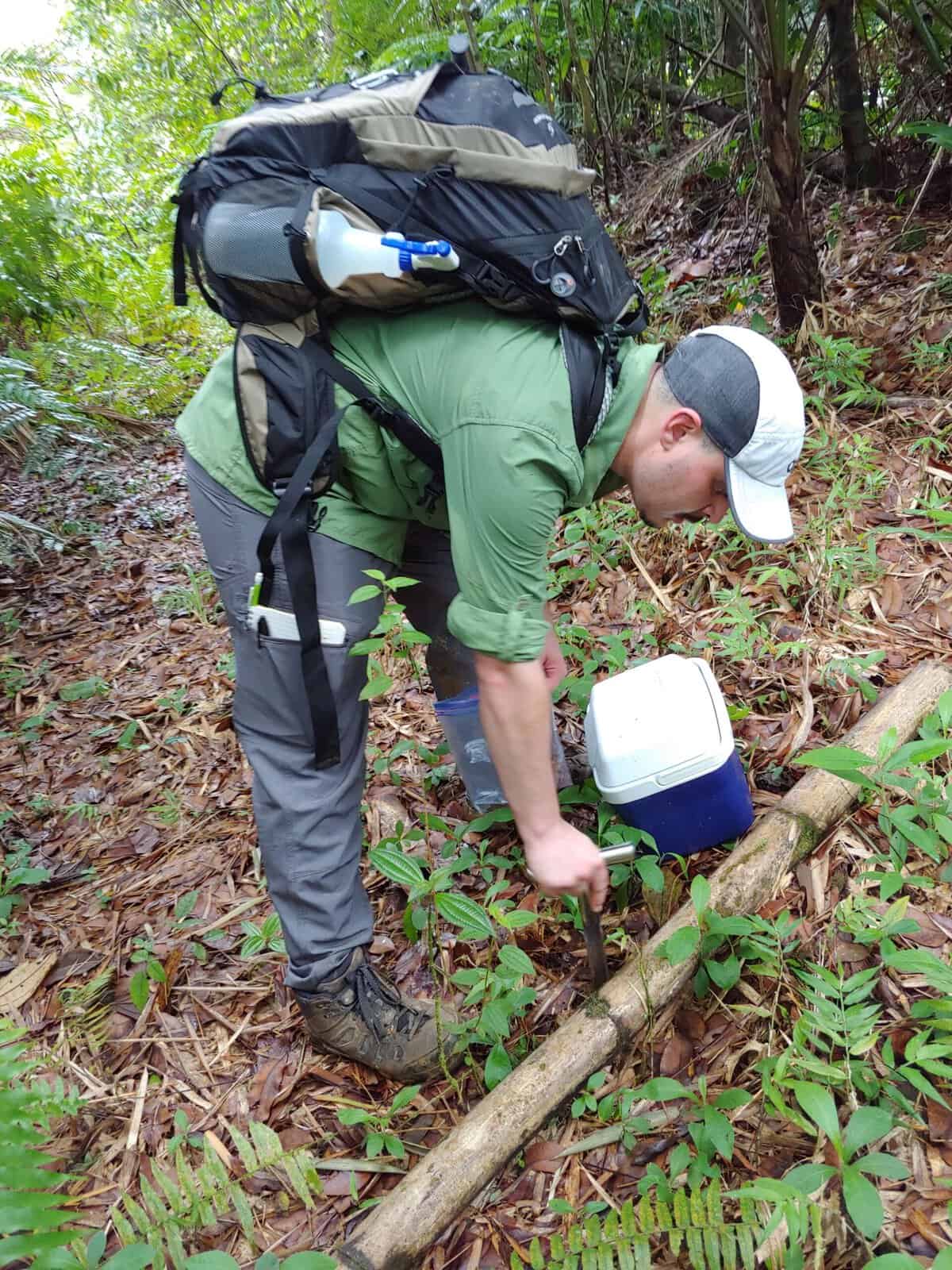
Ari’s research takes us below ground, using soil sampling and DNA analysis to reveal fungal communities that cannot be reliably documented through visible mushrooms alone.
Together, these approaches connect the mushroom fruiting in the forest today with the much larger, hidden organism below ground. They also connect close observation in the field with laboratory analysis and island-wide ecological comparisons.The results from the Las Casas samples will be analyzed over the coming months.
We look forward to learning what is living beneath and around the roots of our Coccoloba trees—and how these communities compare with those found in forests throughout Puerto Rico.
For Las Casas de la Selva, this research adds another layer to our understanding of the forest. Trees do not grow as isolated individuals. They exist within intricate communities of organisms, many of which remain invisible to us. Every soil sample offers a glimpse into that hidden world and reminds us that conserving a forest means protecting not only what rises above the ground, but also the vast living network beneath it.
Follow Their Work
Kurt Miller
iNaturalist
Instagram: Fungi PR
Fungi of Puerto Rico Facebook group
Email: komille277@gmail.com
Ari Puentes
iNaturalist
LinkedIn
Additional resource: Red Ecocientífica
Photos in this article by Kurt Miller, Ari Puentes, and 3t Vakil
Thrity Vakil, July 2026