
Management Objectives
Objective 1: Sustainably Manage Production Zones
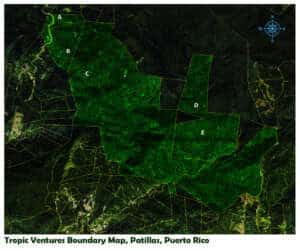
Develop and manage a timber-producing forest through both traditional and innovative agroforestry systems. These include shade-grown coffee and cacao, as well as diverse plantings that combine trees, shrubs, and herbs with fruit, ornamental, medicinal, and culinary value. Between 1984 and 1990, approximately 25% of the secondary forest at Las Casas de la Selva was planted with timber trees, establishing the basis of today’s production areas.
Objective 2: Conserve Wildlife Habitat
Protect and enhance biodiversity by leaving 75% of the property’s forest—including steep slopes and deep valleys—untouched. This preserves soils, prevents erosion, and allows natural forest succession to continue. The project’s location, bordering the Carite State Forest, strengthens regional wildlife corridors and ecological connectivity.
Objective 3: Safeguard Water Quality
Protect three major watersheds—Sonadora, Hormiga, and Icaco—that flow into the Río Grande de Patillas and ultimately supply Lake Patillas, a critical source of drinking and irrigation water. Maintaining intact forest cover is essential to securing clean, reliable water for surrounding communities.
Objective 4: Promote Recreation and Education
Develop authentic ecotourism and educational opportunities that encourage recreation, reflection, and connection with nature. By creating spaces for people to experience the rainforest deeply, we help cultivate love for forests—because what people love, they will protect.
Objective 5: Strengthen Sustainable Enterprises
Create practical strategies for plantations and the use of small-diameter forest products, and non- wood forest products, linking producers and artisans. By creating sustainable enterprises, we support livelihoods while maintaining the long-term health and productivity of the forest.
Objective 6: Reduce and Manage Threats
Identify, monitor, and mitigate threats to ecosystem health, including:
- Erosion and soil loss
- Insect pests and plant diseases
- Ecosystem fragmentation
- Climate change impacts
- Hurricanes and severe storms
- Drought conditions
- Invasive species of plants and animals
Through proactive stewardship, these risks can be reduced, ensuring the resilience and regeneration of the forest into the future.
Our Commitment
Together, these objectives form a comprehensive approach to forest stewardship at Las Casas de la Selva. By protecting biodiversity, safeguarding water resources, encouraging learning and education, as well as developing sustainable economic opportunities, we are working to ensure that this forest continues to thrive for generations to come. In a time of accelerating climate change and ecological loss, these efforts are not optional—they are urgent. Forests are life-support systems, and caring for them is caring for our shared future.
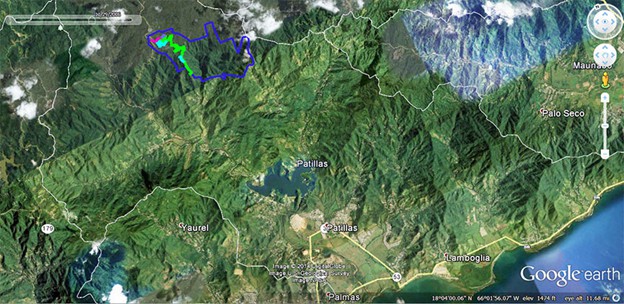
Blue line indicates Las Casas de la Selva property boundary in Patillas, PR